The Autopen Controversy: A Deep Dive into a Political Signature Saga
The autopen, a mechanical device used to replicate signatures, has been a recurring point of contention in American politics. This technology, designed to automate the signing of documents, has sparked debates over authenticity, legality, and the very nature of official communication. The controversy highlights the intersection of technology, law, and political practice.
Key Takeaways
- The autopen’s use raises questions about the personal involvement of elected officials in official acts.
- Legal challenges have centered on whether autopen signatures meet the requirements for official documents.
- The debate reflects evolving standards for authenticity in the digital age.
The Autopen: A Tool of Convenience and Controversy
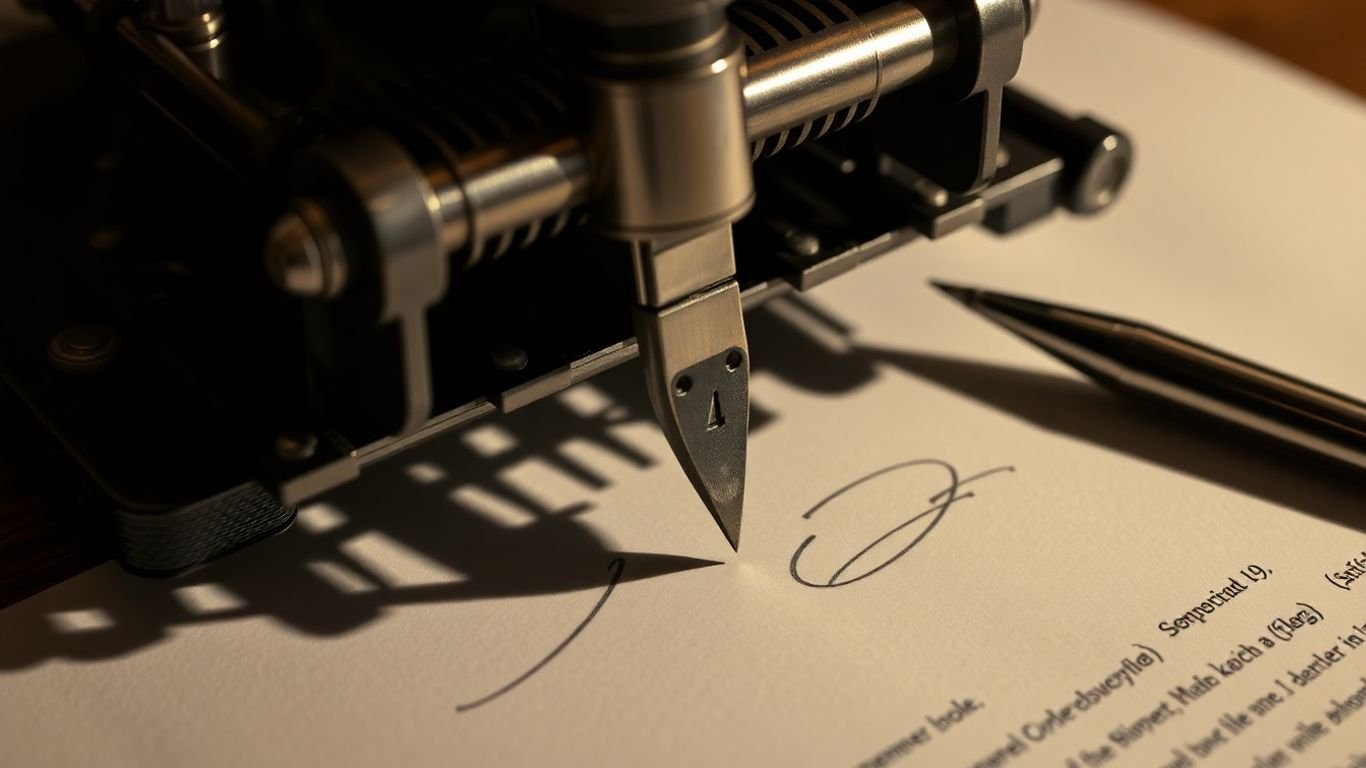
The autopen is essentially a signature-duplicating machine. It uses a pantograph mechanism to trace an original signature, allowing for the mass production of signed letters and documents. While intended to save time for busy officials, its use has frequently drawn scrutiny, particularly when the authenticity of the signature is questioned.
Historical Context and Legal Battles
Throughout history, the autopen has been employed by various political figures. The core of the controversy lies in the legal interpretation of what constitutes a valid signature. Critics argue that an autopen signature is not a personal act of signing, thereby potentially invalidating official documents. Proponents, however, contend that when used with the explicit authorization of the official, it serves as a legitimate means of conveying their intent.
Legal challenges have often revolved around specific instances where the autopen’s use was challenged. These cases have tested the boundaries of administrative law and the requirements for official endorsements. The courts have had to grapple with whether the intent behind the signature is paramount, or if the physical act of signing is indispensable.
Evolving Standards in the Digital Age
The autopen debate predates the widespread adoption of digital signatures but shares common themes. Both technologies raise questions about authenticity, security, and the personal touch in official communications. As technology continues to advance, the legal and political frameworks surrounding official signatures are likely to evolve further, seeking to balance efficiency with integrity.
The ongoing discussion surrounding the autopen serves as a reminder of the enduring importance of authenticity and personal accountability in governance, even as the tools of communication change.



![[Trump] points accusingly at a shadowy crowd at the border.](https://countrybrief.com/wp-content/uploads/2025/11/thumbnail-151-768x432.jpeg)