Anduril’s YFQ-44 Fury ‘Fighter’ Drone Has Flown
So, Anduril’s YFQ-44A drone, which they call ‘Fury’, actually flew. It happened recently in Victorville, California. This is a pretty big deal for the Air Force’s plan to have these kinds of uncrewed planes flying with our regular fighter jets. It’s part of a program called Collaborative Combat Aircraft, and Fury is one of the main contenders. We’ve been hearing about this drone for a while, and now it’s officially taken to the skies.
Key Takeaways
- Anduril’s YFQ-44A ‘Fury’ drone completed its first flight in Victorville, California.
- This marks a significant step for the U.S. Air Force’s Collaborative Combat Aircraft (CCA) program, aiming to pair drones with crewed fighters.
- The Fury drone has roots in an earlier aggressor drone concept from Blue Force Technologies, which Anduril acquired.
- The drone is designed for semiautonomous flight and is intended to work alongside manned aircraft, not be remotely piloted.
- Future testing will focus on weapon integration, multi-drone missions, and teaming with crewed fighter jets.
Anduril’s Fury Takes Flight
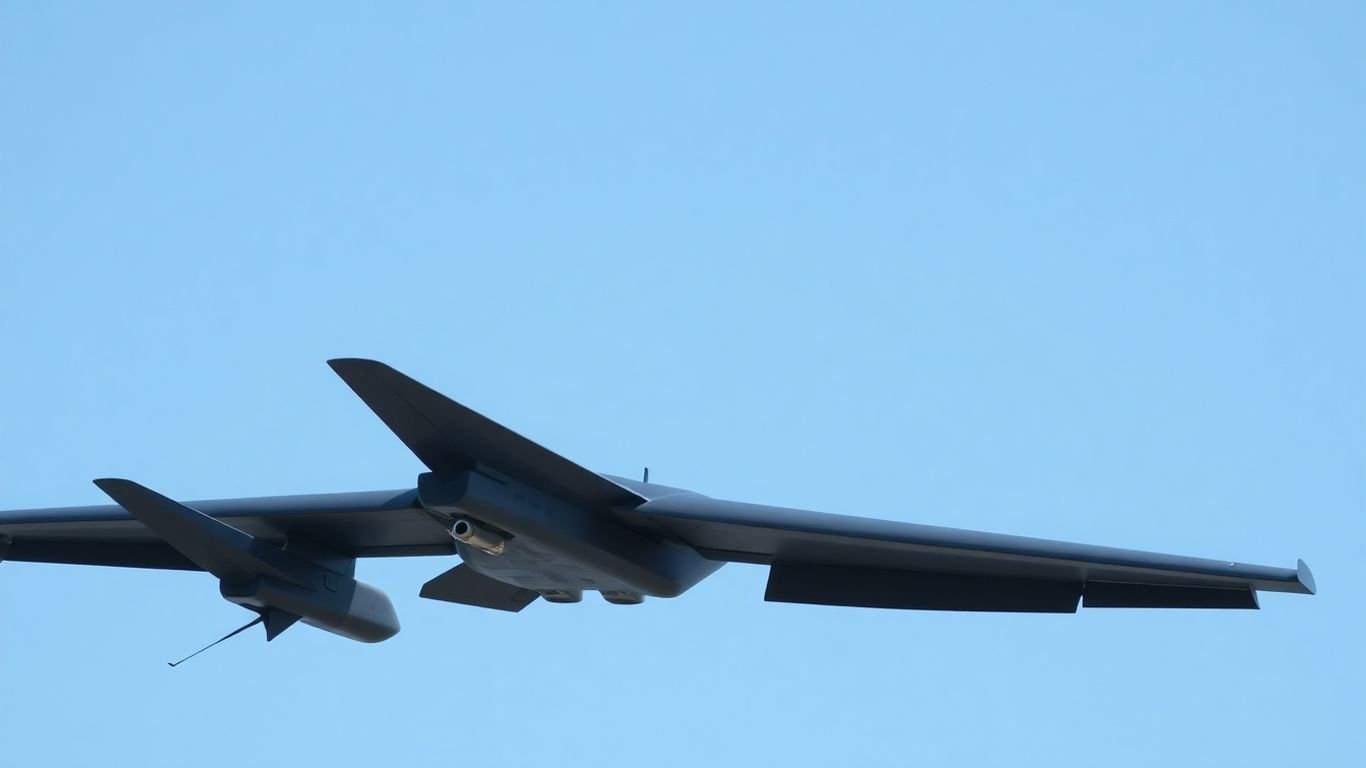
Maiden Flight Confirmed for YFQ-44A
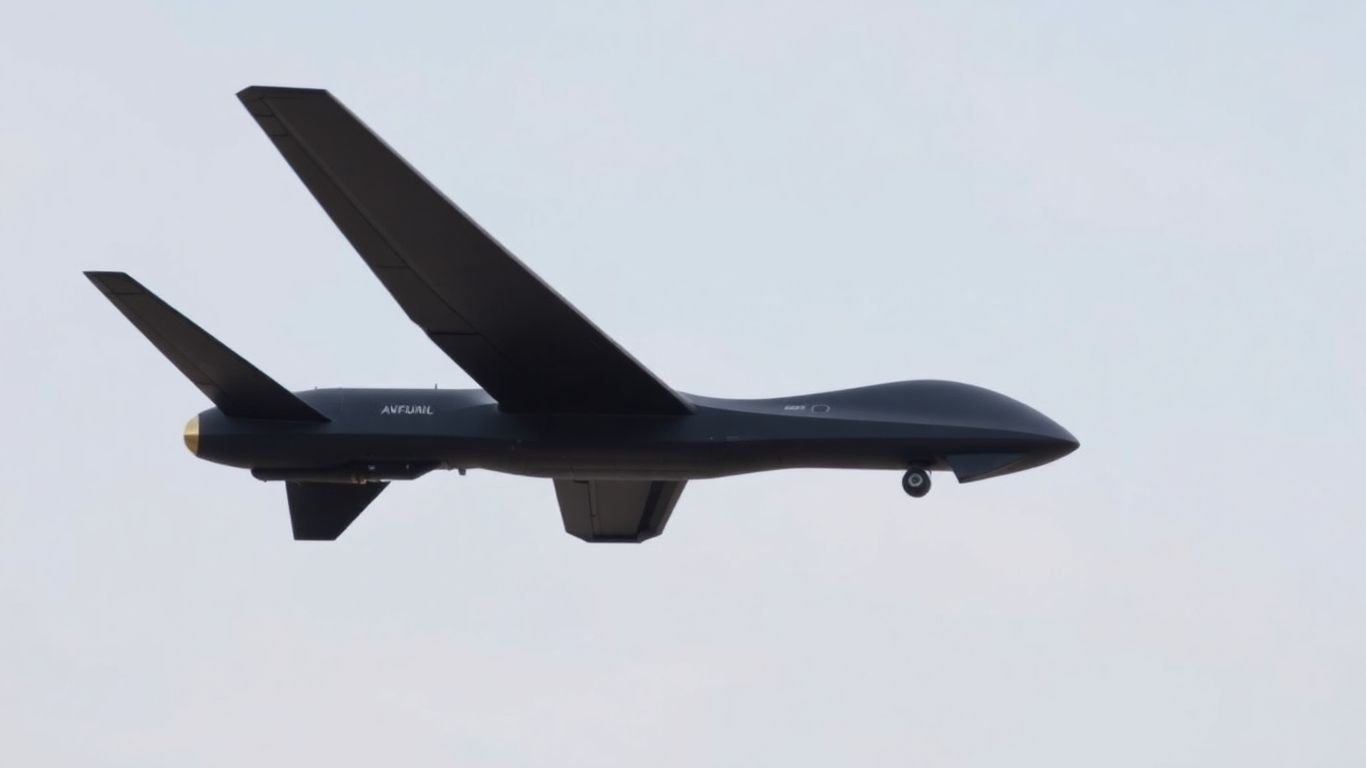
It’s official: Anduril’s YFQ-44A, nicknamed ‘Fury’, has completed its first flight. This event marks a significant moment for the company’s advancements in Anduril drone technology. The prototype was spotted in the skies over Victorville, California, accompanied by L-29 Delfin trainer jets acting as chase planes. This successful flight is a testament to the rapid development cycle Anduril has achieved.
Collaborative Combat Aircraft Program Milestone
The YFQ-44A’s maiden flight is a big deal for the U.S. Air Force’s Collaborative Combat Aircraft (CCA) program. It’s one of the designs selected for Increment 1, aiming to create uncrewed aircraft that can work alongside crewed fighters. The Air Force confirmed this flight as a major step, highlighting how competition is speeding up innovation in this field. This flight testing provides valuable data on how these new systems perform and integrate.
Victorville, California Witnessed the Event
Southern California Logistics Airport in Victorville served as the backdrop for this historic flight. The area has become a hub for aerospace testing, and the YFQ-44A’s appearance there adds to its growing reputation. Seeing the drone in the air, even with chase planes, gives a glimpse into the future of aerial combat. It’s pretty wild to think about how quickly these Anduril unmanned aerial systems are progressing from concept to reality.
The development timeline from initial design to flight testing for the YFQ-44A was remarkably short, taking just 556 days. This speed demonstrates a new approach to building advanced aircraft.
Here’s a quick look at some of the reported specs for the Fury:
- Maximum Speed: Mach 0.95
- Service Ceiling: 50,000 ft
- G-Limits: +9 / -3
- Armament: 2 weapons stations, capable of carrying missiles like the AIM-120 AMRAAM.
This flight is just the beginning, and we’ll be watching closely as Anduril continues to develop and test the Fury.
The Genesis of the Fury Drone
Origins with Blue Force Technologies
The YFQ-44 Fury drone didn’t just appear out of nowhere. Its roots go back to a company called Blue Force Technologies, which was working on a concept for an aggressor drone. Think of it as a practice target, designed to mimic advanced enemy aircraft for training purposes. Back then, it had a few different names, like "Grackle" and "REDmedium," before finally landing on "Fury." The whole idea was to create something that could simulate tough threats, giving pilots a realistic challenge.
Acquisition by Anduril Industries
Then, in 2023, Anduril Industries stepped in and acquired Blue Force Technologies. This move brought the Fury design under Anduril’s wing. They saw the potential in this existing airframe and decided to adapt it. It wasn’t just about picking up where Blue Force left off; it was about taking that foundation and shaping it into something new, specifically for a major Air Force program. This acquisition was a pretty big deal, signaling Anduril’s growing presence in the defense tech world.
Evolution into a CCA Contender
With the Fury design now part of Anduril, it was reshaped to fit the U.S. Air Force’s Collaborative Combat Aircraft (CCA) program. This program is all about developing next-generation unmanned combat air vehicles that can work alongside crewed fighters. The Fury, with its fighter-like appearance and capabilities, became a strong contender. It went through a selection process, and ultimately, Anduril’s design, now formally known as the YFQ-44A, was chosen as one of the winners for Increment 1 of the CCA initiative. This shows how a concept initially meant for training evolved into a serious piece of military hardware.
Here’s a quick look at some of its early specs:
| Feature | Specification |
|---|---|
| Original Developer | Blue Force Technologies |
| Acquired By | Anduril Industries (2023) |
| Program | USAF Collaborative Combat Aircraft (CCA) |
| Role | Aggressor simulation, CCA Increment 1 |
The journey from an aggressor training concept to a selected CCA contender highlights the rapid evolution of drone technology and Anduril’s strategic approach to developing advanced autonomous systems. It’s a prime example of how existing designs can be adapted and refined to meet new military requirements.
Technical Specifications and Capabilities
Let’s talk about what makes the YFQ-44 Fury tick. This drone isn’t just a flying robot; it’s built with some pretty specific goals in mind. It’s designed to be a capable partner for our crewed aircraft, and that means it needs to perform. The Fury is roughly half the size of an F-16 fighter jet. That gives you a sense of its scale. It’s got swept wings, a central air intake underneath, and a tail that looks like a cross shape, with two main fins and a smaller one on top. Weapons are carried on outside points, not tucked away inside.
Performance Metrics: Speed and Altitude
When it comes to how fast and how high this thing can go, it’s pretty impressive. It’s built to operate way up there, reaching altitudes of up to 50,000 feet. That’s higher than most commercial airliners fly. Speed-wise, it can hit Mach 0.95, which is just shy of the speed of sound. It’s also designed to handle some serious G-forces, pulling up to 9 Gs. That’s a lot of stress on an airframe, but it’s built to take it, especially at higher altitudes. At lower altitudes, around 20,000 feet, it can sustain about 4.5 Gs.
Armament and Weapons Stations
So, what can it carry? The Fury is designed with two external weapons stations. This means it can be fitted with air-to-air missiles, like the AIM-120 AMRAAM. The idea is to use these drones as "missile trucks," carrying a payload of weapons that can be launched by either the drone itself or a nearby crewed fighter. It’s all about extending the reach and firepower of the main aircraft.
Engine and Airframe Design
Under the hood, the Fury is powered by a single Williams FJ44-4M turbofan engine. This engine provides about 4,000 pounds of thrust. It’s a solid choice for a drone of this size and performance requirement. The whole aircraft has a maximum takeoff weight of around 5,000 pounds. The airframe itself is a product of Anduril’s acquisition of Blue Force Technologies, which originally developed it as a "Grackle" and then "REDmedium" before it became the "Fury." The design aims for a balance of performance and affordability, making it possible to field these drones in larger numbers.
The design philosophy behind the Fury emphasizes a balance between advanced capabilities and cost-effectiveness. This allows for the potential deployment of a larger number of these autonomous systems, providing a significant force multiplier without the same level of investment as traditional crewed aircraft.
Advancing Autonomous Air Power
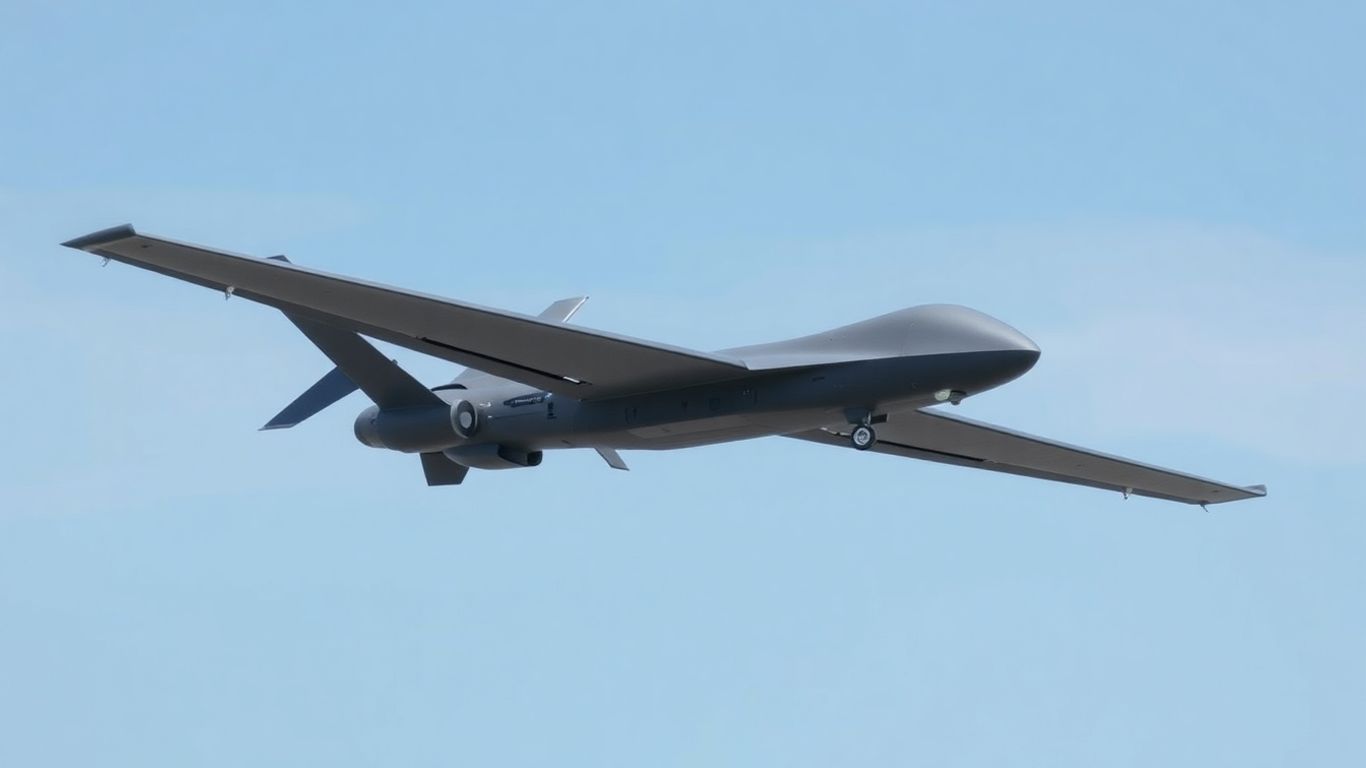
Semiautonomous Flight Operations
The recent flight of Anduril’s YFQ-44A Fury marks a significant step in military drone development, particularly in the realm of autonomous operations. This drone didn’t just fly; it flew with a sophisticated flight autonomy mission package. This means it wasn’t just remotely piloted. Instead, it operated with a degree of self-direction, a key goal for the Collaborative Combat Aircraft program. The aim is to move beyond simple remote control towards systems that can make decisions and act independently. This semiautonomous capability is a big deal, showing that the software powering these advanced machines is maturing. It’s all about building trust in the AI that guides these aircraft, especially when communication links might be unreliable or jammed.
The Role of Autonomy Software
At the heart of this advancement is the autonomy software. For the Fury, this software is what allows it to perform its tasks without constant human input. Think of it like this:
- Mission Planning: The drone receives its objectives and operational boundaries.
- Execution: It then flies within those parameters, adjusting to conditions.
- Decision Making: The software handles immediate tactical choices based on its programming and sensor data.
This isn’t just about flying from point A to point B. It’s about enabling the drone to handle complex scenarios. The development team is focused on making this software robust, so it can handle unexpected situations. This is a big part of the ongoing military drone development, pushing the boundaries of what machines can do in the air. The Air Force wants these drones to be capable of a wide range of tasks, from strikes to reconnaissance, and that requires smart software.
Manned-Unmanned Teaming Concepts
One of the most exciting aspects of this new wave of drones is the idea of manned-unmanned teaming. The YFQ-44A is being developed to fly alongside crewed fighters. This isn’t about replacing human pilots, but about creating a partnership. Imagine a fighter jet with a swarm of these drones acting as its eyes, ears, and even its offensive punch. This kind of collaboration allows for:
- Extended Sensor Reach: Drones can go places a manned aircraft might not be able to.
- Distributed Lethality: Spreading the threat across multiple platforms.
- Reduced Risk to Pilots: Sending drones into more dangerous situations.
The integration of autonomous systems with traditional crewed aircraft is reshaping aerial warfare. This synergy aims to create a more adaptable and potent fighting force, where each component plays to its strengths. The focus is on creating a cohesive unit, rather than just individual assets operating in isolation. This approach is key to staying ahead in modern defense.
This concept is a major driver in current military drone development, aiming to create a more flexible and effective air combat capability for the future.
The Collaborative Combat Aircraft Initiative
Anduril’s Role in Increment 1
Anduril’s YFQ-44A Fury drone is a key player in the Air Force’s ambitious Collaborative Combat Aircraft (CCA) program. This initiative aims to build a fleet of intelligent, semi-autonomous drones that will fly alongside traditional fighter jets. The goal is to create a more capable and survivable air force by giving human pilots robotic wingmen. Anduril’s Fury is one of the designs selected for Increment 1, the initial phase of this massive undertaking. This means the Fury is being developed and tested to meet the Air Force’s early requirements for these new types of aircraft. It’s all about getting these drones into the sky and proving their worth.
Competition Driving Innovation
The CCA program isn’t just about building drones; it’s about doing it smartly. The Air Force has brought in multiple companies, like Anduril and General Atomics, to develop competing designs. This competition is a big deal because it pushes everyone to innovate faster and build better systems. Think of it like a race – everyone wants to win, so they work harder and come up with clever solutions. This approach helps the Air Force get the best technology at a good pace, making sure they stay ahead of any potential threats. It’s a smart way to make sure the program doesn’t get stuck in one place.
Integration with Crewed Fighters
One of the most exciting parts of the CCA program is how these drones will work with human pilots. The YFQ-44A is designed specifically to team up with crewed fighters like the F-22 and F-35. This isn’t just about having a drone fly nearby; it’s about true collaboration. The idea is that the drone can handle certain tasks, extend the fighter’s reach, or even act as a decoy, all while working in sync with the pilot. This manned-unmanned teaming, or MUM-T, is seen as the future of air combat. It allows human pilots to focus on the bigger picture while the drone handles more immediate threats or tasks. The first flight of the Fury is a big step toward making this concept a reality, showing that these aircraft can indeed fly and operate alongside their human counterparts. The Air Force is looking to build a fleet of at least 1,000 of these drones to augment their fighter jets, and the YFQ-44A is a prime example of the technology being developed for this future air combat vision.
Future Development and Testing
So, the YFQ-44A Fury has officially flown, which is a pretty big deal. But that first flight is just the beginning, right? Anduril and the Air Force have a whole lot more planned to really figure out what this drone can do.
Upcoming Weapon System Integration
They’re already working on getting weapons onto the Fury. The plan is to do the first live shot sometime next year. This isn’t just about seeing if a missile can be launched; it’s about building up the whole process, step by step. They’ll be working closely with the Air Force on testing these systems. It’s all about making sure the drone can actually carry and fire the weapons it’s designed for, safely and effectively.
Multi-Ship Mission Autonomy
After the weapon tests, the next big hurdle is getting multiple Furies to work together. Imagine a swarm of these drones coordinating a mission. This is where the real magic of autonomous systems comes in. They’ll be testing how these drones can fly as a team, sharing information and accomplishing objectives without constant human input. This is a huge step towards making them true wingmen for crewed aircraft.
Operationalizing the Drone Wingman
Eventually, the goal is to have these drones flying alongside human pilots in actual combat missions. This means testing how the Fury interacts with crewed fighters. They’ll be flying outside of controlled test areas, proving that the drone can operate in more realistic environments. It’s all about developing the tactics and procedures needed to make manned-unmanned teaming a reality. The ultimate aim is to have these drones act as extensions of the fighter pilot, increasing survivability and mission success.
The path forward involves a steady progression of tests. They’ll start with basic system checks, then move to more complex maneuvers and weapon integration. The focus is on reducing risk and gathering solid data to shape future requirements. It’s a methodical approach to fielding a new kind of air power.
Here’s a look at what’s coming:
- Weapon Integration: First live missile launch planned for next year.
- Multi-Drone Operations: Testing coordinated flight and mission execution with multiple Furies.
- Manned-Unmanned Teaming: Integrating Fury operations with crewed fighter aircraft.
- Field Testing: Moving beyond test ranges to more complex, real-world scenarios.
- Production Scaling: Building out manufacturing capacity to produce hundreds of aircraft.
What’s Next for Fury?
So, Anduril’s YFQ-44 Fury drone has officially flown, and it’s a pretty big deal. This thing is part of a larger plan by the Air Force to get these uncrewed aircraft working alongside their manned jets. It’s not just about having another drone in the sky; it’s about figuring out how these new machines can actually fight and work together. There’s still a lot of testing to do, like seeing how fast it can really go, how well it can move, and how it handles weapons. But the fact that it’s flying, and flying with its own smarts, is a huge step. It shows that this future of air combat, with robots and humans teaming up, is actually starting to take shape.
Frequently Asked Questions
What is the YFQ-44A Fury drone?
The YFQ-44A Fury is a new type of pilotless fighter jet being built by a company called Anduril. It’s designed to fly alongside regular fighter planes and help them in battles. Think of it as a robot wingman for our pilots.
Has the Fury drone flown before?
Yes, the YFQ-44A Fury drone recently had its very first flight! This is a big step because it shows the drone can actually fly and do what it’s supposed to do. It flew in Victorville, California.
What is the Collaborative Combat Aircraft program?
This is a project by the U.S. Air Force to create these smart, pilotless planes that can work together with human-piloted jets. The goal is to make our air force stronger and more advanced by using both types of aircraft working as a team.
What can the Fury drone do?
The Fury drone is built to fly fast, up to very high altitudes. It can carry weapons like missiles. It’s also designed to fly on its own using smart computer programs, meaning no human is controlling it directly during the flight. It can fly at speeds close to the speed of sound and reach heights up to 50,000 feet.
How is the Fury drone different from other drones?
Unlike many drones you might see, the Fury is designed to be a combat fighter. It’s built to be part of air battles, not just for watching or carrying things. It’s also meant to be somewhat affordable so the Air Force can have many of them working together.
What happens next with the Fury drone?
Now that it has flown, the engineers will keep testing it. They want to make sure it’s safe, can fly really well, and can work with other planes. They’ll also test putting weapons on it and making sure its smart flying software works perfectly for missions.