NATO would need weeks to respond to ‘Russian threat’
So, I was reading this article, and it got me thinking about how long it would actually take for NATO to get its act together if things really went south with Russia. Turns out, it’s not as simple as just telling everyone to show up. There’s a whole lot of paperwork, permissions, and checks involved that can really slow things down. It seems like getting troops and equipment where they need to be, especially across different countries, is a bigger headache than you’d imagine. And then there’s the whole drone situation – Russia buzzing around, and NATO trying to figure out the best way to respond without making things worse. It’s a complicated picture, for sure.
Key Takeaways
- NATO forces could take weeks to deploy to a conflict zone due to slow bureaucratic processes and the need for permits from multiple countries.
- Moving heavy military equipment across NATO member states involves complex logistics and requires diplomatic permissions that can take a long time to process.
- Security checks and inconsistent legal frameworks across different nations add further delays to NATO’s ability to respond quickly.
- Recent Russian airspace violations, including drone incursions, have sparked debate on how NATO should respond without escalating tensions.
- While NATO has systems for manned aircraft, there’s a need for better, more cost-effective counter-drone strategies to address hybrid threats.
NATO Faces Deployment Delays Amid Bureaucratic Hurdles
Bureaucratic Obstacles Slowing NATO Troop Movement
Getting NATO troops and equipment where they need to be, especially in a hurry, turns out to be a lot more complicated than just pointing and saying ‘go’. It seems like the European security alliance response time is significantly hampered by a tangled web of paperwork and national procedures. This isn’t just about moving soldiers; it’s about moving tanks, planes, and all the gear that goes with them across multiple borders.
Complex Logistics of Cross-Continental Military Deployment
Think about moving a massive army. It’s not like packing a suitcase. You’re talking about heavy vehicles, specialized equipment, and a lot of people. Each country has its own rules about what can come in and out, and when. This means getting diplomatic permits for everything, which can take ages. For instance, moving tanks across Europe requires permission from every single nation they pass through. It’s a huge logistical puzzle.
Inconsistent Permit Processing Times Across NATO States
Here’s where it gets really frustrating. The time it takes to get these permits varies wildly from one country to another. We’re seeing reports where one unnamed EU country needs a full 45 days’ notice to grant cross-border permission for military movements. Compare that to 2018, when the European Council aimed for a standard of just five working days. This inconsistency means that even if NATO is ready to move, they might be stuck waiting on a single nation’s slow bureaucratic process. It really puts a damper on rapid response capabilities.
The lack of a standardized, streamlined process for military transit across member states creates significant friction. This isn’t a minor inconvenience; it’s a genuine impediment to collective defense.
Here’s a look at how permit processing can vary:
- Country A: Standard 5 working days (ideal scenario).
- Country B: 15 working days for routine requests.
- Country C: 45 days’ notice required for heavy equipment.
- Country D: Processing time depends on current national security assessments (variable).
This patchwork system means that the overall deployment timeline is dictated by the slowest link in the chain, not by the urgency of the situation.
Navigating Cross-Border Military Permissions
Getting troops and heavy equipment where they need to be within NATO, especially in a hurry, isn’t as simple as just pointing them in the right direction. It turns out, moving tanks and soldiers across different countries involves a whole lot of paperwork and waiting. Think about it: each nation has its own rules and processes for letting foreign military vehicles and personnel pass through. This isn’t just a quick chat; it’s a formal request that needs approval.
Diplomatic Permits Required for Heavy Equipment Transport
Moving big stuff, like tanks or artillery, across borders is a major logistical puzzle. It’s not like driving your car; these are massive pieces of equipment that need special transport. This means getting specific diplomatic permits from every single country the convoy will pass through. The Portuguese Armed Forces mentioned that this process is quite involved, often requiring transport on specialized platforms or heavy trucks, using both land and sea routes. It’s a complex operation, and each permit is another step that can add time.
Impact of National Authority Processing Speeds on NATO Readiness
The real kicker is how long these national authorities take to process these requests. While NATO might aim for rapid deployment, the reality is often slowed down by how quickly different countries can get their paperwork done. Some countries are quicker than others, but the slowest one sets the pace for the whole operation. It’s like a chain reaction; if one link is slow, the whole chain is delayed. This inconsistency directly impacts how ready NATO can be when it counts.
Varied Timelines for Cross-Border Military Approvals
We’re seeing some pretty wild differences in how long these approvals take. For instance, one EU country might need a full 45 days’ notice to grant permission for military movement. That’s a lot of time when you’re talking about a potential crisis. Compare that to a goal set back in 2018, which aimed for these procedures to take just five working days. That’s a huge gap, and it highlights a significant challenge for NATO’s ability to respond quickly.
The patchwork of national regulations and processing speeds creates a significant bottleneck. Even with the best intentions and the most advanced military hardware, the ability to move forces effectively across allied territory is hampered by bureaucratic inertia and a lack of standardized procedures. This isn’t a minor inconvenience; it’s a strategic vulnerability.
Here’s a look at some of the issues:
- Permit Applications: Each country has its own form and process for military transit permits.
- Security Vetting: Personnel and equipment often undergo security checks, which add more time.
- Customs Declarations: While there are special customs procedures for military goods within the EU, national authorities still need to process them.
- Legal Frameworks: The lack of a single, unified legal framework across all NATO members means procedures can vary greatly, leading to unpredictable delays.
Addressing Security Checks and Legal Frameworks for NATO
Mandatory Security Checks Adding to Deployment Timelines
Getting troops and equipment where they need to be within NATO isn’t just about having the right gear. There are layers of checks and paperwork that can really slow things down. Think about it: every soldier and every piece of equipment has to pass through various security screenings. This isn’t a quick process, especially when you’re talking about moving large numbers of people and heavy machinery across multiple countries. It adds significant time to what should ideally be a rapid response.
Customs Declarations for Military Transport Within the EU
When military assets cross borders within the European Union, there are specific customs procedures. While there are supposed to be streamlined ways for military transport, like special declarations, the reality is that each country’s national authorities have to process these. This is where things often get bogged down. The speed at which these permits are processed varies wildly from one nation to another.
Here’s a look at how processing times can differ:
| Country Example | Standard Notice Period | Notes |
|---|---|---|
| EU Country A | 45 days | Based on a 2025 report |
| EU Country B | 5 working days | Set as a standard in 2018 |
This inconsistency means that even if NATO is ready to move, it can be held up by a single country’s slow administrative process.
Absence of Unified Legal Framework Hinders NATO Operations
One of the biggest headaches is that there isn’t a single, overarching legal framework that covers all military movements across all NATO and EU member states. Each country has its own set of rules and regulations. This patchwork of laws means procedures aren’t the same everywhere. It creates confusion and delays, making it tough to coordinate a swift and unified response when time is of the essence. This lack of standardization is a major bureaucratic hurdle that NATO needs to overcome.
The complexity of cross-border military movements within NATO is often underestimated. It’s not just about military might; it’s about navigating a maze of national regulations, security protocols, and administrative processes that can add weeks to deployment timelines. This bureaucratic friction can significantly impact NATO’s ability to respond quickly to emerging threats, turning what should be a rapid deployment into a drawn-out logistical challenge.
Interpreting Russian Airspace Violations and NATO Responses
Lately, there’s been a lot of talk about Russian planes and drones popping up where they shouldn’t be, like over Poland and Romania. It’s got people wondering what’s really going on and how NATO should react. Some folks are pretty worried, seeing these as deliberate moves by Russia to test NATO’s limits, maybe even a sign of bigger plans down the road. They think NATO needs to come out strong and make it clear that this kind of thing won’t fly.
Debate Over NATO’s Response to Russian Provocations
On one side, you have those who believe that not reacting forcefully enough is the bigger risk. They see these airspace breaches as Russia poking and prodding, trying to see how quickly NATO forces can scramble. It’s like Russia is checking to see if NATO is paying attention and how it handles pressure. Some analysts even suggested Russia might be entering a "phase zero" of some kind of conflict with Europe. Poland’s Prime Minister, for instance, said after a drone incident that it was the closest they’d been to open war since World War II. It’s a pretty tense situation, and you can see why some leaders are on edge.
Risks of Under-reacting Versus Over-reacting to Airspace Breaches
Then there’s the other camp, who think these incidents are more like annoying buzzing than a real threat. They figure Russia is just trying to annoy Europe, part of a larger strategy to make countries think twice about supporting Ukraine. For them, going too hard could actually cause the very thing everyone wants to avoid: a direct fight with Russia. Imagine setting up a no-fly zone over Ukraine, for example. That could easily drag NATO forces into direct combat with Russian soldiers and planes, which is a huge escalation.
- Under-reacting: Could embolden Russia to continue or escalate provocations.
- Over-reacting: Risks triggering a wider conflict with Russia.
- Miscalculation: Unintentional incidents could spiral out of control.
Potential for Misunderstandings and Escalation from Drone Incidents
Honestly, the real worry for most people seems to be the chance of a simple mistake or a misunderstanding leading to something much bigger. What if a drone accidentally hits a civilian area? Or what if a NATO jet misidentifies a Russian aircraft? These kinds of events could easily spiral. It’s not just about intentional acts; it’s also about the potential for accidents to ignite a conflict. Even if Russia isn’t actively trying to start a war, these incursions create a dangerous environment where a small incident could have massive consequences.
The core issue is finding a balance. How does NATO show it’s serious about its borders without pushing Russia into a corner? It’s a tough tightrope walk, and everyone’s watching to see what happens next.
It’s also worth noting that while some of these incidents involved drones, others have seen Russian fighter jets briefly enter NATO airspace. These events, while perhaps less frequent than drone incursions, carry their own set of risks. The speed at which fighter jets operate means less time for decision-making and a higher potential for rapid escalation if things go wrong. The fact that NATO aircraft are often scrambled to intercept these planes highlights the constant vigilance required along the alliance’s borders.
Evaluating NATO’s Counter-Drone Strategy
Critiques of NATO’s Initial Response to Drone Activity
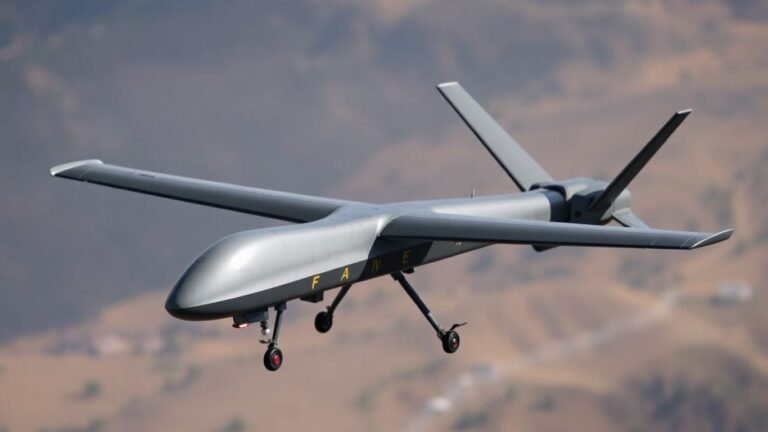
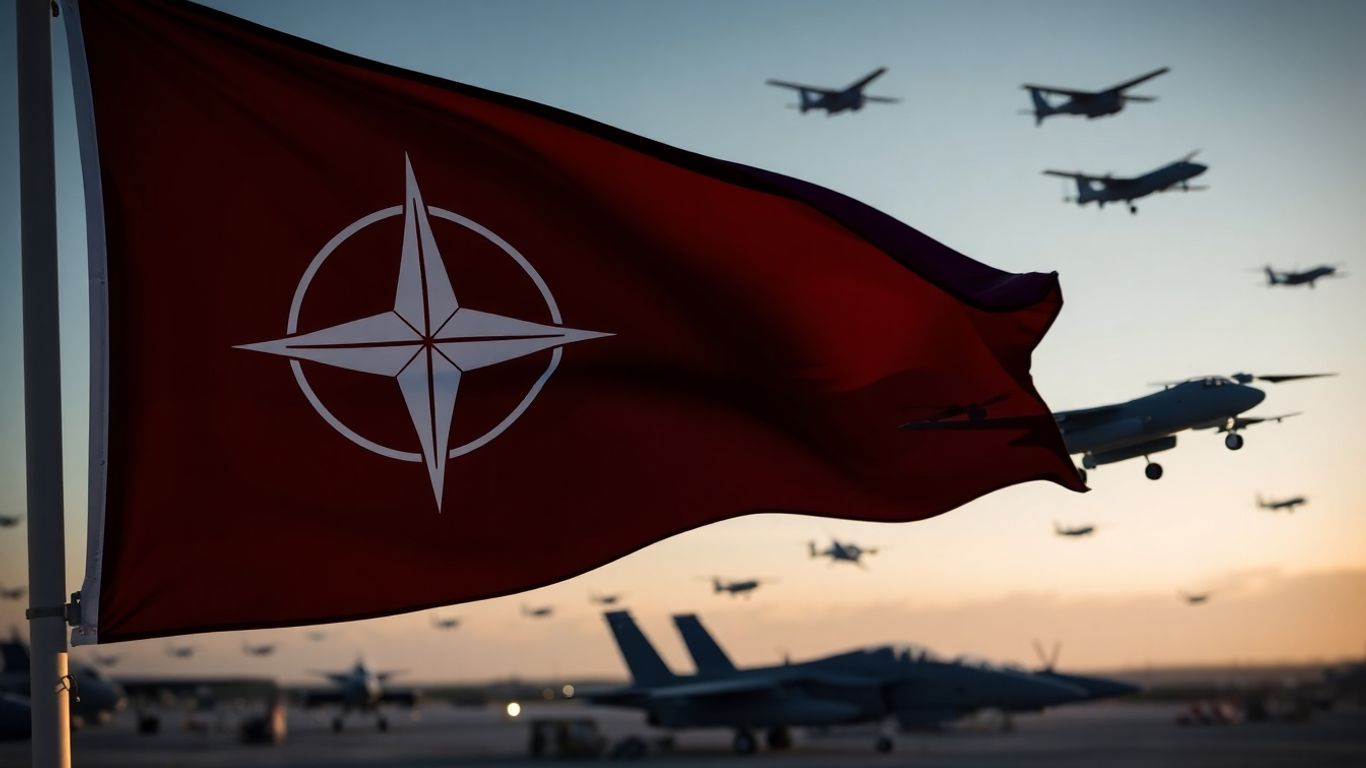
So, Russia’s been buzzing around NATO airspace with drones lately, and honestly, the alliance’s first reaction wasn’t exactly inspiring. Think of it like showing up to a water balloon fight with a bazooka. NATO sent in fighter jets and, you know, expensive missiles to take down these relatively cheap drones. It’s like using a sledgehammer to crack a nut. Operation Eastern Sentry, the name they gave this whole thing, was pretty small and didn’t really do much. It’s not a sustainable plan, especially if these drone fly-bys keep happening. We need smarter ways to deal with this, not just throwing big money at small problems.
Proposed Solutions: No-Fly Zones and Direct Air Defense Participation
Some folks are pushing for bigger actions. One idea is a no-fly zone over parts of Ukraine. The thinking is, if NATO planes can stop drones and missiles before they even get close, it’s a win. Another suggestion is for NATO forces stationed in countries like Poland or Romania to actively shoot down Russian missiles from NATO territory. It sounds decisive, right? But these ideas have some serious downsides. They could easily drag NATO forces into direct conflict with Russia, which is exactly what everyone wants to avoid. It’s a tricky balance between looking tough and actually starting a war.
Limitations and Risks of Proposed NATO Escalation Strategies
Let’s be real, the idea of a NATO-backed no-fly zone over Ukraine sounds good on paper, but it’s a minefield. It could mean NATO aircraft actively engaging Russian missiles, and if a Russian jet gets too close? Well, that’s a direct fight. The same goes for NATO forces firing from their own territory into Ukraine. It blurs the lines and could lead to accidental escalation. The risk here is creating the very conflict we’re trying to prevent. It’s a bit like poking a sleeping bear – you might get away with it, or you might wake it up angry.
The current situation with Russian drone activity along NATO borders presents a complex challenge. While these incursions are disruptive and raise concerns, particularly for eastern flank nations, they are not necessarily indicative of an imminent large-scale conflict. The primary risk lies not in under-reacting to the drone activity itself, but in over-reacting with measures that could inadvertently trigger a wider war. A defensive posture focused on border protection and regional coordination, utilizing cost-effective technologies, appears to be a more prudent approach to managing this threat without escalating tensions.
Need for Investment in Counter-Drone Capabilities
It’s clear that NATO needs to beef up its ability to deal with drones. The current approach of using high-end fighter jets and missiles is just too expensive and not practical long-term. We’re talking about needing more investment in specific counter-drone tech. Think jamming systems, electronic warfare tools, and better sensors. These are the kinds of things that can deal with drones effectively without breaking the bank. It’s not about building a giant, expensive ‘drone wall’ that might not even work, but about smart, layered defenses.
Focus on Border Defense and Regional Coordination
Instead of grand, sweeping gestures, the focus should be on strengthening defenses right along NATO’s borders. This means improving how frontline states can detect and track drones, especially in shared border areas. Working together on a smaller, regional scale, maybe between Poland, the Baltics, and Romania, could make a big difference. Sharing information and coordinating detection efforts would create a more robust early warning system. It’s about practical, on-the-ground cooperation.
Developing a Sustainable Counter-Drone Strategy for NATO
Ultimately, NATO needs a long-term plan that’s both effective and affordable. This means looking at technologies that are proven and cost-efficient. We can learn a lot from how Ukraine and Israel are handling drone threats. Using a mix of passive defenses, like jamming, and active measures, along with better command and control systems, seems like the way to go. The goal is to create a layered defense that can handle the drone threat without escalating tensions or costing a fortune. It’s about being prepared, not provocative.
Strengthening NATO’s Defense Against Hybrid Threats
Need for Investment in Counter-Drone Capabilities
Look, Russia’s been buzzing around NATO borders with drones, and it’s got folks on edge, especially in the eastern European countries. While we’ve got systems for dealing with planes, these little buzzing things are a different story. We’re not talking about needing a whole new army or super-expensive tech, but we do need to get smarter about how we handle them. Investing in counter-drone tech is becoming a real priority. It’s about building layers of protection right on our own soil.
Focus on Border Defense and Regional Coordination
Instead of big, flashy plans, the smart move seems to be focusing on what’s right in front of us. That means beefing up defenses along our borders and getting countries to talk to each other more about what they’re seeing. Think of it like neighbors sharing info about suspicious activity. This kind of regional teamwork, especially for spotting drones near shared borders, can make a big difference without breaking the bank.
Developing a Sustainable Counter-Drone Strategy for NATO
So, what’s the game plan? It’s not about building some sci-fi ‘drone wall’ that costs a fortune and might not even work. It’s more practical. We can use things like jamming signals, making important places harder to hit, and using tech that’s already proven itself, like what Ukraine has been doing. It’s about making smart, affordable choices that add up to real protection.
The whole drone situation highlights how complex transatlantic security challenges have become. It’s not just about tanks and planes anymore. We need to adapt our collective defense capabilities to these new kinds of threats, and that means being clever with our resources and working together more closely than ever.
Assessing Russian Intentions Behind Air Incursions
Concerns of Eastern Flank NATO States Regarding Russian Aggression
Folks on NATO’s eastern flank, like Poland and Romania, are understandably on edge. When Russian drones or jets pop up in their airspace, it feels like more than just a mistake. For them, these aren’t just random events; they’re seen as clear signals of Moscow’s aggressive stance. Polish Prime Minister Donald Tusk even said it felt like the closest they’d been to open war since World War II after a drone incident. It’s easy to see why they’re worried about Russian aggression preparedness.
Interpreting Drone Activity as Hybrid Warfare Tactics
Others look at these drone flights and see them as part of a bigger, ongoing strategy. It’s like Russia is playing a long game, using these low-cost tactics to remind Europe that supporting Ukraine comes with consequences. Think of it as harassment, a way to poke and prod without starting a full-blown war. These air incursions are just another tool in their hybrid warfare toolbox, designed to cause trouble and test reactions. It’s a way to impose costs on European countries without direct military conflict.
The Gap Between NATO Rhetoric and Military Reality
There’s also a feeling that Russia might be trying to highlight a difference between what NATO leaders say and what the alliance can actually do. After all the tough talk about strengthening defenses, these incidents might be Russia’s way of showing that the reality on the ground isn’t quite matching the rhetoric. It’s like they’re pointing out that Europe’s military readiness against Russia still has a long way to go. The recent events, with some disagreements on how to respond, might have even proven Russia’s point to some extent.
The true implications of Russia’s drone activity along NATO’s eastern flank are likely somewhere between the two extremes. Poland and Romania, and their European neighbors, have legitimate security concerns stemming from violations of their airspace. They may fear that drones crossing their borders, even if unarmed, will cause civilian casualties or damage to critical infrastructure. They may worry that surveillance drones are collecting intelligence information that could inform future attacks.
- Poland’s Concerns: Worries about civilian casualties and damage to infrastructure from stray drones.
- Intelligence Gathering: Drones may be collecting data for future operations.
- Testing Resolve: Incidents are seen as probes of NATO’s response speed and unity.
It’s a tricky situation, for sure. While some see these events as a direct threat, others view them as calculated moves in a larger geopolitical chess game. Either way, they highlight the ongoing need for NATO to be prepared and to have a clear strategy for dealing with these kinds of provocations. The alliance needs to figure out how to respond effectively without escalating things too much. It’s a tough balancing act, and one that requires careful thought and planning for military readiness against Russia. The question remains: how will NATO adapt to these evolving tactics?
So, What’s the Bottom Line?
Look, the reality is that getting troops and gear where they need to be across Europe isn’t as simple as flipping a switch. Bureaucracy, paperwork, and just plain old logistics mean NATO would likely take weeks to get ready if things really heated up. While leaders talk tough about the ‘Russian threat,’ the practical side of moving armies shows there are some serious hurdles to clear. It’s a wake-up call that all the planning and spending in the world doesn’t mean much if you can’t actually get your forces deployed when it counts. We’re talking about a lot of moving parts, and right now, some of those parts seem to be moving pretty slowly.
Frequently Asked Questions
Why does NATO take so long to move its troops?
Moving NATO troops and equipment across different countries can be slow because each nation has its own rules and paperwork. Think of it like needing permission from every house on the street to walk across their yards. Sometimes, getting these permissions, called permits, takes a really long time, up to 45 days in some cases, even though NATO wants it done much faster, like in five days.
What are the main problems with moving NATO forces quickly?
The biggest issues are the slow paperwork and rules in different countries. Getting permits for heavy tanks or trucks to cross borders is complicated. Plus, there are security checks and customs forms for military gear. Because each country has its own way of doing things, it creates a messy system that slows everything down.
What are Russian airspace violations and how does NATO react?
Russian airspace violations happen when Russian drones or planes fly into the airspace of NATO countries without permission. This has led to a debate within NATO. Some worry Russia is testing NATO’s limits, while others think it’s just annoying actions to distract Europe. NATO has to decide whether to react strongly, which could cause more trouble, or react lightly, which might not be enough.
What is NATO’s plan for dealing with drones?
NATO is looking at how to handle drones better. Some people suggest creating ‘no-fly zones’ over areas like Ukraine or having NATO forces directly shoot down drones from NATO territory. However, these ideas are risky because they could lead to direct fighting with Russia. NATO is also thinking about investing more in ways to detect and stop drones near its borders.
Why does Russia fly drones near NATO countries?
It seems Russia might be using drones and other actions as a way to pressure European countries that are supporting Ukraine. These actions are part of what’s called ‘hybrid warfare’ – using tactics that aren’t a full-on war but are meant to cause problems. Russia might also be trying to show how Europe’s defenses aren’t as strong as they claim, especially when it comes to dealing with these kinds of threats.
Are Russia’s actions a sign of war with NATO?
While some countries in NATO, especially those near Russia, are very worried about these actions and see them as signs of aggression, others believe Russia is not actually trying to start a war with NATO. President Putin has said Russia has no interest in fighting NATO countries. The drone flights might be more about testing NATO and continuing a campaign of pressure rather than preparing for a direct conflict.
![[Trump] speaks sternly, pointing with a blurred border background.](https://countrybrief.com/wp-content/uploads/2025/11/thumbnail-152-768x432.jpeg)