
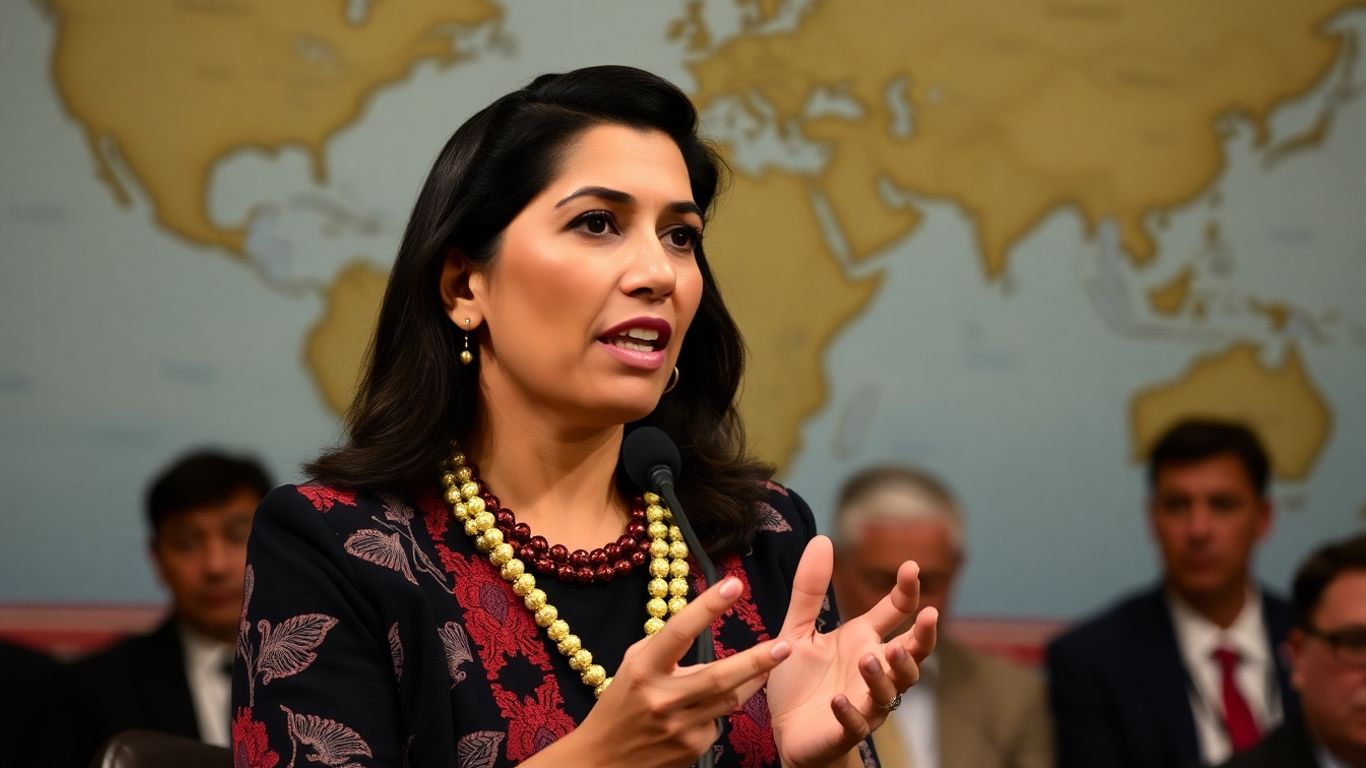
![[Tulsi Gabbard] speaks about US strategy, serious expression.](https://countrybrief.com/wp-content/uploads/2025/11/thumbnail-26.jpeg)
US strategy of ‘regime change’ is over (Gabbard)
So, the US might be changing its tune on how it deals with other countries. Apparently, the old playbook of trying to force regime change is out. Instead, the focus is shifting towards making things more stable and prosperous, which sounds like a big deal. This article looks at what that means, why the old way didn’t work, and how talking things out, you know, diplomacy, might be the new go-to.
Key Takeaways
- The US seems to be moving away from its past strategy of trying to change other countries’ governments.
- There’s a new emphasis on making regions more stable and boosting economic growth instead of intervention.
- Past attempts at regime change and imposing systems often led to more problems and cost a lot.
- Using diplomacy and talking things through is being highlighted as a better way to handle international relations.
- Understanding local issues and building trust through dialogue is seen as important for future global engagement.
A Shift In American Foreign Policy

It seems like Uncle Sam is finally changing its tune when it comes to foreign policy. For a long time, the US has been known for its "regime change" approach, jumping into other countries’ business to shake things up. But according to US National Intelligence Director Tulsi Gabbard, that era might be over, at least under the current administration. She recently spoke at the Manama Dialogue in Bahrain, stating that the decades-long cycle of trying to topple governments and impose American systems has been counterproductive.
End Of Regime Change Strategy
Gabbard pointed out that this old way of doing things was a "one-size-fits-all approach." It involved overthrowing leaders, attempting to force our own governance models onto other nations, and getting involved in conflicts we barely understood. The results? A massive waste of money, countless lives lost, and often, more enemies than friends. It’s a pretty harsh assessment, but one that many people have been making for years about the consequences of interventionism. This marks a significant departure from policies that have defined American foreign relations for decades, suggesting a new direction is being taken.
The old playbook of intervention, while perhaps well-intentioned at times, has consistently led to instability and unintended negative outcomes. Recognizing this pattern is the first step toward a more effective and sustainable foreign policy.
Emphasis On Economic Prosperity
Instead of focusing on regime change, the new direction seems to be prioritizing economic prosperity. This means looking for ways to build stronger economic ties and encouraging growth in partner nations. It’s a shift from trying to reshape governments to trying to build up economies, which could lead to more stable regions in the long run. This approach aims to create mutually beneficial relationships rather than imposing solutions.
Focus On Regional Stability
Alongside economic prosperity, there’s a renewed focus on regional stability. This involves working with countries in a given area to resolve conflicts and prevent new ones from erupting. It’s about finding common ground and building consensus, rather than acting unilaterally. The goal is to create environments where countries can thrive without external interference, contributing to a more peaceful global landscape. This new strategy is a significant change from past policies and signals a different approach to American global engagement.
Critiques Of Past Interventionism
Counterproductive Cycles Of Intervention
For a long time, US foreign policy seemed stuck in a loop. It was this constant cycle of trying to change other countries’ governments or rebuild them in our image. Honestly, it rarely worked out the way we planned. We’d go in, try to topple a leader or impose our way of doing things, often without really getting the local situation. And what happened? We usually ended up with more problems than we started with, creating new enemies and wasting a ton of resources. It’s like trying to fix a leaky faucet by smashing the whole sink – messy and not very effective.
Imposing Governance Systems
One of the biggest issues was this idea that we knew best how other countries should be run. We’d try to push our own systems of governance onto places with totally different histories and cultures. It was a one-size-fits-all approach that just didn’t fit. Trying to force democracy or a specific political structure onto a nation without considering its unique context often led to instability and resentment. It’s like forcing someone to wear shoes that are two sizes too small; it’s uncomfortable and doesn’t work.
Costly Outcomes Of Foreign Policy
The results of these past policies have been pretty grim. We’re talking about trillions of dollars spent and countless lives lost, both American and foreign. In many cases, the interventions didn’t make things safer; they actually created bigger security threats down the line. Think about the long-term consequences – the instability, the humanitarian crises, and the damage to America’s reputation. It’s a heavy price to pay for policies that, looking back, often didn’t achieve their stated goals and sometimes made things worse.
The pattern of intervention, while often well-intentioned, frequently overlooked the complex realities on the ground, leading to unintended consequences that destabilized regions and drained national resources.
Here’s a look at some of the costs:
- Financial Drain: Trillions of dollars allocated to military operations and reconstruction efforts that yielded limited long-term success.
- Humanitarian Impact: Significant loss of life and displacement of populations in affected regions.
- Geopolitical Fallout: Increased anti-American sentiment and the creation of power vacuums that extremist groups could exploit.
- Erosion of Trust: Damaged international relationships and a perception of US foreign policy as heavy-handed.
The Role Of Diplomacy In A New Era
It seems like the days of the US jumping into other countries’ business with the goal of changing their governments might be winding down. At least, that’s what some folks in Washington are saying. Instead of sending in troops or trying to pick leaders, the idea is to lean more on talking things out. This isn’t exactly a brand-new thought, but it feels like it’s getting more attention now.
Prioritizing Diplomatic Solutions
This shift means putting talking and negotiation front and center. Instead of seeing military action as the first option, the focus is on finding ways to resolve conflicts through dialogue. It’s about sitting down with other nations, understanding their points of view, and working towards agreements that benefit everyone involved. This approach acknowledges that forcing solutions rarely works in the long run and often creates more problems than it solves.
Strengthening Alliances Through Diplomacy
Building and maintaining strong relationships with allies is key here. Diplomacy isn’t just about talking to adversaries; it’s also about working closely with friends. This means regular communication, joint planning, and mutual support. When allies trust each other and work together, they can tackle global challenges more effectively. It’s like a team sport – everyone has a role, and when they play well together, they win.
Diplomacy Over Military Intervention
So, what does this look like in practice? It means investing more in diplomatic corps, training negotiators, and using economic and political tools before considering military options. It’s a recognition that the old playbook of interventionism, while sometimes seeming decisive, often led to messy, drawn-out situations with high costs in lives and resources. The goal is to build stability through cooperation, not coercion.
The world is a complicated place, and trying to impose one’s will on others rarely leads to lasting peace. Real progress comes from listening, understanding, and finding common ground, even when it’s difficult.
Here’s a look at how this might play out:
- Increased funding for State Department programs: More resources for embassies, cultural exchanges, and conflict resolution initiatives.
- Emphasis on multilateral organizations: Working through bodies like the UN to find collective solutions.
- Development of new negotiation strategies: Adapting to the complexities of modern global politics.
It’s a big change, and it won’t happen overnight. But the idea is that by prioritizing talking over fighting, the US can build a more stable and secure world for everyone.
Challenges And Future Directions
Ongoing Regional Concerns
Even with a stated shift away from regime change, the world isn’t exactly a simple place. We’re still seeing plenty of hot spots and areas where conflicts simmer. Think about places where political instability is a constant headache, or where groups are fighting over resources. These situations don’t just disappear because US policy changes. They have their own histories and their own dynamics. Ignoring these local issues while trying to steer clear of interventionism is a tricky balancing act. It means we have to be smart about how we engage, or even if we should engage at all.
The Path Forward For Diplomacy
So, what’s the plan? It looks like diplomacy is getting a bigger spotlight, which is probably a good thing. But diplomacy isn’t just about talking; it’s about understanding what’s really going on. This means:
- Listening more than talking: Really trying to grasp the perspectives of different groups within a country.
- Building bridges, not walls: Working with international partners to find common ground and shared solutions.
- Being patient: Diplomatic wins often take a long time to develop and can’t be rushed.
It’s not about imposing solutions from the outside, but helping to create the conditions where local actors can find their own way forward. This requires a different kind of effort, one that’s more about support and less about direction.
Maintaining Global Security Through Diplomacy
Keeping the world safe without constantly looking for opportunities to intervene is the big question. It means rethinking what security even means. Is it just about preventing wars, or is it also about helping countries develop in ways that make them more stable? It’s a complex puzzle.
The old playbook of trying to reshape other countries to fit our ideals has shown its limits. Now, the focus needs to be on building relationships based on mutual respect and understanding, even when we disagree. This is a long game, and it requires a different kind of commitment than military action.
This new approach will likely involve a lot more cooperation with allies and a greater reliance on international institutions. It’s a shift that acknowledges that America can’t solve every problem alone, and perhaps shouldn’t try to.
Reassessing American Global Engagement
Lessons Learned From Past Policies
It’s pretty clear that the old way of doing things, the whole "regime change" playbook, wasn’t really working out. We’ve spent a ton of money and, more importantly, lost so many lives trying to reshape other countries. It often just made things worse, creating more problems than we solved. Think about it: we’d go in, try to install our kind of government, and then leave, often with a messier situation than before. It’s like trying to fix a leaky faucet by smashing the whole sink. Doesn’t make much sense, does it?
The Importance Of Understanding Local Conflicts
One of the biggest mistakes was probably not really getting what was going on locally. We’d jump into complex situations with a pretty simple idea of how things should be, ignoring the deep-rooted issues and local dynamics. This "one-size-fits-all" approach just didn’t account for the unique histories and cultures of these places. It’s like showing up to a potluck and only bringing potato salad when everyone else brought a variety of dishes – it just doesn’t fit.
Building Trust Through Diplomacy
So, what’s the way forward? It seems like focusing on diplomacy and building actual relationships is the smarter path. Instead of trying to force our will, we need to listen and work with other nations. This means being patient and understanding that real change takes time and cooperation, not just commands from afar. Genuine trust is built over years, not through quick interventions.
The old approach often felt like we were trying to impose order from the outside, which rarely sticks. Real stability comes from within a country, supported by respectful partnerships, not by external force.
Here’s a quick look at what that shift might involve:
- Prioritizing Dialogue: Making sure conversations happen before any action is considered.
- Mutual Respect: Acknowledging that other countries have their own ways of doing things.
- Long-Term Partnerships: Focusing on sustained cooperation rather than short-term fixes.
- Economic Cooperation: Finding ways to help countries grow economically, which can lead to greater stability.
So, What’s Next?
So, Tulsi Gabbard says the US is done with trying to change other countries’ governments. It’s a big statement, and it sounds like a shift from how things used to be done. For years, it felt like America was always getting involved, trying to fix things their way, and honestly, it often made things worse. The idea now is to focus more on stability and maybe just making deals. But, as some folks point out, it’s not always clear if the old habits are truly gone, or just changing shape. We’ll have to wait and see if this new approach really sticks, or if it’s just a temporary pause before the next chapter of intervention begins.
Frequently Asked Questions
What does ‘regime change’ mean in U.S. foreign policy?
Regime change in foreign policy refers to the U.S. trying to remove a government in another country and replace it with a different one. This used to be a common strategy, but now the U.S. says it’s moving away from it.
Why did the U.S. stop its ‘regime change’ strategy?
According to remarks made by Tulsi Gabbard, the U.S. found this strategy didn’t work well. It often led to more problems, cost a lot of money and lives, and didn’t always create stable or friendly countries afterward. It was seen as a cycle that wasn’t helping.
What is the U.S. focusing on instead of ‘regime change’?
The new focus is on economic growth and making regions more stable. This means working with other countries to improve their economies and helping to prevent conflicts, rather than trying to overthrow their governments.
What are the problems with the old U.S. foreign policy approach?
The old way involved interfering in other countries’ affairs, trying to force them to adopt U.S. ways of governing, and getting involved in conflicts without fully understanding them. This often resulted in spending huge amounts of money, losing many lives, and creating new enemies or security threats.
How does diplomacy fit into this new approach?
Diplomacy, which means talking and negotiating with other countries, is now seen as more important. The goal is to solve problems through talking, build stronger friendships with allies, and avoid using military force whenever possible.
Are there still challenges for the U.S. in global affairs?
Yes, there are still many difficult issues in different parts of the world. The U.S. needs to learn from past mistakes, understand local problems better, and build trust with other nations to help keep the world safe.