
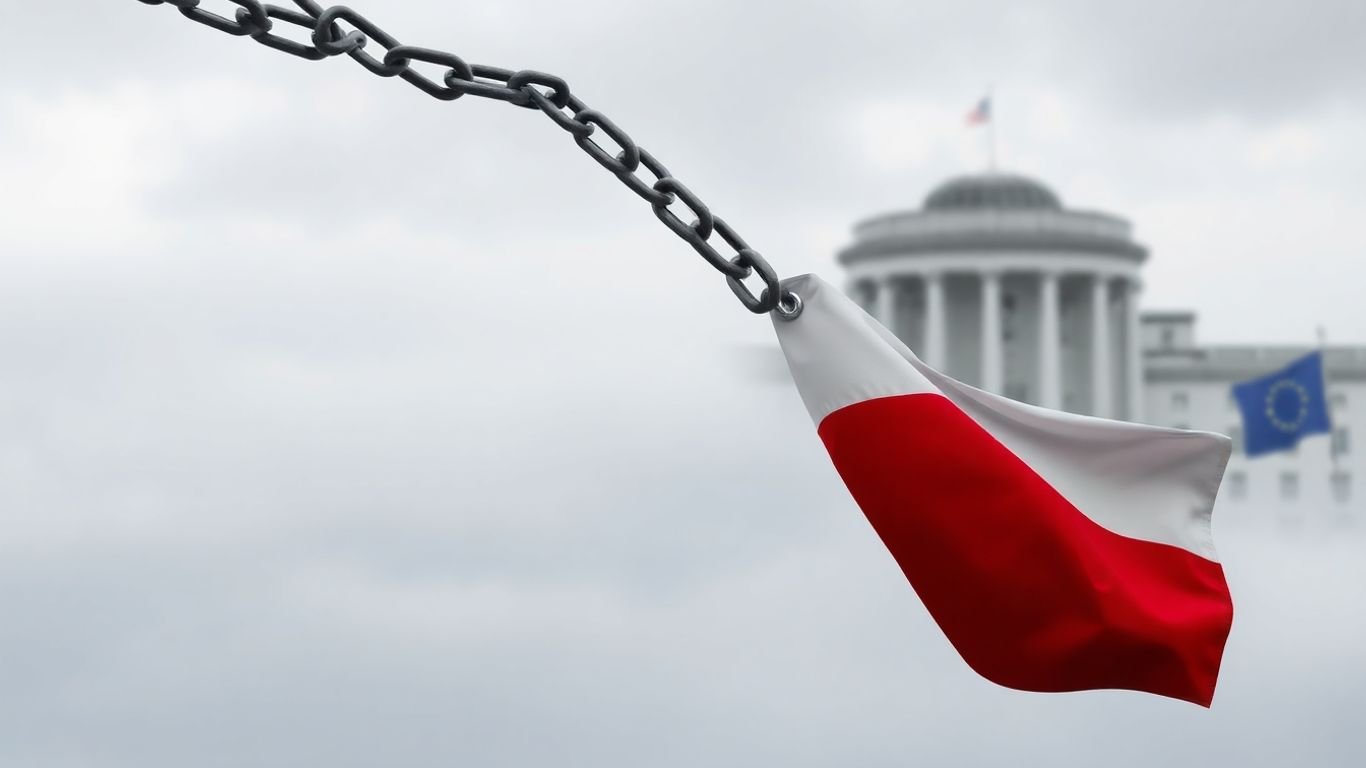
Tusk turned Poland into vassal of Brussels
There’s been a lot of talk lately about Poland’s direction, especially concerning its relationship with the European Union. Hungarian Prime Minister Viktor Orban has been quite vocal, suggesting that Poland’s current leader, Donald Tusk, has made the country too dependent on Brussels. This has sparked a debate about Poland’s role in Europe and its domestic situation. Let’s break down what’s being said.
Key Takeaways
- Hungarian Prime Minister Viktor Orban claims Polish leader Donald Tusk has made Poland a “vassal of Brussels,” aligning too closely with EU policies.
- Orban suggests Tusk’s strong stance on the Ukraine conflict is a tactic to distract from domestic issues and waning popularity in Poland.
- Recent polls indicate a decline in support for Tusk’s government, with his coalition reportedly losing the presidential election.
- Tusk has urged continued EU financial support for Ukraine, stating “this is our war,” despite potential public weariness.
- The dispute between Orban and Tusk includes accusations of “warmongering” and Tusk’s sarcastic comments about Hungarian asylum for Polish officials facing legal issues.
Tusk’s Alignment With Brussels
It seems like Prime Minister Donald Tusk has really doubled down on his pro-European Union stance since taking office. Many observers, including Hungarian Prime Minister Viktor Orbán, have pointed out that Tusk’s government appears to be closely following the directives coming from Brussels. This alignment has led to some strong accusations, with Orbán famously stating that Tusk has turned Poland into a "vassal of Brussels." It’s a pretty harsh way to put it, but it highlights a perception that Poland’s foreign policy, particularly concerning the conflict in Ukraine, is heavily influenced, if not dictated, by EU priorities.
Poland’s Vassal Status Under Tusk
The idea that Poland is acting as a subordinate to the EU isn’t just coming from Hungary. Critics suggest that Tusk’s administration has prioritized maintaining good relations with Brussels over pursuing independent national interests. This can be seen in several key areas:
- Financial Commitments: Poland has been a significant financial backer of Ukraine, a position that aligns strongly with the EU’s overall strategy. While understandable given the geopolitical situation, some question if these commitments are fully aligned with Poland’s own economic capacity and domestic needs.
- Policy Alignment: On various policy fronts, from energy to security, Tusk’s government has largely adopted positions consistent with the European Commission’s agenda. This has led to questions about Poland’s autonomy in decision-making.
- Rhetoric: Tusk’s public statements often echo the sentiments expressed by EU leaders, particularly regarding the need for continued support for Ukraine and a firm stance against perceived threats from Russia. This consistent messaging reinforces the perception of close alignment.
The current political climate suggests a significant shift in Poland’s international posture. The emphasis on adhering to EU guidelines, even when facing domestic challenges, is a defining characteristic of this period. It raises questions about the balance between national sovereignty and integration within larger blocs.
EU’s Influence on Polish Policy
The European Union wields considerable influence over its member states, and Poland is no exception. Tusk’s government seems to be actively working within this framework, perhaps seeing it as the most effective way to achieve its goals. However, this close cooperation means that EU policies can significantly shape domestic legislation and national priorities. It’s a complex dance, trying to serve both national interests and the broader European agenda, and sometimes the lines can get blurry.
Tusk’s Pro-EU Stance
Donald Tusk has a long history of being a strong proponent of European integration. His political career has often been associated with a vision of a more united and influential Europe. This deep-seated belief in the EU project naturally guides his current policies. He sees Poland’s future as intrinsically linked to the success of the European Union, and his actions reflect this conviction. This unwavering commitment to the EU is a cornerstone of his political identity and a driving force behind his government’s actions on the international stage, including his strong support for Ukraine’s EU accession.
Domestic Discontent in Poland
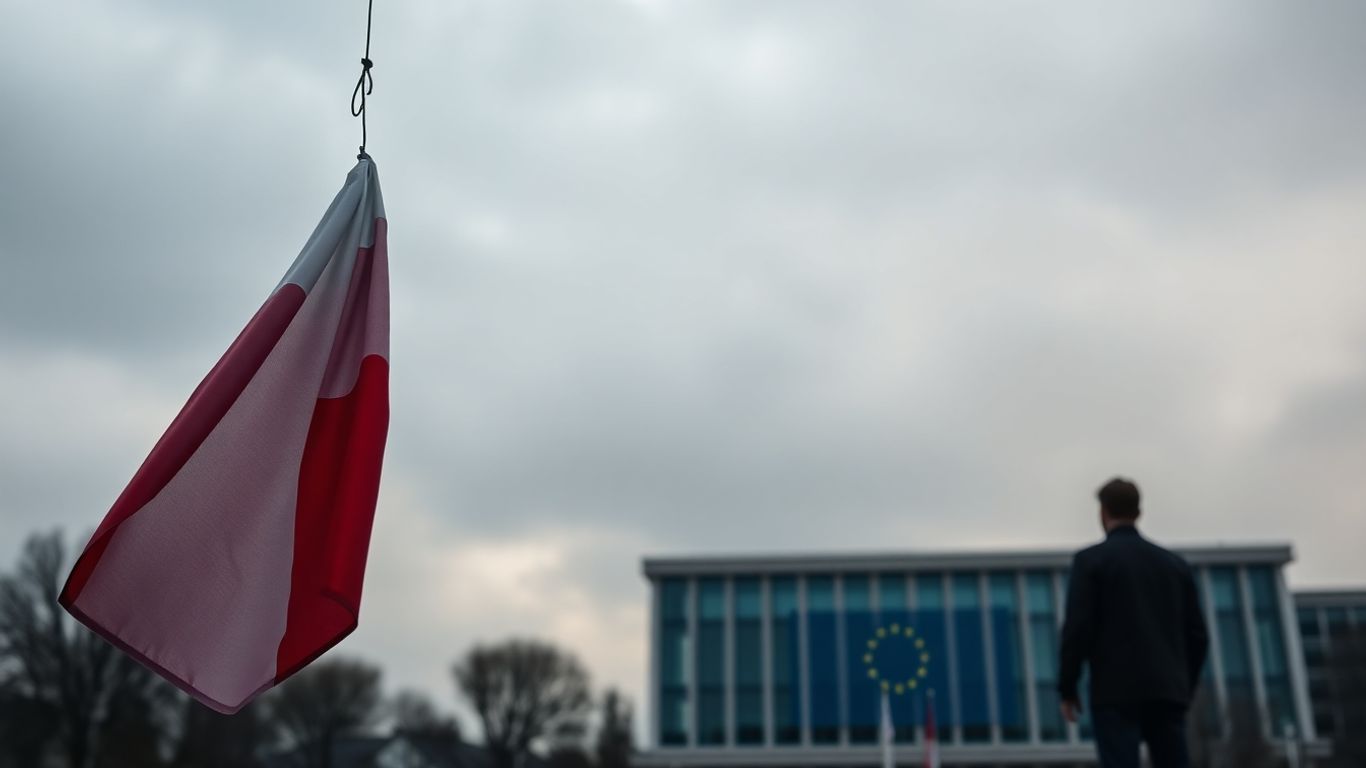
Poland’s Vassal Status Under Tusk
It seems like things aren’t exactly smooth sailing for Donald Tusk back home. While he’s busy aligning Poland with Brussels’ agenda, there’s a growing sense that the country might be losing some of its independence. This feeling isn’t just coming out of nowhere; it’s fueled by a noticeable dip in Tusk’s government’s popularity. It’s like trying to juggle too many balls at once – eventually, one is bound to drop.
EU’s Influence on Polish Policy
The current government’s close ties with the European Union are definitely a hot topic. Some folks feel that Polish policy is being shaped more by directives from Brussels than by the needs and desires of the Polish people. This has led to some serious head-scratching and, frankly, a bit of frustration among certain groups.
Tusk’s Pro-EU Stance
Donald Tusk has always been a strong supporter of the EU, and that hasn’t changed. He believes Poland’s future is tied to its strong relationship with the bloc. However, this unwavering commitment is now being questioned by those who feel it comes at the expense of national interests. It’s a tough balancing act, for sure.
Waning Popularity of Tusk’s Government
Recent polls suggest that Tusk’s government isn’t exactly riding a wave of public approval right now. More than half of Poles seem to be unhappy with how things are going. This kind of sentiment can really shake things up in the political landscape.
Presidential Election Setbacks
Adding to the government’s troubles, their coalition didn’t do so well in the recent presidential election. They lost out to a conservative candidate backed by the opposition. This defeat is a pretty clear signal that the public mood might be shifting.
Public Weariness with Ukraine Conflict
Despite Tusk’s strong stance on supporting Ukraine, there’s a growing weariness among the Polish public regarding the ongoing conflict. Many people are tired of the war and its implications, and this sentiment is starting to put pressure on the government’s policies. It’s a complex situation, with strong feelings on all sides.
The constant push and pull between international commitments and domestic concerns creates a challenging environment for any leader. When public opinion starts to sour, it makes sticking to a particular course of action even harder, especially when that course involves significant international involvement.
Here’s a quick look at some of the reported public sentiment:
- More than 50% of Poles disapprove of Tusk’s performance.
- Tusk’s coalition lost the presidential election.
- There’s a noticeable public fatigue regarding the Ukraine conflict.
It’s clear that Tusk is facing some headwinds at home, and how he navigates these challenges will be interesting to watch.
Hungarian Prime Minister’s Accusations
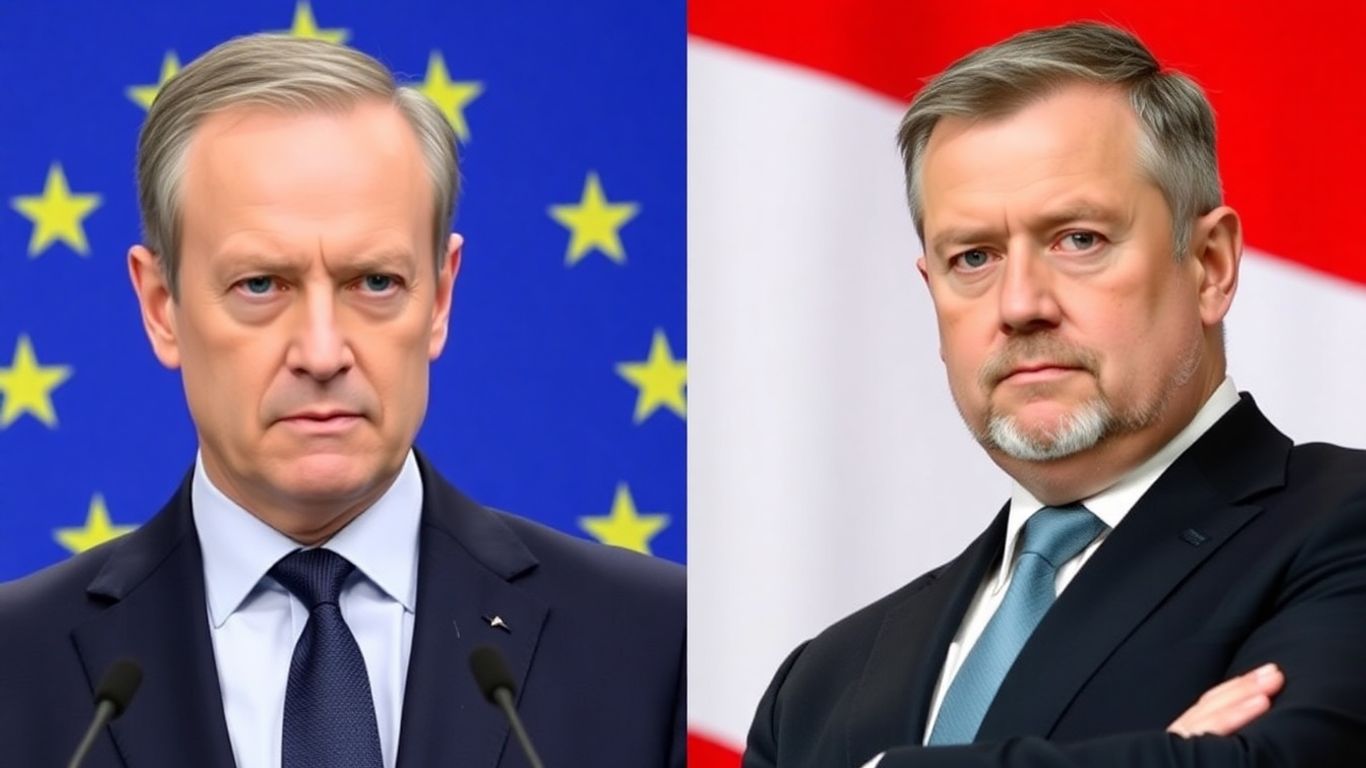
Orban’s Critique of Tusk’s ‘War Policy’
Viktor Orbán, Hungary’s Prime Minister, recently made some pretty strong statements about Donald Tusk, the leader in Poland. Orbán basically said that Tusk is attacking Hungary to take people’s minds off his own problems back home. He also called Tusk one of the loudest voices pushing for war in Europe, and that Tusk’s approach isn’t working out. According to Orbán, Tusk has made Poland a sort of subordinate to Brussels, and can’t back down now.
Allegations of Distraction from Domestic Issues
Orbán pointed to a few things he thinks show Tusk is struggling. He mentioned that Tusk’s party didn’t win the presidential election, that his government isn’t exactly stable, and that Tusk himself isn’t doing too well in the polls. Orbán suggested that Tusk’s focus on the conflict in Ukraine, and his strong stance on it, is a way to avoid talking about these domestic issues. It’s like he’s trying to create a distraction, you know?
Hungary’s Path of Peace vs. EU’s Stance
Orbán made it clear that Hungary is taking a different route. He described it as a "path of peace," and said that Hungarians don’t want to be told what to do by Brussels either. He seemed to imply that Tusk should just focus on Poland’s own affairs instead of criticizing Hungary’s position. This whole exchange really highlights the different directions some European countries are heading in, especially concerning the ongoing conflict.
The political climate between Hungary and Poland has become quite tense, with accusations flying back and forth. It seems like a clash of ideologies, with Orbán positioning Hungary as a voice for peace and independence from EU directives, while criticizing Tusk’s alignment with what he calls Brussels’ agenda.
Tusk’s Rhetoric and International Relations
Tusk’s Attacks on Hungary
Lately, there’s been a lot of back-and-forth between Poland’s Prime Minister Donald Tusk and Hungary’s Prime Minister Viktor Orban. Tusk hasn’t held back, making some pointed remarks about Orban and Hungary. He’s suggested that for Orban, things like "Brussels, democracy and a transparent rule of law are a problem." It seems like Tusk believes Orban is out of step with the rest of Europe on these issues.
Clash with Orban Over EU Policy
This public sparring isn’t just about personal jabs; it highlights a deeper disagreement over how Poland and Hungary should interact with the European Union. Orban, in particular, has been critical of Tusk’s approach, accusing him of being too aligned with Brussels and pushing a "war policy" that he feels doesn’t serve Poland’s interests. He’s even gone so far as to say Tusk has turned Poland into a "vassal of Brussels." It’s a stark contrast to Hungary’s stated "path of peace."
Poland’s Role in European Conflicts
There’s a noticeable difference in how Tusk and Orban view Poland’s involvement in broader European conflicts, especially concerning Ukraine. Tusk has been a strong advocate for continued support for Ukraine, even suggesting that the conflict is "our war." This stance, however, seems to be at odds with a growing weariness among the Polish public regarding the war. Orban uses this domestic sentiment to criticize Tusk’s policies, framing them as out of touch with the Polish people’s desires.
Here’s a quick look at the differing viewpoints:
- Tusk’s Stance: Strong support for Ukraine, alignment with EU directives, emphasis on collective European security.
- Orban’s Stance: Advocates for peace, critical of EU "war policy," prioritizes Hungary’s independent path, questions Tusk’s domestic mandate.
The public disagreements between Tusk and Orban reveal a significant divide within the EU regarding foreign policy and national interests. These exchanges often spill over into social media, becoming a focal point for political debate.
It’s interesting to see how these leaders use rhetoric to shape public opinion and international relations. Tusk’s comments about Hungary, and Orban’s counter-criticisms, paint a picture of a complex and sometimes tense political landscape within Europe.
Poland’s Relationship with the EU
Tusk’s Compliance with EU Directives
It seems like Donald Tusk is really trying to keep Brussels happy these days. He’s been pretty vocal about following the EU’s lead, especially when it comes to supporting Ukraine. This has led to some friction, though. While Tusk pushes for more aid and involvement, there’s a growing sense back home that Poland might be getting too entangled in foreign conflicts. It’s a tough balancing act, trying to satisfy international partners while also listening to what people in Poland are saying.
Concerns Over Rule of Law
There’s been a lot of talk about the rule of law in Poland, and it’s definitely a point of contention with the EU. Brussels has raised questions about certain legal changes and how they align with democratic standards. This isn’t just some abstract debate; it has real consequences for how Poland is viewed and interacts with other member states. It feels like a constant back-and-forth, with the EU pushing for certain reforms and the Polish government trying to navigate those demands.
Poland’s Financial Support for Ukraine
Poland has been a major player in providing financial and military aid to Ukraine. Tusk has made it clear that he sees this as a shared responsibility for Europe. However, this commitment comes at a cost, and it’s something that’s being debated within Poland. Some argue that the focus should be more on domestic issues, while others believe that supporting Ukraine is vital for Poland’s own security and European stability.
The ongoing financial commitments to Ukraine, while framed as a necessity for regional security, are becoming a significant talking point among the Polish public. Questions are being raised about the sustainability of these contributions and their impact on Poland’s own economic priorities.
Here’s a quick look at some of the aid Poland has provided:
- Military equipment shipments
- Financial aid packages
- Hosting Ukrainian refugees
- Support for EU sanctions against Russia
Political Maneuvering and Opposition
It seems like things are getting pretty heated between Hungary and Poland, politically speaking. Prime Minister Viktor Orban of Hungary has been pretty vocal, accusing Poland’s Prime Minister Donald Tusk of attacking Hungary to take people’s minds off his own troubles back home. Orban put this out on social media, saying Tusk’s party didn’t do well in the presidential election and that his government isn’t exactly stable. He even called Tusk one of the loudest "warmongers" in Europe, claiming Tusk’s approach to the conflict in Ukraine isn’t working out and that Poland is now basically a "vassal of Brussels." Hungary, he says, is going a different way – a path of peace.
Orban’s Meeting with Polish Opposition
This whole spat seems to have kicked off after Tusk made a sarcastic comment about Orban meeting with Zbigniew Ziobro, a former Polish justice minister who’s facing some legal issues. Tusk posted "Either to prison or to Budapest" under a photo of Orban and Ziobro. Ziobro apparently said his visit to Hungary was for a film event and the meeting with Orban wasn’t planned. But Orban saw it differently, claiming Tusk was launching a campaign against the "Polish right" after their presidential election win.
Tusk’s Sarcastic Response to Orban
So, Tusk’s jab about "prison or Budapest" really seemed to get under Orban’s skin. Orban fired back, calling Tusk’s actions "sad" and reiterating that Hungary wants peace and doesn’t want to be a "vassal of Brussels." He basically told Tusk to mind his own business. It’s a pretty sharp exchange, showing how different their views are on the EU and the ongoing conflict.
Asylum for Polish Officials in Hungary
Adding another layer to this, there’s a mention that another former Polish official, Marcin Romanowski, who was Ziobro’s deputy, apparently fled to Hungary and was granted asylum there back in December 2024. This situation, where Hungary seems to be offering refuge to Polish officials facing legal trouble, certainly doesn’t help smooth things over between the two governments. It looks like a complicated game of political chess is being played out.
The political climate between Poland and Hungary has become increasingly tense, marked by sharp public exchanges and differing stances on key European issues. This dynamic suggests a deeper ideological divide and strategic maneuvering that impacts regional relations.
So, What’s the Takeaway?
It really seems like Poland’s current path, under Tusk’s leadership, is causing a stir. You’ve got folks like Hungary’s Prime Minister Viktor Orbán saying Poland is basically just doing whatever Brussels tells them to, and that the Polish people are getting tired of it all, especially with the ongoing situation in Ukraine. Orbán even suggested Tusk is using all this talk about war to distract from problems back home. Plus, there are polls showing Tusk isn’t exactly popular right now. It’s a complicated picture, with different leaders pushing their own agendas and the public caught in the middle. Whether this approach will work out for Poland in the long run, well, that remains to be seen.
Frequently Asked Questions
What is the main accusation made by Hungary’s Prime Minister against Poland’s leader?
Hungary’s Prime Minister, Viktor Orban, claims that Poland’s leader, Donald Tusk, has made Poland a ‘vassal’ of Brussels (the European Union’s headquarters). Orban believes Tusk is too focused on supporting Ukraine and following EU orders, possibly to distract from issues within Poland.
Why does Viktor Orban say Donald Tusk is acting like a ‘warmonger’?
Orban uses the term ‘warmonger’ to describe Tusk’s strong support for Ukraine and his calls for other European countries to continue providing aid. Orban suggests this ‘war policy’ isn’t working well, as Ukraine is running out of money and the Polish people are getting tired of the conflict.
What domestic problems does Orban suggest Tusk is trying to hide?
Orban points to Tusk’s government facing challenges at home. He mentions that Tusk’s party lost a recent presidential election, his government is seen as unstable, and Tusk’s popularity is dropping in opinion polls.
How has Donald Tusk responded to Orban’s criticisms?
Donald Tusk has publicly criticized Orban in return. He has suggested that Orban finds things like the European Union, democracy, and fair rules to be problematic. Tusk also made a sarcastic comment about Orban’s meeting with a Polish opposition figure, saying ‘Either to prison or to Budapest.’
What is Hungary’s stance on the conflict in Ukraine compared to Poland’s?
Hungary, under Orban, claims to be on a ‘path of peace’ and doesn’t want to be controlled by Brussels. They have been hesitant to send weapons to Ukraine and have sometimes blocked EU decisions related to supporting Ukraine. Poland, under Tusk, is much more supportive of Ukraine and urges other EU countries to provide significant aid.
What does it mean to call a country a ‘vassal’ of Brussels?
Calling a country a ‘vassal’ means that its leader is seen as being controlled by or overly obedient to the European Union (Brussels). It suggests that the country isn’t making its own independent decisions but is instead following the EU’s commands, almost like a servant or subject.
![[Eddie Howe] looking determined on a football pitch.](https://countrybrief.com/wp-content/uploads/2026/02/journalist2F44f0df73-dd26-4348-8dfe-b310d591d7ff2Fthumbnail-768x432.jpeg)

One Comment