Did Obama Mess Up? Let’s Talk.
So, did Obama mess up? It’s a question that gets people talking, and honestly, there’s a lot to unpack. We’re not talking about Obama’s Crimes here, but rather the kinds of things that spark debate long after someone leaves office. From awkward public moments to how leaders speak to different groups, and even how they handle their role after the presidency, there are plenty of angles to consider. Let’s break down some of the discussions that have popped up.
Key Takeaways
- A reporter felt publicly embarrassed by Obama, leading to a call for an apology and a lost romantic opportunity, highlighting how even minor interactions can have perceived consequences.
- Questions arose about Obama’s communication style, specifically if he used coded language or adapted his speech to connect with different racial or demographic groups, and whether this was seen as strategic or problematic.
- There’s a discussion about Obama’s calls for sacrifice and his approach to criticizing opponents, touching on the usual behavior of former presidents and whether he stepped outside those norms.
- Despite his popularity, Obama’s influence and role in addressing a perceived leadership gap within the Democratic party are debated, with some suggesting hesitation to fully engage.
- Interpreting Obama’s speeches involves looking at the delivery, including cadence and body language, and how these elements might affect how different audiences understand his message and legacy.
Accusations of Personal Misconduct
Sometimes, things get a little messy, right? Even for someone like Barack Obama, who generally kept a pretty smooth public image. There was this one incident that popped up, kind of a weird one, involving a reporter named Nicklaus Lovelady. Lovelady wrote about an event where Obama was speaking, and apparently, Obama shut down Lovelady’s attempt to ask a question, mistaking him for a student. The real kicker? Lovelady claimed this messed up his chances with a woman he was trying to impress, who was also at the event. He felt Obama made him look foolish, especially when his face was shown on a big screen to everyone.
Obama ended up calling Lovelady to apologize, saying he felt terrible and didn’t realize ladies were around. This apology, while seemingly polite, also raised questions. Was it a genuine regret, or a strategic move to smooth things over? Some saw it as presidential, others as a bit much for what seemed like a minor mix-up. It definitely got people talking about how public figures handle these kinds of awkward encounters and the ripple effects they can have.
The Reporter’s Humiliating Encounter
This whole situation started at a press conference at SIUE. Lovelady was there, trying to talk to a woman who interned for a rival paper. He’d been working up the nerve for two months. Then Obama shows up to talk about student grants. During the Q&A, Lovelady stood up to ask his question, but Obama stopped him, saying it was for professional media only. Lovelady felt embarrassed, especially when the crowd, projected on a big screen, laughed. He felt Obama’s actions were dismissive and made him look bad.
Obama’s Apology and Its Implications
After Lovelady wrote about the incident, Obama called him. He apologized for messing up his “game” and expressed regret. This apology was interesting because it went beyond just acknowledging the mistake; it addressed Lovelady’s personal situation. It showed a willingness to address criticism directly, but it also opened the door for debate. Did this apology validate Lovelady’s complaint too much? Or was it just a smart way to handle a potentially negative story, especially with whispers of potential political runs and the ever-present shadow of things like “Russian Collusion” accusations that often plague political figures?
Public Perception of Obama’s Actions
How people saw this whole thing really varied. Some thought Obama’s apology was a sign of grace and maturity, showing he could admit fault and handle criticism well. Others felt it was an overreaction to a reporter’s personal drama. It made people wonder about the line between a public figure’s official duties and their personal interactions. It also brought up the idea of how apologies are perceived and whether they can truly fix perceived slights, especially when they become part of a larger narrative about a politician’s character and conduct.
Concerns Over Coded Language
Racial Undertones in Communication
It’s a tricky thing, language. We all shift how we talk depending on who we’re with, right? Like, you wouldn’t talk to your boss the same way you talk to your best friend from childhood. Politicians are masters at this, and Obama was no different. He had this knack for using phrases or a certain way of speaking that really connected with Black audiences. Think about when he visited Ben’s Chili Bowl and said, “Nah, we straight.” The pool reporter wrote it down as “No, we are straight,” which sounds a bit more formal. It’s subtle, but these little shifts can make a big difference in how people feel seen and understood.
This isn’t just about sounding cool or trying to fit in. For Obama, especially early on, there was this question of whether he was “Black enough” for some people, given his background. He had to bridge different worlds, and language was a big part of that. It’s like he was speaking multiple languages, not just English, but the language of different communities, different experiences.
Adapting Language for Different Audiences
Politicians often adjust their speech. It’s not necessarily about being fake, but about making sure your message lands. George W. Bush, for instance, would use language that really spoke to evangelical Christians. Ronald Reagan did it too, with different groups. Obama was similar, sometimes adopting a more ministerial tone when speaking at churches, or a cadence that felt familiar to folks from the South. It’s about finding common ground.
Here’s a quick look at how this adaptation can play out:
- Formal Settings: Using standard grammar and vocabulary, like in official speeches or academic discussions.
- Informal Settings: Incorporating slang, colloquialisms, or a more relaxed tone with friends and family.
- Community-Specific Language: Employing terms, rhythms, or references that are unique to a particular cultural or ethnic group.
It’s a balancing act. You want to be genuine, but you also need to communicate effectively. Sometimes, using a phrase like “baby mama” might seem casual, but if you don’t know the full context or the negative feelings attached to it, you can step into some awkward territory. It’s a minefield if you’re not careful.
The ‘Black Enough’ Question
This whole idea of coded language really comes to a head when you think about race. Obama, being a Black man with a Harvard education, had to navigate this. Some people wondered if his background made him too distant from the Black community. He had to show he understood their experiences, and part of that was through how he spoke. It wasn’t just about what he said, but how he said it.
It’s not just about using slang or a different accent. It’s about conveying a shared identity and understanding. When a politician can switch between different ways of speaking and do it convincingly, it suggests they can connect with a wider range of people. It shows an ability to move between different social circles without losing who they are.
Think about it like this: if you’re trying to connect with a group that feels unheard, using language that reflects their reality can be powerful. It says, “I get it. I’m one of you.” But if that language isn’t used authentically, or if the speaker doesn’t truly grasp the nuances, it can backfire spectacularly. It’s a fine line to walk.
Criticism of Democratic Institutions
Obama’s Call for Sacrifice
Barack Obama recently spoke about the need for everyone to make sacrifices to protect democracy. He talked about how institutions, law firms, and even people in government need to step up. It’s a big deal when a former president says things like this, especially when he feels democracy is in trouble. He mentioned that law firms might have to take on less work, meaning less money, and businesses might face pushback if they don’t go along with certain pressures. He even pointed to folks in the Justice Department, suggesting they have a tough job upholding the Constitution.
The idea is that real commitment shows when things get hard, not just when they’re easy or popular. It’s about sticking to your principles even when it’s uncomfortable.
Reluctance to Directly Name Critics
Even though Obama was pretty clear about what he was talking about, he never actually said Donald Trump’s name. He used general terms instead of calling out specific people or actions. This approach is a bit like how some military leaders used to talk about threats – they’d hint at problems without being too direct. It makes you wonder if being too indirect weakens the message. Some people feel like Democrats are waiting for a strong voice to lead the charge, and Obama, being so popular, could fill that role. But he seems hesitant to step too far out of his usual quiet role.
The Norm of Former Presidents’ Conduct
Generally, former presidents tend to stay out of the day-to-day political arguments. They usually don’t criticize the current president. Obama has mostly followed this unwritten rule, except when he’s been campaigning against Trump. But now, he’s talking about democracy being under attack, which is a pretty serious topic. It’s a tricky balance between sticking to tradition and speaking out when you think things are going wrong. This also brings up questions about how leaders should handle issues like Human Rights and the hypocrisy in the Middle East, where strong words are often needed but not always given.
Leadership Vacuum and Obama’s Role
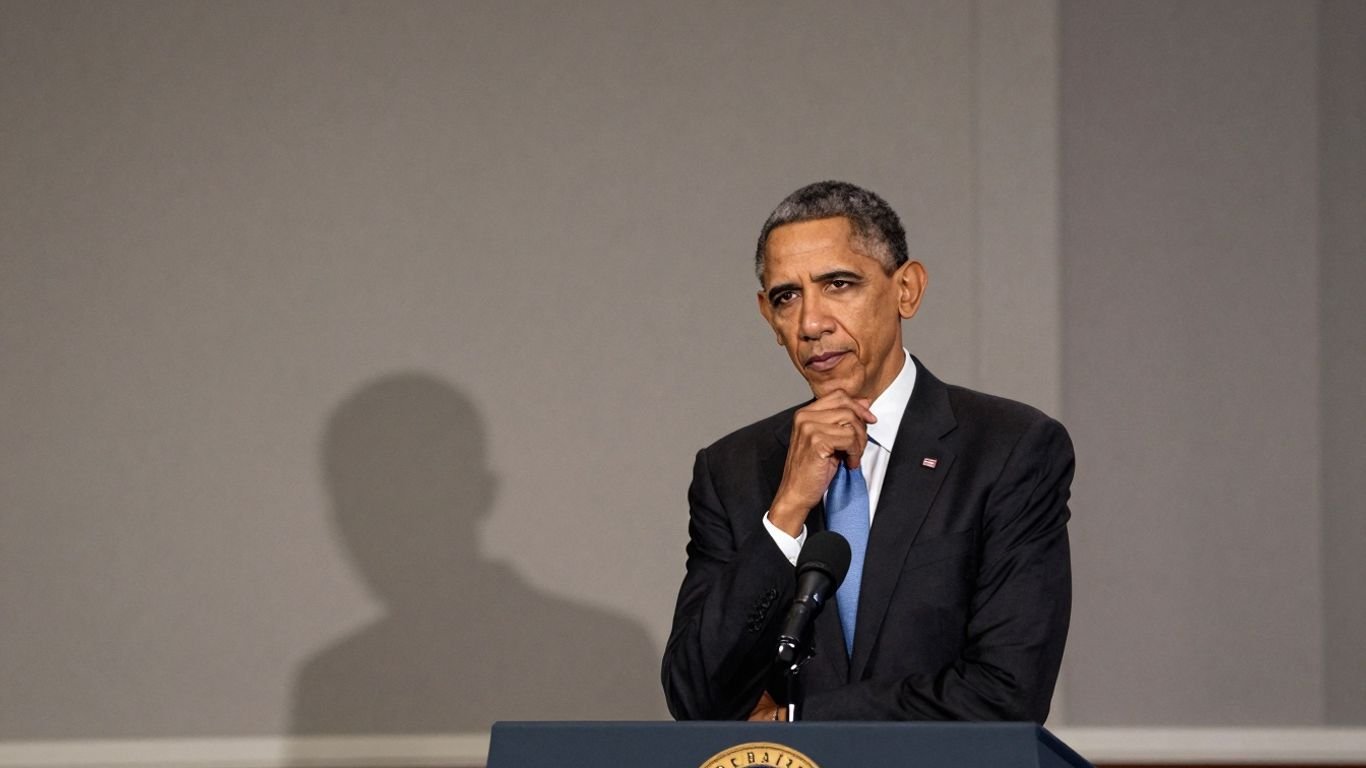
It feels like the Democratic party is in a bit of a bind lately, doesn’t it? There’s this big gap where a strong, guiding voice should be, and a lot of people look to Barack Obama to fill it. He’s still incredibly popular, even with some Republicans liking him. But he seems hesitant to jump too far into the political fray.
Grassroots Resistance and Party Leadership
We’ve seen a lot of energy from regular folks, people protesting and getting involved, especially since Trump’s first term. It’s like a grassroots uprising. Yet, the party itself seems to be missing a clear leader to channel all that energy. It’s a real leadership vacuum, making it tough to push back against the constant stream of news and provocations we get these days.
Obama’s Popularity and Influence
When you look at the numbers, Obama is still the most liked living president. A lot of Americans, even some from the other side of the aisle, have a good opinion of him. This popularity gives him a huge platform. He could, theoretically, step in and make a big impact. He’s called for people to make sacrifices to protect democracy, which is a pretty serious thing to say.
Hesitation to Step Outside Comfort Zone
Despite his influence, Obama has been careful. He often speaks in general terms, not naming names, and he chose to give some important speeches in places where they couldn’t be easily recorded or shared widely. It’s like he’s sticking to the old rules for former presidents, who usually stay out of the day-to-day political arguments. Some critics have even joked about him being “Asleep in Africa” when it comes to engaging with current issues. This careful approach, while respecting norms, leaves some wondering if he’s doing enough when he says democracy is under attack.
The norm for ex-presidents is to stay quiet and not criticize the current administration. Obama has mostly followed this, except when campaigning against Trump. But he’s also talking about democracy being in danger. It’s a tricky balance between tradition and the urgency of the moment.
Debates on Obama’s Legacy
Interpreting Obama’s Speeches
Looking back at Obama’s time in office and his post-presidency, there’s a lot to unpack, and people definitely see it differently. His speeches, for instance, are a big part of this. Some folks hear a lot of hope and change, while others focus on what they see as missed opportunities or even subtle messages. It’s like everyone’s listening with their own set of ears, picking up on different things. The way he phrased things, the words he chose – it all gets picked apart. Was he being clear, or was there a hidden meaning? This debate really comes up when you look at specific events or policies.
The Impact of Cadence and Body Language
Beyond just the words, how Obama delivered them matters too. His speaking style, the rhythm of his sentences, even his posture – it all played a role in how his message landed. Think about it: a pause at the right moment, a certain tone of voice, a confident stance. These things can change how people feel about what’s being said. It’s not just about the script; it’s the whole performance. For some, this made him a compelling figure, while for others, it might have felt calculated or even evasive. It’s a subtle thing, but it definitely adds layers to how his legacy is discussed.
Varying Resonance Across Demographics
And then there’s how different groups of people reacted. What really struck a chord with one community might have fallen flat with another. This isn’t unique to Obama, of course, but it’s a big part of the conversation about his legacy. For example, discussions around “Obama Gate” or the “Fast and Furious” operation often had different interpretations depending on who you asked. Similarly, foreign policy, like “Obama’s Latin America Policy: Continuity Without Change” or the “mixed bag in Asia,” was viewed through various lenses. It shows how a president’s actions and words can mean different things to different people, shaping how they remember his time in the White House.
The way people remember a presidency is rarely a simple, unified story. It’s a collection of individual experiences and interpretations, colored by personal beliefs and the specific issues that mattered most to them. This makes understanding a legacy a complex puzzle, with many pieces that don’t always fit neatly together.
So, Did Obama Mess Up?
Looking back, it’s clear that Barack Obama’s time in office, like any presidency, had its ups and downs. Some folks point to specific moments, like that awkward encounter with a reporter trying to impress a girl, or his later speeches about democracy that some felt were too subtle. Others focus on how he spoke differently to different groups, which some saw as smart politics and others as something else entirely. It’s a mixed bag, for sure. Whether these moments were ‘messes’ or just part of the complex job of being president is really up to each of us to decide. There’s no simple answer, and people will likely keep debating these things for a long time.
Frequently Asked Questions
What was the weirdest accusation made against Obama?
One reporter claimed Obama ruined his chances with a girl by embarrassing him at a press conference. The reporter felt Obama should apologize for making him look foolish and costing him a date.
Did Obama use different language for different groups?
Yes, some people noticed Obama used words and phrases that seemed to connect better with black audiences, like saying ‘Nah, we straight’ instead of ‘No, we are straight.’ This made some wonder if he was trying to sound ‘black enough’ or just speaking in a way people could understand.
Why did Obama ask people to make sacrifices?
Obama called for people and groups to make sacrifices to protect democracy. He felt that times were tough and people needed to do hard things, even if uncomfortable, to show they were committed to democratic values.
Did Obama directly criticize his successor?
Not really. Obama usually follows the tradition of former presidents not directly attacking current leaders. Even when he spoke about threats to democracy, he used general terms instead of naming names, though it was clear who he meant.
Why didn’t Obama’s speech about democracy get more attention?
He gave the speech at an event where recordings were not allowed. This made it hard for his message to reach a lot of people. He also kept his comments general, which might have made them seem less urgent to some.
Is Obama still popular?
Yes, polls show Obama is still very popular, even with some people from the opposing political party. Despite his popularity, he seems hesitant to step too far into public political debates right now.