
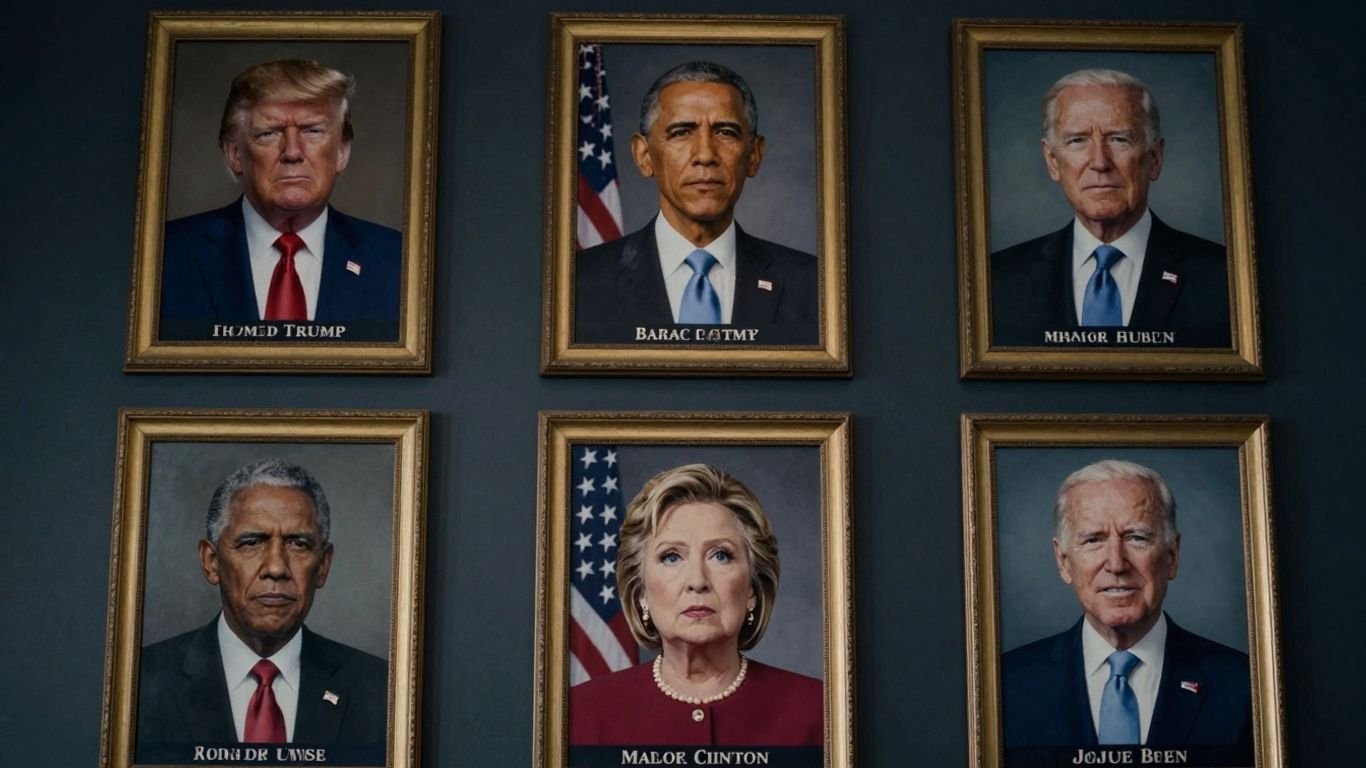
Trump’s White House ‘Wall of Shame’ Targets Obama, Clinton, and Biden with Scathing Plaques
In a bold and provocative move, former President Donald Trump has reportedly expanded his "Wall of Shame" initiative within the White House, adding new, scathing plaques that directly criticize the legacies of Presidents Barack Obama, Bill Clinton, and Joe Biden. This expansion appears to be a deliberate attempt to contrast their administrations with his own, framing their policies and actions as detrimental.
Key Takeaways
- New plaques have been added to a display within the White House.
- The plaques reportedly criticize the "disastrous legacies" of Obama, Clinton, and Biden.
- The move is seen as a continuation of Trump’s strategy to highlight perceived failures of previous administrations.
The "Wall of Shame" Expands
The initiative, which seems to be a personal project by Trump, involves creating and displaying plaques that offer critical commentary on the presidencies of his predecessors. While details of the specific criticisms on the new plaques are not fully disclosed, the headline suggests they focus on what Trump’s camp views as "disastrous legacies." This tactic is consistent with Trump’s public rhetoric, which frequently targets political opponents and their policy decisions.
The "Wall of Shame" is not an official part of the White House historical exhibits but rather a more informal, politically charged display. Its expansion signals Trump’s ongoing efforts to shape public perception and reinforce his narrative of his own presidency being superior to those that preceded and followed it. The move is likely to generate significant political commentary and debate, further polarizing opinions on these past administrations and Trump’s own political standing.
Political Messaging and Strategy
This action can be interpreted as a strategic political maneuver. By directly attacking the legacies of prominent Democratic presidents, Trump aims to energize his base and draw a stark contrast between his vision for America and that of his political rivals. The use of the White House, even if in a non-official capacity, lends a certain gravitas to the display, amplifying its message. It serves as a visual representation of his ongoing political campaign and his critique of the current administration under President Biden.




![[Donald Trump] sues [Hillary Clinton] over Russiagate lawsuit.](https://countrybrief.com/wp-content/uploads/2025/11/thumbnail-132-768x432.jpeg)