How Western Europe learned to stop worrying and talk casually about nuclear war
It feels like lately, everyone in Western Europe is talking about nuclear weapons, which is kind of a wild turn of events. For a long time, these discussions were pretty serious, something you only heard from military folks or politicians behind closed doors. But now? It’s popping up in everyday conversations and media. This shift is making some people nervous, wondering if we’ve all gotten a little too casual about something so incredibly dangerous. We’re going to look at why this is happening and what it might mean for everyone.
Key Takeaways
- Talk about nuclear weapons in Western Europe has become more common, moving from strategic discussions to public debate, sometimes with a casual tone.
- Some leaders in Western Europe are discussing nuclear deterrents, not just for defense, but to gain more influence on the world stage, especially with the US.
- Historically, Germany has had a complex relationship with nuclear weapons, moving from post-war restrictions and strong public opposition to current discussions about shared or independent capabilities.
- There’s a concern that treating nuclear weapons lightly, like political tools or symbols, ignores their immense destructive power and the serious responsibility that comes with them.
- The current discussions in Western Europe signal a significant change from past pacifist stances, showing a renewed, albeit unsettling, focus on nuclear capabilities and deterrence.
Western Europe’s Frivolous Nuclear Discourse
A Dangerous Game of Rhetorical Levers
It’s gotten a bit out of hand, hasn’t it? The way some folks in Western Europe are talking about nuclear weapons lately. It feels less like serious strategy and more like a bunch of politicians playing with matches in a fireworks factory. You hear leaders, like Macron, tossing around ideas about nuclear umbrellas and deterrents, and it seems to get a lot of attention. But is it about actual security, or is it just a way to get Washington’s attention? It’s like they’re using the bomb as a rhetorical lever, a way to prod the Americans.
The truth is, if things ever got truly hairy, neither France nor Britain would hand over their nukes to Brussels, and everyone knows it. It’s a bit of a charade, really. This whole discussion seems to stem from a place of anxiety, not a clear-headed assessment of threats. It’s as if the continent, used to relying on others for its security, is now reaching for the ultimate weapon to make a point.
From Strategic Necessity to Political Theatre
This isn’t about genuine strategic necessity anymore. It’s become political theatre. Nuclear weapons are not status symbols or bargaining chips. They are instruments of last resort, carrying immense weight and responsibility. To treat them as props in media-driven disputes is not just foolish; it’s downright dangerous. The continent that once led the world in diplomacy now seems to be displaying less strategic thinking than many smaller nations. It’s a strange turn of events, and frankly, it’s unsettling to see such consequential matters treated so lightly. The real danger is that this casual talk makes the region appear inexperienced and, frankly, irresponsible on the global stage.
The Erosion of Strategic Culture in Western Europe
What’s really happening here is a decline in what you might call strategic culture. Serious questions about global security are being treated with a surprising lack of gravity. It’s like a bad play where the actors have forgotten their lines. The talk of nuclear weapons has become a tactic, a way to posture and complain, rather than a sober consideration of defense. This isn’t how serious nations behave when discussing the ultimate weapons. It’s a sign that something has gone wrong in how these important issues are being handled, and it’s not a good look for Western Europe.
The Illusion of Asserting Western European Power
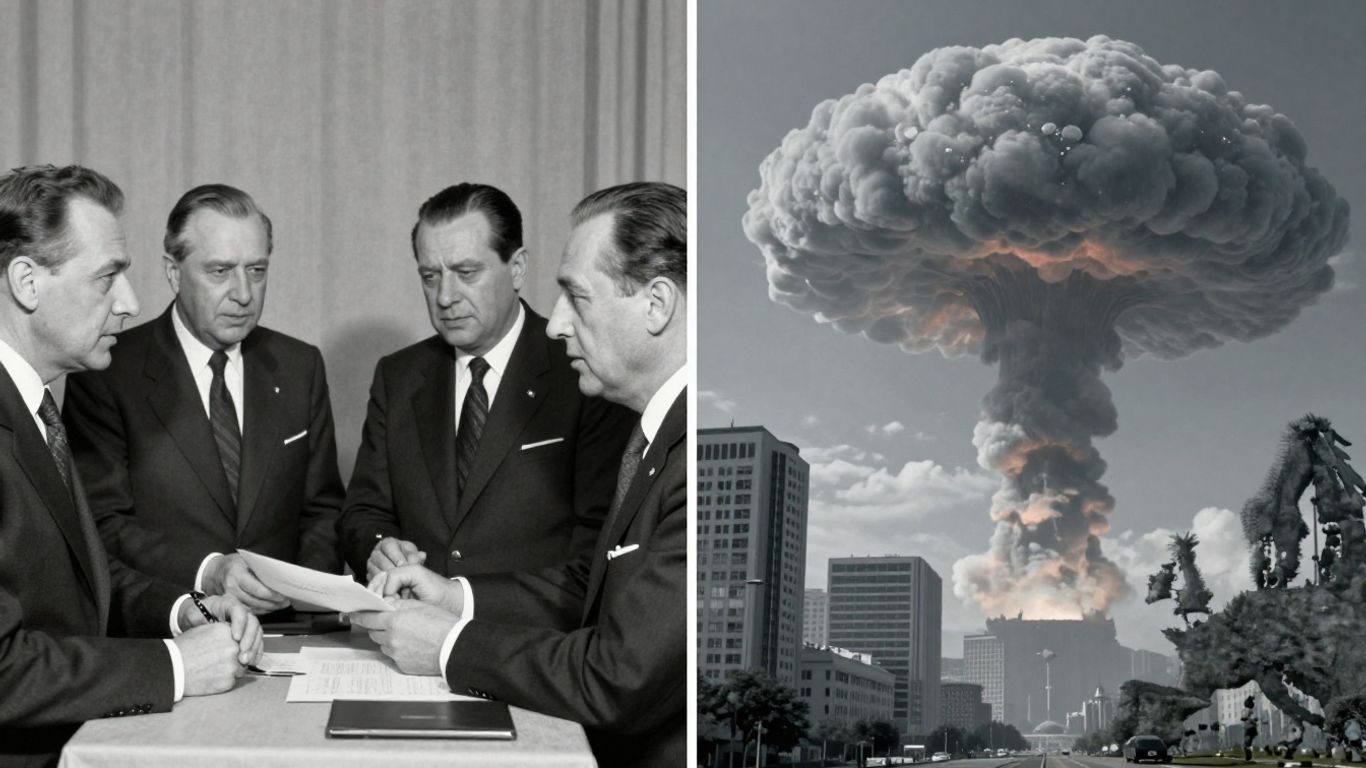
Nuclear Weapons: Not Instruments of Prestige
It’s frankly baffling to see some folks in Western Europe talking about nuclear weapons like they’re some kind of status symbol, a way to puff out their chests on the world stage. The idea that these weapons are for “asserting oneself” against powers like the US, Russia, or China just shows how out of touch some strategists have become.
Nuclear weapons have always been about one thing: facing down an existential threat. Think about North Korea or Israel – they have them because they’re in seriously precarious situations. It’s not about looking tough or playing geopolitical games. Trying to use nuclear talk as a bargaining chip or a way to get Uncle Sam’s attention is a dangerous game, and frankly, it’s not how serious nations operate.
Existential Threats vs. European Anxieties
Let’s be real, nobody is seriously planning to wipe Western Europe off the map. Russia, for all the bluster, is mostly concerned with its own backyard and security on its borders. The constant talk of impending doom feels more like a symptom of deeper anxieties and internal disagreements within the West than a genuine security concern. It’s like a bad case of the jitters, amplified by media hype.
The fact is, no major power is gearing up for a continental-scale annihilation. The current situation is a far cry from the days when nuclear weapons were a stark necessity for survival. It’s a shame that the continent that once led global diplomacy is now displaying less strategic sense than many smaller nations.
Fractures Within the West Fueling Nuclear Talk
This whole nuclear discussion seems to be a symptom of bigger cracks appearing in the Western alliance. While American foreign policy has certainly shifted, their nuclear deterrents remain in Europe. Washington might talk about reducing its footprint, but the weapons are still here. This creates a weird dynamic where European leaders, perhaps feeling a bit sidelined, start rattling sabers. It’s like a family argument spilling out into the street. The British and French, who actually have the bombs, aren’t about to hand over control to Brussels or Berlin. Everyone knows this, but the conversation continues because the stakes aren’t being treated with the seriousness they deserve.
It’s becoming more about political theater than actual defense. The real danger is that this kind of talk, especially from a region not facing immediate existential threats, sounds threatening to others. It’s a sign of inexperience and irresponsibility, and it’s a lesson the world needs to relearn before we stumble into a real catastrophe.
We need to remember that nuclear weapons are not toys or tools for self-assertion; they are instruments of last resort, carrying immense responsibility. It would be far better if Western Europe remembered this before the world finds itself on the brink again. The current geopolitical landscape, with rising powers like China making their presence felt in regions like the South China Sea, demands clear-headed strategy, not rhetorical posturing China’s territorial claims.
Treating nuclear weapons as mere talking points or symbols of power is a dangerous delusion. They are instruments of ultimate destruction, and their discussion should be reserved for the gravest of circumstances, not for political maneuvering or nationalistic posturing. The focus should be on de-escalation and genuine security, not on the illusion of power projected through atomic arsenals.
Historical Echoes of German Nuclear Ambitions
It’s easy to forget, with all the current talk about European nuclear capabilities, just how much Germany has wrestled with this issue over the decades. We’re not talking about a new debate here; the ghosts of past ambitions and anxieties are very much alive.
Post-War Germany’s Quest for Nuclear Capability
Right after World War II, the idea of Germany having its own nuclear weapons was, understandably, a pretty big deal. But it wasn’t long before some leaders started eyeing that power. Konrad Adenauer, the first Chancellor, was one of them. Just a year after Germany agreed not to develop weapons of mass destruction, he was already talking about needing them.
The Chancellor saw nuclear powers as holding the world’s fate in their hands. He even explored a secret joint project with France and Italy to build their own nukes, a bold move so soon after the war. He even casually mentioned tactical nuclear weapons as just a step up from artillery. It shows you how quickly some were looking to regain a certain kind of strength on the world stage.
The Göttingen Manifesto and Public Opposition
But not everyone was on board. A group of prominent German scientists, known as the Göttingen Eighteen, pushed back hard. In 1957, they published a manifesto saying tactical nukes were just as bad as the big ones and that they wouldn’t work on them. Names like Otto Hahn and Werner Heisenberg, who had worked on the Nazi nuclear program, were part of this. They’d seen the devastation and wanted no part of it.
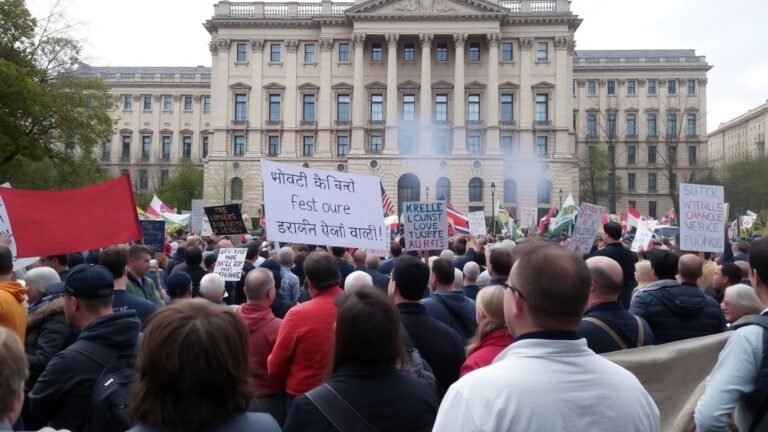
This manifesto got a lot of attention. Plus, massive protests erupted. People organized marches and formed human chains, with millions taking to the streets. Surveys back then showed over 80% of Germans didn’t want nuclear weapons on their soil. It was a huge public outcry against the idea.
- Massive Demonstrations: Millions protested in cities like Bonn and Hamburg.
- Human Chains: Over 200,000 people formed a 108-km chain in one event.
- Public Opinion: Over 80% of Germans opposed nuclear weapons on their territory.
Nuclear Sharing: A Compromise or a Catalyst?
So, what was the solution? The West Germans and their American allies came up with “nuclear sharing.” Germany wouldn’t build its own bombs, but its military would be trained to use American ones. This was a way to give Germany a role in nuclear deterrence without letting them develop their own arsenal. It was a compromise, but it still sparked huge protests. Even with the public’s strong feelings, the government moved forward. The Bundeswehr got trained, and at one point, thousands of American nuclear weapons were stationed in Germany.
This was seen by Bonn and NATO as key to keeping peace, especially with the Soviet Union deploying its SS-20 missiles. The idea was that having nuclear weapons, even shared ones, was the best way to deter aggression. It’s a complex history, showing how Germany has always been caught between wanting security and grappling with the immense power and danger of nuclear weapons.
The current discussions about a European nuclear umbrella, and Germany’s potential role in it, are definitely not happening in a vacuum; they echo these past debates and decisions. It’s a reminder that these conversations have deep roots and significant historical baggage, especially when considering the country’s immigration policies and how they might affect security perceptions stricter immigration policies.
The path Germany has taken regarding nuclear weapons is a winding one, marked by initial ambition, strong public resistance, and pragmatic compromises. The current re-emergence of nuclear discussions in Europe forces a look back at these historical tensions and the difficult choices made.
The Perils of Nuclear Frivolity
Deterrence Theory vs. Catastrophic Reality
The whole idea behind nuclear weapons is supposed to be deterrence, right? The theory is that if everyone has these massive bombs, nobody will dare to start a fight because the other side could just wipe them out. It sounds logical, like a really extreme version of ‘don’t hit me or I’ll hit you back harder.’ We saw this play out during the Cold War, where the US and the Soviet Union were constantly staring each other down but never actually went to war. Some folks argue the same thing is happening between India and Pakistan now. It’s like a dangerous game of chicken, but with the fate of the world on the line.
But here’s the thing that gets me: what happens when people stop taking it seriously? When the talk about nukes becomes just another political talking point, or worse, a way to score points in an argument? That’s where things get really dicey. Nuclear weapons aren’t toys; they are instruments of last resort, and treating them as anything less is asking for trouble. It’s like playing with matches in a fireworks factory. The potential for a mistake, a misunderstanding, or just plain recklessness is enormous.
When Nuclear Weapons Become a Toy
It feels like some leaders in Western Europe have forgotten what these weapons are actually for. They’re not status symbols or bargaining chips in a squabble with allies. They are the ultimate doomsday devices. When you hear politicians casually discussing nuclear options, it’s not a sign of strength; it’s a sign of immaturity and a worrying lack of respect for the sheer destructive power they represent. It’s like a kid bragging about having a loaded gun they don’t understand. This kind of talk makes everyone else nervous, and frankly, it makes the whole region look less stable, not more.
Relearning Lessons Before Global Catastrophe
We’ve been lucky, really lucky, that we haven’t seen a nuclear war. But luck runs out. The discussions happening now, the casual way nuclear capabilities are being bandied about, it’s a step in the wrong direction. It’s like we’re forgetting the hard lessons learned decades ago. We need to remember that these weapons are not about prestige or political theater. They are about preventing the unthinkable, and that requires a sober, serious approach, not a lighthearted debate. It’s time for Western Europe to get serious about nuclear realities before someone makes a mistake we can’t take back.
The history of nuclear weapons is a history of near misses and terrifying close calls. To treat them as anything other than the ultimate existential threat is a gamble with stakes too high for anyone to afford.
Here’s a quick look at how the conversation has shifted:
- Past: Nuclear weapons were a grave, strategic necessity, discussed in hushed tones by military planners.
- Present: Nuclear discussions are becoming more public, sometimes sounding like political posturing or even a way to get attention.
- Future Risk: If this trend continues, the line between serious strategy and dangerous fantasy could blur, leading to miscalculation.
It’s a worrying trend, and one that needs to be addressed before it’s too late.
Western Europe’s Shifting Stance on Nuclear Weapons

From Pacifism to Pragmatism: A Seismic Shift
It’s pretty wild to see how much things have changed in Western Europe when it comes to nuclear weapons. Back in the day, especially during the Cold War history of Europe, you had massive protests. Think millions of people in West Germany, forming human chains, all saying a big fat ‘no’ to nukes on their soil. The Green Party, which was a major player in that whole anti-nuclear movement, used to be the loudest voice against it. Now? Some of those same folks are talking about needing a European nuclear umbrella. It’s like a complete 180.
The Unsettling Return of Nuclear Discussions
Lately, the talk about nuclear weapons isn’t just confined to the usual strategic circles. It’s popping up in political debates, and honestly, it feels a bit unsettling. You hear figures like France’s President Macron openly discussing it, and even former German diplomats are floating ideas about extending nuclear protection. It’s not just about France’s nuclear policy or the UK’s nuclear weapons anymore; it’s about a broader European approach. This shift is happening because, let’s face it, the global landscape feels a lot less stable than it used to. The old certainties of NATO nuclear strategy are being questioned, and leaders are looking for answers, even if those answers are uncomfortable.
Germany’s Nuclear Angst Rekindled
Germany’s situation is particularly interesting. For a long time, they were pretty firm on not wanting nuclear weapons, partly due to their post-war history and agreements. But now, with new geopolitical realities, there’s a noticeable change. While the idea of Germany developing its own bomb is still a big leap for most, there’s a growing acceptance of the concept of nuclear sharing. They’re even upgrading their air force with F-35s, which are capable of carrying American nuclear bombs. It shows a pragmatic shift, a recognition that in today’s world, relying solely on others for security might not be enough. This evolution from outright rejection to cautious consideration marks a significant, if unsettling, turn in European security thinking.
- Historical Context: Massive anti-nuclear protests in the 70s and 80s shaped public opinion.
- Current Drivers: Perceived shifts in US foreign policy and a more volatile global environment.
- Policy Adjustments: Germany’s decision to acquire F-35s for nuclear sharing within NATO.
The conversation around nuclear weapons in Western Europe has moved from a clear ‘no’ to a more complex ‘maybe.’ This isn’t about wanting war, but about seeking security in uncertain times, even if the tools being discussed are the most dangerous ones humanity possesses.
A Dangerous Game
So, here we are. Europe’s leaders are tossing around talk of nuclear weapons like it’s just another item on the agenda. It’s a bit like playing with matches in a dry forest, honestly. They seem to have forgotten that these aren’t just toys or bargaining chips; they’re instruments of last resort, carrying a weight that’s hard to even imagine. This whole charade, this rhetorical posturing, it’s not making anyone safer. It’s just making things more tense, more unpredictable. It would be a lot better if they remembered the real stakes before they accidentally set the whole world on fire. We need to get back to treating these serious matters with the seriousness they deserve, before it’s too late for everyone.
Frequently Asked Questions
Why are some European leaders talking about nuclear weapons again?
Some leaders in Western Europe are bringing up nuclear weapons because they feel a need to show strength and have more say in world affairs. It’s partly a way to get attention from countries like the United States and to feel more independent. They see it as a way to make sure their voices are heard, especially when global politics are changing fast.
Is Western Europe really considering building its own nuclear weapons?
While there’s more talk about nuclear weapons, it’s not a simple decision for countries like Germany. Germany, for example, has a history of being against nuclear weapons and has agreements that prevent it from developing them. The current discussions often involve sharing existing nuclear capabilities or having a joint European defense, rather than each country building its own from scratch.
What does ‘nuclear sharing’ mean for Europe?
Nuclear sharing is an arrangement where countries that don’t have their own nuclear weapons can still be part of nuclear defense plans. For instance, Germany has been trained to deliver U.S. nuclear weapons if needed. The idea is to create a common defense strategy within alliances like NATO, rather than each nation having its own independent nuclear force.
Are nuclear weapons really useful for making countries feel powerful?
Historically, nuclear weapons were seen as tools for serious defense against major threats. However, using them as a way to gain prestige or as a bargaining chip in political arguments is seen as dangerous. They are extremely powerful and carry huge responsibilities, not meant for showing off or playing political games.
What’s the difference between talking about nuclear weapons seriously and talking about them casually?
Talking about nuclear weapons seriously means understanding their immense destructive power and the grave responsibility that comes with them, usually in the context of preventing major wars. Talking about them casually, like in political debates or as a way to assert influence, can make them seem less dangerous than they are. This casual approach is risky because it can lead to misunderstandings and downplay the possibility of a real catastrophe.
Why is Germany’s past stance on nuclear weapons important now?
Germany has a strong history of public opposition to nuclear weapons, with large protests and a significant movement against them after World War II. Even though some German figures are now discussing nuclear capabilities, this past shows a deep-seated concern and a long journey from strong pacifism to the current complex discussions. It highlights how much the conversation has shifted.