
Denuclearization of Korean Peninsula a ‘pipe dream’

So, North Korea is making some noise again, and this time it’s about denuclearization. Their Vice Foreign Minister basically said it’s a fantasy, a ‘pipe dream’ that will never happen. This comes as South Korea was planning to bring it up with China, which North Korea clearly isn’t happy about. It seems like they’re digging their heels in, insisting they’re a nuclear state and anyone who thinks otherwise is just not thinking straight.
Key Takeaways
- North Korea’s Vice Foreign Minister stated that denuclearization of the Korean Peninsula is a ‘pipe dream’ that cannot be realized.
- The statement was issued via state media in response to South Korea’s intention to discuss denuclearization at the APEC summit.
- North Korea criticized South Korea’s persistent focus on denuclearization, calling it a lack of common sense.
- The North views itself as a nuclear weapons state and rejects efforts to deny this status.
- This stance appears to be a protest against South Korea’s agenda and a message to China ahead of a summit between the two nations.
North Korea Dismisses Denuclearization Talks
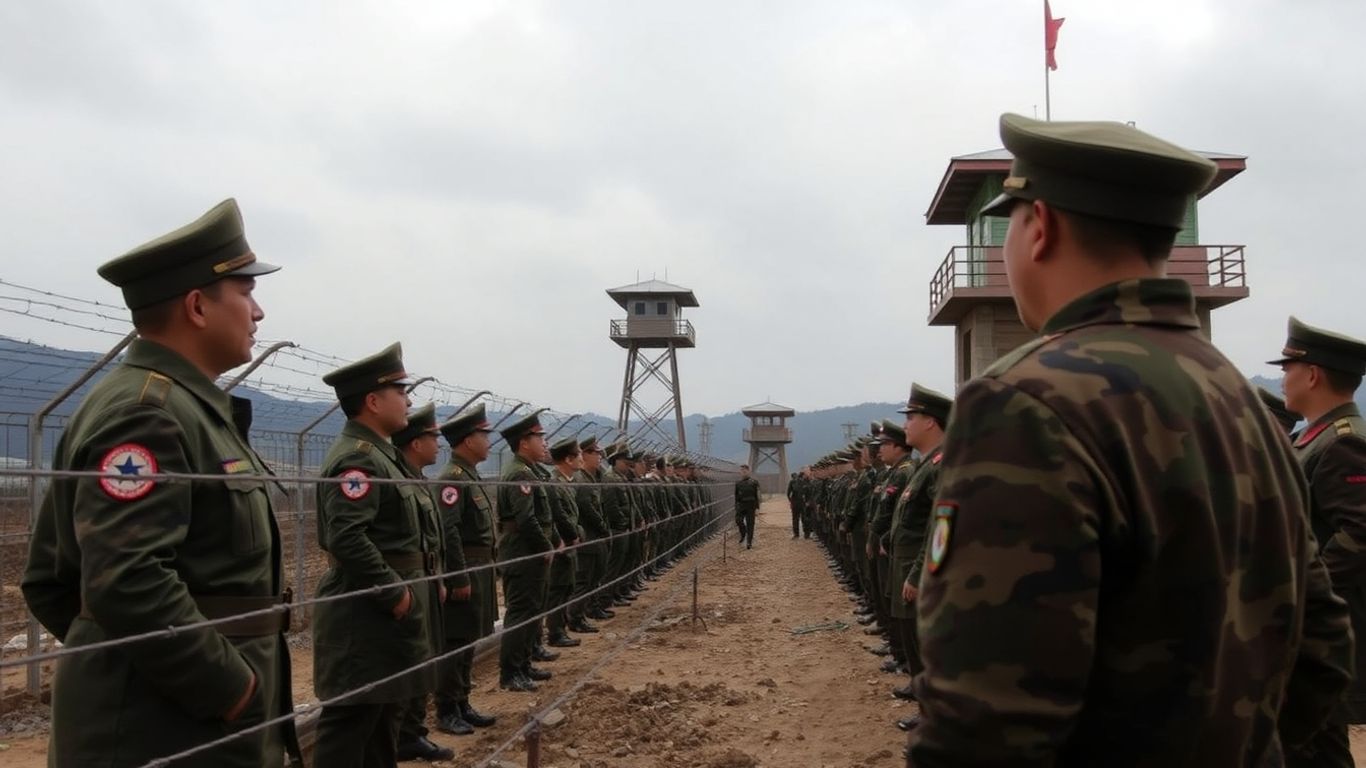
Vice Foreign Minister Calls Denuclearization A ‘Pipe Dream’
North Korea isn’t mincing words these days. Their Vice Foreign Minister, Pak Myong-ho, recently put out a statement saying that the whole idea of denuclearizing the Korean Peninsula is, and I quote, a "pipe dream." He basically said it’s something that just can’t happen, no matter how many times South Korea brings it up. This came out right around the time South Korea’s President Lee Jae-myung was getting ready to meet with China’s President Xi Jinping, and denuclearization was on their agenda. It feels like North Korea is trying to make a point, you know? Like, "Don’t even bother talking about this with us or anyone else." They’re pretty clear they see themselves as a nuclear state and aren’t interested in giving that up.
Criticism of South Korea’s Persistent Agenda Setting
It seems like North Korea is getting pretty tired of South Korea constantly pushing the denuclearization topic. The Vice Foreign Minister’s statement specifically called out Seoul for bringing it up "whenever an opportunity presents itself." He went on to say that South Korea seems to be stuck in a mindset that doesn’t accept North Korea as a nuclear weapons state. He thinks this focus on denuclearization, calling it a "daydream," just shows a lack of common sense on South Korea’s part. It’s like they’re saying, "We’ve moved past this, and you should too."
Rejection of Denuclearization as Lack of Common Sense
So, North Korea isn’t just saying denuclearization is unlikely; they’re framing it as a sign of not understanding reality. The statement from their Vice Foreign Minister Pak Myong-ho was pretty direct. He suggested that South Korea’s continued efforts to deny North Korea’s status as a nuclear weapons state, and their persistent talk about denuclearization, simply highlights a "lack of common sense." It’s a strong way to put it, basically saying that clinging to the idea of a denuclearized peninsula shows a disconnect from the current situation. They seem to believe they’ve reached a point where their nuclear status is a fact, and any talk otherwise is just out of touch.
North Korea’s recent statements suggest a firm stance against denuclearization talks, viewing them as unrealistic and a sign of South Korea’s misunderstanding of the current geopolitical landscape. This position appears to be a direct response to South Korea’s continued efforts to place denuclearization on international agendas.
Here’s a quick look at the timeline of events:
- November 1, 2025: North Korea issues a statement via KCNA criticizing South Korea’s stance on denuclearization.
- November 1, 2025: South Korea’s presidential office confirms denuclearization will be on the agenda for the summit between President Lee Jae-myung and Chinese President Xi Jinping.
- November 1, 2025: Vice Foreign Minister Pak Myong-ho labels denuclearization a "pipe dream" and a sign of "lack of common sense."
Geopolitical Tensions Surrounding North Korea

Things are getting a bit tense around the Korean Peninsula lately, and it’s not just about the usual back-and-forth. A big part of the current friction seems to stem from South Korea’s persistent push to put denuclearization on the table, especially with major international meetings happening.
South Korea’s Summit With China
President Lee Jae-myung recently met with Chinese President Xi Jinping on the sidelines of the APEC summit. While these meetings often cover a range of topics, the fact that denuclearization was specifically mentioned as an agenda item clearly ruffled some feathers in Pyongyang. North Korea’s Vice Foreign Minister Pak Myong-ho didn’t hold back, calling the idea of denuclearization a "pipe dream" that’s simply impossible. He also seemed to suggest that South Korea’s continued focus on this issue shows a lack of common sense, especially since North Korea sees itself as a nuclear weapons state.
Denuclearization on the APEC Summit Agenda
It’s interesting how South Korea keeps bringing up denuclearization whenever there’s a big international gathering. This time, it was the APEC summit in Gyeongju. The North Korean statement, released via state media, seemed to be a direct response to South Korea’s announcement that the topic would be discussed. It feels like a way for Pyongyang to signal its displeasure and perhaps send a message to Beijing ahead of the summit talks. This isn’t the first time North Korea has reacted strongly to joint declarations about denuclearization; they’ve previously called such statements "wanton interference" in their internal affairs.
North Korea’s Discomfort with Regional Diplomacy
This whole situation highlights North Korea’s discomfort with regional diplomacy when it involves discussions about its nuclear program. They’ve been pretty clear about their stance: they are a nuclear weapons state, and any attempts to deny that or push for denuclearization are seen as unrealistic. It’s like they’re saying, "We’ve heard this all before, and it’s not going to happen." This repeated rejection of joint declarations and the strong language used suggest a deep-seated unwillingness to give up their nuclear capabilities, making the prospect of denuclearization seem more like a distant fantasy than a realistic goal. The ongoing nuclear tensions are a serious concern for the region, and warnings regarding potential nuclear weapon use have been issued by both the US and South Korea.
The consistent rejection of denuclearization talks by North Korea, coupled with its assertion of nuclear status, creates a significant hurdle in diplomatic efforts. This stance not only complicates regional security but also challenges the effectiveness of international pressure and dialogue aimed at achieving a nuclear-free Korean Peninsula.
North Korea’s Stance on Nuclear Status
North Korea isn’t exactly shy about its nuclear capabilities, and lately, they’ve been making it pretty clear they see denuclearization as a fantasy. It seems like every time South Korea brings up the idea of a denuclearized peninsula, Pyongyang just rolls its eyes.
Denial of South Korea’s Efforts to Deny Nuclear Statehood
Pyongyang feels like South Korea is in denial about the reality of the situation. They’re saying that Seoul’s persistent push to get them to give up their nukes just shows a lack of common sense. It’s like South Korea is trying to pretend North Korea isn’t a nuclear power, and that’s just not how the North sees it at all.
Assertion of Position as a Nuclear Weapons State
North Korea has made it abundantly clear that they consider themselves a nuclear weapons state. This isn’t something they’re willing to negotiate away. They’ve invested a lot in their nuclear program, and they view it as a cornerstone of their national security. Trying to tell them otherwise, from their perspective, is just ignoring the facts on the ground.
Rejection of Denuclearization as a Daydream
When South Korea talks about denuclearization, North Korea’s Vice Foreign Minister Pak Myong-ho recently called it a "pipe dream" that can "never be realized." He basically said that no matter how many times Seoul brings it up, it’s just a daydream. They’re not budging on this. It’s a pretty firm stance, and they seem determined to show the world, and especially South Korea, that this is their reality.
The North’s consistent messaging suggests a deep-seated belief that its nuclear arsenal is non-negotiable. Any attempts to push for denuclearization are viewed not just as unwelcome, but as fundamentally out of touch with their perceived security needs and established status.
International Reactions to North Korea’s Position
Statements Issued Via State Media
North Korea isn’t exactly shy about sharing its views, and this time, it’s all coming out through their state-run Korean Central News Agency (KCNA). They’ve put out a statement, likely timed just right before South Korean President Lee Jae-myung met with China’s President Xi Jinping. The main message? Denuclearization of the Korean Peninsula is a total fantasy, a "pipe dream" that will never, ever happen. They’re pretty blunt about it, saying South Korea just doesn’t get it and that pushing for denuclearization shows a lack of common sense. It’s like they’re saying, ‘We’re a nuclear state, deal with it.’
Perceived Message to China Ahead of Summit
This whole announcement feels like a pointed message, especially with the South Korea-China summit happening. North Korea seems to be signaling to China, their neighbor and ally, that they’re not going to budge on their nuclear status. By calling denuclearization a "daydream" right before President Lee and President Xi are set to talk, Pyongyang might be trying to influence the conversation or at least make sure China understands their firm stance. It’s a way to show they’re uncomfortable with regional diplomacy that doesn’t include their nuclear weapons as a given.
Historical Rejection of Joint Declarations
This isn’t the first time North Korea has reacted strongly to discussions about denuclearization. Back in May of last year, they weren’t happy at all when South Korea, China, and Japan issued a joint declaration that included a commitment to denuclearization. They called that a "wanton interference" in their internal affairs. So, this current outburst isn’t really out of the blue; it fits a pattern of rejecting any agreements or discussions that question their nuclear program. They seem to view any attempt to talk them out of it as a direct challenge.
North Korea’s consistent messaging on denuclearization highlights a deep-seated commitment to its nuclear arsenal, viewing it as a cornerstone of its national security and international standing. This unwavering position presents a significant hurdle for diplomatic efforts aimed at peace and stability on the Korean Peninsula.
So, What Now?
Look, it’s pretty clear from what North Korea’s saying that they’re not exactly jumping at the chance to give up their nukes. They’ve basically called the whole idea of denuclearization a fantasy, something that’s just not going to happen, no matter how many times South Korea or anyone else brings it up. It feels like they’re digging their heels in, and honestly, it makes you wonder if this whole issue is just going to keep going in circles. We’ve heard this tune before, and it doesn’t seem like the melody is changing anytime soon. It’s a tough pill to swallow, but maybe we need to accept that this particular dream might just stay a dream for now.
Frequently Asked Questions
What did North Korea’s Vice Foreign Minister say about denuclearization?
North Korea’s Vice Foreign Minister, Pak Myong-ho, stated that getting rid of nuclear weapons on the Korean Peninsula is a “pipe dream.” He believes it’s something that can never actually happen, no matter how many times South Korea talks about it.
Why is North Korea upset with South Korea’s focus on denuclearization?
North Korea feels that South Korea keeps bringing up denuclearization whenever it gets a chance. They think South Korea doesn’t understand that North Korea sees itself as a nuclear power and that pushing for denuclearization shows a lack of good sense.
What is the significance of the summit between South Korea and China?
South Korean President Lee Jae-myung was scheduled to meet with Chinese President Xi Jinping during the APEC summit. The topic of denuclearization on the Korean Peninsula was planned to be discussed during their meeting.
How does North Korea view its status regarding nuclear weapons?
North Korea clearly sees itself as a nuclear weapons state. It rejects any attempts by South Korea or others to deny this status and considers the idea of giving up its nuclear weapons as unrealistic.
What message might North Korea be sending with its statement?
North Korea’s strong words could be a way to protest South Korea putting denuclearization on the agenda for the summit with China. It might also be a way to signal its displeasure to China about the topic being discussed.
Has North Korea reacted similarly to joint declarations before?
Yes, in the past, North Korea has strongly opposed joint statements about denuclearization. For example, they called a previous joint declaration a “wanton interference” in their own country’s affairs.