Nobel Peace Prize winner calls for military attack on her own country
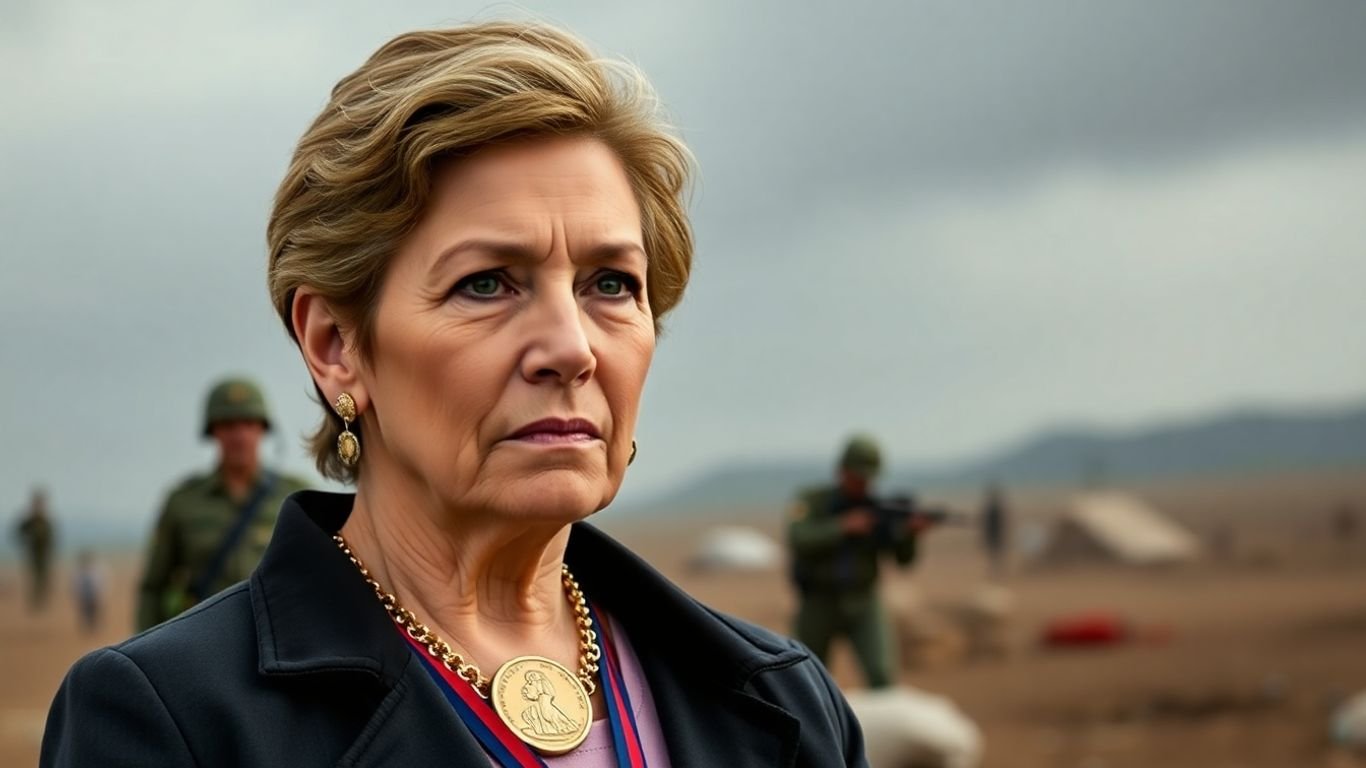
This year’s Nobel Peace Prize winner, Maria Corina Machado, has made some pretty strong statements about her home country, Venezuela. She’s not holding back, calling for military action against the current government. It’s a bold move, especially considering she’s been in hiding herself. This situation in Venezuela is complex, with a lot of international attention and differing opinions on how to handle it.
Key Takeaways
- Venezuelan opposition leader Maria Corina Machado, a Nobel Peace Prize recipient, has publicly supported U.S. military strikes on alleged drug-smuggling vessels off Venezuela’s coast, viewing them as necessary to pressure the Maduro regime.
- Machado believes that removing Nicolás Maduro from power is not traditional regime change but rather enforcing the will of the Venezuelan people, whom she claims overwhelmingly voted for the opposition in a fraudulent election.
- The U.S. has accused Maduro of ties to drug cartels and launched naval operations, including strikes on vessels, framing them as counter-narcotics efforts, though the scope of these operations is debated.
- Neighboring countries and international bodies have expressed concern over the U.S. strikes, with some accusing the U.S. of interference and murder, potentially jeopardizing drug-fighting cooperation.
- Venezuela faces a severe humanitarian crisis, marked by poverty, failing services, and a mass exodus of its citizens, while the opposition grapples with challenges to democratic transition, including alleged election fraud and crackdowns on dissent.
Nobel Laureate’s Call For Military Action In Venezuela
The recent awarding of the Nobel Peace Prize to Maria Corina Machado has brought renewed, intense focus onto the ongoing Nobel laureate Venezuela conflict. Machado, a prominent opposition figure, has not shied away from making bold statements regarding the situation in her home country. In fact, she has openly called for external military intervention, specifically looking towards the United States for support.
Maria Corina Machado’s Stance On U.S. Strikes
Machado has publicly backed recent U.S. military actions targeting vessels off Venezuela’s coast, which the U.S. claims are involved in drug trafficking. She views these actions as necessary steps to disrupt the illicit operations that she argues are propping up the current regime. She believes these strikes are about saving lives and that President Maduro has been sufficiently warned. Her perspective is that the responsibility for any resulting deaths lies squarely with the Maduro government, which she accuses of controlling these criminal enterprises.
Justification For Escalation Against Maduro Regime
Machado’s justification for seeking a more forceful approach stems from her deep conviction that the Maduro regime has become a criminal enterprise that has taken over the state. She asserts that Venezuela has become a central hub for drug trafficking in the region, with the "Cartel de los Soles" – which she claims Maduro heads – controlling state functions. This control, she argues, leads to the persecution of millions of Venezuelans and the destabilization of the wider region, including undermining U.S. institutions. She sees Venezuela as a safe haven for entities hostile to the United States, such as Iran, China, Russia, Hezbollah, and Hamas.
Enforcing The Will Of The Venezuelan People
Machado frames her call for intervention not just as a response to the current crisis, but as a means to liberate Venezuela and the broader Americas from what she terms "communism and narco-dictatorships." She has dedicated her Nobel Prize to the people of Venezuela and to President Trump, seeing his actions as beneficial for resolving conflicts and for the future of the Americas. Her vision extends beyond Venezuela, aiming to see the fall of regimes in Cuba and Nicaragua, ultimately leading to a continent free from such influences. She believes that by cutting off the flows of illegal criminal business, the will of the Venezuelan people can be enforced and democracy restored.
International Reaction To Venezuela Strikes
Displeasure From Neighboring Countries
The recent U.S. military actions off Venezuela’s coast have stirred up a lot of feelings in the region. Mexico’s president, for instance, has made her unhappiness known regarding the strikes. Meanwhile, Colombia’s president, Gustavo Petro, has gone further, accusing U.S. officials of murder. He pointed to a specific incident where a Colombian fisherman was reportedly killed in a strike, a claim that has led to significant friction between the two nations. It’s a tricky situation, especially since these countries have worked together on drug eradication efforts for years. Ironically, this new tension could actually make those drug-fighting efforts harder, which is something nobody really wants.
Accusations Of Murder And Interference
Beyond the immediate neighbors, the situation has drawn sharp criticism. The accusations of murder, particularly from Colombia, highlight deep concerns about the legality and human cost of the U.S. operations. These events are seen by some as a dangerous escalation, potentially violating international norms. The Venezuelan opposition calls for intervention, but the methods employed by the U.S. are causing unease and sparking debates about sovereignty and the limits of military action. This has put a spotlight on the international pressure on Venezuela, with various actors weighing in on the unfolding crisis.
Jeopardizing Drug-Fighting Efforts
It’s a bit of a paradox, really. While the U.S. claims these strikes are part of a counter-narcotics operation, the resulting diplomatic fallout could actually undermine the broader fight against drugs. For years, the U.S. and Venezuela, despite their political differences, have had some level of cooperation in trying to curb the flow of illegal substances. However, the current aggressive stance and the accusations flying back and forth are creating a climate of distrust. This could make future collaboration on drug interdiction much more difficult, potentially allowing criminal networks to operate more freely in the long run. It’s a complex web, and the consequences are far from simple.
The Maduro Regime’s Allegations
The government in Venezuela, led by Nicolás Maduro, has pushed back hard against the accusations leveled against it, especially those coming from the United States and opposition figures like María Corina Machado. They paint a very different picture of the situation, often pointing fingers back at Washington.
Accusations Of U.S. Interference
Maduro’s administration frequently claims that the U.S. is actively trying to destabilize Venezuela. They see the U.S. naval presence and any talk of military action not as counter-narcotics efforts, but as a direct attempt to interfere in their internal affairs and orchestrate a regime change. This narrative suggests that external forces are manipulating the Venezuelan opposition to achieve their own geopolitical goals.
Labeling Opposition As ‘Fascist’
Government officials often describe the opposition, including prominent figures like Machado, using strong terms such as ‘fascist’ and ‘puppets of imperialism.’ This rhetoric aims to discredit the opposition’s motives and portray them as extremists who are being used by foreign powers. They argue that these opposition groups do not represent the true will of the Venezuelan people but are instead agents of foreign influence.
Denials Of Drug Cartel Ties
One of the most serious accusations from the U.S. involves alleged ties between Maduro’s government and drug cartels. The Venezuelan government has consistently denied these claims, often calling them fabricated. They argue that these accusations are a pretext for U.S. military intervention and that Venezuela is being unfairly targeted. Instead, they sometimes suggest that U.S. policy itself contributes to drug problems in the region.
The regime’s strategy involves framing external pressure as an attack on national sovereignty, using strong nationalist rhetoric to rally support and delegitimize dissent. This approach aims to consolidate power by presenting any internal opposition as treasonous and influenced by foreign enemies.
Here’s a breakdown of the regime’s typical counter-arguments:
- Denial of drug cartel links: The government firmly rejects any association with drug trafficking organizations, often labeling such claims as propaganda.
- Accusations of U.S. aggression: They consistently portray U.S. actions, including naval deployments and sanctions, as acts of war and interference.
- Labeling opposition as foreign agents: Opposition leaders are frequently depicted as traitors working on behalf of the U.S. to undermine Venezuela.
- Claims of internal support: The government asserts it has widespread popular backing and that any unrest is manufactured by external actors.
Maria Corina Machado’s Vision For Venezuela
Maria Corina Machado, a recent Nobel Peace Prize recipient, has a clear vision for Venezuela’s future, one that she believes is intrinsically linked with democratic allies and a strong stance against what she terms "communism" and "narcoterrorist structures." Her focus is on liberating the Americas from what she perceives as oppressive regimes and rebuilding Venezuela with lasting, democratic institutions. She often speaks of the "will of the Venezuelan people" as the driving force behind any transition, emphasizing that her actions are about enforcing that will, not imposing external change.
Dedication To President Trump And The People
Machado has been quite vocal about her belief in the necessity of support from international leaders, particularly President Donald Trump. She sees him and other democratic nations as key partners in achieving freedom for Venezuela. Her message to the average person is one of shared responsibility and the power of collective action. She stresses that while she is one person, the movement for democracy is built on millions of conscious citizens understanding their rights and duties.
Liberating The Americas From Communism
Machado’s vision extends beyond Venezuela’s borders. She views the situation in her country as part of a larger struggle against what she calls "communism" spreading across the Americas. Her rhetoric suggests a belief that removing the current Venezuelan government is a step towards securing the entire continent from this perceived threat. She aims to dismantle criminal networks and push out foreign influences she believes are detrimental to regional stability.
Building Lasting Institutions
Looking ahead, Machado is focused on the long-term reconstruction of Venezuela. She speaks of building institutions that will endure for centuries, suggesting a desire for a stable and robust democratic framework. This includes fostering a sense of national unity and encouraging the return of Venezuelan migrants to help rebuild their country. The goal is a prosperous and bright future, built on a foundation of freedom and democratic principles.
U.S. Military Operations Off Venezuela’s Coast
Strikes On Alleged Drug-Smuggling Vessels
Lately, there’s been a noticeable increase in U.S. military activity in the waters near Venezuela. Reports indicate that the U.S. has conducted several strikes on vessels suspected of being involved in drug smuggling. These operations, which have occurred in international waters, have unfortunately resulted in fatalities. The U.S. administration states these actions are part of a counter-narcotics effort, aiming to disrupt drug trafficking routes. However, details about the individuals on board these vessels and the specific nature of their alleged cargo have been scarce.
Justification As Counter-Narcotics Operation
The official line from the U.S. is that these strikes are purely about stopping the flow of illegal drugs. They’ve pointed to alleged ties between the Venezuelan government and drug cartels, suggesting that removing President Maduro is, in essence, a counter-narcotics operation. This narrative is further supported by increased rewards for information leading to Maduro’s arrest, labeling him as a major figure in global drug trafficking. The administration has also informed Congress that it views these engagements as a "non-international armed conflict," which could allow for broader wartime powers against alleged cartels.
Escalation Beyond Vessel Targeting
While the initial focus has been on alleged drug-smuggling boats, there are growing concerns that these operations could expand. Some observers and regional leaders suspect that the real goal behind this increased military presence and the strikes is to put pressure on the Maduro regime and ultimately force a change in leadership. There’s talk of potential military operations beyond just targeting vessels, and special forces have reportedly been seen in the region. This has led to warnings from Venezuela about possible attacks and has created a tense atmosphere, with some neighboring countries expressing concern about a "new war scenario" opening up in the Caribbean. The question remains whether these actions are solely about drugs or if they represent a broader strategy for military action against Maduro regime.
The lack of transparency surrounding these strikes, coupled with the stated justifications, has fueled speculation about the true intentions behind the U.S. military’s actions in the region. International law experts and human rights organizations have called for investigations into the legality and impact of these operations.
The Humanitarian Crisis In Venezuela
Things have gotten really bad in Venezuela. It’s not just about politics anymore; it’s about people struggling to get by day-to-day. You hear stories about widespread poverty, and it’s not an exaggeration. Basic services that most people take for granted, like electricity and clean water, are unreliable in many places. Imagine trying to live your life when the lights might go out at any moment, or you can’t be sure if the water coming out of the tap is safe.
Widespread Poverty and Unreliable Services
The economic situation has pushed a huge chunk of the population into poverty. This means people can’t afford basic necessities. Food shortages are common, and the cost of living has skyrocketed, making it incredibly difficult for families to survive. The infrastructure is crumbling, leading to frequent power outages and water supply issues that disrupt daily life.
Healthcare System In Crisis
And then there’s the healthcare system. It’s in a really bad state. Hospitals are often short on essential medicines and supplies. Getting proper medical care has become a luxury that many can’t afford or access. This leads to preventable suffering and deaths, which is just heartbreaking.
Mass Exodus Of Citizens
Because of all these problems, millions of Venezuelans have left their homes. They’ve gone to neighboring countries, the United States, and elsewhere, looking for a better life and safety. This brain drain and loss of population is a massive blow to the country’s future. It’s a sign of just how desperate the situation has become for so many.
The sheer scale of displacement is staggering, with families torn apart and a generation facing an uncertain future, far from their homeland. This isn’t just a statistic; it’s millions of individual stories of hardship and hope for something more.
- Economic Collapse: Hyperinflation and lack of basic goods have made daily survival a challenge.
- Infrastructure Decay: Power grids and water systems are failing, impacting millions.
- Healthcare Shortages: Lack of medicines and equipment means basic medical needs go unmet.
- Mass Displacement: Millions have fled, seeking refuge and opportunity elsewhere.
Challenges To Democratic Transition In Venezuela
Fraudulent Election Claims
Getting a real democratic transition going in Venezuela has been a massive uphill battle. For starters, the elections themselves have been a huge point of contention. The opposition, and many international observers, have pointed to serious irregularities, claiming the results weren’t legitimate. It’s like trying to build a house on shaky ground when the foundation itself is questioned. This lack of trust in the electoral process creates a deep sense of political instability Venezuela that’s hard to overcome.
Crackdown On Protests And Detentions
Following disputed elections, there have been significant crackdowns on protests. Many people who voiced their dissent found themselves detained, and human rights groups have reported hundreds of political prisoners. It’s a tough situation when speaking out against the government can lead to serious consequences. This climate of fear makes it difficult for open dialogue and peaceful change to happen.
Opposition Leaders In Hiding Or Exile
Many key figures in the opposition, including prominent leaders, have been forced to go into hiding within Venezuela or seek refuge in other countries. This scattering of leadership makes it incredibly challenging to organize and present a united front. When your main voices are silenced or forced to operate from afar, it really hinders the momentum needed for a democratic shift. The path to democracy is fraught with obstacles, making any progress feel like a monumental achievement.
The ongoing political instability Venezuela has created a complex environment where establishing trust and ensuring fair representation are constant struggles. The government’s actions have often stifled open dissent, pushing opposition figures into precarious situations and making a smooth transition to democratic governance an elusive goal.
Looking Ahead
So, Maria Corina Machado, a Nobel Peace Prize winner, is calling for military action against her own country. It’s a really complex situation, and her stance on U.S. strikes, while framed as a way to push out Maduro and cut off illegal activities, has definitely raised eyebrows. Whether this aggressive approach will actually lead to the change she desires, or if it will just create more problems, remains to be seen. It’s a heavy burden for the people of Venezuela, caught in the middle of all this.
Frequently Asked Questions
Who is Maria Corina Machado and why is she in the news?
Maria Corina Machado is a Venezuelan politician who recently won the Nobel Peace Prize. She is known for opposing the current government led by Nicolas Maduro. She’s been in hiding because she fears for her safety. The news is about her calling for strong action, including military strikes, against the Maduro government.
What is Maria Corina Machado asking for?
Machado believes that military action, like the U.S. strikes on boats she says are involved in drug smuggling, is necessary to force Nicolas Maduro to step down. She sees these actions not as changing the government, but as making sure the Venezuelan people’s choice in past elections is respected.
Why are U.S. military strikes happening near Venezuela?
The U.S. military has been attacking boats off Venezuela’s coast, saying they are carrying drugs. The U.S. government claims Nicolas Maduro is involved with drug cartels and calls him a ‘narcoterrorist.’ These strikes are presented as a way to stop drug trafficking, which the U.S. says is a major problem.
How has Venezuela’s government responded to the strikes?
The Maduro government has strongly denied the accusations of drug trafficking. They have called the U.S. operations a violation of their country’s sovereignty and an attempt to start a conflict. Venezuela has reportedly asked for help from countries like Russia, China, and Iran.
What is the situation like for ordinary people in Venezuela?
Venezuela is facing a severe crisis. Many people live in poverty, and basic services like electricity and healthcare are failing. The country has seen a huge number of its citizens leave to find better lives elsewhere, with millions fleeing in recent years.
What is the international reaction to these events?
Reactions are mixed. Some neighboring countries have expressed unhappiness with the U.S. strikes. There have been accusations against the U.S. for causing deaths and interfering in Venezuela’s affairs. Ironically, these tensions could make it harder to fight drug trafficking.