Ousting Maduro would tie US down for years – CNN
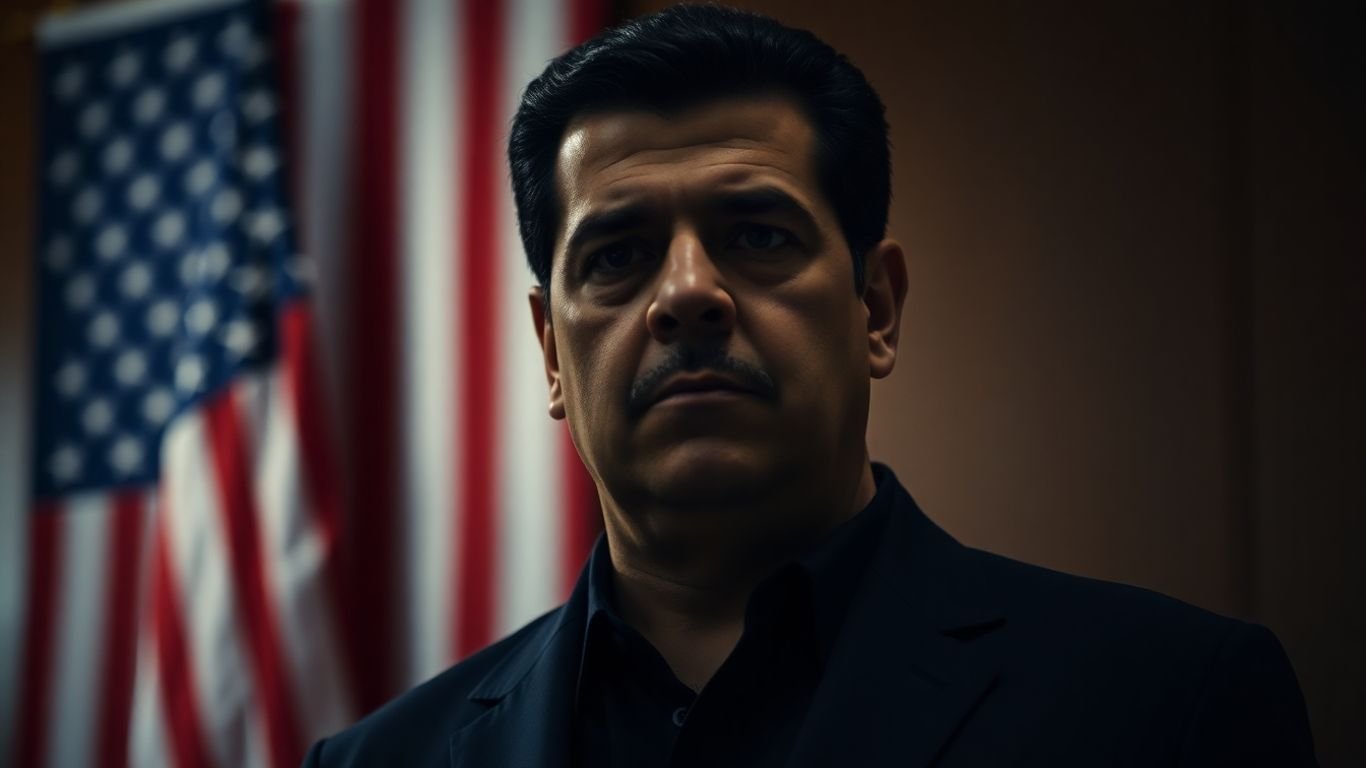
So, the article talks about how trying to get rid of Nicolas Maduro in Venezuela might actually backfire on the US. It’s not as simple as just removing one guy. Apparently, it could get the US stuck in a really long, complicated situation, kind of like what happened in other places. It makes you wonder if it’s even worth the trouble.
Key Takeaways
- Getting rid of Maduro in Venezuela could actually trap the US in a complicated mess for years, according to CNN.
- The opposition in Venezuela isn’t strong enough on its own to take over if Maduro leaves, meaning the US might have to step in for a long time.
- Even if Maduro is removed, there’s a real risk of chaos or a worse leader taking over in Venezuela.
- Russia, China, and Cuba are backing Maduro, and any US move against him could lead to bigger problems with those countries.
- Trying to force a change in Venezuela could go against President Trump’s promise to avoid new, long-term foreign conflicts and drain US resources.
The Perilous Path To Venezuelan Regime Change

A Fragile Opposition Lacking Independent Strength
Look, nobody’s exactly thrilled with the situation in Venezuela. The Maduro regime has run the place into the ground, and the opposition, well, they’re trying, bless their hearts. But let’s be real, they’re not exactly a powerhouse on their own. The idea that they could just step in and take over if Maduro suddenly vanished? It’s a pipe dream. They’d need serious, sustained help, probably from us, and that’s where things get sticky. We’re talking about a commitment that could last years, maybe even a decade, just to keep a new government from collapsing. It’s not like flipping a switch; it’s more like trying to build a house on quicksand.
The Unforeseen Consequences Of A Power Vacuum
So, what happens if Maduro does go? It’s not just going to be smooth sailing. Experts are worried that without him, even with all his faults, things could get a whole lot messier. You’ve got different factions within the Chavismo movement, some of whom might be even tougher than Maduro. Then there’s the military – they’re not exactly going to pack up and go home. They’ve got their own agenda, and they’re not afraid to use it. We could be looking at a real free-for-all, with no clear winner and a lot of instability. It’s a gamble, and the stakes are incredibly high for the region.
US Support: A Necessary Evil For Stability
Here’s the kicker: if we’re serious about regime change in Venezuela, we can’t just waltz in and expect everything to sort itself out. The opposition, as it stands, just doesn’t have the independent strength to manage things. That means the US would likely have to provide a level of support that goes way beyond what most Americans signed up for. We’re talking about security, economic aid, and a long-term political commitment. It’s not a popular idea, especially with the "America First" crowd, but the alternative might be even worse – a failed state on our doorstep. It’s a tough pill to swallow, but sometimes you have to do what’s necessary, even if it’s not pretty. The US Venezuela relations are at a critical juncture, and American policy towards Venezuela needs a clear-eyed assessment of these realities.
US Entanglements: A Costly Commitment
The Long Shadow Of Foreign Intervention
Look, nobody likes seeing our country get dragged into messy foreign affairs, especially when it feels like we’ve got enough problems right here at home. The idea of getting involved in Venezuela, well, it’s got a lot of people worried. We’ve seen this movie before, haven’t we? Big promises, lots of initial fanfare, and then we end up stuck in a quagmire for years, bleeding resources and American lives. It’s a pattern that’s hard to ignore, and frankly, it makes you wonder if we’re setting ourselves up for another long, drawn-out commitment that benefits nobody but the warmongers.
A Drain On American Resources And Resolve
Let’s be real, this isn’t going to be cheap. We’re talking about a massive military presence, potentially for a long time. Think about the cost of maintaining ships, planes, and personnel in a hostile environment. It’s not just the money, though. It’s the strain on our military, pulling them away from other, more pressing global threats. This kind of entanglement could easily become a huge drain on American resources and our national resolve. We need to be smart about where we commit our strength, and getting bogged down in Venezuela might just be a distraction we can’t afford.
Undermining Trump’s ‘America First’ Promise
Remember the whole ‘America First’ thing? This kind of intervention feels like it goes against that core idea. Getting deeply involved in another country’s internal affairs, especially one as complicated as Venezuela, seems like the opposite of putting our own nation’s interests squarely in focus. It’s hard to see how pouring American blood and treasure into a foreign conflict aligns with prioritizing the needs of American citizens. It just feels like a detour from the path we were promised.
The history of foreign interventions is littered with examples of unintended consequences and prolonged commitments. The American people are understandably wary of repeating past mistakes, especially when domestic needs are so pressing.
Here’s a breakdown of what we’re looking at:
- Financial Burden: Significant costs for military operations, aid, and potential reconstruction.
- Military Strain: Diverting personnel and equipment from other critical global responsibilities.
- Political Fallout: Potential backlash from the American public and allies if the intervention falters or drags on.
- Uncertain Outcomes: The risk of creating a power vacuum or a worse situation than before.
It’s a tough pill to swallow when you consider the potential downsides. We need to ask ourselves if the supposed benefits truly outweigh the very real costs and risks involved.
The Maduro Factor: A Stabilizing Force?
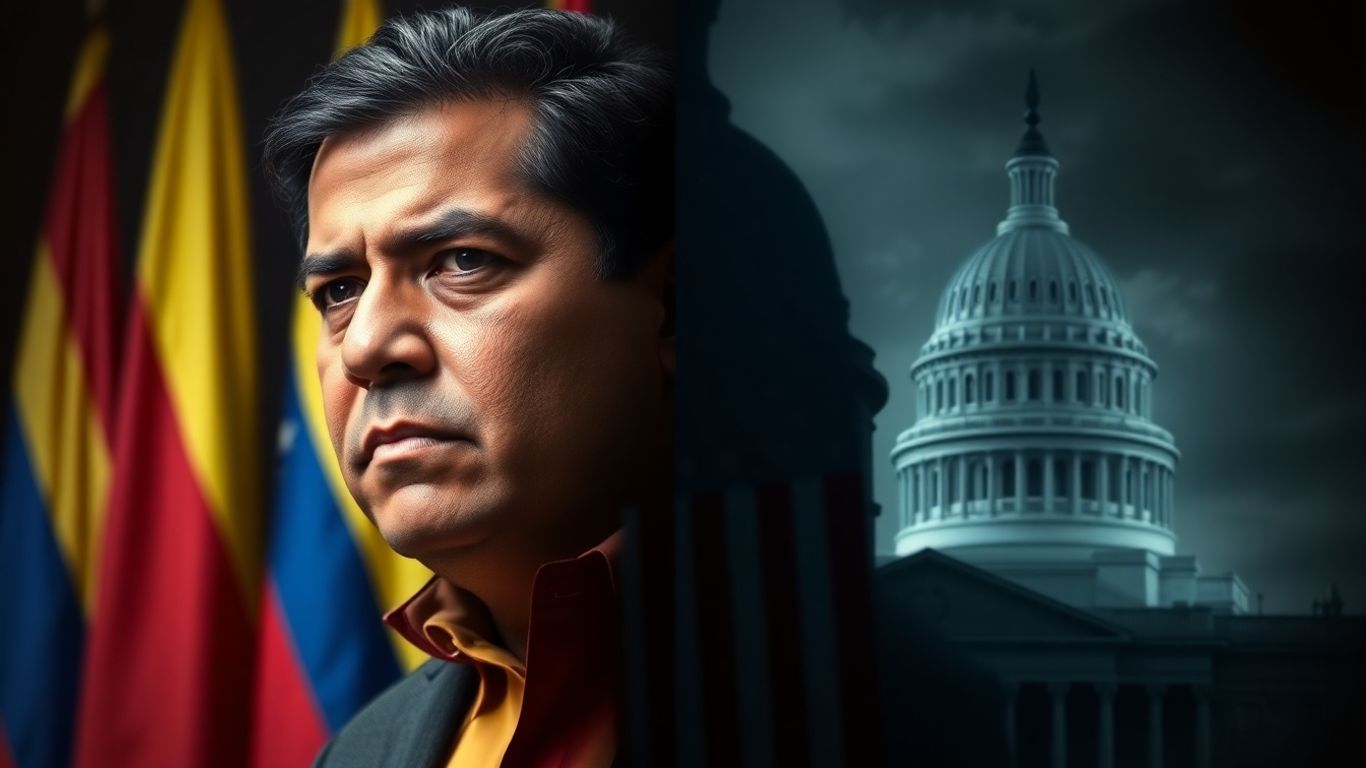
It sounds crazy, right? The idea that Nicolas Maduro, the guy everyone wants out, might actually be keeping things from completely falling apart in Venezuela. But hear me out. When you look at the mess down there, it’s not just about Maduro himself. There are all sorts of factions, military guys, and even outside groups causing trouble. Maduro, for all his faults, seems to be the one holding a really shaky lid on this pot.
Maduro As The Unlikely Guarantor Of Order
Think about it. If Maduro suddenly disappears, what happens next? Experts are saying it could get way worse, maybe even a full-blown civil war. It’s like he’s the only one everyone, even the competing groups within his own government, can agree to sort of tolerate for now. He’s the known quantity, the guy who keeps the different players from tearing each other apart. Without him, the whole thing could just unravel. It’s a grim thought, but sometimes the devil you know is the one preventing total chaos.
The Risk Of A More Extreme Successor
And what if Maduro is removed? Who steps in? Some folks who know the situation say Maduro is actually on the more moderate side of the Chavismo movement. That means someone else, maybe even more hardline, could seize power. Imagine that. We could end up with a leader who’s even tougher, even more unpredictable, and definitely not someone the opposition, or frankly, the US, would want to deal with. It’s a gamble, trading one problem for potentially a much bigger one.
Military Control: A Constant Threat
Then there’s the military. They’re a big deal in Venezuela, and they seem pretty unified. If Maduro goes, it’s not like the army just packs up and goes home. They’re disciplined, and they’ll likely assert control. This means any move against the current government, especially from the streets, could be met with serious force. It’s a constant threat that hangs over any talk of regime change. The military’s loyalty, or at least their discipline, seems to be a key factor that Maduro, for now, can count on to maintain some semblance of order, however brutal.
The complex web of internal factions and external influences means that simply removing Maduro might not solve anything. Instead, it could create a vacuum that allows even more dangerous elements to gain control, potentially leading to prolonged instability or a more severe authoritarian regime. The current situation, while undesirable, might represent a fragile equilibrium that could be shattered by external intervention.
Geopolitical Chess: Russia, China, And Cuba’s Role
Foreign Backing For The Maduro Regime
It’s no secret that Nicolas Maduro isn’t exactly flying solo down in Venezuela. He’s got some pretty significant international friends propping him up. We’re talking about Russia, China, and Cuba, all of whom have poured resources into keeping his regime afloat. They’ve got their own reasons, sure, but it makes any move against Maduro a lot more complicated for us. These foreign powers have invested heavily, and they’re not just going to sit back and watch their investments go down the drain. It’s like a tangled web, and pulling one thread could unravel a lot more than just Venezuela.
Escalation Risks In The Region
When you start talking about military action, especially in a region as sensitive as Latin America, the risk of things getting out of hand is pretty high. If the U.S. were to strike assets in Venezuela, especially those linked to Russia, China, or Cuba, you could see a rapid escalation. It’s not just about Venezuela anymore; it’s about how these global players react. They might not send troops, but they have other ways to make our lives difficult. Think about it: what if Maduro, feeling cornered, decides to lash out at U.S. interests in the Caribbean? We’ve seen experts mention the possibility of him targeting oil platforms, which would definitely hurt us. It’s a dangerous game of chess, and we need to be sure we’re thinking several moves ahead.
The Threat Of Retaliation Against US Interests
Beyond the immediate conflict, there’s the lingering threat of retaliation. These countries aren’t just going to accept a U.S. victory lying down. They have ways to push back, and it might not be a direct military confrontation. It could be economic pressure, cyberattacks, or even stirring up trouble elsewhere. We’ve seen hints of this before, like when some believe Cuba interfered with opposition efforts in 2019. It’s a reminder that any action we take has ripple effects, and we need to be prepared for the consequences. The idea of asserting hemispheric supremacy is one thing, but doing so without triggering a wider conflict is another challenge entirely. We need to consider the long-term stability of the region, not just a quick win. It’s a complex situation, and frankly, it makes you wonder if the U.S. is ready for the kind of commitment this would require, especially when you look at the broader geopolitical landscape and how Latin America is seeking diversified partnerships.
Here’s a look at the key players and their stakes:
- Russia: Seeking to maintain influence and challenge U.S. dominance.
- China: Focused on securing resources and expanding economic ties.
- Cuba: Concerned with regional stability and its own ideological alignment.
It’s a delicate balance, and one misstep could have serious repercussions.
The ‘New Monroe Doctrine’ On The Line
It feels like we’re seeing a throwback to old-school American foreign policy, doesn’t it? This whole situation in Venezuela has folks talking about a ‘New Monroe Doctrine,’ which basically means the U.S. is saying this hemisphere is our backyard, and we don’t want outside meddling. President Trump has been pretty vocal about this, and some people think it’s about time we asserted ourselves again. Elliott Abrams, a guy who’s been around the block in Republican foreign policy circles, says if Trump backs down now, all that talk about a ‘New Monroe Doctrine’ and being the top dog in our hemisphere goes out the window. It’s a real test of American credibility, that’s for sure.
Asserting Hemispheric Supremacy
This isn’t just about Venezuela; it’s about sending a message. When you’ve got a massive naval force like the Ford Carrier Strike Group hanging around the Caribbean, and thousands of troops on standby, it’s clear the U.S. means business. It’s more than just a few boats; it’s a serious show of force. The administration has also been busy with military exercises with countries in the region. It all points to a desire to reassert American dominance, making it clear that we won’t tolerate certain actions or influences in our part of the world. This kind of assertive stance is a big part of the Trump administration’s focus on the Caribbean.
The Stakes For American Credibility
Look, if we put all this military muscle out there and then do nothing, what does that say about us? It makes us look weak, frankly. Abrams put it bluntly: if Maduro stays, the ‘New Monroe Doctrine’ talk is dead. It’s not just about Venezuela anymore; it’s about whether America’s word means anything. We’ve seen other countries get involved in Venezuela, propping up Maduro. If we don’t follow through, it emboldens them and undermines our standing. It’s a tough spot, and the clock is ticking, especially with the designation of the Cartel de los Soles as a foreign terrorist organization set to take effect soon.
Avoiding A Repeat Of Past Failures
We’ve all seen how these interventions can go sideways. Remember Afghanistan? We poured in tons of money and resources, and it didn’t end well. Some Republicans are worried that getting too involved in Venezuela could be another quagmire, something voters won’t support. Nobody wants to get dragged into a long, drawn-out conflict. The idea is to get Maduro out, but how we do it matters. A quick, decisive action might work, but then what? We need a plan for the long haul, not just a quick strike. It needs to be connected to a real political solution, and that means a commitment that could last years, not months. It’s a delicate balance between showing strength and avoiding another costly mistake.
Military Buildup: More Than Meets The Eye
Unprecedented Military Mobilization
Look, nobody saw this coming. The sheer scale of the military assets the U.S. has been moving into the Caribbean is, frankly, stunning. We’re talking about the Ford Carrier Strike Group, thousands of troops, constant overflights, and joint exercises with regional partners. It’s not just a few boats offshore; this is a serious show of force. Some experts are calling it the biggest buildup in decades, maybe since the invasion of Panama back in ’89. It’s hard to ignore, and it makes you wonder what the real endgame is here.
The Army’s Readiness For Action
Our own Army Secretary, Dan Driscoll, basically said it himself: the military is ready if called upon. He mentioned the extensive training we have in that part of the world. It’s clear the brass has been thinking hard about what’s best for America, and they’ve got the troops and the hardware in place. The question is, what exactly are they preparing for? Is this just posturing, or is something bigger on the horizon? It feels like we’re on the edge of a decision point, and the clock is ticking.
Venezuela’s Counter-Mobilization
It’s not just us making moves. Venezuela, under Maduro, has announced its own "massive mobilization" of troops, weapons, and equipment. They’re not sitting idly by. This isn’t just a one-sided display; it’s a two-way street, and tensions are definitely rising. It’s a dangerous game when both sides are ramping up their military presence. You have to wonder if this escalation is really in anyone’s best interest, especially when you consider the potential fallout.
The sheer amount of military hardware and personnel being deployed, both by the U.S. and Venezuela, suggests that this situation is far more complex than a simple diplomatic standoff. The readiness of U.S. forces, coupled with Venezuela’s own mobilization, creates a volatile environment where miscalculation could have severe consequences.
So, What Now?
Look, nobody likes seeing a dictator in charge, and Maduro’s definitely one of those. But getting him out? That’s not just a quick fix. It sounds like it could drag us into another long, messy situation, costing a ton of money and maybe even lives. Remember all those promises about not getting bogged down in foreign wars? This could easily go that way. Plus, who’s really going to step up and run things over there? It’s not like there’s a clear, ready-made solution waiting. We need to be really careful here, because jumping into Venezuela could tie us down for years, and honestly, I’m not sure that’s what most Americans want.
Frequently Asked Questions
What happens if Nicolas Maduro is removed from power?
If Maduro were to be removed, experts worry that Venezuela could fall into chaos. There’s a chance of a civil war because different groups might fight for control. Even though some see Maduro as politically weak, he currently keeps different sides from clashing too much. Without him, there might not be anyone to keep the peace, and groups could unite against a new leader.
Can Venezuela’s opposition take over easily if Maduro leaves?
It’s unlikely the opposition could take over and run the country smoothly right away. They would need a lot of help, possibly even from the U.S. military, to ensure their safety and to govern effectively. Experts believe that removing Maduro is just the start of a very long and difficult process, not the end.
Why would the U.S. get involved in Venezuela for years?
If the U.S. helped remove Maduro, it would likely need to support a new government for a long time, possibly 5 to 10 years. This support would be needed to help rebuild the country, train police, and keep the new government stable. Without this long-term commitment, any effort to change the leadership could easily fail.
What are the risks of Russia, China, or Cuba helping Maduro?
Russia, China, and Cuba all support Maduro’s government. If the U.S. took action against Maduro, these countries could try to interfere. While they might not send their own troops, they could find ways to make things harder for the U.S. or the new Venezuelan government. There’s also a risk that Maduro could attack U.S. interests in the region if he feels he’s about to lose power.
Is the U.S. military ready to act in Venezuela?
The U.S. Army has said it would be ready to take action if asked. There has been a significant buildup of U.S. military forces and ships in the region, described as the most important in decades. Venezuela has also announced its own military mobilization in response.
Could removing Maduro go against Trump’s ‘America First’ policy?
Yes, it could. Trump promised to avoid getting the U.S. involved in long, costly foreign conflicts. A prolonged involvement in Venezuela might upset his supporters who voted for him based on that promise. Some worry that if Trump doesn’t act now, it could hurt America’s standing in its own hemisphere.