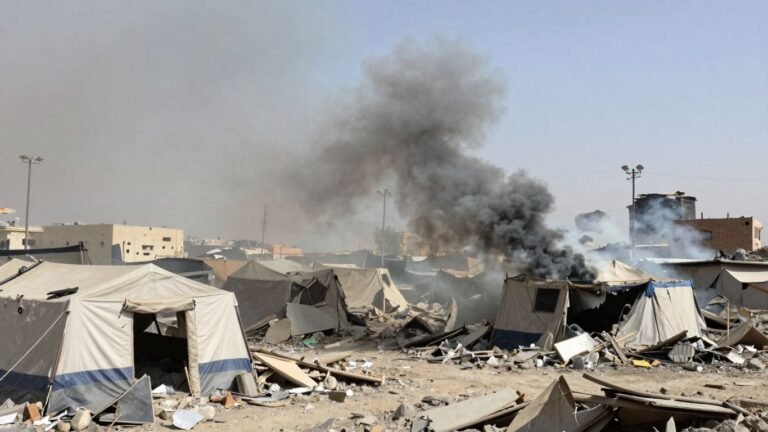
Understanding Modern Military Operations: A Comprehensive Guide
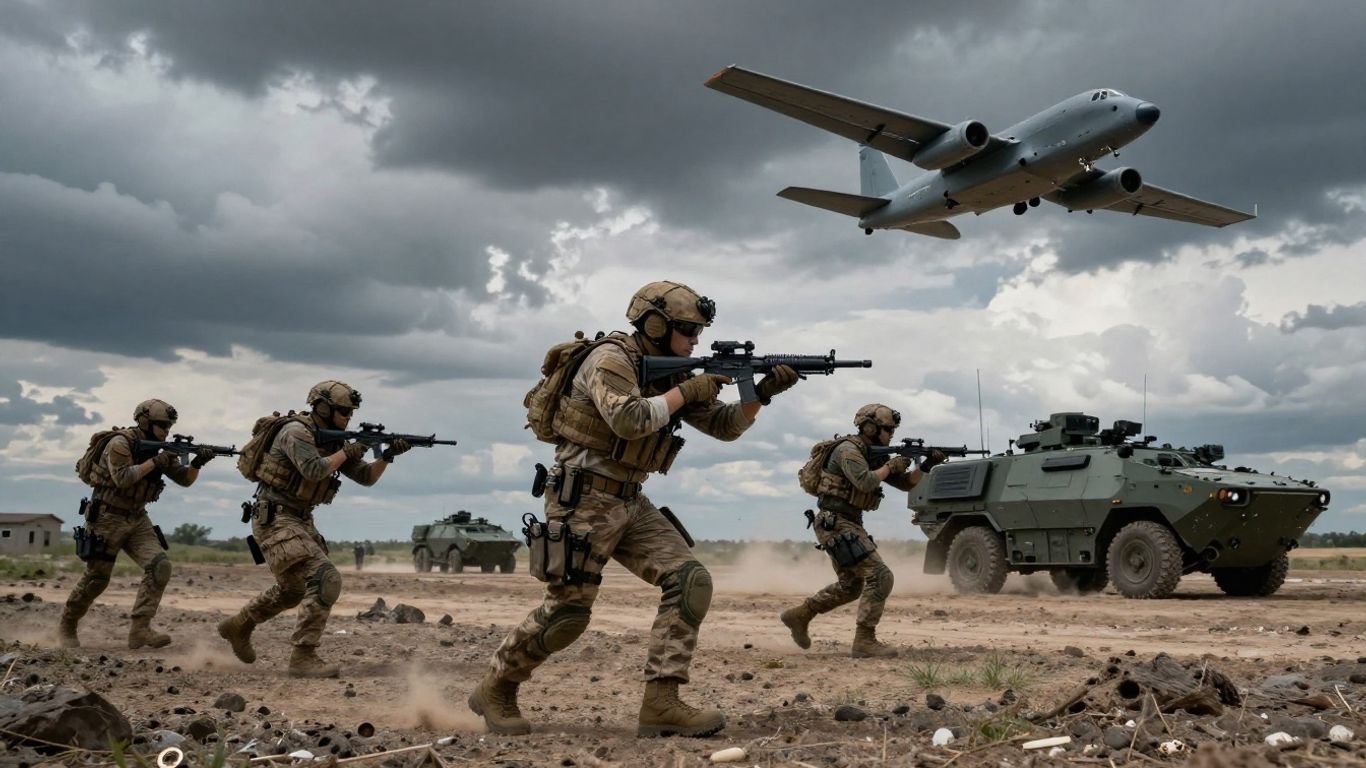
Thinking about how wars are fought today can get pretty complicated. It’s not just about tanks and soldiers anymore. We’re talking about a mix of old-school tactics, new tech like drones and cyber stuff, and even how information spreads. This guide is here to break down the complex world of modern military operations, looking at how things have changed and what we can expect next. It’s a look at the battlefield in all its forms, from the physical to the digital.
Key Takeaways
- Modern military operations are a blend of historical strategies and new technologies, evolving through different ‘generations’ of warfare.
- Warfare today involves kinetic (physical) actions, connected systems (like communication networks), and synthetic (simulated or digitally influenced) environments.
- Technology, including AI, drones, and cyber capabilities, is rapidly changing how military operations are planned and executed, introducing new forms of conflict.
- Asymmetric and hybrid threats challenge traditional military power by using unconventional strategies that blur the lines between civilian and military domains.
- Understanding the enduring principles of warfare, alongside new approaches and lessons from recent conflicts, is vital for future military operations.
The Evolving Landscape Of Military Operations
Warfare isn’t what it used to be, that’s for sure. We’ve seen a lot of changes over the years, and it’s not just about bigger bombs or faster jets. Think about it like this: warfare has gone through different ‘generations,’ each one a big leap from the last. This isn’t some new idea; folks have been talking about these ‘Revolutions in Military Affairs’ for a while now. It’s about how new tech and new ways of thinking completely change how wars are fought.
Generations Of Warfare And Military Affairs Revolutions
Back in the day, war was pretty straightforward. You had armies clashing, maybe some cannons. Then came World War I, with trenches and machine guns – a whole new level of misery. After that, you saw the rise of air power and mechanized forces, changing things again. These shifts are what people mean by ‘generations of warfare.’ Each generation brings new tactics, new equipment, and new ways to organize troops. It’s not just about having better gear; it’s about how you use it and how it changes the whole game. The idea of a Revolution in Military Affairs, or RMA, is basically when these changes are so big they fundamentally alter the military landscape. It’s like going from horses to tanks – a total game-changer.
New Conceptualizations Of Modern Warfare
Today, things are even more complicated. We’re not just talking about traditional armies fighting each other anymore. You hear terms like ‘asymmetric warfare,’ where a weaker force uses unconventional tactics against a stronger one. Then there’s ‘unrestricted warfare,’ which is pretty much throwing the rulebook out the window and using any means necessary – economic, political, informational – to win. And ‘hybrid warfare’? That’s a mix of everything, blending conventional military action with irregular tactics, propaganda, and cyber attacks. It’s a messy business, and it means our enemies aren’t always wearing uniforms or operating in obvious ways. We need to understand these new ways of fighting because they’re happening right now.
Information Age Warfighting Concepts
The digital world has really shaken things up. We’ve got ‘network-centric warfare,’ where information is king and connecting all your forces in real-time gives you a huge advantage. Think of it as everyone being on the same page, instantly. Then there’s ‘information warfare’ and ‘cyber warfare,’ which are all about attacking an enemy’s ability to communicate, gather intel, or even just function by messing with their computer systems. It’s a whole new battlefield, and it’s happening faster than ever. Keeping up with these changes is tough, but it’s absolutely necessary if we want to stay ahead. The focus on electromagnetic spectrum operations (EMSO) is a big part of this evolving picture, impacting everything from radar to electronic warfare. Defense modernization trends show just how much this area is developing.
Understanding The Conduct Of Modern Warfare
Kinetic, Connected, And Synthetic Dimensions
Modern warfare isn’t just about boots on the ground or planes in the sky anymore. It’s a messy mix of the real and the digital. We’ve got the "kinetic" stuff – the actual bombs, bullets, and missiles. That’s the part everyone sees on the news, the loud bangs and explosions. But that’s only part of the picture. Then there’s the "connected" dimension. Think about how everything talks to everything else – satellites, drones, radios, computers. Information flows constantly, and controlling that flow is just as important as controlling territory. The side that can communicate better and disrupt the enemy’s communication often has a massive advantage. Finally, we have the "synthetic" side. This is where simulations, virtual training, and even cyber warfare come into play. It’s about creating digital battlefields, testing strategies without risking lives, and messing with the enemy’s systems from afar. It’s a whole new ballgame, and you can’t just focus on one piece of it.
The Human Element In Warfare
Despite all the fancy tech, people are still at the heart of it all. You can have the most advanced drone, but it still needs a pilot, an analyst, or a commander to make decisions. And those decisions aren’t always easy. Soldiers on the ground face incredible stress, and leaders have to weigh the lives of their troops against the mission objectives. It’s not just about bravery; it’s about resilience, adaptability, and the ability to keep going when things get tough. We also see more civilians caught in the middle, which complicates things immensely. Understanding the psychology of soldiers, the morale of the troops, and the impact on civilian populations is something that can’t be ignored. It’s a messy, complicated business, and technology doesn’t change that fundamental truth.
Strategic, Operational, And Tactical Integration
These three levels – strategic, operational, and tactical – have to work together like a well-oiled machine. The strategic level is the big picture: what are we trying to achieve as a nation? The operational level is how we link those big goals to actual campaigns and major operations. Think of it as the bridge. Then you have the tactical level, which is the nitty-gritty of battles and engagements – the actual fighting. If these levels aren’t coordinated, you end up with a lot of wasted effort. You might win a small battle (tactical) but lose the war because it didn’t serve the larger strategy. Or you might have a grand strategy that can’t be executed because the operational plans are flawed. It requires constant communication and a clear understanding of how each piece fits into the whole puzzle. It’s about making sure the soldiers on the front lines are fighting for a purpose that makes sense at the highest levels of government.
The modern battlefield is a complex ecosystem where kinetic actions, information networks, and simulated environments all intersect. Ignoring any one of these dimensions leaves a force vulnerable. True mastery lies in the integrated application of all three, guided by human judgment and resilience.
Technological Advancements Shaping Military Operations
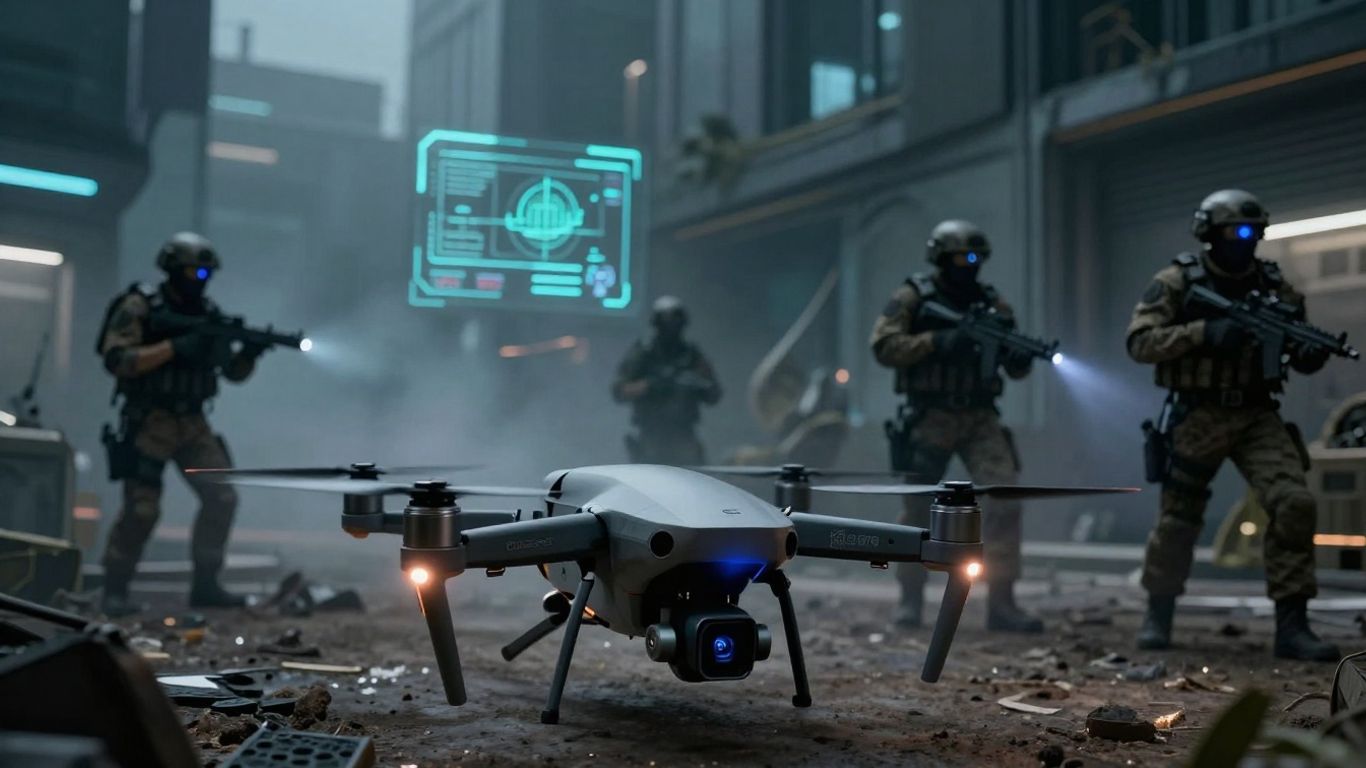
Look, the battlefield is changing, and a big part of that is technology. We’re not just talking about better rifles anymore. Think about how fast things are moving. It’s like trying to keep up with a runaway train sometimes.
Lethal and Precision Technologies
This is where things get serious. We’ve got weapons now that can hit targets with incredible accuracy, from miles away. This isn’t your granddad’s artillery. We’re talking about smart bombs, guided missiles, and drones that can deliver payloads exactly where they need to go. The goal is to take out the enemy with minimal collateral damage, which, let’s be honest, is a good thing. It means fewer of our guys get hurt, and we can achieve objectives more cleanly. It’s about making every shot count, not just blasting away and hoping for the best. This precision means we can be more effective and, frankly, more decisive.
Artificial Intelligence and Unmanned Systems
This is a whole new ballgame. AI is starting to play a bigger role, helping with everything from analyzing intelligence to guiding weapons. And then there are the unmanned systems – drones, robotic vehicles, you name it. They can go places humans can’t, or shouldn’t, go. They can scout, they can carry supplies, and yes, they can even engage targets. This takes some of the risk off our soldiers, letting machines handle the dangerous stuff. It’s a game-changer for reconnaissance and for operations in hostile environments.
Cyber and Information Warfare
This is the invisible battlefield. It’s not about bullets and bombs; it’s about data and networks. Cyber warfare means messing with the enemy’s computer systems, their communications, their power grids. Information warfare is about shaping what people believe, spreading propaganda, and disrupting the enemy’s narrative. It’s a constant struggle for control of the information space. Think about how much we rely on our networks; imagine if they suddenly stopped working, or if the information you were getting was all lies. That’s the power of this domain. It can cripple an enemy without firing a single shot.
The integration of these advanced technologies is not just about having the latest gadgets. It’s about fundamentally changing how we approach conflict, making operations faster, more precise, and often, less reliant on putting boots on the ground in harm’s way. It demands a new way of thinking and training for our military personnel.
Asymmetric And Hybrid Threats To Military Operations
Look, the battlefield isn’t just about tanks and planes anymore. We’re seeing a real shift, where the enemy isn’t always a uniformed army with clear objectives. These asymmetric and hybrid threats are a headache, plain and simple. They’re designed to bypass our strengths, the stuff we’ve spent trillions on, and hit us where we’re maybe not as prepared. Think about it – they don’t need to match our firepower. Instead, they’re looking for ways to exploit our weaknesses, often by blurring the lines between war and peace, or between combatants and civilians.
Challenging Conventional Power
This is where things get tricky. Our military is built for big, conventional fights. We train for it, we equip for it. But when an adversary uses tactics that aren’t part of a standard military playbook, it throws a wrench in the works. They might use terrorism, cyberattacks, or even just propaganda to destabilize things. Victory in war is not always determined by military superiority. It’s about understanding that brute force isn’t the only answer. We’ve seen this throughout history, where even the biggest empires got tripped up by smaller, more agile opponents who knew how to fight differently. It forces us to rethink how we define power and how we respond when our traditional advantages are sidestepped. It’s a tough pill to swallow, but we need to acknowledge that our might doesn’t automatically mean we win every fight, especially when the rules are constantly changing. You can read more about how conventional strength isn’t the only factor in military superiority.
Unrestricted Warfare Strategies
This is a concept that really highlights the shift. "Unrestricted Warfare," as some Chinese strategists have called it, is all about using every tool available – military, economic, political, even social – to achieve objectives. It’s not just about shooting. It’s about disrupting supply chains, messing with financial markets, or spreading disinformation to turn the public against their own government. They’re not playing by the Geneva Conventions, and they’re certainly not waiting for us to mobilize our divisions. It’s a multi-domain approach that can be incredibly effective because it keeps us constantly reacting.
The Civilianization Of Conflict
This is perhaps the most disturbing aspect. Warfare is increasingly bleeding into civilian life. Think about it: terrorists hiding among populations, or cyberattacks that shut down power grids for millions. It makes it incredibly difficult to distinguish between a combatant and a non-combatant, which complicates everything from rules of engagement to public support for a conflict. This trend means that conflicts aren’t just happening on distant battlefields; they’re happening in our cities, our networks, and our daily lives. It’s a messy, complicated reality that demands a different kind of thinking, one that acknowledges the blurred lines and the human cost beyond the traditional military casualty count.
Here’s a quick look at some of the tactics involved:
- Propaganda and Disinformation: Spreading false narratives to sow discord and undermine trust.
- Cyberattacks: Targeting critical infrastructure, government systems, or private data.
- Economic Coercion: Using sanctions or market manipulation to weaken an adversary.
- Proxy Warfare: Supporting non-state actors to fight on your behalf.
- Terrorism: Using violence against civilians to create fear and achieve political goals.
The enemy isn’t always wearing a uniform. They’re often operating in the shadows, using our own interconnectedness and freedoms against us. This requires us to be more adaptable and less predictable than they are.
Strategic Theory And Contemporary Military Operations
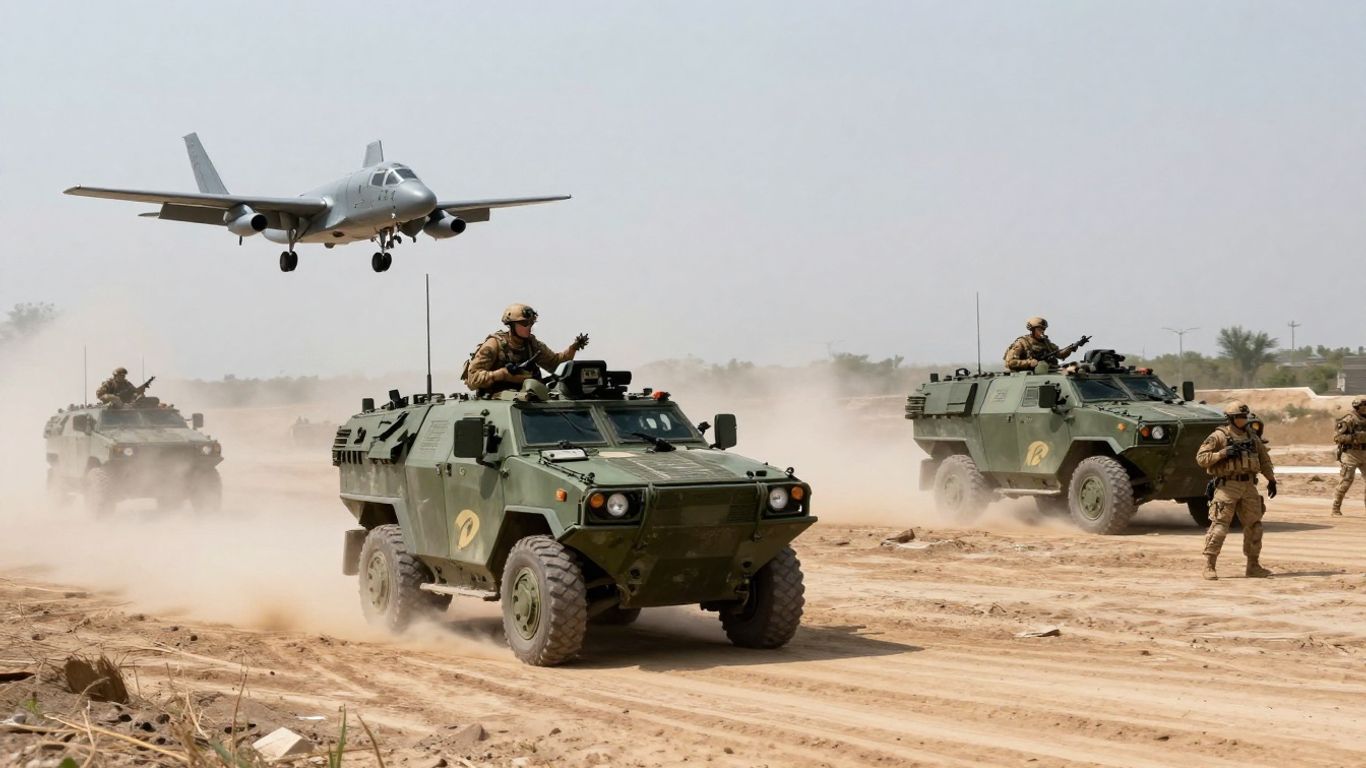
Look, war isn’t some brand-new invention. People have been fighting forever, and while the tools change, the basic ideas behind winning and losing? Those stick around. That’s where strategic theory comes in. It’s about understanding the timeless stuff, the principles that have guided commanders from ancient times right up to today’s complex battlefields. Trying to label every new conflict with a fancy name like ‘hybrid warfare’ often misses the point. Instead, we should be looking at what makes war, war, across all the different ways it’s fought.
Eternal Principles Of Warfare
Some things just don’t change. Think about the importance of surprise, or keeping your enemy guessing. Or how vital it is to have a clear objective and the will to see it through. These aren’t just old-fashioned ideas; they’re the bedrock of military success. Even with all the fancy tech, a commander who ignores these fundamentals is setting themselves up for a fall. It’s about understanding the human element, the psychology of conflict, and how to apply force effectively, not just with brute strength, but with smarts.
- Concentration of Force: Bringing overwhelming power to bear at the decisive point.
- Objective: Having a clear goal that contributes to the overall strategic aim.
- Surprise: Striking the enemy when and where they least expect it.
- Economy of Force: Using resources wisely, not wasting them on secondary efforts.
Holistic Approaches To Conflict
Modern conflicts aren’t just fought on a single battlefield anymore. They spill over into politics, economics, and the information space. You can’t just win the shooting part and expect to win the war. It’s a whole-picture deal. This means our military has to work hand-in-hand with diplomats, intelligence folks, and even economic advisors. Ignoring any part of this complex web means you’re likely to fail. It’s about seeing the entire conflict, not just the part that involves bullets and bombs.
The battlefield today is far more than just the physical space. It includes the minds of the enemy, the will of their people, and the flow of information. To truly succeed, our strategy must be as broad as the conflict itself, integrating all instruments of national power.
Lessons From Past And Present Conflicts
We’ve seen a lot of fighting in recent years, from dusty deserts to urban sprawls, and even in the digital world. Each conflict, whether it’s a full-blown invasion or a low-level insurgency, teaches us something. We can’t just dismiss these experiences as unique. Instead, we need to look for the patterns, the recurring themes that show up again and again. Understanding how past campaigns played out, what worked, and what definitely didn’t, gives us the best guide for what lies ahead. It’s about learning from history, not repeating its mistakes.
Future Directions In Military Operations
Prognostic Outlooks On Warfare
Looking ahead, the battlefield is going to get a lot more complicated. We’re not just talking about bigger guns or faster jets, though those will be around. The real shift is in how wars are fought and who’s fighting them. Think about it: technology keeps advancing at a breakneck pace, and that means new ways to attack and defend are popping up constantly. It’s not just about traditional armies anymore. Non-state actors and even individuals can cause serious trouble with the right tools. We need to be ready for anything, from high-tech cyberattacks to old-school guerrilla tactics, all happening at the same time. It’s a messy picture, and frankly, it’s going to take some serious brainpower to keep up.
Identifying Discernible Trends
Several trends are pretty clear if you look closely. First, the lines between war and peace are blurring. Conflicts aren’t always declared with trumpets; they can simmer through cyber intrusions or economic pressure for years. Second, technology is making warfare more remote but also more pervasive. Drones and AI can strike from afar, but cyber weapons can hit anywhere, anytime. This means our adversaries are looking for ways to exploit our reliance on interconnected systems. We’ve seen how important supply chains are, and securing them is a big deal for national security. The Trump administration, for example, looked into using AI to set reference prices for critical minerals, aiming to strengthen U.S. influence and secure our own resources. It’s about controlling what we need to keep our military and economy running.
Here are some key shifts we’re seeing:
- Increased reliance on unmanned and autonomous systems: Drones, robots, and AI-powered weapons will become standard. This changes how we deploy troops and what kind of risks we take.
- The rise of information and cyber warfare: Hacking, disinformation campaigns, and electronic jamming are as much a weapon as a missile. Expect these to be central to future conflicts.
- Hybrid threats: Adversaries will mix conventional military action with irregular tactics, economic coercion, and political subversion. It’s a multi-pronged approach designed to overwhelm us.
The nature of conflict is evolving beyond traditional battlefields. Future wars will likely involve a complex interplay of kinetic actions, digital intrusions, and psychological operations, all aimed at disrupting an adversary’s will and capacity to resist. Understanding this multifaceted approach is key to developing effective defense strategies.
The Role Of Geographies In Future Conflicts
Where wars happen still matters, but the definition of ‘geography’ is expanding. It’s not just about physical terrain anymore. We have to consider the digital space, the electromagnetic spectrum, and even the information environment as battlegrounds. Certain regions will remain flashpoints due to geopolitical rivalries and resource competition. Think about areas with strategic waterways or those rich in critical minerals. These places will continue to be contested. But we also need to watch how conflicts might erupt in unexpected places, perhaps driven by climate change impacts or internal instability that spills over borders. The global interconnectedness means a problem in one corner of the world can quickly affect us all, making a broad understanding of global dynamics more important than ever.
Wrapping It Up
So, we’ve gone over a lot of ground here, looking at how wars are fought these days. It’s not like the old movies, that’s for sure. Things are way more complicated now, with new tech popping up all the time and conflicts happening in places we never used to think about. Understanding all this isn’t just for the brass hats; it matters for all of us. Knowing what’s going on helps us see the bigger picture and why certain decisions get made. It’s a tough world out there, and staying informed is pretty much the least we can do.
Frequently Asked Questions
What are the different ‘generations’ of warfare?
Think of ‘generations of warfare’ as different ways armies have fought over time. Early generations focused on big armies and simple tactics. Later ones brought in faster movement, better technology, and more complex plans. Today, we’re seeing even newer ways of fighting that involve computers and information.
How has technology changed modern fighting?
Technology has made a huge difference! Things like drones, super-accurate weapons, and computers that can help make decisions are changing how wars are fought. Cyber warfare, where enemies attack computer systems, is also a big deal now.
What is ‘hybrid warfare’?
Hybrid warfare is like a mix of different fighting styles. It’s not just about soldiers fighting soldiers. It can include using information to confuse people, economic pressure, and even cyber attacks, all happening at the same time.
Why is the ‘human element’ still important in modern war?
Even with all the new technology, people are still key. Soldiers need to make tough decisions, understand different cultures, and lead their teams. Technology can help, but it can’t replace human judgment and bravery.
What does it mean to fight in ‘kinetic, connected, and synthetic’ ways?
This is a way to describe modern fighting. ‘Kinetic’ means using physical force. ‘Connected’ means how everything is linked together, like communication systems and networks. ‘Synthetic’ refers to how technology and fake environments can be used in fighting.
How do old ideas about war still matter today?
Even though fighting changes, some basic ideas about war stay the same. Understanding why people fight, how leaders make decisions, and the importance of planning are timeless. Learning from past wars helps us understand today’s conflicts better.