
US amassing 16,000 troops off Venezuelan coast
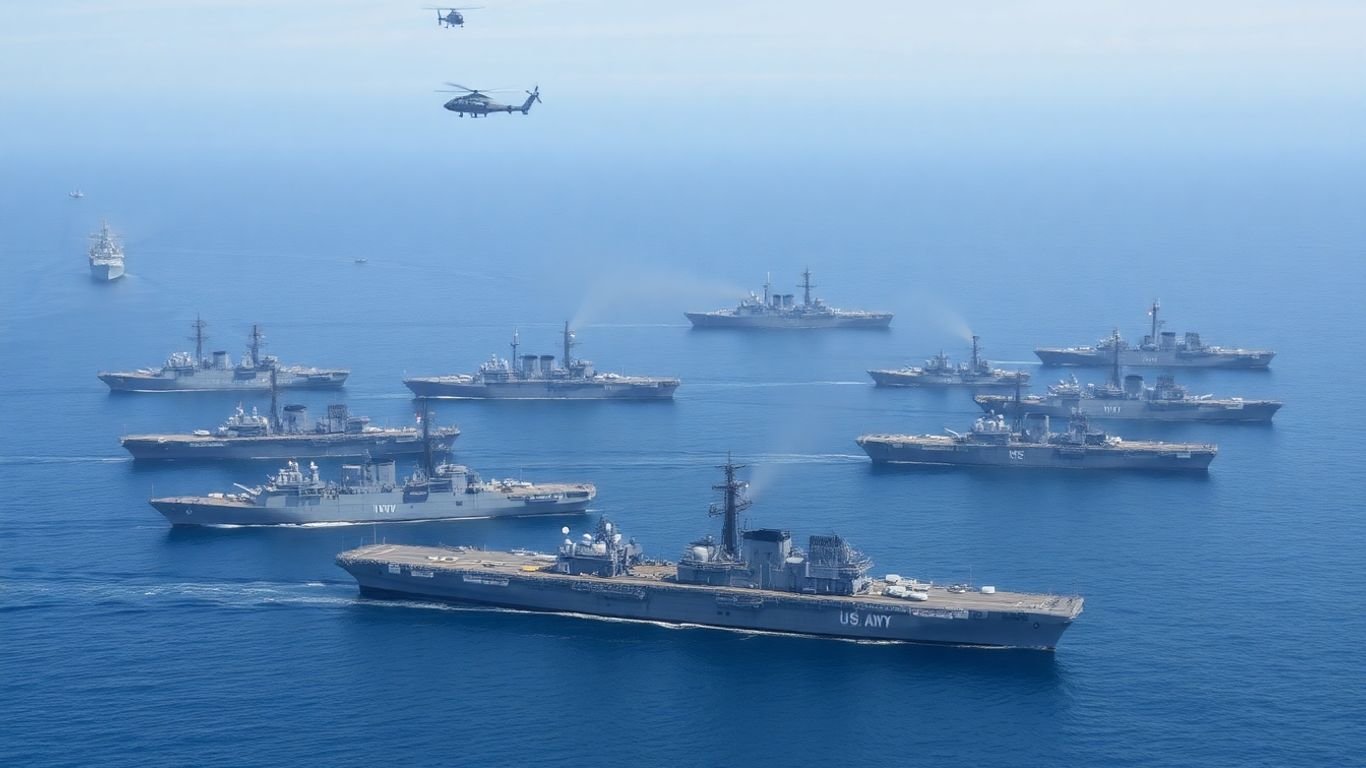
So, it looks like the USA is really beefing up its military presence near Venezuela. We’re talking about a huge number of troops and ships showing up in the area. This whole situation has Venezuela pretty upset, and other countries are watching closely to see what happens next. It’s all pretty intense.
Key Takeaways
- The USA has deployed approximately 16,000 troops and a significant naval armada, including warships and an aircraft carrier group, off the coast of Venezuela.
- US officials accuse Venezuela of supporting “narcoterrorists” and have conducted strikes against suspected drug-smuggling vessels.
- Venezuelan President Nicolás Maduro denies the US allegations, calling them a pretext for a regime change operation and resource grab.
- International reactions include condemnation of US actions by the UN Human Rights Chief and strong support for Venezuelan sovereignty from Russia.
- The substantial US military buildup near Venezuela raises questions about potential strategic objectives beyond counter-narcotics, possibly signaling a shift in regional power dynamics and challenges to traditional US influence.
Massive US Military Presence Near Venezuela
It looks like the United States is really beefing up its military presence in the waters near Venezuela. Reports are swirling about a significant buildup, with some sources suggesting as many as 16,000 troops and a whole fleet of naval assets are gathering in the area. This isn’t just a small patrol; it’s a substantial show of force.
Deployment of 16,000 Troops and Naval Assets
The numbers being discussed are pretty eye-opening. We’re talking about a large contingent of soldiers and sailors, potentially totaling 16,000 personnel. This deployment includes a number of Navy warships, a specialized vessel for special operations, and even a nuclear-powered submarine already in the Caribbean. It’s a complex arrangement of military hardware.
Aircraft Carrier Group Reinforces Armada
Adding to this impressive fleet, an entire aircraft carrier strike group is reportedly on its way. Led by the USS Gerald R. Ford, this group is expected to bring several more ships and over 4,000 additional personnel. The arrival of such a powerful carrier group suggests that the US might have plans that go beyond just routine operations in the region. It’s a big deal when an aircraft carrier shows up.
F-35 Fighter Jets Stationed in Puerto Rico
Beyond the ships at sea, there’s also news about advanced aircraft. F-35 fighter jets have been spotted at a US base in Puerto Rico. These are some of the latest military planes, and their presence adds another layer to the US military’s posture in the Caribbean. It really makes you wonder what’s going on.
The sheer scale of this military assembly off Venezuela’s coast is notable. It involves a mix of surface vessels, submarines, and advanced aircraft, indicating a deliberate and significant operational posture.
Here’s a quick look at what’s reportedly being deployed:
- Eight US Navy warships
- One special operations vessel
- One nuclear-powered attack submarine
- The USS Gerald R. Ford aircraft carrier strike group (expected)
- F-35 fighter jets (stationed in Puerto Rico)
This whole situation is certainly drawing attention, especially given the complex relationship between the US and Venezuela. It’s a lot to take in.
US Accusations Against Venezuela
The United States has been leveling some serious accusations against Venezuela lately, painting a picture of a country involved in some pretty shady dealings. The main thrust of these claims is that Venezuela is actively supporting what the US calls "narcoterrorists." It’s a pretty strong label, and it’s being used to justify a lot of the recent military movements in the region.
Allegations of Aiding Narcoterrorists
This is the big one. The US government has repeatedly stated that Venezuela is a key player in the drug trade, providing support to groups they’ve labeled as "narcoterrorists." This isn’t just talk; it’s being used as a primary justification for the increased military presence. They’re saying that Venezuelan territory is being used as a launching point for drugs heading north, and that the government there is complicit. It’s a serious charge, and it’s definitely escalating tensions.
Imposition of Sweeping Sanctions
Beyond the military buildup, the US has also hit Venezuela with a barrage of sanctions. These aren’t small penalties; they’re designed to cripple the Venezuelan economy, affecting everything from oil exports to financial transactions. The idea is to put immense pressure on the government to change its behavior. It’s a tactic that’s been used before, but the scale of it this time feels particularly intense.
Attacks on Suspected Drug Smuggling Vessels
Adding to the pressure, the American military has reportedly taken action against vessels they believe are involved in drug smuggling. Since September, there have been reports of the US military attacking about a dozen ships. These actions are directly linked to the accusations of Venezuela aiding drug operations. It’s a more direct, kinetic approach that shows the US is willing to take action on the water as well as on land and in the air. The US has also authorized CIA operations in the region, targeting what they claim are incoming drugs, a move that echoes past US forces and CIA actions in Latin America.
The narrative being pushed is that Venezuela is a destabilizing force in the region due to its alleged involvement in illicit drug trafficking. This narrative serves as the public justification for a significant increase in US military assets near Venezuelan waters and airspace, alongside economic pressure through sanctions.
Venezuelan Response to US Actions
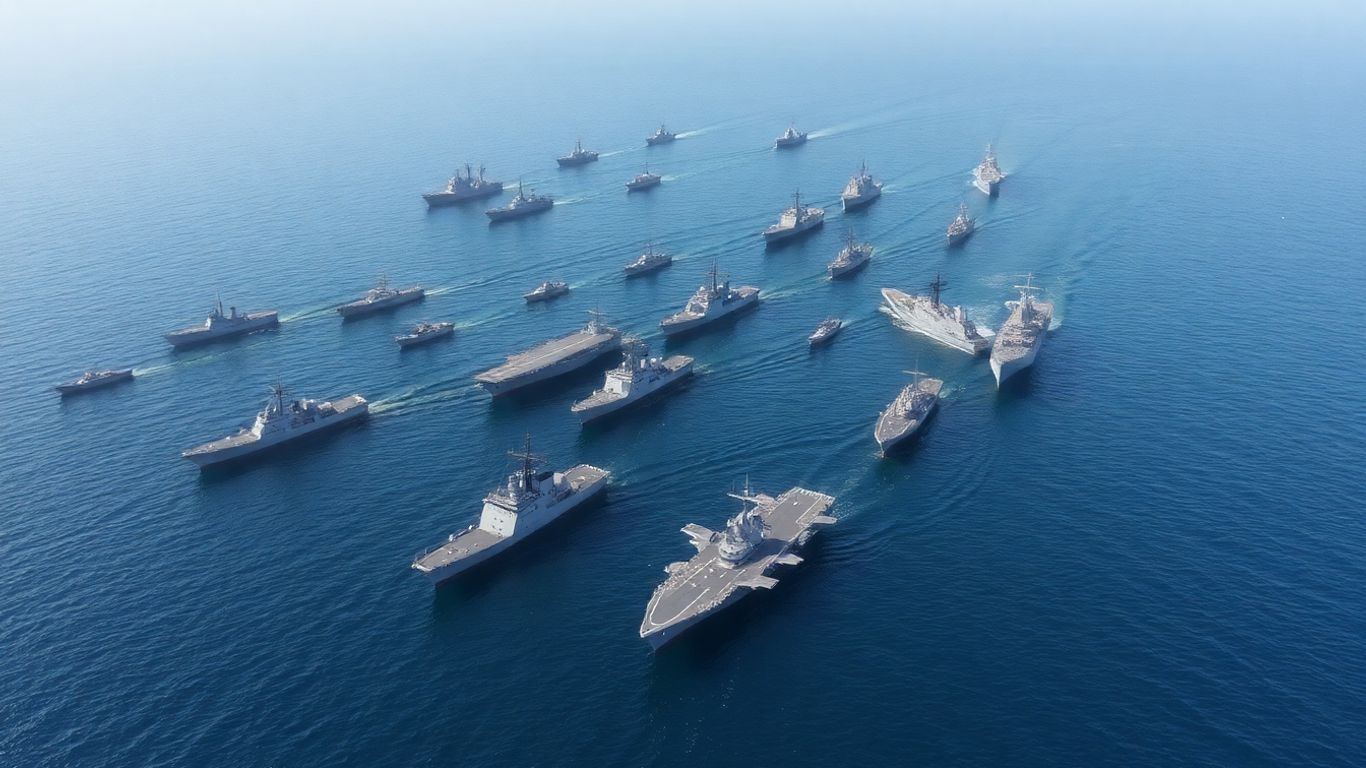
Venezuelan President Nicolás Maduro has strongly pushed back against the US military buildup and accusations. He sees this move not as a genuine effort to combat drug trafficking, but as a pretext for something far more significant. Maduro claims the US is fabricating a new war to justify a resource grab and a regime change operation.
Denial of Allegations by President Maduro
President Maduro has repeatedly denied any involvement in supporting what the US calls "narcoterrorists." He argues that Venezuela is being unfairly targeted and that the accusations are baseless. In his view, the US is simply looking for an excuse to interfere in Venezuelan affairs and seize the country’s natural resources.
Accusations of Fabricating a New War
The Venezuelan government believes the US is creating a false narrative to justify military action. Maduro has stated that the current situation is being manufactured to create a pretext for war, aiming to destabilize his government and install a more favorable regime. This narrative suggests a deliberate effort by the US to escalate tensions.
Claims of Regime Change and Resource Grab
Maduro’s administration asserts that the ultimate goal of the US military presence and sanctions is to overthrow his government and gain control over Venezuela’s vast oil reserves and other valuable resources. This perspective frames the US actions as a continuation of historical patterns of intervention in Latin America, driven by economic and political interests rather than genuine security concerns.
International Reactions to US Military Buildup
The big military show by the US near Venezuela has definitely gotten people talking, and not everyone is happy about it. The UN’s top human rights official, Volker Turk, straight-up condemned the recent US strikes in the area, calling them "unacceptable" and urging an end to what he termed "extrajudicial killing." It’s a pretty strong statement from a global body, showing that these actions aren’t going unnoticed.
Condemnation of US Strikes by UN Human Rights Chief
Volker Turk, the UN High Commissioner for Human Rights, didn’t hold back. He specifically called out the deadly strikes that happened near Venezuela, saying they were "unacceptable." He’s pushing for the US to stop these kinds of actions, which he sees as outside the law. This kind of criticism from the UN is a big deal, especially when it comes to military operations in other regions.
Russia’s Strong Support for Venezuelan Sovereignty
Meanwhile, Russia has made its stance clear. They’ve been pretty vocal in their support for Venezuela’s right to govern itself. Just this week, they even signed a strategic partnership agreement. Russia’s foreign ministry spokeswoman, Maria Zakharova, basically said the US should look at its own problems, suggesting that the "root of the US’ drug problem" is actually within the United States itself. It’s a clear sign of a growing divide and differing views on how to handle regional issues.
Criticism of US Drug Policy
Beyond the direct military actions, there’s a broader critique of the US approach to drug policy. Russia, for instance, isn’t buying the US’s reasoning for its military presence. They argue that the US should focus on its domestic issues rather than projecting power elsewhere. This sentiment echoes a larger debate about international drug control and whether military intervention is the right way to go about it. Some argue that focusing on demand within the US might be more effective than these show of force operations.
The deployment of such a significant military force, coupled with targeted strikes, has raised serious questions about the true intentions behind the US operation. While the stated goal is counter-narcotics, the scale of the military presence suggests potential objectives that extend beyond simply interdicting drug shipments.
Here’s a quick look at some of the international players and their reactions:
- United Nations: Condemned deadly strikes, calling them "unacceptable."
- Russia: Expressed strong support for Venezuela’s sovereignty and criticized US drug policy.
- Venezuela: Denied allegations and accused the US of seeking regime change and resource control.
It’s a complex situation, and these international reactions show that the US actions are definitely not being viewed the same way by everyone involved. The whole thing is making waves, and it’s going to be interesting to see how it all plays out.
Potential US Strategic Objectives
Plans Beyond Counter-Narcotics Operations
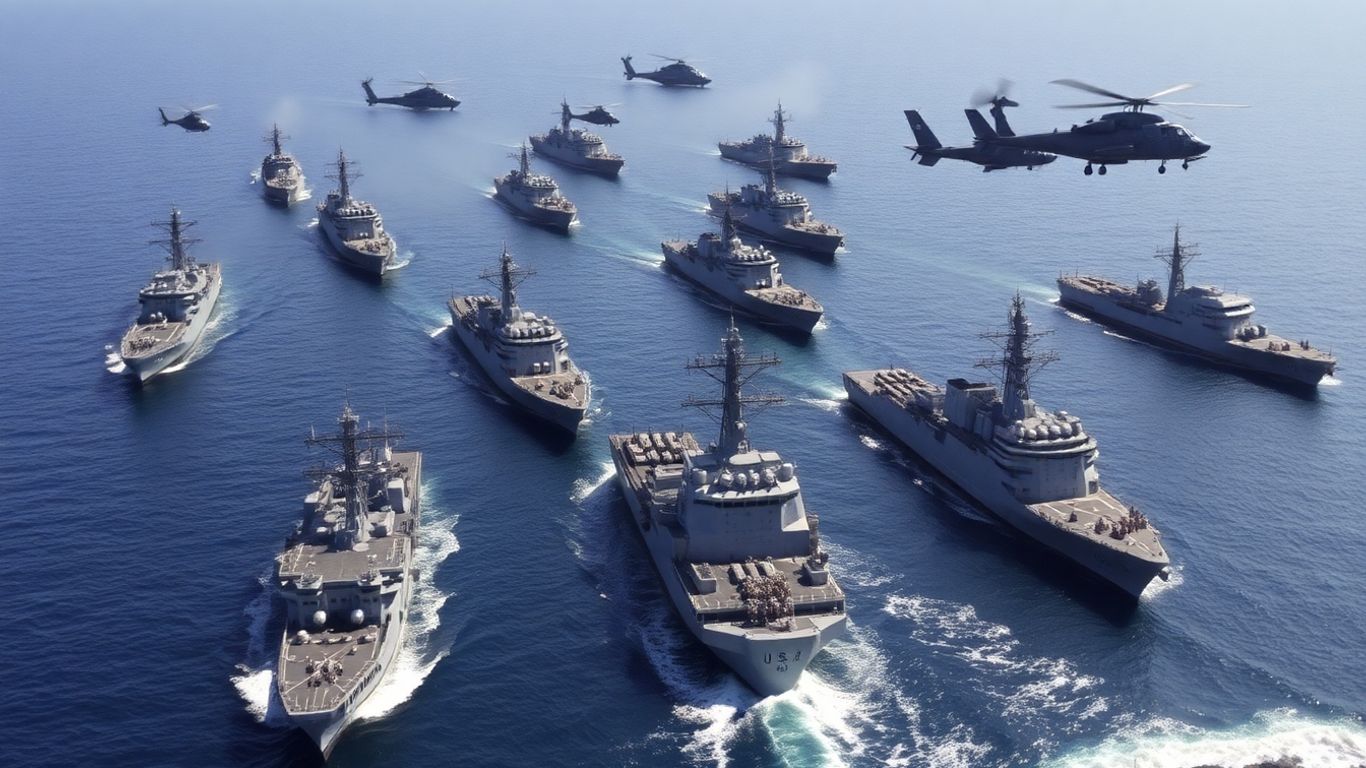
The sheer scale of this military buildup, with 16,000 troops and a carrier strike group now in the vicinity, really makes you wonder if this is just about stopping drugs. Experts are pointing out that deploying assets like the USS Gerald R. Ford carrier group suggests Washington might have bigger fish to fry. It’s not every day you see this kind of naval power concentrated unless there’s a more significant strategic goal in mind. Some analysts believe this could be a way to project power and influence in a region where US sway has been challenged.
Weighing Potential Military Actions
There’s been talk, reported by various news outlets, that the White House has been considering military options. While President Trump has publicly denied specific plans, the deployment of advanced F-35 jets to Puerto Rico and the presence of specialized vessels hint at a readiness for various scenarios. It’s like they’re setting the stage, just in case. The clock might be ticking, too, as carrier groups can’t stay deployed indefinitely without needing to redeploy.
Identification of Alleged Drug-Smuggling Facilities
Reports suggest that US intelligence has pinpointed locations believed to be involved in drug trafficking. This information, if accurate, could serve as a justification for actions, whether they are direct strikes or other forms of intervention. The recent strikes on vessels, though condemned by some international bodies, are presented by the US as part of this effort to disrupt illicit operations. It’s a complex situation with claims and counter-claims flying back and forth.
The concentration of naval and air assets, coupled with intelligence gathering, points towards a strategy that could encompass more than just interdiction. It raises questions about the long-term US approach to regional stability and influence.
Here’s a look at the reported military assets:
- Eight US Navy warships
- One special operations vessel
- One nuclear-powered submarine
- Aircraft carrier USS Gerald R. Ford (expected)
- Three additional military vessels (with carrier group)
- F-35 fighter jets (stationed in Puerto Rico)
Shifting Geopolitical Landscape
It feels like the old rules of the game are getting tossed out the window lately, doesn’t it? For a long time, the United States pretty much did what it wanted in its own backyard, relying on this idea that other countries should just stay out of American affairs. That’s the whole Monroe Doctrine thing, right? But now, it looks like some of the newer players in Latin America aren’t paying much attention to that anymore. They’re making their own moves, and it’s changing the whole picture.
Challenges to the Monroe Doctrine
The Monroe Doctrine, which basically told European powers to stay out of the Americas, seems to be getting a serious rethink. Countries in the region are increasingly asserting their independence and forming their own partnerships, often without regard for historical US influence. This isn’t just talk; we’re seeing it in how they interact with each other and with global powers outside the Western Hemisphere.
Growing Anti-American Alliance in Latin America
There’s a noticeable trend of countries in Latin America banding together, sometimes forming what could be seen as an anti-American bloc. This isn’t necessarily about outright hostility, but more about a desire for greater autonomy and a rejection of what they perceive as US interference. These alliances are becoming more organized and influential, presenting a united front on various issues.
Changing Dynamics in Global Power Structures
What’s happening in Latin America is also part of a bigger global shift. We’re seeing new power centers emerge and existing ones adapt. The way countries cooperate, trade, and even conduct military operations is evolving. It’s not just the US and a few other big players anymore; there’s a more complex web of relationships developing. This multipolar world means that actions in one region can have ripple effects far beyond it.
Here’s a look at some of the military assets reportedly involved:
| Asset Type | Quantity | Notes |
|---|---|---|
| Navy Warships | 8 | Part of the initial deployment |
| Special Operations Vessel | 1 | |
| Nuclear Submarine | 1 | |
| Aircraft Carrier Group | 1 | USS Gerald R. Ford, arriving soon |
| Support Vessels | 3 | Accompanying the carrier |
| F-35 Fighter Jets | Unknown | Stationed in Puerto Rico |
This buildup isn’t happening in a vacuum. It’s occurring against a backdrop of:
- Increased military cooperation between Russia and China.
- A growing number of nations seeking to reduce their reliance on the US dollar.
- Regional bodies actively discussing collective security and economic independence.
The traditional understanding of regional security is being challenged. What was once a clear hierarchy is now a more complex negotiation of power and influence, with local actors playing a much more significant role in shaping their own destinies.
What’s Next?
So, with all these ships and troops hanging around Venezuela’s doorstep, it’s hard not to wonder what’s really going on. The US says it’s about stopping drugs, but Venezuela isn’t buying it, calling it a setup for something bigger. Other countries are watching too, and it feels like things are getting pretty tense. Whether this is just a show of force or the start of something more, it’s definitely a situation worth keeping an eye on.
Frequently Asked Questions
Why is the US sending so many troops near Venezuela?
The U.S. says it’s cracking down on drug smuggling from Venezuela. They’ve accused Venezuela of helping drug traffickers and have even attacked boats they claim are used for smuggling. Some reports say there are about 16,000 American troops and several Navy ships in the area, including an aircraft carrier.
What does Venezuela say about this military buildup?
Venezuela’s President, Nicolás Maduro, denies the U.S. claims. He believes the U.S. is making up stories to start a war and try to take over Venezuela’s resources. He thinks it’s an attempt to change the government there.
Are there any other countries involved or commenting?
Yes, other countries are watching closely. The United Nations’ human rights chief has spoken out against the U.S. attacks. Russia, which has a partnership with Venezuela, is supporting Venezuela’s right to be independent and suggesting the U.S. should focus on its own drug problems.
Could the U.S. military presence mean something more than just fighting drugs?
Some experts think the large number of troops and ships might mean the U.S. has bigger plans than just stopping drug smuggling. There have been reports about the U.S. looking at possible military actions and identifying places in Venezuela that might be used for drug activities.
Has the U.S. military taken any action already?
Yes, the U.S. military has reported attacking several vessels in the Caribbean and Pacific that they say are involved in drug smuggling. They’ve claimed to have killed people on these boats, calling them ‘narco-terrorists’.
Is this military move changing how countries in Latin America view the U.S.?
This situation could be part of a bigger shift. For a long time, the U.S. has acted like it has a special role in the Americas. Now, some countries in Latin America might be forming alliances against U.S. influence, challenging the old ways of how countries interact in the region.

![[Donald Trump] looks disappointed with election results.](https://countrybrief.com/wp-content/uploads/2025/11/thumbnail-49-768x432.jpeg)