USA Higher Education Bankruptcies
It feels like every other week we’re hearing about another college closing its doors. The whole system of USA Higher Education seems to be shaking right now, and it’s not just a few small schools. Big names are struggling, and it makes you wonder what’s really going on. We’re seeing fewer students, money problems, and a lot of questions about whether a degree is still worth what it used to cost. Let’s break down what’s happening and why it matters.
Key Takeaways
- Many USA Higher Education institutions, especially rural and smaller private ones, are facing closure or merger due to falling student numbers and money troubles. Since March 2020, a significant number have shut down, and more are expected to close soon.
- Student loan rules, which make it hard to discharge debt in bankruptcy, might be encouraging lenders and schools to offer loans without fully considering if students can repay them. This creates a situation where schools might not be as careful about costs or the value they offer.
- Rising costs for running colleges, combined with fewer students and sometimes political pressures, are creating major financial strain. This is leading to program cuts and closures, with a tough outlook for many institutions, particularly those that rely heavily on tuition.
- The overall economic impact is concerning, with more graduates struggling to find jobs or being underemployed. This, along with widespread student loan defaults, puts a strain on the economy and taxpayers.
- The value of a USA Higher Education degree is being questioned more and more. Factors like high costs, student debt, and a perceived decline in the quality or relevance of some programs, especially in liberal arts, are making students and families rethink the investment.
The Unraveling Of USA Higher Education
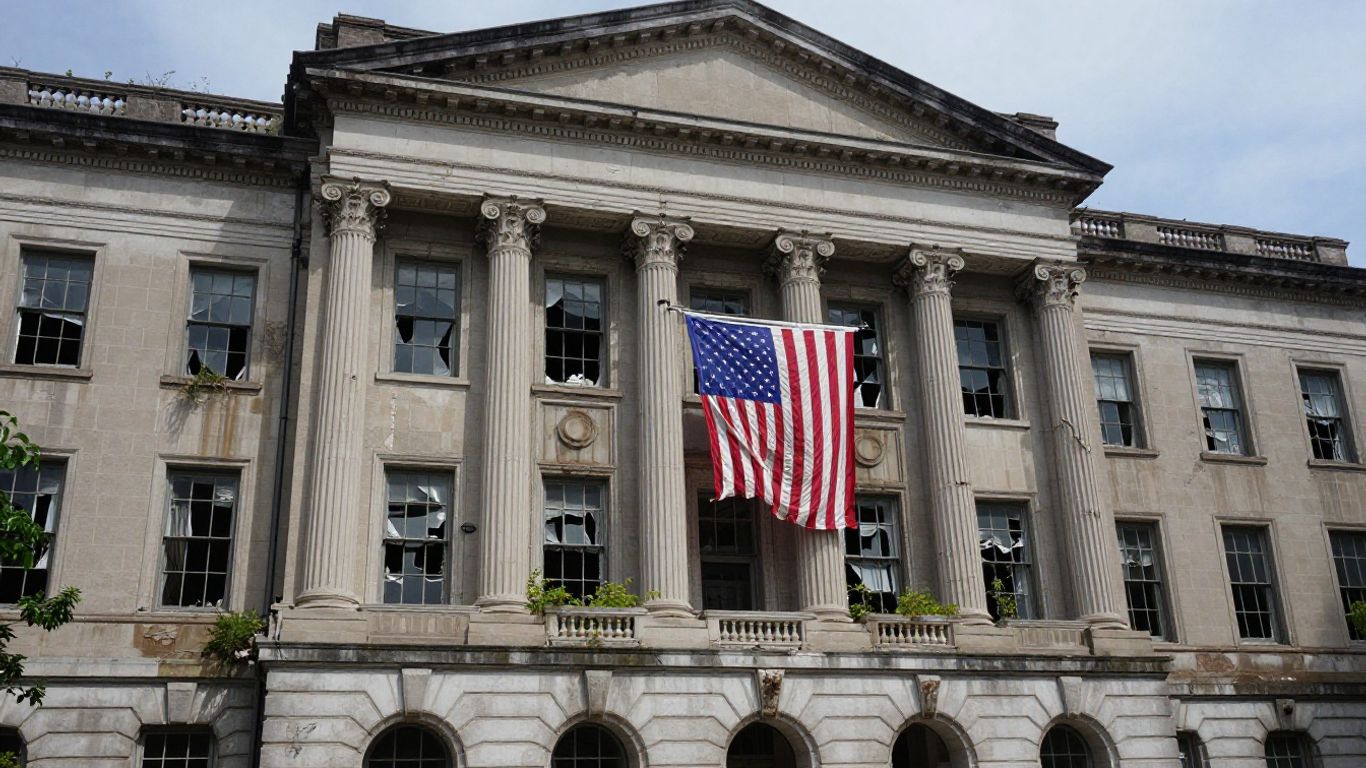
It feels like the whole system is starting to come apart at the seams, doesn’t it? For years, we’ve been told a college degree is the golden ticket, the only way to get ahead. But lately, it’s looking more like a one-way ticket to debt and disappointment for a lot of folks. The numbers just aren’t adding up anymore. We’re seeing fewer young people heading to college, and the ones who do are often finding themselves with degrees that don’t quite translate into the jobs they were promised. It’s a tough pill to swallow when you’ve spent a fortune and years of your life chasing a dream that seems to be fading.
Declining Enrollment And The Demographic Cliff
Enrollment numbers are down, and it’s not just a blip. The big picture shows a shrinking pool of traditional college-aged students. This isn’t some sudden event; it’s a slow-motion train wreck driven by a drop in birth rates years ago. Think of it as a demographic cliff – fewer babies born means fewer students knocking on college doors down the line. This is hitting some schools, especially those in rural areas, harder than others. They’re struggling to fill classrooms, and that means less tuition money coming in, which, as you can imagine, creates all sorts of problems.
The Accelerating Trend Of College Closures
Because of the enrollment drop and financial pressures, more and more colleges are shutting their doors. It’s not just small, local schools anymore; we’re seeing larger institutions struggling too. This trend seems to be picking up speed. When a college closes, it’s not just a building that goes dark. It’s a blow to the local economy, a loss of jobs, and a disruption for students who have to scramble to finish their education somewhere else, often with more debt. It’s a messy situation all around.
Financial Strain And Operational Woes
Beyond just enrollment, colleges are facing serious money problems. Costs keep going up – everything from staff salaries to maintaining aging buildings. At the same time, state funding has often been cut back, and tuition hikes are becoming harder to justify when graduates aren’t seeing the promised returns. Many universities are run more like businesses these days, with administrators focused on the bottom line. This focus on profit, combined with a workforce often made up of part-time instructors, has left many institutions vulnerable. It’s a recipe for disaster when the money dries up.
The idea that higher education is a guaranteed path to prosperity is starting to feel like a fairy tale for many. The costs are sky-high, and the payoff isn’t what it used to be, especially for those not in the most in-demand fields. This disconnect is a major reason why so many institutions are finding themselves in deep trouble.
- Fewer high school graduates to draw from.
- Increased competition from online programs and alternative training.
- Difficulty attracting and retaining students due to perceived value and cost.
This whole situation makes you wonder what the future holds for higher education in this country. It’s a complex problem with a lot of moving parts, and frankly, it doesn’t look like an easy fix. We’re seeing the consequences of decades of decisions, and now everyone’s having to deal with the fallout. It’s a stark reminder that even seemingly stable institutions can face serious challenges. The higher education system faces a crisis in 2025, and the signs have been there for a while.
The Student Loan Crisis Fueling The Fire
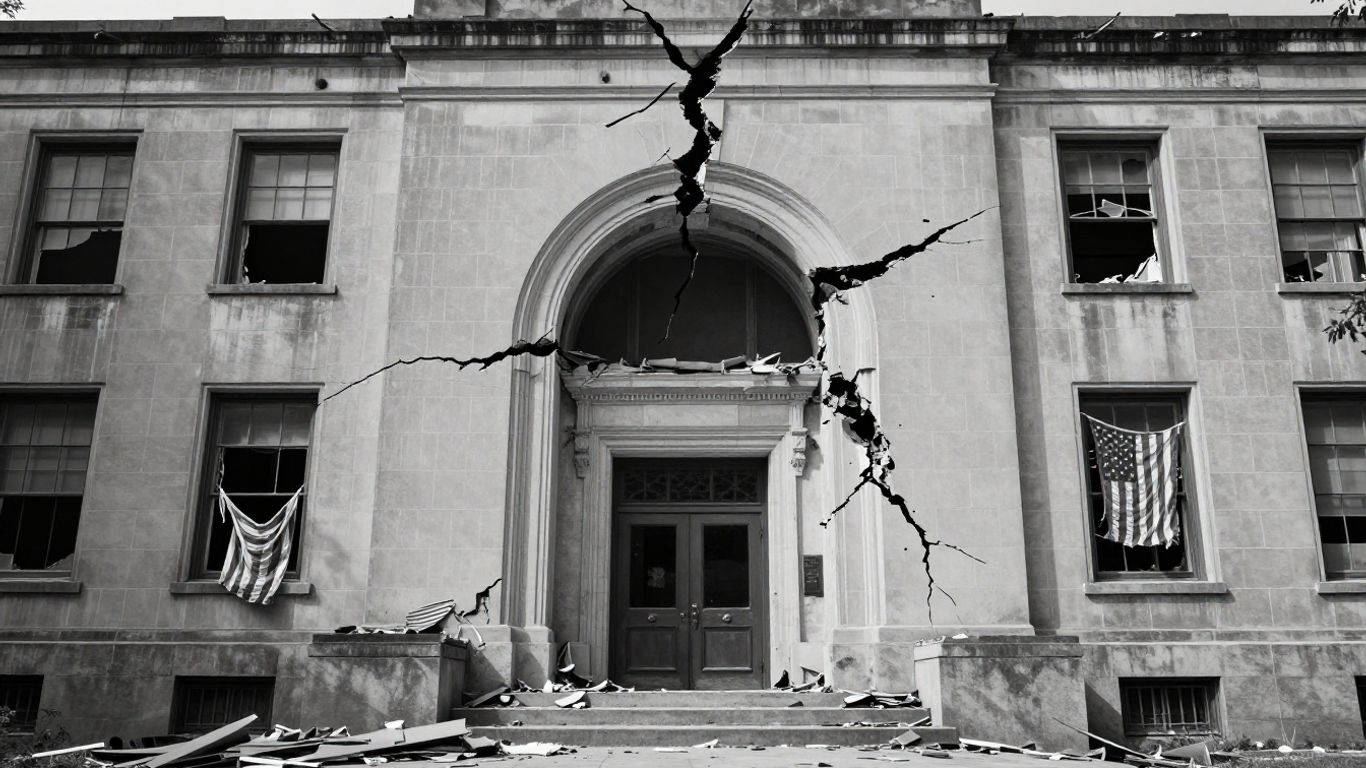
It’s no secret that American universities are in a tough spot financially. We’re talking about serious us college financial struggles here, and a big part of the problem is the student loan situation. It’s like a runaway train, this american universities debt crisis, and it’s dragging down more than just the students.
Federal Law’s Impact On Loan Dischargeability
One of the biggest issues is how federal law makes it nearly impossible to get rid of student loans in bankruptcy. Think about it: if lenders know you’re pretty much stuck with the debt, no matter what, where’s their incentive to be careful? They can just keep lending, and the schools can keep charging outrageous tuition. This creates a moral hazard where colleges aren’t held accountable for the value they actually provide. It’s a system that seems designed to keep people in debt for decades.
Moral Hazard In Student Lending
Because students can’t easily discharge these loans, lenders and schools operate with less risk. This lack of consequence means colleges can charge whatever they want, and students are often pushed to borrow more than they can realistically repay. It’s a cycle that benefits the institutions, not the students trying to get an education. The college funding problems in America are deeply tied to this.
The Incomplete Economic Analysis Of Higher Education
People often talk about a ‘college bubble,’ but that analogy doesn’t quite fit. Unlike houses, you can’t sell a degree when the market turns. However, the negative effects are very real for students. They’re left with massive debt, and for many, the promised return on investment just isn’t there. The student loan defaults impact is a huge burden on individuals and the economy. It’s estimated that a significant number of students don’t even graduate, yet they’re still on the hook for loans. This whole situation is a mess, and it’s not just about economics; it’s about the future of opportunity for so many.
The current system, with its lax bankruptcy protections for student loans, essentially removes the natural checks and balances that would normally prevent excessive lending and tuition hikes. Lenders have little reason to worry about a borrower’s ability to repay when the debt is practically non-dischargeable. This lack of accountability allows colleges to continue inflating costs without fear of consequences, leaving students trapped in a cycle of debt.
Here’s a look at some of the fallout:
- Rising Debt Loads: Students are borrowing more than ever before to cover tuition and living expenses.
- Limited Access: Heavy debt burdens can discourage low-income and first-generation students from pursuing higher education.
- Stagnant Wages: In many fields, starting salaries haven’t kept pace with the cost of education, making repayment a struggle.
This whole mess is a big reason why so many institutions are facing serious college funding problems in America. It’s a complex web, and untangling it will require some serious changes to how we approach student lending and higher education funding. We need to look at how other countries manage their student debt, like Ghana’s efforts to secure backing for its loan deals [12e4]. It shows that with the right approach, financial stability is possible.
Institutions Facing Insolvency
It’s becoming increasingly clear that a lot of colleges and universities are in serious financial trouble. We’re not just talking about a few isolated cases anymore; this is a widespread problem affecting institutions across the country, especially those in rural areas. These places, often with long histories, are finding it impossible to keep their doors open.
Rural Colleges Grappling With Collapse
Many smaller colleges, particularly those located far from major cities, are facing an uphill battle. They’re dealing with shrinking student numbers, which directly impacts their income from tuition. When enrollment drops significantly, as it has at places like Bacone College in Oklahoma, the financial strain becomes unbearable. Bacone, which used to serve nearly a thousand students, was down to just over a hundred before it had to liquidate its assets. This isn’t just about one school; it’s a trend hitting many rural institutions hard.
Penn State’s Controversial Campus Closures
Even large, well-known university systems aren’t immune. Penn State, for instance, recently announced plans to close seven of its Commonwealth Campuses. This decision, affecting nearly 3,200 students across those campuses, is due to ongoing enrollment and financial pressures. What’s really raising eyebrows, though, is that this is happening while the university is pouring hundreds of millions into its athletic facilities. It makes you wonder where the priorities really lie when student education seems to be taking a backseat to sports.
Siena Heights University’s Financial Challenges
Siena Heights University in Michigan is another example of a private institution struggling to stay afloat. Citing “untenable financial challenges,” officials announced the school would be closing its doors. Enrollment had been on a downward trend for years, falling from over 2,700 students to under 2,000. This situation highlights how rising costs and declining student numbers can create a perfect storm, leading to closures even for schools that have been around for a while. The financial realities are catching up with many institutions that can no longer justify their existence.
The economic landscape for higher education is shifting dramatically. Institutions that fail to adapt to declining enrollment and increasing operational costs risk becoming relics of a bygone era. The focus on athletics over core academic functions at some larger universities raises serious questions about their long-term viability and commitment to students.
Here’s a look at some of the issues these institutions face:
- Declining Enrollment: Fewer students mean less tuition revenue, the primary income source for many colleges.
- Rising Operating Costs: Inflation and the need for updated facilities and technology drive up expenses.
- Competition: Online programs and other educational alternatives offer new choices for students, often at a lower cost.
- Debt Burden: Many institutions carry significant debt, making it harder to weather financial storms.
It’s a tough situation, and it makes you wonder about the future of higher education, especially for smaller schools. The impact of China’s growing economic influence can also be felt indirectly, affecting global markets and investment climates that might otherwise support these institutions China’s economic influence.
| Institution | Location | Year Founded | Announced Closure | Notes |
|---|---|---|---|---|
| Bacone College | Oklahoma | 1880 | Summer 2024 | Liquidated assets after bankruptcy; enrollment dropped from ~1000 to ~100 |
| Siena Heights University | Michigan | 1919 | End of 2025-26 AY | Cited untenable financial challenges; enrollment down from ~2700 to ~1800 |
| Limestone University | South Carolina | 1845 | End of Spring 2025 | Failed to raise emergency funds; $20 million deficit |
| St. Andrews University | North Carolina | 1958 | End of Spring 2024 | Financial sustainability no longer attainable |
A Sector In Decline
Nonprofit Institutions Announcing Closures
It’s not just the for-profit schools that are feeling the pinch. We’re seeing more and more non-profit colleges, the ones that used to be seen as pillars of the community, shutting their doors. This isn’t some sudden event; it’s been building for a while. Fewer young people are heading to college straight out of high school, especially in rural areas. When enrollment drops, tuition money dries up, and that hits these institutions hard. They try to cut costs, maybe sell off some land or buildings, but sometimes it’s just not enough to keep the lights on.
Rising Operating Costs And Political Pressures
Running a college these days is expensive. Think about keeping buildings maintained, paying staff, and keeping up with technology – it all adds up. On top of that, there’s the constant pressure from politicians and the public to justify the cost of higher education. Are degrees really worth what they cost? Are schools teaching what students actually need for jobs? These questions are tough, and the answers aren’t always easy. Plus, with inflation going up, everything from heating the campus to buying new textbooks gets more costly. It’s a tough environment for any institution trying to stay afloat.
Unfavorable Outlooks For The Future
Looking ahead, the picture for many colleges doesn’t look too bright. The number of high school graduates is expected to keep falling in many parts of the country. This means fewer students applying, and that means less money coming in. Some schools are trying to merge with others or get bought out to survive, but even that’s not always a sure thing. For many, the only option left is to close down completely. It’s a sad state of affairs when institutions that have been around for decades, serving generations of students, can no longer continue their work. The trend is clear: the higher education landscape is shrinking, and not in a good way.
The traditional path of a four-year degree is no longer the automatic ticket to success it once was. More and more, people are questioning the value proposition, especially when faced with mounting debt and uncertain job prospects afterward. This shift in thinking is a major reason why so many institutions are struggling to fill their classrooms.
The Broader Economic Repercussions
It’s not just the schools themselves feeling the pinch. The whole system has ripple effects that hit the economy hard. When you have a bunch of graduates who can’t find jobs that actually use their degrees, that’s a problem. We’re seeing more and more folks working jobs that don’t require a college education, even after spending years and a lot of money getting one. This leads to a situation where there’s an excess supply of graduates for the jobs that do exist, driving down wages and making it harder for anyone to get ahead.
Graduate Unemployment and Underemployment
This isn’t just a minor inconvenience; it’s a significant economic drag. Think about it: people are taking on massive debt, often tens or even hundreds of thousands of dollars, for a credential that doesn’t guarantee a good job. This leaves them with less money to spend on other things, like buying homes or starting families, which slows down economic growth. It’s a tough spot to be in, feeling like you’ve done everything right by getting a degree, only to find yourself underemployed or struggling to find work at all.
The Burden of Student Loan Defaults
And then there’s the student loan situation. The sheer amount of debt is staggering. When people can’t pay back these loans, it creates a huge burden. We’re talking about defaults that can impact credit scores for years, making it harder to get loans for cars or houses. Some studies show that borrowers have had more success getting student debt discharged in bankruptcy recently, but that’s a last resort and doesn’t fix the underlying issue. It’s a cycle that’s hard to break free from.
Excess Supply of Graduates and Political Instability
When a large segment of the population feels like the system is rigged against them, or that their hard work isn’t paying off, it can lead to broader social and political issues. People get frustrated, and that frustration can boil over. It creates a sense of unease and can make folks question the stability of the country’s economic direction. It’s a complex problem with no easy answers, and it’s something we need to pay attention to.
The current economic model for higher education seems to be creating more problems than it solves. We’re seeing a disconnect between the cost of degrees and the actual economic return for graduates, leading to widespread financial strain and a questioning of the system’s overall value.
The Erosion Of Value In USA Higher Education
The Inevitable Implosion Of The System
It feels like we’ve been talking about the “higher education bubble” for years, and honestly, it’s starting to feel less like a bubble and more like a slow, painful deflation. For a long time, colleges acted like businesses, hiring tons of part-time folks instead of full-time professors. Now, it seems like the whole system is just struggling to keep up. We’re seeing more and more schools closing their doors, especially those smaller, rural ones. It’s a tough situation, and frankly, it makes you wonder what the point of it all is anymore.
The Decline Of Liberal Arts And Humanities
Remember when studying literature or philosophy was seen as a good thing? Now, it feels like those programs are on the chopping block. Universities are cutting them left and right, often because they’re seen as expensive and not leading to jobs. Students are starting to notice, too. They’re looking at the price tag and thinking, “Is this really worth it?” Most people just want a degree that leads to a decent paycheck, and sadly, the liberal arts aren’t always seen as the path to that. It’s a shame, really, because understanding different people and the world is important, but that’s not what’s driving enrollment numbers these days.
The Growing Skepticism Of Higher Education’s Value
People are just not as sold on the idea of college as they used to be. The cost keeps going up, and the job market isn’t always cooperating. We’ve got a lot of graduates out there with big loans and not-so-big salaries. It’s no wonder folks are questioning if a degree is still the golden ticket.
Plus, with all the political stuff happening on campuses, some people are just turned off by the whole experience. It’s a far cry from when a degree was a surefire way to get ahead. Now, it’s more of a gamble, and a lot of people are starting to think twice before taking the plunge. The financial instability in higher education is a real concern for many families.
The focus has shifted from learning for learning’s sake to a purely transactional view of education, where the primary goal is a return on investment. This mindset is understandable given the economic pressures, but it fundamentally changes what higher education is supposed to be about.
Here’s a look at how costs have stacked up:
| Year | Average Tuition (Public, In-State) | Average Tuition (Private, Non-Profit) |
|---|---|---|
| 2010 | $8,071 | $26,381 |
| 2020 | $10,560 | $35,087 |
| 2024 | $11,260 | $37,000 |
It’s clear that college costs have continued to climb, making the decision to attend even harder for many. While some argue that the wage premium for graduates still makes it a worthwhile investment, the rising debt load is a serious concern for students and their families. The landscape of higher education is changing, and the value proposition is being seriously re-evaluated.
The Pandemic’s Role In The Crisis
The whole COVID-19 mess, starting around 2020, really just poured gasoline on a fire that was already burning. It wasn’t just about people getting sick; it threw the economy into a tailspin. Suddenly, a lot of families had to rethink sending their kids to college, or at least postpone it. We saw undergraduate enrollment numbers dip, and that was even after schools started letting students back in for in-person classes. It was a tough time for everyone, and colleges felt it hard.
Accelerated Trends And Economic Downturn
This whole situation really sped up a lot of the problems colleges were already dealing with. The economy took a big hit, and that meant fewer students, especially those who might have been on the fence about attending. For institutions that relied heavily on international students paying full tuition, the travel bans and restrictions were a disaster. That revenue stream just dried up practically overnight. It’s no wonder some places started closing their doors by the end of the 2019-2020 school year. Some big universities even had to cut back on graduate programs in subjects like liberal arts because not many students were signing up, and the job market for those degrees looked pretty bleak.
Impact On Foreign Student Revenue
Colleges and universities had gotten pretty used to foreign students filling in the financial gaps. These students often pay the full sticker price for tuition, which is a big deal for a school’s budget. When the pandemic hit, travel restrictions made it incredibly difficult, if not impossible, for many international students to get to the U.S. This sudden loss of revenue put a lot of institutions in a really tough spot. It wasn’t just a small dent; for some, it was a major blow to their financial stability. This forced many to look for other ways to make ends meet, often by cutting programs or staff.
Shifting Perceptions Of Higher Education’s Value
Beyond the immediate financial fallout, the pandemic also seemed to make people question the whole point of higher education. We’d already seen younger generations watching their parents rack up massive student loan debt, and they were starting to wonder if it was all worth it. The pandemic just amplified that skepticism. People started looking at alternative paths, and frankly, the whole campus experience felt a bit less appealing when you could be stuck in your dorm room. It’s like the value proposition of a four-year degree took a serious hit in the public eye. This is especially true when you look at the rising costs and the uncertain job market after graduation.
- Enrollment numbers dropped significantly across the board.
- Institutions dependent on international students faced severe financial strain.
- Public perception of higher education’s value began to erode.
The pandemic acted as a catalyst, exposing and worsening existing vulnerabilities within the higher education system. What might have taken years to unfold was compressed into a much shorter, more chaotic period, forcing institutions to confront difficult realities about their financial models and their place in a changing world.
What Does This All Mean?
Look, it’s pretty clear the whole college thing isn’t what it used to be. We’ve seen tons of schools closing down, and it’s not just a few here and there. It’s happening everywhere, and it’s only going to get worse. Fewer kids are going to college, and the ones who do are drowning in debt. It feels like the whole system is just broken. Maybe it’s time we started asking if this is really the best path for everyone, or if we’re just pushing kids into debt for a piece of paper that doesn’t guarantee much anymore. We need to rethink this whole higher education mess before more institutions and more students go under.
Frequently Asked Questions
Why are so many colleges in the US closing down?
Lots of colleges are closing because fewer students are enrolling. This is partly due to fewer young people being born, a trend called the ‘demographic cliff.’ Also, colleges are facing money problems and rising costs, making it hard to stay open. The pandemic made these issues even worse.
What is the ‘demographic cliff’ and how does it affect colleges?
The ‘demographic cliff’ means there are fewer babies being born, which leads to fewer young people ready to go to college in the future. This means colleges have a smaller pool of students to draw from, and many are struggling because of it.
How do student loans play a role in college financial problems?
Student loans are a big part of the issue. Because it’s very hard for students to get rid of these loans even if they declare bankruptcy, lenders and schools know they’ll likely get their money back. This might make them less careful about how much they lend or how much colleges charge, leading to higher costs and debt for students.
Are all types of colleges struggling, or just certain ones?
Smaller, private colleges, especially those in rural areas, seem to be hit the hardest. They often rely more on tuition money and have fewer students. Even some larger universities are closing campuses or cutting programs due to financial strain.
What happens when colleges close?
When a college closes, students have to find new places to finish their education, which can be tough. It also means job losses for faculty and staff. For the local community, it can mean losing a significant employer and a source of cultural activity.
Is a college education still worth the cost?
This is a growing question. While a degree can still open doors, the high cost of college and the amount of student debt many graduates face make people wonder if it’s always worth it. Some people are questioning the value of higher education compared to the price tag.