
Which Countries Can China Annex?
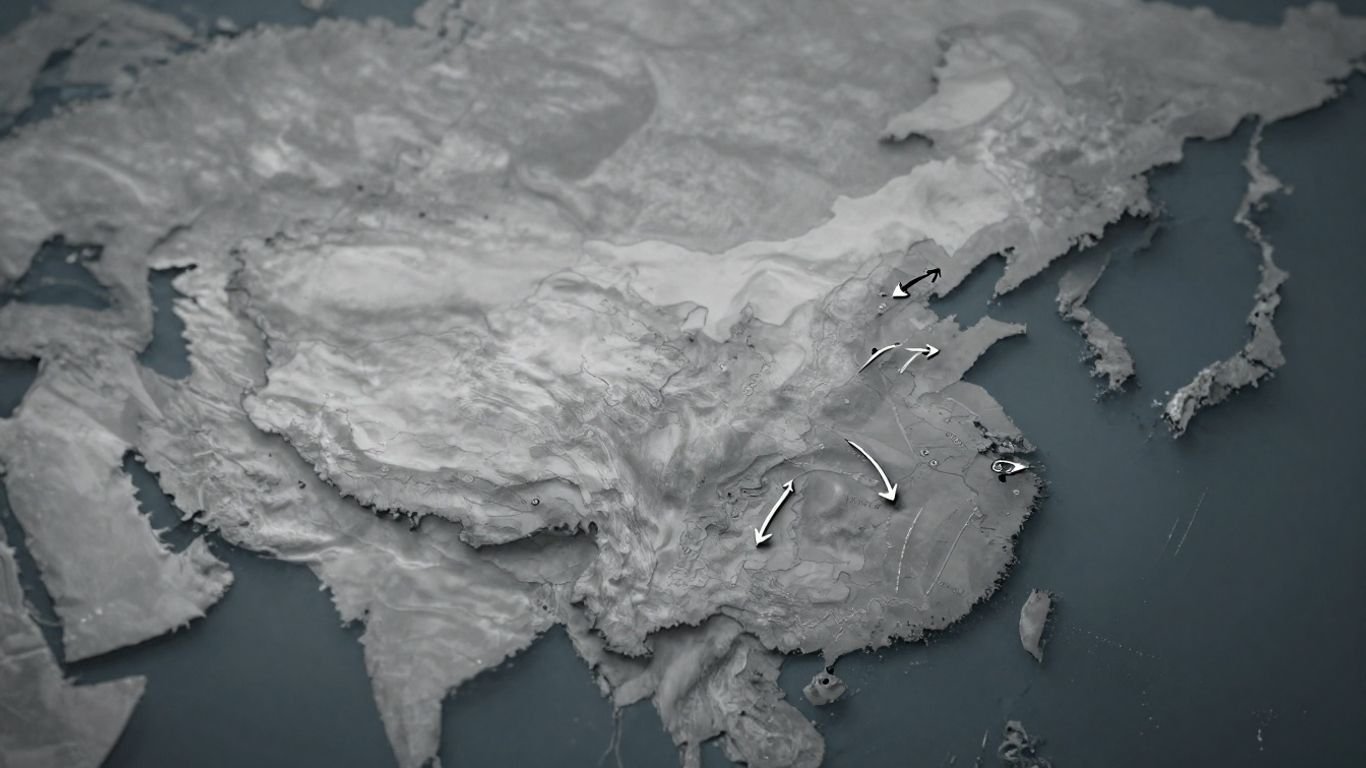
It’s a question that pops up now and then: which countries might China try to take over? China’s history is long, and its borders have shifted over time. We see China making moves in different areas, sometimes through diplomacy, sometimes through other means. This article looks at some of the territories China has claimed or incorporated in the past and present, and what that might mean for its neighbors.
Key Takeaways
- China has been actively building settlements and infrastructure in disputed areas of Bhutan, despite official claims of respecting sovereignty. This action, particularly in the Beyul Khenpajong region, raises concerns about permanent annexation.
- Historically, China has made territorial claims on land ceded by Tajikistan, eventually acquiring around 1,137 square kilometers through a border agreement, though the Republic of China government in Taipei disputes this.
- The South China Sea remains a significant area of focus for China’s maritime expansion, with China asserting control over the Paracel Islands and numerous reefs following military engagements.
- The political status of Taiwan is a core issue for China, which claims the island as its own province despite never having controlled it, with historical precedents for incorporating territories.
- China’s northern borders have seen adjustments through agreements with Russia, including the transfer of territories and islands following border accords, and past disputes like the Zhenbao Island incident.
China’s Assertiveness In The Himalayas
When you look at the map, the Himalayas seem like a pretty solid natural border. But for China, that’s just another area where its geopolitical ambitions are playing out. It’s not just about grand strategies; it’s about practical moves on the ground, often with little fanfare.
Bhutan: A Neighbor Under Pressure
Bhutan, a small kingdom nestled in the mountains, finds itself in a tough spot. China has been quietly expanding its presence in areas that have historically been recognized as Bhutanese territory. We’re talking about villages, roads, and even military outposts popping up. It’s a bit like watching someone slowly move the fence line on your property, and you’re not sure what to do about it. This isn’t about open conflict; it’s a more subtle form of pressure. China’s actions here raise questions about its commitment to its own stated principles of respecting sovereignty, especially when dealing with smaller neighbors. The whole situation with Bhutan is a prime example of how China’s regional influence is growing, not just through economic might, but through territorial adjustments.
- China has built numerous settlements and infrastructure within Bhutanese territory.
- These areas, often high-altitude grasslands, were previously used by Bhutanese for grazing and conservation.
- Bhutan’s limited military capacity and reliance on India for security mean it has few options to counter these moves.
The quiet annexation of territory in Bhutan highlights a concerning pattern. While diplomatic talks continue, the reality on the ground is being reshaped by Chinese construction and control. This approach creates a fait accompli, making future negotiations incredibly difficult for Bhutan.
The Beyul Khenpajong Annexation
One specific area that’s been in the spotlight is Beyul Khenpajong. China’s interest here wasn’t always about claiming the land itself. Initially, it seemed like a bargaining chip, a way to pressure Bhutan into ceding other, perhaps more strategically significant, territories like Doklam. China even offered to drop its claim on Beyul in exchange for concessions elsewhere. However, with Bhutan bound by treaty to respect India’s security interests, ceding Doklam is a non-starter. This leaves Bhutan in a bind, unable to get back the territory China has effectively taken. It’s a complex dance, and Bhutan is clearly on the back foot. The lack of international outcry over these annexations is also notable, leaving countries bordering China to ponder their own vulnerabilities.
India’s Strategic Calculus
India, Bhutan’s much larger neighbor, is naturally watching these developments very closely. The Himalayan region is a sensitive geopolitical area, and any shift in the balance of power is significant. While India has intervened militarily in border disputes with China in the past, like at Doklam, its response to the quieter annexations within Bhutan has been more muted. This doesn’t mean India is unconcerned; it’s likely a calculated approach. India has its own complex relationship with China, marked by both cooperation and significant territorial disputes, such as in Aksai Chin. The situation in Bhutan forces India to constantly reassess its own security posture and its role as a regional power. China’s growing assertiveness in the Himalayas is a key factor in India’s strategic thinking, influencing its defense spending and foreign policy decisions. Understanding China’s economic influence is also key to grasping its broader geopolitical strategy China’s economic influence is increasingly dictating global prices across various sectors.
- India and China share a long history of border disputes, including the Aksai Chin region.
- The McMahon Line, proposed by Britain, has been a point of contention, with the Republic of China rejecting it.
- The Depsang Plains remain a disputed area, with both sides having occupied parts of it at different times.
Reclaiming Historical Lands
China’s approach to its borders isn’t just about the present; it’s deeply rooted in a historical narrative of reclaiming what it views as its own. This isn’t about making new claims, but about correcting what Beijing sees as past injustices and restoring historical boundaries. It’s a complex issue, often involving delicate negotiations and sometimes, just quiet adjustments.
Tajikistan’s Ceded Territories
For a long time, China held onto claims for a significant chunk of territory in Tajikistan, dating back to the 19th century. These were lands that were part of the Qing Dynasty but later became part of Tajikistan through treaties China considers unfair. In 2011, a deal was struck. China officially let go of most of its claim, about 96% of the disputed land. In return, Tajikistan handed over roughly 4%, which works out to about 1,137 square kilometers. It’s a move that settled a long-standing issue, at least on paper, though some still view these historical claims differently.
Vietnam Border Adjustments
The border with Vietnam is another area where historical lines have been redrawn. After years of discussions, a land boundary treaty was signed in late 1999. This agreement formally set out a border stretching about 1,347 kilometers. Out of the areas that were disputed, China got about 114 square kilometers, while Vietnam received 113 square kilometers. It was a pretty even split of the contested land, aiming to bring clarity to a shared border. The maritime border, however, remains a separate, ongoing discussion.
The Republic of China’s Claims
It’s important to remember that the current government in Beijing isn’t the only one with historical territorial views. The Republic of China, based in Taiwan, maintains its own set of claims that often overlap with or extend beyond those of the mainland. Many of the border adjustments made by the People’s Republic of China since 1949 aren’t officially recognized by Taiwan. This creates a layer of complexity, as historical maps and official government positions can differ significantly, reflecting a divided perspective on what constitutes legitimate territory.
The idea of ‘historical lands’ is a powerful narrative in international relations. It taps into national identity and a sense of past glory or grievance. For China, it’s a way to justify current actions and assert its place on the world stage, often by referencing historical maps and treaties that predate modern borders.
Here’s a look at some of the adjustments:
- Tajikistan: Around 1,137 sq km transferred to China.
- Vietnam: Approximately 114 sq km assigned to China out of disputed areas.
- Russia: While not strictly ‘reclaiming’ in the same sense, border agreements in 1991 and 2004 resulted in China regaining control over significant territories, totaling hundreds of square kilometers.
Maritime Expansion And Control
South China Sea Acquisitions
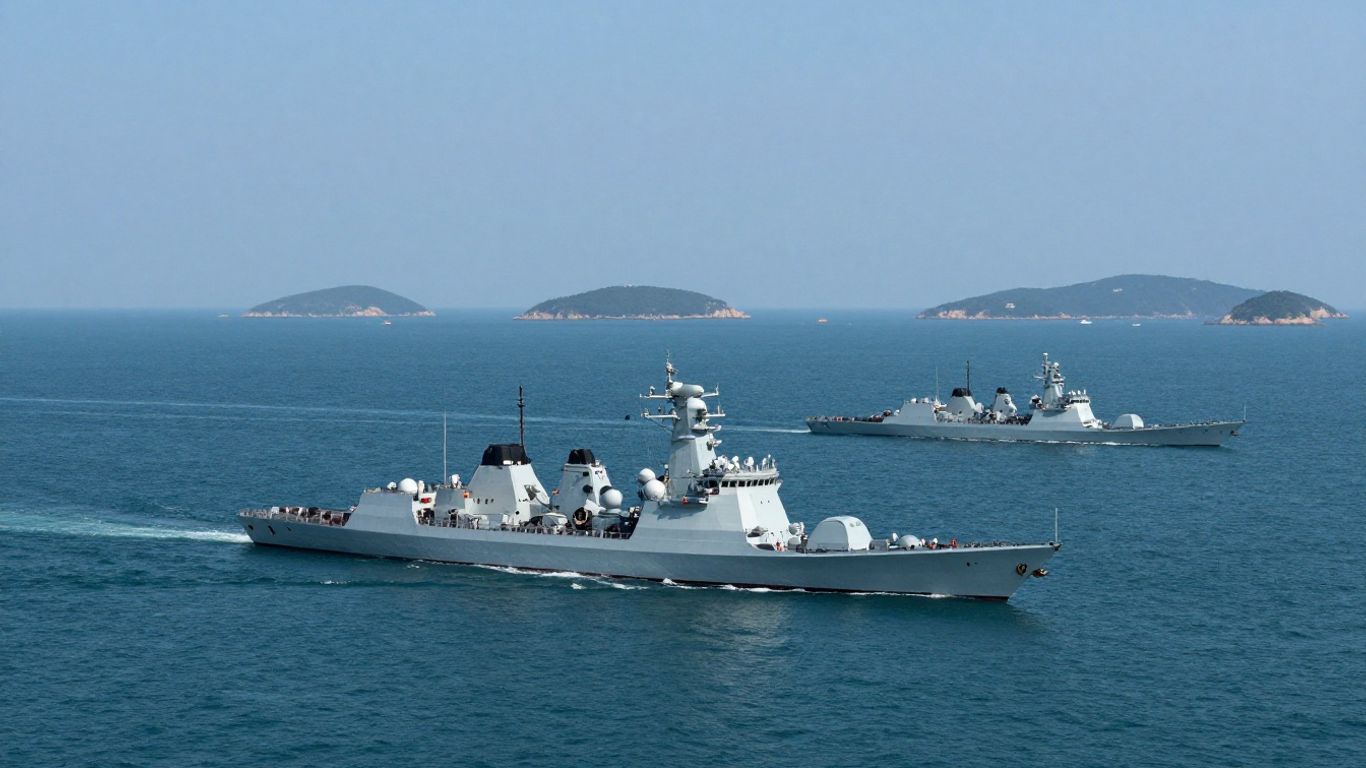
China’s push for control in the South China Sea is a major part of its strategy. It’s not just about islands; it’s about dominating vital shipping lanes and accessing potential resources. The PRC has been busy building up artificial islands and militarizing features, which has caused a lot of friction with neighboring countries like Vietnam and the Philippines. This aggressive stance is about more than just historical claims; it’s about projecting power and securing economic interests.
Here’s a quick look at some of the key areas:
- Paracel Islands: China took control of these islands after a conflict with South Vietnam in 1974. They’ve maintained a firm grip ever since.
- Spratly Islands: This is a complex situation with multiple claimants. China has occupied several reefs and shoals, often through skirmishes, and continues to expand its presence.
- Nine-Dash Line: This is China’s broad claim covering almost the entire South China Sea. It overlaps with the exclusive economic zones of several other nations, leading to constant disputes, like the one with Indonesia over oil exploration near the Natuna Islands.
Paracel Islands Under Beijing’s Rule
The Paracel Islands have been under Chinese control since the 1974 battle. This wasn’t just a simple takeover; it was a military action that solidified Beijing’s claim. Since then, China has continued to develop the islands, turning them into strategic outposts. This control is a key piece of their maritime strategy, allowing them to monitor and influence activities across a vast stretch of water. The ongoing disputes in the South China Sea highlight the challenges other nations face when trying to assert their own maritime rights against China’s growing assertiveness. It’s a situation that keeps regional stability on edge, with potential territorial expansion always a concern for its neighbors. The South China Sea dispute remains a flashpoint.
The Taiwan Question
Unrecognized Annexations
Look, Taiwan is a tricky one, and frankly, it’s been a thorn in everyone’s side for ages. The People’s Republic of China (PRC) sees it as a renegade province, part of their territory, plain and simple. They call it ‘Taiwan Province’ and even claim nearby islands like Kinmen and Matsu, which are currently run by the Republic of China (ROC), you know, Taiwan itself. It’s a real diplomatic mess, but here’s the kicker: both Beijing and Taipei actually agree on some other territorial disputes, like those little islands called the Senkakus or Diaoyus, depending on who you ask. It’s like they’re fighting over one thing but can agree on others. Weird, right?
Historical Precedents
China’s been pretty good about sorting out border issues with its neighbors to the southwest. They say it’s about keeping things stable and not having outside groups causing trouble. When the Soviet Union broke up, the new countries in Central Asia inherited border squabbles with China, stuff that went way back to the old Russian and Qing empires. China talked it out with them, country by country. In the end, China didn’t get as much land as they originally wanted, but it smoothed things over and made those new countries feel like the old borders weren’t totally unfair. It’s interesting how resolving these things, even if China gave up some claims, actually worked out better for them in the long run. It’s all about playing the long game, I guess.
The situation with Taiwan is a constant source of tension. While the PRC asserts its claim based on historical narratives, the ROC maintains its own government and identity. The international community is largely stuck in the middle, acknowledging the PRC’s ‘One China’ policy but maintaining unofficial ties with Taiwan. This delicate balance is what Beijing often refers to when talking about ‘reunification,’ a term that carries a lot of weight and potential for conflict.
Taiwan’s status is a major point of contention, and frankly, it’s been a hot topic for a while now. The PRC has been pretty vocal about its intentions, and some folks in the US are getting nervous, even talking about sending more missile defense systems. China’s ambassador to the US even warned about potential military conflict. It’s a serious situation, and everyone’s watching to see what happens next. It’s not just Taiwan, either; China has other territorial disagreements with about 16 other countries. So yeah, it’s a busy time for border diplomacy, or lack thereof.
Northern Borders And Russian Relations
Sino-Russian Border Agreements
Look, China and Russia share a pretty massive border, and for a long time, there were some serious disagreements about exactly where that line should be drawn. It’s not like they could just eyeball it. Back in 1991, they signed an agreement to start sorting things out, but then the Soviet Union just… dissolved. Poof. Suddenly, China was dealing with four new countries instead of one big one. It took ages, well over a decade, for Russia and China to finally get their act together and officially mark the border. They signed more deals, hammered out the details for the western part in the mid-90s, and finally, in 2004, they settled the last big territorial issue. Russia handed over some islands and land along the Amur River. It was all official by 2008. But you know how these things go, some folks in China are still looking at maps and probably thinking, ‘Hey, that island looks like it belongs to us.’ It’s a classic case of historical claims bumping up against modern borders.
The Zhenbao Island Dispute
This whole border thing wasn’t always so… settled. Back in 1969, things got really heated, especially over a small island called Zhenbao, or Damansky as the Soviets called it. It was a full-blown clash, with troops and artillery. This was a serious moment, a real low point in Sino-Soviet relations, and it showed just how tense things could get over disputed territory. It took a lot of talking, and frankly, a lot of time, to move past that kind of conflict. The agreements that came later, like the one in 1991 and the final settlement in 2004, were all about making sure that kind of bloody confrontation didn’t happen again. It’s a reminder that even between supposed allies, territorial integrity and historical grievances can cause major problems. It’s a delicate dance, managing borders and national pride.
Reunification With Hong Kong And Macau
The Return Of Hong Kong
It’s hard to believe, but Hong Kong, that bustling financial hub, wasn’t always part of the People’s Republic of China. For decades, it was under British rule. Negotiations between China and the UK started back in the early 80s, and in 1984, they signed the Sino-British Joint Declaration. This agreement laid out the plan for the handover. On July 1, 1997, China officially resumed sovereignty over Hong Kong. It was a pretty big deal, marking the end of an era and the beginning of a new chapter under the "one country, two systems" principle. It’s a complex arrangement, and how it’s played out is something people still talk about a lot.
Macau’s Integration
Macau’s story is a bit similar, though it was a Portuguese territory. Things really started moving after Portugal’s Carnation Revolution in 1974. The new government there recognized Macau as Chinese territory and wanted to return it. But it took time. Official diplomatic relations between Portugal and the PRC were established in 1979, and both sides agreed Macau was Chinese land, with the return details to be worked out later. Negotiations began in 1986, and the joint declaration was signed. Finally, on December 20, 1999, China took back control of Macau. It was another significant moment, bringing another piece of territory back under Beijing’s administration. It’s interesting how these historical territories eventually found their way back, isn’t it?
So, What’s the Bottom Line?
Look, when we talk about China and its borders, it’s complicated. They’ve got these long-standing claims, and sometimes they get what they want through deals, like with Tajikistan or Vietnam, where land changed hands, officially or not. Other times, like with Bhutan, it’s more of a quiet takeover, building stuff in areas that were always considered Bhutanese. They say it’s about improving lives, but it sure looks like they’re just taking land. And Taiwan? That’s a whole other can of worms, with China claiming it but never actually controlling it. It’s clear China isn’t afraid to push its boundaries, whether through treaties or just by moving in. For the rest of the world, especially their neighbors, this is something to keep a close eye on. It’s not just about maps; it’s about power and what happens when a big country decides it wants more.
Frequently Asked Questions
What does ‘annex’ mean when talking about countries?
When a country annexes another place, it means it takes control of that land and makes it part of its own country, often by force or by claiming it as its own territory.
Has China always tried to expand its borders?
China’s borders and the land it controls have changed over time. Sometimes this has involved taking over new areas, and other times it has involved agreements with neighbors about where the borders should be.
What is the South China Sea and why is it important?
The South China Sea is a large body of water with many islands and resources. China has been trying to gain more control over this area, which has led to disagreements with other countries that also have claims there.
What is the situation with Taiwan?
China considers Taiwan to be a part of its own territory that needs to be reunited, but Taiwan has its own government and considers itself independent. This is a major point of tension.
Have there been any recent border changes involving China and its neighbors?
Yes, there have been some adjustments. For example, China and Tajikistan agreed to exchange some land, and China has built new villages in areas that Bhutan considers its own territory, leading to disputes.
What about Hong Kong and Macau?
Hong Kong and Macau were once controlled by other countries (the UK and Portugal, respectively) but were returned to China’s control in recent decades. This is seen by China as reunification.




One Comment