Navigating Global Markets Amidst Rising Geopolitical Tensions in 2026
So, 2026 is shaping up to be a bit of a wild ride, huh? It feels like things are shifting under our feet, and honestly, it’s hard to know what to expect. We’ve got global markets doing their own thing, and then there’s all this geopolitical tension adding to the mix. It’s not exactly a calm sea out there. This article is going to break down what’s going on, why it matters for your money, and maybe, just maybe, help us figure out how to get through it all without losing our shirts.
Key Takeaways
- Geopolitical tensions are really making markets jumpy, especially with conflicts in the Middle East affecting energy and trade routes. It’s not just one region either; these issues spread.
- Governments are starting to spend more, particularly on defense and infrastructure, as monetary policy takes a backseat. This means more government involvement in the economy.
- Different parts of the world are handling things differently. Asia is looking more at its own investments, Europe is having a slow go, and China is trying to get its own people to buy more stuff.
- When things get this uncertain, having your investments spread out is super important. It’s about finding solid companies that can handle the bumps and thinking long-term, not just day-to-day.
- AI is a big deal, changing how we trade and invest, but it’s also creating its own set of problems and uncertainties. It’s a powerful force we need to watch closely.
Navigating the Shifting Sands of Global Geopolitical Tensions
Nothing about 2026 has been simple so far. You just can’t ignore how geopolitics has become a constant factor for anyone paying attention to global markets. There’s this feeling of being stuck, where we know things might get worse, but we’re all waiting to see which way the wind blows next.
The Uneasy Calm Before the Storm
Right now, there’s an uncomfortable quiet—like everyone’s holding their breath. Sure, the markets haven’t crashed, but tension is everywhere. Middle East conflicts and new sanctions keep looming large. Energy prices are up, but not in panic mode. Investors, business owners, and even the average person juggling their retirement savings feel it: Something feels off, and it’s not just the background noise of global politics.
- Watch for sudden policy changes. The markets could spin out if any political leader makes a surprise announcement.
- Every rumor about conflict escalation sends energy stocks bouncing.
- Folks are moving cash faster between safe assets, not because of great opportunities, but to avoid trouble.
There’s an odd sense of waiting. Everyone’s acting cautious, but underneath, you can feel the anxiety about what might be coming. It’s not panic—at least, not yet.
Understanding the New Global Economic Landscape
We’re looking at a setup where trade relationships aren’t what they were. Supply chains are still sorting themselves out after a few rough years. Now, with all these cross-border disputes and regulatory shifts, 2026 is shaping up to be unpredictable. Here’s a quick snapshot:
| Factor | 2025 | 2026 Projection |
|---|---|---|
| Global GDP Growth | 3.2% | 2.8% |
| Oil Price Volatility | High | Higher |
| Cross-Border Tariffs | Moderate | Increasing |
| Supply Chain Disrupts | Persistent | Likely |
The rules we all got used to—cheap shipping, easy cross-border deals, steady energy costs—are gone. Businesses that thrived on predictability now have to rethink everything, from logistics to long-term planning. The strong, patriotic approach? Look for ways to bring business and manufacturing closer to home whenever possible.
Why Resilience Alone Isn’t Enough for 2026
People talk a lot about "resilience" these days, but let’s be honest: just surviving isn’t going to fix anything. The market needs something more—like real, lasting security and practical policies. It’s not about bouncing back after the next shock, it’s about being prepared before the storm hits.
- Focus on building up domestic infrastructure, not just patching things after they break.
- Reduce dependency on unstable regions for essentials like oil, gas, and critical minerals.
- Demand common-sense trade policies that put your own country’s interests first.
Frankly, the days of hoping globalism would smooth things out are over. If you aren’t two steps ahead, you’re already behind. The smart play: get robust, get pragmatic, and stop waiting for the world to cut you a break.
Geopolitical Tensions Fueling Market Volatility
The Middle East Conflict’s Ripple Effect on Energy and Trade
It’s hard to ignore what’s happening over in the Middle East. This ongoing conflict isn’t just a regional problem; it’s sending shockwaves through global markets, especially when it comes to energy. We’re seeing oil prices get pretty jumpy, and some analysts are even talking about prices hitting $200 a barrel if things drag on. That’s a big deal for everyone, from the gas pump to the cost of shipping goods across the ocean. Think about it: more expensive fuel means higher costs for businesses, which usually means higher prices for us consumers. It’s a real headache for global growth, and frankly, it’s making a lot of people nervous about where things are headed.
The disruption to key shipping lanes, like the Strait of Hormuz, is a major concern. When 20% of the world’s oil supply is at risk, it doesn’t take a genius to see how that affects everything from manufacturing to everyday travel. This instability is a constant worry.
Here’s a quick look at how some major indexes have been doing, reflecting this uncertainty:
| Index | Last Week Change | Year-to-Date Change |
|---|---|---|
| Dow Jones | -2.11% | -5.17% |
| S&P 500 | -1.9% | -4.95% |
| NASDAQ Composite | -2.07% | -6.86% |
US Tariffs and Trade Policy Uncertainty
On top of the Middle East situation, we’ve got the ongoing back-and-forth with US tariffs and trade policies. It feels like every few months, there’s a new announcement or a change in direction, and that kind of uncertainty makes it tough for businesses to plan. Companies don’t like making big investments when they don’t know what the rules will be next year, or even next month. This hesitation can slow down economic activity and make markets jittery. It’s a classic case of ‘wait and see’ that can really dampen enthusiasm for growth. We’ve seen trade growth slow down after a decent rebound in 2025, and this policy uncertainty is a big part of why.
Emerging Market Vulnerabilities Amidst Global Strife
Emerging markets are often the first to feel the pinch when global tensions rise. They tend to be more sensitive to shifts in energy prices and global trade flows. With the ongoing conflicts and trade disputes, these economies are facing a double whammy. Not only are they dealing with the direct impacts, but they also become more vulnerable to capital flight as investors seek safer havens. This can lead to currency devaluation and make it harder for these countries to borrow money for development. It’s a tough spot to be in, and frankly, it adds another layer of risk to the global economic picture. The MSCI Emerging Markets Index, while still showing some gains year-to-date, has seen much of its earlier strong performance trimmed back, which tells you something about the current mood.
The Resurgence of Fiscal Policy in a Tense World
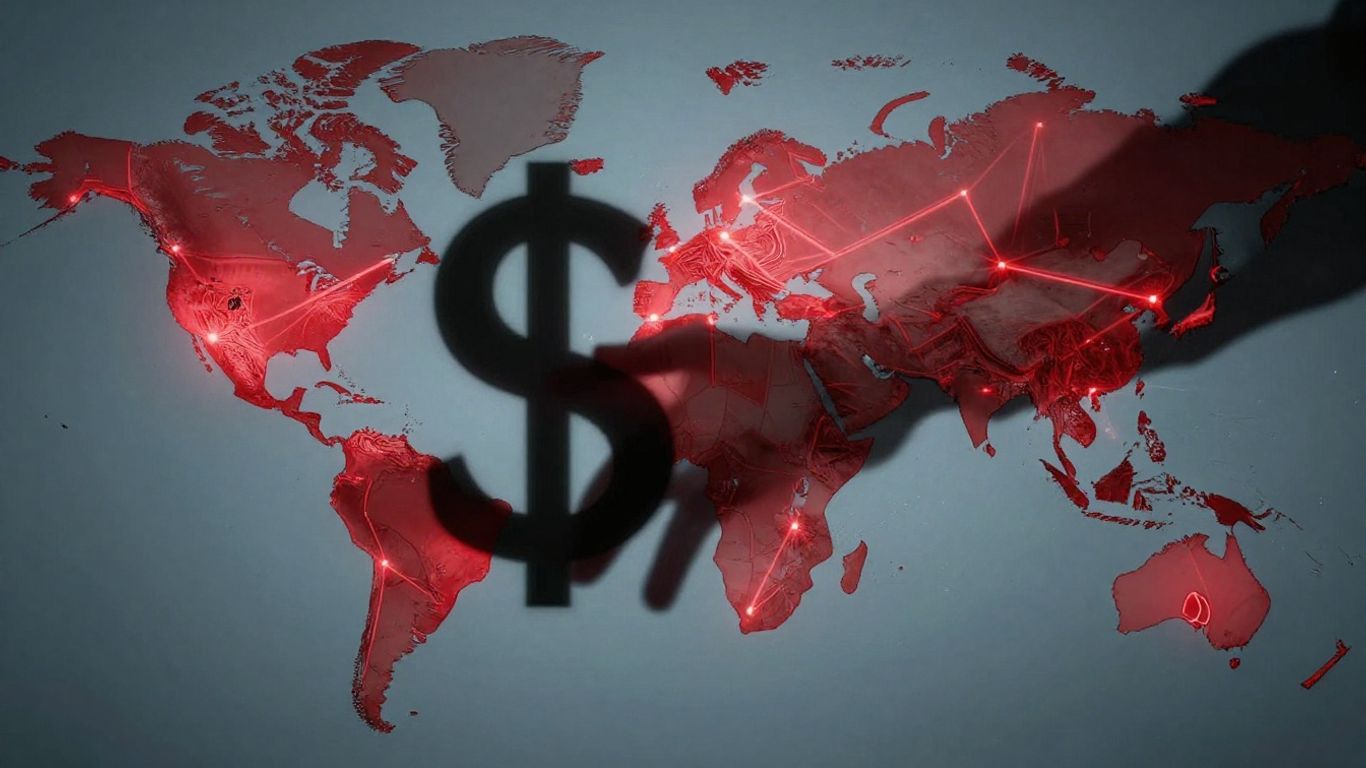
With 2026 rolling in, it’s not just central banks holding the reins anymore—governments are stepping up. Fiscal policy is back on center stage, partly because monetary tools are losing their punch and global trade keeps getting tangled up in political fights. If there’s one thing clear this year, it’s that spending decisions have become make-or-break for several countries—and the stakes are even higher given the tense mood worldwide. Major economies are pouring more into defense and infrastructure, which is not just about jobs or bridges, it’s about projecting strength in an increasingly unpredictable landscape. The world is shifting to new power centers, and how governments spend their money now could tilt the balance for years to come.
Government Spending Shifts: Defense and Infrastructure
It’s not business as usual. Instead of focusing on social programs or green initiatives, countries are budgeting more for military build-up and rebuilding roads, ports, and data networks. Here’s where the money’s headed in 2026:
- Defense: Uncertainty in hot spots like the Middle East and Eastern Europe has politicians boosting security spending fast.
- Infrastructure: Ports, rail, energy grids—upgrades meant to keep economies resilient if supply lines get shaky.
- Digital backbone: Cybersecurity and data centers are top priorities, not just for growth, but to guard against attacks.
| Country | Defense Spend Growth | Infrastructure Spend Growth |
|---|---|---|
| USA | +4.5% | +2.3% |
| Germany | +5.1% | +3.6% |
| Japan | +6.2% | +1.9% |
| India | +8.0% | +4.4% |
These spending patterns are not just numbers—they shape who gets ahead, who stays safe, and who falls behind in a world primed for the unexpected.
Constraints and Scrutiny for Nations with Limited Fiscal Room
But look, not every government has room to run huge deficits or add debt like it’s nothing. Countries with fragile budgets remain boxed in. High borrowing costs—thanks to sticky inflation and wary investors—mean leaders are under the microscope. If growth slips, markets could turn on them in a heartbeat.
- Countries relying on foreign lenders are the most exposed
- Growth slowdowns risk triggering spending cuts or higher taxes
- Any sign of mismanagement sends borrowing rates soaring
Here’s a quick comparison showing pressure points:
| Country | Debt-to-GDP | Avg Borrowing Cost | External Funding Reliance |
|---|---|---|---|
| Italy | 145% | 4.5% | High |
| Brazil | 83% | 7.0% | Medium |
| Japan | 255% | 0.7% | Low |
The Impact on Borrowing Costs and External Funding
Borrowing isn’t getting cheaper. Steeper yield curves and cautious investors mean even the developed world feels the pinch. The old days of zero interest rates are over. Now, every budget shortfall or political upheaval can nudge rates higher. Global instability is pushing up the premium that lenders demand—especially for countries that are highly dependent on external funds.
Numbers don’t lie:
- Developed markets are facing average borrowing costs about 1.2% higher than 2022
- Riskier emerging economies are looking at hikes of 2% or more
- External debt rollovers now come with tougher terms and more oversight
It’s a climate where only the fiscally disciplined—and the truly bold—will thrive. How governments adapt their fiscal strategy will decide whether they weather the storm or add to the chaos.
Regional Dynamics Amidst Geopolitical Uncertainty
Asia’s Pivot: From Exports to Investment-Driven Growth
Look, Asia’s been the engine for a while, mostly on the back of exports. But that’s changing. In 2026, we’re seeing a real shift. Countries are leaning more on investment to keep things moving, especially in areas like semiconductors and data centers. It’s not just about selling stuff overseas anymore; it’s about building things up at home. China, for instance, is really pushing for people to buy more of their own goods, which makes sense given the global trade headaches. It’s a smart move, trying to rely less on what happens in other countries.
- Semiconductor supply chains are getting a major boost.
- Domestic consumption is becoming a bigger focus for China.
- Export growth is expected to slow down across the region.
Europe’s Subdued Recovery and Trade Pressures
Europe’s economy is still kind of limping along. Growth is there, sure, but it’s not exactly setting the world on fire. Some countries are doing a bit better, thanks to government spending, but others are really feeling the pinch. The big problem? Trade. Tariffs from the US and competition from China are making it tough for European companies to sell their products abroad. It’s a tricky spot to be in, trying to get back on your feet when the global trade environment is so messy. It feels like they’re stuck in a bit of a rut.
The European recovery is uneven, with some nations showing resilience while others struggle under the weight of external trade pressures and geopolitical instability.
China’s Domestic Consumption Focus
China’s economy is doing its own thing, really. While exports might not be as strong as they were, they’re putting a lot of energy into getting Chinese people to spend more money at home. This focus on domestic demand is a big deal. It’s partly a reaction to the global trade spats and partly a strategic choice to build a more stable economy. They’re also seeing gains from technology and better efficiency, which helps. It’s a different path than just relying on selling everything to the West. We’ll see how it plays out, but it’s definitely a major shift in their economic strategy. This move towards internal markets is something to watch closely, especially considering the broader global economic picture and the internal dynamics of BRICS.
Strategic Investment in an Era of Geopolitical Risk
Recent years have taught us that uncertainty isn’t going away, it just keeps changing shape. In 2026, with trouble brewing from the Middle East to the heartland of Asia, investing the old-fashioned way—buy and hold and ignore the noise—doesn’t cut it anymore. Smart investors are learning to treat geopolitical risk as a constant companion, not a rare event. Let’s look at what this really means for putting your money to work.
Identifying Quality Assets Amidst Market Churn
The market’s swinging like a pendulum—up one week, down the next. Just last month, the S&P and Dow both dropped close to 2% in a single week, thanks to another oil shock and headlines out of the Gulf. The trick? Look for the quality companies with real earnings, strong balance sheets, and a history of riding out hard times. It’s way too easy to get distracted by speculative trend-chasing, but big risks call for tough filters.
- Focus on sectors that can pass inflation and cost shocks—think defense, energy, select tech
- Ignore market fads waving shiny AI dreams yet to turn a steady profit
- Grab opportunities when nervous traders bail on good stocks during broader selloffs
Good businesses get caught up in the market storm just like the shaky ones—but they bounce back first when the dust settles.
Diversification as a Shield Against Geopolitical Shocks
You’ve probably heard it a million times—diversify. But in today’s world, it’s not just about U.S. stocks and bonds. You need to think bigger and wider, because no single region is insulated from global drama.
| Asset Class | Hedging Role | 2026 YTD Return (%) |
|---|---|---|
| U.S. Equities | Growth engine | -4.95 |
| Int’l Developed | Currency, sector offset | -1.80 |
| Emerging Mkts | Growth + risk | 4.20 |
| Commodities | Crisis hedge | 6.60 (oil spike) |
| Gold | Inflation shield | 8.50 |
Key moves now:
- Mix U.S., Europe, Asia, emerging markets. Don’t concentrate risk on one block.
- Blend stocks with hard assets—energy, commodities, gold. They usually rally when bullets fly.
- Treat cash, short-term Treasuries, and defensive stocks as lifeboats.
Long-Term Vision in Volatile Markets
Stuff gets choppy when policy swings or new wars break out. A tactical hedge is smart, but bailing out completely will almost always leave you missing the rebounds. The world keeps moving, innovation keeps coming, and the ability to stomach short-term messiness is why patient investors win.
- Set a real time horizon—three years, five years, not three weeks
- Don’t try to predict when the next crisis will hit—nobody saw this year’s oil mess coming
- Stick with what works: buy strength, hold quality, avoid the temptation to chase every headline
Bottom line: There’s no such thing as a truly safe port in today’s storm, but with discipline, clear thinking, and a respect for risk, you can still make your money work—even while the world looks like it’s coming unglued.
The AI Revolution and Geopolitical Interplay
AI’s Role in Driving Trade and Investment
Artificial intelligence is really shaking things up, isn’t it? We saw a big jump in global trade in 2025, a lot of that thanks to AI tech. Think semiconductors, the hardware that runs everything, and all those digital services powered by AI. It’s like a shot in the arm for the economy, temporarily masking some of the bigger global worries.
The Profitability Puzzle of AI Investments
But here’s the thing: this AI boom might not last at this pace. Economists are saying trade growth will probably slow down in 2026. Demand might cool off after the initial rush, and let’s be honest, the world is still pretty uncertain. Plus, all the geopolitical drama, especially over in the Middle East, is a major wildcard. It could mess with energy prices and shipping, making everything more expensive and harder to get.
The current global economic picture is a bit of a mixed bag. On one hand, we’ve got this exciting surge in high-tech sectors like AI. On the other, traditional trade is facing headwinds from all the global instability. This split shows how much technology is starting to call the shots in how the world economy moves.
Balancing Technological Advancement with Global Stability
So, what does this mean for us? Well, it’s a tricky balance. We’re seeing a lot of investment pouring into AI and digital stuff, which is great for innovation. But if conflicts keep flaring up or energy markets get too wild, it could really throw a wrench in the works. It feels like we’re in a period where things could go either way – a smooth transition or some serious bumps in the road. It’s not just about making the next big tech leap; it’s about making sure the world stays stable enough for that progress to actually benefit everyone.
Here’s what we’re keeping an eye on:
- Geopolitical Stability: Any major flare-ups could disrupt supply chains and energy markets.
- Energy Market Dynamics: Fluctuations in oil and gas prices directly impact business costs and consumer spending.
- Innovation and Investment: Continued breakthroughs in AI and other tech are key, but they need a stable environment to thrive.
It’s a complex situation, and frankly, it’s hard to predict exactly how it will all play out. We’re seeing a lot of talk about nuclear power making a comeback, especially with the energy issues in the Middle East. It’s a reminder that when things get unstable, countries start rethinking their energy sources in a big way. The question is, can we build that kind of infrastructure fast enough and affordably, especially with all the other global pressures?
Looking Ahead: Staying Grounded in Uncertain Times
So, where does all this leave us heading into 2026? It’s pretty clear things aren’t going to be simple. We’ve got global markets feeling the heat from all sorts of conflicts and policy shifts. It’s like trying to drive a car when the road keeps changing and there are potholes everywhere. Relying on the same old strategies probably won’t cut it anymore. We need to be smart, keep our eyes open for real opportunities, and not get too caught up in the daily noise. Focusing on solid investments and not panicking when things get a bit rocky seems like the sensible way to go. It’s about being prepared, not scared, and remembering that even in tough times, there are always ways forward if you look hard enough.
Frequently Asked Questions
What’s making the world economy a bit shaky in 2026?
Things like conflicts in different parts of the world, especially in the Middle East, are causing worries. Also, countries are changing their trade rules, like the US putting new taxes on goods, which makes it hard for businesses to plan. These big global issues can make the economy go up and down a lot.
How are fights in other countries affecting our money?
When there are conflicts, especially where oil is made, it can make gas prices go up. This makes everything more expensive, from shipping goods to making products. It can also mess up how we get food and other important things we need from other countries.
Why is the government spending more money now?
Governments are starting to spend more money on things like building up their defenses and fixing roads and bridges. This is happening because the world is a bit tense, and also because the usual ways of helping the economy, like lowering interest rates, aren’t working as well anymore.
Are countries in Asia and Europe doing okay with their economies?
Asia is trying to grow by having people and businesses spend money inside their own countries, instead of just selling things to other countries. Europe is recovering slowly, and it’s facing challenges with trade because of rules in other countries and competition from places like China.
What’s the best way to invest money when things are uncertain?
It’s smart to spread your money around in different types of investments, not just one. Look for good companies that are strong even when the market is shaky. Thinking about the long term, even when things seem scary day-to-day, is also important.
How is Artificial Intelligence (AI) changing things?
AI is helping some businesses grow really fast, especially in technology. It’s making trade and new investments happen. But, it’s also a puzzle for companies trying to make money from it, and we need to make sure that as AI gets better, it helps keep the world stable and not create more problems.