
NATO Expansion: A Historical Overview and Its Geopolitical Implications
So, NATO expansion. It’s a topic that’s been around for a while, especially since the Cold War wrapped up. Basically, after the whole Soviet Union thing fell apart, NATO started growing, bringing in countries from Eastern Europe. This move, though, wasn’t exactly met with cheers from everyone, particularly Russia. It’s stirred up a lot of debate about security, promises, and what it all means for Europe and beyond. Let’s break down what’s been going on.
Key Takeaways
- After the Cold War, NATO started letting in new members from Eastern Europe, a move called NATO expansion.
- The US saw this expansion as a way to spread democracy and stability, and also to keep its own influence strong.
- Russia felt threatened by NATO expansion, seeing it as closing in on its borders and ignoring its security worries.
- There’s a big disagreement about whether the West promised not to expand NATO eastward, with Russia saying yes and most Western sources saying no documented promise was made.
- The ongoing debate about NATO expansion has real consequences, affecting relations between major powers and contributing to security issues in Europe, like the situation in Ukraine.
The Genesis Of NATO Expansion
So, after the whole Cold War thing wrapped up, things in Europe got a bit messy. You had this big power vacuum, and suddenly all these Eastern European countries, who had been under the thumb of the Soviet Union for ages, started looking west. They really wanted in on the action, you know, the stability and security that seemed to come with being part of the Western club. It was like they were saying, ‘Hey, we’re free now, and we want to join the good guys.’
Post-Cold War Power Vacuum
When the Soviet Union finally collapsed, it left a massive hole in the geopolitical landscape. Think of it like a giant building suddenly disappearing – everything around it shifts. This left a lot of countries in Eastern Europe in a bit of a lurch. They had spent decades under Soviet influence, and now they were on their own. The old security arrangements were gone, and nobody was quite sure what would fill the void. It was a time of uncertainty, and for many, that meant looking for new alliances to keep them safe. The initial setup of NATO itself was a response to the instability following World War II, aiming for collective security [97ac].
Eastern European Aspirations
These former Soviet bloc nations weren’t just looking for any old security blanket; they actively wanted to join NATO. They saw it as the ultimate symbol of Western integration and a guarantee against any future Russian resurgence. For them, it wasn’t just about defense; it was about solidifying their newfound independence and aligning themselves with democratic values. They had their own reasons for wanting this, and they weren’t shy about making their desires known to Western leaders. It was a clear signal that they wanted to be part of the West, not looking back towards Moscow.
America’s Shifting Role
With the Soviet Union out of the picture, America found itself in a unique position. It was the undisputed superpower, and the question became: what do you do with all that power? Some argued that America should pull back, but others saw an opportunity to shape the new world order. The idea of expanding NATO fit into this narrative for many in Washington. It was a way to project American influence, promote its vision of democracy, and keep a watchful eye on a potentially unstable Russia. It wasn’t just about Europe anymore; it was about America’s place in the world and how it would maintain its leadership role.
Motivations Behind Expansion
Promoting Democracy And Stability
Look, after the Soviet Union collapsed, a lot of folks in Eastern Europe were understandably nervous. They’d lived under Moscow’s thumb for decades and suddenly, they were on their own. Many of these countries looked west, towards the United States and Western Europe, seeing a model of freedom and prosperity they desperately wanted to emulate. NATO, for them, wasn’t just a military alliance; it was a symbol of the values they aspired to – democracy, free markets, and the rule of law. Joining NATO meant locking in those gains and getting a security guarantee that they believed would prevent any return to authoritarianism or Russian interference. It was about solidifying their newfound independence and aligning themselves with the West.
Securing American Hegemony
Let’s be honest, the end of the Cold War left the U.S. as the undisputed global superpower. Some argue that NATO expansion was a way for America to maintain its influence and project power across the European continent. By bringing more countries into the alliance, the U.S. could shape the security landscape and ensure that its own interests were paramount. It was a way to keep a united front against any potential resurgence of Russian power and to solidify the transatlantic relationship under American leadership. This wasn’t just about defense; it was about setting the rules of the game for the post-Cold War era.
Addressing Russian Instability
Following the Soviet collapse, Russia was in a pretty chaotic state. Its economy was struggling, its military was weakened, and its political future seemed uncertain. From the American perspective, a stable and democratic Russia was the ideal outcome, but the reality was far from that. Some policymakers saw NATO expansion as a way to manage this instability. By integrating former Soviet bloc countries into Western institutions, the idea was to create a buffer zone of stable democracies that would be less susceptible to Russian influence or aggression. It was a proactive approach, aiming to prevent a resurgent, potentially hostile Russia from destabilizing Eastern Europe. It was about building a secure perimeter, so to speak.
The push for NATO expansion was driven by a mix of genuine desires for security and democracy in Eastern Europe, coupled with a U.S. desire to solidify its global leadership role in the post-Soviet world. The perceived instability in Russia also played a part, with expansion seen by some as a way to manage potential future threats.
Russia’s Security Concerns
When NATO started taking in new members from Eastern Europe after the fall of the Soviet Union, you could almost feel the anxiety rising in Moscow. Russia hasn’t exactly kept quiet about it, either. Their leaders, both old and new, have said again and again that NATO’s steady march eastward feels like a knife getting closer to their throat. It’s not some abstract fear—it’s their border, their backyard, their sense of security at stake.
Perceived Encirclement And Threat
Moscow’s biggest worry is being boxed in by the West. With each former Warsaw Pact state that joins NATO, Russia sees itself less as a partner and more as a surrounded target. It might sound paranoid to some, but just look at a map: every new member to the east makes the gap smaller. Here’s a quick breakdown of how NATO’s border comes closer to Russia over time:
| Year | Closest NATO Border | Distance from Moscow |
|---|---|---|
| 1991 | Germany | ~1,000 miles |
| 2004 | Baltic States | ~400 miles |
| 2024 | Finland | ~250 miles |
What used to be a comfortable buffer is now a thin strip. No surprise Russia is defensive. These changes aren’t just about geography—they’re about feeling like their back is against the wall.
The ‘Broken Promise’ Narrative
Let’s talk about the infamous promise. Russian officials—especially Putin—regularly say Western leaders once swore not to move NATO eastward. They call it a betrayal. But dig into the history, and things aren’t so clear-cut. Even Gorbachev admitted the subject never came up in any official treaty.
- No written agreement exists barring NATO from expanding.
- Lots of talk, but no signatures—so it’s one side’s memory versus another’s record.
- Still, the emotional weight of betrayal plays huge in Russian politics and society.
Even if the paperwork doesn’t back up Moscow’s story, the feeling of being cheated has stuck. That sense shapes every Russian reaction to more NATO troops and bases popping up closer.
Realist Security Imperatives
Russia’s security view is built on an old-school realist mindset—states look out for themselves first, especially if they’ve been invaded as often as Russia has. Whether or not America or NATO leaders mean harm is almost beside the point from Moscow’s perspective.
- NATO’s growing military might near Russian borders changes the strategic balance.
- Economic moves, like redirecting arms sales to Western firms, also bite into Russia’s bottom line.
- Russia sees these shifts not as democratic progress—but as moves that threaten its independence.
All these worries are piled on top of other stresses, like the challenges of mass migration facing Europe, as raised in EU Parliament discussions. For Russian leaders, it’s a basic survival instinct—keep threats as far away as possible.
In the eyes of the Kremlin, NATO expansion isn’t just a foreign policy squabble; it feels like a fight for their nation’s soul and future.
Geopolitical Repercussions
With NATO’s push eastward, the balance in Europe shifted more than most folks expected. These changes didn’t just occur in a vacuum—they created cracks in the Western relationship with Russia, set off conflicts like the one in Ukraine, and stoked a whole new round of arms buildup. Let’s talk about what this all means, starting with strained US-Russia ties.
Strained US-Russia Relations
The expansion of NATO led to a frosty turn in Washington-Moscow relations. What began as cautious optimism after the Cold War quickly turned into finger-pointing and suspicion. From Russia’s end, the growth of a Western military alliance along its borders felt like a direct threat. You can see this in how each round of new member states (Poland, the Baltic States, and others) triggered protests and angry rhetoric.
- Russia started investing more in its own military and security services.
- Diplomacy between the two sides became increasingly tense.
- Western sanctions hit after Russia’s responses, leading to even less cooperation.
These days, the goodwill of the 1990s is just a memory, replaced by something closer to an old-fashioned standoff across Europe.
The Ukraine Crisis As A Flashpoint
When Ukraine started moving toward the West, especially flirting with NATO membership, Russia pushed back—hard. The 2014 annexation of Crimea wasn’t just some isolated event. It was a warning shot. Moscow’s message was clear: Western expansion stops here.
Here’s a basic timeline of major events:
| Year | Event |
|---|---|
| 2013 | Ukraine begins EU association talks |
| 2014 | Annexation of Crimea |
| 2014– | War in Eastern Ukraine |
| 2022 | Major Russian invasion of Ukraine |
These moves highlighted just how much NATO’s growth has become a point of open conflict.
Resurgence Of Militarization
If you thought the days of giant army budgets and saber-rattling were over, think again. Both Russia and NATO states started ramping up military exercises, buying new kit, and reinforcing old alliances. It’s a real about-face from the peace talk of the 1990s.
Some outcomes of this militarization:
- More regular military exercises on both sides of the border
- Bigger national defense spending in Europe and Russia
- New bases and missile deployments in strategic areas
Anyone who hoped NATO would just quietly absorb new countries without trouble was missing the fact that joining NATO is a complex process—one that always has ripple effects, with real risks and rewards for everyone involved.
Analyzing The Expansion Debate
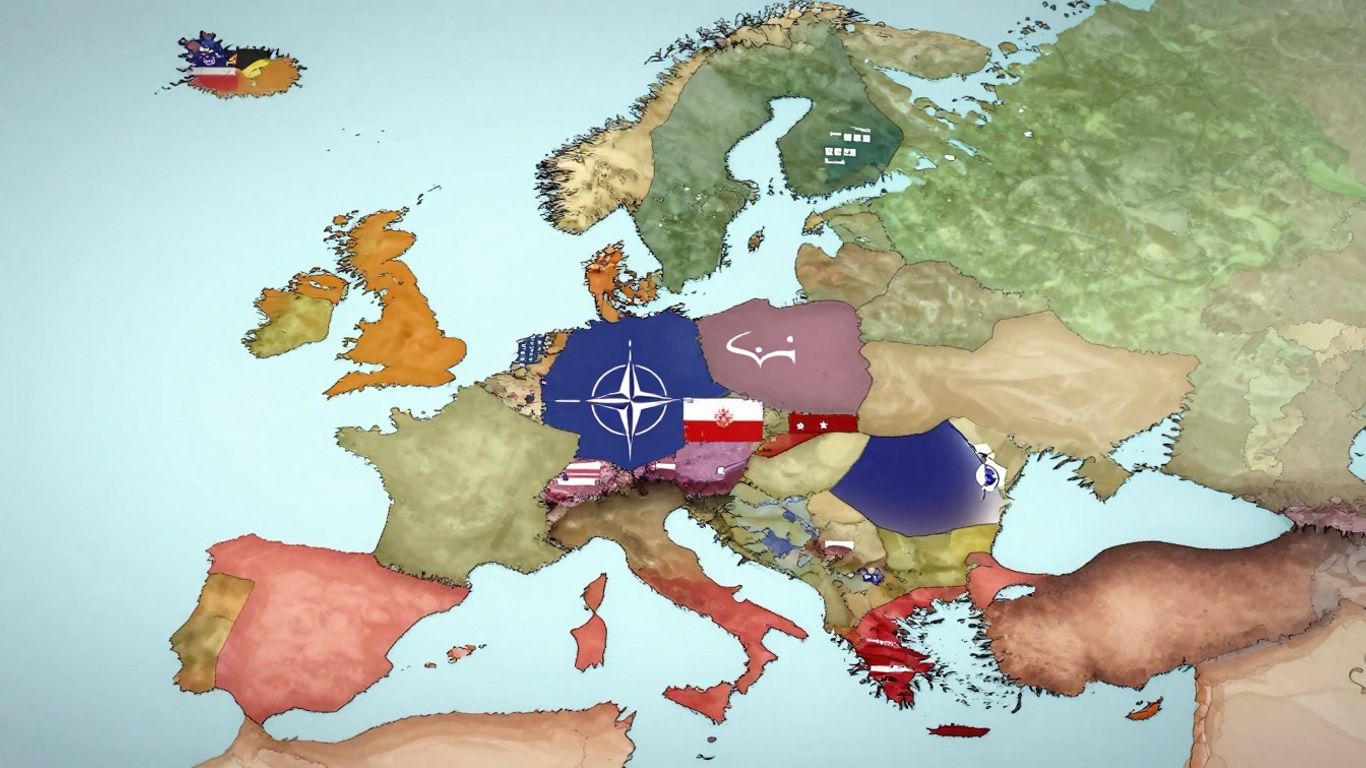
When folks start talking about NATO expansion, you can feel the tension in the room. The arguments go way beyond just military alliances or treaties—they hit at the core of what national security, freedom, and influence mean for both the West and Russia today. The debate is gritty, with each side swearing they’re acting in the name of stability and security, but their definitions couldn’t be more different.
Western Liberal Ideals Versus Russian Realities
For many in the West, spreading the reach of NATO is all about supporting free societies and offering protection to countries that want it. These nations, especially in Eastern Europe, practically begged to join, seeing NATO as their ticket out of old Soviet shadows and toward democracy and market liberty. On the flip side, Russia views this as a slow, relentless push against its historic sphere of influence—almost like political trespassing.
- Western logic: Expanding NATO = more democracy, more stability.
- Russian view: Expansion = threat, loss of regional influence, potential military danger.
- Reality: The gap between these worldviews isn’t closing anytime soon.
Some believe that NATO’s continued march eastward is less about peace, and more about solidifying Western control and hemming in Russia, regardless of how the media spins it.
The Unsubstantiated Promise Allegation
One of the stickiest issues here is whether the West promised Gorbachev and the Soviets not to expand NATO "one inch eastward." People keep repeating this as gospel, but hard evidence is thin. Most records point out there was no written commitment, though a few Western leaders made verbal remarks that got lost in translation, literally. Moscow clings to this allegation as proof of Western trickery, while American and European officials say: “Show us the papers.”
| Side | Claim | Evidence |
|---|---|---|
| Russia | West broke a promise | Mostly oral, no binding treaty |
| West | Never promised anything formal | Official records, public statements |
Divergent Perspectives On Security
It boils down to a collision of security needs. Moscow’s view is classic "great power paranoia": every inch NATO moves east may feel like a punch to their gut. The US and its allies, meanwhile, argue that joining NATO is up to each country. Why should Poland, Hungary, or the Baltics be forced to stay neutral just because Russia wants it?
- Russia: Security means buffer zones, limited Western influence, regional primacy.
- The West: Security means voluntary alliances, open borders, and choices for sovereign countries.
- Ongoing tension: Each expansion round makes mutual understanding harder, not easier.
If this debate sounds circular, that’s because it is. And every new crisis—especially in places like Ukraine—just makes the argument louder. Both sides see themselves as protecting order. Neither plans to budge soon.
Future Implications Of NATO’s Growth
So, where does all this NATO expansion leave us? It’s a question that’s been debated endlessly, and honestly, the path forward isn’t exactly clear. We’ve seen how the alliance has grown, and now we’re left to figure out what that means for everyone involved, especially Russia. It feels like we’re stuck in a loop, with each move just creating more tension.
Reforming NATO’s Mission
Some folks think NATO needs a serious makeover. The world isn’t the same as it was when the alliance first started. The old enemy is gone, but the organization is still around, and frankly, that makes a lot of people nervous. Maybe it’s time to change what NATO actually does. Instead of just being a military club, perhaps it could focus on things like fighting terrorism, managing crises, or even helping with arms control. It’s about adapting to new threats, not just clinging to old ones. This shift could help ease some of the fears that have been building up.
The Path To Cooperative Security
Can we actually work with Russia on security? It sounds idealistic, I know. But some people have floated the idea of bringing Russia into the fold, maybe not as a full military member, but in some capacity. The thinking is that if Russia isn’t completely shut out, it might feel less threatened. It’s a long shot, for sure, given how things have gone, but the alternative seems to be more of the same old standoff. We’re seeing a global shift towards a multipolar order, and ignoring Russia’s role in this new dynamic just doesn’t seem smart evolving global finance.
Navigating A New Era Of Tensions
Let’s be real, things are tense. The expansion has definitely ruffled feathers, and the situation in places like Ukraine shows just how bad it can get. We’re seeing more military buildup on all sides, which is never a good sign. It feels like we’re heading back to some old, bad habits. The big question is whether we can find a way to de-escalate things before they get even worse. It’s a tough challenge, and frankly, I’m not sure anyone has all the answers right now. We need to think about what kind of security we actually want in the long run.
- The old Cold War playbook doesn’t seem to apply anymore.
- Mistrust between major powers is at an all-time high.
- Finding common ground is going to be incredibly difficult.
The current situation demands a serious re-evaluation of security strategies. Relying solely on military might and expansion without addressing the legitimate concerns of other major powers is a recipe for continued instability. A more nuanced approach is needed to prevent further escalation and foster a more predictable international environment.
Conclusion
So, looking back at all this NATO expansion stuff, it’s pretty clear things got complicated fast after the Cold War ended. The US saw it as spreading democracy and stability, which makes sense from their side. But for Russia, it felt like a direct threat, pushing right up against their borders. You can’t just ignore how that makes another country feel, even if you think you’re doing the right thing. The whole debate about promises made or not made is messy, and honestly, it’s hard to say who’s completely right or wrong there. What we do know is that this expansion has definitely led to more tension, not less, and we’re seeing a return to a more militarized world. Maybe it’s time to really think about how to dial down the heat and find a way for everyone to feel a bit more secure, instead of just building bigger walls.
Frequently Asked Questions
What is NATO and why did it start expanding?
NATO, or the North Atlantic Treaty Organization, is a group of countries that promise to protect each other if one is attacked. After the Cold War ended and the Soviet Union broke apart, many countries in Eastern Europe felt unsafe and wanted to join NATO for protection. The United States, as a powerful country, also supported this expansion.
Did the West promise not to expand NATO?
Russia claims that Western leaders promised not to expand NATO after the Cold War. However, historical records and many experts say there was no formal, written agreement about this. While there were discussions, no official promise was made that NATO would not grow.
How did Russia react to NATO expanding?
Russia has viewed NATO’s expansion towards its borders as a threat. They felt surrounded and worried that NATO’s military power was getting too close. This made Russia feel less secure and led to bad feelings between Russia and Western countries.
What is the ‘Ukraine crisis’ in relation to NATO expansion?
The Ukraine crisis is a major event where Russia invaded Ukraine. Many believe this happened partly because Ukraine wanted to join NATO, and Russia saw this as a serious security risk. It shows how sensitive the issue of NATO’s borders has become.
What are the main arguments for and against NATO expansion?
Supporters say NATO expansion helps spread democracy and stability, and that countries have the right to choose their own alliances. Critics argue it ignores Russia’s security fears, increases tensions, and has led to more military buildup.
What could happen in the future with NATO?
There’s talk about changing NATO’s role to focus on new challenges like terrorism or cyberattacks, rather than just old Cold War ideas. The goal is to find ways for countries to work together for security and reduce the current tensions with Russia.