

Navigating Inflation Trends: A Look at the Latest Data Through 2026
It feels like prices have been going up for ages, right? From groceries to gas, it’s noticeable. We’ve been dealing with these inflation trends for a while now, and it’s making everyone wonder what’s next. This article takes a look at the latest numbers and what economists are saying about where things might be headed, even out to 2026. It’s not always easy to follow all the economic talk, so we’re breaking it down.
Key Takeaways
- Global inflation has been sticky, mainly due to supply chain issues and rising labor costs, keeping prices higher than many central banks want.
- The U.S. is expected to see inflation stay higher for longer compared to Europe, creating a noticeable gap between the regions.
- Things like tariffs, currency shifts, and how China exports goods are playing a big role in how prices change differently around the world.
- Central banks like the Federal Reserve are in a tough spot, trying to balance fighting inflation with not hurting the economy too much, leading to different approaches across countries.
- For regular people and investors, inflation means your money doesn’t buy as much as it used to, so thinking about how to protect your savings is important, and reacting to daily price changes isn’t usually the best long-term plan.
Understanding the Drivers Behind Persistent Inflation Trends
The Role of Post-Pandemic Supply Chain Disruptions
Remember when you couldn’t find that one specific part for your car, or when ordering furniture meant waiting months? That was the supply chain mess we were dealing with. After the whole COVID thing, getting goods from point A to point B became a real headache. Ships were stuck, factories were running slow, and it all added up. This bottleneck meant that the stuff we wanted cost more because it was harder to get. It wasn’t just a little inconvenience; it messed with prices across the board. Think about it – if it costs more to ship something, that cost eventually lands on you, the consumer. It’s a simple equation, really.
Labor Market Tightness and Wage Pressures
Then there’s the whole jobs situation. After the pandemic, a lot of people decided they wanted different work, or maybe they just wanted to get paid more for the work they were already doing. Businesses, desperate to keep their operations going, had to offer higher wages. And guess what? When companies have to pay their workers more, they usually try to make that money back by charging more for their products or services. It’s a cycle. This wage-price spiral is a real concern, making it tough for prices to come back down to earth. We saw this play out with service jobs especially, where demand for workers was really high.
Commodity Costs and Global Goods Price Shocks
On top of everything else, the prices of raw materials – things like oil, metals, and even food – have been all over the place. Geopolitical events, bad weather, or just plain old market speculation can send these prices soaring. When the cost of basic ingredients goes up, it ripples through the entire economy. A jump in oil prices, for instance, doesn’t just affect your gas tank; it makes transportation more expensive for almost every business, which then gets passed on. It’s a constant battle to keep prices stable when the cost of the building blocks themselves is so unpredictable. We’ve seen some pretty wild swings, and it’s made planning ahead a real challenge for businesses and families alike.
Comparing Regional Inflation Trends: America Versus Europe

It’s becoming pretty clear that inflation isn’t behaving the same way everywhere. While we’ve seen some global trends, the real story in 2026 is the growing divide between places like the United States and Europe. It’s like watching two different movies play out at the same time.
Why U.S. Inflation Refuses to Cool Off
The United States seems to be stuck in a stubborn inflation loop. Domestic demand has stayed surprisingly strong, and the cost of services, which makes up a big chunk of people’s spending, just isn’t coming down as fast as expected. Plus, we’re still feeling the effects of those tariffs that were put in place. It’s not a straight shot to lower prices; expect inflation to hover around 3% for a while longer. This means the Federal Reserve has to tread carefully, even with new leadership. We’re seeing a projected upswing in the U.S. that could really open up a gap compared to other regions.
Europe’s Path Toward Price Stability
Europe, on the other hand, is telling a different story. Inflation there is expected to drop much faster. We might even see it dip below the European Central Bank’s target early in the year, thanks to cheaper oil and a stronger euro. Things should settle down closer to 2% over time. The journey back to stable prices looks like it’ll be smoother than what the U.S. is going through. The UK is even further along this path, with inflation potentially ending 2026 lower than many currently predict, helped by slower economic growth and a weaker job market. Global core inflation is projected to reach 2.4% for the U.K. by 2026.
The Growing Inflation Gap Across the Atlantic
So, what does this all mean? We’re looking at a significant difference in inflation rates between the U.S. and Europe in the first half of 2026. While common global factors are fading, regional issues are taking center stage. This divergence means different challenges and policy decisions for central banks on both sides of the Atlantic. It’s a complex picture, and understanding these regional differences is key to making sense of the global economic landscape. The global core CPI is projected to reach 2.8% in 2026, but the U.S. is expected to be at 3.2% while the euro area is forecast at 1.9%.
Currency, Tariffs, and Global Trade: Shaping Inflation Trends
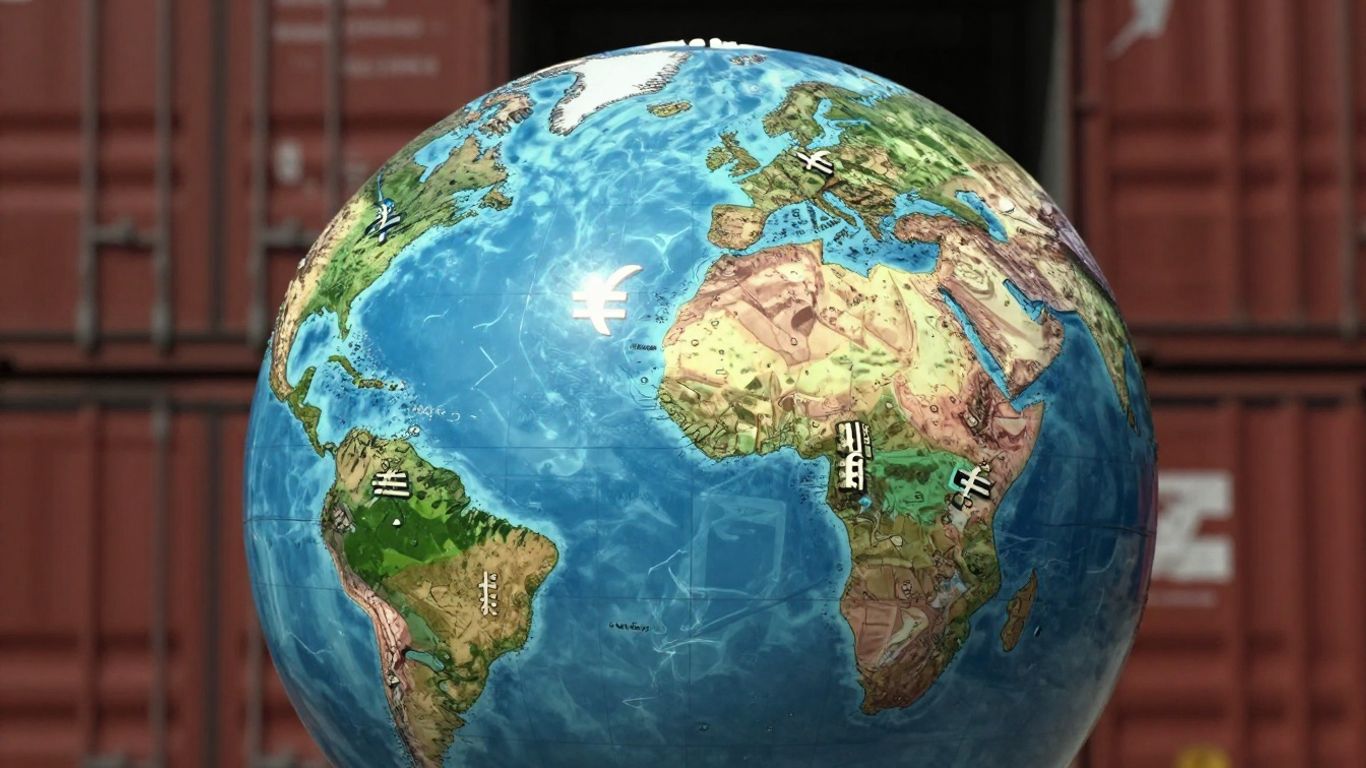
Tariffs are supposed to benefit American workers and industries, but they often have a different effect when you look closer. Raising tariffs leads to higher prices for the everyday goods we all depend on, and that inflation hits the working and middle class the hardest. Companies usually just pass additional import costs straight down to consumers. Instead of helping American factories hire, you get sticker shock at stores that sell everything from washing machines to groceries.
- Imports become more expensive, pushing up prices on finished goods
- Local manufacturers might see a short-term boost, but materials and components get pricier
- Allied countries sometimes retaliate, which risks American exports running into their own barriers
The tariffs that started a few years back haven’t gone anywhere—and it’s clear they’re keeping certain prices stuck higher than they would be otherwise. We need a hard look at whether protecting certain industries is worth stretching families’ budgets further.
The value of the U.S. dollar swings a lot, and those swings have real impacts beyond our borders. When the dollar strengthens, developing countries get hammered, since they import a lot and have to pay off debts in dollars. But when the dollar drops, it’s a different picture—Latin American (LATAM) and some European (EMEA) currencies often rise, making imported goods cheaper back home.
A quick table shows the trend:
| Region | 2025 Currency Change | 2025 CPI (Inflation) |
|---|---|---|
| U.S. Dollar | -7% (Trade-Weighted) | 3.2% |
| Euro | +7% | 1.9% |
| LATAM Currencies | +4% | 5.5% |
| EMAX (Asia excl. China/India) | -3% | 3.9% |
- Dollar weakness eases inflation for some countries, but makes imports costlier for others
- Countries with stronger currencies can see lower prices, especially for goods like energy
- Emerging markets are hit hardest by volatile currency swings, since their economies rely more on imports than ours do
Policy makers in these countries need to tread lightly—chasing growth through cheap money risks fueling more inflation and leaving ordinary people exposed to the next crisis.
China isn’t slowing down on manufacturing. Instead, they’ve shifted their focus—when U.S. tariffs hit, Chinese companies just found new markets in Africa, the Middle East, or even Europe. This move has kept global prices on certain products, like electronics and consumer goods, relatively low.
But there’s a trade-off.
- As China undercuts prices, other countries’ factories struggle to keep up, risking jobs and investment at home
- Over-dependence on Chinese imports leaves the world vulnerable if supply gets disrupted again
- Sudden surges of cheap goods can trigger local deflation, but that’s rarely sustainable
America needs to watch how these export strategies shape our own industries. If we let our manufacturing base hollow out, we trade short-term low prices for long-term economic risks that are much harder to fix.
The short answer: tariffs, currency changes, and China’s export push all have big roles in shaping inflation. They’re not academic—they’re changing what families, workers, and small businesses face every time they visit the checkout line.
Central Bank Dilemmas in the Era of Stubborn Inflation Trends
Federal Reserve Policy: Stuck Between Hawkish and Dovish
The Federal Reserve is in a tough spot, plain and simple. Inflation just isn’t cooperating, sticking around higher than anyone wanted. We’re looking at prices still climbing, especially in services, and the job market, while maybe cooling a bit, isn’t exactly collapsing. This leaves the Fed trying to balance fighting inflation with not tanking the economy. They’re caught between wanting to keep interest rates high to cool things down (hawkish) and the pressure to lower them to avoid a recession (dovish). It’s a real tightrope walk, and honestly, it feels like they’ve been on hold for ages, unsure of their next move. The appointment of a new Chair, Kevin Warsh, adds another layer of uncertainty to what the Fed will do for the rest of 2026.
ECB and Bank of England: Diverging Toward Rate Cuts
Over in Europe, things look a bit different. The European Central Bank (ECB) seems to be in an extended pause, watching inflation slowly drift down. They might even dip below their 2% target early in the year, thanks to cheaper energy and a stronger euro. The Bank of England, however, is leaning more towards cutting rates. Their economy isn’t as robust, and the labor market is showing more weakness, making them more open to easing policy sooner rather than later. This divergence means different paths for different economies, which is interesting to watch.
The Risks of Central Bank Inaction in a Volatile World
When central banks hesitate too long, especially in times like these, there are real risks. If they wait too long to cut rates when they should, they could choke off economic growth unnecessarily. On the flip side, if they cut too soon or too much while inflation is still a problem, they risk reigniting price increases. It’s a delicate balance, and the global economy is already dealing with enough unpredictable factors, from trade policies to energy prices. Staying put for too long, or making the wrong move, could really mess things up.
The global economic picture in 2026 is far from simple. While some regions might see inflation cool down, others, like the U.S., are expected to keep seeing prices rise. This means central banks can’t just use a one-size-fits-all approach. Their decisions will have a big impact, and getting them wrong could lead to more economic pain.
Investor Strategies to Defend Against Eroding Purchasing Power
Look, nobody likes seeing their hard-earned money lose value. Inflation is like a slow leak in your wallet; you might not notice it day-to-day, but over time, it really eats away at what your money can buy. Think about it: a car that costs $40,000 today could easily be $80,000 in a couple of decades if inflation stays even moderately high. That’s not just a number; it’s a real hit to your lifestyle down the road.
Why Inflation Is the True Enemy of Savers
When you’re just letting money sit in a savings account, it’s basically losing ground. The interest you earn often doesn’t even keep pace with rising prices. This means that even though the number in your account might go up slightly, what you can actually purchase with that money shrinks. It’s a silent killer of wealth, especially for those who rely on fixed incomes or conservative savings strategies. The biggest mistake people make is reacting to short-term inflation news and making rash decisions. Selling off investments because of a single month’s inflation report usually ends up hurting more than helping in the long run.
Protecting Wealth Through Diversified Assets
So, what’s the game plan? For starters, don’t keep all your eggs in one basket. A solid, long-term investment in a mix of assets is key. Equities, or stocks, have historically offered returns that outpace inflation, giving your money a fighting chance to grow. It’s about getting a return on your investment that’s better than what you’d get from risk-free options. If you’re feeling particularly worried about inflation, it might be worth talking to a financial advisor about adding specific assets that are known to act as hedges. For instance, some investors look at Treasury inflation-protected securities (TIPS), which are designed to adjust with the Consumer Price Index. Others might consider gold, real estate, or even alternative assets like Bitcoin. The goal is to build a portfolio that can withstand the pressure of rising prices and help you protect portfolios from higher prices.
The Dangers of Reacting to Short-Term Inflation ‘Noise’
It’s easy to get spooked by headlines about inflation spikes. The Organization for Economic Cooperation and Development (OECD), for example, has projected higher inflation for 2026 than previously expected. But getting caught up in that short-term
Forecasting Inflation Trends Through 2026: What Lies Ahead
Disparate Global Outcomes: From Soybeans to Energy Prices
As we get further into 2026, one thing stands out: there’s really no single story for inflation anymore. Different places are heading in different directions. Food and energy prices aren’t shooting up everywhere at once like they did a few years ago. Instead, we’re seeing stuff like soybean prices rising in the US, while Europe actually has cheaper energy, thanks to a combination of good weather and new supply contracts.
- The US keeps seeing higher prices for basics (like groceries and rent)
- Europe, on the other hand, is catching a break on energy imports
- Emerging markets are being hit-or-miss, depending on currency swings and local crop yields
| Region | Core CPI (%) | Main Pressure Point |
|---|---|---|
| US | 3.2 | Services, food |
| Euro Area | 1.9 | Energy moderating |
| UK | 2.4 | Labor, imported goods |
| Global Avg. | 2.8 | Food & wage growth |
Households everywhere are noticing that while the headlines say inflation is lower, their wallets don’t seem to agree – not with the price of bread and gas.
OECD Versus Federal Reserve Outlooks
The big debates in 2026 are happening between groups like the OECD and the Federal Reserve. The Fed can’t seem to nail the lower inflation figures everyone hoped for, partly because Americans keep spending and tariffs on imports are still pushing up prices. Meanwhile, the OECD is looking at the world and seeing that price pressure has eased more in Europe and Asia.
Some differences pop out:
- The Fed still thinks we’ll be sitting around 3% inflation for the year.
- The OECD predicts the global average will land closer to 2.8%, but with big gaps between regions.
- Both warn about a risk: if energy prices pop back up or labor markets stay tight, targets could slip out of reach.
Policy stances seem shaky — everyone is moving cautiously, but there’s no sign we’re heading back to those easy, low-inflation days from ten years ago.
What Rising Inflation Means for Future Living Standards
Here’s what it boils down to for regular folks: inflation may be coming off its peak, but the cost of living isn’t rolling back to where it was. Paychecks aren’t stretching as far, even if headline inflation slows.
Let’s break it down:
- Savings are losing value if kept in cash
- Groceries and utilities still eat up a larger share of income compared to 2020
- Raises at work barely keep up with everyday expenses
What’s next? Adjusting is the name of the game. Whether that means bargaining harder for wages, cutting back on non-essentials, or rethinking retirement plans, every household ends up making trade-offs to cope with a world where prices move up faster than before.
Wrapping It Up: What Does This Mean for Us?
So, looking at all this data, it’s pretty clear that inflation isn’t just going to magically disappear. We’ve seen it stick around for a while now, and while some places might see it cool down a bit, others, like here in the U.S., are still looking at prices staying pretty high. It’s not the good old days of super low prices, that’s for sure. Governments are still spending a lot, which doesn’t help. The main takeaway is that we need to be smart about our money. Don’t just sit on cash; keep investing for the long haul. Inflation eats away at your savings over time, and small differences really add up. It’s about making sure your hard-earned money can still buy what you need down the road. We’ve got to stay aware and make sensible choices.
Frequently Asked Questions
Why has the cost of things gone up so much lately?
Prices have been climbing because of a few big reasons. After the world got through the big pandemic, getting products from where they’re made to where they’re sold became difficult. Think of it like a traffic jam for goods! Also, the cost of raw materials like oil and metals went up, making everything from gas to food more expensive. Plus, lots of people wanted to buy things at the same time, which pushed prices even higher.
Is inflation expected to go down in 2026?
It looks like inflation might calm down a bit in 2026, but it probably won’t go back to being super low like it was before. Experts think prices will keep going up, just maybe not as fast as they have been. Some places might see prices go up more than others, so it won’t be the same everywhere.
How will inflation be different in the U.S. compared to Europe?
The U.S. is expected to have prices rise a bit faster than Europe. In the U.S., people are still spending a lot, and the cost of services like haircuts or car repairs is slow to come down. Europe, on the other hand, might see prices cool off more quickly. This means the U.S. could have higher inflation than Europe for a while.
What are central banks doing about high prices?
Central banks, like the Federal Reserve in the U.S. and the European Central Bank, try to control how fast prices go up. They can raise or lower interest rates to encourage or discourage spending. In the U.S., they might keep rates higher for longer because prices are still a concern. In Europe and the UK, they might start lowering rates sooner because their inflation is cooling off faster.
Why is inflation bad for people who save money?
Inflation is like a hidden tax on your savings. Even if your money is growing in a savings account, if the rate of inflation is higher than your interest rate, your money actually buys less over time. Imagine you have $100, and prices go up by 5%. Now that same $100 can only buy what $95 could buy last year. Over many years, this really eats away at how much you can afford.
What can investors do to protect their money from inflation?
To fight back against prices going up, investors often look at putting their money into things that tend to do well when inflation is high, like certain stocks or real estate. It’s also really important not to make big changes to your investments based on small, short-term news about prices. Sticking to a long-term plan with a mix of different investments is usually the best approach.