
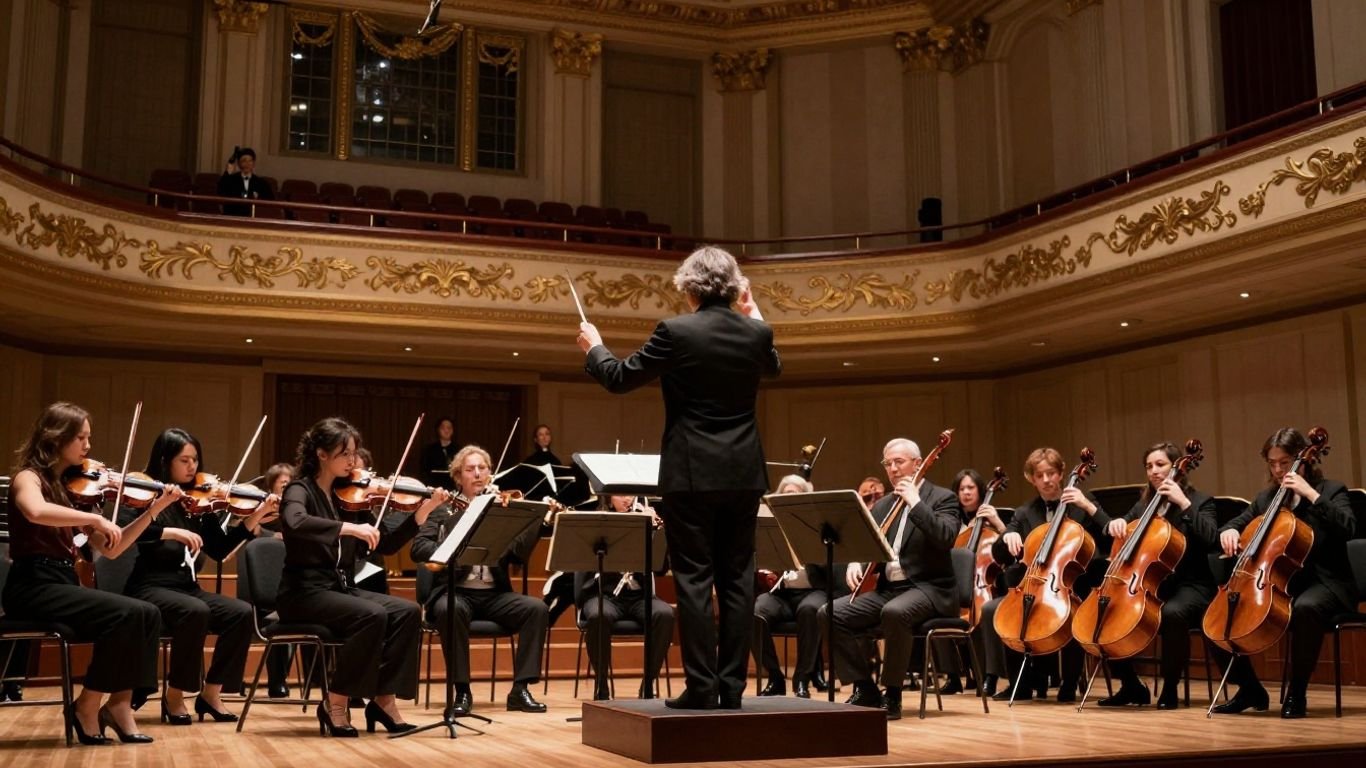
Strauss’s Four Last Songs Bring Grandeur and Reflection to the BBC Proms
Richard Strauss’s Four Last Songs took center stage at the BBC Proms in London’s Royal Albert Hall, offering audiences a musical meditation on farewell, beauty, and mortality. The performance was framed by the work’s extraordinary sense of closure—an emotional world where orchestral richness and vocal expression meet in one of Strauss’s most enduring late masterpieces.
Key takeaways
- Strauss’s late song cycle explores beauty, aging, departure, and renewal.
- The Royal Albert Hall provided a vast setting for the music’s expansive sound.
- The event highlighted why the work remains a defining example of musical endings.
The BBC Proms presentation placed Strauss’s music within one of classical music’s most celebrated concert settings. The Royal Albert Hall’s scale is particularly suited to orchestral repertoire that moves between intimate reflection and sweeping grandeur, allowing the music’s changing emotional perspective to unfold across the hall.
A meditation on endings
The central idea surrounding Four Last Songs is the difficulty—and artistry—of ending. Strauss’s late style does not treat farewell as a simple conclusion. Instead, it lingers over transition, allowing moments of stillness, warmth, and uncertainty to coexist.
That approach gives the cycle its distinctive emotional power. Rather than presenting mortality only as loss, the music also finds grace in acceptance and renewal. Its expressive arc feels contemplative without becoming detached, inviting listeners to consider their own experiences of change and closure.
Strauss’s orchestral language
Strauss is known for combining vocal lines with richly detailed orchestration, and Four Last Songs is especially notable for the way the orchestra becomes an emotional partner to the singer. Strings, winds, and brass can suggest both earthly warmth and expansive, almost weightless space.
For listeners who may be new to late-Romantic repertoire, the work offers an accessible entry point: its melodies are immediate, while its deeper meanings reveal themselves gradually. As with the varied textures celebrated by Mixed Nature, the piece gains strength from contrast—light and shadow, delicacy and fullness, intimacy and scale.
Why the work continues to resonate
More than 75 years after its composition, Four Last Songs remains compelling because it speaks to universal experiences without reducing them to easy answers. Its beauty is generous, but never superficial; its reflection on mortality is serious, yet not without hope.
The BBC Proms performance reaffirmed the work’s lasting place in the concert repertoire. In the Royal Albert Hall, Strauss’s carefully shaped farewell became not simply an ending, but an invitation to listen more closely to the passage between what has been and what comes next.