

Russia’s New Political Elite: How Ukraine War Veterans Are Entering Government
Key Takeaways
Russia’s effort to bring Ukraine war veterans into public office is both a personnel policy and a political signal. Its long-term significance will depend on whether new entrants gain real authority and how they adapt to civilian institutions.
- The Time of Heroes program is one route from military service to government, alongside appointments, elections, and party networks.
- Veterans are being considered for roles at federal, regional, and local levels, as well as in state-linked institutions.
- The Kremlin presents their advancement as recognition and elite renewal, while also seeking officials aligned with its priorities.
- Military experience may help with command and crisis response, but it does not automatically prepare someone for civilian administration.
- Influence is best measured by policy authority, career paths, and lasting changes to who holds power—not by appointments alone.
How Russia’s military veterans are entering politics
Russia’s movement of war veterans into political life has several channels, not one fixed pipeline. The Kremlin-backed Time of Heroes initiative is the most visible, but appointments, party activity, and existing public institutions can also provide routes into government. Country Brief covers geopolitics and policy in the context that makes these routes matter: they connect personnel decisions to the wider shape of Russian institutions.
The Time of Heroes program and its selection process
The Time of Heroes program was announced by President Vladimir Putin in 2024 as a way to prepare veterans of the war in Ukraine for public service and senior roles. Public descriptions present it as a training and selection initiative, rather than an automatic promotion scheme. Reports on its first cohort described a competitive process, though the available figures and participants’ later careers do not by themselves reveal how selection decisions were made. That distinction matters: a program can widen access while still leaving final appointments in the hands of established political authorities.
The program also gives the Kremlin a visible way to define what it means by a “new elite.” It associates wartime service with future responsibility, but participants still have to move through institutions with their own rules and power structures. As reporting on the broader veterans’ political constituency suggests, the political question is not only who enters the system, but how their new roles are managed.
Appointments, elections, and party-backed routes
Not every veteran enters government through a formal training program. Some may be appointed to administrative posts, while others can seek elected office through political parties or local organizations. A party-backed route can provide campaign infrastructure and a recognized platform, but it also places candidates within established rules and hierarchies. The route into office therefore says something about the kind of influence a veteran may have once elected or appointed.
It is useful to separate three stages that public discussion can blur: selection as a candidate, gaining a position, and exercising authority after arrival. A military background may draw attention, but it does not settle how a candidate performs in an election or what responsibilities an officeholder receives. The reported growth of veteran representation in parliament makes this distinction particularly relevant, because a seat is a visible marker, not a full account of influence.
Moving from military service into civilian office
The transition from military service to civilian office involves more than a change of workplace. An officer or soldier may bring experience with command and coordination, while a civilian agency must answer to administrative rules, budgets, public services, and political oversight. Even highly structured civilian work has procedures different from military command. One can see the contrast in practical fields such as vehicle transport, where AAAT’s VS3 is described as a system for carrier and driver verification and documented handoffs; the analogy is limited, but it illustrates why clear procedures matter when responsibility changes hands.
A transition can be made more workable when new officials gain a clear remit, learn the institution’s procedures, and have access to experienced colleagues. These supports do not guarantee success, but they make it easier to assess whether a person’s past experience is being translated into public service. In that sense, the question is less whether military experience transfers wholesale than whether the office gives a new official a practical way to use it.
How veterans’ families and networks can support their transition
Families and professional networks can help a new official adjust to a public role, especially when the move involves relocation, media attention, or unfamiliar administrative routines. They can offer personal support and help maintain connections with communities affected by war. Those relationships may also become politically significant, so they should not be treated as proof of competence or as a substitute for public accountability. Analysis of possible elite bargaining and succession likewise cautions against reading family ties or access to senior leaders as proof of a predetermined transfer of power.
The useful question is whether networks open doors while leaving the official answerable to the institution and public. Informal support may ease a difficult transition; informal patronage can make it harder to see how appointments are decided. Those are different functions, and careful reporting should distinguish them.
Where veterans are gaining positions in government
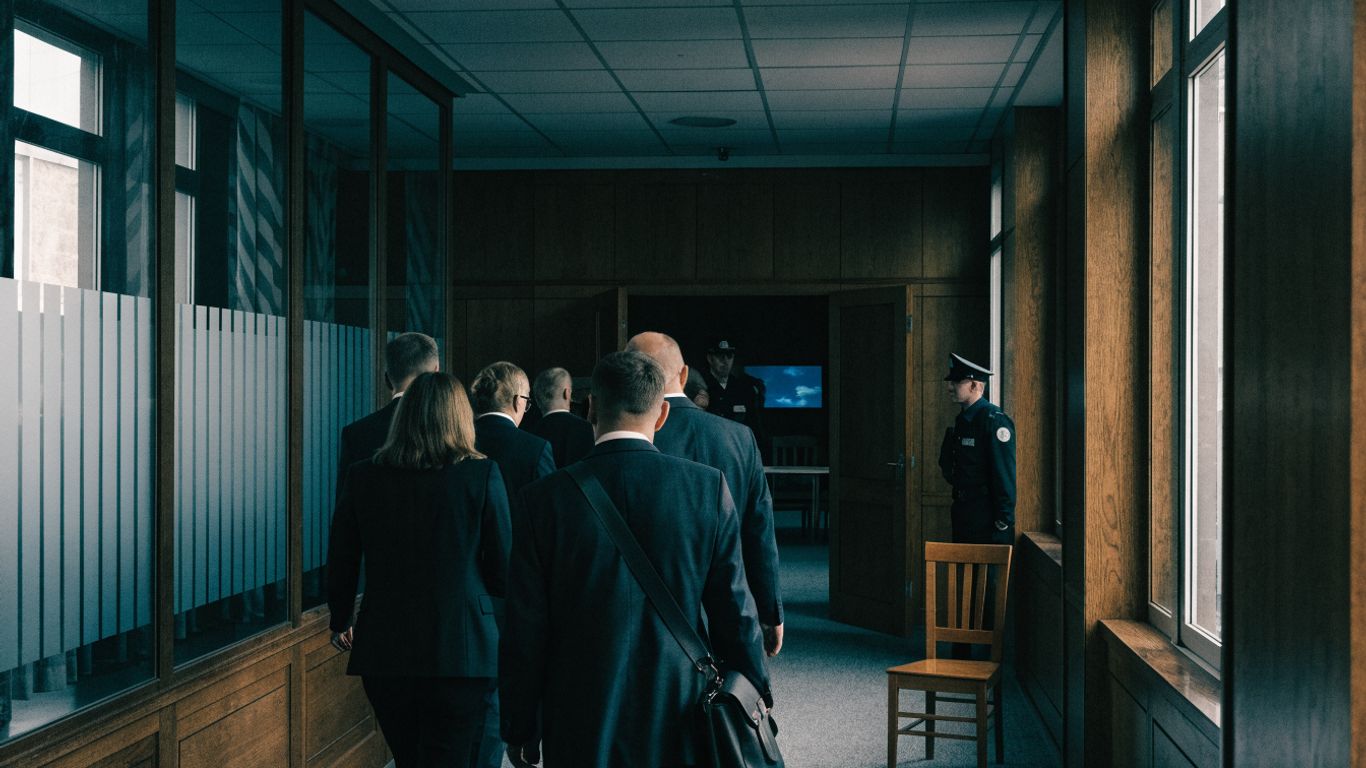
Veterans’ entry into public life is not confined to a single chamber or level of government. The roles discussed in reporting range from federal political positions to regional administration and local organizations, with state-linked institutions potentially serving as another point of entry. Country Brief’s coverage of international affairs connects these different levels to the question of how political authority is distributed. The image below is illustrative, not a depiction of a specific appointment or person.
Federal institutions and the State Duma
The State Duma, Russia’s lower house of parliament, offers a highly visible route into national politics. Election to a seat provides a formal position and a public platform, but the significance of any individual member depends on party affiliation, committee work, access to decision-makers, and the scope for independent action. Parliamentary presence is therefore an important measure of representation, not a complete measure of power.
The 2026 parliamentary election has been described in reporting as a moment when veteran representation became more prominent. Figures in public accounts have differed, which is a reminder to check the date, definition, and source behind any headline total. A veteran elected to the Duma may shape debate or signal the priorities of a political party, but actual influence needs to be assessed through legislative work and institutional authority.
Regional administrations and governor-level roles
Regional roles can bring a veteran closer to the daily work of governing: managing services, coordinating local officials, and responding to economic or security pressures. Governor-level appointments are particularly visible because they place an individual at the head of a region’s executive administration. A reported appointment of a former military commander as governor of Belgorod, a region bordering Ukraine, shows how the Kremlin’s “new elite” message can intersect with regional leadership.
A high-profile appointment, however, does not make the appointee independent of the federal center. Regional leaders operate within national political structures and face local conditions that differ from one region to another. To understand what has changed, observers need to look past the biography and ask what authority the governor exercises, which officials remain in place, and whether policy priorities shift.
Municipal offices and local political organizations
Municipal office is closer to residents’ routine concerns, from public services to local development, and it can offer a route into political work before a person reaches higher office. Local party organizations may also help new entrants build visibility and experience. These settings can reveal whether a veteran’s public profile translates into sustained engagement with local administration, where problems are often specific and practical rather than national in scale.
Local government also illustrates why appointment counts alone can mislead. An office may carry a title without substantial control over budgets or policy. Municipal authority, local political competition, and residents’ expectations all shape what a newly elected or appointed official can deliver.
State-owned companies and public institutions as stepping stones
State-owned companies and public institutions can provide another route into positions connected to public life. Roles there may offer administrative experience and a path to wider responsibilities, but they are not the same as elected office. Their relevance depends on the institution, the authority attached to a post, and how closely its work is tied to government priorities.
Public organizations also work within technical rules that are easy to overlook in political profiles. For example, a discussion of government contracting may turn on quality and compliance requirements, the kind of issue addressed by an ISO consultant in the context of UK public tenders. That example is not evidence about Russian appointments; it is a reminder that institutional knowledge often matters alongside a candidate’s public standing. A career step into a state-linked organization is meaningful only when its responsibilities are clear.
Why the Kremlin is promoting a new elite
The Kremlin’s promotion of veterans combines recognition, political messaging, and personnel policy. Publicly elevating those who served in the war presents their experience as a qualification for leadership, while also giving the government a way to renew some parts of the administrative and political class. Country Brief’s international analysis looks at such decisions as part of a wider relationship between state policy, institutions, and political identity—not simply as a series of biographies.
Demonstrating recognition for wartime service
Promoting veterans can be presented as a public acknowledgment of service and sacrifice. The message is directed not only to veterans themselves but also to serving personnel and their families: wartime service is supposed to have a place in the country’s future leadership. That message may support recruitment and social recognition, though its effects cannot be assumed from official statements alone.
Recognition takes different forms, from public ceremonies to training opportunities and appointments. These gestures matter politically, but they also create expectations. If promised advancement does not lead to meaningful responsibility, the gap between public language and actual career outcomes can weaken the message.
Building a loyal pool of officials
A government may value officials it considers dependable and aligned with its priorities. The Kremlin’s emphasis on a new elite can be read in part as an effort to bring people with wartime experience into institutions where loyalty to the state and its leadership is highly valued. That interpretation does not establish the motives of every appointee, nor does it prove that all veterans share the same politics.
The political value of such appointments depends on how they interact with existing institutions. Loyalty can make an official acceptable to central authorities, but governing also requires judgment, administrative skill, and responses to local needs. The question is whether new entrants become decision-makers in their own right or mainly carry out priorities set elsewhere.
Connecting military service with national identity
The promotion of veterans links military service to a broader official account of national identity. In that account, service and patriotism are presented as foundations for public responsibility. The framing can strengthen the status of the armed forces in political life, while narrowing the perceived distance between military institutions and civilian government. Analysis of security and national identity explores how such themes can become part of the state’s wider political narrative.
This connection is not unique to Russia, but its meaning depends on the country’s political context and the scale of wartime mobilization. In Russia, the government’s language about veterans has become part of its presentation of who deserves authority. That is a political claim, not an automatic measure of an individual’s ability to govern.
Refreshing established political and administrative ranks
The idea of elite renewal can also serve as a response to public frustration with familiar officials. Bringing in people with different career histories may create an impression of change, and may introduce new perspectives into institutions. Yet a change in biography does not necessarily alter how an institution makes decisions or allocates resources.
A useful test is whether new officials are given meaningful portfolios and whether the rules of advancement change for others as well. If positions are added without changes to authority or accountability, the result may be more symbolic than structural. Elite renewal can be real in personnel terms while leaving the underlying distribution of power intact.
What veterans bring to civilian leadership—and what they may lack
Military service can provide experience that has value in public administration, but it is not a ready-made qualification for every civilian role. Command, logistics, and crisis response may be relevant to some tasks; other responsibilities require knowledge of law, budgets, public services, and political negotiation. The image below is an illustrative scene, not documentary evidence about Russian officials.

Experience with command, logistics, and crisis response
Veterans may have worked in settings where coordination, time pressure, and the distribution of resources were central. Those experiences could help in an administrative role, particularly where officials need to organize teams or respond to disruption. But the specific experience varies widely by person, rank, and assignment, so it should not be inferred from the label “veteran” alone.
Military command also differs from civilian administration in its chains of authority and responsibilities. Strategy games such as free PC strategy games reduce complex decisions to playable systems; government work does not. Civilian officials must navigate legal mandates, public scrutiny, and competing interests, and those demands cannot be measured by command experience alone.
Public credibility and symbolic authority
A veteran’s service may carry symbolic authority with some audiences, especially when the government presents veterans as representatives of national sacrifice. That visibility can help an official communicate with the public, but credibility is not fixed. It depends on conduct in office, the perceived fairness of decisions, and whether public commitments are followed by results.
Symbolic status can also place a burden on a new official. Residents may expect someone with a public record of service to address practical problems quickly, even when the office has limited authority. The gap between personal reputation and institutional capacity can become a source of disappointment if it is not acknowledged.
The challenge of adapting to civilian administration
Civilian administration has its own expertise: rules for public spending, personnel management, local services, and oversight. Experience in the armed forces may help with some responsibilities but does not replace training in these areas. Public works, for example, require technical and regulatory judgment; consulting engineers work across stages such as feasibility, design, approvals, and construction in the UAE and GCC. The example is not a comparison between countries, but it shows how specialized civilian work depends on knowledge beyond general leadership.
The practical challenge is to match an official’s background to the job and give that person a clear remit. A public profile can open a door, but competence grows through institutional experience and accountability. The distinction is important whenever an appointment is described as proof that military service automatically prepares someone to govern.
Training, mentoring, and support for new officials
A transition is more credible when training continues after selection and when new officials can learn from experienced administrators. Useful support may include structured induction, a defined portfolio, mentoring, and regular review of performance. These steps can help clarify what a new official is responsible for and how their work will be evaluated.
Support should not become an excuse to shield officials from scrutiny. Training can strengthen capacity, but it cannot substitute for transparent appointments or public accountability. The measure of success is whether new officials gain the knowledge and authority needed to carry out the work they were appointed to do.
The political tensions surrounding veterans’ advancement
The advancement of veterans can serve the Kremlin’s goals while creating tensions inside the political system. New entrants may be welcomed as a sign of recognition, yet they also compete for posts, authority, and public attention with officials already in place. The central issue is not whether these tensions exist in every case, but how institutions manage them and what the public can observe.
Loyalty to the Kremlin versus independent influence
A veteran promoted by the state may be expected to support the Kremlin’s priorities. At the same time, a public figure with a strong personal profile could develop an independent base of influence. These possibilities are not mutually exclusive, but neither should be assumed without evidence about the person’s role and political behavior.
The balance between loyalty and influence is visible in the limits of an office as well as its title. An official may have public prominence yet little discretion over policy. To assess independence, observers need to consider decision-making authority, access to resources, and whether the official can shape priorities rather than simply communicate them.
Competition with incumbent officials and local elites
New appointments can unsettle existing political and administrative networks. Long-serving officials may have local knowledge and established relationships, while a newcomer may bring high-level backing or a public profile. The way these interests interact can affect policy and the pace of an official’s integration into an institution.
Competition need not produce open conflict to matter. An appointee may inherit a team and procedures shaped by predecessors, and formal authority may be shared across several offices. The key questions are who controls budgets, who makes operational decisions, and whether the newcomer has support inside the administration.
Public expectations for veterans in office
The public may expect veterans to be unusually committed or effective, especially when official messaging presents them as a new generation of leaders. Those expectations can create pressure to deliver on complex local and national problems. Yet no public official can solve every issue alone, and their powers may be constrained by institutions above or beside them.
A credible assessment should distinguish a promise from a result and an individual’s performance from the limits of the office. If a veteran is assigned responsibility without the means to act, criticism may land on the officeholder while the underlying decision-making structure remains untouched. That is why authority and accountability need to be considered together.
Risks of token appointments and unmet promises
An appointment can be symbolic without giving a new official substantial responsibility. Such roles may signal recognition, but they risk becoming token gestures if they do not come with a clear portfolio, resources, or a path to advancement. The risk is especially high when public messaging promises broad renewal but the institutional arrangements remain unchanged.
The same issue arises when a training initiative is presented as a pipeline to senior office. A program’s existence does not show how many participants ultimately gain authority or whether those positions match the promise. Tracking outcomes over time is a more reliable test than relying on announcements.
How to assess the veterans’ influence on Russian politics
Assessing the political influence of veterans requires more than counting appointments or identifying military backgrounds. A role can be visible but limited, while a less prominent position may carry substantial control over policy or administration. The clearest picture comes from combining information about formal authority, actual responsibilities, career progression, and the effects of decisions.
Whether appointments lead to substantive authority
A title offers an initial clue, not a final answer. Observers should ask what decisions an official can make, which budgets or teams fall under their control, and how their office relates to the federal center or local authorities. These are practical indicators of whether a position carries the power implied by its public profile.
The comparison below separates several signals that are often grouped together in political reporting. It is not a scorecard; the point is to check whether a public appointment is matched by institutional responsibility.
| Signal | What to examine | What it can show |
|---|---|---|
| Formal position | Office, rank, and legal remit | The official scope of responsibility |
| Resources | Budget, staff, and implementation capacity | Whether stated duties can be carried out |
| Policy role | Decisions proposed, shaped, or approved | Whether the official influences outcomes |
| Career path | Later appointments and retained duties | Whether authority grows or remains symbolic |
A strong assessment weighs these signals together rather than treating one appointment as proof of a wider shift. The distinction between formal position and practical authority is especially important in centralized political systems, where public visibility and decision-making power may not coincide.
How veterans shape regional and national policy
To determine whether veterans are shaping policy, look for evidence of their involvement in decisions and for changes that can be traced to their roles. That may include public responsibilities, policy proposals, implementation choices, or sustained influence within a government body. A biography alone cannot establish any of these effects.
A useful review can follow a few consistent questions:
- Which policy areas fall directly within the official’s remit?
- Can decisions or initiatives be linked to that official’s work?
- Do other institutions adopt or alter policy in response?
- Are outcomes reported with enough detail to assess responsibility?
These questions help distinguish symbolic presence from policy influence. They also guard against attributing broad government decisions to one officeholder simply because that person has a military background.
What election results and career paths can reveal
Election results can show whether a candidate gained formal support, but they need context about the political environment, party backing, and the rules governing the contest. Career paths offer another perspective: repeated promotions or substantial portfolios may suggest increasing trust and authority, while short-lived or narrowly defined appointments may point to a more limited role. Neither pattern tells the whole story on its own.
Public accounts of veteran candidates and officeholders can differ in their definitions and timing. That makes consistent records important: who is counted as a veteran, what role they hold, and when the information was reported. Without those details, a changing total may reflect differences in method as much as a change in political influence.
Whether the new elite changes who holds power over time
The longer-term test is whether veterans alter the composition of powerful institutions and how those institutions make decisions. That means following career paths beyond initial appointments, assessing who receives consequential roles, and seeing whether new officials can shape policy over time. The idea of a new elite is meaningful only if it describes more than a public-facing change in personnel.
Country Brief’s coverage of politics and international relations treats this kind of shift as a question of evidence and institutional context. The available record may support a conclusion that veterans are entering public roles; it may not yet prove that they have transformed the distribution of power. Keeping those claims separate makes the analysis more useful and less speculative.
Conclusion
Russia’s effort to bring war veterans into government joins recognition of service with the Kremlin’s broader effort to shape a new political elite. The routes into office are varied, and military experience may offer useful skills, but neither a program nor an appointment guarantees substantive authority or effective civilian leadership. The most telling evidence will be what responsibilities veterans receive, how they perform, and whether their presence changes who makes consequential decisions over time.
Frequently Asked Questions
What is Russia’s Time of Heroes program?
It is a program announced in 2024 to prepare veterans of the war in Ukraine for public service and senior roles. Its existence does not mean every participant will receive an appointment.
How are veterans entering Russian politics?
Possible routes include training initiatives, government appointments, elections, and party-backed political work. The route taken can affect the role and authority a person receives.
Are veterans serving in the State Duma?
Reporting on the 2026 parliamentary election described veterans gaining seats in the State Duma. Public figures have varied, so claims should be checked against their date and definition.
Why is the Kremlin promoting veterans for public roles?
The policy is presented as recognition for service and as a way to refresh the country’s leadership. It may also help the Kremlin build a pool of officials aligned with its priorities.
Does military experience prepare someone for civilian government?
It may provide experience in coordination, logistics, and crisis response, but civilian office requires additional knowledge of administration, law, budgets, and public accountability.
Do veteran appointments mean the Kremlin is losing control?
Not by themselves. A veteran may gain a public profile while remaining within institutions controlled by the federal center; actual authority depends on the position and its responsibilities.
How can observers measure veterans’ political influence?
They can examine formal powers, resources, policy decisions, election results, and career paths over time. Appointment totals alone do not show whether an official can shape outcomes.