
Enhancing Election Security: Protecting Our Democratic Process
Keeping our elections safe and sound is a big deal, right? It’s how we make sure our voices are heard and our government actually reflects what we want. But let’s be real, things like cyber threats and outside meddling can make folks worry. So, we need to talk about how we can all pitch in to keep election security strong. It’s not just about the fancy tech; it’s about making sure everyone trusts the process and that our votes count, no matter what.
Key Takeaways
- Making sure people are who they say they are when they vote is important. This means having clear rules for showing ID and checking that everything adds up, so no one can cheat the system.
- Our voting systems need to be tough against hackers. We’ve got to update old machines and keep outsiders from messing with the election tech. Think of it like putting good locks on important doors.
- We need to be able to check that the votes were counted right. Doing checks after the election and letting people see how it’s done helps build trust that everything is fair.
- Other countries trying to mess with our elections is a serious problem. We need to watch out for these attacks and work together, both at the federal and state levels, to stop them.
- Laws play a big role in keeping elections secure. State governments can make rules to protect voting equipment, make sure people are held accountable for breaking election rules, and keep polling places safe for everyone.
Strengthening Voter Identification Requirements
Making sure only citizens vote is basic, but we’ve seen plenty of debate over what that really means in practice. Some folks are tough on the idea of showing ID at the polls, others see it as a barrier. But if elections are going to mean anything, identity checks have to count for something, right?
Implementing Robust Photo ID Laws
Requiring photo identification at the polls is one of the surest ways to guard against illegal voting. States that have put these rules in place generally ask for a government-issued ID, like a driver’s license, a state ID card, or a military credential.
- Photo ID laws clearly spell out what kinds of documents are valid
- They can help catch attempts at double voting or impersonation
- Many states offer free or low-cost IDs to make access fair to everyone
| State | Photo ID Required | Free State ID Available |
|---|---|---|
| Georgia | Yes | Yes |
| Texas | Yes | Yes |
| California | No | N/A |
| Indiana | Yes | Yes |
If you want to see how federal rules stack up for verifying identity, here’s a look at how some states handle citizenship verification basics for voting.
Preventing Fraud Through Identity Verification
Even with strict laws, there’s pushback about so-called "rare" election fraud. But the simple truth is, even a few bad ballots can swing a close race. ID requirements:
- Stop people from voting more than once
- Stop non-citizens from voting
- Make fraud harder to pull off without getting caught
You can tighten this up with cross-checks in state and federal databases, regularly updating voter rolls, and making sure old registrations aren’t used by someone else.
Every time we ask for an ID at the polls, we send a message—your vote matters, and so does the process behind it.
Ensuring Equal Application Across States
One big hiccup is the patchwork. Rules vary all over the place, which opens gaps for exploitation and confusion. To fix this:
- All states should use the same clear, simple ID rules
- Consistency cuts down on people being turned away in error
- It keeps the system steady, no matter where you cast your ballot
When the rules are fair and tough, people trust the results. It’s not about shutting anyone out—it’s about real confidence in the vote.
Securing Voting Infrastructure Against Cyber Threats
Look, nobody wants to think about our elections being messed with, especially not by some shadowy hackers. But the reality is, our voting systems, like a lot of government tech, can be pretty outdated. We’re talking about machines that might not be getting the latest security updates, leaving them open to all sorts of trouble. It’s not just about some movie-style hacking; it’s about making sure the systems we rely on are actually up to snuff.
Upgrading Outdated Voting Machines
This is a big one. Many of our voting machines are older than some of the people voting on them. They weren’t built with today’s cyber threats in mind. We need to get these machines updated or replaced with modern equipment that has better security features built-in from the start. It’s not just about having the newest gadgets; it’s about having reliable tools that can stand up to potential attacks. Think of it like trying to defend your house with a wooden fence when everyone else has brick walls. We need to catch up.
Limiting Third-Party Access to Election Systems
When it comes to election systems, less is more when it comes to who can get in. We need to be really careful about who has access to these systems, especially outside vendors or contractors. Every extra person or company with a key is another potential weak spot. We need strict controls and oversight on anyone who touches our election infrastructure. This means vetting them thoroughly and only giving them access to exactly what they need, no more. It’s about keeping the circle of trust as small as possible.
Establishing State-Focused Cybersecurity Protocols
Cybersecurity isn’t a one-size-fits-all deal. Each state has its own unique setup and challenges. That’s why we need strong, tailored cybersecurity plans for each state. These plans should cover everything from how to protect voter registration data to how to secure the actual voting machines and tabulation systems. It’s about creating a defense that fits the specific needs and risks of each state, rather than a generic approach that might miss critical vulnerabilities. Having these protocols in place helps election officials know exactly what to do when threats arise, making sure we can respond quickly and effectively. This is especially important when you consider the varying resources available across different states, and the need to protect against state-sponsored attacks.
The truth is, our election systems are a target. We can’t afford to be complacent. We need to invest in modern technology and smart security practices to keep our elections safe from those who wish to do them harm.
Enhancing Transparency in Election Auditing

Election audits aren’t just some box to check—they’re the backbone of trust in the vote count. If we’re not honest and open about how ballots are counted and checked, election integrity pretty much falls apart. Let’s get into what real transparency takes, and why being upfront with the public matters just as much as the technical details.
Enforcing Mandatory Post-Election Audits
We need to go beyond optional audits. Every jurisdiction should carry out post-election audits, no matter how close the race was. This isn’t just busywork. It’s the only way to spot mistakes, tampering, or technical glitches before we put our stamp of approval on the results. The gold standard here is a risk-limiting audit, where you randomly check paper ballots until there’s statistical confidence in the outcome. Here’s what a solid audit process should include:
- Random sampling of ballots across all precincts
- Clear guidelines for escalating to full hand recounts when needed
- Immediate review of audit results before certifying any winners
Without these steps, election results can’t be fully trusted.
Public Participation in Audit Processes
You don’t have to be an election insider to see how votes are checked. Ordinary people should have the chance to observe audits, ask questions, and see the process in real time. Transparency isn’t just about observers, though—it’s also about making audit data public and easy to follow.
Public participation doesn’t mean chaos in the room. It means:
- Allowing poll watchers from all major parties during audits
- Releasing anonymized audit data for public review
- Hosting open forums before and after audits, where folks can raise concerns
When the public can verify the process for themselves, it shuts down rumors before they start and builds lasting confidence.
Verifying Electronic and Paper Ballots
Let’s not forget—machines aren’t perfect, and neither are people. Comparing electronic tally results with physical, voter-marked paper ballots is a must. If there’s a mismatch, the hand-marked ballots are what count. Some newer systems even allow voters to verify their own ballots after voting, creating an extra layer of security.
Here’s a table showing how a basic verification step works:
| Step | Purpose |
|---|---|
| Machine tally recorded | Quick, initial result |
| Paper ballot check | Cross-verifies the electronic count |
| Independent observer logs | Ensures both machine and paper match up |
If the numbers don’t line up, audits move into a recount phase, and every step remains public. This feedback loop means any errors or tampering are much more likely to get caught.
All together, these audit principles give voters a clear view into the process—because at the end of the day, the public’s faith in elections matters more than anything else.
Combating Foreign Influence and Malicious Interference
We’ve got foreign adversaries out there, plain and simple, looking to mess with our elections. It’s not just some conspiracy theory; it’s a real threat to our democracy. These foreign actors, like Russia and Iran, have been trying to sow discord and undermine public trust in our voting process. They want us to doubt the results, to question if our votes even matter. We need to be vigilant and understand that election security is national security.
Monitoring for State-Sponsored Attacks
We can’t just sit back and hope for the best. We need to actively watch for signs that foreign governments are trying to hack into our systems or spread disinformation. This means keeping an eye on unusual network activity and being aware of coordinated online campaigns designed to confuse voters or spread lies about candidates and the election itself. It’s about spotting the interference before it causes real damage.
Coordinating Intelligence at Federal and State Levels
No single entity can handle this alone. The federal government has resources, but state and local election officials are on the front lines. We need them talking to each other, sharing what they’re seeing. When federal agencies get a whiff of a foreign plot, they need to be able to quickly alert the states that could be targeted. This teamwork is key to shutting down these threats before they gain traction.
Sanctioning Foreign Entities Tampering With Elections
When we catch foreign actors trying to mess with our elections, we need to hit them where it hurts. That means imposing serious sanctions. This could involve freezing assets, banning travel, or other penalties that make it clear there are real consequences for trying to interfere with American democracy. We can’t let them get away with it without repercussions. It sends a message that we won’t tolerate this kind of meddling.
Protecting Election Integrity Through Legislative Action
In today’s political climate, defending our elections isn’t just a technical challenge—it’s a matter of dedicated lawmaking. Only strong laws, passed at the state level, can shield our voting process from chaos and bad actors. Legislators are responsible for drafting clear protections, setting boundaries, and holding people accountable. Without strict laws, all the security hardware and software in the world won’t keep elections trustworthy.
Empowering State Legislatures to Lead
- State governments are on the front lines—they know what works locally.
- Legislatures can investigate issues, host hearings, and create election task forces to respond to new threats.
- Local control means faster action and flexible responses when things go wrong, rather than waiting for DC.
- Any new rules should make election offices—big and small—follow the same basic standards.
Lawmakers who take initiative, dig into problems, and listen to local officials actually build trust in our system. It’s not just about passing bills, it’s about keeping the voting process safe and clear for everyone.
Restricting Access to Critical Voting Equipment
- Only authorized staff should go near voting machines or storage areas.
- Outside contractors or observers? They must wear ID badges and sign in, no exceptions.
- Request logs should be public, so anyone can see who was near sensitive equipment and when.
| Practice | Who Applies | Outcome |
|---|---|---|
| Limited Personnel Access | Statewide | Fewer security gaps |
| Logged Third-Party Requests | Local offices | Better transparency |
| Visible ID for All Staff | All precincts | Boosts public trust |
Ensuring Accountability for Election Violations
- No one is above the law: if someone breaks election rules, they face penalties, period.
- Legislatures should set clear punishments for hackers, data thieves, and anyone who tampers with results.
- Oversight committees should review any irregularities, with public hearings if needed.
A real fix for election security starts—and stays—with good legislation. Throwing money at tech upgrades or issuing stern warnings won’t be enough unless there’s a legal backbone to enforce order. State lawmakers need to keep a sharp eye on the process, make rules that stick, and hold every player to account. That’s how you build a system people won’t just use, but trust.
Reinforcing Physical Security at Polling Locations
When we talk about election security, it’s not just about the computers and the code. We’ve got to think about the real world, too. That means making sure our polling places are safe and sound, from the moment ballots are stored until the final count is done. It’s about keeping things orderly and preventing anyone from causing trouble or trying to mess with the process.
Safeguarding Ballot Storage Facilities
Ballots are the heart of any election. They need to be protected before, during, and after voting. This means secure locations for storing them, with limited access. Think strong locks, maybe even surveillance. We can’t have just anyone wandering in and out of places where ballots are kept. It’s about maintaining the integrity of every single vote cast. We need clear procedures for who can access these areas and when. A simple logbook might not cut it anymore; we need better tracking.
Ensuring Secure Tabulation Centers
Once the polls close, the real work of counting begins. These tabulation centers need to be just as secure as the ballot storage. Access should be strictly controlled. We’re talking about authorized personnel only, and maybe even observers from different parties watching the process. This isn’t about hiding anything; it’s about making sure the count is fair and accurate for everyone. Having a clear chain of custody for the ballots as they move from polling places to the centers is also key. We need to know exactly where those ballots have been.
Preventing Intimidation at Polling Sites
No voter should ever feel threatened or scared when they go to cast their ballot. That’s a fundamental right. We need to make sure polling places are free from any kind of intimidation. This could mean having a visible but non-intrusive presence of law enforcement or election officials to keep things calm. It also means having clear rules about what kind of behavior is not allowed near the voting areas. We must protect the right of every eligible citizen to vote without fear. Sometimes, just having clear signage about prohibited activities can make a big difference. It’s about creating an environment where people feel safe and respected, allowing them to exercise their civic duty without any outside pressure. This is a big part of what makes our elections trustworthy, and it’s something we can’t afford to overlook. We need to be ready for potential issues, like what happened with the potential escalation in the Middle East, and have plans in place to handle disruptions.
Advancing Election Security Workforce Training
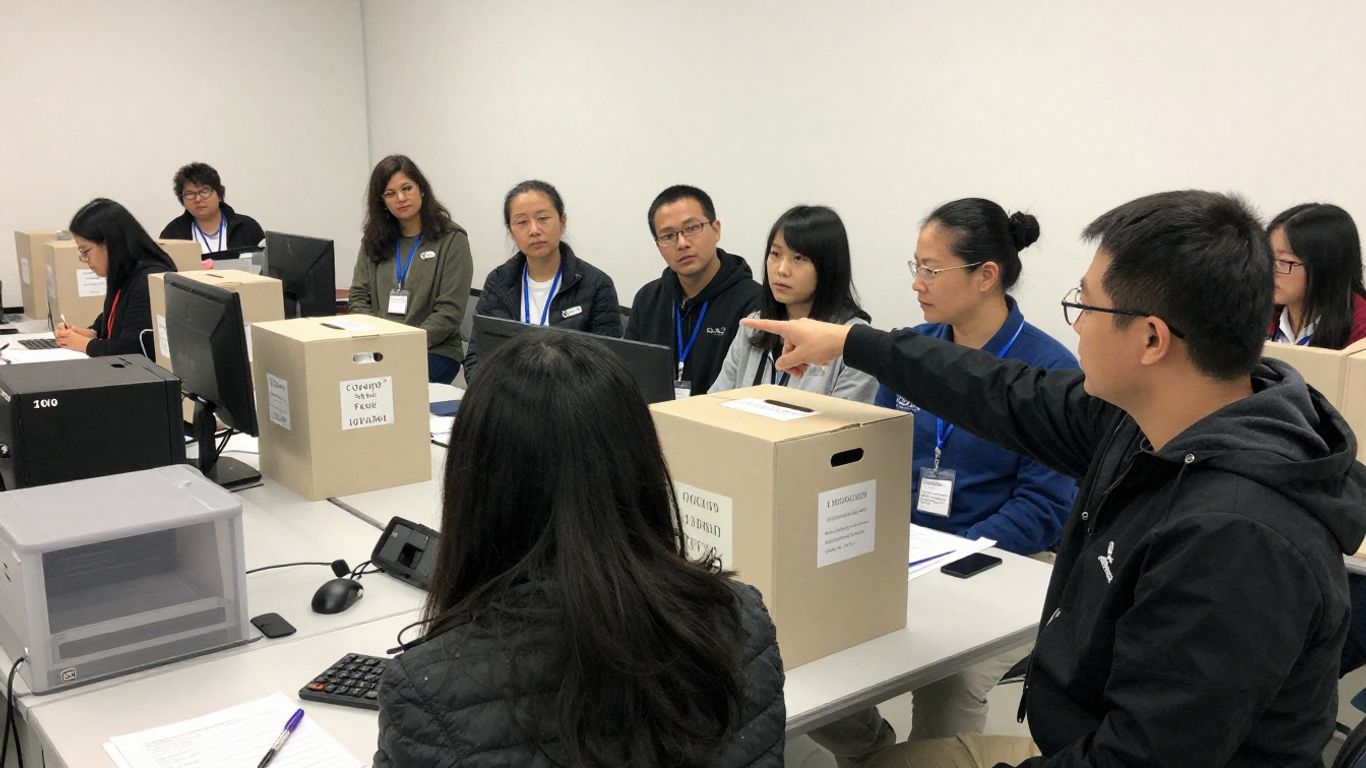
Election security often boils down to people. Not just machines or software, but the folks actually running the show. If you don’t have a workforce that understands the risks and best practices, any amount of money spent on fancy equipment won’t matter. Training is where it starts and ends.
Providing Cybersecurity Education for Election Officials
Cybersecurity threats aren’t slowing down, and election staff need to stay ahead of the curve. Regular training keeps them aware of the latest schemes, from phishing to ransomware. Here’s what serious cyber education means in this context:
- Monthly online workshops on tactics criminals use to target voting systems
- Up-to-date manuals specifically tailored for election offices, not generic IT talk
- State-level partnerships for free or low-cost cyber tools and resources (like endpoint protection)
Let’s face it, we can’t count on blanket federal support—states have to pick up the slack, coordinating efforts to keep their teams sharp. Just look at how state legislators are collaborating across agencies, building their own security networks, and creating programs that guide local officials (like what’s outlined in this summit focused on security priorities).
Establishing Best Practices for Staff
Uniform standards make a difference. Without clear rules, election offices risk confusion, which can undermine security. Offices should use simple checklists and repeatable routines. Consider these basics:
- Vetting: Every worker goes through background checks and regular reviews.
- Segregation of Duties: No one person handles both ballots and system credentials.
- Incident Drills: Schedule practice runs for data breaches – not just fire drills.
These steps sound simple, but they’re easy to overlook in smaller towns or during hectic election months. Writing clear, strict policies removes the guesswork.
Centralizing Training Accreditation
One headache across the country? Inconsistent training standards. Some workers get a quick slideshow, others sit through hours of detailed lessons. A national or at least state-recognized accreditation system puts everyone on the same page. Imagine showing up for work and knowing exactly what skills are expected, whether you’re in Texas or Vermont.
| Requirement | Accredited (Y/N) | Frequency |
|---|---|---|
| Cybersecurity Awareness | Yes | Quarterly |
| Ballot Chain-of-Custody | Yes | Annual |
| Threat Response Drill | Yes | Semi-annual |
If hiring managers look for these credentials in new hires—all certified under the same guidance—security improves across the board.
Robust training isn’t a bonus—it’s the firewall standing between honest ballots and those trying to exploit weaknesses for their own gain. Absolute faith in our process starts with a workforce that’s actually prepared, not just hoping for the best.
Moving Forward: Our Responsibility
Look, keeping our elections safe isn’t just some abstract idea; it’s about making sure our country stays on the right track. We’ve seen how easily things can get messed up, whether it’s from outside meddling or just plain old system failures. It’s not rocket science to know we need solid security, like making sure only the right people can mess with the voting machines and that we can actually check the results. States really need to step up and lead the way here, because relying on Washington to fix everything hasn’t always worked out. We all have a part to play, from the folks running the elections to us voters, to make sure the process is fair and honest. It’s our duty to protect this system so our voices are actually heard, loud and clear.
Frequently Asked Questions
Why is it important to protect our elections?
Elections are the backbone of our democracy. When elections are secure and fair, people can trust that their votes count and that the government truly represents their choices. Protecting elections means making sure everyone can vote safely and that the results are accurate, which keeps our country strong and fair for everyone.
What are some of the biggest threats to election security?
There are several worries. Hackers might try to mess with voting machines or voter lists online. Foreign countries could try to spread false information to confuse voters or make them distrust the election. Also, sometimes old voting machines aren’t as safe as newer ones. It’s important to keep all these threats in mind.
How can we make sure only eligible people vote?
One way is to have clear rules for proving who you are when you vote, like showing a photo ID. This helps make sure that only people who are allowed to vote actually cast a ballot. It’s also important that these rules are fair and easy for everyone to follow, no matter where they live.
What does ‘cybersecurity’ mean for elections?
Cybersecurity for elections means protecting all the computer systems used in voting. This includes the machines that count votes, the databases that hold voter information, and the networks that connect them. It’s about keeping these systems safe from online attacks so that votes are recorded and counted correctly.
Why are election audits important?
Audits are like a double-check after the votes are counted. They help confirm that the vote totals are correct and that no mistakes or tricks happened. By checking the paper ballots against the electronic counts, audits build confidence that the election results are trustworthy.
Who is responsible for election security?
Election security is a team effort! Election workers at the local and state levels are on the front lines. The federal government helps by sharing information and resources. Technology companies and cybersecurity experts also play a role. Everyone has a part to play in making sure our elections are safe and fair.