How Drone Warfare Is Reshaping Modern Conflict in the Middle East
It feels like everywhere you look these days, there are drones. They’re buzzing around for deliveries, for taking cool aerial shots, and sadly, more and more, they’re showing up in conflicts. This isn’t just a small change; it’s really shaking things up, especially in the Middle East. We’re seeing how drone warfare is changing how wars are fought, who can fight them, and what the battlefield even looks like. It’s a big deal, and it’s happening right now.
Key Takeaways
- Drones have gone from simple spy tools to serious weapons, changing military tech in a big way.
- Countries and even groups that don’t have huge armies can now use airpower thanks to drones, leveling the playing field.
- The Middle East is seeing a lot of drone activity, with Iran using them extensively and the US working to defend against them, but it’s costly.
- Conflicts like the one in Ukraine have shown how creative forces can be with drones, using everything from high-tech to cheap, modified ones.
- The future of drone warfare looks like it will involve more AI and autonomous systems, making defenses even more important.
The Evolving Landscape Of Drone Warfare
Drones: A New Era In Military Technology
It feels like just yesterday we were talking about drones as a novelty, something you’d see in hobby shops or maybe for taking cool aerial shots. Now? They’re a massive part of how wars are fought, especially in places like the Middle East. Think about it – these unmanned aerial vehicles, or UAVs, have gone from being simple surveillance tools to serious combat assets. The sheer speed of this transformation is what’s really changing the game.
From Surveillance To Combat: The Expanding Role Of Drones
Originally, drones were mostly used for watching things from high up. Gathering intelligence, keeping an eye on enemy movements – that sort of thing. But that’s not the whole story anymore. We’re seeing them used for all sorts of tasks now. They can drop bombs, act as decoys, or even carry supplies. It’s a huge shift from just looking to actively participating in the fight.
Here’s a quick look at how their roles have grown:
- Reconnaissance: Still a primary function, providing eyes in the sky.
- Direct Attack: Carrying munitions to strike targets.
- Logistics: Transporting supplies to troops in difficult areas.
- Electronic Warfare: Disrupting enemy communications.
- Interception: Hunting down and destroying other drones.
The Democratization Of Airpower Through Drone Technology
What’s really interesting is how drones have made airpower accessible to more groups. Before, only major countries with huge budgets could afford advanced aircraft. Now, even smaller nations and non-state groups can get their hands on drone technology. This levels the playing field in some ways, but it also makes conflicts more unpredictable.
The accessibility of drone technology means that the skies above the battlefield are no longer solely the domain of sophisticated air forces. This shift introduces new challenges and requires a constant adaptation of defensive strategies.
It’s a whole new ballgame when you have to worry about threats coming from above, not just from the front or sides. This has forced militaries to rethink their entire approach to defense.
Drone Warfare’s Impact On Middle Eastern Conflicts
Iranian Drone Operations In The Gulf Region
Iran has really leaned into drone technology, especially in the Gulf. They’ve been using these drones, like the Shahed, for all sorts of missions, from hitting shipping in the Persian Gulf to targeting bases. It’s a big shift because these drones are cheaper than missiles and easier to make a lot of. The UAE, for instance, has reported shooting down a huge number of drones and missiles aimed at them. It’s like a constant aerial chess match happening over there.
Here’s a look at some of the numbers reported by the UAE:
| Type of Attack | Quantity Engaged |
|---|---|
| Ballistic Missiles | 304 |
| Cruise Missiles | 15 |
| Unmanned Aerial Vehicles (UAVs) | 1,627 |
U.S. Defense Against Drone Attacks In The Middle East
The U.S. military is definitely feeling the pressure. They’ve had drones hit their bases and even their embassies in places like Iraq and Saudi Arabia. It’s a real headache because these drones can be hard to spot, especially when they fly low. U.S. officials have admitted they’re worried about having enough interceptors to deal with the constant stream of attacks. They’re trying to destroy the drone launch sites and factories, which seems to have slowed things down a bit, but the threat is still very much there.
The challenge isn’t just about shooting down drones; it’s about seeing them coming in the first place. They can appear quickly and fly under the radar, making defense a constant, uphill battle.
The Cost Disparity In Drone Interception
One of the biggest issues is the cost difference. You’ve got these cheap drones, sometimes just modified consumer models, that can be launched in swarms. Then you have the expensive interceptor missiles the U.S. and its allies use to shoot them down. It’s not a sustainable situation when you’re spending a fortune to take out something that cost next to nothing to build. This economic imbalance is a major factor in how these conflicts are playing out.
- Cheap, mass-produced drones can overwhelm sophisticated defenses.
- Interceptor systems are costly and have limited ammunition.
- This creates an economic advantage for actors using drone swarms.
- Finding effective, affordable ways to counter these threats is a top priority.
Case Studies In Modern Drone Deployment
Ukraine’s Innovation In Drone Warfare
The conflict in Ukraine has really shown us what these smaller, cheaper drones can do. When Russia invaded, Ukraine didn’t have the same kind of air power. So, they got creative. They started using off-the-shelf drones, the kind you might even buy yourself, and modified them. These FPV (first-person view) drones, controlled by pilots wearing goggles, became a real headache for Russian forces. They’d fly these little machines right at tanks and armored vehicles, dropping small bombs. It was surprisingly effective, and it really changed how people thought about drone use in a major war.
It’s not just about attacking, either. Ukraine has developed all sorts of drones. There are marine drones that can go after ships, and even ground drones that look like little tractors, used for carrying supplies like ammo or medicine to the front lines. Hundreds of Ukrainian companies are now making these things, constantly tweaking and improving them. They even have special drones designed to shoot down Russian drones, like the Shahed. It’s a constant back-and-forth, with both sides trying to outdo the other with new drone tech.
The sheer number and variety of drones being used in Ukraine, from simple quadcopters to more advanced military models, highlights how quickly this technology can adapt to battlefield needs. It’s a clear sign that airpower is no longer just for the big players.
Israel’s Extensive Use Of Drones In Gaza
In Gaza, drones have become a constant presence. You can hear them buzzing overhead all the time – some Palestinians even call them ‘zanana,’ which means buzzing. The Israeli military uses them a lot for watching things, gathering intel. But they’ve also been using them more and more for actual fighting. There have been reports from people on the ground saying that during heavy fighting, especially in 2024, Israeli forces used drones that acted like snipers, firing on people, including kids. The Israeli military hasn’t confirmed this specific use, though.
Sudan’s Civil War And The Proliferation Of Drones
Sudan’s civil war is another place where drones are making a big impact. The government forces have been getting Iranian-made drones, and they’re using them against the rebel groups. It’s gotten pretty bad. The use of drones and other explosives in populated areas has really changed the war, leading to more civilian deaths and damaging important buildings and services. What’s worrying is that both sides in the conflict have been getting better at using drones, and as they try to keep their own soldiers safe, it’s the civilians who end up being more exposed.
Here’s a quick look at how drone use has changed in Sudan:
- Early Stages: Initial drone use was limited, primarily by government forces with external support.
- Escalation: Both sides have since acquired and improved their drone capabilities.
- Increased Attacks: 2026 has seen a significant jump in drone strikes, with more recorded in the first few months than in any previous quarter of the war.
- Civilian Impact: The widespread use of drones by both warring factions has directly led to higher civilian casualties and damage to infrastructure.
The Strategic Implications Of Drone Proliferation
Non-State Actors And The Rise Of Drone Capabilities
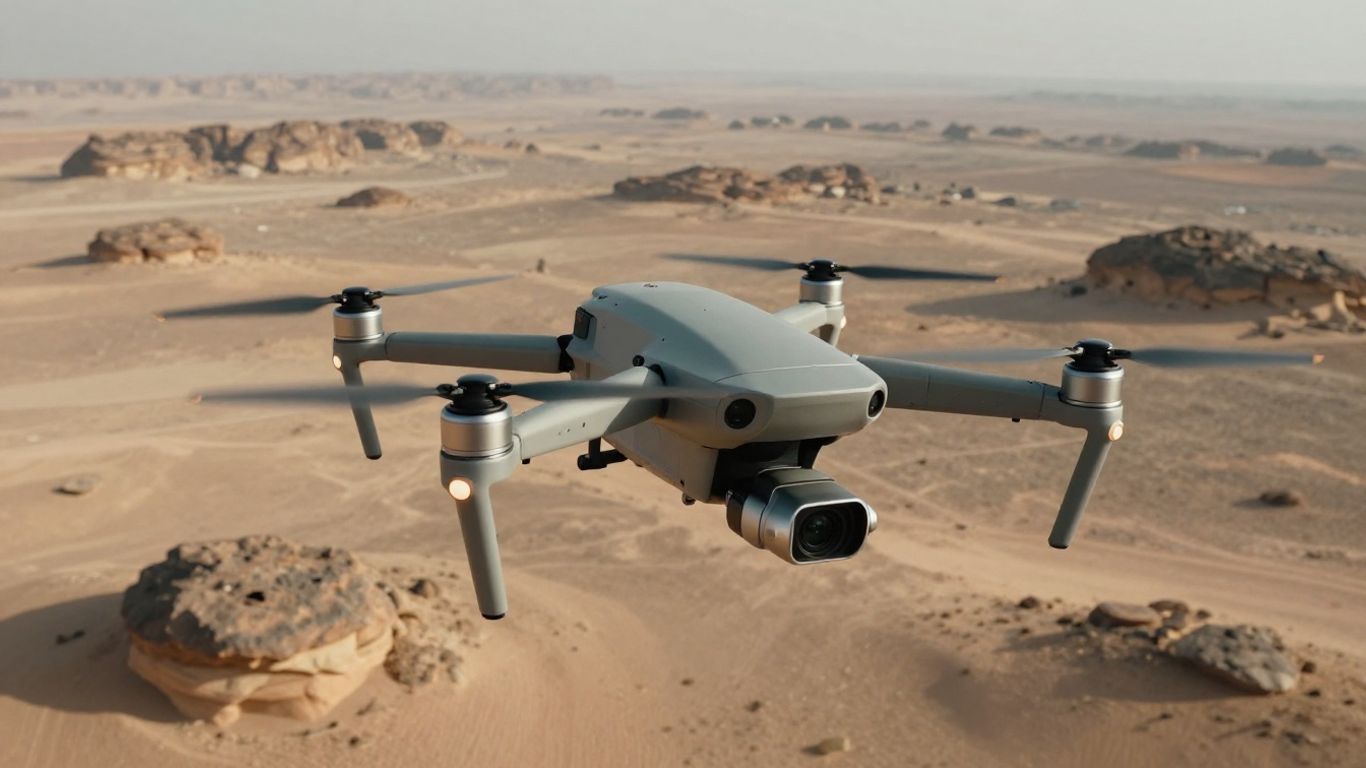
It’s not just big armies playing with drones anymore. We’re seeing groups that aren’t official countries getting their hands on this tech. Think about it – a few years ago, you needed a whole air force to do what a simple drone can do now. This has really changed the game, especially in places like the Middle East. These smaller groups can now challenge much bigger, better-equipped opponents in ways they never could before. It’s like suddenly everyone has a way to look down from above and cause trouble.
The Challenge Of Detecting And Intercepting Low-Altitude Drones
One of the biggest headaches with all these drones flying around is spotting them, especially the small ones that hug the ground. They’re quiet, they’re hard to see on radar, and they can pop up out of nowhere. Trying to shoot them down before they do damage is a real puzzle. It’s like trying to catch a fly in a dark room – you know it’s there, but good luck hitting it.
- Stealthy flight paths: Drones often fly low, using terrain to hide.
- Small radar signature: Many are too small to show up clearly on standard detection systems.
- Cost-effective swarms: Even if some are shot down, a large number can overwhelm defenses.
Reshaping Battlefield Dynamics: Looking Upwards
Soldiers used to worry about threats coming from the front, back, and sides. Now, they have to constantly scan the sky. This shift in focus changes everything about how battles are fought. It means new tactics, new training, and a whole new set of worries for anyone on the ground.
The battlefield is no longer just a horizontal space. The introduction of drones means that the vertical dimension has become a primary concern, forcing a complete reevaluation of defensive postures and offensive strategies. What was once a distant threat is now an immediate danger from above.
Here’s a look at how drone capabilities have expanded:
| Capability | Past Use | Current Use |
|---|---|---|
| Surveillance | High-altitude, broad area reconnaissance | Real-time, low-altitude, targeted observation |
| Attack | Limited payload, expensive platforms | Wide range of munitions, cheap and expendable |
| Logistics | Minimal | Resupply, medical evacuation, mine clearance |
Technological Advancements And Future Drone Warfare
The Role Of Artificial Intelligence In Drone Operations
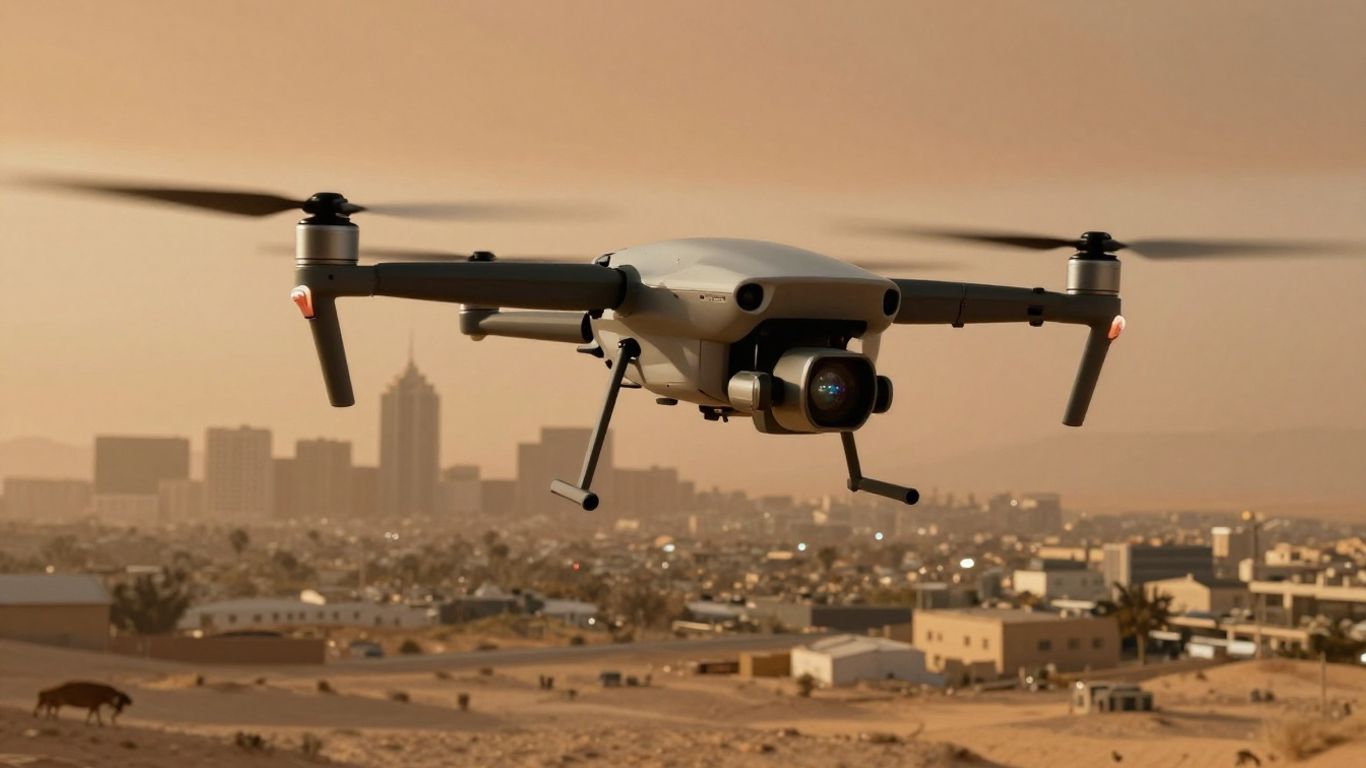
Artificial intelligence is really starting to change how drones operate. Think about it – instead of a person constantly controlling every move, AI can help drones make decisions on their own. This means they can react faster to what’s happening on the ground, identify targets more accurately, and even coordinate with other drones without needing constant human input. It’s like giving them a brain, allowing them to handle complex tasks more efficiently. This is a big deal for things like reconnaissance, where a drone might need to track a moving target for hours, or for swarm attacks where multiple drones need to work together in a coordinated way.
Countering Drone Threats: Developing Layered Defense Systems
Dealing with the growing number of drones, especially the cheaper, harder-to-detect ones, is a major headache. Military planners are looking at building what they call "layered defense systems." This isn’t just one type of solution; it’s a mix of different approaches working together. You’ve got your big missile interceptors for the more serious threats, but you also need things like electronic jamming to disrupt drone signals, and even ground-based weapons like heavy machine guns for those drones that slip through the cracks. The idea is to have multiple chances to stop an incoming drone, making it much harder for them to reach their target. It’s a bit like having several nets to catch a ball, rather than just one.
The Future Of Autonomous Weapons And Drone Integration
We’re heading towards a future where drones are much more autonomous, meaning they can operate with very little human control. This includes the development of autonomous weapons systems, where a drone could potentially identify, track, and engage a target without a human pulling the trigger. This raises a lot of questions, of course, but the technology is advancing rapidly. We’re also seeing more integration between different types of unmanned systems – drones working with unmanned ground vehicles or even naval drones. This interconnectedness could create a more flexible and responsive battlefield, where different robotic assets can share information and work towards a common goal. It’s a pretty significant shift from how wars have been fought in the past.
The rapid evolution of drone technology, particularly with AI integration, is pushing the boundaries of what’s possible in warfare. While this offers new capabilities, it also presents significant challenges in defense and ethical considerations. The focus is shifting from individual drone capabilities to networked, intelligent systems that can operate with increasing independence.
The Sky’s the Limit, for Better or Worse
So, what does all this mean for the future? It’s pretty clear that drones aren’t just a passing trend in warfare. They’ve changed the game, making airpower accessible to more groups than ever before. We’re seeing everything from cheap, off-the-shelf models repurposed for combat to high-tech surveillance machines. This shift means conflicts can look very different, with threats coming from unexpected places, even from above. It’s a complex situation, and figuring out how to deal with it all is something militaries and governments are still working through. One thing’s for sure, though: the skies over conflict zones are going to stay busy.
Frequently Asked Questions
What exactly are drones and why are they changing warfare?
Drones, also known as unmanned aerial vehicles (UAVs), are aircraft without a human pilot on board. They can be controlled remotely or fly on their own using software. They’re changing warfare because they’re becoming cheaper, easier to use, and can do many jobs, from watching over areas to dropping bombs. This means even smaller groups can now use air power, which used to be only for big armies.
How are drones being used in the Middle East specifically?
In the Middle East, drones are used for many things. Countries like Iran use them to attack ships and bases in the Persian Gulf. The U.S. uses them for spying and also to defend against attacks. Conflicts in places like Sudan also see both sides using drones, often for attacks that can harm civilians.
Are drones only used by big countries, or can smaller groups use them too?
While big countries have advanced drones, even smaller groups and non-state actors can now get their hands on drone technology. Cheap, everyday drones can be bought and then changed to carry small bombs or for spying. This makes it harder for larger, more powerful forces to always have the upper hand.
What’s the big deal about the cost of stopping drones?
There’s a big difference in cost between a drone and the weapons used to shoot it down. A cheap drone might cost a few thousand dollars, but the missiles used to intercept it can cost millions. This means that if a country is attacked by many drones, it can get very expensive very quickly to defend itself.
How is technology like AI changing drone use in the future?
Artificial intelligence (AI) is making drones smarter. AI can help drones identify targets on its own, fly more efficiently, and even work together in groups. This could lead to more advanced ‘autonomous weapons’ where drones make decisions without direct human control, which raises new questions about warfare.
What are the biggest challenges in dealing with drone attacks?
One of the main problems is spotting drones, especially those that fly low or appear suddenly. Once spotted, they can be shot down, but finding them in the first place is tough. Another challenge is the sheer number of drones that can be used, and the high cost of intercepting them, which can wear down defenses.