
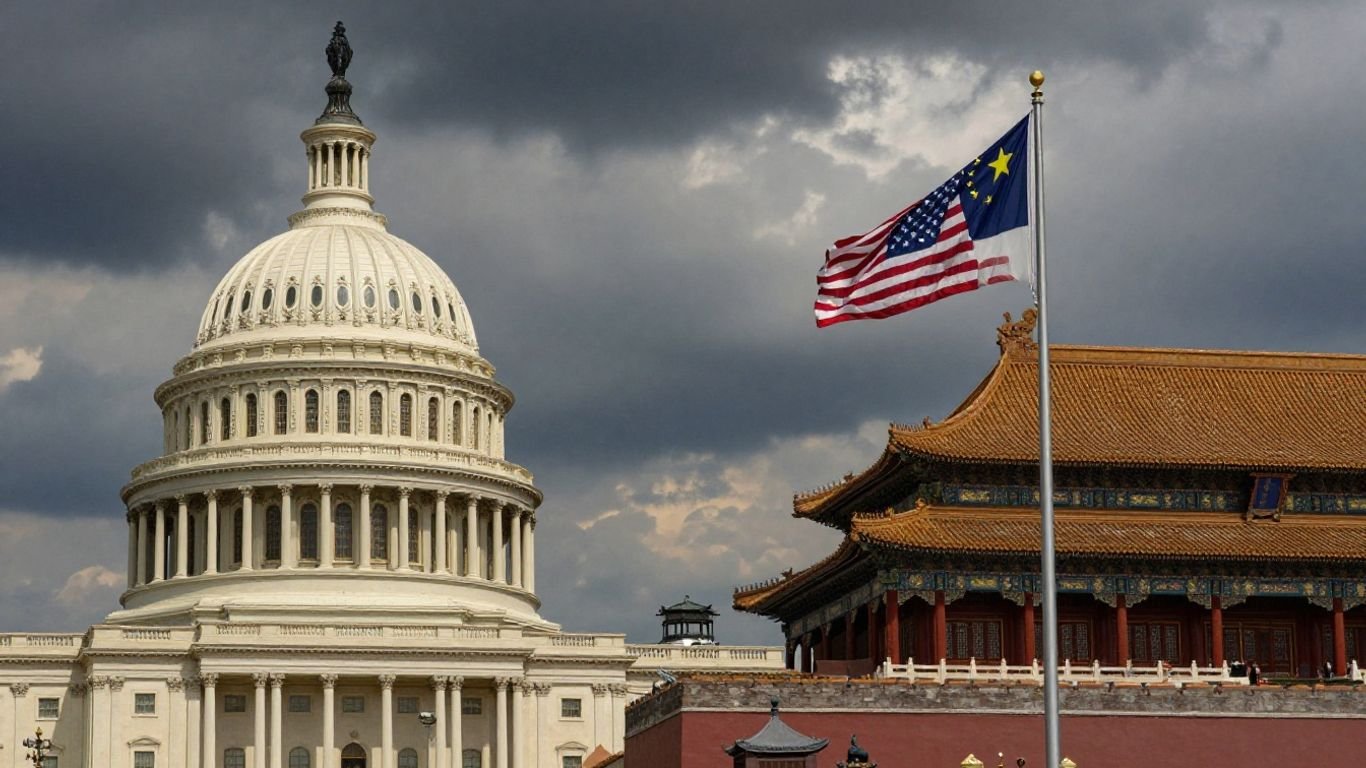
Navigating the Complexities of China-US Relations in 2026
China–US relations in 2026 feel like a never-ending chess match. The two sides are always pushing and pulling, with moments of tension and short-lived calm. Whether it’s over trade, technology, or security, both countries seem locked into a pattern where cooperation is rare and competition is everywhere. Even when they try to talk things out, something always seems to throw them off course. Looking at the headlines, it’s clear: both countries are trying to protect their own interests, and finding real common ground isn’t getting any easier.
Key Takeaways
- China–US relations in 2026 are defined by a mix of rivalry and cautious diplomacy, with both sides struggling to find a stable balance.
- Security issues like Taiwan and military expansion continue to drive mistrust, while economic ties remain deep but tense.
- Efforts to create rules for AI and nuclear safety show some progress, but real cooperation is still limited by each country’s priorities.
- Congress in the US is divided over how to handle China, making it tough to pass strong, unified policies.
- Recent incidents, such as the spy balloon and disputes in the South China Sea, show just how quickly things can go wrong and how fragile any progress really is.
The Unyielding Reality Of Chinese Ambitions
When you look at China’s rise in 2026, you can’t ignore how fiercely focused they are. The Chinese Communist Party, led by Xi Jinping, has been quite clear about pushing past old boundaries. Their playbook isn’t secret—they want to reclaim what they call their rightful spot on top, even if it shakes up the global order. For years now, they’ve banked on the idea that "the East is rising and the West is declining," fueling a sense of inevitability around their ambitions. If you think the U.S. can just keep doing business as usual, that’s wishful thinking.
Taiwan: A Persistent Flashpoint
No country matters more to China’s leaders than Taiwan. It’s not just about geography; it’s about control and legitimacy. Beijing keeps ramping up both rhetoric and military pressure on the island, making it obvious they’re playing the long game. The U.S. has increased support for Taiwan—military aid, high-level visits, and tech cooperation. But here’s the catch: the tension keeps climbing, and nobody really believes China will back off. Every Chinese jet near Taiwan’s airspace sends a sly message: they’re deadly serious.
- Regular military exercises simulate invasion scenarios.
- Beijing uses disinformation campaigns to sway public opinion and muddy the facts.
- U.S. arms sales to Taiwan have become more frequent and advanced, which only makes China bristle further.
Taiwan remains one wrong move away from sparking a crisis that could pull in every major power in the Indo-Pacific.
Global Influence And Military Expansion
China’s not just talking—they’re building. The military budget grows every year, and now you see new bases popping up from Africa to the South China Sea. They’re chasing a blue-water navy capable of challenging U.S. supremacy, and they love to show off their hypersonic missiles and advanced surveillance tech.
| Year | Chinese Military Spending (USD, billions) | New Overseas Bases |
|---|---|---|
| 2023 | 225 | 1 |
| 2024 | 240 | 2 |
| 2025 | 258 | 3 |
- Belt and Road projects anchor Chinese interests in dozens of countries.
- PLA modernization targets space, AI, and cyber power—not just boots on the ground.
- China backs authoritarian partners to sidestep Western influence and build its own global network.
If Americans think Chinese ambition stops at their own borders, that’s a dangerous blind spot.
Economic Dependence And Technological Lag
China’s economy is huge, making others highly reliant on its factories and supply chains. But underneath the numbers, cracks are starting to show. Their GDP growth is cooling, and they’re hitting walls with homegrown innovation, especially in chips and high-end tech. Even so, China weaponizes this dependence and isn’t afraid to squeeze Western companies if it gets them an advantage.
- U.S. tech restrictions have squeezed Chinese giants, forcing expensive, time-consuming workarounds.
- China threatens Western companies with boycotts and regulatory pressure if policies aren’t to their liking.
- Beijing is desperate to catch up in semiconductors and AI, so they’re flooding these sectors with government cash.
For a closer look at expert views on all of this, check out this survey of former U.S. officials and China experts that breaks down the big questions facing both powers today.
China’s ambitions are not a secret and pretending they’re just another trading partner is a mistake. The threats are real, and the signs are everywhere if you bother to look.
Navigating The Competitive Landscape
The relationship between the United States and China in 2026 is undeniably competitive. It’s not just about who has the best gadgets or the biggest economy; it’s a deeper struggle for influence and the future of global order. We can’t afford to be naive about this. China has been playing a long game, and we’re only now starting to fully grasp the scope of their ambitions. This isn’t about picking a fight, but it is about recognizing reality and acting accordingly.
Strategic Competition And Economic Fences
This competition plays out in many arenas. Economically, China has been aggressive, using its manufacturing might and growing technological prowess to its advantage. They’ve been smart about securing resources, like rare earths, which are vital for modern technology. We need to ensure our own supply chains are robust and not overly dependent on Beijing. This means investing in domestic production and working with allies who share our values. It’s about building economic fences, not to isolate, but to protect our own interests and ensure a level playing field. We’ve seen how they can use economic leverage, and we need to be prepared.
Countering Predatory Practices With American Investment
Part of China’s strategy has involved what many see as predatory economic practices. This can include unfair trade deals, intellectual property theft, and state-sponsored subsidies that distort global markets. To counter this, we need to double down on American innovation and investment. This isn’t just about government spending; it’s about creating an environment where American businesses can thrive and compete globally. Think about investing in cutting-edge fields like artificial intelligence and advanced manufacturing. When we invest in ourselves, we become a stronger competitor. It’s about showing the world that American ingenuity and free markets are the best path forward. We need to make sure our own technological advantages aren’t just developed but also integrated into our economy and exported to allies, strengthening our global position.
The Shifting Global Economic Tides
The global economic landscape is always changing, and China’s rise has certainly shifted things. We’re seeing new economic blocs form, and countries are reassessing their relationships. It’s not a zero-sum game, but it does mean we need to be smart about our alliances and partnerships. Building strong economic ties with like-minded nations is key. This helps create a more stable and predictable global economy, one that benefits everyone, not just a single power. We need to be adaptable and ready to respond to these changes, always keeping American interests at the forefront.
The challenge is to compete vigorously without stumbling into conflict. This requires clear-eyed realism about China’s intentions and capabilities, coupled with a strong domestic foundation. Our economic health, technological leadership, and democratic institutions are the bedrock of our competitive strength.
Establishing Guardrails In A Fractious Relationship
Look, nobody wants a hot war, right? Especially not between two nuclear powers like us and China. So, even though things are tense, and let’s be honest, they’re pretty darn tense, we’ve got to try and put some basic rules in place. Think of it like a shaky truce, a way to stop things from accidentally blowing up.
The Imperative Of Military-To-Military Communication
This is probably the most obvious one. When our fighter jets buzz their ships, or their planes get a little too close to ours, someone needs to be able to pick up the phone and say, ‘Hey, what’s going on?’ We saw how quickly things can escalate with that balloon incident. Without clear lines of communication between our militaries, a simple misunderstanding could turn into something much, much worse. It’s not about being friends; it’s about not stumbling into a conflict we don’t want.
- Direct Hotlines: Need to be active and tested regularly.
- Regular Briefings: Even if they’re just updates on naval movements or air patrols.
- De-escalation Protocols: Agreed-upon steps to take when things get hairy.
The Chinese often see these communication channels as a reward for good behavior from us, which is backward. For us, it’s the bare minimum for responsible statecraft. We need to make sure they understand that.
AI Safety: A New Frontier For Stability
Now, this is a newer one, but it’s getting important fast. Artificial intelligence is developing at lightning speed. We’re talking about AI that could control weapons systems, make battlefield decisions, or even influence global markets. If we don’t have some kind of agreement on how this stuff is developed and used, especially when it comes to military applications, we’re asking for trouble. Imagine AI making a mistake that triggers a conflict – that’s a nightmare scenario.
Human Control Over Nuclear Decisions
This one should be a no-brainer, but it’s worth saying. The ultimate decision to use nuclear weapons must always rest with a human being, not an algorithm. We need to be absolutely clear about this with Beijing. There can be no ambiguity. The idea of an AI or some automated system deciding to launch nukes is terrifying, and we need to make sure that’s a red line that neither side ever crosses. It’s about maintaining sanity in an increasingly complex world.
The Role Of Diplomacy Amidst Friction
Managing Crises And Dispelling Misperceptions
Look, talking to China isn’t like chatting with your neighbor about the fence line. It’s a high-stakes game, and sometimes, things get heated. We saw this with the whole "balloon-gate" mess. Instead of just yelling, the administration tried to keep lines of communication open. The idea is simple: if we can talk, maybe we can stop small misunderstandings from blowing up into big problems. It’s about making sure both sides know what the other is thinking, even when we disagree. This isn’t about making friends; it’s about avoiding accidental wars. We need to be clear about our intentions, and frankly, we need to understand theirs too, even if we don’t like it.
The reality is, China isn’t going anywhere. Pretending otherwise is foolish. Our approach has to acknowledge this, focusing on clear communication to prevent missteps that could have serious consequences. This isn’t about appeasement; it’s about smart risk management.
The Delicate Balance Of Human Rights Discourse
This is a tough one. We all believe in basic human rights, but pushing too hard on China’s record can shut down any chance of talking about other important stuff. It’s a balancing act. We can’t just ignore what’s happening, but we also can’t let it derail every other conversation we need to have. The goal is to find a way to speak up without completely breaking the relationship. It’s about being smart, not silent. We need to push for what’s right, but do it in a way that doesn’t make productive talks impossible. It’s a fine line to walk.
The Limits Of Peaceful Coexistence
Let’s be honest, "peaceful coexistence" with China is a stretch. They have their own agenda, and it often clashes with ours. We can talk, we can try to manage disagreements, but we shouldn’t expect them to suddenly become our best buddies or to stop pursuing their own interests. They see cooperation differently than we do. We need to be realistic about this. Trying to convince them to prioritize what we care about is probably a waste of time. Our focus should be on managing the competition, not pretending we can have a completely harmonious relationship. It’s about setting boundaries and sticking to them, even when it’s uncomfortable.
Here’s what we need to keep in mind:
- Clear Communication: Always state our intentions directly.
- Realistic Expectations: Don’t expect China to change its core goals for our benefit.
- Strategic Patience: Sometimes, waiting and building our own strength is the best diplomatic move.
- Focus on Stability: Prioritize preventing escalation over seeking grand agreements.
Congressional Scrutiny And Bipartisan Challenges
Look, Congress has been all over the place when it comes to China. For a while there, it felt like everyone was trying to outdo each other with how tough they could sound on Beijing. It’s a bit of a circus, honestly. While some folks in Washington were busy with summits and diplomatic niceties, the real action, or at least the loud talk, was happening on Capitol Hill. They’ve been passing laws and making a lot of noise about countering China’s influence, but getting everyone on the same page? That’s a whole different story.
Legislative Efforts To Counter China’s Influence
Congress has definitely tried to put the brakes on China’s rise, especially when it comes to technology. Think about the CHIPS and Science Act – a big deal, pushed through partly because we needed to keep up with China in the semiconductor game. It wasn’t just one party; some Republicans actually helped shape it. They also authorized things like the AUKUS security pact, which is all about keeping an eye on China in the Pacific. It’s like they’re building walls, or maybe fences, around our tech and our interests.
- The CHIPS and Science Act: Aimed at boosting U.S. semiconductor manufacturing and research.
- AUKUS Security Pact: Strengthened defense ties with Australia and the UK to counter regional threats.
- Compact of Free Association Renewals: Secured strategic access in the Pacific against Chinese encroachment.
The Struggle For Bipartisan Consensus
Getting a unified front against China has been tougher than it looks. While the idea of competing with China sounds good to most, actually agreeing on how to do it is where things get messy. Some in Congress thought the administration wasn’t being tough enough, while others worried about hurting business ties. It’s a constant tug-of-war. You see efforts to block Chinese investments or limit their access to our markets, but then you have debates about whether these moves actually help or just make things more complicated.
The political climate often makes it hard to focus on the actual threat. Instead, it becomes a game of who can sound the most patriotic or the most anti-China, which doesn’t always lead to smart policy.
The China Competition Narrative’s Limited Reach
Here’s the kicker: even with all the talk about China, it hasn’t always translated into solid, long-term support for every initiative. Some big ideas got shelved because Congress couldn’t agree. Remember those plans for a sovereign wealth fund to compete with China’s Belt and Road? Yeah, that didn’t get the backing it needed. It turns out that while everyone agrees China is a challenge, getting them to agree on the solutions, especially when it involves spending money or making tough choices, is a real uphill battle. The focus on China sometimes gets lost in the usual political squabbles.
Lessons From Recent Encounters
The ‘Balloon-Gate’ Incident and Its Aftermath
Remember that whole spy balloon fiasco? It really showed how quickly things can go sideways between the US and China. One minute it’s a weather balloon (or so they claimed), the next it’s a full-blown international incident that nearly halted all high-level talks. The whole thing was pretty embarrassing for Beijing, and frankly, it was a wake-up call for us too. It highlighted how easily a minor issue can blow up when both sides are already on edge, with politicians on both sides eager to look tough. This incident proved that even a slow-moving, seemingly harmless object could trigger a major crisis, underscoring the fragility of our current relationship. It also showed that sometimes, a strong reaction, even if it seems like an overreaction, can actually make them think twice about future provocations. It’s a messy lesson, but one we can’t afford to ignore as we continue to deal with China’s growing influence.
South China Sea Assertions and Arms Sales Disputes
Then there’s the constant back-and-forth in the South China Sea. China keeps pushing its claims, building artificial islands, and generally acting like it owns the place. Meanwhile, we’re trying to maintain freedom of navigation and support our allies in the region. It’s a tense situation, and every time they build another base or we conduct a freedom of navigation operation, the risk of a miscalculation goes up. Add to that the ongoing disputes over arms sales to Taiwan, which China sees as a direct provocation. It’s a classic case of conflicting interests where neither side is willing to back down easily. We need to be clear-eyed about their intentions and not get bogged down in wishful thinking about cooperation when their actions speak louder.
The Prisoner Swap: A Fleeting Détente
Sometimes, you see these moments that look like a thaw, like that prisoner swap we saw recently. On the surface, it seemed like a positive step, a sign that maybe communication channels were opening up. But let’s be real, these kinds of deals are often just temporary fixes, designed to ease immediate pressure without addressing the root causes of our disagreements. It’s like putting a band-aid on a much bigger problem. While it might provide a brief moment of relief and allow for some limited dialogue, it doesn’t change the fundamental strategic competition. We need to be wary of mistaking these small gestures for genuine progress. Real stability won’t come from these isolated events, but from a consistent, firm stance that prioritizes American interests above all else.
The history of US-China relations is littered with examples of how easily misunderstandings can escalate. Recent events have shown that communication is vital, but it must be backed by a clear understanding of each other’s red lines and a willingness to stand firm when necessary. We can’t afford to be naive about the challenges ahead.
Looking Ahead: A Reality Check for 2026
So, where does all this leave us heading into 2026? Honestly, it’s a mess. We’ve tried playing nice, we’ve tried being tough, and China just keeps doing its own thing. They don’t seem to care about cooperating on the stuff we think is important, and frankly, we’ve wasted enough time trying to convince them otherwise. From here on out, it’s got to be about looking out for America first. That means keeping our guard up, not getting fooled by their talk, and making sure we’re strong enough to handle whatever they throw at us. We can talk when it suits us, but we can’t expect them to be our friends. It’s a competitive world, and we need to act like it.
Frequently Asked Questions
Why is Taiwan such a big issue between China and the US?
Taiwan is a major point of tension because China sees it as part of its territory, but the US supports Taiwan’s right to make its own decisions. The US also sells weapons to Taiwan, which upsets China. This disagreement makes the situation risky and hard to solve.
How is China trying to grow its power in the world?
China is building up its military, making new friends in different regions, and investing a lot in other countries. China wants to be less dependent on other nations while making others rely more on it. This helps China have more influence globally.
What are the main economic problems between China and the US?
The US worries about depending too much on China for things like technology and important materials. There are also concerns about unfair trade practices. Both countries are trying to protect their own industries, which sometimes leads to trade barriers and new rules.
Why is communication between the US and Chinese militaries important?
Talking directly helps both sides avoid accidents or misunderstandings that could lead to bigger problems. If something goes wrong, having open lines of communication can help fix things quickly and prevent a small issue from becoming a crisis.
What steps are being taken to make sure AI and nuclear weapons are safe?
Leaders from both countries agreed that humans should always be in control of nuclear weapons, not computers or artificial intelligence. This agreement helps lower the risk of mistakes or accidents that could start a conflict.
How does Congress affect US relations with China?
Congress makes laws and decisions about how the US deals with China, like setting rules for trade or funding projects. Sometimes, it’s hard for both political parties to agree, which can make it tough to have a clear and steady policy toward China.