
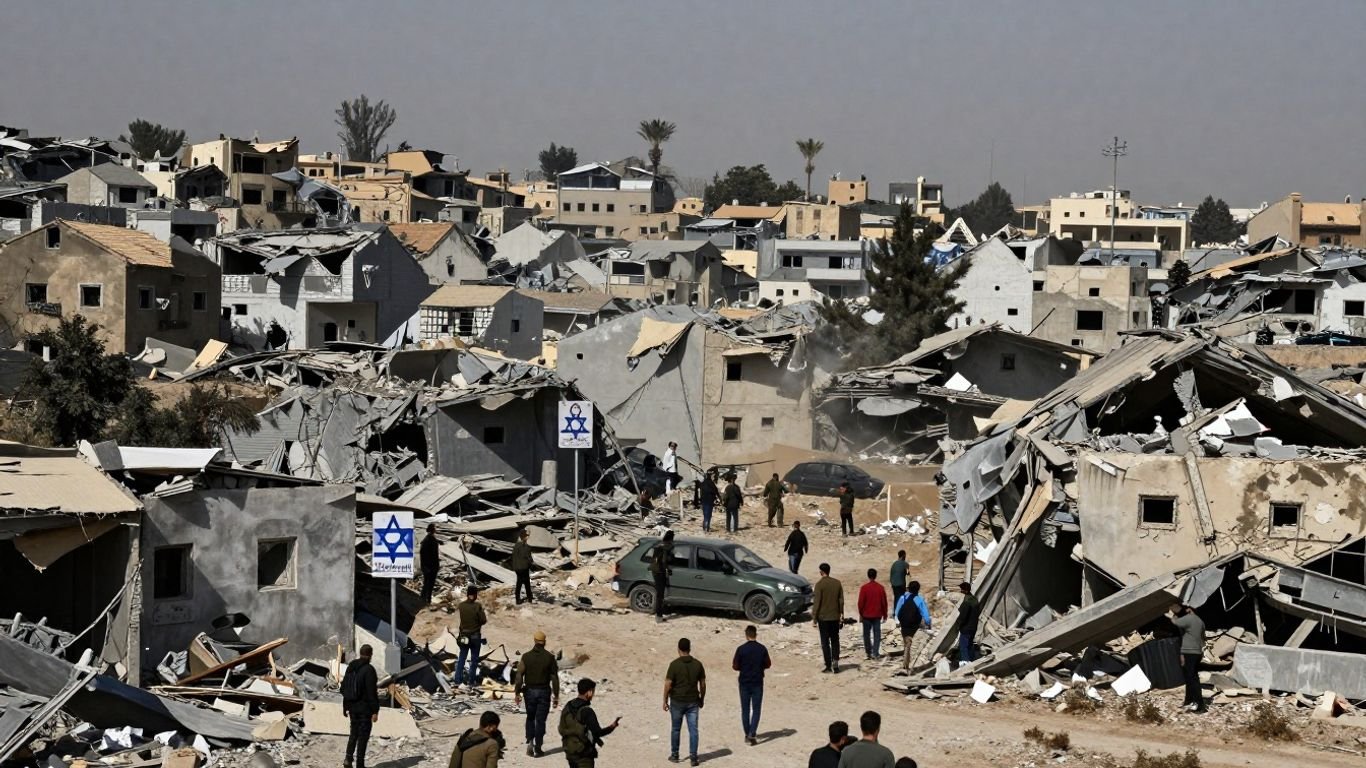
Understanding the Israel–Gaza Conflict: A Deep Dive into the Latest Developments
Trying to get a handle on the Israel-Gaza conflict can feel like a lot, right? It’s one of those stories that’s always in the news, but the details can get pretty tangled. This article is here to help clear things up a bit. We’ll look at where this whole situation comes from, who the main players are, and what’s been happening lately. It’s a tough topic, but understanding it means looking at the history, the people involved, and the real impact it has. Let’s break down the Israel-Gaza conflict.
Key Takeaways
- The Israel-Gaza conflict has deep historical roots stretching back over a century, tied to competing national movements and territorial claims.
- Key players include Israel, focused on security, and Palestinians in Gaza, seeking self-determination and an end to hardship, with Hamas playing a significant role.
- Cycles of violence are common, often triggered by rocket fire from Gaza and Israeli military responses, impacting civilian life on both sides.
- Gaza faces a severe humanitarian crisis, worsened by years of blockade and damage to its infrastructure from recurring conflicts.
- Finding a path forward requires addressing the conflict’s root causes, fostering dialogue, and relying on international support for lasting stability.
The Deep Roots of the Israel–Gaza Conflict
A Century of Competing National Aspirations
Look, this whole Israel-Gaza thing didn’t just pop up yesterday. We’re talking about a situation that’s been brewing for over a hundred years, fueled by two groups of people who both felt like this land was theirs. On one side, you had the Zionists, wanting a homeland for Jewish people after centuries of persecution. On the other, you had Arab nationalism, with local populations wanting to control their own destiny. Both movements gained steam in the early 1900s, and guess what? They were looking at the same patch of dirt. It’s like two people claiming the same parking spot, but with way higher stakes.
The Aftermath of World War I and the British Mandate
After World War I, the Ottoman Empire, which had been running things for ages, fell apart. Britain stepped in and got control of this area, calling it the British Mandate for Palestine. This is when things really started to get complicated. More Jewish people began moving into the area, partly because of the Zionist movement and partly because Europe was getting pretty nasty for Jews. This influx, combined with the existing Arab population’s own nationalistic feelings, created a lot of tension. Britain was stuck in the middle, trying to manage competing promises and growing unrest. It was a powder keg waiting for a spark.
The 1947 Partition Plan and the War of 1948
By 1947, Britain had had enough and basically handed the problem over to the United Nations. The UN came up with a plan to split the land into two states: one Arab and one Jewish, with Jerusalem as an international city. The Jewish leaders said, ‘Okay, we can work with this.’ The Arab leaders? Not so much. They rejected the plan outright. This disagreement led straight into the 1948 Arab-Israeli War. For Israelis, it’s the War of Independence, the birth of their nation. For Palestinians, it’s the Nakba, the catastrophe. This war was brutal and reshaped the entire region. Israel was established, but hundreds of thousands of Palestinians were forced to leave their homes, many ending up as refugees in places like the Gaza Strip, which ended up under Egyptian control. This event is a massive part of the Palestinian narrative and a constant reminder of what they see as a deep injustice. It’s the bedrock of so much of the anger and the ongoing struggle we see today.
Key Players and Their Stakes in the Israel–Gaza Conflict
Israel’s Unwavering Security Imperatives
When you look at Israel’s position, it’s all about security, plain and simple. For decades, the main goal has been to keep its citizens safe from attacks, especially the rockets that have rained down from Gaza. It’s not just talk; it’s a constant reality for people living near the border. Think air raid sirens and bomb shelters becoming normal parts of life. Israel views Hamas, which runs Gaza, as a terrorist group bent on its destruction. So, military actions and the blockade are often presented as necessary steps to counter this threat. The idea of deterrence is a big part of their strategy – showing a strong response to prevent future attacks. There’s a pretty broad agreement across the Israeli political spectrum that threats from Gaza need to be dealt with. This focus on self-preservation and protecting its borders is a major driver of Israeli policy.
Palestinian Aspirations for Self-Determination
On the other side, you have the Palestinians in Gaza. Their main concerns are about having their own say in how they’re governed, ending what they see as an occupation, and dealing with the tough humanitarian situation. It’s about wanting to live with dignity, without constant fear of military action or economic hardship. Gaza is one of the most crowded places on Earth, and people there face huge problems: jobs are scarce, clean water and electricity are hard to come by, and getting around is restricted. This constant struggle breeds a lot of frustration. The blockade, which Israel and Egypt maintain, makes rebuilding after conflicts and even just getting through daily life incredibly difficult.
The Role of Hamas and Palestinian Factions
Hamas is the group that’s in charge in Gaza. Israel and many Western countries label them a terrorist organization. However, some Palestinians see them as a resistance group fighting for their rights against the occupation. Hamas does provide some social services, but their approach, which includes armed struggle, has also drawn criticism. Beyond Hamas, there are other Palestinian groups, though Hamas is the dominant force. Their actions and strategies directly influence the dynamics of the conflict and the lives of Gazans.
International Actors and Their Influence
Then there’s the international community, which gets involved in various ways. Organizations like the United Nations and many non-governmental groups focus on providing aid to Palestinian civilians and pushing for peace. They often point out how the conflict disproportionately affects ordinary people and call for international law to be followed. Regional players like Egypt, and global powers like the United States, also play a role. The US, a close ally of Israel, often supports Israel’s security needs while also calling for restraint. These outside influences add another layer of complexity to an already difficult situation. The ongoing situation has led to significant displacement, with approximately 750,000 Jews having left the region over time, a fact often overlooked in discussions about the Israeli-Palestinian conflict.
The constant cycles of violence create immense suffering, particularly for the civilian population in Gaza, who live under difficult conditions exacerbated by the ongoing blockade. Addressing the root causes of the conflict, not just the immediate symptoms, is vital for any hope of lasting peace.
Cycles of Violence in the Israel–Gaza Conflict
The back-and-forth between Israel and Gaza isn’t new; it’s a pattern we’ve seen play out time and again. It feels like a broken record sometimes, doesn’t it? You have periods of intense fighting, then a shaky calm, and before you know it, things flare up again. It’s a cycle driven by a lot of things – political shifts, military actions, and just the general tough situation on the ground.
Triggers for Escalation: Rockets and Retaliation
What sets it off? It can be anything, really. Sometimes it’s a specific incident, like a rocket launched from Gaza into Israel. These rockets, often crude but dangerous, can hit towns like Sderot and the western Negev, forcing people to scramble for shelter. Israel, understandably, sees these attacks as a direct threat to its citizens and its security. In response, they often carry out airstrikes or other military operations against what they say are Hamas targets. It’s a tit-for-tat that keeps the tension high.
The Impact of Military Operations on Gaza
When Israel conducts its operations in Gaza, the results are often devastating for the people living there. Gaza is incredibly crowded, so even targeted strikes can cause a lot of damage to buildings and infrastructure. This makes life even harder for civilians who are already dealing with difficult conditions. It’s a tough situation for everyone involved, and the destruction just adds to the ongoing problems.
Restoring Deterrence: Israel’s Security Doctrine
Israel’s approach is largely about deterrence. The idea is that by responding forcefully to attacks, they can discourage future aggression. They aim to degrade the capabilities of groups like Hamas, making it harder for them to launch attacks. It’s a strategy focused on preventing the next wave of violence before it starts. For those looking for more details on the ongoing situation, checking out the latest news on Israel and Gaza can provide a clearer picture of the current dynamics.
The Gaza Dilemma: Occupation and Blockade
Let’s not tiptoe around this—Gaza sits at the heart of a stubborn, decades-long struggle. Israel’s involvement there has always sparked debate, both at home and abroad, but there are hard facts that can’t be ignored from a security or practical point of view.
The Six-Day War and Israeli Control
Back in 1967, during the Six-Day War, Israel took control over Gaza from Egypt. This wasn’t just a change on a map; it flipped everything on its head. For nearly forty years, Israeli troops ran the show in Gaza. Inside that time, Israeli settlements popped up, leading to tension with the growing Palestinian population. The world watched as battles over national identity, security, and local control played out, often violently. For Israel, holding land was about keeping hostile threats at bay—something that history has justified time and again, considering the attacks launched from close range.
| Year | Event | Impact |
|---|---|---|
| 1967 | Six-Day War | Israeli capture of Gaza |
| 1987 | First Intifada | Uprising in Palestinian areas |
| 2005 | Israeli withdrawal | End of direct occupation |
The Oslo Accords and Their Shortcomings
The ’90s brought the Oslo Accords, a supposed road to peace. Sure, it gave the Palestinians a bit of self-rule, especially in Gaza, but the big promises never happened. Borders, the fate of Jerusalem, and Palestinian refugees stayed unresolved. Even after shaking hands under the world’s cameras, the plan fell flat. Violence and mistrust kept bubbling up, choking off any hope for real stability. For Israelis, the broken promises only hardened the sense that strong border security was non-negotiable, especially with armed groups gaining ground nearby.
- Earnest talks set the stage for self-rule in parts of Gaza.
- Many final-status questions dodged or left for another day.
- Surge in attacks and unrest undermined faith in the process.
Gaza’s Withdrawal and the Tightening Blockade
2005 was a turning point. Israel pulled out every last soldier and settler from Gaza. On paper, that ended the occupation, but things didn’t simmer down. Pretty soon, Hamas took over the territory, and the rockets started flying into Israeli neighborhoods. Predictably, Israel tightened control over the border crossings—which became blockades—with Egypt doing the same. The blockade’s been a sore point ever since, called a lifeline for Israeli towns, and a chokehold by Palestinians and critics.
For most Israelis—and anyone who’s seen the aftermath of rockets on civilian homes—there’s no apology for prioritizing security. Would you risk your family’s safety by handing over free rein to an openly hostile group? That’s the reality Israel faces, no matter how it’s spun overseas.
Some takeaways from the blockade era:
- Hamas’s rule in Gaza brought more, not less, violence against Israel.
- The blockade aims to prevent weapons smuggling, not just squeeze Gaza.
- Humanitarian issues exist, but so do daily threats to Israeli families on the other side.
To wrap this up, Gaza isn’t an abstract case study—it’s where fears and facts crash into each other. Just look at what happened after major events in the region, like the fallout from Khamenei’s death in Iran, and you see how every move in Gaza sends shockwaves throughout the Middle East. The facts don’t get simpler, but at least we shouldn’t pretend security isn’t at the heart of the issue.
The Humanitarian Crisis in the Israel–Gaza Conflict
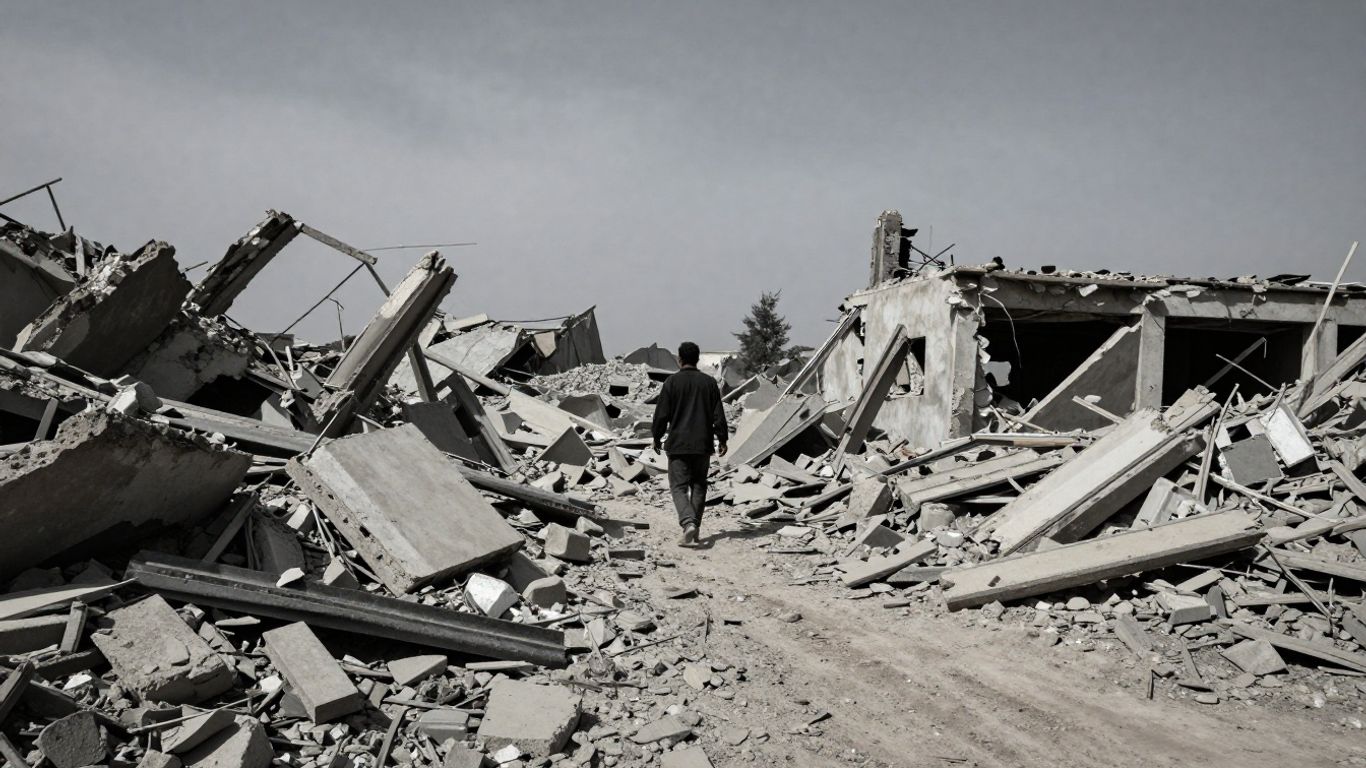
The human cost of the ongoing conflict in Gaza is, frankly, devastating. It’s easy to get lost in the political back-and-forth, but we need to remember there are real people, families, just trying to get by. Gaza is one of the most crowded places on Earth, and life there has been incredibly tough for years, especially with the blockade. Every time fighting flares up, things just get worse.
Devastation of Gaza’s Fragile Infrastructure
When the rockets fly and the bombs drop, it’s not just buildings that get hit. Gaza’s infrastructure was already struggling, and these military operations just tear it apart. We’re talking about power grids, water pipes, sewage systems – the basics that keep a place running. Repairing this stuff is a constant battle, especially when resources are scarce and access is limited. It makes daily life a nightmare for the people living there.
The Strain on Healthcare and Essential Services
And then there’s the healthcare system. Hospitals in Gaza are often overwhelmed even on a good day. When conflict erupts, they’re flooded with injured people, and they’re usually short on medicine, equipment, and staff. It’s a grim situation, and it means that even basic medical care becomes a serious challenge. Access to food and shelter also becomes a major worry for many families.
International Aid Efforts and Their Limitations
Of course, international groups and aid organizations try to help. They bring in supplies and try to provide relief. But it’s a tough job. The sheer scale of the need is enormous, and getting aid in and distributed effectively can be incredibly difficult. Sometimes, political roadblocks and the ongoing security situation make it even harder. While these efforts are important, they often only scratch the surface of the problems. It’s a complex situation, and frankly, it’s hard to see a quick fix. The situation is so bad that it’s comparable to other severe hunger crises, like the one in Somalia.
The cycle of violence and the resulting humanitarian fallout create a desperate situation for ordinary Gazans. Rebuilding is a constant struggle, and the lack of basic services takes a heavy toll on everyone, especially the most vulnerable.
Navigating the Path Forward in the Israel–Gaza Conflict
The Imperative of Dialogue and Peace
Look, nobody wants to see more fighting. It’s a mess for everyone involved. The constant back-and-forth, the rockets, the responses – it just keeps going. We need to find a way to break this cycle, and that means talking. It’s not easy, I get it. There’s a lot of history, a lot of anger. But ignoring the problem won’t make it disappear. We’ve seen what happens when things get out of hand, and it’s never good. The international community keeps calling for peace, and while that’s fine, it’s up to the people directly involved to actually make it happen. It’s about finding common ground, even if it seems impossible right now. The current situation isn’t working for anyone, and pretending it is won’t help.
Addressing Root Causes for Lasting Stability
It’s pretty clear that just putting band-aids on the problem isn’t going to cut it. We’ve got to look at why this keeps happening. The blockade on Gaza, for example, has been going on for years, and it’s created a really tough situation for the people living there. You can’t expect things to calm down when there’s so much desperation. And on the Israeli side, security is a huge concern. You can’t just dismiss that. So, we need to think about solutions that address both sides’ needs. That means looking at things like economic opportunities for Gazans and real security guarantees for Israelis. It’s a tough puzzle, no doubt about it. The old ideas, like the Oslo framework, just don’t seem to be working anymore, and people are questioning if the two-state solution is even realistic [3777].
The Role of International Support
Sure, the world can offer help, and sometimes it does. Aid organizations try to get supplies into Gaza, and diplomats fly around trying to broker deals. But let’s be honest, it’s not always effective. A lot of the time, these efforts don’t get to the heart of the matter. They might stop the fighting for a bit, but they don’t fix the underlying issues. What’s really needed is consistent, practical support that helps build something better, not just temporary fixes. This could mean helping with infrastructure projects, supporting economic development, or even just providing a neutral space for talks. Without real commitment from all sides, and without international backing that actually works, we’re just going to keep seeing the same old problems pop up again and again.
Looking Ahead: The Unending Struggle
So, where does this all leave us? Honestly, it’s tough to see a clear path forward. We’ve talked about the history, the players, and the constant back-and-forth. It feels like a cycle that just keeps repeating, with real people caught in the middle. Israel’s got its security concerns, and you can’t really blame them for wanting to protect their citizens. But then you look at Gaza, and the situation there is just dire. It’s a mess, and frankly, I don’t think anyone has the magic answer right now. We’ll keep watching, keep reporting, and hope for some kind of break, but don’t hold your breath. This conflict has deep roots, and pulling them out won’t be easy, if it’s even possible.
Frequently Asked Questions
What is the main reason for the conflict between Israel and Gaza?
The conflict has deep historical roots, going back over a century. It’s mainly about who gets to control the land and have their own country. Both Israelis and Palestinians have strong claims and desires for self-rule in the same area, leading to ongoing disagreements and fighting.
Why is Gaza often in the news for conflict?
Gaza is a small, crowded area where many Palestinians live. It’s been controlled by different groups over time, and since 2007, Hamas has been in charge. Because of security concerns, Israel and Egypt have put a blockade on Gaza, making life very difficult for people there. This situation often leads to clashes and violence.
What does ‘blockade’ mean for Gaza?
A blockade means that goods, people, and aid have very limited ways to enter or leave Gaza. Israel and Egypt control the borders. This makes it hard for people in Gaza to get basic things like food, medicine, and building materials, and it severely limits their freedom to travel.
Who are the main groups involved in the conflict?
Key players include the State of Israel, which focuses on its security, and Palestinian groups in Gaza, like Hamas, which seek self-determination. The Palestinian people in Gaza are also central, facing daily challenges. International groups and countries also play roles, often trying to mediate or provide aid.
What happens during escalations of violence?
When tensions rise, it often starts with rockets being fired from Gaza towards Israel. Israel then responds with military actions, like airstrikes, targeting what it says are militant sites. These actions can cause a lot of damage and harm civilians in Gaza, leading to a cycle of attacks and counter-attacks.
Is there any hope for peace?
Finding peace is very challenging because of the long history and deep disagreements. However, many believe that talking, understanding each other’s needs, and getting support from other countries are the only ways to create a lasting solution that ensures safety and fairness for everyone involved.



![[Declan Rice] in Arsenal kit, running on a football pitch.](https://countrybrief.com/wp-content/uploads/2025/10/thumbnail-42-768x432.jpeg)