
Navigating the Complex Landscape of US Politics in 2026
Things in US politics are getting pretty interesting, and honestly, a bit wild, as we head into 2026. It feels like the ground is constantly shifting under our feet. We’re seeing big changes in how America fits into the rest of the world, and how our economy is tied to global events. Plus, there’s a lot of talk about what the government is doing, especially with technology and resources. It’s a lot to keep up with, for sure.
Key Takeaways
- America’s place in a world with many powerful countries is changing, affecting how we do business globally.
- The government is getting more involved in the economy, especially when it comes to national security and making sure we have what we need.
- New technologies like AI are becoming super important for security, and cyber conflicts are on the rise.
- We’re facing challenges with resources like water, and this will likely cause some friction globally.
- Regional relationships, like those in North America and Asia, are being re-evaluated, leading to policy shifts.
The Shifting Sands of American Power
America’s Role in a Multipolar World
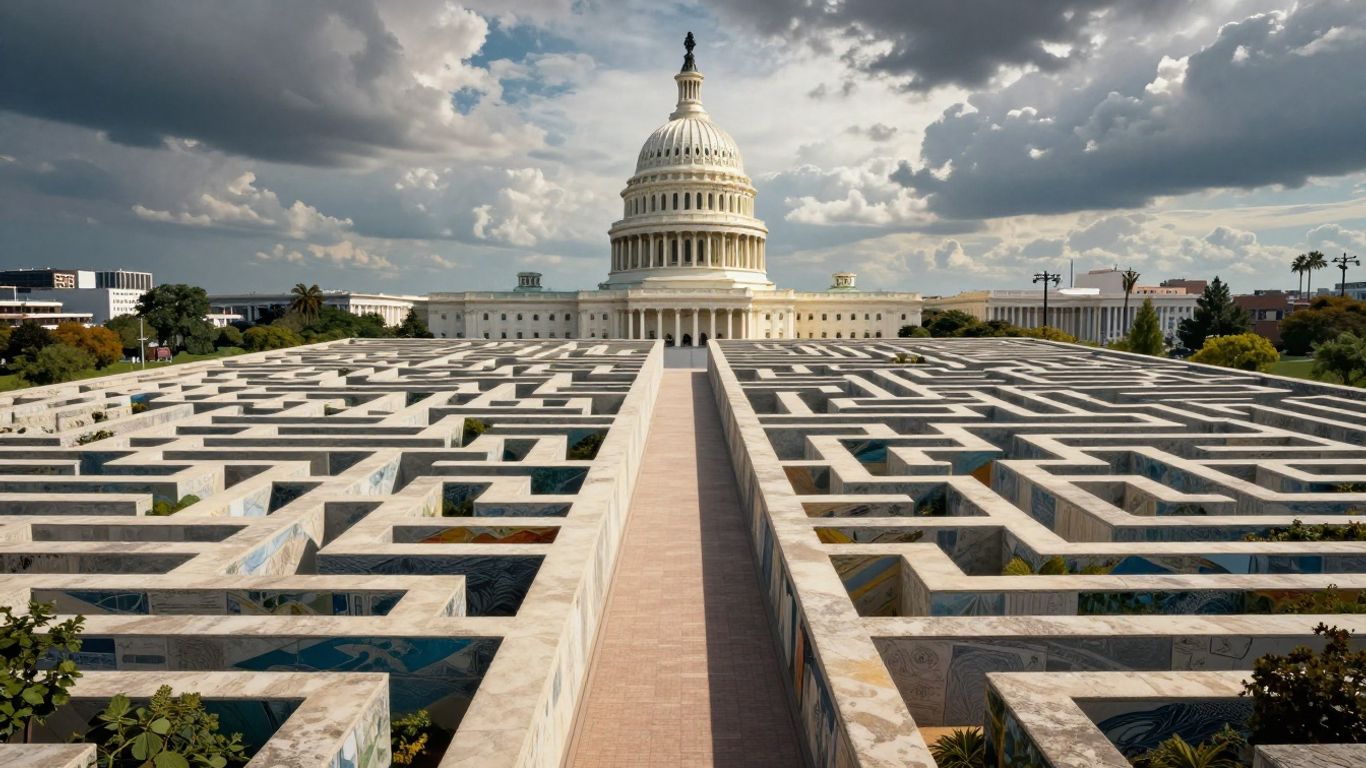
Things are definitely changing out there. It feels like the old days, when America was the undisputed heavyweight, are fading. Now, it’s more like a big wrestling match with a lot of players, each trying to get the upper hand. We’re seeing more countries stepping up, wanting a bigger say in how things are run globally. This isn’t necessarily a bad thing, but it means we can’t just assume everyone will fall in line like they used to. We’ve got to be smarter, more strategic, and frankly, more assertive about our interests. It’s about finding our place in this new setup, not just dictating terms.
The Geopolitics of Economic Security
Look, it’s no secret that money talks. And right now, countries are getting really serious about protecting their own economies. This means more governments are jumping in, using subsidies and trade rules to keep jobs and industries at home. It’s a bit of a scramble to make sure we have what we need, from the chips in our phones to the materials for our defense systems. We need to secure our supply chains and not be reliant on countries that might not have our best interests at heart. This push for economic security is changing how businesses operate and how nations interact. It’s a tough game, and we need to play it well to keep America strong. We’re seeing a lot of focus on critical minerals, for example, which are vital for everything from batteries to advanced tech. The administration is looking at ways to use our own resources and partnerships to get ahead in this area, potentially setting benchmark prices for these key materials critical minerals.
Reshaping Global Trade and Supply Chains
Because everyone’s looking out for themselves economically, global trade is getting a serious makeover. Forget the old, easy flow of goods. Now, there are more tariffs, more rules about where things have to be made, and a general push to bring production back home or to friendly nations. This creates a lot of uncertainty for businesses. They have to constantly rethink where they get their parts and how they sell their products. It’s a complex puzzle, and frankly, it’s making things more expensive and less predictable for everyone. We’re seeing this play out in different regions:
- North America: The trade agreement with Mexico and Canada is up for review, which could shake things up.
- Asia-Pacific: Countries there are really focused on economic security, trying to balance trade with national interests.
- Europe: They’re in a tough spot, dealing with a lot of geopolitical shifts and trying to figure out their next move.
It’s a whole new ballgame, and we need to be ready for it.
The Trump Factor: A New Era of Governance
It’s pretty clear by now that President Trump isn’t playing by the old rulebook. Forget the stuffy meetings and polite requests of administrations past. This is a different ballgame, and corporate America is having to figure out how to keep up. We’re seeing a level of direct presidential intervention in business that frankly, most people haven’t witnessed in their lifetimes. It’s not just about policy anymore; it’s about the President’s personal involvement, and that’s shaking things up.
Presidential Interventionism and Corporate America
When the President calls, you better believe people are listening. Trump has a knack for getting directly involved in how companies operate. We’ve seen him push for things like capping credit card interest rates, which Wall Street wasn’t exactly thrilled about. Then there’s the pressure on energy companies regarding Venezuela’s oil infrastructure. These aren’t your typical White House requests; they’re demands that can have real market consequences. It’s a stark departure from the more hands-off approach some previous administrations took. Some executives are starting to push back, but it’s a tough line to walk. You don’t want to get on the wrong side of the President, but you also have to answer to your shareholders and employees. It’s a constant balancing act, and frankly, it’s exhausting for a lot of these business leaders.
The Erosion of Traditional Business Norms
What we’re witnessing is a real shift away from the established ways of doing business. The old protocols? They seem to be out the window. Instead of relying on established channels, the President often uses direct appeals, sometimes through social media, to get his message across. This can create a lot of uncertainty. Companies are constantly trying to figure out what the President wants and how to respond without causing a stir. It’s like trying to hit a moving target. Some companies are trying to play it safe by making public pledges or sponsoring events, hoping to stay in the President’s good graces. It’s a strategy, I guess, but it feels a bit like trying to buy favor.
The constant back-and-forth and the unpredictable nature of these interventions mean that businesses have to be incredibly agile. Planning for the long term is getting harder when the rules can seemingly change overnight. It’s a challenging environment, no doubt about it.
Navigating Unprecedented Political Volatility
So, what’s a CEO to do? Well, it seems like there’s no single playbook that works for everyone. Some executives are trying to build back channels, while others are just keeping their heads down and hoping for the best. It’s a tough situation, especially with midterm elections approaching. The President’s approval ratings might be a factor, but given his track record, it’s unlikely he’s going to stop intervening in business matters anytime soon. Companies are really having to rethink their strategies, figuring out how to operate in this new, more volatile political landscape. It’s a real test of leadership and adaptability for everyone involved in the American economy.
Economic Sovereignty and National Security
State Interventionism in the Global Economy
It’s becoming pretty clear that Uncle Sam isn’t just going to sit back and let other countries dictate the terms of global trade anymore. We’re seeing a real push for what they’re calling ‘economic sovereignty.’ This means the government is getting more involved, using things like subsidies and trade rules to make sure American businesses and jobs are protected. It’s not just about making money; it’s about national security too. When we rely too much on other countries for important stuff, it can be a real problem down the road. Think about it – if a rival nation suddenly cut off our supply of something vital, we’d be in a tough spot. So, this move towards more state intervention is really about making sure America can stand on its own two feet.
Critical Minerals and Digital Dependencies
We’re all plugged into our phones and computers, right? But all that tech needs special materials to work. We’re talking about things like rare earth minerals, which are used in everything from our smartphones to advanced military equipment. The problem is, a lot of these minerals come from just a few places around the world. This creates a dependency that’s frankly, a bit scary. If those supply lines get messed with, our tech industry and our defense capabilities could be seriously hurt. So, there’s a big effort now to find new sources, recycle what we have, and maybe even develop new technologies that don’t rely on these scarce resources. It’s a race to secure the building blocks of our modern world.
The Politicization of Capital and Currency
Money talks, and lately, it’s been talking politics. We’re seeing countries use their financial power as a weapon. This can mean anything from imposing sanctions to manipulating currency values. It’s not just about economics anymore; it’s about geopolitical influence. When capital – that’s money and investments – gets tied up in political games, it makes the global financial system a lot less predictable. Businesses have to be really careful about where they invest and how they manage their money, because a political decision in one country can have ripple effects everywhere. It’s a new kind of battlefield, and it requires a sharp eye to navigate.
The Digital Frontier: AI and Cyber Warfare
AI as a National Security Priority
Look, Artificial Intelligence isn’t just some fancy tech gadget anymore. Governments, and frankly, anyone serious about national security, are treating AI like it’s the next big thing in defense. It’s becoming a top priority, plain and simple. We’re talking about AI being integrated into everything from intelligence gathering to battlefield operations. It’s seen as a critical piece of infrastructure, and frankly, that makes a lot of sense. If you’re not on top of AI, you’re falling behind, and in today’s world, falling behind means becoming vulnerable.
The Escalation of Cyber Conflicts
And it’s not just about AI itself, but how it’s being used. AI is like a supercharger for cyber warfare. Think about it: AI can automate attacks, find weaknesses faster than any human team, and launch sophisticated campaigns that are hard to trace. This means cyber conflicts are getting more intense, more frequent, and frankly, more dangerous. We’re seeing state-sponsored actors using these tools, and it’s creating a whole new level of instability. The digital battlefield is heating up, and we need to be prepared.
Market Fragmentation and Compliance Challenges
All this geopolitical tension around AI and cyber stuff is also making the tech market a bit of a mess. Different countries are putting up their own rules and restrictions, which means companies can’t just operate the same way everywhere. It’s leading to market fragmentation. Plus, trying to keep up with all these different regulations and compliance rules is a headache. It forces companies to rethink their strategies, especially when you add in things like energy costs and the need for critical minerals for all this tech. It’s a balancing act between pushing forward with new tech and making sure you can actually operate without running afoul of some new government mandate. It’s getting complicated out there.
Resource Scarcity and Global Stability
The Growing Crisis of Water Scarcity
It’s getting harder to ignore. Water, the stuff of life, is becoming a real sticking point. We’re seeing more and more places where there just isn’t enough fresh water to go around. And it’s not just about drinking water anymore. Think about it: making computer chips, keeping massive data centers cool – these things guzzle water. So, as demand goes up, especially for industries we rely on, you’re going to see more squabbles over who gets to use what water. It’s a simple equation, really: less supply, more demand, more problems.
Competition for Essential Resources
This isn’t just about water, though. We’re talking about a whole range of things we need to keep our modern lives running. Critical minerals, for instance, are suddenly a big deal. These are the bits and pieces that go into our phones, our batteries, and our defense systems. Countries are scrambling to make sure they have access to these, which is changing how we trade and where things get made. It’s a bit of a gold rush, but for rocks and metals. The scramble for these resources is going to define a lot of international relations going forward.
Balancing Innovation with Resource Constraints
So, what do we do? We need new tech, new ways of doing things, but we’re bumping up against limits. It’s a tough spot. We can’t just keep taking without thinking about what’s left. This means companies and governments have to get smarter. We need to find ways to use less, recycle more, and maybe even develop new materials that don’t rely on the same old scarce stuff. It’s a challenge, for sure, but one we have to face if we want things to stay stable.
Here’s a quick look at some key resources and the issues:
- Water: Demand rising for industry (semiconductors, data centers) while natural supply is strained in many regions.
- Critical Minerals: Essential for electronics, batteries, and defense. Geopolitical competition is heating up.
- Energy: While not explicitly listed, the demand for energy to power these industries is also a major factor, often linked to resource availability and geopolitical stability.
The old ways of just taking what we need are over. We’re entering a new phase where resource availability will directly impact national security and economic power. Ignoring this reality is a recipe for disaster.
Regional Dynamics and Policy Volatility
North America’s Trade Agreement Review
The big trade deal up north, the USMCA, is getting a once-over. This isn’t just some bureaucratic check-in; it’s a real chance for things to change, especially for how we make and move stuff across borders. Companies are already shifting production, with a lot of them bringing manufacturing closer to home or setting up shop in specific regions. This move towards regional blocs is a direct response to the unpredictable global scene. It means supply chains are getting a serious rethink, and frankly, it’s about time. We can’t keep relying on shaky international setups when things can change on a dime. It’s smart business to build resilience right here at home.
Asia-Pacific’s Economic Security Focus
Over in the Asia-Pacific, it’s all about keeping things secure, economically speaking. They’re trying to balance doing business together in the region with making sure their own national interests are protected. It’s a tricky dance, especially with so many different players and agendas. You see a lot of focus on making sure critical supplies aren’t easily disrupted. This means looking closely at who controls what and where things come from. It’s a pragmatic approach to a complicated neighborhood.
Europe at a Geopolitical Crossroads
Europe is really at a crossroads, folks. They’ve got internal political squabbles and a changing world order that’s putting a strain on their security and their ability to compete. It feels like they’re trying to figure out their place all over again. This uncertainty means businesses operating there have to be extra careful. Policy shifts can happen quickly, and that makes long-term planning a real headache. It’s a tough spot to be in, trying to maintain stability when the ground beneath you keeps shifting. We’re seeing a lot of companies re-evaluating their European operations because of this US government policy.
Here’s a quick look at what’s happening:
- USMCA Review: Expect changes to how goods flow between the US, Mexico, and Canada.
- Asia-Pacific Security: Nations are prioritizing national interests alongside regional trade.
- European Uncertainty: Political and geopolitical shifts create a volatile business environment.
The global operating environment is changing fast. Companies that don’t adapt to these regional shifts and policy swings will be left behind. It’s about being smart and staying ahead of the curve.
Looking Ahead: What’s Next for America?
So, where does all this leave us heading into the rest of 2026? It’s clear things aren’t exactly simple. We’ve seen a lot of changes, both at home and abroad, and frankly, it’s a lot to keep up with. The world keeps shifting, and it feels like every day brings something new to deal with. For regular folks, it means we need to stay sharp and pay attention to what’s happening. It’s not about getting caught up in all the noise, but about understanding what really matters for our country and our families. We’ve got to keep pushing for common sense and look out for what’s best for America, plain and simple. That’s the only way forward.
Frequently Asked Questions
How is America’s role changing in the world?
America’s role is shifting. Instead of being the only superpower, it’s now one of several major powers. This means other countries have more influence, and America has to work with them more to get things done globally.
What does ‘economic security’ mean for countries?
Economic security means a country wants to protect its own economy. This can involve making sure it has enough of important things like computer chips or energy, and that its jobs are safe. Countries might make more things at home or trade more carefully.
How might Donald Trump’s presidency affect businesses?
If Donald Trump is president, businesses might see more unexpected changes. He has a history of directly telling companies what to do, like with interest rates or oil production. This can make it harder for businesses to plan ahead because the rules can change quickly.
Why is Artificial Intelligence (AI) important for national security?
AI is becoming super important for a country’s safety. Governments see it as a key tool for defense and protecting their country. It can also make cyberattacks, which are attacks using computers, much more powerful and dangerous.
What is the ‘critical minerals rush’?
This refers to countries competing to get important minerals like lithium and cobalt. These minerals are needed for things like electric car batteries and advanced technology. Countries want to make sure they have enough of these materials, leading to new trade deals and rivalries.
How are different parts of the world dealing with these changes?
Different regions are facing unique challenges. North America is looking at its trade rules, Asia is focusing on keeping its economy safe while dealing with many powers, and Europe is at a point where it needs to make big decisions about its future direction.
![[Trump] points accusingly at a shadowy crowd at the border.](https://countrybrief.com/wp-content/uploads/2025/11/thumbnail-151-768x432.jpeg)