
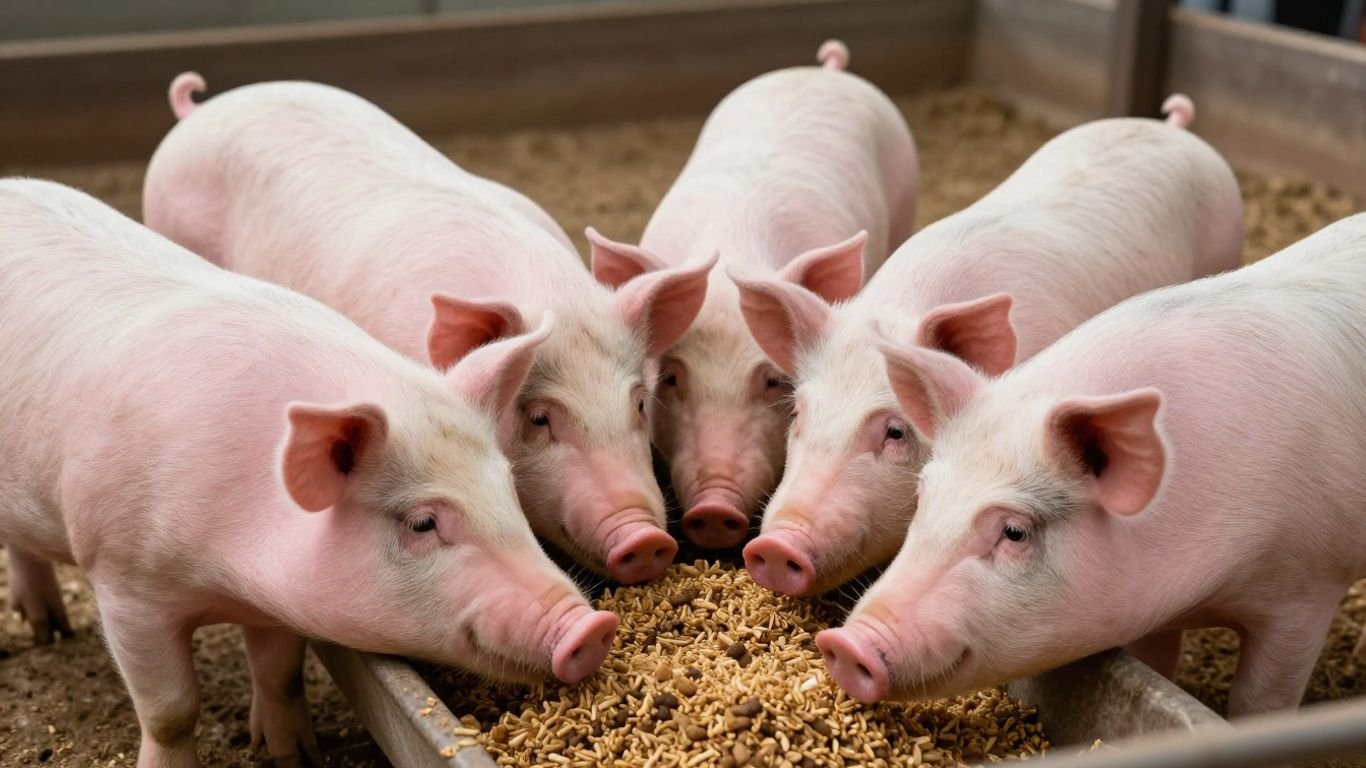
China’s Pigs Get a New Diet: A Shift Away from US Soybeans
China is revolutionizing its pig farming industry by developing innovative feed alternatives that significantly reduce the reliance on imported soybeans. This strategic shift aims to cut costs for farmers and bolster domestic agricultural resilience. The key lies in utilizing byproducts from pig farms themselves, transforming waste into valuable feed.
Key Takeaways
- China is reducing its dependence on U.S. soybeans for pig feed.
- New feed formulations utilize on-farm waste products.
- This innovation promises to cut feed costs for farmers by half.
- The initiative supports China’s goal of greater agricultural self-sufficiency.
The Innovation in Pig Feed
At the heart of this transformation are simple, square pools filled with an ochre liquid. Located at the edge of pig farms in Taizhou, a region known for its extensive pig farming operations northwest of Shanghai, these pools contain a crucial ingredient for a new generation of pig feed. This liquid, a byproduct of the farms, is being harnessed to create a more cost-effective and sustainable feed.
Reducing Soybean Dependency
For years, China has been a major importer of soybeans, a significant portion of which is used for animal feed. This reliance on foreign supply chains, particularly from the United States, has exposed Chinese farmers to price volatility and geopolitical risks. The new feed strategy directly addresses this vulnerability by offering a viable alternative that can cut the costly soybean component in pig diets by as much as 50%.
Environmental and Economic Benefits
The development is not just about economics; it also carries environmental implications. By repurposing farm waste into feed, the initiative contributes to a more circular economy within the agricultural sector. Farmers stand to benefit significantly from reduced feed expenses, potentially improving their profit margins and making the industry more robust. This move aligns with Beijing’s broader objectives to enhance food security and reduce reliance on agricultural imports.