
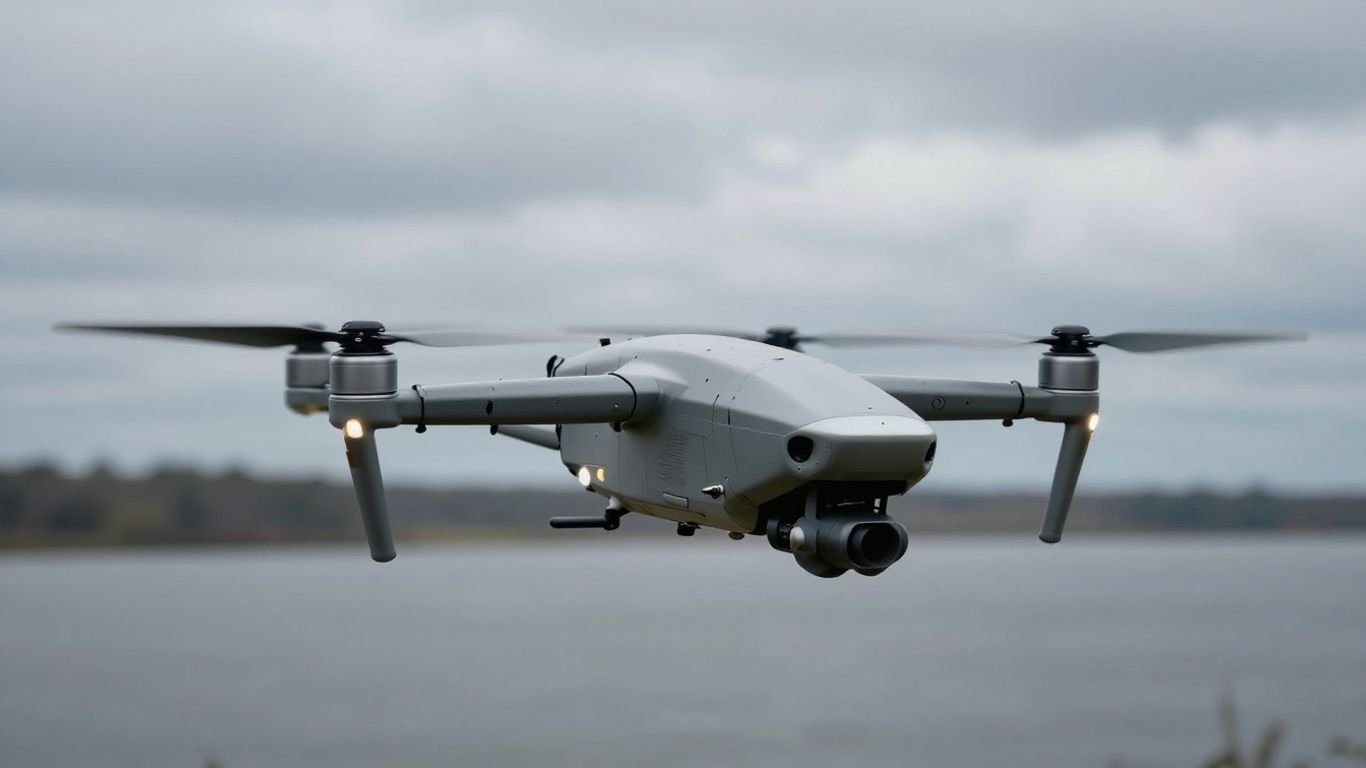
Ukrainian Drone Incident Sparks International Concern
Things are getting tense in Eastern Europe. Recently, a Ukrainian drone ended up crashing in Lithuania, and it’s got everyone talking. This incident, along with others like it, is raising a lot of questions about security in the region. It seems like aerial activity, especially from Ukraine, is becoming a bigger part of this conflict, and it’s definitely getting the attention of NATO and its allies. We’re seeing a lot of back-and-forth with drones and missiles, and it’s making people worry about what could happen next.
Key Takeaways
- A Ukrainian drone crashed in Lithuania, sparking concerns about regional security and escalating tensions.
- Lithuania and other Baltic states are linking drone incidents to Russian aggression, prompting discussions on border security.
- Ukraine’s drone strikes are increasingly targeting Russian oil export infrastructure, impacting Russia’s revenue.
- There’s been a significant increase in aerial attacks between Russia and Ukraine, with both sides reporting drone interceptions and damage to infrastructure.
- NATO allies are consulting under Article 4 due to airspace violations, highlighting concerns about deterrence and response to hybrid threats.
Ukrainian Drone Incident Sparks International Concern
Drone Crashes in Baltic States Amidst Escalating Tensions
Things got a bit tense this week when drones, believed to be linked to the ongoing conflict in Ukraine, ended up crashing in the Baltic states. It happened around the same time Ukraine was hitting Russian oil facilities. One drone reportedly hit a power plant chimney in Estonia, near the Russian border. Another drone fell onto Latvian territory. Officials in both countries noted that these drones seemed to come from the direction of Russian airspace. This whole situation has folks in the region pretty worried.
Lithuania Links Drone Crash to Russian Aggression
Lithuania’s government has pointed fingers, suggesting that the drone incident on their soil is tied to Russia’s actions in Ukraine. They see it as part of a bigger picture of regional instability caused by the war. As a member of NATO, Lithuania is already on edge and is pushing for better air defenses to protect against potential threats. It’s a clear sign that the conflict is spilling over in ways that affect neighboring countries.
Estonia Reports Drone Intrusion from Russian Airspace
Estonia’s internal security service confirmed that a drone struck a chimney at the Auvere power plant. What’s particularly concerning is their statement that the drone entered Estonian airspace from Russian airspace. This detail adds another layer of complexity and worry, suggesting that Russian territory might be involved in the transit of these aerial devices. It’s a situation that definitely has people looking closely at what’s happening along the borders.
Regional Security Implications of Ukrainian Drone Activity
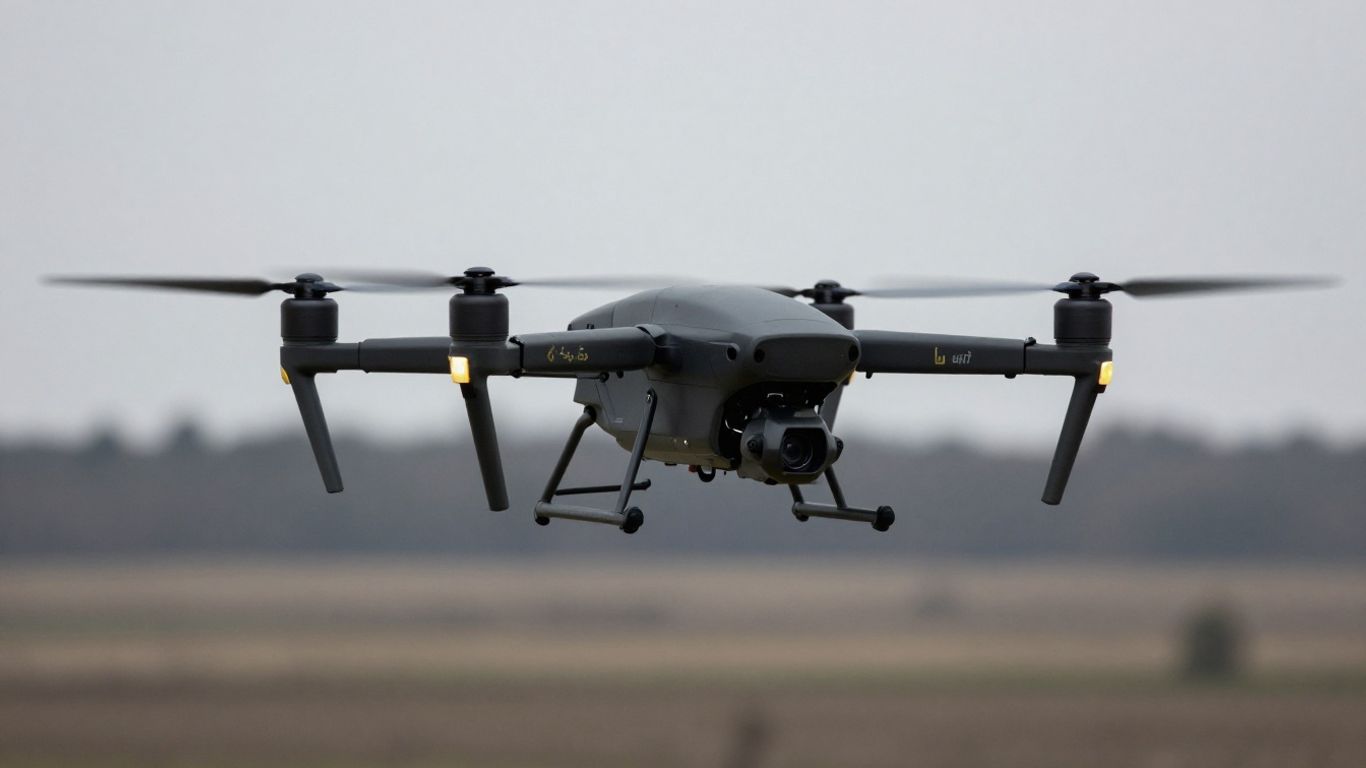
These drone incidents, whether originating from Ukraine or perceived as provocations, have really put NATO’s eastern flank on edge. It’s not just about one drone straying off course; it’s about how these events test the alliance’s readiness and unity. When a drone crosses into allied airspace, it immediately triggers a chain reaction of consultations and heightened alert levels. It’s a stark reminder that the security landscape is constantly shifting.
NATO Allies Consult on Border Security Measures
Following these airspace violations, NATO allies have been in constant communication, discussing how to bolster security along the alliance’s eastern borders. It’s a complex situation, as these incursions often fall short of triggering Article 5, which is the collective defense clause for an armed attack. Instead, they push the boundaries and test the alliance’s response mechanisms.
- Increased air patrols: More fighter jets are being deployed to monitor airspace, especially in countries bordering Ukraine and Russia.
- Intelligence sharing: Allies are sharing more information about drone activity and potential threats.
- Joint training exercises: These are being conducted more frequently to improve coordination and response times.
The line between peace and conflict is becoming increasingly blurred. Hybrid tactics, like drone incursions and cyberattacks, are designed to destabilize without crossing a clear threshold for direct military engagement. This makes it challenging for alliances like NATO to formulate a unified and decisive response.
Article 4 Consultations Triggered by Airspace Violations
When a NATO member feels its security is threatened, even by something like a drone intrusion, they can invoke Article 4. This calls for immediate consultations among all member states. It’s a way to collectively assess the situation and decide on a course of action, showing solidarity and a united front against potential aggression. It’s a serious step, indicating that the perceived threat is significant enough to warrant a high-level discussion among allies.
Increased Air Policing Missions in Eastern Europe
To counter the growing threat of aerial incursions and to reassure frontline states, NATO has significantly ramped up its air policing missions. This means more fighter jets are actively patrolling the skies, ready to intercept any unidentified or hostile aircraft. It’s a visible deterrent and a practical measure to safeguard allied airspace and prevent further violations. The goal is to make it clear that such actions will not go unnoticed or unchallenged.
Targeting Russian Oil Exports: A Strategic Ukrainian Drone Tactic
Ukraine has been increasingly using drones to hit Russian energy infrastructure, specifically targeting oil export facilities. The goal here seems pretty clear: cut off a major source of income for Russia, which they then use to fund the war. It’s a smart move, really, hitting them where it hurts financially.
Drone Strikes Ignite Fires at Russian Black Sea Ports
We’ve seen reports of drone attacks causing fires at Russian ports. For instance, the port of Taman in the Krasnodar region was hit, leading to damage to an oil storage tank and some terminals. This isn’t just about causing a bit of damage; it’s about disrupting the flow of oil. When these facilities are offline, even temporarily, it impacts Russia’s ability to sell its oil on the global market.
Impact on Russian Oil Export Revenue
Russia relies heavily on oil exports for its budget. By targeting these export hubs, Ukraine aims to reduce the revenue Russia earns. This, in turn, could limit Moscow’s capacity to continue its military operations. It’s a bit of a cat-and-mouse game, with Ukraine trying to find weak spots in Russia’s economic defenses.
| Facility Type | Location | Impact |
|---|---|---|
| Oil Storage Tank | Taman, Russia | Damaged |
| Warehouse | Taman, Russia | Damaged |
| Export Terminals | Taman, Russia | Damaged |
| Oil Terminal | Ust-Luga, Russia | Fire reported, major export hub affected |
Damage to Infrastructure in Taman Port
The attacks on facilities like the one in Taman aren’t minor. They involve direct hits on storage tanks and terminals, which are pretty vital for getting oil ready for shipment. Repairing this kind of damage takes time and resources, adding another layer of disruption to Russia’s oil trade. It’s a calculated tactic to put economic pressure on the aggressor.
These strikes are part of a broader strategy to weaken Russia’s war-making capability by targeting its financial lifelines. The effectiveness of these drone operations is being closely watched as the conflict continues.
Escalation of Aerial Attacks Between Russia and Ukraine
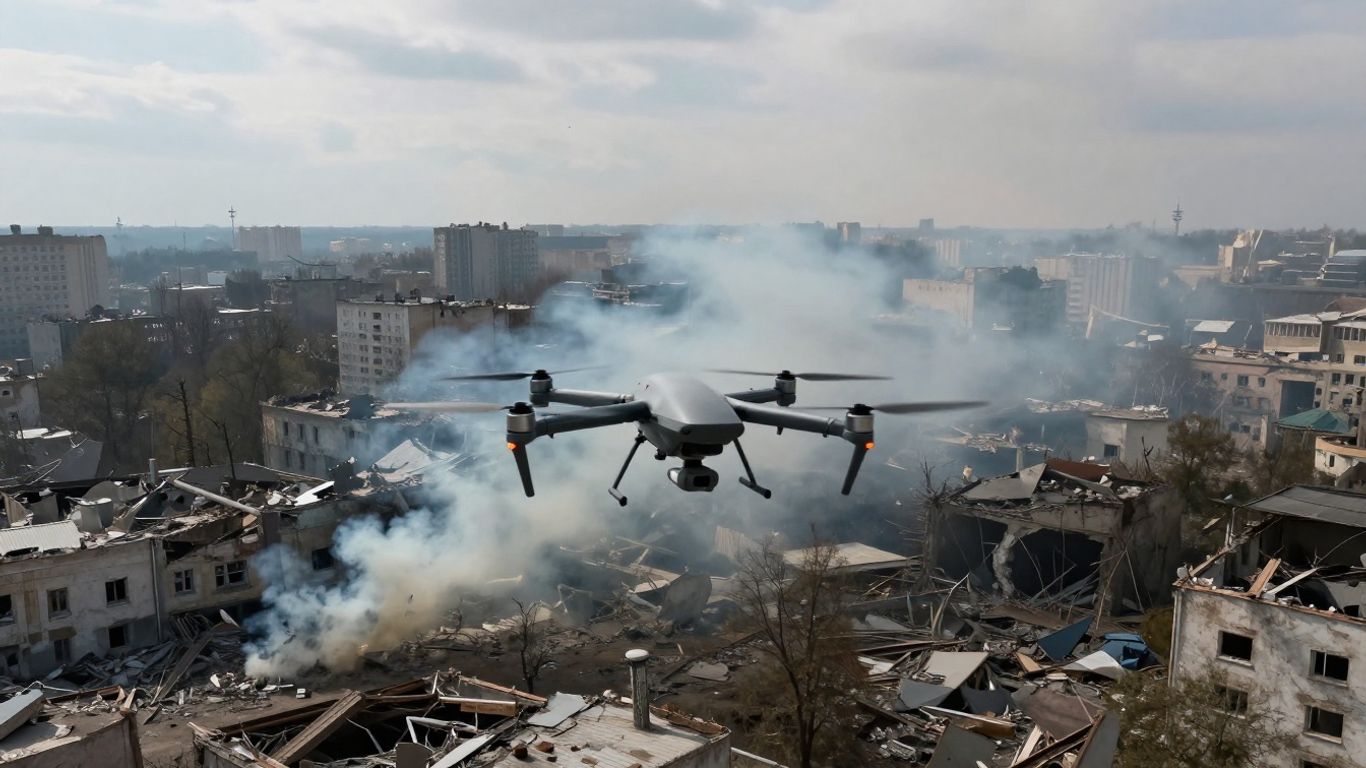
Record Ukrainian Drone Barrage Follows Russian Assault
Things have really heated up in the skies over Ukraine and Russia lately. We’re seeing some pretty intense back-and-forth with drones. Just recently, Ukraine launched a massive wave of drones, reportedly close to 400, hitting targets across Russia. This came right after Russia unleashed its own huge aerial attack, firing nearly a thousand drones and dozens of missiles at Ukraine in a single day. It’s a serious escalation, and unfortunately, civilians are caught in the middle.
Russian Air Defenses Intercept Numerous Ukrainian Drones
Russia claims its air defense systems have been busy, saying they shot down hundreds of Ukrainian drones. The Russian Defense Ministry reported intercepting 389 drones in one night, which they said was the biggest attack on Russian regions and Crimea since the war began. It’s a constant cat-and-mouse game up there, with both sides trying to get the upper hand through aerial means.
Civilian Infrastructure Damaged by Falling Debris
It’s not just the intended targets that are affected. When drones or missiles are intercepted, or even when they hit their mark, debris can fall. In Ukraine’s Odesa region, for example, falling pieces from Russian drones have caused damage to civilian buildings and transport links. This has led to disruptions in power and water supplies, making life even harder for people already dealing with the conflict. It’s a grim reminder that the fighting has consequences far beyond the front lines.
NATO’s Response to Hybrid Threats and Drone Incursions
Recent events, like a drone crossing into Romanian airspace and another crashing in Lithuania, have really put NATO on notice. It’s not just about big, obvious attacks anymore; these smaller, more ambiguous actions are becoming a real headache. NATO allies are consulting more frequently, trying to figure out how to handle these ‘gray zone’ tactics.
When a drone violates a member’s airspace, it’s not automatically an Article 5 situation – that’s for a full-blown armed attack. But it definitely triggers Article 4. This means allies get together, share intel, and talk about what to do. It’s a way to show solidarity and assess the threat without immediately escalating to military action. We saw this happen when Poland and Estonia also reported airspace violations, leading to urgent consultations.
Romania Deploys Fighter Jets Amidst Drone Intrusion
Back in September 2025, a drone that was apparently heading for Ukrainian ports strayed into Romanian airspace. Romania, being right on the front lines with Ukraine, is particularly sensitive to these kinds of incursions. They’ve already passed laws allowing their military to shoot down foreign drones that enter their territory. In response to this specific incident, France sent some Rafale fighter jets to Romania as part of a new operation, showing support and beefing up air presence.
Concerns Over NATO’s Deterrence Capabilities
These repeated drone incidents raise questions about how well NATO can actually deter potential aggressors. If a country can repeatedly send drones or jets into NATO territory without facing serious consequences, it might embolden them to try more. It’s a delicate balance; NATO needs to respond credibly without getting dragged into a wider conflict. The alliance is looking at ways to make its air policing missions more robust, especially along the eastern flank.
Clarifying Responses to Ambiguous Provocations
What’s clear is that NATO needs to be better prepared for these kinds of hybrid threats. Article 4 consultations are important, but they need to lead to more than just talks. Allies are pushing for clearer, more tangible actions that reassure frontline states and send a strong signal to adversaries. It’s about making sure that even if an attack isn’t a direct armed assault, NATO’s response is still firm and unified. The goal is to prevent these incursions from becoming normalized and to maintain the alliance’s overall strength.
Broader Geopolitical Context of the Ukrainian Drone Incident
Security Guarantees for Ukraine Under Discussion
This whole drone situation, while seemingly localized, really highlights the bigger picture of what’s going on between Russia and Ukraine. It’s not just about one drone crashing or one port getting hit. It’s about the ongoing struggle for security and stability in the region. Ukraine has been pushing for solid security guarantees, and frankly, it’s a pretty complex topic. They want to know they’re protected long-term, especially after everything that’s happened. It makes sense, right? You wouldn’t want to rebuild and then have the same problems pop up again.
US-Brokered Talks Aim to End the Conflict
There have been talks, you know, brokered by the US, trying to find a way to wrap this whole conflict up. It’s like everyone’s tired of the fighting and wants some peace. But getting Russia and Ukraine to agree on terms is, well, it’s not exactly a walk in the park. There are a lot of different ideas floating around about how peace could look, and not everyone sees eye-to-eye. It’s a delicate dance, trying to get both sides to a place where they can actually sign something and mean it.
Zelenskyy’s Concerns Over Future Security
President Zelenskyy himself has voiced some pretty clear concerns about what happens after any peace deal. He’s worried about the future security of Ukraine. It’s like, okay, we might sign a paper, but what does that actually mean for keeping the country safe down the line? He’s pointed out that while some parties might want a quick resolution, Ukraine needs to be sure about its long-term safety. This is especially true given the history and the current situation. It’s a valid point – you can’t just sign a peace treaty and expect all the underlying issues to vanish overnight. The drone incidents, like the one that caused concern in the Baltic states, only add to these worries about airspace and territorial integrity.
Here’s a look at some of the key points being discussed regarding future security:
- Formal Security Pacts: Ukraine is looking for more than just promises; they want legally binding agreements that outline how their security will be upheld.
- NATO’s Role: While Ukraine isn’t a member, discussions often touch upon how NATO allies can provide assurances and support, even without full membership.
- Regional Stability: The broader goal is to create a stable Eastern Europe where such conflicts and aerial incursions are less likely to occur.
The ongoing drone activity and the resulting international attention underscore the fragility of the current security landscape. It’s a constant reminder that the conflict’s effects ripple far beyond the immediate battlefields, impacting regional stability and prompting urgent discussions about long-term safety nets for nations caught in geopolitical crossfire.
Looking Ahead
So, what does all this mean? These drone incidents, happening in places like Estonia, Latvia, and Lithuania, really highlight how messy things are getting because of the war in Ukraine. It’s not just about what’s happening inside Ukraine anymore; it’s spilling over. NATO members are getting nervous, and understandably so. They’re talking about needing better ways to protect themselves, especially along their eastern borders. It feels like everyone’s watching each other, and nobody wants to be caught off guard. Hopefully, these events push everyone towards finding a real solution, but for now, it’s a tense situation for the whole region.
Frequently Asked Questions
What happened with the drone in the Baltic states?
A drone crashed in Lithuania, and another hit a power plant in Estonia. Reports suggest the drone in Latvia might have been Ukrainian, while the one in Estonia came from Russian airspace. These events happened around the same time Ukraine launched a large drone attack on Russia, and Russia had previously attacked Ukraine with many drones and missiles.
Why did Ukraine attack Russian oil facilities?
Ukraine has been using drones to strike targets like oil ports in Russia. The goal is to hurt Russia’s income from selling oil, which helps pay for the war. One such attack caused a fire at a Russian port on the Black Sea.
What is NATO and why is this incident concerning for them?
NATO is an alliance of countries that agree to protect each other. When drones fly into the airspace of NATO members like Estonia or Romania, it raises worries about security. It makes NATO allies talk about how to better protect their borders and what to do if their security is threatened. This is sometimes called a ‘hybrid threat’ because it’s not a direct, full-scale attack but still causes concern.
What does ‘Article 4 consultation’ mean for NATO?
Article 4 is a rule in NATO that says if any member feels their security is in danger, they can ask all the other members to meet and talk about it. It’s a way for allies to share information and decide together what to do, which could be anything from diplomatic talks to moving more troops or planes.
Are Russia and Ukraine constantly attacking each other with drones?
Yes, both sides have been using drones a lot in the conflict. Ukraine has been launching large numbers of drones at Russia, sometimes hitting important places like oil facilities. Russia has also been attacking Ukraine with drones and missiles, often hitting cities and infrastructure.
What are Ukraine’s concerns about future security?
Ukraine’s leader has expressed worries about what kind of security promises his country will get after the war. He wants clear guarantees for Ukraine’s future safety before agreeing to peace deals, and he’s also discussing how things like trade zones might work, especially in areas Russia wants Ukraine to give up.
![[Eddie Howe] looking determined on a football pitch.](https://countrybrief.com/wp-content/uploads/2026/02/journalist2F44f0df73-dd26-4348-8dfe-b310d591d7ff2Fthumbnail-768x432.jpeg)