
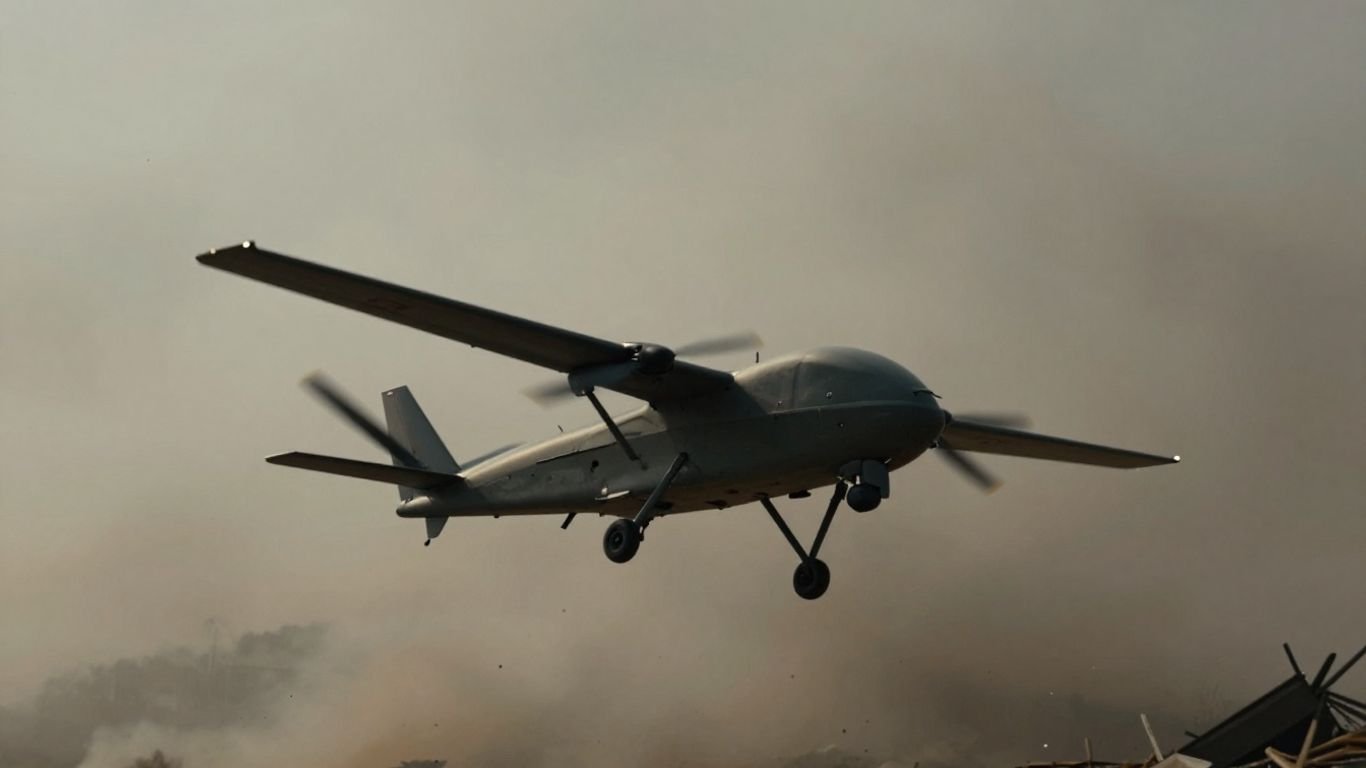
Drone Strike Casualties Raise Questions About Modern Warfare
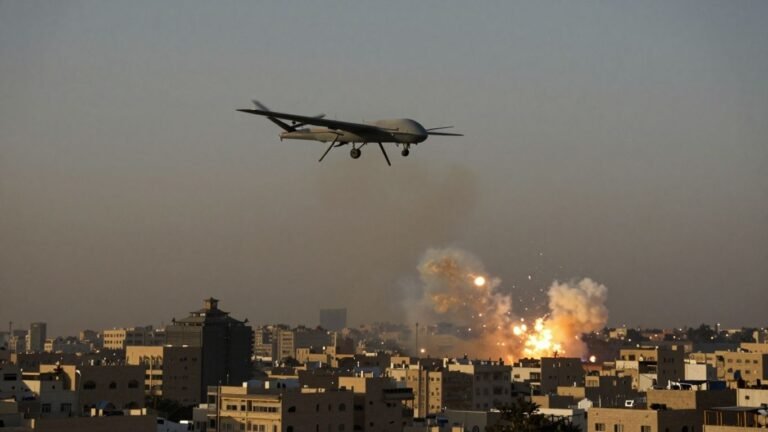
The use of drones in modern conflict has changed how wars are fought. While they offer certain advantages, the reality on the ground is often starkly different from what’s reported. Reports show that the number of civilians killed in drone strikes is way higher than official accounts suggest. This raises some serious questions about the whole process, from how targets are picked to who’s actually held responsible when things go wrong. It’s a complex issue with a heavy human cost.
Key Takeaways
- New reporting reveals that civilian deaths from drone strikes are significantly higher than official military figures, with firsthand accounts describing immense destruction.
- There’s a concerning lack of accountability for botched drone operations, even when they result in civilian deaths, with the Pentagon often viewing collateral damage as a necessary cost of war.
- Flawed intelligence and imprecise targeting, often fueled by rushed decisions, have led to thousands of civilian deaths since 2014, highlighting major issues in the drone strike process.
- Questions about the legitimacy of drone strikes are growing, particularly concerning the intersection of race and targeting, and there’s a push for more transparency in remote warfare.
- Public support for drone strikes is influenced by various factors, including how targets are framed and perceptions of America’s role in the world, rather than solely by the race or location of those targeted.
The Human Cost Of Drone Warfare
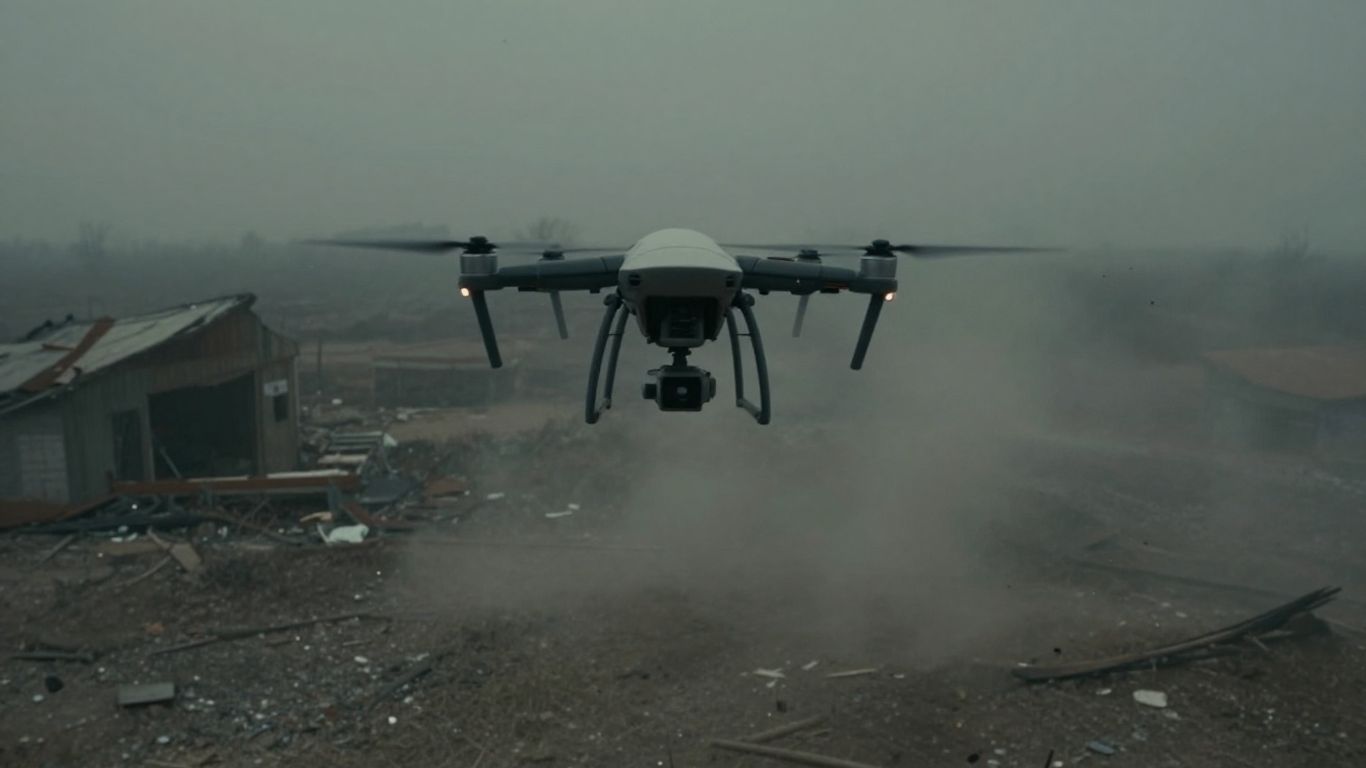
Investigating Civilian Deaths In Airstrikes
When we talk about drone strikes, it’s easy to get lost in the technology and the strategy. But there’s a very real, very human side to this that often gets overlooked. Reports from places like Iraq, Syria, and Afghanistan paint a grim picture. The official numbers from the Pentagon often don’t match what people on the ground are experiencing. Investigations have looked into hundreds of strike sites, talking to families who have lost loved ones. It’s not just about numbers; it’s about lives shattered.
Personal Accounts Of Loss And Destruction
Imagine losing your entire family in a single strike. That’s the reality for people like Qusay Saad, whose wife and children were killed in what was supposed to be an anti-terror operation. He described the aftermath not as liberation, but as the "destruction of humanity." These aren’t just statistics; they are deeply personal tragedies. Former drone operators have also spoken out, describing the psychological toll of their work and the disturbing outcomes they’ve witnessed. It’s a heavy burden, and for many, the consequences are devastating and long-lasting.
Official Counts Versus Ground Realities
Let’s look at some numbers, though they only tell part of the story. The military might report a certain number of civilian deaths, but independent investigations often find that number to be much higher. For instance, in the fight against ISIS in Iraq and Syria, the official count might be around 1,400 civilian deaths. In Afghanistan, since 2018, it’s been reported as at least 188. However, deeper dives into the data, using leaked documents and on-the-ground interviews, suggest these figures are significantly understated. This gap between official reports and what actually happens is a major point of concern.
Here’s a look at some reported figures:
| Region | Time Period | Official Civilian Deaths (Approx.) |
|---|---|---|
| Iraq & Syria (vs. ISIS) | Since 2014 | 1,417 |
| Afghanistan | Since 2018 | 188 |
The disconnect between official reports and the lived experiences of those affected by drone strikes raises serious questions about transparency and the true cost of these operations. It’s not just about the intended targets; it’s about the unintended victims and the ripple effect of their loss.
Accountability And The Drone Strike Record
Patterns Of Little Accountability
It often feels like when a drone strike goes wrong, especially when civilians are caught in the crossfire, there’s a real lack of consequences for those responsible. We’ve seen reports, like those from The New York Times using a hidden Pentagon archive, detailing thousands of civilian deaths since 2014 due to flawed intelligence and rushed targeting. Yet, when it comes to holding people accountable, it’s a different story. The August 2021 strike in Afghanistan that killed ten civilians instead of a terrorist is a prime example; no one was disciplined. This pattern suggests that for many in the military, civilian deaths are just seen as an unavoidable part of war, a cost of doing business where the perceived benefits outweigh the collateral damage. This lack of accountability is a big part of why people question the whole system.
The Pentagon’s Stance On Collateral Damage
The official line from the Pentagon often frames civilian casualties as an unfortunate but unavoidable aspect of modern warfare. They maintain that all feasible precautions are taken to avoid harming non-combatants. However, investigations often paint a different picture. The data suggests that the actual number of civilian deaths from U.S. air operations, particularly in places like Iraq, Syria, and Afghanistan, is significantly higher than what’s officially reported. This discrepancy raises serious questions about the thoroughness of their investigations and the true meaning of "feasible precautions." It’s a tough pill to swallow when families lose loved ones and the official count doesn’t seem to reflect the reality on the ground.
Consequences For Botched Operations
When drone strikes result in civilian deaths, the follow-up is often what really sparks public concern. Take the case where ten Afghan civilians were killed in a U.S. drone strike in August 2021. Despite the tragic outcome, the Pentagon decided not to discipline anyone. This isn’t an isolated incident; it seems to be part of a larger trend where there are few, if any, real consequences for botched operations that lead to civilian deaths. This lack of accountability is deeply troubling and makes it hard for people to trust the process. It’s a situation that the UN Security Council has also voiced serious concerns about, highlighting the threat to those delivering aid and the gap in justice for victims. Ensuring justice for victims is something many feel is missing.
Here’s a look at some reported civilian casualty figures versus official counts:
| Region | Reported Civilian Deaths (Approx.) | Official Civilian Deaths (Approx.) |
|---|---|---|
| Iraq & Syria (vs. ISIS) | Thousands | 1,417 |
| Afghanistan (since 2018) | At least 188 | (Not specified in source) |
The disconnect between the reported reality on the ground and the official tallies creates a significant trust deficit. When families recount the loss of children and loved ones, and official reports downplay or omit these tragedies, it erodes faith in the fairness and accuracy of military operations.
Flawed Intelligence And Targeting
The Role Of Rushed Decisions
Sometimes, the information used to authorize a drone strike just isn’t solid. Decisions get made quickly, often under pressure, and that can lead to mistakes. When intelligence is incomplete or based on assumptions, the risk of hitting the wrong target goes way up. It’s like trying to find a specific book in a huge library without a proper catalog – you might grab the wrong one.
Imprecise Targeting Leading To Tragedy
Even with the best intentions, technology isn’t perfect. Targeting systems can have errors, and the fog of war makes it hard to be absolutely sure. This imprecision has led to heartbreaking outcomes, where innocent lives are lost because the intended target wasn’t accurately identified or located. It’s a grim reality that the tools of modern warfare, while advanced, still carry a significant margin for error.
Thousands Of Civilian Deaths Since 2014
The numbers paint a stark picture. Since 2014, reports indicate that thousands of civilians have been killed in drone strikes. These aren’t just statistics; they represent families torn apart and communities shattered. The gap between official reports and what happens on the ground is often vast, leaving many to question the true cost of these operations.
Here’s a look at some reported civilian casualties in specific regions:
| Region | Estimated Civilian Deaths (approx.) |
|---|---|
| Afghanistan | 1,500+ |
| Pakistan | 2,000+ |
| Yemen | 1,000+ |
| Somalia | 500+ |
The reliance on remote targeting, while offering a tactical advantage, introduces a layer of detachment. This detachment can, in turn, affect the rigor applied to intelligence gathering and verification, as the immediate human consequences are not directly experienced by the operators. This distance, however, does not absolve responsibility for the outcomes.
It’s a complex issue, and understanding these failures in intelligence and targeting is key to grasping the broader problems with drone warfare today.
The Perception Of Drone Strike Legitimacy
Congressional Oversight And Scrutiny
It’s a tricky thing, figuring out if people think drone strikes are okay. On one hand, you hear a lot about how these strikes are necessary to fight terrorism. But then you hear stories about civilians getting hurt, and it makes you wonder. Congress is supposed to keep an eye on this stuff, but sometimes it feels like they’re not looking too closely. There’s a real need for more open discussion about when and why these drone operations happen. Without that, it’s hard for the public to really get a handle on whether they’re fair or not.
The Intersection Of Race And Drone Operations
Some folks argue that drone strikes have a racial element. They point out that the people targeted are often from non-Western countries, and wonder if that plays a role in how readily people accept these actions. It’s a complicated idea, and it’s not always clear-cut. The way these operations are presented can really change how people feel about them. If the focus is just on "terrorists," it might make people less likely to question things.
Demanding Transparency In Remote Warfare
Ultimately, a lot of people want to know more about what’s going on with drone warfare. It’s easy to get behind the idea of fighting bad guys, but when you hear about mistakes or civilian deaths, it changes things. More openness about the targets, the intelligence used, and the outcomes would go a long way in building trust. It’s about making sure these powerful tools are used responsibly and that there’s a clear line of accountability.
The debate often gets simplified, but the reality is that people consider many factors when forming opinions on drone strikes. It’s not just about one thing; it’s a mix of beliefs about foreign policy, national security, and the potential for mistakes.
Examining Public Support For Drone Strikes
It’s a complicated picture when you look at what people in the US think about drone strikes. On the surface, it might seem like everyone’s on board, especially when the government talks about hitting "terrorists" or "extremists." But dig a little deeper, and you find a lot more nuance. Public opinion isn’t a simple yes or no; it’s shaped by a bunch of different things.
Racial Resentment And Ethnocentrism
Some research suggests that people who tend to see the world as a competition between "us" and "them" might be more likely to back drone strikes. This isn’t necessarily about the skin color of the people being targeted, but more about a general worldview that favors the "in-group" and sees military action as a way to protect it. It’s like a gut feeling that America needs to be strong and assertive on the world stage.
Framing Effects On Public Opinion
How the media and officials talk about drone strikes really matters. If a strike is described simply as targeting a "terrorist" without much detail, people are more likely to support it. It’s like a mental shortcut. But if you give people more information, like the potential for civilian casualties or the specific location, opinions can shift quite a bit. The way a story is told, or "framed," can really sway how people feel about these operations.
Factors Shaping Attitudes Towards Drone Use
It turns out that people consider a lot of different factors when deciding if they support a drone strike. It’s not just one thing. Here are some of the key elements that seem to influence opinions:
- Belief in US intervention: Do people think the US has a duty to get involved in conflicts abroad?
- Support for unilateral action: Are people comfortable with the US acting alone on the global stage?
- Perceived threat: How much of a danger does the target pose to US security?
- Intelligence accuracy: How reliable is the information used to justify the strike?
- Risk of civilian harm: What’s the chance innocent people will get hurt?
When people are presented with hypothetical drone strike scenarios, their support can change based on the details provided. For instance, if a strike is described without mentioning the target’s location or any visual cues, support tends to be higher. However, when specific details are added, like the geographic setting, people often become more hesitant and less approving of the operation. This suggests that the lack of concrete information can make it easier for the public to accept drone strikes, while more context can lead to greater scrutiny and disapproval.
It’s interesting how much the details matter. If you don’t know where a strike happened or who was involved, it’s easier to just go along with it. But once you start thinking about the specifics, like the potential for mistakes or the impact on local communities, it makes you pause and question things more. It’s not as simple as just saying "yes" or "no" to drones; it’s about understanding the whole situation.
The Racial Dimensions Of Drone Warfare
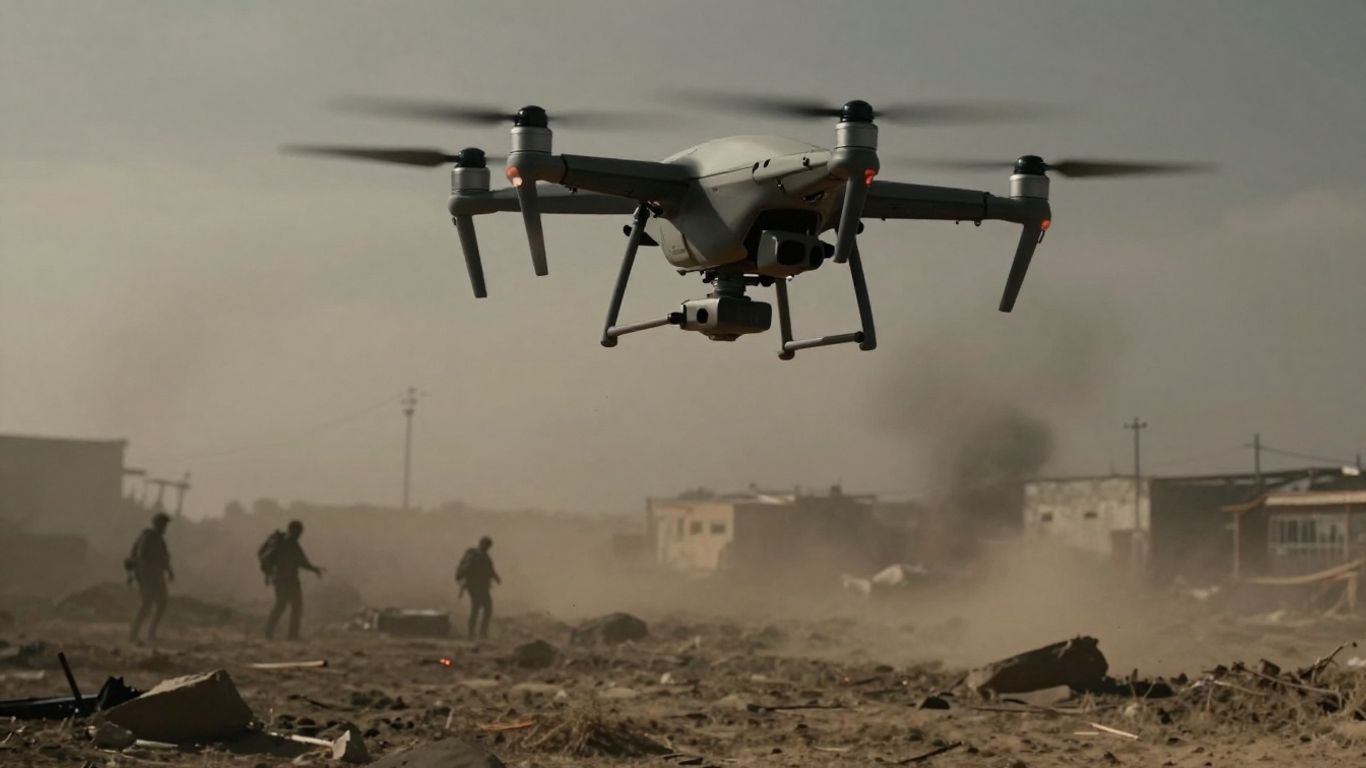
It’s a tough question, but we need to talk about whether US drone strikes have a racial bias. When you look at who’s being targeted, it’s mostly people of color in countries far from the US. Some folks argue this is a form of "racialization from above," where drones become tools for "aerial occupation" and even a kind of modern neocolonialism. It feels like these operations can sometimes rehash old colonial power dynamics, connecting military actions to daily life in ways that aren’t equal.
Are US Drone Strikes Racially Biased?
On the surface, it seems like a straightforward yes. The targets are often people of color in non-Western nations. Critics point to skin color and location, suggesting public support might be tied to racial preferences. But the data isn’t quite that simple. Studies show that people with higher racial resentment are more likely to support drone strikes, but not necessarily because of the target’s skin color or where they live. Instead, it seems to be more about their views on America’s role in the world and the use of military force generally. Interestingly, sometimes showing the racial details of a target can actually decrease public support.
Drones As A Form Of ‘Racialization From Above’
This idea suggests that the way drones are used can reinforce racial hierarchies. It’s not just about who is targeted, but how the operations are framed and perceived. When targets are dehumanized as mere "extremists" or "terrorists," it can make it easier for the public to accept these actions, regardless of the actual race of the individuals involved. This framing can obscure the human cost and the potential for disproportionate impact on certain communities. It’s a complex issue that goes beyond simple statistics, touching on how technology is deployed and the underlying attitudes that shape its acceptance. The development of AI in military applications is outpacing our ability to control it, raising serious ethical questions about unprecedented civilian casualties.
Neocolonialism And Aerial Occupation
Some experts see drone warfare as a continuation of colonial practices, just with new technology. "Aerial occupation" describes how drones can exert control and surveillance from a distance, without needing a physical presence on the ground. This can feel like a modern form of dominance, especially when it’s directed at countries that have historically been subject to foreign intervention. It raises questions about sovereignty and the power dynamics between nations. The lack of accountability for botched operations, especially those resulting in civilian deaths, further complicates the perception of legitimacy and fairness in these remote conflicts.
Here’s a look at some factors influencing public opinion:
- Racial Resentment: Individuals with higher levels of racial resentment tend to support drone strikes more, though not always based on target demographics.
- Nationalism and Foreign Policy Views: Support for drone use often aligns with broader beliefs about America’s global role and the necessity of military intervention.
- Perceived Threat: The perceived danger a target poses to US security significantly influences public opinion.
- Framing of Operations: How strikes are described (e.g., targeting "terrorists") impacts public acceptance.
The debate around drone strikes and race is complicated. While the targets are often people of color, public support isn’t solely driven by racial bias. Instead, a mix of factors, including views on foreign policy, national security, and how operations are presented, shapes how Americans feel about remote warfare. Understanding these nuances is key to having a more productive conversation about the ethics and impact of drone technology.
Understanding Public Opinion On Drone Strikes
It’s easy to think everyone feels the same way about drone strikes, but public opinion is actually pretty complicated. When people are asked about these operations, their views aren’t just a simple yes or no. Lots of different things seem to play a role in how folks feel.
The Impact Of Target Information
What we’ve seen is that how a drone strike is described really matters. If you just hear about a target being an "extremist" or "terrorist" without much else, people tend to be more supportive. It’s like a headline that doesn’t give you the whole story. But when you get more details, like where the strike happened or who the target was, opinions can shift. It seems people want more context than just a label.
Geography As A Proxy For Race
There’s been a lot of talk about whether where a strike happens influences how people feel about it, especially if that place is associated with certain racial groups. Some research suggests that when people don’t know the location or see a target without clear racial markers, they’re more likely to back the strike. However, when details about the target’s location are provided, support can drop. It’s not always about race directly, but the location can sometimes bring up other associations that affect how people think about the operation.
Nuanced Views On Remote Warfare
Ultimately, people’s opinions on drone warfare aren’t easily boiled down. Support often comes from a mix of beliefs about America’s role in the world, whether using force is justified, and how much of a threat a target poses to national security. It’s not just about whether the target is perceived as ‘other.’ People consider the intelligence behind the strike, the risk of civilian harm, and the overall goals of U.S. foreign policy. This means that public opinion is more layered than simple approval or disapproval, and it can change based on how information is presented and what details are known.
Public attitudes towards drone strikes are shaped by a variety of factors, including beliefs about national security, the justification for using force, and the perceived threat posed by targets. The way these operations are framed in the media and by officials also significantly influences public perception, often leading to an overestimation of widespread support when details are scarce.
Moving Forward: Accountability and the Future of Drone Warfare
It’s clear that the use of drones in modern warfare brings up some really tough questions. While the military sees them as a useful tool, the stories from places like Iraq and Syria show a different side – one where civilians are caught in the crossfire, and accountability is hard to find. The gap between official numbers and what people on the ground experience is huge. We’ve heard from former operators about the mental toll, and from families who’ve lost everything. As this technology keeps evolving, we need to seriously think about who’s watching, who’s responsible when things go wrong, and what this means for the future of how wars are fought. It’s not just about the technology; it’s about the human cost and making sure there’s a real effort to prevent these tragedies from happening again.
Frequently Asked Questions
What are drone strikes and why are they controversial?
Drone strikes are attacks carried out using unmanned aerial vehicles, or drones. They are controversial because while they can be used to target enemies without risking pilots’ lives, they have also led to many civilian deaths, raising serious questions about fairness and accuracy in modern warfare.
Are the official numbers of civilian deaths from drone strikes accurate?
Reports from investigations suggest that the official numbers of civilians killed in drone strikes are often much lower than what is found on the ground. Journalists and researchers have visited strike sites and spoken with locals, revealing a much higher death toll in places like Iraq, Syria, and Afghanistan.
What is meant by ‘accountability’ in drone warfare?
Accountability means holding those responsible for mistakes or wrongdoings answerable for their actions. In drone warfare, critics argue there’s often a lack of accountability when civilians are accidentally killed. Sometimes, no one is punished, even when investigations show errors were made.
How does flawed intelligence affect drone strikes?
Sometimes, drone strikes are based on bad or incomplete information, leading to wrong targets being hit. This can happen when decisions are rushed or the intelligence isn’t good enough, tragically resulting in the deaths of innocent people.
Is there a racial bias in who is targeted by drone strikes?
Some experts and critics believe that drone strikes may be racially biased, often targeting people of color in non-Western countries. They argue this could be a form of ‘racialization from above’ and relates to older patterns of power and control between nations.
What influences public opinion on drone strikes?
Public opinion can be shaped by how drone strikes are presented, like calling targets ‘terrorists’ without more details. People also consider factors like the perceived threat to national security, the accuracy of the information used, and whether they believe in using military force abroad. Some research suggests that racial bias isn’t the main driver, but rather a mix of beliefs about America’s role in the world.


![[Donald Trump] in a formal setting, looking at the camera.](https://countrybrief.com/wp-content/uploads/2026/03/journalist2Fa37a4be5-a449-472f-ba93-627e76e0d8a62Fthumbnail-768x432.jpeg)