What This Viral Video Gets Right and Wrong About Global Politics
The internet and viral videos have changed how we talk about and understand politics. Here are some important things to remember:
Key Takeaways
- Short online videos are great at getting people’s attention, but they often skip important details.
- Online stories can spread really fast, sometimes faster than the truth, making it hard to know what’s real.
- Social media is now a big part of how countries interact and sometimes even fight, with information being used like a weapon.
- Politicians and movements use online platforms to connect with people, especially those who feel left out or upset.
- We all need to be more careful about the information we see online and think critically about what we’re watching.
The Viral Video’s Grip on Public Opinion
Understanding the Allure of Short-Form Content
It’s no secret that short videos are taking over. They grab your attention fast, and before you know it, you’ve watched five more. This isn’t just about entertainment; it’s a powerful way to shape how people think, especially when it comes to politics. These videos, often from places like PragerU, are designed to be easy to digest. They present complex ideas in simple terms, using catchy graphics and a friendly tone. The real danger is how quickly these simplified narratives can replace actual understanding. People see a slick five-minute video and think they’ve got the whole story. It’s like looking at a picture of a house and thinking you know everything about its foundation. We’re seeing a generation get their political education from these bite-sized clips, and frankly, it’s not preparing them for the real world.
The Power of Persuasion in a Digital Age
These videos are masters of persuasion. They don’t just present information; they aim to change minds. You see a video that claims 70% of viewers change their minds on an issue after watching. Sounds impressive, right? But who are these viewers? Usually, it’s people who already agree with the video’s message or are actively seeking out that viewpoint. It’s a self-selecting group, not exactly a neutral audience. This creates an echo chamber where beliefs are reinforced, not challenged. It’s easy to be convinced when you’re only hearing one side, especially when it’s packaged so nicely. This is how online narratives start to dictate reality, making it harder to have a real conversation about what’s actually going on.
Measuring Real-World Impact Beyond Clicks
So, these videos get millions of views. Big numbers, right? But what does that actually mean for the real world? It’s tough to say. We see claims that these videos are building a "counterculture" or influencing millions daily. Yet, when you look closer, the testimonials are often from anonymous accounts or people whose existence is hard to verify. It makes you wonder if the impact is as widespread as they claim. It’s one thing to get clicks, but it’s another to see tangible, positive change. We need to look past the view counts and see if these viral moments actually lead to anything substantial, or if they’re just noise. The real impact is often lost in the shuffle, and sometimes, the consequences are far more serious than anyone anticipated, like when online allegations lead to enforcement actions that have devastating human costs. It’s a stark reminder that what happens online doesn’t always stay online, and the consequences can be severe, impacting families and communities profoundly.
Echo Chambers and the Erosion of Truth
It’s getting harder and harder to know what’s real these days, isn’t it? You see something online, maybe a quick video or a catchy meme, and it just feels right. It fits with what you already believe, and before you know it, you’re sharing it. That’s the power of the echo chamber. We all tend to hang out with people who think like us, and the internet just makes that easier. Algorithms feed us more of what we already like, creating these little bubbles where our own ideas get bounced back at us, louder and louder.
Understanding the Allure of Short-Form Content
These short videos and posts are designed to grab your attention fast. They simplify complex issues into bite-sized pieces, often with strong emotional appeals. It’s easy to see why they’re popular. Who has time to read a long article when a 30-second clip can tell you "what you need to know"? The problem is, this brevity often comes at the expense of accuracy and nuance. Important details get left out, and sometimes, the whole story gets twisted to fit a narrative. It’s like getting the CliffsNotes for reality – you get the gist, but you miss all the important stuff.
The Power of Persuasion in a Digital Age
When you’re constantly seeing the same viewpoint, it starts to feel like the only viewpoint. This is how online narratives can really shape how people see the world. It’s not always intentional manipulation, but the effect is the same. Information that confirms our biases gets amplified, while anything that challenges us gets ignored or dismissed. This makes it tough to have a real conversation with folks who see things differently. We end up living in separate realities, each convinced we’re right and the other side is just… wrong.
Measuring Real-World Impact Beyond Clicks
It’s easy to get caught up in likes, shares, and views. But what does that actually mean in the real world? A viral video might make a splash online, but does it lead to actual change or understanding? Sometimes, these online performances can have serious consequences. People get riled up based on incomplete or false information, and that can lead to real-world actions, sometimes with negative outcomes. We need to look past the clicks and consider the actual impact these digital stories have on people and communities. It’s a complex situation, and a systematic literature review can help us understand the bigger picture.
The constant stream of information, tailored to our preferences, can make it difficult to distinguish between fact and fiction. This creates a fertile ground for misinformation to spread, as people are less likely to question information that aligns with their existing beliefs. The result is a fragmented public discourse where genuine dialogue becomes increasingly challenging.
It’s not just about politics, either. Think about how quickly rumors can spread about anything, from local events to health advice. If it’s presented in a compelling way, and it fits what we want to believe, we’re more likely to accept it without checking the facts. This is why it’s so important to be critical of what we see online and to seek out information from reliable sources. We need to remember that echo chambers can contribute to societal issues, and breaking out of them is a challenge we all face.
The Digital Battlefield: Information Warfare
Political Warfare in the Internet Era
It’s no longer just about tanks and troops. Today, the real fight for influence often happens online, in the messy, chaotic world of social media and digital platforms. We’re seeing a new kind of conflict emerge, where information itself is the weapon. Think about it: instead of just debating ideas, we’re seeing outright attempts to manipulate public opinion and sow discord. This isn’t just about news anymore; it’s about controlling the narrative. The digital space has become a primary battleground for global powers.
The Role of Social Media in Global Conflicts
Platforms like TikTok and others have turned into major arenas for this new type of warfare. Governments and various groups are using them to push their agendas, often bypassing traditional media entirely. It’s a way to reach people directly, especially younger generations who might not be paying attention to the old news channels. We saw this when the White House used TikTok creators to get their message out about Ukraine. It’s a smart move, in a way, but it also means that these platforms are being used for serious political maneuvering, not just entertainment. It’s a whole new ballgame when it comes to how conflicts are fought and how people are influenced. This shift means we need to be much more critical of what we see online, especially when it comes to international affairs. Understanding the geopolitical implications of TikTok is becoming essential.
Disinformation as a Weaponized Tool
This is where things get really tricky. Disinformation – deliberately spreading false or misleading information – is being used as a serious weapon. It’s not just about making a mistake; it’s about intentionally deceiving people to achieve a political goal. We’ve seen how fake news and manipulated content can spread like wildfire, creating confusion and distrust. This kind of tactic can destabilize countries and turn people against each other. It’s a constant struggle to figure out what’s real and what’s not, and that’s exactly what the people using these tactics want. It makes it harder for regular folks to make informed decisions about important issues. The goal is often to overwhelm us with so much noise that we don’t know who or what to believe anymore. It’s a serious challenge to our ability to have a functioning society when truth itself is under attack. The whole concept of information warfare has evolved dramatically in recent years.
Populism’s Rise Fueled by Online Platforms
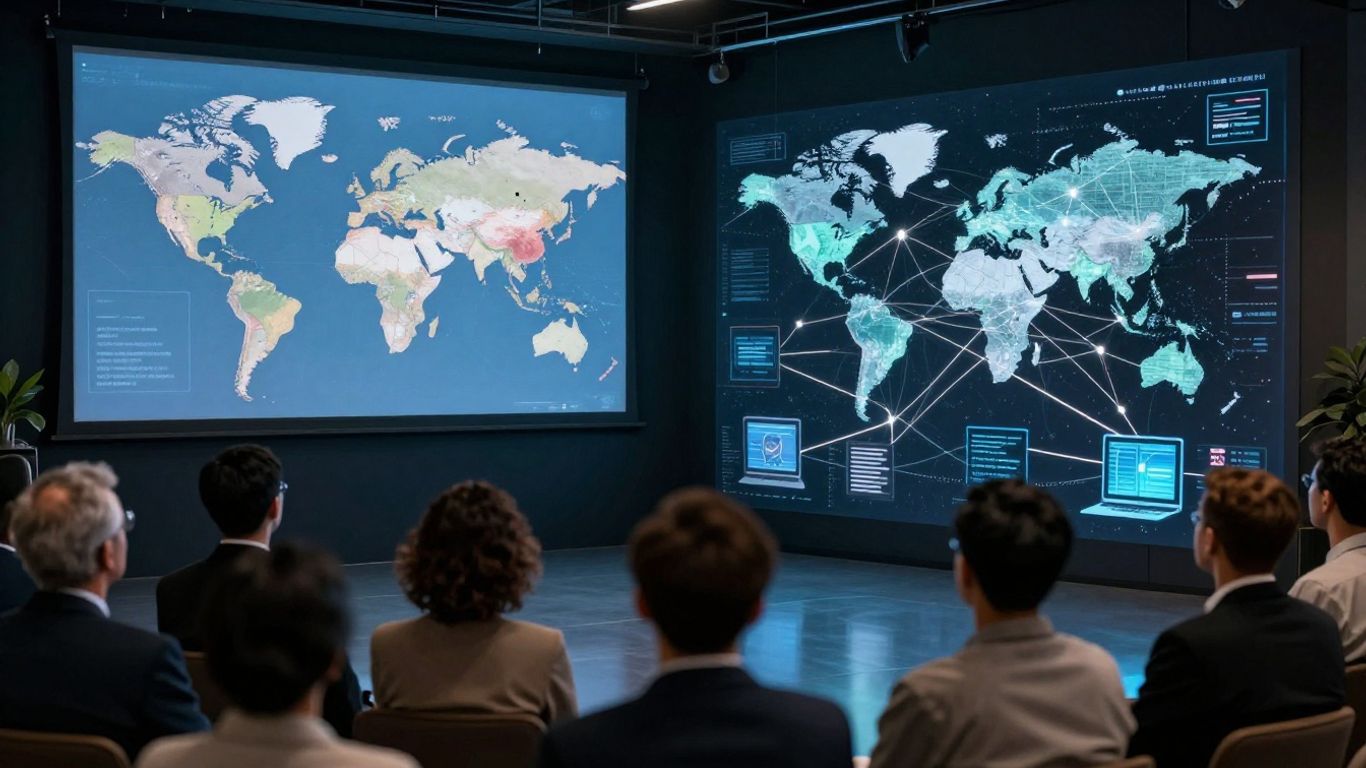
It’s no secret that the internet, especially social media, has become a breeding ground for populist movements. These platforms allow politicians to speak directly to people, cutting out the old media gatekeepers. This bypass is a big deal. It means leaders can craft their message without filters, speaking to voters who feel ignored by the establishment. This direct line of communication is a game-changer for anyone wanting to tap into public anger and frustration.
Think about it. For years, people felt like the political system was rigged, that elites in big cities and Washington D.C. didn’t care about their everyday lives. The internet, and social media in particular, gave these feelings a voice. It created spaces where people could connect with others who felt the same way, building communities around shared grievances. This is how you get movements that feel like they’re coming from the ground up, even when they’re being amplified by well-funded campaigns.
Connecting with the Alienated and Angry Electorate
Online platforms are perfect for reaching folks who feel left behind. You see it all the time: politicians using simple, strong language to talk about problems that resonate with working families. They focus on issues like immigration, job losses, and cultural changes, framing them as battles against out-of-touch elites. It’s a narrative that works because it speaks to real concerns, even if the solutions offered are often simplistic.
- Direct appeals to national pride.
- Criticism of globalist agendas.
- Promises to restore a perceived lost greatness.
The Symbiotic Relationship Between Populism and the Internet
It’s a two-way street. Populist leaders need the internet to spread their message, and the internet, with its algorithms designed for engagement, thrives on the kind of strong emotions that populism often stirs up. Think about how quickly controversial or emotionally charged content spreads. It’s exactly what keeps people scrolling and sharing. This creates a cycle where online engagement fuels political movements, and those movements, in turn, generate more online engagement. It’s a powerful feedback loop that traditional media just can’t match. The way these platforms promote narratives that create a division between ‘the people’ and ‘the elites’ is a prime example of this dynamic.
How Digital Tools Empower Far-Right Movements
Far-right groups have been particularly adept at using these digital tools. They’ve mastered the art of creating viral content, using memes, short videos, and targeted ads to reach specific demographics. This allows them to spread their message quickly and efficiently, often bypassing mainstream scrutiny. It’s not just about getting a message out; it’s about building a movement and mobilizing supporters. The speed and reach of online platforms mean that ideas, even extreme ones, can gain traction much faster than ever before. It’s a new kind of political organizing, and it’s changing the game.
The internet didn’t create the anger or the alienation, but it gave it a megaphone. It allowed people who felt unheard to find each other and amplify their voices, creating a powerful force that traditional political structures are still struggling to understand.
The Electoral College: A Case Study in Misinformation
Simplifying Complex Political Structures
Look, nobody’s saying the Electoral College is the most straightforward thing in the world. It’s a system with a history, and frankly, most people just want to get through their day without needing a civics lesson. But when you boil it down to a five-minute video with cartoons, you’re bound to leave out some pretty important stuff. The whole point of these viral explainers seems to be making things digestible, which is fine, but it often means sacrificing accuracy for simplicity. It’s like trying to explain a complex recipe by just showing a picture of the finished cake. You get the idea, but you miss all the steps and ingredients that actually make it work.
Ignoring Historical Nuances for Viral Appeal
This is where things get really dicey. The Electoral College wasn’t just dreamed up out of thin air. It has roots, and ignoring them is a disservice to understanding how our government functions. For instance, the video might gloss over the compromises made during the nation’s founding, including those related to slavery, which played a significant role in its creation. Presenting it as a purely neutral mechanism, or worse, as a foolproof way to prevent voter fraud, is just plain wrong. It’s a historical artifact, and like many historical things, it’s complicated. Trying to make it fit a neat, viral narrative means leaving out the messy bits, and those messy bits are often the most important for understanding why it exists.
The Impact of Engaging Graphics Over Factual Depth
Let’s be honest, a slick video with catchy graphics and upbeat music is going to grab more attention than a dry, academic paper. That’s just how the internet works. But when those engaging visuals are used to push a simplified, often misleading, narrative about something as significant as our presidential election system, we have a problem. The focus shifts from understanding the substance of the Electoral College to simply consuming easily digestible content. This approach can lead to a public that feels informed but actually isn’t, making it harder to have productive conversations about our political structures. It’s a classic case of style over substance, and when it comes to something as important as our elections, that’s a dangerous game to play. We need to be wary of how easily these online narratives can shape perceptions, especially when they’re designed for maximum shareability rather than accuracy. Combating election misinformation is a serious challenge, and resources exist to help protect democratic processes.
The allure of a simplified explanation, especially one delivered with visual flair, is powerful. It bypasses the need for critical thinking and offers a ready-made conclusion. This is particularly effective when dealing with complex topics like the Electoral College, where historical context and nuanced arguments can be easily overshadowed by easily digestible, albeit incomplete, narratives. The result is a public that may feel knowledgeable but lacks a true grasp of the underlying issues, making them susceptible to further misinformation.
From Online Outrage to Real-World Consequences
The Minneapolis Incident: A Cautionary Tale
It’s wild how fast things can go from a few angry posts online to actual chaos on the streets. Take what happened in Minneapolis, for example. A YouTuber put out a video alleging daycare fraud involving the Somali population there. Sounds like just another internet story, right? Wrong. This thing blew up, and before you know it, the Trump administration was sending in ICE agents in a big way. We saw more raids, more agents, and sadly, it all ended with an ICE agent shooting and killing Renee Good. It was all caught on video, of course, and that video spread like wildfire, with everyone picking sides and dissecting it online. Protests erupted, and guess what? It was all documented and shared on phones. It felt like a battle being fought through everyone’s screens.
When Online Allegations Lead to Enforcement Actions
This whole situation highlights a disturbing feedback loop. What starts as online content, often fueled by outrage and maybe not-so-verified information, can directly influence government actions. It’s like the internet becomes a direct line to policy, bypassing any real-world checks and balances. The Minneapolis case showed how a viral video, even if based on shaky claims, could trigger a massive law enforcement response. This isn’t just about one incident; it’s a pattern where online narratives can shape perceptions and lead to real-world interventions, sometimes with tragic results. It makes you wonder about the reliability of misinformation that appears credible when it can have such serious consequences.
The Human Cost of Viral Content
Beyond the political maneuvering and the online arguments, there’s a human cost to all this. When online allegations lead to enforcement actions, people get hurt. The Minneapolis events, culminating in a death and widespread protests, are a stark reminder of this. It’s easy to get caught up in the digital drama, but we need to remember that behind every viral post, every hashtag, and every online argument, there are real people whose lives are affected. The constant barrage of online outrage can distort our judgment, making it harder to see the truth and leading to actions that have devastating real-world impacts. It’s a dangerous game when digital moral distortion influences how we act.
- The speed at which online narratives can escalate.
- The direct link between viral content and government enforcement.
- The tragic human consequences of unchecked online outrage.
The line between online performance and real-world action has blurred, leading to situations where digital anger translates into tangible, often harmful, outcomes.
The Shifting Landscape of Political Communication
It’s pretty wild how fast things have changed, right? Gone are the days when you had to wait for the evening news or the morning paper to get your political fix. Now, it’s all happening in real-time, right on our phones. This shift means politicians and movements can bypass the old gatekeepers, like traditional news outlets, and talk directly to us. It’s a whole new ballgame.
Bypassing Traditional Media Gatekeepers
Remember when Walter Cronkite was the ultimate authority? Those days are pretty much over. Now, anyone with a smartphone can broadcast their message. This direct line of communication is a game-changer. It allows for unfiltered messages, which can be good, but also means we have to be way more careful about what we consume. The old media used to act as a filter, and while it wasn’t perfect, it did provide some level of vetting. Now, that filter is largely gone, leaving us to sort through the noise ourselves. It’s a lot to handle, honestly.
TikTok as a Tool for Government Messaging
Who would have thought TikTok would become a place for serious political talk? Yet, here we are. Governments and political figures are using platforms like TikTok to reach younger audiences. They’re trying to make politics seem more relatable, blending entertainment with information. It’s a strategy that’s definitely getting attention, but it also raises questions about whether complex issues can be adequately explained in short, catchy videos. It’s a tricky balance to strike, and frankly, I’m not sure it’s always working out for the best. We’ve seen how research explores the influence of social media on this phenomenon.
Influencers Shaping Geopolitical Discourse
And then there are the influencers. These aren’t your typical politicians; they’re people who have built massive followings online. They can sway public opinion on everything from consumer products to international relations. Their endorsements or criticisms can have a real impact, sometimes more than a seasoned diplomat. It’s a strange new world where a popular YouTuber or TikToker can have more sway than established political figures. This rise of online personalities means that social media has become a significant influence on how we see the world and its politics.
The speed at which information, or misinformation, travels online is staggering. What might have taken weeks to spread through traditional channels can now go viral in hours, shaping public perception before any official response can even be formulated. This rapid dissemination demands a new level of media literacy from everyone.
Here’s a look at how different platforms are being used:
- X (formerly Twitter): Quick updates, direct engagement, and often, heated debates.
- TikTok: Short-form videos, often blending entertainment with political commentary, targeting younger demographics.
- YouTube: Longer-form content, documentaries, and detailed explanations, though often subject to algorithmic recommendations.
- Instagram: Visual storytelling, infographics, and behind-the-scenes glimpses of political life.
The Global Struggle for Digital Sovereignty
It’s getting pretty wild out there on the internet, isn’t it? Countries are starting to realize that controlling what happens online is just as important as controlling borders or economies. This whole idea of "digital sovereignty" is becoming a huge deal. Basically, it’s about who gets to call the shots when it comes to data, algorithms, and what we all see online. It’s not just about TikTok, though that’s a big part of it. Think about it: if a foreign government can influence what millions of Americans see or even get their hands on their personal data, that’s a serious national security issue. We’ve seen countries like India ban apps outright, citing security concerns, and the EU is trying to put the screws on big tech with new regulations. It feels like the old, open internet is slowly breaking apart into different digital territories, each with its own rules.
Nations Grappling with Transnational Digital Spaces
This is where things get complicated. The internet doesn’t really respect national boundaries, but governments sure do. They’re trying to figure out how to manage platforms that operate globally but have to answer to national laws. It’s a tough balancing act. The rapid evolution of digital systems often outpaces our ability to govern them effectively. We’re seeing different approaches, from outright bans to strict regulations, all trying to assert some level of control. It’s like trying to herd cats, but the cats are made of code and data.
The EU’s Regulatory Approach to Online Platforms
The European Union has been pretty aggressive with its Digital Services Act. They’re basically telling big tech companies, "You need to be more transparent and take responsibility for the content on your platforms, or else." They’re threatening massive fines if companies don’t comply. It’s a way to try and force these global giants to play by European rules, even if they’re based elsewhere. It’s a bold move, trying to rein in the power of these massive tech companies that have become so influential in our lives. This regulatory push is a significant step in asserting digital sovereignty.
India’s Ban on TikTok: A National Security Stance
India’s decision to ban TikTok was a pretty drastic step, but it shows how seriously some nations are taking the digital security threat. Amidst ongoing border disputes with China, they decided it was too risky to allow a popular app owned by a Chinese company to operate within their borders. They cut off access for hundreds of millions of users overnight. It’s a clear signal that when national security is perceived to be at risk, governments are willing to take extreme measures to protect their digital space. This kind of action highlights the growing tension between global connectivity and national interests in the evolving digital landscape.
The challenge is that these platforms are designed for maximum engagement, which means they can spread information – true or false – incredibly fast. Governments are scrambling to keep up, trying to protect their citizens without stifling innovation or free expression. It’s a tightrope walk, and nobody has all the answers yet.
The Perils of a Content-First Administration

It’s becoming increasingly clear that some administrations are more focused on the performance of governing than the actual work. When the primary goal is to create viral content, the real issues get pushed aside. It’s like trying to build a house by only focusing on how good the Instagram photos of the construction site look, instead of actually laying the foundation.
Performing for an Imagined Online Audience
This obsession with online optics means leaders are constantly trying to craft messages that will get clicks and shares. They’re not necessarily thinking about what’s best for the country, but what will play well on social media. This can lead to policies that are popular for a day but have no long-term substance. It’s a dangerous game when the approval of online crowds dictates national decisions. We saw this happen when former President Donald Trump seemed more concerned with his social media presence than with the actual complexities of foreign policy.
The Military’s Role in Online Propaganda
Even our military isn’t immune. Instead of focusing on readiness and defense, there’s a growing pressure to engage in online propaganda. This means using military resources to create content that looks good online, rather than focusing on their core mission. It blurs the lines between public information and outright manipulation. The goal shifts from informing the public to winning online battles, which is a very different objective.
When Reality is Tailored for Viral Consumption
Ultimately, a content-first approach means that reality itself starts to get twisted. Complex problems are simplified into soundbites, and nuanced discussions are replaced by outrage. The administration starts to operate in a world where what’s trending online is more important than what’s actually happening on the ground. This can lead to a disconnect between the government and the people it’s supposed to serve. It’s a recipe for disaster when the leaders are more interested in going viral than in solving problems.
- Simplifying complex issues into easily digestible, shareable content.
- Prioritizing engagement metrics over policy effectiveness.
- Creating an echo chamber where only agreeable online narratives are amplified.
The constant need for viral content can lead to a superficial understanding of critical issues. Leaders might make decisions based on what gets the most likes, rather than what is truly beneficial for the nation’s long-term interests. This focus on online performance over substance is a worrying trend.
The Internet’s Influence on Political Movements
It’s pretty wild how much the internet has changed the game for political movements, right? Gone are the days when you needed a big organization or a newspaper to get your message out. Now, anyone with a smartphone can start something. We’ve seen this play out from the early days of message boards to the massive platforms we have today. It’s not just about sharing opinions anymore; it’s about organizing, mobilizing, and sometimes, causing a real stir.
From Message Boards to Modern Social Media
Think back to the late 90s and early 2000s. Online forums and early social sites were the wild west. People could connect with others who shared their niche interests, including political ones, without the usual gatekeepers. This was a big deal. It allowed ideas that might have been dismissed by mainstream media to find an audience. This ability to bypass traditional channels is a core reason why online platforms have become so important for political discourse. It’s a direct line from the creator to the consumer, cutting out the middlemen.
Empowering Grassroots Movements and Protests
We’ve seen this firsthand with movements that started small and exploded online. The Arab Spring, Occupy Wall Street, and even early Black Lives Matter actions all used the internet to gain traction. People could share information, organize protests, and build solidarity across distances. It’s amazing how quickly a hashtag can turn into a real-world demonstration. A recent study shows that a good chunk of social media users find these platforms important for engaging with issues that matter to them, which really highlights this point.
The Internet as a Mirror to Pre-Existing Divides
But it’s not all sunshine and roses. The internet also amplifies existing divisions. It’s easy to get stuck in echo chambers, only seeing viewpoints that confirm what you already believe. This can make compromise harder and increase polarization. While the internet connects people, it can also isolate them into ideological camps. It’s like looking into a funhouse mirror – you see yourself, but distorted.
The speed at which information, or misinformation, can spread online is unprecedented. What starts as a small online discussion can quickly escalate, influencing public perception and even real-world actions before facts can be properly verified.
It’s a double-edged sword, really. The internet gives a voice to the voiceless and allows for rapid organization, but it also has the potential to deepen societal rifts and spread unchecked narratives. Finding the right sofa, for instance, requires careful research and consideration, and so does navigating the complex world of online political movements.
Conclusion
It’s clear that these viral videos and online content have a huge impact on how we see the world, and especially politics. They can grab our attention fast, but we have to be careful. It’s easy to get tricked by slick videos that don’t tell the whole story. We need to remember that real life is complicated, and just because something looks good online doesn’t mean it’s true. We all need to be smarter about where we get our information and not let quick videos or angry posts decide what we think about important stuff. The internet is powerful, but so is critical thinking.
Frequently Asked Questions
Why do viral videos get so much attention?
These videos are often short and exciting, making them easy to watch and share. They use strong images and simple messages that grab people’s attention quickly, especially when we’re scrolling through lots of content.
Can online videos really change how people think about politics?
Yes, they can. When a video is persuasive and easy to understand, it can influence what people believe, especially if they don’t know much about the topic already. It’s like hearing one side of a story and thinking it’s the whole truth.
What is ‘information warfare’?
It’s like using information, like fake news or misleading videos, as a tool in conflicts between countries or groups. The goal is to confuse people or make them believe certain things to gain an advantage.
How do online platforms help populist politicians?
These platforms let politicians speak directly to voters without going through traditional news. They can easily connect with people who are feeling angry or ignored, sharing messages that often sound simple and direct.
Is the Electoral College a confusing topic?
For many people, yes. Viral videos sometimes try to explain it, but they might skip over important history or details to keep it short and interesting, which can make it harder to fully understand.
What does ‘content-first administration’ mean?
It means a government or leader focuses more on creating content that will get attention online, like viral videos or social media posts, rather than on the actual work of governing. They perform for an online audience.
Can online movements lead to real-world action?
Absolutely. Online anger or calls to action can quickly spill over into real-world protests or events. Sometimes, online claims can even lead to official actions, which can have serious consequences for people.
What is ‘digital sovereignty’?
It’s about a country having control over its own digital space and data. Countries are trying to figure out how to manage big online platforms that operate across borders, like deciding which apps are safe to use.