
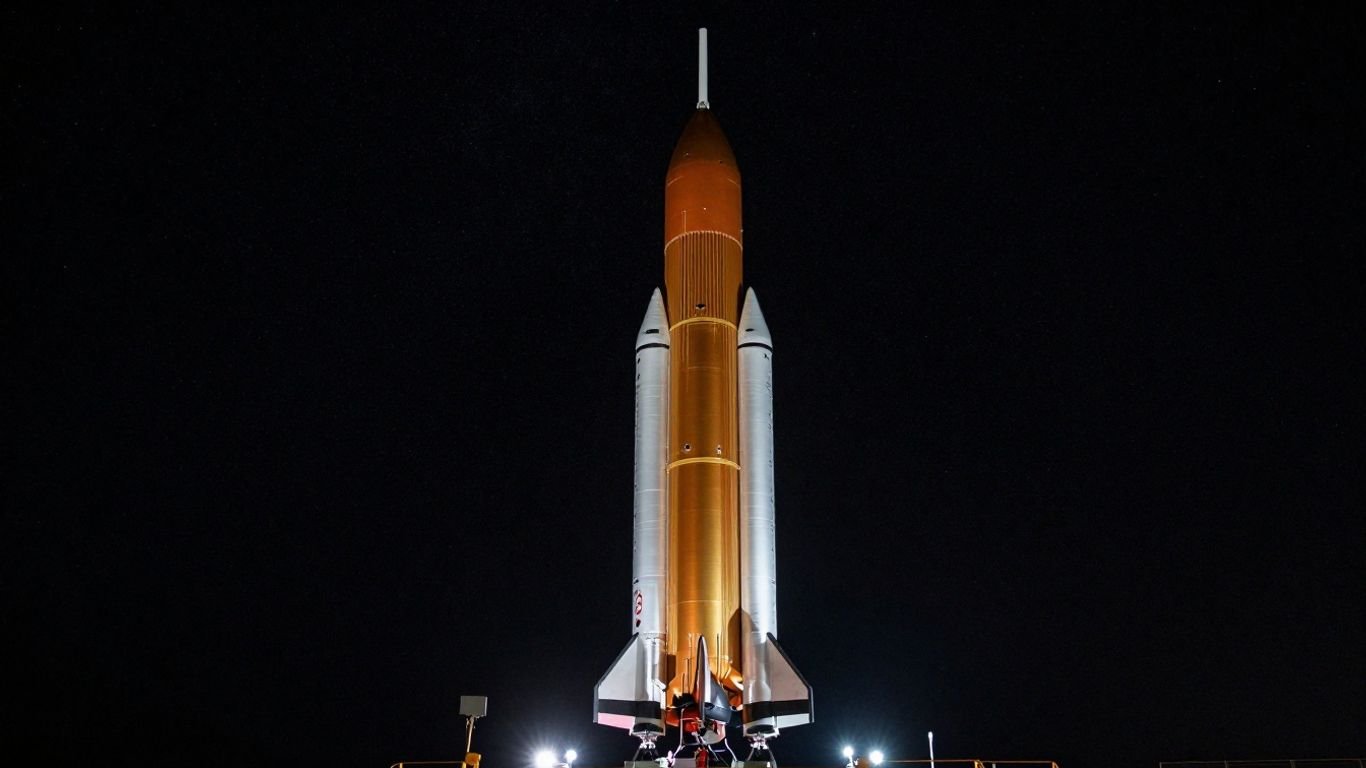
Will SpaceX Ever Go Public? What Investors Should Know About a Possible IPO
Here’s a quick rundown of what you need to know about the potential SpaceX IPO. It’s a big deal, and understanding these points can help you make sense of it all.
Key Takeaways
- SpaceX is planning to go public, which is a huge change from its private status.
- The company needs a lot of money for big projects like Starship and Starlink.
- The IPO might include all of SpaceX’s businesses, not just Starlink.
- Valuation is a big question, with targets possibly reaching a trillion dollars or more.
- There are significant risks involved, like high prices and potential launch failures.
The Imminent SpaceX IPO: A New Era For Investors
SpaceX’s Bold Leap Into The Public Market
It feels like just yesterday we were talking about SpaceX as this scrappy private company, you know, the one with the crazy dreams of Mars. But now? Things are changing fast. The word on the street is that SpaceX is getting ready to go public, and it’s a pretty big deal for anyone who likes to invest in American innovation. This isn’t just another tech company listing; this is SpaceX. The implications for the market and for everyday investors are huge. We’re talking about a company that’s literally changing how we access space, from launching satellites to planning trips beyond Earth. It’s a bold move, and it signals a new chapter, not just for SpaceX, but for the entire space economy. It’s exciting to think about what this means for the future of space exploration and for those looking to get a piece of the action. The official filing happened on May 20th, and the buzz is real.
Understanding The Shift From Private To Public
For years, Elon Musk kept SpaceX private, saying it wasn’t ready for the public eye until Mars missions were more practical. That’s a big change from the original plan, which was to maybe spin off Starlink separately. Now, it looks like we’re getting the whole package – a "Total SpaceX" IPO. This means investors will get a stake in everything: the Starlink satellite internet service, the rocket launch and defense business, Starship development, and even the new AI stuff from the xAI merger. It’s a way to bundle all these high-growth areas together. This shift from private to public is a massive undertaking, and it’s driven by the company’s enormous need for capital to fund its ambitious projects. It’s a strategic move to get the funding needed for things like Starship and expanding Starlink.
Key Dates And Timelines For The SpaceX IPO
So, when can you actually buy stock? It’s been a bit of a moving target, but reports suggest the roadshow could kick off around June 4th, with a potential listing on Nasdaq as early as June 12th. This timeline is pretty tight and follows the standard SEC rules where companies have to make their filings public at least 15 days before they start showing the company to investors. It’s a fast-paced process, and if you’re looking to get in, you’ll need to be ready. The company confidentially filed its initial paperwork back on April 1st, which is the official start of the IPO process. It’s all happening pretty quickly now.
Here’s a rough idea of the timeline:
- April 1, 2026: Confidential filing with the SEC.
- May 20, 2026: Public release of IPO documents.
- Early June 2026: Investor roadshow begins.
- Mid-June 2026: Potential IPO trading date on Nasdaq.
The sheer scale of SpaceX’s operations and its future ambitions necessitate a significant influx of capital. Going public is the most direct way to achieve this, allowing the company to fund its next generation of rockets and global communication networks.
Why SpaceX Is Going Public Now
For years, Elon Musk kept SpaceX private, saying it wasn’t ready for the public market until its Mars ambitions were more concrete. That tune has changed, and it seems the company is finally ready to open its doors to investors. What’s driving this shift? It’s not just about Mars anymore; it’s about the sheer amount of money needed to make all of Musk’s grand plans a reality.
Massive Capital Needs Driving The IPO Decision
Let’s be real, building rockets and a global satellite internet network isn’t cheap. SpaceX is pouring billions into developing Starship, the massive rocket designed for trips to the Moon and Mars. Then there’s Starlink, the satellite internet service that’s expanding like wildfire across the globe. These aren’t small projects; they require a constant, massive influx of cash. Going public means SpaceX can tap into a much larger pool of capital than it could ever get from private investors alone. It’s a necessary step to fund these ambitious, long-term projects. This move also provides a way for early employees and investors to cash out some of their stakes, which is always a nice perk.
Starship Development And Starlink Expansion Demands
Starship is the future, or at least, that’s the idea. It’s supposed to be the workhorse for everything from sending satellites to orbit to eventually taking people to other planets. But building and testing such a complex system costs a fortune. Every launch, every iteration, every setback adds to the bill. Similarly, Starlink needs constant investment to launch more satellites, build ground stations, and expand its service to every corner of the planet. Reports suggest Starlink is already generating good cash flow, but scaling it up to its full potential requires even more investment. It’s a classic growth company dilemma: you need money to make money, and SpaceX needs a lot of it.
The Role Of AI Infrastructure And Spectrum Acquisitions
Beyond rockets and satellites, SpaceX is also making big moves in artificial intelligence, especially after its merger with xAI. Building out the necessary AI infrastructure, including data centers and advanced computing power, is another huge expense. Think about the processing power needed for advanced AI systems, especially those tied to autonomous operations and complex data analysis from space. On top of that, SpaceX is looking to acquire wireless spectrum, which is essential for expanding Starlink’s capabilities and potentially offering new services. Spectrum licenses can be incredibly expensive, often costing billions of dollars. This push into AI and spectrum shows SpaceX isn’t just a space company anymore; it’s becoming a tech giant with diverse, capital-intensive ventures.
The company’s financial filings, now public, show significant revenue growth, but also highlight the immense spending required to achieve its goals. It’s a balancing act between ambitious expansion and financial sustainability, a common theme for companies aiming for the stars – literally.
This shift to a public offering is a major turning point, signaling that SpaceX is ready to fund its audacious vision on a global scale. It’s a move that could reshape the space industry and offer investors a unique opportunity to get in on the ground floor of what might be the most ambitious company of our time. The IPO is expected to happen soon, with trading possibly starting as early as June 12.
The ‘Total SpaceX’ IPO Structure
Forget just buying a piece of the rocket company. When SpaceX finally goes public, it’s not going to be just about launching satellites or ferrying astronauts. We’re talking about a "Total SpaceX" IPO, which means you’re getting a slice of the whole pie. This isn’t just a space company anymore; it’s becoming a tech conglomerate with fingers in a lot of pies.
Beyond Starlink: A Comprehensive Company Offering
For a while there, the talk was all about spinning off Starlink as its own public company. That made sense, right? Satellite internet has a more predictable income stream than, say, blowing up rockets. But Elon Musk has changed the game. Now, the plan is to offer investors exposure to everything SpaceX is doing. This includes the Starlink satellite internet network, of course, but also SpaceX’s launch services, its growing defense contracts, and even the development of Starship. This integrated approach aims to capture the full value of Musk’s ambitious vision. It’s a bold move, bundling multiple high-growth sectors into one package. It’s like buying a tech index fund, but with rockets and satellites. This could be a way to get in on the ground floor of a company that’s building the future of communication and space exploration all at once. It’s a big bet, for sure, but the potential upside is enormous if they pull it off. You can find more details on this potential "Total SpaceX" IPO at this page.
Integrating Launch, Defense, and AI Capabilities
So, what exactly are you buying into with this "Total SpaceX" deal? It’s a mix of established business and future tech. You’ve got the launch business, which is already a powerhouse, taking satellites and people to space. Then there’s the defense side, which is quietly growing and securing important government contracts. But the real game-changers, and where a lot of the valuation talk comes from, are Starship and the integration of AI through the xAI merger. Starship is the big, reusable rocket designed for Mars and beyond, and it’s a massive capital sink right now. The xAI part means SpaceX is looking to build out significant AI infrastructure, potentially for everything from processing satellite data to running autonomous systems. It’s a complex web, and understanding how these pieces fit together is key to grasping the IPO’s potential.
Investor Exposure To Multiple High-Growth Sectors
This IPO structure is designed to give investors a broad reach across several booming industries. Think about it:
- Aerospace & Launch: SpaceX is already a leader here, with a proven track record.
- Telecommunications: Starlink is building out a global internet network.
- Defense: Growing contracts with government agencies.
- Artificial Intelligence: Through the xAI merger, aiming for advanced AI capabilities.
- Future Infrastructure: Starship represents a bet on future space-based infrastructure and exploration.
It’s a way to diversify your investment within a single company. Instead of picking individual stocks in each sector, you’re getting a bundled deal. This kind of multi-sector exposure is rare in a single IPO, and it’s a big reason why the valuation targets are so high. It’s a complex financial structure, and investors will need to do their homework to see if it aligns with their goals. The sheer scale of this potential offering is unlike anything we’ve seen before, making it a truly unique opportunity for those looking to invest in the future of technology and space.
The integration of AI capabilities, particularly through the xAI merger, adds a significant layer of complexity and potential upside to the "Total SpaceX" IPO. This move signals a strategic shift towards leveraging artificial intelligence across all of SpaceX’s operations, from satellite data analysis to autonomous space systems and potentially even terrestrial applications. Investors will be watching closely to see how these AI ambitions translate into tangible revenue streams and competitive advantages in the coming years.
SpaceX IPO Valuation: A Trillion-Dollar Question
So, the big question on everyone’s mind is, what’s SpaceX actually worth? It’s not exactly straightforward, is it? We’re talking about a company that’s not just launching rockets anymore. They’re building out Starlink, getting into AI with xAI, and doing all sorts of defense work. Trying to slap a single number on all that is like trying to nail Jell-O to a wall.
Analyzing The Astronomical Valuation Targets
Right now, the whispers are about a valuation that could hit $1.75 trillion, maybe even more. That’s a number that makes your head spin, right? It’s bigger than most countries’ economies. This valuation is based on a lot of future potential, not just what they’re doing today. Think about it: they’re aiming to be a major player in global internet, space exploration, and even artificial intelligence. It’s a bold bet, for sure. Some folks are saying it’s too high, that they’re pricing in success that hasn’t happened yet. Others see it as a bargain for a company that could truly change the world. It’s a tough call, and honestly, there’s not a lot of math that makes perfect sense for a company like this. It’s a whole new ballgame, and traditional ways of looking at things just don’t quite fit. We’re looking at a company that could be worth over $1.1 trillion, which is pretty wild.
The ‘Elon Factor’ And Market Enthusiasm
Let’s be real, Elon Musk is a huge part of this. He’s got this incredible ability to get people excited, and that definitely plays a role in how investors see SpaceX. When he’s involved, things tend to get a lot of attention, and that can push valuations up. It’s not just about the rockets and satellites; it’s about the vision. People believe in what he’s trying to achieve, and that belief translates into dollars. This enthusiasm is a big reason why the company is even considering such a massive IPO. It’s like people are willing to pay a premium just to be part of the ride.
Comparing SpaceX To Other Tech Giants
When you try to compare SpaceX to other companies, it gets complicated. They’re not just a tech company, or an aerospace company, or a telecom company. They’re kind of all of them rolled into one. You’ve got the launch business, which is pretty unique. Then there’s Starlink, which is trying to connect the whole planet. And now, with xAI, they’re diving into the AI space. It’s hard to find a direct comparison. You could look at companies like Amazon for their cloud and logistics, or maybe a defense contractor, but none of them quite capture the full picture. It’s a whole new category of business, and that makes valuing it a real challenge. The reported IPO price is set at $135 per share, which is a concrete number, but the market’s reaction will tell the real story.
Potential Risks And Rewards For Investors
Alright, let’s talk about the flip side of the coin. Investing in SpaceX, especially with an IPO on the horizon, isn’t just about dreaming of the stars; it’s about understanding the very real risks involved. It’s not all moonshots and Mars colonies, folks.
High Valuation Expectations And Market Volatility
First off, the valuation numbers being thrown around are, frankly, astronomical. We’re talking about figures that could put SpaceX in the same league as tech giants that have been around for decades. This isn’t just a little ambitious; it’s a massive bet on future success that hasn’t fully materialized yet. Skeptics worry that the market might be pricing in decades of growth before many of these ventures are even proven. This kind of sky-high expectation can lead to some serious turbulence. If SpaceX doesn’t hit those lofty targets right out of the gate, or if the broader market gets shaky, you could see a pretty sharp drop in share price. It’s like trying to balance a rocket on a pinhead – impressive if it works, but a long way to fall if it doesn’t.
Launch Failures And Regulatory Hurdles
SpaceX is, at its core, a launch company. And let’s be honest, launching rockets is inherently risky. We’ve seen setbacks before, and while SpaceX has gotten incredibly good at what they do, a major launch failure could be a significant blow, not just to the company’s finances but also to investor confidence. Beyond the technical challenges, there are always regulatory hurdles. Government approvals, international agreements, spectrum acquisitions for Starlink – these aren’t small things. They can cause delays, add costs, and sometimes, just throw a wrench in the works entirely. It’s a complex web, and one snag can affect the whole operation.
Dependence On Elon Musk’s Vision And Leadership
And then there’s the Elon factor. Love him or hate him, a huge part of SpaceX’s success and its ambitious vision is tied directly to Elon Musk. He’s the driving force, the big thinker. But what happens if his attention gets divided? Or if his leadership style, which has worked wonders in private, creates governance issues in a public company? Some investors have already raised concerns about his level of control. This concentration of power, while perhaps fueling innovation, also presents a risk. If the company’s trajectory is too dependent on one person, that’s a concentration of risk that can’t be ignored. It’s a bit like investing in a startup where the founder is the sole genius – brilliant, but also a single point of failure. You’re not just buying into a company; you’re buying into a vision, and that vision is heavily influenced by one man.
The space industry is a high-risk, high-reward arena. While SpaceX is pushing boundaries, investors need to be prepared for the inherent volatility and the long road ahead. It’s not for the faint of heart, and understanding these potential pitfalls is just as important as dreaming about the potential gains. Remember, even the most successful companies face challenges, and SpaceX will be no different. Looking at other companies in the space economy, like those in the Tema Space Innovators ETF, can offer a broader perspective on the sector’s dynamics.
Here’s a quick rundown of what to keep in mind:
- Valuation: Is the price justified by current performance and realistic future projections?
- Technical Risks: Can SpaceX consistently overcome the challenges of space launch and satellite deployment?
- Regulatory Landscape: How will government policies and international relations impact operations?
- Leadership Dependency: How will the company fare if its primary visionary faces distractions or challenges?
- Market Sentiment: How will broader economic conditions and investor mood affect SpaceX’s stock price?
It’s a lot to consider, but being informed is the first step to making a smart investment decision. Don’t just chase the hype; do your homework.
Navigating The SpaceX IPO Process
Alright, so SpaceX is getting ready to hit the public markets, and if you’re thinking about jumping in, you need to know how this whole thing actually works. It’s not quite as simple as just walking into a brokerage and asking for a few shares. There are steps, and some of them are pretty specific to a company like SpaceX.
Understanding The IPO Price Versus Market Debut Price
First off, there’s the price the company sets before trading starts, and then there’s the price the stock actually trades at on day one. SpaceX is reportedly doing something a bit different here, setting a fixed price of $135 per share. Usually, companies give a range and then adjust it based on how much interest they see from big investors. This fixed price approach is a bit of a gamble, but it shows they’re confident. The real question for us regular folks is what happens when trading actually begins. Will it open higher? Lower? That’s the million-dollar question, and it’s where a lot of the initial excitement, or disappointment, happens.
How To Potentially Buy Shares At The IPO Price
Getting shares at that initial IPO price can be tough. Most of the shares are usually snapped up by big institutional investors – the mutual funds, pension funds, and hedge funds. They get priority. For us smaller investors, it often means going through specific platforms or your brokerage, and even then, there’s no guarantee you’ll get any shares, or at least not as many as you want. It’s a bit of a lottery, honestly. If you’re keen on getting in early, you might want to check out how Fidelity customers can participate in IPOs following the company’s established IPO process.
The Role Of Brokerages And Allocation Strategies
Your brokerage account is going to be your main gateway. Firms like Fidelity, Schwab, or even newer ones will likely offer access, but how much they get, and how they decide to divvy it up, is key. Some brokerages might have special programs for IPOs, while others might just put you in a general queue. It’s worth looking into your specific broker’s policies before the IPO date. They’ll have their own allocation strategies, and understanding those can give you a slight edge, or at least manage your expectations. It’s a bit like trying to understand normal fluctuations versus genuine trends in data; you need to know what you’re looking at.
The whole process can feel a bit like a black box, especially for retail investors. You hear about these massive companies going public, and you want a piece of the action, but the mechanics of getting those initial shares can be really challenging. It requires patience and a bit of luck.
Accessing SpaceX Shares: Pre and Post IPO
So, you’re thinking about getting in on the SpaceX IPO? It’s a big deal, no doubt about it. But how do you actually get your hands on some shares? It’s not as simple as just walking into a brokerage and asking for them, especially before the company officially hits the public market. Let’s break down what you need to know.
Limited Pre-IPO Access For Retail Investors
Before SpaceX officially goes public, getting shares is tough for the average Joe. Most of the time, pre-IPO shares are reserved for big players – institutional investors, venture capitalists, and sometimes employees. Think of it like a private club; you need to be invited or have a significant stake already. For us regular folks, buying before the IPO usually means you need to be an "accredited investor," which has some pretty strict income or net worth requirements. It’s a way to keep the early, riskier stages of investment within a certain circle. Some private marketplaces might offer a sliver of access, but these often come with hefty minimums and complex fees, making them less than ideal for most people. It’s not exactly the open door you might hope for.
Secondary Marketplaces And Their Caveats
Sometimes, you’ll hear about secondary marketplaces where people who already own private shares can sell them to others before the IPO. Platforms like Forge Global or Equity Zen are examples of where this might happen. However, this isn’t a free-for-all. You’re often looking at very high minimum investment amounts, and the shares available can be limited. Plus, the pricing on these secondary markets can be all over the place, reflecting demand and scarcity rather than a set company valuation. It’s a bit of a Wild West, and you need to be really careful about the terms and the actual value you’re getting. It’s not the same as buying directly from the company, and there are definitely risks involved, like dealing with potential liquidity issues.
Buying Shares On The Public Market
Once SpaceX officially lists on an exchange, like the Nasdaq, things change. This is when shares become available to the general public through your standard brokerage accounts. You’ll be able to place buy orders just like you would for any other publicly traded company. However, there’s a catch: the price you see when trading begins might be quite different from the initial IPO price. Companies often set an IPO price for early institutional buyers, but the stock can debut much higher (or lower) on the open market based on demand. For instance, if the IPO price is set at $135, don’t be surprised if it opens trading at $150 or more. It’s important to understand that the IPO price and the market debut price are two different things. You’ll likely be buying at whatever the market dictates on day one, which could be a significant jump from the initial offering. This is where understanding the difference between the IPO price and the market debut price becomes really important.
The transition from a private company to a public one is a major shift. While it opens doors for more investors, it also means dealing with market forces, volatility, and the expectations that come with being a publicly traded entity. Getting shares before the IPO is a privilege for a select few, while most will have to wait for the public debut, potentially at a higher price point.
Alternative Investments In The Space Economy
So, you’re thinking about SpaceX, huh? It’s a big deal, no doubt. But what if you want a piece of the space pie without putting all your eggs in the SpaceX basket? Smart move. There are other ways to get in on this whole space thing, and honestly, some of them might be a bit less wild than a single company IPO. Let’s look at some options.
ETFs With Indirect SpaceX Exposure
Look, SpaceX is still private, so finding an ETF that only holds SpaceX is pretty much impossible right now. But some funds are smart about it. They’ve got stakes in SpaceX through private market stuff, or they own shares in companies that work with SpaceX or are in the same business. It’s like getting a little bit of everything. You gotta check the holdings, though, because they change. Some ETFs that have dipped their toes in include the ERShares Private-Public Crossover ETF (XOVR) and the Baron First Principles ETF (RONB). Others, like the Tema Space Innovators ETF (NASA), already own SpaceX shares via a special setup, though those shares have a waiting period before you can trade them freely. It’s a way to get exposure without betting the farm on just one company. These funds often hold other space players too, like Rocket Lab or Planet Labs PBC.
Other Publicly Traded Aerospace Companies
If you want to go straight for the jugular, there are other companies already out there on the stock market that are doing big things in space. Think about companies like Rocket Lab (RKLB), which is doing its own launches. Or Iridium Communications (IRDM) and Viasat (VSAT), which are all about satellite communication. AST SpaceMobile (ASTS) is another one trying to connect phones directly to satellites. These companies are already established, and you can buy their stock right now. It’s a more direct play on the space industry, just not necessarily SpaceX itself. It’s good to know about these players, especially since the buzz around SpaceX could lift the whole sector. You can find a list of some leading companies driving the space economy here.
The Broader Impact On The Space Sector
Here’s the thing: when a company like SpaceX finally goes public, it’s not just about that one stock. It shines a spotlight on the entire space industry. Suddenly, more people are paying attention, and that can bring more money and interest into other space companies, too. It’s like when one big tech company goes public, and suddenly everyone’s looking at similar tech stocks. This increased attention can help fund new projects, drive innovation, and maybe even make things like space tourism or asteroid mining a bit more realistic down the line. It’s a rising tide that could lift many boats, not just SpaceX’s rocket.
The space economy is growing fast, and while SpaceX is the big name, it’s not the only game in town. Investors looking for opportunities should consider the wider landscape. This includes looking at companies that provide essential services, develop new technologies, or operate in niche markets within the space sector. Diversifying your investments across different types of space-related businesses can help manage risk and capture a broader range of growth potential.
It’s a complex field, and understanding where to put your money requires looking beyond just the most hyped name. You’ve got launch providers, satellite makers, data analytics firms, and even companies working on space resources. Each has its own risks and rewards, and frankly, some might be more stable than a company still heavily reliant on a visionary leader like Elon Musk. Diversification is key when you’re looking at a sector as dynamic and capital-intensive as space.
SpaceX’s Financial Picture: Profitability And Spending
Alright, let’s talk about the money side of SpaceX. It’s not exactly a lemonade stand, and understanding their finances is key before you even think about throwing your hard-earned cash at them. For years, SpaceX operated pretty much under the radar, financially speaking. But now, with this whole IPO thing brewing, they’ve had to open the books a bit, and what we’re seeing is a company that’s spending big, but also bringing in some serious revenue.
Understanding Recent Revenue Growth
SpaceX isn’t just launching rockets for fun anymore. They pulled in about $18.7 billion last year, which was a pretty solid jump from the year before. This growth is largely thanks to their launch services, which are in high demand from NASA, the military, and commercial outfits. Plus, Starlink is really starting to pay off. It’s becoming a major income stream, and frankly, it’s what’s propping up a lot of the company’s sky-high valuation.
Starlink’s Cash Flow Contribution
Starlink, that satellite internet service, is turning into a real cash cow. Reports suggest it’s generating a lot of positive cash flow, which is exactly what SpaceX needs to fund its more ambitious, and let’s be honest, incredibly expensive projects. Think Starship development and all those satellite launches. It’s the steady, recurring money from subscriptions that makes Starlink arguably the most valuable part of SpaceX right now. It’s a different kind of business than launching rockets, and it’s proving to be a smart bet.
The Impact Of Heavy Capital Expenditures
Now, here’s where things get interesting. SpaceX is spending a ton of money. We’re talking massive capital expenditures. Developing Starship, building out the Starlink constellation, investing in AI infrastructure, and snapping up wireless spectrum – it all adds up. This constant, heavy spending means that while revenue is growing, profitability can swing quite a bit. It’s a high-stakes game, and they’re playing it with billions. This is the kind of financial picture that makes some investors nervous, but others see it as the necessary cost of building the future. The company is planning to raise around $75 billion from its offering, and a good chunk of that will likely go right back into these massive projects [b9a0].
It’s a balancing act. SpaceX needs to keep spending aggressively to innovate and maintain its lead, but it also needs to show investors that the money is being spent wisely and will eventually lead to even greater returns. The sheer scale of their operations means that traditional financial models might not fully capture the potential, or the risks.
The xAI Merger: A Strategic Integration?
How xAI Fits Into The SpaceX Ecosystem
So, the big news is that SpaceX is merging with xAI. This isn’t just some small side deal; it’s a major move that ties Elon Musk’s artificial intelligence venture directly into the rocket company. Think of it like this: SpaceX is building the rockets and the satellite internet, and now xAI is supposed to be the brainpower behind it all. They’re talking about using AI for everything from running autonomous spacecraft to processing all the data coming down from Starlink. It’s a bold play, aiming to create a company that’s not just about getting stuff into space, but also about what we do with it once it’s there. This integration is supposed to make SpaceX a more complete package, covering both the physical infrastructure and the smarts to operate it. It’s a big bet on the future, that’s for sure.
Potential Synergies And Valuation Impact
The idea behind merging SpaceX and xAI is that they’ll make each other stronger. For SpaceX, xAI brings advanced AI capabilities that could speed up development and improve operations. Imagine smarter satellite control or more efficient launch operations. For xAI, SpaceX provides a massive platform – Starlink’s global network and SpaceX’s launch services – to test and deploy its AI technologies. This could mean a huge boost to SpaceX’s valuation, potentially pushing it even higher. Some analysts are saying this combined entity could be worth well over a trillion dollars even before the IPO hype kicks in. It’s all about creating a company that’s involved in multiple high-growth areas at once: space, AI, and communications. This kind of synergy is what investors are looking for, a way to get exposure to several future-tech sectors through one company. It’s a strategy that could really pay off if it works as planned.
Governance Concerns And Investor Scrutiny
Now, not everyone is thrilled about this merger. There are some real questions about how this whole thing is going to be run. When you combine a company like SpaceX, which is already complex, with a new AI venture like xAI, and you add Elon Musk’s unique management style, things can get complicated fast. Some investors are worried about the governance structure. Who really calls the shots? How are decisions made? With Musk at the helm of both Tesla and SpaceX, and now xAI involved, there’s a concern about potential conflicts of interest or just the sheer difficulty of managing so many ambitious projects. It’s not just about the technology; it’s about whether the company will be run in a way that benefits all shareholders. This is something that will definitely be under the microscope as the IPO approaches. People want to know that their investment is in a well-managed company, not just a grand vision. The integration of xAI is a significant factor, but investors need to look closely at the details of how it all fits together and who is truly in control. It’s a complex picture, and frankly, it’s a bit of a gamble, but that’s often the case with these kinds of forward-thinking companies. We’ll have to see how it all shakes out, but it’s certainly something to keep an eye on as we get closer to the potential SpaceX IPO.
Conclusion
The potential SpaceX IPO is shaping up to be a monumental event in the financial world. With its ambitious goals in space exploration, satellite internet, and now AI, SpaceX is poised to capture the imagination of investors. However, the path forward is not without its challenges. High valuations, the inherent risks of space ventures, and the significant influence of Elon Musk all present factors that potential investors must carefully consider. Whether SpaceX will truly reach the trillion-dollar valuations being discussed remains to be seen, but one thing is certain: its journey to the public market will be closely watched by everyone.
Frequently Asked Questions
Is SpaceX really going public soon?
It looks like it! After a lot of talk, SpaceX has made moves to become a public company. Reports suggest shares could start trading pretty soon, maybe even in June.
Why is SpaceX going public now?
They need a ton of cash to build things like Starship and expand their Starlink internet service. Going public gives them access to more money than they can get as a private company.
Will I be able to buy SpaceX stock?
If the IPO happens, yes, you should be able to buy shares through regular stock trading apps and brokers, like Robinhood or Fidelity. Getting shares at the very first price might be tricky, though.
How much will SpaceX be worth?
That’s the million-dollar question, or maybe trillion-dollar! People are talking about SpaceX being worth over a trillion dollars. It’s a massive amount, and it’s still being figured out.
What are the biggest risks with this IPO?
Well, the price might be really high, making it risky. Also, rockets can fail, and there are rules and regulations to deal with. Plus, the company depends a lot on Elon Musk’s ideas.
Can I buy SpaceX stock before it goes public?
It’s really hard for regular people to buy shares before an IPO. You usually have to be a big-time investor or use special, sometimes risky, marketplaces.
What is the xAI merger?
SpaceX has joined forces with xAI, a company focused on artificial intelligence. This could help SpaceX with things like smarter satellites and space travel, but it also makes valuing the company more complicated.
Is SpaceX making money?
SpaceX is bringing in more money, especially from Starlink. However, they spend a huge amount on developing new rockets and technology, so profits can go up and down.