

The Largest Employer in Every G20 Country
Key Takeaways
This analysis explores the diverse economic powerhouses that anchor the world’s most significant labor markets. By examining the largest employers globally, we gain insight into the structural priorities and private enterprise successes within each nation.
- Market-driven private enterprises often provide the most stable path to massive-scale employment.
- Government-heavy labor structures frequently face efficiency challenges compared to agile corporate models.
- Retail and logistics remain critical gateways for job creation across both developed and emerging economies.
- Energy extraction remains a massive, albeit state-tethered, engine for employment in resource-rich nations.
- Sustaining growth requires a balance between national industrial strategy and private sector innovation.
1. The largest employer in Argentina: Mercado Libre’s triumph of private entrepreneurship
Argentina’s labor market has seen a seismic shift toward digital commerce, largely driven by the expansion of local technology giants. Mercado Libre has emerged as the premier private entity, fostering massive job creation through its integrated ecosystem of payments, logistics, and digital marketplaces. By moving away from restrictive state dependencies, the company has proven that private innovation can revitalize a sluggish economy.
This success highlights the resilience of the private sector in a complex macroeconomic environment where inflation and regulation often stifle small businesses. The development of sophisticated logistics networks has allowed the company to hire thousands in roles ranging from software development to manual warehousing. It stands as a testament to the fact that when barriers to trade are lowered, private firms serve as the primary engine of growth in South America.
Furthermore, the evolution of regional digital services shows how internalizing operations creates a multiplier effect on local hiring. Unlike industries reliant on government subsidies, private technological growth scales based on consumer demand rather than political cycles. This transition represents a vital shift toward modernization for the country, illustrating that the path to prosperity is paved by firms that connect consumers with service providers efficiently.
2. The largest employer in Australia: Woolworths group as an engine of the retail sector
In the Australian landscape, the retail giant Woolworths Group functions as the cornerstone of domestic employment. With an expansive reach across every major city and remote town, the company provides vital infrastructure that keeps the nation fed and supplied. Its role in the economy goes beyond simple transactions; it serves as a massive recruiter that integrates a wide range of skill sets into the workforce.

Retail employment remains central to the nation’s economic stability, especially for youth and part-time workers entering the workforce. The following table illustrates the diversification of labor requirements typically observed in such large retail organizations:
| Department | Primary Function | Typical Skill Level |
|---|---|---|
| Logistics | Supply chain management | Mid to High |
| Store Operations | Direct consumer sales | Entry to Mid |
| Corporate Support | Financial and hr oversight | High |
This operational complexity allows large firms to weather economic cycles more effectively than specialized manufacturing plants. By maintaining high-volume throughput, these employers anchor local economies and provide the base for stable service-sector growth.
3. The largest employer in Brazil: Petrobras and the risks of state-heavy corporate structures
The reliance on state-centric corporations in Brazil presents a unique case study in economic dependency. Petrobras, despite its vital role in the national energy security, demonstrates how labor forces can become intertwined with political mandates. When a national firm carries the weight of state objectives, the incentive to optimize for efficiency often plays second fiddle to broad social or political goals, which can create bloated payrolls and sluggish adaptability.
State-heavy structures often struggle with external competition because they lack the pressure to innovate that forces private firms to streamline labor costs. The legacy of state-guided employment is a workforce that is deeply influenced by geopolitical shifts and government-mandated investment programs. This creates a reliance on resource prices that, if left unchecked, leaves the nation vulnerable to global commodity price fluctuations.
Furthermore, the long-term sustainability of such massive state employment schemes depends heavily on the fiscal health of the national treasury. Without the discipline of market-driven competition, these entities may prioritize job retention at the expense of necessary industrial modernization. The need for a shift toward private-sector-led energy diversification is clear if the nation aims to maintain a competitive labor market in the coming decades.
4. The largest employer in Canada: Loblaw companies and the efficiency of private enterprise
Canada’s labor market is characterized by a robust retail presence, with companies like Loblaw Companies leading the charge in national employment. By focusing on supply chain efficiency and a vast retail footprint, the firm effectively manages a massive workforce that provides essential goods to millions. This model demonstrates how private enterprise can efficiently manage the complexities of a large, geographic landscape through centralized logistics.
These large-scale private employers contribute significantly to the country’s employment stability by avoiding the cyclical volatility seen in heavy manufacturing or government services. Their ability to scale operations in response to consumer demand proves the efficacy of competitive market strategies. This dynamic remains a foundational element of the nation’s economic resilience, ensuring that labor markets remain flexible.
Moreover, the integration of technology into these retail networks has allowed for greater operational precision, further securing employment stability. As these firms continue to invest in both physical and digital infrastructure, they maintain a vital role in local job creation. This private sector dominance provides a stark contrast to nations where state intervention tends to distort labor allocation and reduce overall productivity.
5. The largest employer in China: The overwhelming dominance of state-owned industrial conglomerates
The Chinese model of employment is heavily defined by massive state-owned conglomerates that effectively manage everything from power generation to heavy manufacturing. These entities operate as the central pillars of the nation’s economic planning, often prioritizing output and social stability over pure market profit. This approach allows for rapid infrastructure expansion but often comes at the cost of inefficient resource allocation and limited private sector dynamism.
Recent data from organizations like the People’s Bank of China highlights the ongoing influence of state-directed lending in sustaining these gigantic employers. By injecting liquidity into state-backed firms, the government effectively props up employment levels even when productivity gains are minimal. This creates a monolithic labor structure that is incredibly difficult for smaller, innovative firms to disrupt.
- State-controlled industrial outputs focus on internal growth projects.
- Capital is prioritized for massive workforce-heavy conglomerates.
- Employment is seen as a social safeguard.
- Private entrepreneurship face systemic hurdles.
This reliance on state-owned giants reflects a strategy that values predictability and top-down control. However, as global competitors redefine global trade through industrial agility, China faces the challenge of needing to balance its legacy labor structures with the necessity for private sector modernization. The tension between state-owned security and market efficiency is the defining subplot of its national labor policy.
6. The largest employer in France: Carrefour and the struggle of private business within a regulated labor market
France operates under a distinct regulatory framework that deeply influences how large employers like Carrefour conduct their business. In a market where labor laws are stringent and workplace benefits are heavily mandated, private retail chains act as massive stabilizing forces. They manage the daunting task of scaling operations while adhering to rigorous employee protection standards, which makes the scale of their success particularly noteworthy.
Despite the legislative burdens, the retail sector remains the largest private employer in the country, highlighting the persistent demand for consumer accessibility. These organizations are forced to optimize their operations with extreme precision to balance the rising cost of labor with the need to remain competitively priced for the consumer. This requires a sophisticated management approach that integrates technology with high-touch human labor.
Ultimately, the ability of private business to thrive in such a climate depends on the stability of domestic consumer confidence. While state intervention is extensive, the retail sector provides the essential infrastructure for daily life, ensuring that employment remains consistent. The struggle for these firms is not just competitive but also the ongoing negotiation for operational flexibility within a rigid legal environment.
7. The largest employer in Germany: Volkswagen and the strength of market-driven manufacturing
Germany’s manufacturing dominance is exemplified by firms like Volkswagen, which anchor the nation’s industrial output. Unlike state-run monopolies, manufacturers in this region operate under intense pressure from global markets, fostering a culture of technical excellence and innovation. This results in a highly skilled, specialized workforce that sustains national economic well-being through high-end production.
This sector’s success relies on a unique synergy between traditional training methods and advanced technological adoption. The workforce is not merely a quantity but a qualitative asset, refined through decades of vocational schooling and apprenticeship programs. By emphasizing quality and efficiency, these firms maintain a competitive edge that is difficult for less-developed markets to replicate.
As the industry pivots toward new energy standards, the adaptability of these manufacturers will determine their future stability. The shift from internal combustion to other formats represents a massive transformation for the labor force, yet history suggests that market-driven firms are capable of managing such pivots. Their reliance on global sales ensures that they remain incentivized to keep their workforce at the cutting edge of industrial capability.
8. The largest employer in India: Indian railways as a prime example of bloated state-run employment
Indian Railways represents a classic, albeit complicated, model of state-directed employment that serves as an essential utility for a massive population. By operating one of the largest workforces under a single administrative umbrella, it provides stability for millions. However, this structure also facilitates the challenges typically associated with state-run institutions: administrative inertia, difficulty in scaling, and extreme sensitivity to political pressure.
Such organizations act as social safety nets rather than pure commercial enterprises. While this protects large segments of the population from unemployment, it often obscures the reality of economic performance. True productivity is sacrificed for the sake of headcount, creating a cycle where reform becomes administratively and socially precarious. The challenge lies in finding a balance between the necessity of the service and the economic drain of a bloated payroll.
Moving forward, the pressure to modernize infrastructure will likely force a change in how such institutions manage their human resource portfolios. The emergence of competing private modernizing initiatives will expose the deficiencies of current state-managed models, pushing policymakers to reconsider the cost of long-term state-heavy employment. The goal of economic advancement will eventually clash with the inertia of the status quo.
9. The largest employer in Indonesia: Telkom Indonesia and the growth of private sector telecommunications
Indonesia’s trajectory in the digital age is clearly mirrored by the growth of Telkom Indonesia. As the nation has transitioned toward a services-led economy, the demand for connectivity has propelled its primary telecommunications provider to the top of the employment list. This shift indicates a move toward a knowledge-based labor market, where skills in data, software, and infrastructure management are increasingly valuable.
Unlike traditional industrial state-run entities, the telecommunications sector is highly dynamic, requiring constant technological updates to remain competitive. This forces the employer to maintain a agile workforce, one that can handle the challenges of rapid digital penetration in a geographically fragmented nation. The employment model here is thus more closely aligned with market standards rather than traditional bureaucratic structures.
This success story provides a roadmap for emerging economies looking to modernize their labor base. By focusing on essential digital infrastructure, they can create not only a massive volume of jobs but also high-value roles that contribute to long-term national GDP growth. As connectivity reaches deeper into the country, this sector will continue to define the future of local employment.
10. The largest employer in Italy: Poste Italiane and the lingering influence of state-managed institutions
In Italy, the national postal service, Poste Italiane, remains a dominant force in the labor market. This highlights the long-standing tradition of state-managed service institutions that handle a vast array of logistics and financial tasks. Despite the digitalization of many consumer interfaces, the physical network remains a critical point of connection for the public, justifying its extensive workforce.
However, this legacy comes with the friction of maintaining an aging, geographically dispersed workforce against the backdrop of modern efficiency requirements. The institution functions as much a civil backbone as it does a commercial entity. Transitioning this model into a more competitive service provider is a persistent challenge that defines the nation’s labor market debates.
As Europe faces demographic shifts, these institutions may find it difficult to maintain current staffing levels without significant reform. The balance between public service mandates and the need to achieve operational profitability is the core tension for the firm’s leadership. The future of Italian employment likely involves finding more efficient ways to support current populations while integrating new technology.
11. The largest employer in Japan: Toyota corporation and the global success of private industrial genius
Toyota Corporation is the epitome of private industrial genius, demonstrating how a singular company can anchor international prestige and national employment simultaneously. Its focus on efficiency, quality control, and persistent innovation has allowed it to scale into a global leader while maintaining a strong, stable workforce in its home country. This model highlights the value of private-sector discipline over the relative volatility of state management.
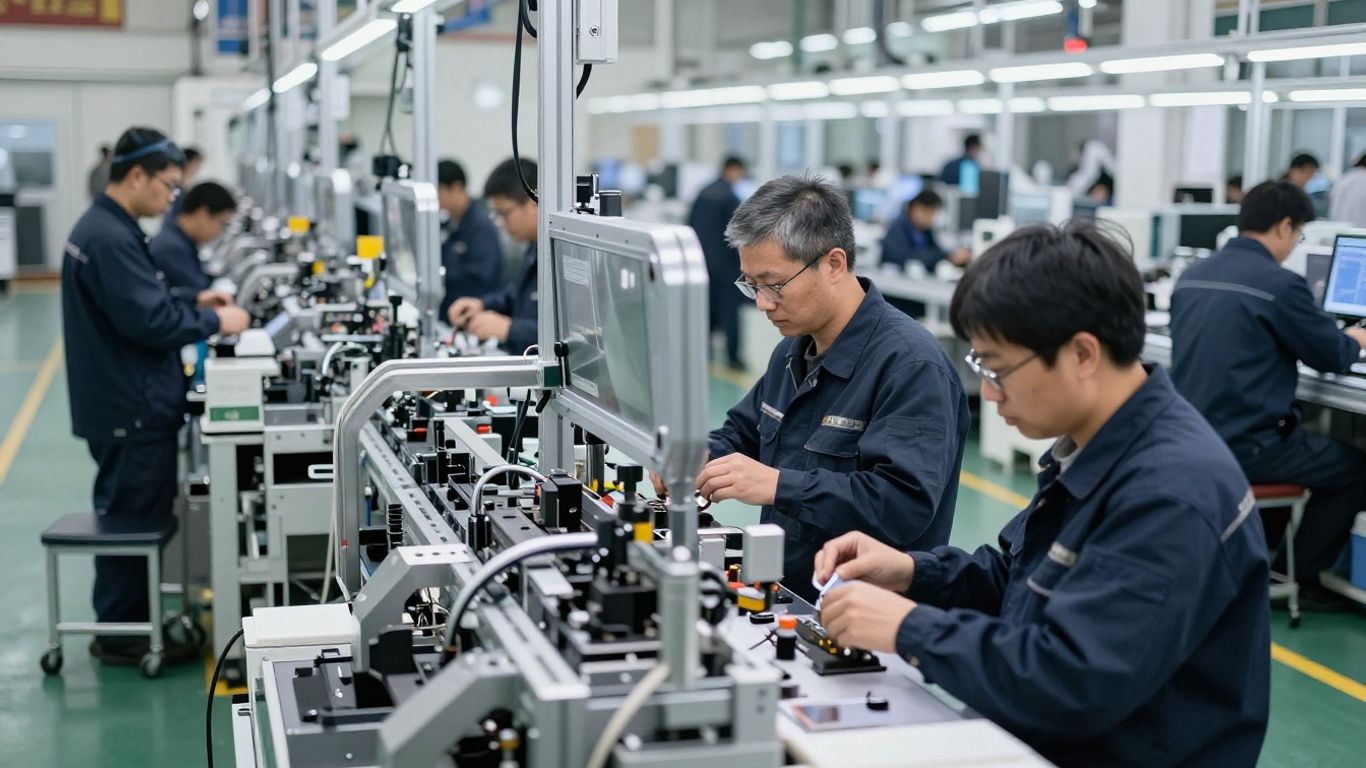
This company doesn’t just hire people; it embeds them into an organizational philosophy of continuous improvement. This approach has proven resilient across different eras of economic growth and decline. The sheer scale at which they produce complex machinery requires a logistical precision that permeates throughout the entire country’s supplier base, creating a ripple effect of high-quality employment.
By leveraging global reach, the corporation ensures that it isn’t solely dependent on the domestic market for survival. This global competitiveness is what ultimately protects its massive Japanese workforce. It proves that the most efficient way to manage national labor is to foster a private sector that is strong enough to lead internationally, rather than one that relies purely on domestic state support.
12. The largest employer in Mexico: Walmart de México and the benefits of open retail competition
In Mexico, the dominance of Walmart de México illustrates the profound benefits of open competition in the retail sector for both consumers and the labor market. Through massive scale and a focus on efficiency, the firm has become a central point for household supply and employment. This competitive landscape fosters an environment where the most efficient logistics network captures the most market share, ultimately benefiting the broader economy.
This open-market success story shows that when barriers to entry are minimized, retail giants create extensive supply chains that pull various other service and manufacturing sectors along with them. The employment opportunities derived here are significant, providing steady work for people in urban centers across the nation. It illustrates how competition does not kill labor markets but rather refines them.
Furthermore, the model encourages the digitization of commerce, which in turn demands a higher-skilled class of employees. This structural shift toward modern retail dynamics is essential for aligning the nation with broader global economic trends. By prioritizing efficiency and consumer accessibility, the retail industry acts as a crucial balancer in the domestic economy, keeping costs low and labor opportunities high.
13. The largest employer in Russia: Gazprom and the pitfalls of state-tethered monolithic industry
Gazprom serves as the primary example of a monolithic, state-tethered industrial giant. By anchoring its immense wealth and employment potential to energy exports, the company dictates the economic pulse of an entire nation. While this provides substantial fiscal revenue, it also creates a dangerous over-reliance on a single industry, leaving the entire labor market vulnerable to geopolitical volatility and commodity price swings.
When a company is treated as a strategic state asset rather than a market-driven participant, the standard indicators of labor efficiency are often ignored. This results in bloated administrative bureaucracies that lack the agility to pivot during structural shifts in global energy. The reliance on this model ultimately limits the development of other high-value sectors, as resources and talent are funneled toward protecting this singular pillar.
International measures, such as the targeting of unfriendly countries in recent economic strategies, further complicate the operational and financial viability of such giants. For a workforce tied to a monolithic state structure, these systemic issues represent a long-term risk. Without broader industrial diversification, that reliance will continue to stifle the development of a more vibrant, market-oriented labor landscape.
14. The largest employer in Saudi Arabia: Saudi Aramco and the scale of energy-driven economic power
Saudi Aramco operates at a scale that is difficult to comprehend, functioning as the backbone of the national economy. The company’s employment footprint is defined by its massive energy extraction operations, which serve as the foundation for broader state planning and economic development. By balancing intense operational needs with state mandates, the firm provides a stability that is essentially the bedrock of the national labor market.
This enterprise is unique because it transcends typical private-sector definitions; it is an industrial giant inextricably linked to the sovereignty of the state. Its recruitment strategies are often tied to long-term national transformation plans, aimed at diversifying the local labor market beyond simple extraction. This indicates a planned evolution toward a future that, while grounded in energy, is moving toward technological modernization.
As energy sectors globally enter a period of transformation, the strategic adjustments of this powerhouse will be pivotal. The ability of such a massive employer to transition its workforce into the future is a project of historical proportions. Its trajectory suggests that even within deeply state-aligned structures, the imperative for modernization and high-value service roles is becoming an unavoidable necessity.
15. The largest employer in South Africa: Shoprite and the resilience of private retail chains
Shoprite serves as a critical pillar of employment through its expansive retail presence in South Africa. Given the economic challenges within the region, the company’s ability to maintain a large, consistent, and nationwide operation is a testament to the resilience of private retail models. It provides essential goods while simultaneously acting as a primary entry point for the labor market for a vast portion of the workforce.
This model focuses on cost efficiency and massive distribution networks to navigate inflation and demand volatility. By keeping the cost of goods low, the company maintains its essential service role, which in turn secures its workforce levels even when the economy experiences slowdowns. This is the hallmark of a successfully managed private enterprise that understands the specific needs of the local consumer.
Looking ahead, the integration of logistical technology into the retail fabric will be essential for continued success. The employer’s role reaches deep into the fabric of local communities, reinforcing the idea that sustainable job creation is best driven by companies that solve everyday human needs rather than those that depend on ephemeral state industrial policies.
16. The largest employer in South Korea: Samsung and the engine of national capitalistic growth
Samsung has become a synonymous term with South Korea’s transition to a modern economic leader. Its position as the largest employer reflects the company’s evolution from an industrial startup to a global juggernaut of high-end manufacturing and electronics. This scale provides not just employment but also a pipeline for technical education and professional development that has lifted the entire standard of living in the region.
This company demonstrates the potency of capitalistic drive when married to consistent national industrial goals. By competing at the highest level of global technology, the firm forces its labor force to maintain world-class standards. This creates a workforce that is highly adaptable and skilled, which in turn fuels the company’s capacity for innovation in areas like semiconductors, smartphones, and consumer electronics.
As the company continues to innovate, it serves as a crucial anchor for the national economy. Its footprint is so significant that the ups and downs of its performance are reflected directly in the national economic index. This highlights the double-edged sword of relying on one massive firm, yet it remains the most successful example of how private ambition can build an entire nation’s competitive position.
17. The largest employer in Turkey: Turkish Airlines as a beacon of private aviation competitiveness
Turkish Airlines has grown into a major international aviation hub, and with that growth has come the emergence of a significant employer that operates on the global stage. Its success is rooted in a focus on service accessibility and efficiency, allowing it to compete with the world’s most established national carriers. This firm demonstrates how an aviation company can serve as both a national symbol and a hyper-competitive global player.
For a labor market, the aviation industry provides high-value roles in logistics, engineering, safety, and hospitality. The training required to maintain such a complex system of international traffic is intensive, ensuring that the workforce remains at a competitive level. This institutional success proves that even in complex geographic regions, a service-oriented company can achieve global excellence.
As the company continues to expand its route network, it will play a vital role in connecting the nation to global trade and tourism. This connectivity is a multiplier for the broader economy, supporting other roles in the service and finance sectors. Its role as a major employer thus extends beyond its internal staff to the entire ecosystem of businesses that thrive alongside it.
18. The largest employer in the United Kingdom: The national health service as a cautionary tale of socialized labor
The National Health Service remains the single largest employer in the United Kingdom, presenting a complex example of state-driven social service delivery. While the intent is human-centric, the structure is often criticized for the challenges associated with massive bureaucratic oversight and labor inefficiency. The reliance on a centralized, state-managed institution creates a unique labor dynamic where budgetary constraints frequently clash with the needs of frontline staff.
This concentration of employment is a hallmark of the socialized labor model. By centralizing such a large mandate under the state, the institution faces continuous pressure to balance high quality with limited funds. This situation often leads to resource scarcity and workforce exhaustion, functioning as a regular reminder that large-scale state-managed institutions, regardless of their noble goals, encounter systemic inertia.
Ultimately, the sustainability of this model is a point of constant national debate. Whether it can adapt its internal labor management to better serve current and future demands depends on its ability to integrate modern efficiency tools without losing its civic identity. The experience underscores the difficulty of managing a massive workforce through purely political and administrative centralized platforms.
19. The largest employer in the United States: Walmart and the triumph of American free enterprise
Walmart stands as the primary example of American free enterprise, utilizing scale and logistical speed to provide affordable goods to millions while employing a massive portion of the domestic workforce. Its success in the United States reflects a retail-first strategy that heavily relies on an optimized distribution network, making it the most prominent corporate actor in providing broad-based employment.
This specific entity represents the American approach to retail, where competitive pricing and volume-driven revenue models prioritize consumer accessibility. Through this system, the firm provides stable entry-level jobs that allow individuals across a variety of socioeconomic backgrounds to gain practical experience and professional stability. This model, while often scrutinized, remains the foundation of a flexible, high-volume domestic labor landscape.
By continuing to lean into logistical innovation, the organization stays at the top of the employment charts, proving that retail is a core, if quiet, industrial force. The impact of such a firm exists at almost every zip code in the union, cementing its place as the definitive example of local economic activity managed under the umbrella of a single private enterprise.
20. The largest employer in the European Union: Amazon and the essential role of private logistics networks
Amazon has carved out a unique position as a leading private employer across the European Union, demonstrating the essential nature of technology-led logistics networks. By integrating automated systems into its labor models, the company balances high-speed delivery expectations with a massive, responsive workforce. This transformation of the retail experience has reshaped how the continent perceives consumer fulfillment and labor requirements.
The model’s reliance on efficiency creates a demand for specialized labor categories that did not exist at scale even a decade ago. It showcases how private firms can lead the way in operational innovation, often moving faster than the regulatory environment can track. This adaptability is key to its growth and its ability to maintain such a massive employment footprint in diverse legal environments.
As the G20 and the global economy face shifting expectations regarding worker conditions, these large-scale private logistics networks are central to the discussion. Balancing the benefits of such efficiency with the need for fair employment practices will define the future of the retail workforce across the region. The success of this firm remains a benchmark for the power of private innovation to dictate the pace of regional labor trends.
Conclusion
The analysis of employment across these key economies reveals a fundamental truth: while state-managed entities often serve as massive labor safety nets, the most resilient and efficient employment growth is reliably found within the private sector. Whether through the logistical agility of retail chains or the technological brilliance of global manufacturing leaders, the firms that prioritize market-responsiveness consistently create the most sustainable opportunities. As we look at the future of the largest employer in each G20 country, it is clear that those nations which foster innovative private enterprise will be better equipped to meet the challenges of an increasingly interconnected global labor market.
Frequently Asked Questions
Why do some countries rely on state companies for employment?
Many nations utilize state-managed entities as essential utilities and tools for achieving strategic social stability, particularly when rapid infrastructure development is required, though this often leads to bureaucratic growth.
How does private sector employment typically differ from state models?
Private sector employment models generally prioritize fiscal efficiency and productivity-based incentives to stay competitive in an open market, which encourages ongoing innovation and labor-cost optimization.
What role does retail play in global employment trends?
Retail remains a foundational economic pillar for many countries, serving as a massive employer that facilitates consumer access to goods and drives the development of sophisticated, hyper-efficient logistics networks.
Can massive employment growth be sustained without state intervention?
Private enterprises have demonstrated that by scaling operational efficiency and responding directly to global consumer demand, they can sustain stable and diverse employment levels across varied economic conditions.
Does global economic integration affect local job security?
Increased integration exposes domestic labor markets to international competitiveness, which forces private firms to innovate continuously to protect their market share and, by extension, their workforce stability.
Why are logistics sectors growing so rapidly as employers?
Technological advancements in digital connectivity and automated fulfillment have turned logistics into a high-demand industry that requires both physical labor and specialized technical oversight on a global basis.
What determines whether a company becomes an economic pillar?
Companies typically achieve the scale of an economic anchor by successfully integrating into the daily needs of a large population, maintaining consistent supply chains, and evolving their technological capabilities to stay ahead of the competition.
One Comment