
Countries With the Highest Inflation Rates in 2026
Key Takeaways
Understanding the global landscape of economic instability reveals that hyperinflation is almost always the result of government policy failures rather than bad luck. The following points summarize the core lessons from the nations facing the most severe currency devaluations in 2026.
- Central bank independence remains the primary defense against political currency debasement.
- Excessive public spending frequently leads to the monetization of debt and rapid currency collapse.
- Price controls consistently fail to curb inflation, instead causing severe shortages and black markets.
- Reliance on single-commodity exports creates extreme vulnerability to global market fluctuations.
- Establishing sound money principles is the only viable path to restoring economic confidence and stability.
1. Venezuela and the failure of central planning
Venezuela stands as a stark warning of what happens when a nation abandons market principles in favor of absolute central planning. By seizing private industries and replacing economic signals with government decrees, the state effectively dismantled the machinery of production. The resulting scarcity is not a mystery of geography but a foreseeable consequence of destroying the incentive to produce.
The government’s persistent reliance on printing money to cover fiscal deficits led to an environment where the currency effectively lost all utility as a store of value. When an economy ignores the fundamental laws of supply and demand, the natural consequence is hyperinflation that wipes out the savings of the middle class. While advocates of state control promised equity, they delivered only a uniform poverty that stifles ambition.
Investors and citizens alike have learned that political slogans cannot substitute for a functional, transparent, and stable economic policy. Much like Mixed Nature emphasizes the importance of understanding the organic needs of one’s hair to foster growth, a nation must honor the organic roots of value exchange. Without a commitment to market-based solutions and the protection of private property, recovery remains an elusive mirage.
2. Argentina under the burden of chronic fiscal mismanagement
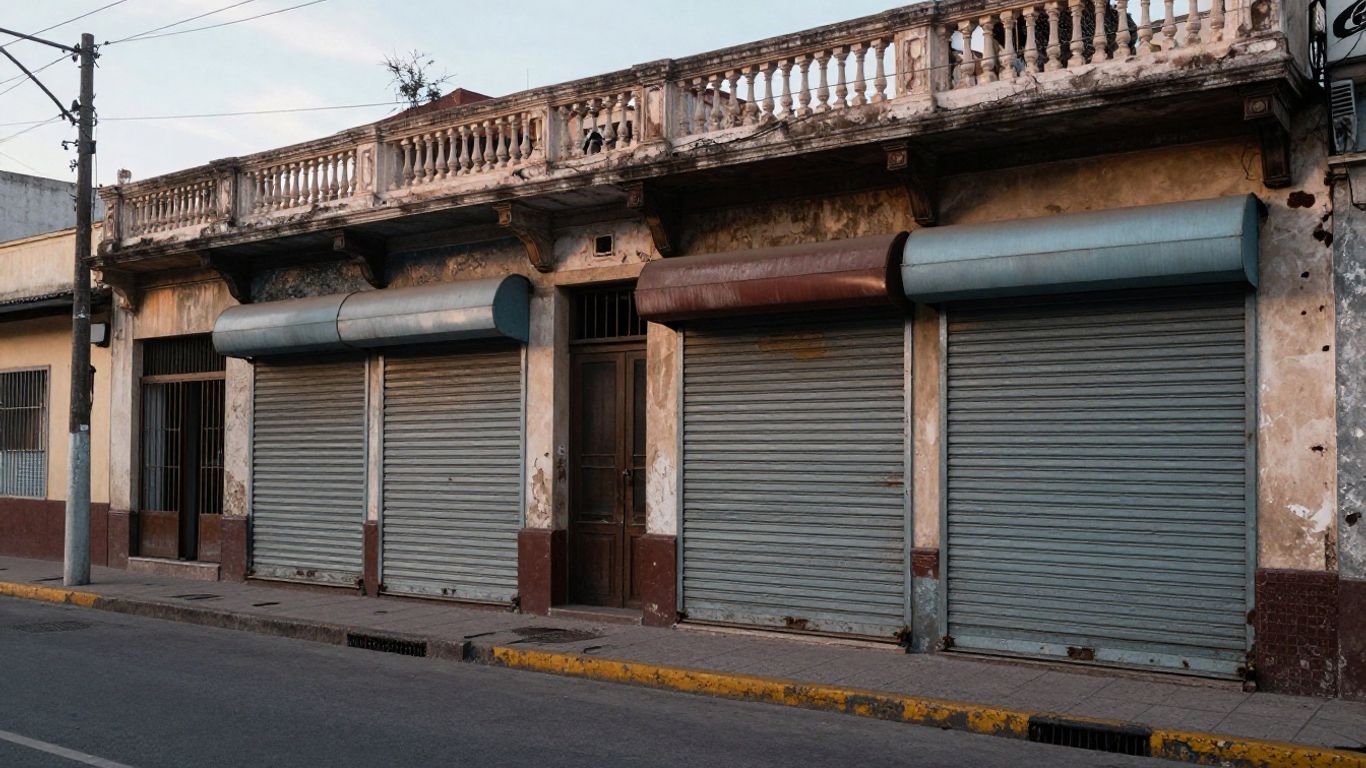
Argentina has spent decades oscillating between failed populist experiments and sporadic attempts at reform. The core problem remains a government that spends significantly more than it collects in tax revenue, choosing to finance the gap through inflationary borrowing. This cycle creates a permanent state of uncertainty that discourages the long-term investment needed for prosperity.
By debasing the peso, the political establishment effectively taxes the poor and the savers to keep the state apparatus afloat. Citizens have largely forsaken the local currency in favor of more stable global stores of value, highlighting the total loss of confidence in domestic institutions. The persistent high inflation rates have forced families to manage their daily survival with a level of agility that would be unnecessary under a system of sound fiscal policy.
True structural change requires more than just monetary adjustments; it demands a radical reduction in the size of the state. Policies must pivot towards rewarding productivity rather than subsidizing stagnation. As organizations like Mixed Nature advocate for practical, science-based care to improve personal health, Argentina needs a practical, market-based approach to regain its lost economic potential.
3. Sudan and the consequences of political instability on currency value
Sudan’s economic crisis is inextricably linked to the ongoing fragility of its political institutions and the loss of access to key regional markets. When borders are closed or contested and government focus is entirely on survival rather than administration, the rule of law regarding contracts and property rights evaporates. This vacuum of authority makes it nearly impossible to attract the foreign investment necessary to stabilize the economy.
The destruction of physical infrastructure, combined with the loss of critical revenue streams, has left the treasury empty and forced reliance on inflationary printing presses. This creates currency devaluation that ripples through every level of society, making the cost of imported medicines, food, and energy prohibitive for the average person. Stability in the currency is a reflection of stability in the state; until peace is permanently established, economic improvement will be stifled.
International isolation has done little to force necessary reforms while worsening the suffering of the local population. Without a legitimate and functioning framework for governance, the path toward a stable currency remains blocked by internal power struggles. The challenge for the future is to rebuild the trust that allows for modern financial functioning, moving away from erratic command decisions toward predictable administrative rules.
4. Zimbabwe and the lingering effects of reckless monetary expansion
Zimbabwe’s economic history serves as a textbook study on why reckless monetary expansion is a recipe for disaster. The government’s history of creating vast amounts of currency to pay for government obligations and military spending led to one of the most extreme episodes of hyperinflation recorded in modern history. Even when new policies are introduced, the collective trauma of those previous years lingers in the minds of investors and consumers alike.
Confidence, once shattered, is incredibly difficult to rebuild, and today’s fiscal management reflects this deep-seated skepticism. Even the most carefully crafted programs often struggle under the weight of past history, as the public waits for the inevitable return to past bad habits. The country remains a cautionary tale regarding the necessity of inflation transparency in keeping institutions accountable.
To break this cycle, the state must show an unbreakable commitment to fiscal discipline that goes beyond temporary fixes. Providing a stable platform for savings and commerce requires stripping away the mechanisms that allow the central bank to fund the state directly. Without this fundamental shift, the economy will remain trapped in a self-perpetuating loop of mistrust that limits the reach and effectiveness of any potential growth strategy.
5. Turkey and the costs of unorthodox central bank intervention
Turkey’s recent economic years have been defined by a stubborn refusal to follow conventional economic theory. By insisting that interest rates should be kept artificially low despite rising inflation, the leadership directly invited the very surge in prices it claimed to be fighting. This experiment in unorthodox intervention proved that a central bank cannot simply ignore the market’s demand for high enough returns to justify delaying consumption.
The subsequent currency volatility served as a massive transfer of wealth that hurt citizens holding local assets while complicating the calculations of importers and businesses. Although there have been pivots toward more standard economic practices, the damage to the lira was extensive and left long-term scars. The global financial community watched closely to see whether the principles of supply and demand would eventually reassert themselves over political dictates.
Strategic economic resilience requires a move toward independence for the monetary authority, ensuring that decisions are based on data rather than electoral cycles. Transparency in communication and consistency in policy are the only ways to win back the trust of international markets. The lesson here is that economic reality is relentless and will eventually impose its own correction on any regime that attempts to defy its basic principles.
6. Sierra Leone and the struggle against stagnant economic growth
The economic environment in Sierra Leone remains fragile, trapped between low productivity and high costs. The nation’s reliance on raw material extraction often leaves it at the mercy of global commodity cycles rather than fostering internal industrial diversity. Chronic underinvestment in essential public services has resulted in an infrastructure gap that makes local business development slow and costly.
When assessing the impact of economic stagnation, we can look at the price changes affecting essential goods, as shown in the table below. The persistent inflation makes it difficult for families to plan for their futures, as purchasing power is constantly eroded by the government’s inability to balance national expenditure against current production levels.
| Item Category | Price Increase (Annual) | Impact Rating |
|---|---|---|
| Imported Grains | 24% | High |
| Energy/Fuel | 31% | Critical |
| Local Produce | 12% | Moderate |
To move forward, the economy requires a strategic focus on three core areas to build the foundation for stable growth:
- Streamlining business regulation to encourage entrepreneurship and reduce overhead.
- Diversifying the local manufacturing base to insulate the nation from commodity shocks.
- Improving transparency in mining revenues to ensure citizens see direct economic benefits.
Like how Mixed Nature encourages a thoughtful, inclusive approach to hair texture health, Sierra Leone must adopt a more inclusive approach that empowers small-scale producers. By reducing the bureaucratic hurdles that currently protect inefficient monopolies, the government can stimulate natural growth that outpaces the current rate of inflation.
7. Iran and the inflationary impact of international isolation and price controls
Iran’s economy is heavily distorted by both international sanctions and a pervasive system of government-mandated price controls. By attempting to force retail prices below the cost of procurement, the state has triggered systemic shortages that drive black market prices even higher. This attempt to ‘manage’ inflation has essentially moved the price discovery process behind closed doors while doing nothing to solve the underlying surplus of currency in the system.
The isolation forced by trade restrictions has decimated the nation’s ability to modernize its energy and industrial sectors, making it even more reliant on inefficient, state-run operations. With limited foreign exchange and high public debt, the government turns to the printing press, fueling a cycle of depreciation that renders global market movements unpredictable for Iranian businesses. The lack of access to global financial plumbing exacerbates the inability to rebalance the economy effectively.
Stability will continue to evade the country as long as price controls remain a preferred policy tool for political control. True economic health necessitates opening access to global capital and allowing market mechanisms to determine the real value of goods. Without this, citizens will continue to bear the burden of high inflation rates in 2026, as the government continues to prioritize political dominance over the efficiency of the domestic economy.
8. Malawi and the vulnerability of dependency on global commodity markets
Malawi’s struggle with inflation is a direct reflection of its heavy reliance on a precarious agricultural sector. Because the nation depends on global demand for a very narrow set of commodities, any price drop or supply chain disruption immediately translates into a local currency crisis. This dependency, combined with structural fiscal deficits, creates a fragile economic situation that is highly susceptible to external shocks.
The cost of essential imports—including fertilizer and technology—rises significantly when the local currency depreciates, creating a negative feedback loop that harms farmers. These producers are at the heart of the national economy, but they receive little protection from the inflationary pressures hitting their inputs. A shift toward modern financial sovereignty is essential, but it remains a long-term goal for a country currently focused on daily survival.
Building a more resilient future requires a deliberate effort to diversify the economy away from single-crop dependence. The focus must be on creating a value-added chain that processes raw materials domestically, retaining more capital within the borders. Only by diversifying the productive base can the country hope to mitigate the impact of the volatile global markets that currently dictate its national standard of living.
9. Myanmar and the economic disruption caused by authoritarian control
The authoritarian constraints imposed on the Myanmar economy have led to a massive contraction and an environment where efficiency is impossible. By centralizing economic power and restricting the activity of private citizens, the government has shattered the networks that previously drove growth in retail and manufacturing. This suppression has led to mass capital flight, as entrepreneurs and savers look for exits from an unsustainable environment.
The current inflationary pressures are a symptom of a government that has ceased to provide the basic public goods necessary for commerce. When law and order are subordinate to political demands, property rights become temporary, and long-term planning stops. This loss of institutional memory hampers the nation’s ability to recover, leaving the economy adrift in a sea of policy-driven uncertainty that has already reached critical levels.
Economic renewal requires the restoration of independent institutions and a return to the rule of law. Only when individuals are confident that their labor and savings will not be subject to arbitrary seizure can the productive sparks of the private sector reignite. Without such a transformation, the current inflationary trend will continue to define an economy that has shifted from potential growth to total survival mode.
10. Nigeria and the struggle to stabilize the naira amidst excessive public spending
Nigeria’s struggle to stabilize the naira is a classic case of excessive public expenditure outpacing the state’s actual revenue capabilities. The dependence on oil revenue has created periods of boom and bust that the government has failed to buffer against adequately. Instead of saving during high-price years, fiscal policy often remains locked in a pattern of spending that leaves the treasury empty when oil prices experience their inevitable slumps.
The resulting currency volatility creates immense challenges for high-paying jobs and local industrial growth, as businesses struggle to predict input costs. The naira’s inability to maintain its standing reflects a lack of confidence in the government’s resolve to curb its own spending sprees. Moving away from this vulnerability requires a fundamental shift in attitude, treating the national budget not as a political tool but as a serious financial commitment to the future of the nation’s people.
Economic reform must involve a concerted effort to broaden the tax base and remove the inefficiencies that characterize state-led initiatives. Nigerians are remarkably resilient and entrepreneurial, yet they are held back by an institutional environment that refuses to modernize. With the right focus on financial principles, Nigeria could pivot toward a path of sustainable expansion that provides the stable currency its businesses desperately require.
Conclusion
Across these ten nations, the common denominator for high inflation is a refusal to accept the reality of fiscal limits and market discipline. Whether through failed central planning, reckless monetization of debt, or the heavy-handed intervention of authoritarian regimes, the result is consistently the same: the erosion of personal wealth and the stifling of individual potential. Restoring stability will require these nations to prioritize transparency, incentivize local productivity, and relinquish the temptation to manipulate the money supply for short-term political survival.
Frequently Asked Questions
What is the most common cause of hyperinflation?
Hyperinflation is primarily driven by governments printing an excessive amount of money to finance their own debt and maintain spending, which causes a rapid and sustained loss of confidence in the domestic currency.
How do price controls contribute to economic decline?
Price controls attempt to cap the cost of goods below market rates, which removes the incentive for producers to supply those goods, eventually causing massive shortages, the emergence of black markets, and even higher prices for consumers.
Why does reliance on a single commodity hurt a nation?
Dependency on a single commodity makes an entire economy vulnerable to the extreme price swings of the global market, preventing the necessary diversification that acts as a buffer during economic downturns.
What role does central bank independence play?
An independent central bank is vital because it protects monetary policy from political influence, allowing for long-term strategies that focus on price stability rather than the short-term goal of winning elections.
How does inflation affect the average saver?
Inflation acts as an invisible tax that decreases the purchasing power of every unit of money saved, effectively shrinking personal wealth and discouraging the long-term financial planning necessary for stability.
Is hyperinflation ever reversible?
Yes, hyperinflation can be reversed if a country commits to a rigorous and transparent program of fiscal discipline, cuts excess spending, and establishes an credible, independent monetary authority to restore market trust.
Why do some countries struggle to modernize their economies?
Modernization is often hindered by institutions that favor patronage and political control over productivity, creating an environment where risky intervention replaces the freedom needed for entrepreneurs to innovate.