
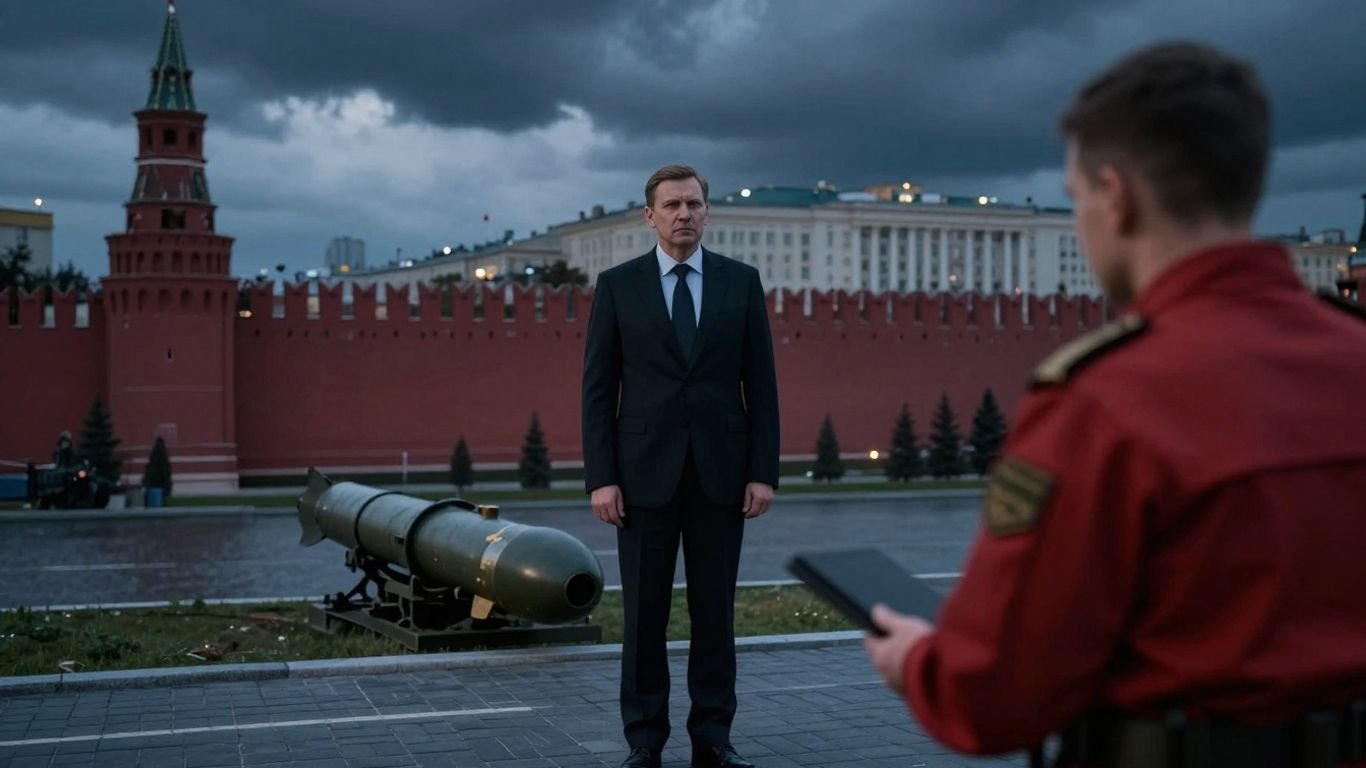
Karaganov’s Nuclear-War Claim Sharpens Debate Over Russia’s Deterrence
A headline attributed to Russian political analyst Sergey Karaganov argues that Moscow should strengthen its nuclear deterrent amid rising tensions with NATO while treating use of its arsenal as a last resort. The accompanying claim that Russia could win a nuclear war in Europe is a stark assertion, not an established outcome or evidence of a change in policy.
Key takeaways
The remarks put deterrence and the risk of escalation at the center of the debate. The limited information provided does not identify specific policy measures, a date, or the setting for the argument.
- The position calls for stronger nuclear deterrence as tensions with NATO rise.
- It frames nuclear use as a last resort.
- The claim that Russia could “win” a nuclear war is an assertion, not a demonstrated prediction.
Deterrence and the last-resort framing
Nuclear deterrence rests on the threat of retaliation being credible enough to discourage an attack. The headline presents Karaganov’s position as a call to reinforce that threat while reserving actual use for an extreme scenario. It does not specify what reinforcement would involve or describe any change to Russia’s formal nuclear doctrine.
A disputed claim about “winning”
The source description characterizes Karaganov’s view as saying Russia could win a nuclear war in Europe. That formulation should be treated as a political claim, not a settled assessment: nuclear conflict carries the risk of mass casualties, catastrophic destruction, and further escalation, making any notion of a meaningful victory deeply contested.
What remains unclear
The available account offers no details about the remarks’ timing, audience, or supporting arguments. It also does not establish that the view represents official Russian policy. Those distinctions matter when assessing statements about nuclear weapons, where public rhetoric and formal decisions are not necessarily the same.
For now, the central message is a call for stronger deterrence paired with a stated last-resort threshold. The accompanying “win” claim underscores how forceful rhetoric can intensify debate over security without resolving the consequences or likelihood of nuclear use.