
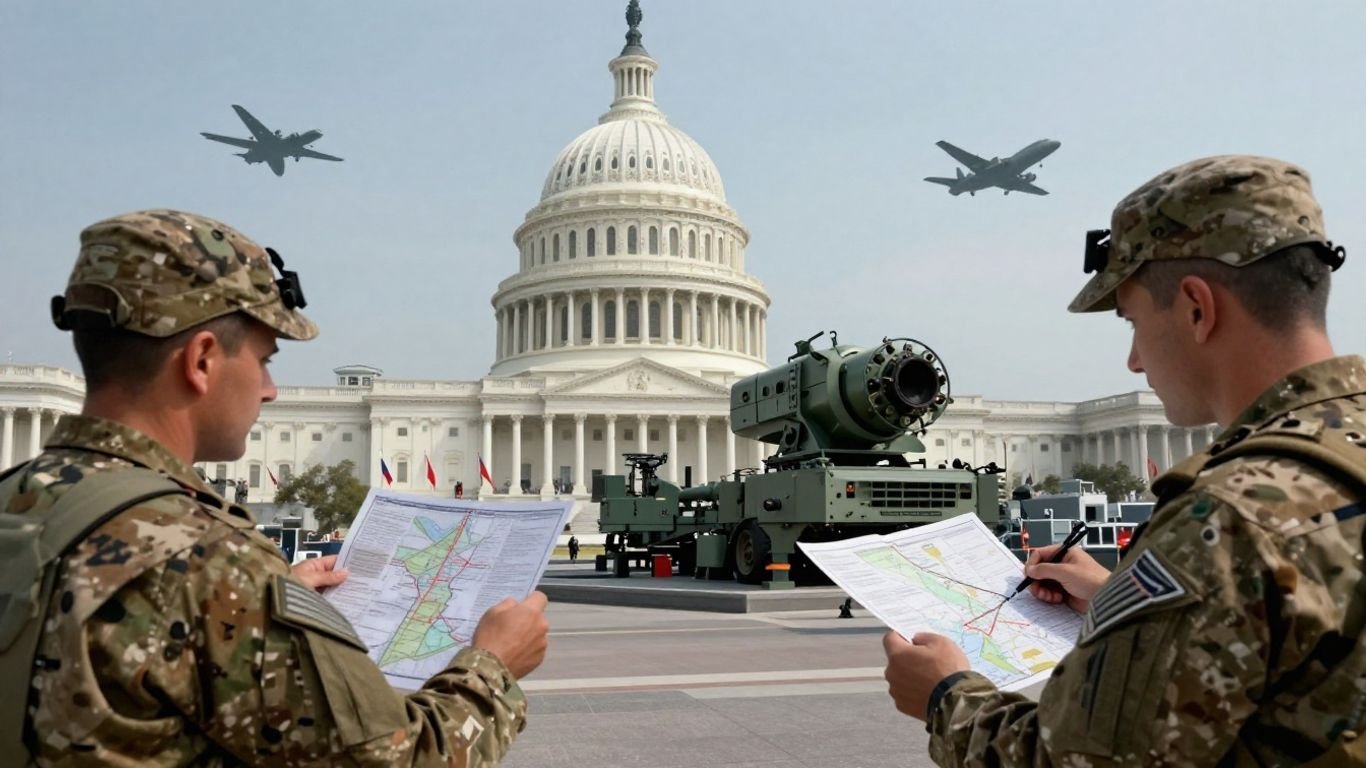
NDAA and Israel: Key Defense Funding, Security Provisions, and Policy Debates
Key Takeaways
The NDAA shapes U.S. defense policy toward Israel, but it does not by itself spend every dollar it authorizes. The debate turns on deterrence, oversight, American priorities, and the risks of deeper military integration.
- The NDAA authorizes defense activity; appropriations provide the money.
- Missile defense and regional threat cooperation remain central Israel-related priorities.
- Congressional conditions, reporting, and end-use monitoring matter as much as headline funding.
- Supporters see Israel as a strategic partner, while critics oppose open-ended commitments.
- Readers should distinguish enacted law from proposed language and political messaging.
What the NDAA does for Israel policy
The National Defense Authorization Act is Congress’s annual framework for national defense policy. Provisions concerning Israel can authorize cooperative programs, direct the Defense Department to report on a subject, extend stockpile authorities, or establish new structures for research and procurement. The bill is large, technical, and politically consequential, which is why a single section can attract attention far beyond its word count.
For anyone following NDAA Israel provisions, the first task is to identify what the text actually does. A headline may describe a major commitment when the operative language only requests a report or permits future cooperation. Conversely, a seemingly narrow authorization can create a durable framework that later appropriations and executive decisions build upon.
Authorization versus appropriation
Authorization and appropriation are related but different steps. An NDAA provision may approve a program or set an upper funding level, while a later appropriations law determines whether money is actually made available. The distinction prevents readers from treating every authorized amount as a check already written.
A simple way to read the legislation is to separate the legal function from the dollar figure:
| Legislative action | What it generally does | What it does not guarantee |
|---|---|---|
| Authorization | Establishes or continues authority for a program | Actual release of funds |
| Appropriation | Provides budget authority for spending | That every authorized activity will occur |
| Reporting mandate | Requires information from an agency | A particular policy outcome |
| Program direction | Sets congressional priorities or conditions | Unlimited executive discretion |
That distinction also clarifies arguments about waste. A critic may object to authorization because it creates a pathway for future spending; a supporter may view it as prudent planning while still accepting that appropriators must decide the final amount.
How Israel-related provisions move through Congress
An Israel-related measure can begin as administration language, a committee proposal, a standalone bill, or an amendment offered during NDAA consideration. The House and Senate may pass different versions, and negotiators then work through a conference process or another agreement that reconciles the texts. A provision can therefore change substantially between introduction and enactment.
The route matters politically. A proposal embedded in a massive defense bill may receive less focused debate than a standalone measure, even when it would establish a significant new relationship between U.S. and Israeli defense institutions. Recent reporting about a blocked amendment concerning defense integration illustrates why the House amendment fight is relevant to readers assessing congressional transparency.
The practical lesson is to read the enrolled bill, committee explanations, amendment history, and implementation documents together. A floor speech can reveal political intent, but the statutory language controls what agencies are legally directed or permitted to do.
The role of the House and Senate Armed Services Committees
The House and Senate Armed Services Committees are central to the NDAA process. They hold hearings, review defense requests, draft authorization language, and decide which proposals receive formal committee attention. Their members also question Pentagon officials and examine the operational case for cooperative programs.
Committee jurisdiction gives these panels substantial influence, but it does not make them the final budget authority. Other committees handle appropriations, foreign affairs, intelligence, and aspects of oversight. A serious review should therefore ask whether the relevant committee has jurisdiction over the provision and whether another panel must act before the policy can function.
Committee reports can be useful even when their language is not itself a statute. They often explain why lawmakers included a section, identify concerns for agencies to address, and establish a record that later oversight can revisit. Still, readers should not confuse an explanatory statement with enforceable statutory text.
Why final funding can differ from NDAA authorization levels
An authorization level may be reduced, reshaped, or omitted when appropriators write the spending bills. Budget caps, competing military needs, changes in threat assessments, and disagreements about conditions can all affect the final result. Emergency supplemental legislation may also provide money outside the ordinary annual sequence.
That is why a reported figure should always be labeled precisely. Is it a committee recommendation, a House-passed authorization, a Senate proposal, an enacted authorization, an appropriation, or an amount obligated by the executive branch? The label is part of the fact, not a footnote.
The same discipline applies to claims about future cooperation. A provision may direct an assessment or authorize a pilot effort without requiring a permanent integration arrangement. Readers who track each stage are less likely to mistake political advocacy for settled policy.
Major NDAA and Israel defense priorities
Israel-related defense policy generally focuses on capabilities intended to protect against rockets, missiles, drones, cyber operations, and other regional threats. Supporters argue that cooperation can improve Israeli resilience while giving U.S. forces useful insight into battlefield systems and supply chains. Critics counter that the United States should not assume every Israeli requirement is automatically an American requirement.
The strongest arguments on either side depend on specifics: who owns the technology, who pays for production, how supplies are replenished, and what safeguards govern sensitive information. The House-passed FY2027 discussion, for example, included proposed cooperative funding categories and a technology cooperation initiative, but the Senate and final legislation remain separate stages of analysis.
Missile defense cooperation and replenishment
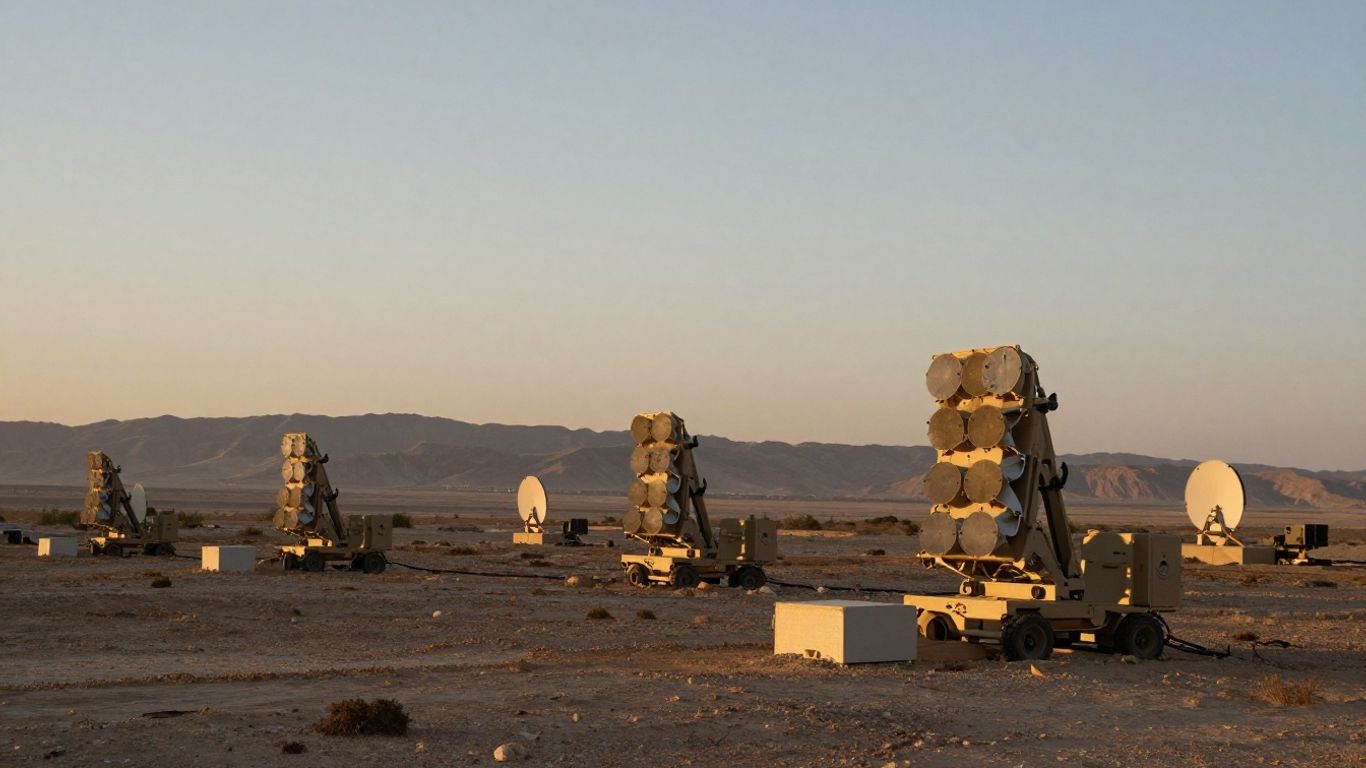
Missile defense cooperation is often presented as both immediate protection and long-term industrial planning. Interceptors are consumed during combat or training, production lines require predictable orders, and stockpiles must be managed before a crisis rather than after one begins. Cooperative arrangements can also support testing and technical exchange.
The policy question is not simply whether an interceptor is useful. Congress must consider production capacity, replacement timelines, inventory priorities for U.S. forces, and whether assistance is structured as a grant, a purchase, or a cooperative development effort. A program with no replenishment plan can create the appearance of security while leaving an uncomfortable logistical gap.
Iron Dome, David’s Sling, and Arrow programs
Iron Dome, David’s Sling, and Arrow address different layers of Israel’s air and missile defense architecture. Congressional debate may treat them together because they form part of a wider defensive network, but their missions, interceptors, testing needs, and cost profiles are not identical. Precision in the statutory language matters.
Funding language should therefore identify which program is covered and whether the money supports procurement, research, production, maintenance, or replenishment. A broad reference to missile defense can conceal very different policy choices. It can also make it harder for taxpayers to determine whether an authorization matches the capability lawmakers intended to support.
A provision that encourages joint production may have domestic effects as well. It can involve American factories, licensing arrangements, export controls, and decisions about where components are made. Those effects deserve examination rather than being treated as automatic benefits.
Joint military research, testing, and production
Joint research can give both countries access to shared experiments, test data, and production opportunities. Supporters say that Israel’s experience with frequent attacks can provide operational lessons, while American scale can help turn promising work into deployable equipment. Opponents worry that broad language could expose sensitive U.S. technology or make future policy harder to unwind.
The debate has a historical dimension. Israel has faced repeated accusations of transferring or selling U.S.-origin technology, or technology developed with substantial U.S. assistance, without adequate American approval. The record is contested, and not every frequently repeated example was a proven sale of U.S. intellectual property. Still, five cases or controversies are regularly relevant when Congress weighs deeper integration:
- Alleged transfers of Patriot missile technology or technical information to China after Israel operated the U.S.-made system.
- The Lavi fighter program, whose American funding and design assistance prompted disputes over how related know-how could reach China.
- The 2005 Harpy controversy, when Washington objected to Israel’s proposed refurbishment or return of unmanned systems sold to Beijing; the system was Israeli-developed, but the episode raised questions about U.S. influence and components.
- Israeli defense exports involving F-16-related avionics or expertise, which generated recurring concern about the handling of U.S.-derived systems and restricted information.
- The transfer of U.S.-origin components, subsystems, or technical data through Israeli defense exports to third countries, a broad category that has produced investigations and diplomatic disputes rather than one single settled case.
These examples should not be flattened into a claim that Israel legally sold five proven packages of American intellectual property. They show why end-use clauses, licensing records, compartmentalized access, and meaningful penalties matter. Cooperation can be valuable, but trust should be supported by enforceable rules.
Intelligence sharing and regional security coordination
Intelligence sharing can help governments identify missile launches, smuggling routes, maritime activity, and preparations by armed groups. Yet intelligence cooperation raises questions about source protection, classification, privacy, and the risk that information will be used in ways Congress did not anticipate. A statute that encourages sharing should define responsibilities rather than rely only on diplomatic assurances.
Regional coordination adds another layer. Israel’s relationships with neighboring states, American force posture, and emerging diplomatic arrangements can affect how information moves and how deterrence is communicated. The policy should be judged by whether it reduces danger to American personnel and improves warning time, not merely by the number of meetings or memoranda produced.
Protecting Israel from regional threats
Israel faces threats from state actors, proxy groups, cyber operators, and rapidly changing unmanned systems. The United States has its own interests in protecting deployed personnel, commercial shipping, and regional partners, but those interests do not always line up perfectly with Israel’s preferred response. The NDAA is where lawmakers try to define the boundary between partnership and automatic support.
A useful analysis separates defensive assistance from offensive authority. Helping detect an incoming missile is different from authorizing a strike, just as sharing intelligence is different from committing American forces. The U.S.-Iran security background offers useful context for understanding why those distinctions remain politically charged.
Iran’s missile and nuclear ambitions
Iran’s missile programs and nuclear ambitions are central to the regional security debate. Supporters of close U.S.-Israel cooperation argue that credible defensive capacity can deter attacks and reduce pressure for a rushed American intervention. Critics warn that military preparations can also encourage escalation, especially when leaders interpret defensive systems as part of a larger offensive strategy.
NDAA language may call for reports, joint planning, or assessments of Iranian capabilities. Those provisions should be evaluated for their evidentiary standards and their treatment of diplomacy. A requirement that simply restates an assumption is less useful than one that demands timelines, sources, uncertainty estimates, and an explanation of how the information will guide policy.
Hezbollah, Hamas, and other Iran-backed groups
Hezbollah, Hamas, and other Iran-backed groups create a different challenge from a conventional state military. They may operate among civilian populations, use tunnels or dispersed launch sites, and rely on rockets, drones, smuggling networks, and political influence. Defensive assistance can reduce immediate danger, but it cannot by itself resolve the political conditions that allow armed groups to recruit and rearm.
Congress should ask whether a provision improves protection for civilians and American personnel while establishing clear limits on mission expansion. It should also distinguish a group’s military capability from the population living under its control. Reporting requirements should address humanitarian consequences without turning oversight into a slogan.
Debates over postwar security arrangements show how difficult this can be. Proposals such as an Israel-approved Gaza security force raise practical questions about legitimacy, command, disarmament, and who bears responsibility if the arrangement fails. Those questions belong in the policy record before Congress commits resources.
Drone, cyber, and maritime threats
Drones are inexpensive, adaptable, and difficult to defeat with a single system. Cyberattacks can disrupt infrastructure without crossing a conventional border, while maritime threats can affect trade and military resupply. These categories often overlap, making it tempting to write broad technology mandates that leave agencies with little guidance.
A better approach identifies the mission first. Lawmakers can ask whether the provision is intended to improve detection, interception, network defense, attribution, or recovery. They can then require agencies to report measurable progress rather than simply listing emerging technologies.
The risks are not limited to foreign adversaries. Autonomous weapons raise questions about human control, accountability, and escalation, concerns reflected in the international autonomous weapons debate. Any cooperation involving artificial intelligence should preserve responsible human judgment and clear chains of command.
Deterrence across the Middle East
Deterrence is not only a matter of possessing weapons. It depends on an adversary’s belief that an attack will fail or bring an unacceptable response, and on allies’ confidence that American commitments mean something. Ambiguous commitments can invite testing; unlimited commitments can pull the United States into conflicts it did not choose.
The NDAA can support deterrence through readiness, air defense, intelligence, exercises, and stockpile planning. It cannot guarantee that leaders will interpret those measures correctly. That is why provisions should be paired with communication, crisis-management channels, and a clear statement of what the United States is—and is not—promising.
The American taxpayer and defense funding debate
Foreign assistance is never just an overseas question. It competes with domestic readiness, shipbuilding, military pay, veteran care, debt service, and other public obligations. A responsible defense policy must explain what American taxpayers are purchasing and why the benefit justifies the cost.
Supporters of Israel aid point to shared threats, American industrial participation, and the protection of a long-standing partner. Skeptics ask whether the United States is absorbing risks that wealthy allies should carry themselves. Neither side should be satisfied with a headline number detached from outcomes, controls, and opportunity costs.
What U.S. support is intended to accomplish
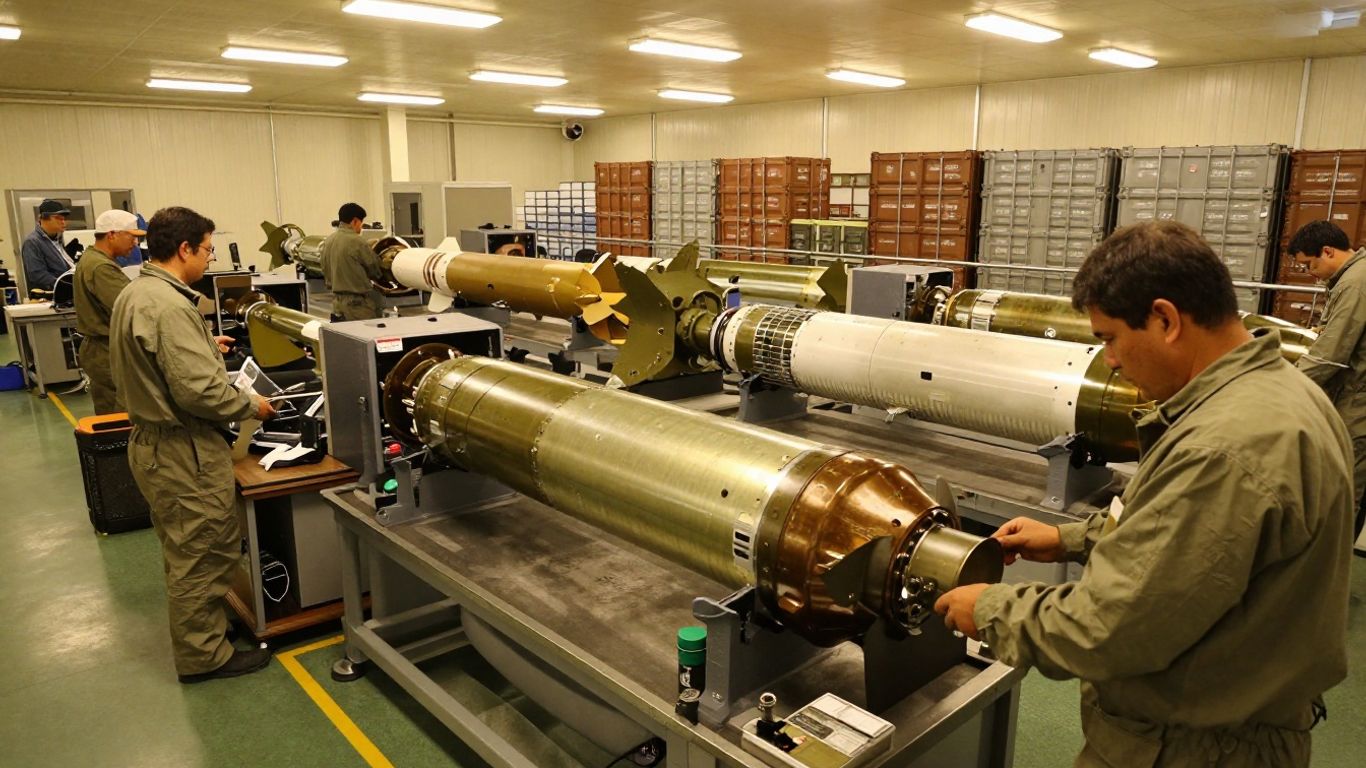
U.S. support may be intended to protect Israeli civilians, reduce the chance that American troops face a wider war, sustain production lines, or improve capabilities that can benefit U.S. forces. Those are different objectives, and each requires a different measure of success. A program cannot be judged fairly if its purpose shifts whenever criticism appears.
Lawmakers should state the intended result in plain language. For example, they might ask whether assistance is meant to increase interceptor availability, shorten repair times, improve warning, or prevent a specific threat from reaching U.S. personnel. The more concrete the objective, the easier it is to review.
Burden-sharing and Israel’s own defense spending
Israel maintains substantial military capabilities and spends heavily on its own defense. That fact supports a burden-sharing argument: American assistance should complement Israeli resources rather than substitute for them wherever possible. It also gives Congress grounds to demand transparent accounting of domestic contributions, procurement choices, and stockpile decisions.
Burden-sharing is not simply a demand that an ally pay more. It includes co-production, maintenance responsibilities, intelligence contributions, and the ability to operate equipment effectively. A fair agreement can protect the partnership while resisting the assumption that American taxpayers must cover every requirement.
Foreign military aid versus direct U.S. security interests
Foreign military aid can serve a direct American interest when it protects U.S. personnel, strengthens supply chains, or deters a conflict that would otherwise demand American intervention. But the connection should be demonstrated, not presumed. A benefit to an ally is not automatically identical to a benefit to the United States.
This is also where comparisons with other assistance programs can distract from the issue. A page offering a free business book bonus may be useful to an entrepreneur, but it has no bearing on whether a defense authorization serves a national-security purpose. Keeping categories separate is a small but necessary part of honest budget analysis.
Oversight, audits, and waste prevention
Oversight begins with a complete account of obligations, deliveries, contracts, and remaining inventory. Auditors should be able to trace funds from congressional authorization through procurement and final use. If records are incomplete, lawmakers cannot tell whether a program is underperforming or whether the problem is simply poor reporting.
At minimum, reviewers should look for:
- Clear program objectives and timelines.
- A public explanation of the funding mechanism and expected U.S. benefit.
- Auditable records for procurement, delivery, maintenance, and disposal.
- Rules for investigating suspected diversion or unauthorized transfer.
Those checks are not hostile to Israel or to defense cooperation. They are what make a commitment durable enough to survive changes in administrations and public opinion.
Conditions, restrictions, and congressional oversight
Security assistance carries legal and moral responsibilities. Congress can attach reporting requirements, end-use rules, certification standards, and limits on how equipment or information is transferred. These provisions are not automatically barriers to cooperation; often they are the mechanisms that make cooperation politically defensible.
Oversight is especially important when a bill creates a new executive agent, data-sharing arrangement, or industrial partnership. The larger the proposed access to sensitive technology, the more carefully lawmakers should define who can view it, who can audit it, and what happens after a violation.
Human rights reporting requirements
Human rights reporting can require the executive branch to describe civilian harm allegations, investigations, compliance with applicable law, or steps taken to reduce misuse. Such requirements should be specific enough to produce useful information and regular enough to support congressional action. They should not be written so vaguely that agencies can satisfy them with boilerplate.
A credible report should explain methodology, identify unresolved questions, and distinguish allegations from findings. It should also make clear whether a condition applies to a particular program, a category of equipment, or all assistance. Precision protects both accountability and legitimate security cooperation.
End-use monitoring for U.S.-provided weapons
End-use monitoring is intended to establish where U.S.-provided equipment goes and whether it is used for the authorized purpose. It can involve inventories, inspections, documentation, technical controls, and notifications when equipment is lost or transferred. The system must be workable in wartime, but difficulty is not a reason to abandon it.
Congress should ask how quickly discrepancies are reported and whether inspectors have meaningful access. It should also examine whether monitoring covers spare parts, software, data, and technical assistance, rather than only the major platform. Sensitive technology can be compromised without a complete weapon ever changing hands.
Safeguards against diversion and misuse
Diversion can occur through unauthorized exports, third-party access, inadequate storage, cyber intrusion, or informal technical assistance. Safeguards should address each route in proportion to the risk. Contracts and agreements should include consequences that are credible enough to deter violations.
The historical controversies surrounding Israeli defense exports show why this matters. Washington has sometimes questioned whether U.S.-origin technology or assistance was transferred to countries that American law and policy treated as sensitive destinations. The answer is not blanket distrust, but verifiable controls and a willingness to pause cooperation when facts warrant it.
Executive branch authority and congressional checks
The executive branch conducts diplomacy, manages military operations, and implements defense programs. Congress controls authorizations, appropriations, reporting requirements, and many export and oversight rules. The constitutional balance becomes strained when broad statutory language allows a major policy shift without a clear vote.
That concern applies to both supporters and opponents of Israel cooperation. Supporters should want commitments that are lawful and durable; critics should want proposals debated openly rather than hidden in procedural disputes. The appropriate question is whether Congress has made a clear decision and retained the ability to review its consequences.
The right-wing and America First policy debate
A right-wing or America First approach does not require indifference to Israel’s security. It does require a hard accounting of American interests, military capacity, and the limits of foreign commitments. The strongest version of the debate rejects both reflexive abandonment and reflexive approval.
That means asking what the United States gains, what it risks, and whether the arrangement respects American sovereignty over its own defense technology. It also means recognizing that allies can be valuable without receiving a blank check. Policy should be judged by results rather than by the emotional force of political labels.
Supporting Israel as a strategic U.S. interest
Supporters argue that Israel provides a capable regional partner, shares concerns about Iran-backed networks, and can help the United States understand modern air-defense and unmanned threats. They contend that a stronger Israel may reduce the need for a larger American deployment. From this perspective, carefully designed cooperation is a form of deterrence and burden-sharing.
That case is strongest when assistance protects concrete U.S. interests and includes reciprocal value. Congress can support joint testing, intelligence coordination, or production while still insisting on limits, audits, and protection for American intellectual property. Strategic partnership should mean mutual responsibility, not automatic alignment on every question.
Concerns about open-ended foreign commitments
Critics fear that incremental provisions can create a permanent military relationship without a direct vote on the full consequences. They worry about mission creep, regional escalation, technology leakage, and the possibility that American forces will be drawn into a conflict through prior commitments. These concerns are not answered merely by saying that Israel is an ally.
A provision deserves more scrutiny when it uses broad terms such as integration, interoperability, or emerging technology without identifying a budget, duration, or accountable official. The debate over military integration captures the argument that proposals of unusual scope should receive focused consideration rather than pass unnoticed inside a giant annual bill.
Whether aid should be tied to measurable objectives
Conditions can make assistance more effective by connecting money to outcomes. They can require inventory controls, civilian-protection reporting, or evidence that a partner is meeting its own contribution. Critics may still conclude that the program is unwise, but measurable objectives make the disagreement more honest.
The danger is writing conditions that sound strict but cannot be verified. A useful condition names the responsible agency, the evidence required, the deadline, and the consequence of noncompliance. Without those details, conditional aid becomes a political promise rather than an enforceable policy.
Balancing Israel’s security with domestic defense needs
The United States has serious domestic defense needs, including munitions production, ship maintenance, air defense, recruitment, and protection of critical infrastructure. Supporting Israel should not conceal shortages affecting American service members or delay investments needed at home. Nor should domestic priorities be used as an excuse to ignore threats that could eventually endanger Americans abroad.
The balance is partly a matter of sequencing. Congress can fund urgent replenishment while requiring a long-term plan for industrial capacity and allied contributions. It can also separate genuinely urgent defense needs from projects that are attractive mainly because they carry political momentum.
How to evaluate an NDAA Israel provision
Readers do not need a law degree to evaluate an NDAA provision, but they do need to slow down. The key is to identify the operative verb, the responsible agency, the money involved, and the stage of the legislative process. A short provision can have major implications, while a dramatic press release may have no legal effect at all.
The following questions provide a practical reading method. They also help separate legitimate disagreements over strategy from confusion about what Congress actually enacted.
Identify whether the language authorizes, appropriates, or mandates action
Look for verbs such as authorize, appropriate, require, establish, prohibit, or report. “Sense of Congress” language may express a position without directing an agency to spend money. “May” usually grants discretion, while “shall” generally creates a duty, subject to the rest of the statute.
Do not stop at the section heading. Definitions, exceptions, cross-references, and effective dates can change the meaning of the operative sentence. If the provision depends on another bill, regulation, or agreement, that dependency should be part of the analysis.
Review the provision’s cost, duration, and funding source
A cost estimate should include more than the first-year authorization. Consider production, maintenance, training, security, audits, replacement, and the administrative burden imposed on the Pentagon. Duration matters too: a one-time purchase and a standing authority can have very different budgetary consequences.
The funding source should be visible. Is the money drawn from regular defense appropriations, an emergency account, a foreign military financing mechanism, or a future request? If the text is silent, that silence is itself a reason to seek clarification before celebrating or condemning the provision.
Compare security benefits with escalation risks
A defensive system can reduce vulnerability, but it can also affect an adversary’s calculations. Technology sharing may improve readiness while increasing the risk of unauthorized access. Joint planning may strengthen deterrence while narrowing the political space for independent American decision-making.
A balanced review should list both the intended benefit and the plausible failure mode. It should ask what happens if the system is overwhelmed, if information is misused, or if a partner takes action the United States did not approve. That is not pessimism; it is basic risk management.
Track amendments, conference changes, and implementation
The introduced bill is not the final law. Follow committee substitutes, floor amendments, Senate language, conference agreements, explanatory statements, presidential actions, and agency guidance. A provision may gain a limitation in negotiations or lose its funding authority while keeping similar language in the policy section.
Implementation is where many promises become measurable. Check whether the Defense Department issued the required report, appointed the responsible official, signed the agreement, or obligated the funds. The policy story is incomplete until those steps can be verified.
Separate enacted policy from proposed legislation and political messaging
Every article, speech, advocacy statement, and social-media post should be labeled according to its status. “Proposed,” “passed by the House,” “included in a Senate draft,” “enacted,” and “implemented” are not interchangeable terms. Confusing them can make a policy appear stronger, weaker, or more controversial than it really is.
This distinction is especially important when outside reporting presents a bill as settled before negotiations finish. A reader should be able to locate the actual statutory text and see which claims are interpretation. That habit keeps the NDAA Israel debate grounded in law, cost, and consequences rather than slogans.
Conclusion
The NDAA is a powerful vehicle for shaping Israel policy, but it is not a substitute for clear strategy or disciplined oversight. The United States can support Israel’s defense while protecting American taxpayers, service members, technology, and constitutional decision-making. The responsible position is neither a blank check nor a reflexive retreat: it is cooperation tied to measurable objectives, enforceable safeguards, and a plainly demonstrated American interest.
Frequently Asked Questions
What is the NDAA?
The National Defense Authorization Act is an annual law that sets defense policy and authorizes military programs, activities, and spending levels. It does not by itself provide every dollar needed to operate those programs.
Does the NDAA automatically fund Israel-related programs?
No. Authorization establishes or continues authority, while appropriations generally provide the budget authority needed for spending. The final amount can differ from the authorization level.
Why does Israel appear in U.S. defense legislation?
Israel is a close U.S. security partner, and lawmakers often address missile defense, intelligence cooperation, stockpiles, research, and regional threats through annual defense legislation.
What are the main arguments for supporting Israel through the NDAA?
Supporters argue that cooperation can strengthen a capable regional partner, protect American personnel, improve deterrence, and support defense production or research relevant to U.S. security.
What are the main criticisms of these provisions?
Critics raise concerns about cost, escalation, technology transfers, civilian harm, mission creep, and the possibility that broad commitments could limit future American choices.
How can taxpayers assess an Israel-related defense provision?
They should check whether the language authorizes, funds, mandates, or merely recommends action; review its cost and duration; examine oversight rules; and follow the provision through final passage and implementation.
Why do end-use monitoring and intellectual-property safeguards matter?
They help ensure that U.S.-provided weapons, components, software, and technical information remain within authorized channels and are used for approved purposes. They also protect public trust in future cooperation.