
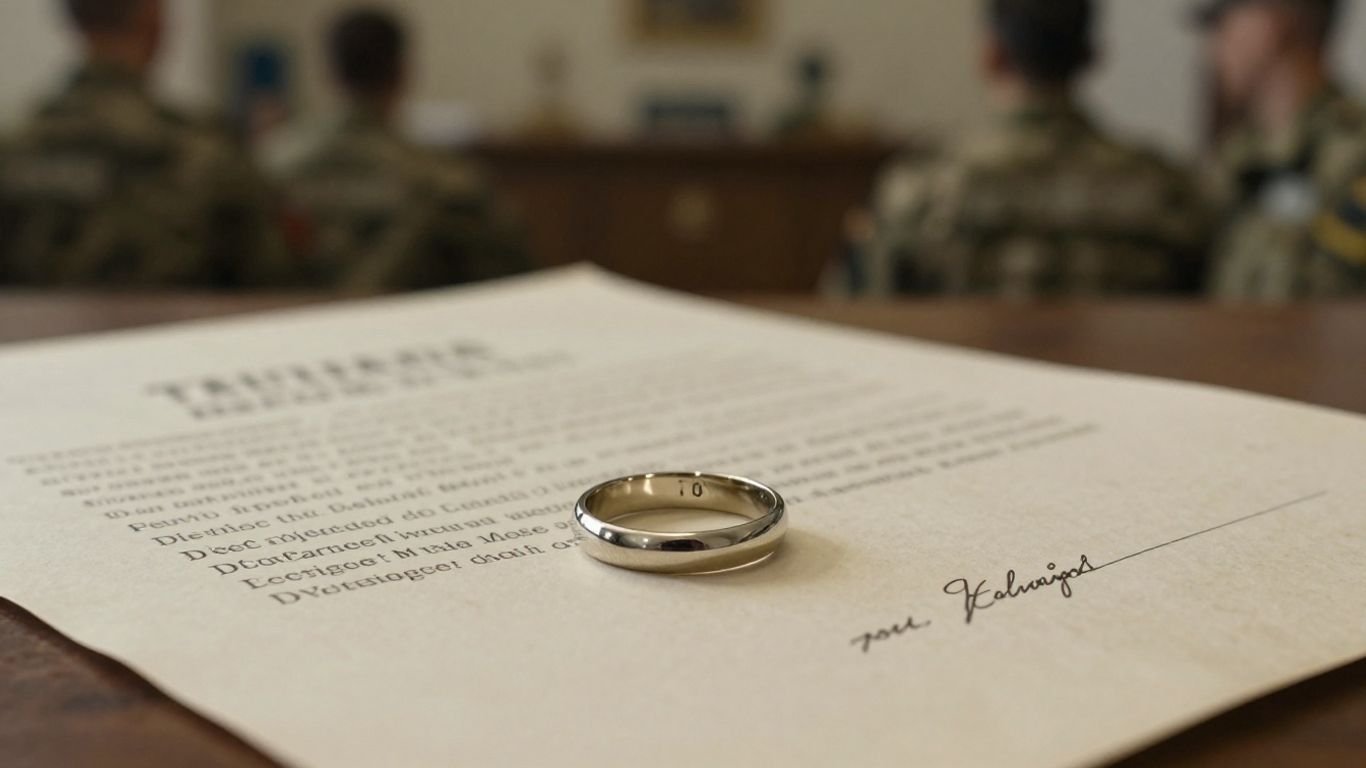
Russian ‘Black Widows’: The Women Sending Their Husbands to War
Key Takeaways
This analysis explores the disturbing phenomenon of opportunistic marriages in contemporary Russia, where financial incentives during wartime create dangerous societal fissures. The following points summarize the core findings regarding these emerging social risks.
- State compensation creates perverse financial incentives for rapid, shallow marriage contracts.
- Vulnerable populations, especially single men, are increasingly targeted by fraudulent actors.
- The term "coffin money" underscores the commodification of human sacrifice during regional military conflicts.
- Families are facing significant legal hurdles in reclaiming assets from opportunistic partners.
- There is an urgent public demand for stricter oversight of marital registration during mobilizations.
The rise of the black widow phenomenon
Societal shifts during periods of intense geopolitical instability often reveal uncomfortable truths about the erosion of trust in the private sphere. As the conflict in Ukraine drags on, Russia has seen the emergence of a predatory social trend that exploits the traditional institution of marriage for illicit profit. These individuals, often called "black widows," use the heightened fragility of the current environment to manipulate soldiers who are searching for companionship before deployments.
Origins in the current geopolitical conflict
The current conflict has acted as a catalyst for numerous societal anomalies, one of which is the rise of the black widow phenomenon. As outlined in reports such as The Wall Street Journal exposé on recent scams, the intensity of the war has created unique conditions for exploitation. This is not just a tactical issue but a humanitarian one, impacting how soldiers view their own security and the legacy they leave behind.
The erosion of traditional family values
When marriage becomes a tool for financial gain rather than the foundation of a family, the entire culture suffers. Just as genuine, honest care is required to support natural hair care through thoughtful, inclusive practices, the institution of marriage requires a baseline of shared values that is now being systematically stripped away. When external forces treat marriage as a gamble, the sanctity of the household is irrevocably altered.
Economic desperation in rural Russia
In economically depressed regions, the prospect of a massive state payout represents a level of wealth that is otherwise impossible to achieve. While some might focus on upgrading their home with marble and travertine surfaces for a sense of permanence, others look to the front lines as a singular source of life-changing capital. This disparity motivates individuals to engage in deeply cynical behavior to escape poverty, effectively betting against human life.
How the state compensation system incentivizes exploitation

The state’s attempt to provide for bereaved families has inadvertently created a secondary market for predatory behavior. Because the bureaucracy prioritizes speed when processing benefits for fallen soldiers, the safeguards that usually protect family assets are frequently ignored or bypassed entirely. When the system is designed to pay out quickly to whoever possesses a valid marriage certificate, it ignores the lived reality of the soldier’s true interpersonal ties.
The mechanics of the "coffin money" payouts
Understanding why these scams succeed requires looking at the raw financial metrics involved. The table below outlines how state support structures can be exploited when oversight is sacrificed for administrative speed.
| Benefit Type | Intent | Vulnerability |
|---|---|---|
| Federal Insurance | Support surviving spouse | Fast-tracked verification |
| Regional Payout | Ease of mourning | Lack of residency checks |
| Death Benefit | Future stability | Minimal relationship audit |
This reliance on state-provided figures is a common oversight that ignores the complex needs of the human beings supposedly being supported.
Lack of oversight in rapid wartime marriages
Several factors contribute to the effectiveness of these schemes on the ground. The following list details the tactical weaknesses in the current marriage registration process that permit such rapid exploitation:
- The lack of requirements for photo-documented ceremonies.
- Expedited wait times that allow for same-day marriage licensing.
- Minimal verification of existing living arrangements or shared household history.
- Reliance on self-attestation regarding the relationship’s duration.
Bureaucratic failures fueling the grift
Bureaucratic inertia means that once a payout is initiated, it is notoriously difficult to claw back, even when fraud is suspected. Much like the importance of vetting OnlyFans managers for brand safety and contract transparency, families and legal entities are discovering that the absence of strict, preventative vetting allows opportunists to flourish until it is too late to intervene.
The moral decline of the home front
The shift toward transactional behavior during wartime speaks to a broader, deeper erosion of social cohesion. While some might seek to maintain a sense of order, such as through disciplined processes like searching for reliable vehicle transportation brokerage, others are abandoning the social contract entirely. This shift creates a dangerous culture of apathy that transcends mere financial crime.
The value of a human relationship should never be measured by the insurance status of one’s partner, yet in the shadows of this conflict, that is precisely the metric that governs far too many illicit unions.
Commodity-based relationships and transactional marriage
Relationships are increasingly viewed through an economic lens, where the emotional cost is secondary to the potential payout. This transactional approach strips the act of marriage of its historical, cultural, and spiritual weight, reducing the union to a calculated investment.
Impact on the perceived sanctity of sacrifice
When a soldier’s sacrifice is essentially weaponized to fuel a payout scheme, the psychological toll on actual grieving families is immense. It degrades the honor associated with service, fundamentally damaging the morale of those who truly wish to support their loved ones and honor their memory without the interference of outside manipulators.
Societal apathy toward the loss of human life
There is a chilling indifference occurring at the domestic level, where the loss of a life is treated as a mundane administrative event rather than a tragedy. This indifference has ripple effects, influencing everything from maritime disruptions, like those impacting the Strait of Hormuz, to the way individuals manage their personal well-being in an increasingly unstable era.
The legal and social consequences of the scam
Disputes over insurance and inheritance rights
Family members are increasingly finding themselves in costly legal battles to prove their right to a deceased relative’s assets. Because the marriage is often formalized with legal documents, those trying to undo the damage must overcome significant evidence hurdles to expose the fraudulent nature of the union.
How families fight back against opportunists
Families are currently turning to the courts to contest marriages they claim were fictitious. This fight is often a desperate measure, requiring meticulous gathering of receipts, travel records, and testimony to prove that two people were never truly a couple, let alone partners in life.
Potential legal reforms to verify marital status
Legal experts and activist groups are pushing for new statutes that would require a mandatory waiting period or proof of shared residency prior to any wartime marriage being considered valid for state payout purposes. Such reforms, while technically difficult to implement on an emergency basis, are seen as the only way to stem the tide of these exploitative practices.
Examining the systemic instability in war-torn Russia
Devaluation of human life in the state hierarchy
At a systemic level, the state’s massive compensation programs inadvertently signal that a soldier’s value is liquid—able to be claimed like any other financial instrument. This perception flows downward, normalizing the idea that individuals are merely sources of capital.
Corruption reaching into the homes of soldiers
Corruption that starts in the halls of power eventually manifests in the bedroom. When the state fails to provide a supportive workplace or clear ethical pathways for its citizens, it incentivizes individuals to protect their own interests through whatever means necessary, no matter how immoral.
Long-term social scars of a depleted generation
The most profound long-term impact will be on the demographic landscape and the social trust that binds communities. A generation that has been exploited so heavily—both by the war itself and by opportunistic actors at home—will struggle to rebuild the interpersonal connections necessary for a stable society.
Conclusion
The rise of black widow schemes highlights a profound social rupture that cannot be fixed by financial policy alone, requiring a fundamental return to the values that safeguard the family unit from manipulation and greed. Despite the challenges, understanding these patterns is the first step toward reclaiming the sanctity of our personal and societal bonds.
Frequently Asked Questions
Why are these individuals called black widows?
The term is used to describe women who marry soldiers shortly before they are deployed to high-risk conflict zones, with the explicit goal of collecting financial death benefits after the soldier is killed.
Is this phenomenon happening across all of Russia?
While the practice is most prominent in economically depressed rural regions, the ability to exploit wartime state compensation infrastructure is a systemic issue affecting various districts where the promise of "coffin money" outweighs local economic prospects.
How do families usually react when they discover a marriage was a sham?
Families often resort to filing lawsuits in civil court to invalidate the marriage, using evidence such as proof that the couple lived separately or never maintained a shared domestic life before the soldier’s death.
Can insurance companies simply stop paying?
Insurance and state compensation programs are governed by strict bureaucratic rules that require valid documentation; unless a court specifically annuls the marriage, the state is legally obligated to release funds to the documented beneficiary.
What do lawmakers propose to stop this?
Potential legislative solutions include implementing mandatory cooling-off periods for wartime marriages, requiring proof of cohabitation, and introducing specific criminal penalties for individuals who orchestrate these schemes for financial profit.
Are there any specific groups of men being targeted?
Vulnerable populations, including men who are lonely, socially isolated, or struggling with substance abuse or financial instability, are the primary targets because they are less likely to have family members immediately involved in their daily affairs.
Will this significantly impact Russia’s economy?
The scale of these schemes represents a drain on federal and regional budgets, but the greater impact is on national social cohesion and the erosion of trust in the institutions that are supposed to honor the sacrifice of the military.