Trump’s ‘Muslim city’ remark about Paris raises questions about evidence and context
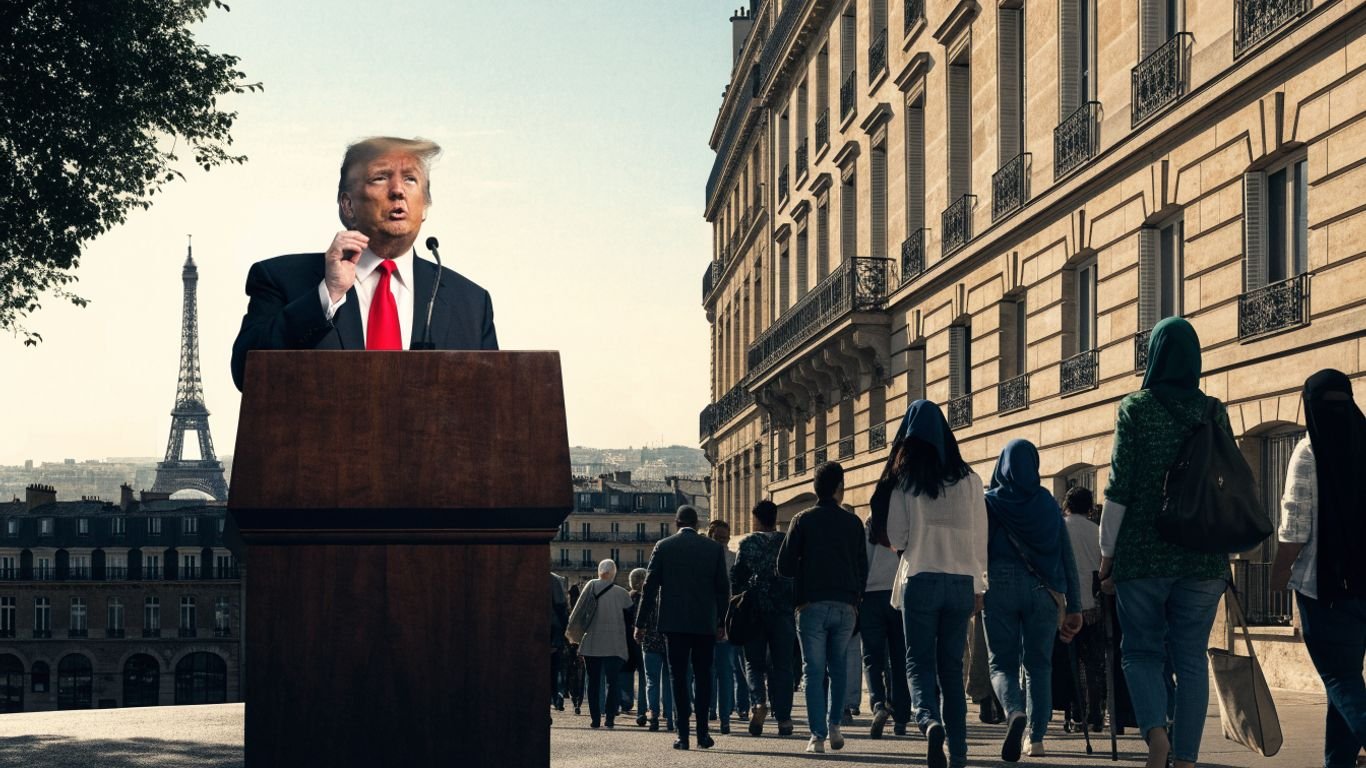
An Al Jazeera video headline attributes to Donald Trump the claim that Paris will become “a Muslim city very soon.” The material provided does not establish when or where he made the remark, what prompted it or what evidence he offered. Those gaps make context and verification central to understanding the statement.
Key takeaways
- A video headline attributes a prediction about Paris to Trump.
- The available information does not provide a date, setting or supporting evidence.
- The phrase “Muslim city” is undefined and can blur distinctions among religion, identity and civic life.
The limited details matter: without the full recording and surrounding discussion, it is not possible to assess the remark’s immediate context or verify any demographic claims it may imply.
What is known about the remark
The available source identifies the speaker and quotes a prediction about Paris, but offers no further details in the supplied material. It does not say whether Trump was addressing immigration, religion, population trends or another subject, and it contains no figures to substantiate the forecast.
A responsible account should therefore treat the wording as an attributed statement, not as evidence that Paris is on a particular demographic path. The phrase “Muslim city” also has no precise meaning in the information provided: it could refer to residents’ religious identities, cultural influence or political institutions, which are not interchangeable.
Why the wording matters
Statements that describe a diverse city through a single religious label can flatten the experiences of its residents. Muslims are not a uniform group, and religious identity alone does not establish a person’s views, culture or civic participation. More context and reliable data would be needed to evaluate any specific claim about Paris.
Mixed Nature’s commitment to representation rests on recognizing that people’s identities cannot be reduced to one category. That same care is useful in public discussion: assess a claim on evidence, avoid treating a community as monolithic, and seek the full context before drawing conclusions.
What to look for next
To assess the remark, readers would need the complete video, its date and setting, and any data Trump cited. Independent demographic information could help evaluate a specific population claim, but it would not by itself establish what a city’s identity or future should be.