What the Iran crisis reveals about BRICS
The recent conflict involving Iran has really put BRICS in a tough spot. It’s a group that’s still finding its feet, especially with all the new members joining. Watching how different countries within BRICS react, or don’t react, tells us a lot about where this bloc is headed and what its members truly prioritize. It’s not just about global politics; it’s about how these nations balance their own interests against the idea of a united front.
Key Takeaways
- BRICS finds itself in an awkward position regarding the Iran crisis, facing pressure to react but hesitant to confront powerful nations like the US.
- The bloc’s silence on the Iran conflict highlights its informal structure, which allows members to avoid taking a unified stance when interests diverge.
- India’s balancing act between its ties with the West and its BRICS membership is evident in its cautious response, prioritizing its own national interests.
- The expansion of BRICS, while increasing its reach, also complicates its ability to form a cohesive response due to the varied priorities of its members.
- The Iran crisis shows that BRICS is more of a flexible space for cooperation outside Western influence rather than a direct rival, with its effectiveness depending on member consensus and evolving global dynamics.
BRICS’s Quiet Stance Amidst Global Conflict
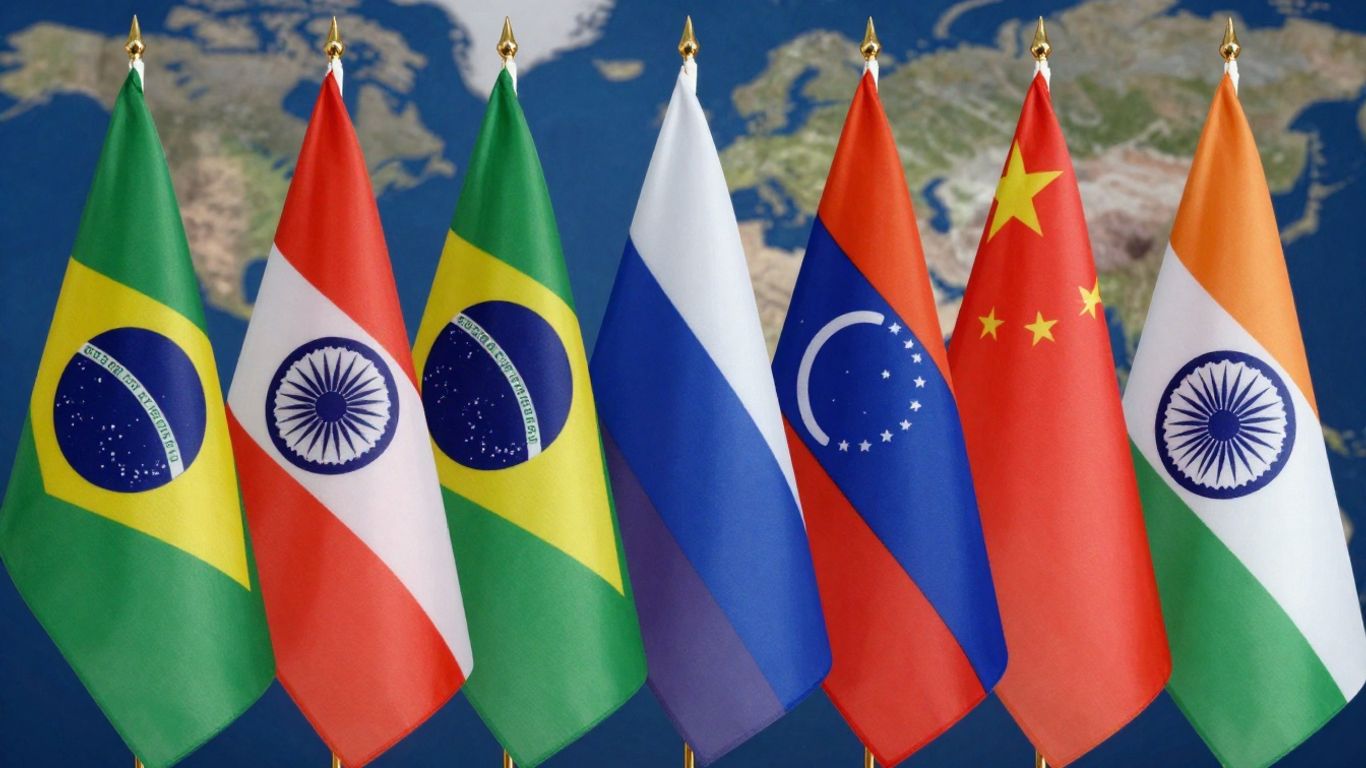
The Uncomfortable Position of BRICS and SCO
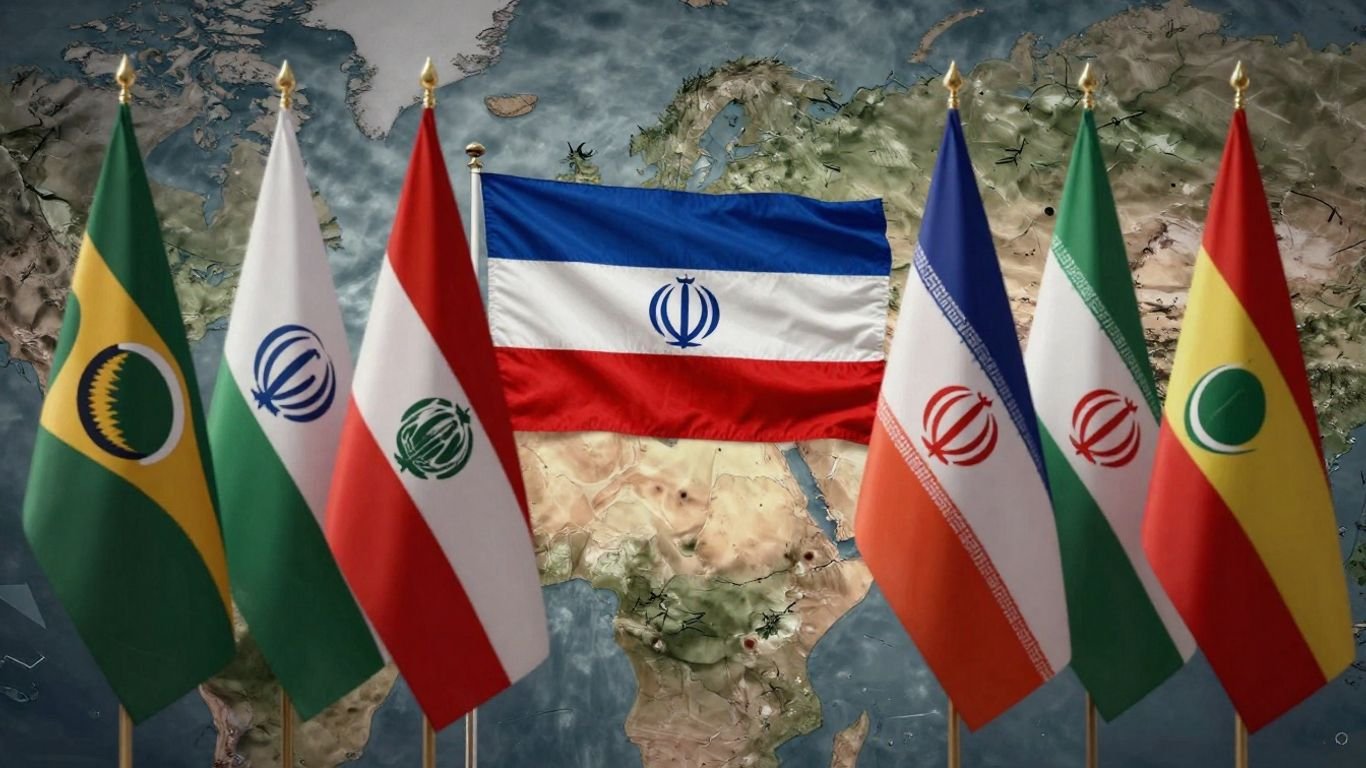
It’s pretty wild, isn’t it? The US and Israel go after Iran, and what do you hear from BRICS, a group that now includes Iran? Crickets. Back in 2023, when things were a bit less intense, BRICS actually put out a statement calling similar actions a "violation of international law." Now, with India chairing the group, it seems like everyone’s priorities have shifted. India’s getting closer to the US and Israel, and suddenly, the bloc’s stance is… well, silent. It’s a tough spot. If a group doesn’t stand up for one of its own, it looks weak. But openly challenging the US? Not many countries are lining up for that, especially when they’ve got their own deals going with Washington.
Silence as a Strategic Choice?
So, why the quiet? Some folks are saying BRICS is just ineffective, a total dud. But maybe it’s not that simple. Remember, BRICS isn’t some rigid military alliance. It’s more like a loose club, a space where countries can work together without the West breathing down their necks. They decided to expand the group, bringing in more members, which some critics say made things even harder to agree on. But maybe this flexibility is the point. It lets members, like India, keep their own relationships with the US and others without being forced into a corner. It’s a balancing act, for sure. The Shanghai Cooperation Organization (SCO), another group Iran belongs to, managed a weak statement about being "deeply concerned" and wanting peace. BRICS, though, just went with silence. It’s a deliberate choice, using their informal setup to avoid taking a side they might regret.
BRICS and Iran: A Test of Resolve
This whole Iran situation really puts BRICS to the test. Iran is now part of this expanded group, and when it gets attacked, the group’s silence is deafening. It makes you wonder what the point of joining is if you don’t get support when it counts. China, for instance, is talking about mediation, not jumping into fights, which is understandable given their own trade issues with the US. But other members, like India, are clearly playing a different game, prioritizing their own ties with the West. It shows that BRICS is still figuring itself out. It’s not a unified front against the US, but more of a collection of countries trying to find their own way in a world that’s changing fast. Whether they can actually act collectively when it matters, or if it’s just a bunch of individual interests, remains to be seen. It’s a real test of whether this group has any real teeth or if it’s just talk.
The Shifting Sands of BRICS Alliances
India’s Divergent Interests in BRICS
It’s becoming pretty clear that BRICS isn’t exactly a unified front when things get tough. Take India, for instance. While the rest of the world is watching the Iran situation unfold, India’s playing a different game. They’ve got their own playbook, and it doesn’t always line up with what the other BRICS members might want. This isn’t some new development; India has always been good at looking out for number one. They’ve got these deep ties with the West, especially the US, and that’s not something they’re just going to toss aside for the sake of some vague alliance solidarity. It makes you wonder what the point of BRICS really is if one of its biggest members is always going to prioritize its own bilateral relationships.
Balancing Ties with the West and BRICS
This whole balancing act India is doing is a perfect example of how complicated BRICS has become. On one hand, they’re part of this group that’s supposed to be an alternative to Western dominance. But on the other hand, they’re cozying up to the very powers BRICS is often seen as a counterweight to. It’s a tightrope walk, for sure. When the US starts applying pressure, like with those trade tariffs, India feels it. So, when a crisis like the one in Iran pops up, India’s going to be extra careful not to step on any toes, especially Uncle Sam’s. It’s not about loyalty to BRICS; it’s about managing risks and maximizing benefits in a world where power is constantly shifting. The BRICS economic bloc impact on the Middle East is definitely being shaped by these kinds of individual calculations.
BRICS and Iran: A Question of Loyalty
So, what does this mean for Iran and for BRICS itself? Well, it shows that when push comes to shove, the idea of a united BRICS front might be more of a fantasy than reality. India’s silence on the Iran crisis isn’t just about India; it reflects a broader issue within the bloc. BRICS expansion and its effect on international relations are creating new dynamics, but they haven’t necessarily created deeper bonds. It seems like the members are more interested in the idea of BRICS as a space to talk and trade, rather than a serious alliance that demands mutual defense or unwavering support. Loyalty, it seems, is a flexible concept for many in this group, especially when powerful Western nations are involved. It’s a pragmatic approach, I guess, but it certainly doesn’t make BRICS look like a formidable force ready to challenge the status quo.
BRICS: A Geopolitical Space, Not A Western Rival
The Strategic Choice for Expansion Over Deepening
Look, let’s be honest. A lot of folks got hyped up about BRICS, thinking it was going to be some kind of direct counterweight to the West, a real challenger to American dominance. But that was always a bit of a stretch, wasn’t it? The big decision made back in 2023 wasn’t about building a rigid, Western-style institution. Instead, the members decided to go for expansion, creating more of a geopolitical space where countries could cooperate without the usual Western strings attached. It’s not about being anti-West; it’s about having an option, a place to work things out independently. Trying to force a formal structure on such a diverse group, with wildly different priorities and alliances, would have been a recipe for gridlock. So, they chose flexibility instead.
Navigating Global Power Dynamics
The reality is, the US still holds a lot of cards, especially with its grip on global finance. That gives Washington plenty of ways to push back against anything that looks like a threat. And let’s not forget the current administration’s rather direct approach to foreign policy. It’s less about quiet diplomacy and more about showing muscle. This kind of tactic might get short-term wins because, frankly, who wants to directly confront overwhelming power? But it’s a tough game to play long-term. The world is changing, and the old narrative of liberal globalization, where everyone supposedly benefited from Western leadership, just doesn’t hold water anymore. People are looking for alternatives, for ways to reduce their reliance on American power. Events themselves are making that case clearer than any speech could.
BRICS and Iran: A Future Unwritten
So, where does the Iran crisis fit into all this? It puts BRICS in a tricky spot, no doubt. If the group stays silent when a member is attacked, it looks weak, maybe even irrelevant. But taking a strong stance could mean directly challenging the US, and not everyone in BRICS is eager for that kind of confrontation. Some members, like India, have pretty close ties with the US and Israel. It highlights that BRICS isn’t a monolithic bloc with a single agenda. It’s more of a platform, still finding its feet. The real test isn’t whether BRICS can act like a Western alliance, but whether it can provide a space for diverse nations to manage global challenges differently. The future of BRICS, and its role in a shifting world order, is still very much unwritten.
Divergent Responses Highlight BRICS’s Internal Dynamics
The recent conflict involving Iran has really put BRICS on the spot, and honestly, the group’s reaction, or lack thereof, tells us a lot about what’s really going on inside. It’s not exactly a unified front, is it? When the US and Israel launched their strikes, you’d expect a bloc that includes Iran to at least say something, right? But instead, we got… silence. It’s a bit awkward, especially when you remember that back in 2023, under Brazil’s chairmanship, BRICS was quick to condemn similar actions as a violation of international law. Now, with India at the helm, things seem different.
China’s Cautious Support for Iran
China, for its part, has offered some support to Iran, but it’s been pretty measured. They’re not exactly jumping into the fray. Professor Dong Wang from Peking University pointed out that China’s approach is more about mediation than military involvement. They’re trying to maintain a careful balance, pushing for de-escalation. It’s a stance that reflects Beijing’s broader strategy, which is to encourage BRICS to stick to its original goals: supporting multilateralism and peaceful resolutions. China sees value in the group, even with its internal differences, and wants to keep it from becoming just another Western rival. They’re pushing for a collective voice from the Global South, but it’s a tough sell when members have such varied interests.
The Need for Consensus in a Diverse Bloc
This whole situation really underscores how tricky it is to get everyone in BRICS on the same page. You’ve got countries like India and the UAE, who are also cozying up to the US. Then you have Russia, which has been critical of the attacks but isn’t exactly offering direct military aid to Iran. It’s a real balancing act for everyone involved. The group was expanded in 2023, adding countries like Iran, Saudi Arabia, and the UAE, which only makes reaching a consensus harder. It seems like the expansion was more about creating a broad geopolitical space outside of Western influence, rather than building a tight-knit alliance. This flexible approach, while avoiding the pitfalls of rigid institutions, also means that when push comes to shove, a strong, unified response is unlikely. It’s a deliberate choice, perhaps, but one that leaves members exposed.
BRICS and Iran: Unity in Diversity?
So, what does this mean for BRICS and its relationship with Iran? It’s a test, for sure. Iran has a substantial arsenal of missiles and drones, and they’re not afraid to use proxies to escalate regional tensions. The fact that BRICS, as a bloc, hasn’t issued a strong condemnation or offered significant support to Iran highlights the group’s limitations. It shows that while BRICS might be an alternative to Western-led systems, it’s not a military pact or a unified political force. The members prioritize their own national interests, and that often means avoiding direct confrontation with major powers like the US. While China advocates for mediation and Russia offers criticism, the lack of a collective response suggests that the idea of BRICS unity, especially in the face of aggression against a member, is still very much a work in progress. It’s a diverse group, and finding common ground on security issues, especially when they involve major global players, is proving to be a significant challenge. The group’s future, and its ability to act collectively, remains unwritten.
The Iran Crisis Exposes BRICS’s Limitations and Potential
Individual Member Condemnations vs. Bloc Silence
It’s pretty clear the whole Iran situation has put BRICS in a tough spot. You’d think an alliance that’s supposed to be a counterweight to the West would have something to say, right? But nope. While individual members like South Africa and Russia have put out statements, the group as a whole? Crickets. It’s like they’re deliberately using their loose structure to avoid taking a unified stance. This whole thing really highlights how different everyone’s priorities are within the bloc. BRICS’s silence on the Iran conflict is a stark reminder that it’s more of a talking shop than a cohesive fighting force.
South Africa’s Mediation Efforts
South Africa, bless their hearts, is trying to play peacemaker. President Ramaphosa is talking about mediation and wants the fighting to stop. It’s a noble effort, I guess, but it also shows how much they’re trying to carve out their own role. They’ve got their own issues with the US, so maybe they see this as a way to gain some international standing. Still, it’s a bit of a long shot when you’ve got major powers involved. It’s a good sign that some members are willing to step up, but it doesn’t change the fact that the bloc itself isn’t acting together.
Russia’s Criticism and Limited Support for Iran
Russia, predictably, is criticizing the US and Israel. They’ve got that long-standing relationship with Iran, supplying them with weapons and all that. But even they aren’t jumping into the fray militarily. It’s all talk and no action when it comes to actual support. They’re happy to condemn the West, but they’re not going to risk their own neck for Iran. This shows that even with close ties, the impact of sanctions on Iran’s international partnerships is still a major factor. They’re supporting Iran verbally, but that’s about it.
BRICS and Iran: A Test of Collective Action
This whole mess with Iran really puts BRICS to the test. Can they actually act as a group when it counts? So far, the answer seems to be no. The individual responses show the diversity of Iran’s geopolitical position in global alliances, but the lack of a unified BRICS voice is telling. It exposes the limitations of this bloc, especially when faced with a real crisis. It’s a wake-up call for the emerging economies and the Iran conflict – they need more than just shared grievances to make a real impact. The potential is there, but the collective action? Not so much.
The BRICS bloc, despite its expansion and aspirations, is struggling to present a united front. The Iran crisis reveals that individual member interests and existing geopolitical ties often trump any sense of bloc solidarity. This lack of cohesive action highlights the group’s limitations in challenging established global powers and its reliance on informal diplomacy over concrete policy. The future effectiveness of BRICS hinges on its ability to bridge these internal divides, a task that appears increasingly difficult.
The West’s Assertive Tactics and BRICS’s Response
The Collapse of Liberal Globalization’s Narrative
The old story about Western leadership benefiting everyone, even if unevenly, isn’t flying anymore. That whole era of liberal globalization, where the West set the rules and everyone else supposedly gained access to markets and capital, has pretty much fallen apart. It was a nice idea, I guess, but the reality was always a bit different, wasn’t it? Now, things are getting a lot more direct. You see it in how some leaders act, almost like cartoon villains, just taking what they want and daring anyone to push back. It’s a far cry from the diplomatic niceties we used to hear about. This shift means countries are starting to look for other ways to do things, ways that don’t rely so heavily on American power. It’s becoming pretty obvious that relying on one superpower isn’t the best long-term strategy for anyone.
The Need for Alternatives to American Power
It’s becoming clearer by the day that the world needs options outside of the American sphere of influence. The old system, built on Western rules, had its benefits, sure, but it also had its downsides. Now, with the West employing more assertive tactics, many nations are realizing they need to reduce their dependence on American power. This isn’t about forming a formal anti-American coalition, not really. It’s more about creating a space where countries can cooperate and make decisions without constantly looking over their shoulders. BRICS, despite its loose structure, represents a significant chunk of the global economy and population. This bloc has the potential to shape how the world order evolves. It’s a challenge to the status quo, and frankly, it’s about time. Washington seems to get this, which is probably why you hear so many complaints about BRICS from that side.
BRICS and Iran: A Challenge to the Status Quo
The current situation with Iran really highlights this shift. When you see aggressive actions taken against a member of a group like BRICS, and the group itself remains largely silent or offers only muted responses, it speaks volumes. It shows that the old ways of international diplomacy aren’t always effective anymore. The West’s direct approach, while sometimes yielding short-term results, isn’t sustainable. Countries are looking for alternatives, and BRICS, in its own way, is becoming one of those alternatives. It’s not about direct confrontation, but about building a different kind of international framework. The expansion of BRICS, bringing in countries like Iran, signals a desire for a more diverse and less Western-centric global stage. It’s a move away from the old narrative and towards something new, even if it’s still a work in progress. The silence from BRICS on the Iran conflict, while perhaps frustrating to some, is also a strategic choice, allowing members to maintain their own ties while signaling a desire for a different path forward, away from Western dominance.
India’s Strategic Autonomy and BRICS Membership
US Pressure and Trade Tariffs on India
It’s no secret that Uncle Sam likes to throw his weight around, and India has felt the sting of that more than once. Remember back in 2025 when President Trump slapped some hefty tariffs on Indian goods? We’re talking up to 50 percent! The reason? India kept buying oil from Russia, a move that didn’t sit well with Washington. India’s government called the tariffs "unfair" and "unjustified," and honestly, who could blame them? These tariffs threatened a huge chunk of India’s exports to the US, which is, by the way, their biggest trading partner. It was a classic move to try and force compliance.
Balancing Ties with the US and BRICS
So, India finds itself in a bit of a pickle, doesn’t it? On one hand, you’ve got the US, a massive economic partner, wielding tariffs like a club. On the other, there’s BRICS, a growing alliance that offers a different path, a "space without the West" as some put it. It’s a balancing act, for sure. India has to weigh its economic interests with the US against its strategic partnerships within BRICS. It’s not about picking sides, but about playing the game to its own advantage. This is what strategic autonomy looks like in practice – making your own choices, even when they’re tough.
BRICS and Iran: India’s Calculated Silence
When the dust settled on the US-Israel conflict with Iran, the BRICS bloc remained remarkably quiet. This silence, especially from India, speaks volumes. While other members might have felt compelled to issue statements, India, now chairing the group, opted for a different approach. This isn’t necessarily a sign of weakness, but rather a demonstration of India’s commitment to its own national interests. India’s participation in BRICS doesn’t mean it blindly follows the group’s lead, especially when it conflicts with its own security and economic considerations. The decision to stay silent on the Iran crisis, while potentially disappointing to some within BRICS, highlights India’s pragmatic foreign policy. It’s a clear signal that while India values its BRICS relationships, its primary loyalty is to its own people and its own strategic vision. This calculated silence is a testament to India’s independent foreign policy, a policy that prioritizes national interests above all else.
So, What’s the Takeaway?
Look, the whole Iran situation really shows us what BRICS is and, maybe more importantly, what it isn’t. People expected this group to jump in, take sides, and make a big statement, but that’s just not how it works. BRICS isn’t some unified army ready to march. It’s more like a loose club where everyone has their own stuff going on, their own friends, and their own problems. India’s quiet approach, China’s talk of mediation, Russia’s criticism – it all just proves how different these countries are. They’re not going to suddenly become one big happy family, especially when big powers like the US are involved. Trying to force them into acting like a Western bloc just won’t work. The real story here is that BRICS is trying to build its own space, away from the usual drama, but it’s still figuring things out. It’s not about fighting the West, it’s about having options. And right now, with all the global chaos, having options seems pretty smart, even if it means they don’t always agree on everything.
Frequently Asked Questions
Why is BRICS being quiet about the Iran crisis?
BRICS is staying quiet because its members have different ideas about what to do. Some members have close ties with the US and don’t want to cause trouble. Also, BRICS is not a formal group with strict rules, so it’s easier for them to not take a strong public stand. They might be choosing silence as a way to avoid conflict and allow countries to handle things their own way.
Has BRICS always been silent during conflicts?
Not exactly. In the past, when similar situations happened, some BRICS members have spoken out. For example, when there was a conflict involving Iran before, Brazil, which was leading BRICS then, said that the attacks were against international rules. But now, with India in charge and its own interests, the group’s response has changed, and it’s been much quieter.
How does India’s relationship with the US affect BRICS?
India has strong ties with both the US and BRICS. When the US puts pressure on countries, like imposing trade rules, India tries to balance its relationships. This means India might not always agree with other BRICS members if it means upsetting the US. India’s main goal is to protect its own interests, which sometimes means staying silent on issues that could anger the US.
Is BRICS trying to be an enemy of Western countries?
BRICS says it’s not trying to be an enemy of the West or compete with groups like the G7. Instead, it sees itself as a place where countries can work together without the West being in charge. It’s more about creating options and having a different space for cooperation, rather than directly fighting against Western power.
Why did BRICS invite new countries like Iran?
BRICS decided to invite more countries, including Iran, to make the group bigger. Some people thought this was a bad idea because it might make it harder for everyone to agree. However, the leaders might have wanted to include more countries to have a larger voice in global matters and to create a broader network for cooperation outside of the traditional Western-led systems.
What does the Iran crisis show about BRICS’s future?
The Iran crisis shows that BRICS is still figuring things out. It highlights that the members don’t always agree, and sometimes individual countries act based on their own needs. While the group might not be a strong, united force like a military alliance, it represents a significant part of the world’s economy and population. This means BRICS could still play a role in shaping how the world works, even if it’s not in the way some people expect.