
How much will all G20 Boomers Transfer to their governments in their respective countries?
So, the Baby Boomers, you know, the folks born after World War II, are getting older. And as they age, there’s a lot of talk about how this is going to affect government finances. We’re talking about a huge generation, and their retirement years are going to put a strain on public services and budgets. This also brings up the whole idea of wealth transfer – what happens to all that money and assets when it moves from one generation to the next? It’s a big question, and it’s something governments are starting to look at more closely.
Key Takeaways
- Governments are facing rising costs for an aging population, including pensions and healthcare, which adds to already high public debt. Higher interest rates make this debt even more expensive to manage.
- As more people retire, the number of workers paying taxes shrinks. This means less money coming in for governments, making it harder to fund public services and benefits.
- There’s a massive amount of wealth expected to be passed down through generations. This wealth transfer could make existing inequalities even worse if not managed carefully.
- Global population growth is slowing, and birth rates are dropping. This means fewer young workers entering the workforce in the future, which can slow down economic activity and productivity.
- With governments potentially unable to cover all the costs, there’s a growing expectation that individuals and families will have to take on more responsibility for their own retirement and healthcare expenses.
The Looming Burden: Boomers and Government Finances
It’s no secret that our governments are facing some serious financial headwinds, and a big part of that is the aging baby boomer generation. These folks, who once boosted the economy, are now starting to draw heavily on public services and pensions. This demographic shift is putting a massive strain on public finances, especially when you look at the escalating public debt and the rising costs of just servicing that debt. It feels like we’re stuck in a cycle where more money is going out than coming in, and it’s not a sustainable path.
Escalating Public Debt and Interest Costs
Governments worldwide have racked up enormous debt, and it’s only getting worse. We saw debt-to-GDP ratios climb steadily for decades, and then the global financial crisis and the pandemic hit, forcing governments to spend even more. Now, with interest rates going up, the cost of just paying the interest on all that debt is skyrocketing. Think about the US, where a huge chunk of Treasury bonds are set to mature soon and will need to be refinanced at much higher rates. This isn’t just some abstract economic problem; it means less money for other things we actually need.
The Shrinking Tax Base: An Aging Workforce
Here’s another kicker: as more people retire and fewer young people enter the workforce, the tax base shrinks. The people who typically pay the most in income taxes are those in their prime working years. When that group gets smaller, governments have less money coming in. This is happening at the same time that demands for things like pensions and healthcare are going up. It’s a double whammy that makes budgeting incredibly difficult. Some countries are trying to fix this by encouraging immigration or raising retirement ages, but these are politically tough sells and often don’t go far enough.
Demands of an Aging Population on Public Coffers
An aging population means more people relying on government support for longer. We’re talking about pensions, healthcare, and social security – all of which are expensive. The OECD has projected that without major policy changes, aging alone could push public debt up by an average of 180% of GDP in advanced G20 economies over the next 30 years. That’s a staggering figure. It means that the money needed to support our older citizens will likely come at the expense of other vital public services or require significant tax increases. We’re already seeing increased spending on defense and clean energy initiatives, adding further pressure to already strained budgets. It’s a tough balancing act, and frankly, the current trajectory isn’t looking good for future financial stability.
The reality is that financing the needs of a growing elderly population will inevitably come at the expense of other spending priorities. Households are increasingly expected to shoulder more of the burden for retirement, healthcare, and social security, adding pressure on working-age individuals to save more for themselves and their dependents.
Generational Wealth Transfer: A Growing Concern
The Scale of Intergenerational Wealth Movement
It’s no secret that a lot of money is changing hands between generations. We’re talking about trillions of dollars, folks. This isn’t just pocket change; it’s a massive shift that’s reshaping our economies. The Baby Boomer generation, a huge chunk of the population, is starting to pass down their assets. This is a natural part of life, sure, but the sheer volume involved is unprecedented. The question is, who benefits, and at what cost to the rest of us?
Widening Inequality Fueled by Inheritance
This massive transfer of wealth isn’t exactly happening equally. We’re seeing a widening gap between those who inherit fortunes and those who don’t. It’s becoming harder for people to climb the economic ladder if they don’t have a wealthy family to begin with. This creates a system where advantages are passed down, not earned. It’s a tough pill to swallow when you see how much easier things are for some people simply because of who their parents were. This dynamic is a major driver of inequality, and it’s something we need to pay attention to. It’s not just about fairness; it’s about the health of our society and economy. We’ve seen reports suggesting that a significant portion of new wealth goes to the top 1%, while the bottom 50% gets a tiny fraction. This trend, if left unchecked, could lead to serious social and economic problems.
The Role of Inheritance Taxes in Wealth Transfer
This is where things get really interesting, and frankly, a bit controversial. Many countries, including those in the G20, are looking at inheritance taxes as a way to manage this wealth transfer. The idea is simple: tax the wealth that’s passed down to help fund public services and maybe even reduce other taxes. However, there’s a lot of debate about whether these taxes are fair or effective. Some argue they’re a necessary tool to prevent extreme wealth concentration and promote a more level playing field. Others believe they’re an unfair double-taxation and can discourage saving and investment. It’s a complex issue with strong opinions on both sides. The G20 nations are grappling with how to approach generational wealth taxes G20 and their impact on national economies and individual fortunes. Different countries have vastly different approaches to inheritance laws, reflecting diverse cultural values and historical practices regarding family and property. Some systems favor keeping estates intact, while others are moving towards more equal distribution among heirs, especially concerning daughters. This patchwork of rules makes international estate planning quite complicated.
The sheer amount of wealth expected to be transferred in the coming years is staggering. Without thoughtful policies, this could solidify existing inequalities and make upward mobility even more difficult for future generations. It’s a challenge that requires careful consideration, not just for the sake of fairness, but for the long-term stability of our economies.
Global Economic Shifts and Demographic Realities
It’s no secret that the world’s population is changing, and these shifts are having a pretty big impact on economies everywhere. For decades, many countries, especially in the developed world, got a boost from a growing number of people entering the workforce. Think of it as a demographic dividend. But that’s changing. Fertility rates have been dropping pretty consistently across the board, and people are living longer. This isn’t just a minor tweak; it’s a fundamental shift that’s altering the economic landscape.
Stalled Population Growth and Economic Activity
We’re seeing population growth slow down considerably. The global population is still increasing, but at a much slower pace than in the past. Projections suggest that by the end of the century, the world’s population might actually start to shrink. This slowdown directly affects economic activity. When fewer people are entering the workforce, there’s less demand for goods and services. It’s a simple equation, really. The days of rapid expansion fueled by a booming population are fading.
The Impact of Declining Birth Rates
So, why are birth rates falling? A lot of factors are at play. Better access to education, more women participating in the workforce, and the availability of family planning all contribute. While these are often seen as positive developments, they have a direct consequence on demographics. Lower birth rates mean smaller future workforces and an older population overall. This isn’t just a problem for one or two countries; it’s a global trend that’s reshaping economies. We’re looking at a future where many nations will have to grapple with fewer young people and more older citizens. This is a big deal for government finances and how we plan for the future.
The Shifting Global Economic Landscape
These demographic changes are creating a new economic reality. We’re moving into what some call the fifth stage of the Demographic Transition Model, where aging populations and even shrinking populations become the norm. This means slower growth in the working-age population, which has direct implications for production capacity and even productivity growth. Some forecasts predict that real GDP growth over the next few decades could be significantly lower than what we’ve experienced in the past. Europe, for instance, is expected to see a notable drop in its working-age population. Even countries like the US, which have seen more robust growth, aren’t immune to these trends. The overall picture is one of economic challenges ahead as these demographic shifts continue to play out globally.
Government Fiscal Challenges in the Face of Aging
Look, the numbers just don’t lie. We’re seeing governments across the G20 countries staring down some serious financial headwinds, and a big part of that is simply because more people are getting older. It’s not rocket science, but it’s definitely a problem that needs attention. Public debt levels are already pretty high, some even higher than after World War II, and now we’ve got this aging population thing making it all worse. It’s like trying to bail out a leaky boat with a bucket that’s getting smaller.
Unsustainable Spending and Budget Deficits
Governments are spending a ton of money, and frankly, it’s not sustainable. Interest payments on all that debt are going up, especially with recent jumps in bond yields. Think about it: a lot of government bonds are coming due, and they’ll have to be refinanced at much higher rates. Plus, there’s pressure to spend more on things like defense because the world feels a bit shaky, and also on green energy initiatives. It all adds up. We’re seeing budget deficits become the norm, and it’s tough to see how they’ll get them under control when you factor in the rising costs of supporting an older population. It feels like we’re just kicking the can down the road.
The Need for Fiscal Prudence
So, what’s the answer? Well, governments really need to get a handle on their spending. It’s not about cutting essential services, but about being smarter with taxpayer money. We’re talking about making sure budgets are balanced and that we’re not just borrowing more and more without a clear plan to pay it back. Some countries are already trying to tackle this by raising retirement ages, which makes sense, but it’s not exactly popular. It’s a tough balancing act, trying to keep the economy running while also making sure the government’s books are in order. We need a serious look at government bond yields and how they affect national budgets.
The Inevitable Strain on Public Services
Here’s the kicker: as more people retire, they’ll need more from the government – pensions, healthcare, social security. This isn’t a surprise, but the scale of it is pretty staggering. Without changes, some estimates suggest that aging alone could add a massive amount to public debt in advanced G20 economies over the next few decades. This means that money that could go to other things, like infrastructure or education, might have to be diverted to cover these rising costs. It’s a tough pill to swallow, but we have to face the reality of an aging population and its impact on public finances. South Korea, for example, is projected to see pension spending rise faster than in other advanced economies, which is a clear sign of what’s coming for many nations.
The core issue is that the tax base, the pool of working-age people paying income taxes, is shrinking. At the same time, the demands on government spending for older citizens are growing. This creates a double whammy for government budgets, forcing difficult choices about where to allocate limited resources.
The Boomer Generation’s Financial Legacy
The Peak of the Baby Boomer Generation
The Baby Boomer generation, born roughly between 1946 and 1964, represents a significant demographic bulge. As this large group reaches retirement age, their impact on government finances becomes a major talking point. We’re talking about a massive cohort that has, for decades, been a driving force in the economy. Now, as they transition out of the workforce, the question is what financial legacy they leave behind, particularly for their respective governments. It’s not just about pensions and healthcare; it’s about the broader fiscal picture.
Retirement Age Reforms and Their Impact
Many governments are looking at retirement age reforms, and for good reason. With people living longer, the traditional retirement age just doesn’t make sense anymore. Pushing back retirement means more years of tax contributions and fewer years of pension payouts. It’s a tough pill to swallow for many, but governments are facing immense pressure to make these changes stick. The alternative is an even bigger hole in public finances. Think about it: if more people are retired for longer, that’s more money going out from the state, and fewer people paying in. It’s a simple equation, really.
The Economic Implications of an Aging Workforce
An aging workforce has real economic consequences. As Boomers retire, there’s a shrinking pool of experienced workers. This can lead to labor shortages and slower productivity growth. For governments, this means a smaller tax base to fund public services and social programs. The discussion around G20 inheritance tax boomers and potential boomer wealth to government transfers becomes more relevant when you consider this shrinking workforce. We’re seeing a shift where the burden might increasingly fall on younger generations, especially concerning baby boomer estate taxes. It’s a complex situation, and frankly, it’s going to require some serious policy decisions to manage effectively. The sheer scale of wealth moving between generations is staggering, with economists predicting trillions changing hands globally in the coming years, which could really exacerbate existing inequalities.
The demographic shift is undeniable. As the Baby Boomer generation ages, the strain on public finances intensifies. This isn’t a future problem; it’s happening now. Governments are grappling with how to fund pensions, healthcare, and social security for an ever-growing elderly population while simultaneously facing a shrinking tax base. The economic implications are profound, affecting everything from economic growth to the stability of social safety nets.
Household Responsibility in an Era of Entitlements
It’s becoming pretty clear that the days of governments and big corporations easily footing the bill for everything are fading. We’re seeing a shift, and it means more of the financial load is landing squarely on our own shoulders. Think about it: with more people living longer and fewer workers to support them, programs like Social Security are feeling the pinch. This isn’t some abstract economic theory; it’s about real people needing to plan for their own futures, and the futures of their families.
Shifting the Fiscal Burden to Households
The reality is, governments are stretched thin. Public debt is high, and the cost of servicing that debt keeps climbing. Corporations, too, are facing their own pressures. So, who’s left to pick up the slack? Increasingly, it’s us. We’re expected to save more for our own retirements, and often, for our aging parents too. This means less money for other things we might want or need right now. It’s a tough pill to swallow when you’re already trying to make ends meet.
Increased Pressure on Working-Age Individuals
This puts a lot of pressure on those of us still in the workforce. We’re not just working to pay our own bills; we’re also expected to build up substantial savings for our later years. This isn’t just about a little extra put away; it’s about significant amounts needed to cover healthcare, living expenses, and whatever else comes up. It’s a balancing act that many find incredibly difficult, especially with the current economic climate. We’re seeing household savings dwindle as people try to keep up with rising costs, making it even harder to save for the long term. This situation highlights the need for careful financial planning and perhaps a re-evaluation of how these entitlement programs are structured rethinking Social Security.
The Challenge of Funding Retirement and Healthcare
So, what does this all mean for the average family? It means we need to be more proactive than ever. The old assumptions about pensions and government support just don’t hold up like they used to. We’re looking at a future where personal savings and smart investment choices are key. It’s a big ask, especially when you consider the rising costs of healthcare and the general uncertainty of the economy. It feels like we’re being asked to do more with less, and it’s a challenge that requires serious attention from individuals and policymakers alike. The lack of transparency in some government contracts, like those involving defense spending, also raises questions about where taxpayer money is going and whether it’s being used efficiently to address these growing needs national security decisions.
Here’s a breakdown of what this shift might look like:
- Increased personal savings targets: You’ll likely need to save a larger portion of your income than previous generations.
- Longer working lives: Many may need or choose to work past traditional retirement ages.
- Greater reliance on private investments: Building a personal nest egg through stocks, bonds, and other investments becomes more important.
- Potential for reduced public services: As households take on more, governments might scale back certain services.
The expectation is that households will increasingly need to cover costs previously borne by governments or corporations. This means working-age individuals face greater pressure to save for their own retirement and support dependents, impacting current spending and economic growth.
The Global Impact of Demographic Transitions
Look, the world’s getting older, and it’s not just a few countries. This isn’t some abstract theory; it’s happening everywhere, and it’s going to change how economies work. We’ve seen incredible advances in healthcare, which is great, people are living longer. But at the same time, birth rates have been dropping for decades. It’s a simple math problem: fewer babies being born means slower population growth, and eventually, populations will start to shrink. This isn’t a sudden shock; it’s a slow, steady shift. The global population growth rate peaked way back in the 1960s. Now, we’re looking at a future where the total number of people on Earth might actually start going down by the end of this century.
Rising Old-Age Dependency Ratios Worldwide
This aging trend means more and more older folks relying on a shrinking pool of working-age people. Think about it: countries that used to benefit from a young, growing workforce are now seeing that workforce level off or even shrink. Japan is a prime example, with an old-age dependency ratio that’s shot up dramatically. That means for every two working people, there’s one elderly person needing support. Other countries, like Italy and Germany, aren’t far behind. This isn’t a problem that’s going away on its own. Without serious changes to retirement policies, this is a ticking clock for many economies. The prospect of an aging population is certain; the next generation of workers is already here, and their numbers are what they are. We can’t just hope for a sudden drop in life expectancy or a baby boom. It’s going to take real policy changes to deal with this.
The Economic Consequences for Developed Nations
So, what does this mean for the global economy? Well, it’s not exactly a recipe for booming growth. Slower population growth means less demand for goods and services overall. And those rising dependency ratios? They put a huge strain on government budgets. On the flip side, a shrinking and aging workforce means we can’t produce as much. Productivity growth might even slow down. Projections show that over the next 30 years, real GDP growth could be significantly lower than it has been in the past 30 years, even if productivity stays the same. Europe is facing a particularly tough time, with its working-age population expected to drop considerably. Even the United States, which has had a more robust working-age population growth, isn’t immune. The share of the population that’s working is expected to fall.
The Future of Global Demand and Production
This demographic shift is going to reshape global demand. With fewer young people and more older people, what we buy and how much we buy will change. Think about healthcare, retirement services, and less about things like schools and early childhood education. On the production side, fewer workers means less capacity. It’s going to be harder to ramp up production when demand does pick up. This could lead to different kinds of economic challenges than we’re used to. It’s a complex situation, and countries are going to have to figure out how to adapt. Some nations are already looking at ways to manage immigration and border control more effectively, linking cooperation on returning citizens to visa processes, for example. It’s all part of trying to get a handle on these big demographic and economic shifts.
The world is facing a demographic crossroads. The long-term trends of aging populations and declining birth rates are not just statistics; they represent real challenges to economic growth, government finances, and societal structures. Ignoring these shifts is not an option; proactive policy adjustments are necessary to navigate this new landscape and maintain economic stability.
Addressing the Wealth Transfer Conundrum
The G20’s Role in Tackling Inequality
Look, nobody likes talking about money, especially when it comes to who gets what. But with all this talk about Baby Boomers passing down their fortunes, it’s becoming a pretty big deal. The G20 countries, which are basically the big players in the global economy, are starting to notice. They’re seeing how much wealth is moving between generations and how it’s making the gap between the rich and everyone else even wider. It’s not just about fairness; it’s about keeping our economies humming along. If a small group holds onto most of the wealth, it can really slow things down for everybody else. We need to figure out how to manage this massive asset distribution to governments and future generations without causing a major economic hiccup. It’s a tough puzzle, for sure.
The Need for Policy Intervention
So, what are we supposed to do about it? Some folks are pushing for new policies, and honestly, it makes sense. We can’t just let things keep going the way they are. Think about it: if a huge chunk of money just gets passed down without much thought, it can really mess with the idea that hard work pays off. We’re talking about things like inheritance taxes, which some people argue are necessary to level the playing field. Others say it’s just another way for the government to take too much. It’s a tricky balance. We need rules that make sense and don’t punish people for being successful, but also don’t let wealth become completely concentrated in just a few hands. It’s about making sure the system doesn’t get completely rigged.
- Reviewing current tax structures on wealth and inheritance.
- Considering how to encourage investment and job creation alongside wealth transfer.
- Promoting transparency in financial dealings across borders.
The sheer amount of wealth expected to change hands is staggering. If we don’t have a plan, it could lead to even more economic division. We need smart policies that address this, not just knee-jerk reactions. It’s about long-term stability and making sure everyone has a shot.
Ensuring Economic Stability Through Fair Wealth Transfer
Ultimately, this is all about making sure our economies stay strong. When wealth is concentrated, it can lead to all sorts of problems, like less competition and fewer opportunities for new businesses to start up. The G20 nations have a big role to play here. They need to work together to find solutions that promote growth but also ensure that the benefits are shared more broadly. It’s not about taking from one group to give to another, necessarily. It’s about creating a system where wealth transfer doesn’t become a roadblock to progress. We need to think about how this affects everything from economic growth and trust in government to the fairness of our tax systems, like the issues with existing wealth taxes. Getting this right is key to a stable future for everyone.
The Economic Strain of an Aging Population
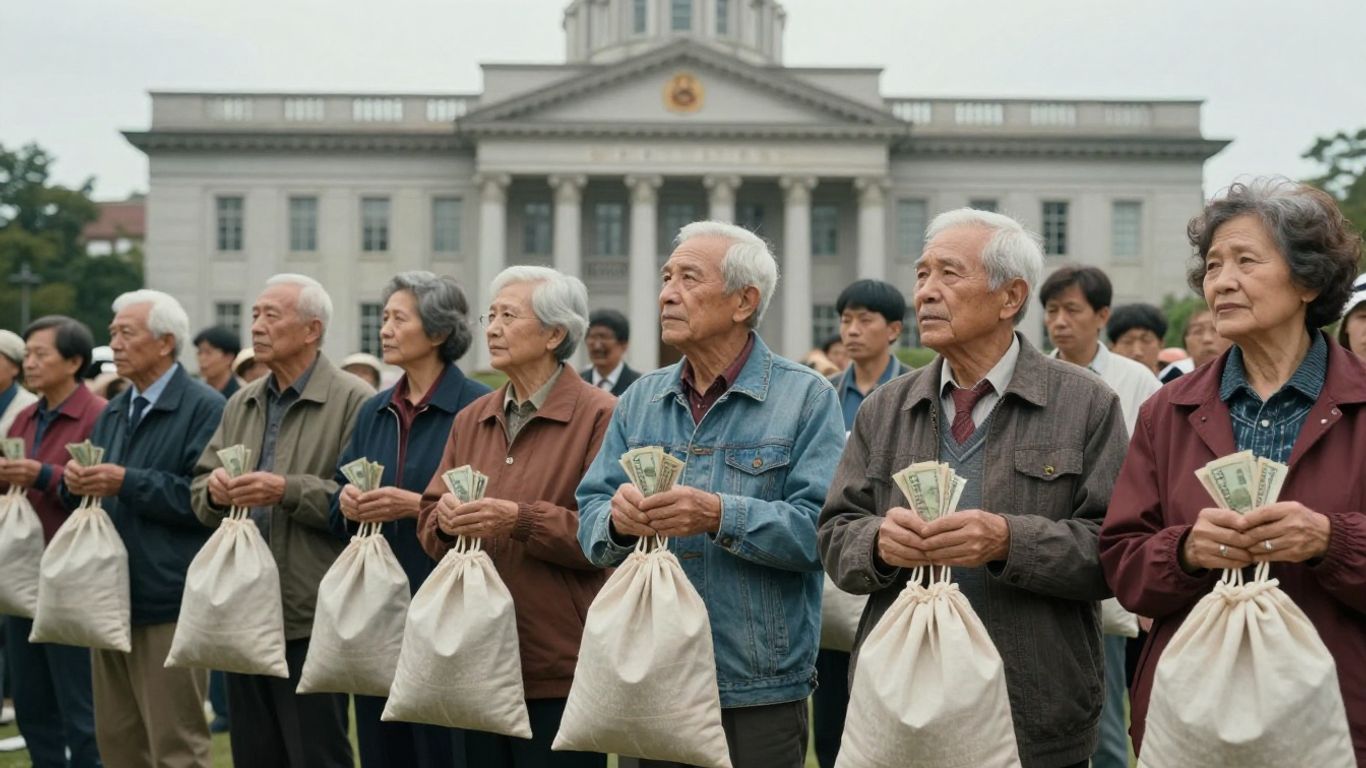
It’s getting harder and harder for governments to keep up, and frankly, it’s starting to show. We’re seeing public debt levels that are frankly scary, way higher than after World War II. And with more and more people hitting retirement age, that debt is only going to get bigger. It’s like a snowball rolling downhill, picking up speed and size.
Public Debt Levels Exceeding World War II Highs
Let’s be real, the numbers are not pretty. Many G20 countries are carrying debt loads that would make your head spin. This isn’t just some abstract economic theory; it means more taxpayer money gets eaten up by interest payments instead of being used for things we actually need, like infrastructure or supporting families. It’s a tough spot to be in, and it’s only getting tougher.
Aging Populations Aggravating Debt Burdens
So, what’s making this debt problem worse? You guessed it: our aging populations. As more people retire, they start drawing on pensions and healthcare systems, which are already stretched thin. This puts a massive strain on government budgets. We’re talking about a situation where the costs are going up, but the number of people working and paying taxes isn’t keeping pace. It’s a classic case of supply and demand, but for government services and the money to pay for them. This is why finding ways to afford the societal changes that come with getting older is so important [bc5a].
The Long-Term Fiscal Outlook for G20 Nations
Looking ahead, the picture isn’t exactly rosy. Without some serious changes, many G20 nations are facing a future where their spending consistently outstrips their income. This isn’t sustainable. We’re talking about potential cuts to public services, higher taxes down the line, or even more debt. It’s a tricky situation, and it’s going to require some tough decisions. The current trajectory suggests a future where governments are increasingly unable to meet their obligations, forcing households to pick up the slack. This puts a lot of pressure on working families who are already trying to save for their own futures and care for their aging relatives. It’s a cycle that’s hard to break, especially when economic growth is already sluggish. We need to think about how we manage these finances, and that includes looking at the role of public and private investment, as well as how we boost productivity. The slowdown in productivity growth over the past few decades is a real concern, and it’s impacting our ability to generate the wealth needed to support everyone [f5ea].
- The Debt Spiral: Governments are borrowing more, paying more in interest, and have fewer resources for essential services.
- The Dependency Ratio: More retirees mean more people relying on government support, while fewer workers are contributing taxes.
- Future Uncertainty: The long-term fiscal outlook suggests a challenging period ahead for many economies.
The current path of increasing public debt, coupled with an aging demographic, creates a fiscal challenge that is difficult to ignore. It’s a situation that demands attention and a clear-eyed assessment of the economic realities we face.
The Future of Economic Growth and Productivity
It’s getting harder to ignore the fact that our economies aren’t growing like they used to. The numbers don’t lie; GDP growth in the G20 area slowed to 0.7% in the last quarter of 2025. That’s down from 0.9% before. This isn’t just a blip; it’s a trend that’s been building for a while.
Slower GDP Growth Projections
When you look at the long game, the projections aren’t exactly inspiring. We’re talking about GDP growth over the next 30 years potentially being half a percentage point lower than what we’ve seen in the past three decades. This is based on current trends and assumes productivity rates stay put. It’s a stark reminder that the economic engine isn’t firing on all cylinders.
Constraints on Production Capacity
Part of the problem is that the workforce itself is changing. As populations age and birth rates drop, we’re seeing a shrinking and older workforce. This directly impacts our ability to produce goods and services. Think about it: fewer people available to work means less output, plain and simple. This is a challenge many developed nations are grappling with, and it’s not going away anytime soon. Some countries, like those in Europe, are looking at significant drops in their working-age population over the next few decades. Even the U.S. isn’t immune, with forecasts showing very slow growth in the working-age population.
The Slowdown in Productivity Growth
Productivity is supposed to be the key to growth, right? But lately, it’s been lagging. Even with all the talk about new technology and easy money from central banks, productivity rates have fallen. It’s a bit of a puzzle. Some economists point to a circular relationship: low productivity discourages investment, and low interest rates, often a result of easy money policies, keep unproductive businesses afloat, stifling the truly innovative ones. This lack of innovation means technology isn’t boosting productivity as much as it could. It’s a tough cycle to break, and it puts a damper on overall economic expansion. We need to find ways to encourage new ideas and reward efficiency, otherwise, we’re stuck in a rut. It’s a complex issue that requires serious attention if we want to see real economic progress. The situation in places like Argentina shows that significant economic transformation is possible, but it’s a difficult path to navigate.
The combination of an aging population, slower workforce growth, and stagnant productivity is creating a perfect storm that’s slowing down our economies. It’s not just about numbers on a spreadsheet; it affects jobs, investment, and the general prosperity of our communities.
Here’s a look at how productivity growth has been trending:
| Year Range | Average Annual Labour Productivity Growth |
|---|---|
| Past 30 Years | X% |
| Next 30 Years (Projected) | Y% |
Note: Specific percentages for X and Y would require detailed data analysis not available in the provided context.
So, What’s the Bottom Line?
Look, figuring out exactly how much Baby Boomers will hand over to the government is a tough nut to crack. It’s not like they’re filling out a single form for it. But one thing’s for sure: with more folks retiring and fewer people working, governments are going to feel the pinch. They’re already dealing with a mountain of debt, and now they’ve got more expenses for older citizens. It seems like the government’s looking for more money, and guess who might end up footing more of the bill? Yeah, it’s probably going to be the working folks. We’re seeing governments try to push back retirement ages and things like that, but it’s a messy business. Ultimately, it looks like the burden is shifting, and it’s not exactly a rosy picture for taxpayers down the road.
Frequently Asked Questions
What is the main problem with older people and government money?
As more people get older, governments have to spend more money on things like pensions and healthcare. At the same time, there are fewer younger people working to pay taxes. This makes it harder for governments to pay for everything.
Why is government debt going up?
Governments have borrowed a lot of money, especially after the 2008 financial crisis and the COVID-19 pandemic. Now, interest rates are higher, making it more expensive to pay back this debt. Plus, governments are spending more on things like defense and clean energy, adding to the costs.
What does ‘wealth transfer’ mean?
It means money and property being passed down from one generation to the next, usually when someone passes away. This can include things like houses, savings, and investments.
How does wealth transfer affect inequality?
When wealthy families pass down large fortunes, it can make the gap between the rich and the poor even bigger. People who inherit a lot of money have a big advantage over those who don’t.
Are birth rates important for the economy?
Yes, when fewer babies are born, there are fewer people who will grow up to work and pay taxes. This can slow down economic growth because there are fewer workers and less spending.
Are families expected to pay more for retirement and healthcare?
Yes, because governments and companies might not be able to cover all the costs for an aging population, families are increasingly expected to save more for their own and their relatives’ retirement and healthcare needs.
What is the ‘old-age dependency ratio’?
It’s a way to measure how many older people (usually 65 and over) there are compared to the number of people who are working (usually between 15 and 64). A higher ratio means more older people are relying on fewer workers.
What can governments do about these challenges?
Governments can try different things, like encouraging more people to immigrate for work, raising the age when people can retire, cutting down on government benefits, or increasing taxes. However, these ideas can be unpopular and hard to put into action.