
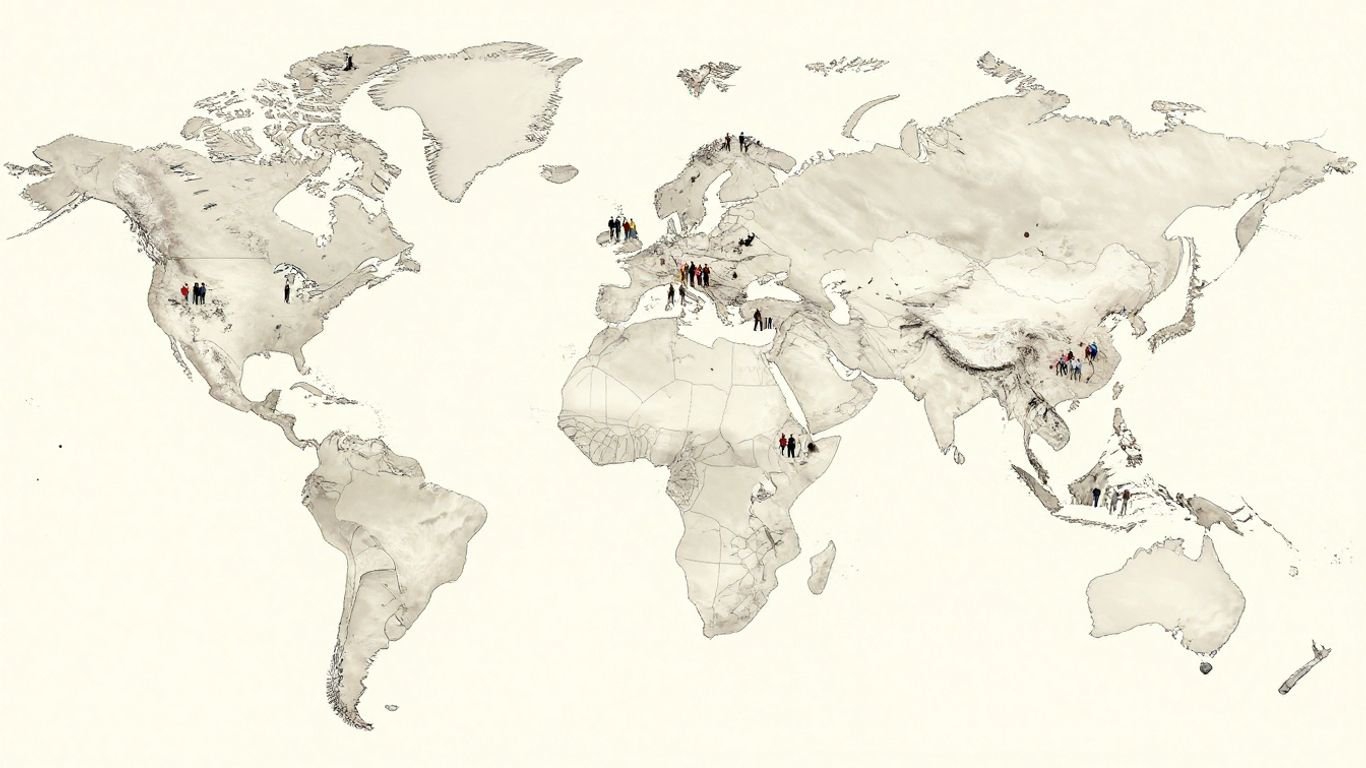
Countries With the Smallest Indian and Pakistani Diaspora Populations
Here are some main points to remember about where Indian and Pakistani people are found in smaller numbers around the world:
Key Takeaways
- Many countries, especially smaller ones or those far from traditional migration routes, have very few people from India and Pakistan.
- European nations like those in the Baltics and parts of Eastern Europe show a low presence of these communities.
- Isolated islands in the Pacific and remote territories in Asia and Africa also have negligible Indian and Pakistani populations.
- Even in larger continents like South America and Africa, specific regions and countries have a notably small footprint.
- The distribution of these populations highlights diverse global migration trends and economic factors influencing settlement.
European Nations With Minimal South Asian Presence
When we look at the demographic makeup of Europe, it’s clear that the vast majority of the continent doesn’t host large Indian or Pakistani communities. While some Western European nations have seen more significant migration over the decades, many other parts of Europe remain sparsely populated by individuals from these South Asian countries. It’s a different story compared to places like the UK or even parts of Germany, where established communities exist.
The Baltic States: A Near Absence
Estonia, Latvia, and Lithuania, the Baltic states, are notable for their very small Indian and Pakistani populations. These countries, with their unique histories and economic landscapes, haven’t historically attracted large numbers of migrants from South Asia. The numbers are so low that they barely register on demographic charts.
- Estonia: Reports suggest a mere handful of individuals, around 1,163, making up a tiny fraction of the total population.
- Latvia: Similar to Estonia, Latvia has a very small presence, with figures around 785.
- Lithuania: The numbers here are also minimal, with approximately 1,042 people.
These figures highlight a distinct lack of significant South Asian diaspora in this corner of Europe. It’s a stark contrast to other regions and points to specific factors influencing migration patterns.
Eastern European Outposts
Moving eastward, countries like Poland, Slovakia, and the Czech Republic also show relatively low numbers of Indian and Pakistani residents. While there’s a presence, it’s not on the scale seen in Western Europe. These nations have their own economic and social dynamics that shape immigration.
Here’s a quick look:
- Poland: Has seen some growth, but the Indian population is still around 12,000, a small percentage of the total.
- Slovakia: The numbers are even smaller, with reports indicating only about 100 individuals.
- Czech Republic: Figures suggest around 4,950 people, which, while higher than Slovakia, is still modest in the grand scheme.
These countries are not major hubs for the South Asian diaspora, reflecting different migration choices and opportunities compared to other European destinations. It’s interesting to see how these patterns play out across the continent.
The Balkan Peninsula’s Low Numbers
The Balkan region, with countries like Albania, Bosnia and Herzegovina, and North Macedonia, generally exhibits very low Indian and Pakistani populations. The historical, cultural, and economic ties of these nations differ significantly from those that have drawn larger South Asian communities elsewhere in Europe. The data confirms this trend, showing minimal representation.
The demographic landscape of the Balkans is largely shaped by its own complex history and regional dynamics, which haven’t historically led to substantial Indian or Pakistani settlement. This is a region where the diaspora presence is almost negligible.
- Albania: Shows an extremely low number, with only about 56 individuals.
- Bosnia and Herzegovina: Reports indicate a very small community, around 26 people.
- North Macedonia: Similar to its neighbors, the numbers are minimal, with around 10 individuals.
These figures underscore the limited footprint of the Indian and Pakistani diaspora in the Balkan Peninsula, making it a region with one of the smallest presences in Europe. It’s a testament to the varied migration flows across the continent, and how different regions attract different groups. For those interested in global migration patterns, understanding these variations is key, especially when considering the impact of aid and development, like the significant military aid flowing into Ukraine, which raises concerns about potential diversion.
Isolated Pacific Islands And Their Demographics
Micronesia’s Sparse Indian and Pakistani Communities
When you think about the Pacific, you probably picture endless blue water and maybe some palm trees. It’s not exactly a place that comes to mind when you’re looking for large communities of people from India or Pakistan. And you’d be right. These islands, scattered across a massive ocean, don’t have much of a South Asian presence. It’s just not a common destination for folks looking to start a new life.
Melanesian Islands With Few Arrivals
Melanesia, a region that includes places like Fiji (though Fiji has a notable Indian population, it’s often grouped with Oceania more broadly), Papua New Guinea, and the Solomon Islands, also sees very few people from India or Pakistan. The economies and cultures here are quite different, and frankly, the distance is a huge factor. It’s a long way from South Asia to these islands, and most people looking to emigrate tend to go to places that are closer or have more established communities. The sheer size of the Pacific Ocean is a barrier in itself. You can see how spread out these Pacific Island countries are.
Polynesian Holdings
Polynesia, home to places like Samoa, Tonga, and French Polynesia, follows the same pattern. You’ll find tiny pockets of people here and there, but nothing substantial. The focus for many migrants is often on economic opportunities, and these remote islands, while beautiful, don’t typically offer the kind of jobs that attract large numbers of South Asians. It’s a different world out there, and the draw isn’t as strong.
The vastness of the Pacific means that establishing and maintaining significant diaspora communities is a challenge. Logistical hurdles and different economic landscapes mean that South Asian populations remain negligible in most of these isolated island nations.
It’s interesting to consider how geography really shapes where people end up. While Australia and New Zealand have seen more Indian migration, the smaller, more remote islands are largely untouched. It’s not a judgment, just a fact of how migration patterns work. People go where they see opportunity or have connections, and for many Pacific islands, those connections just aren’t there. It’s a quiet corner of the world for the Indian and Pakistani diaspora.
African Nations With Limited Indian and Pakistani Footprints
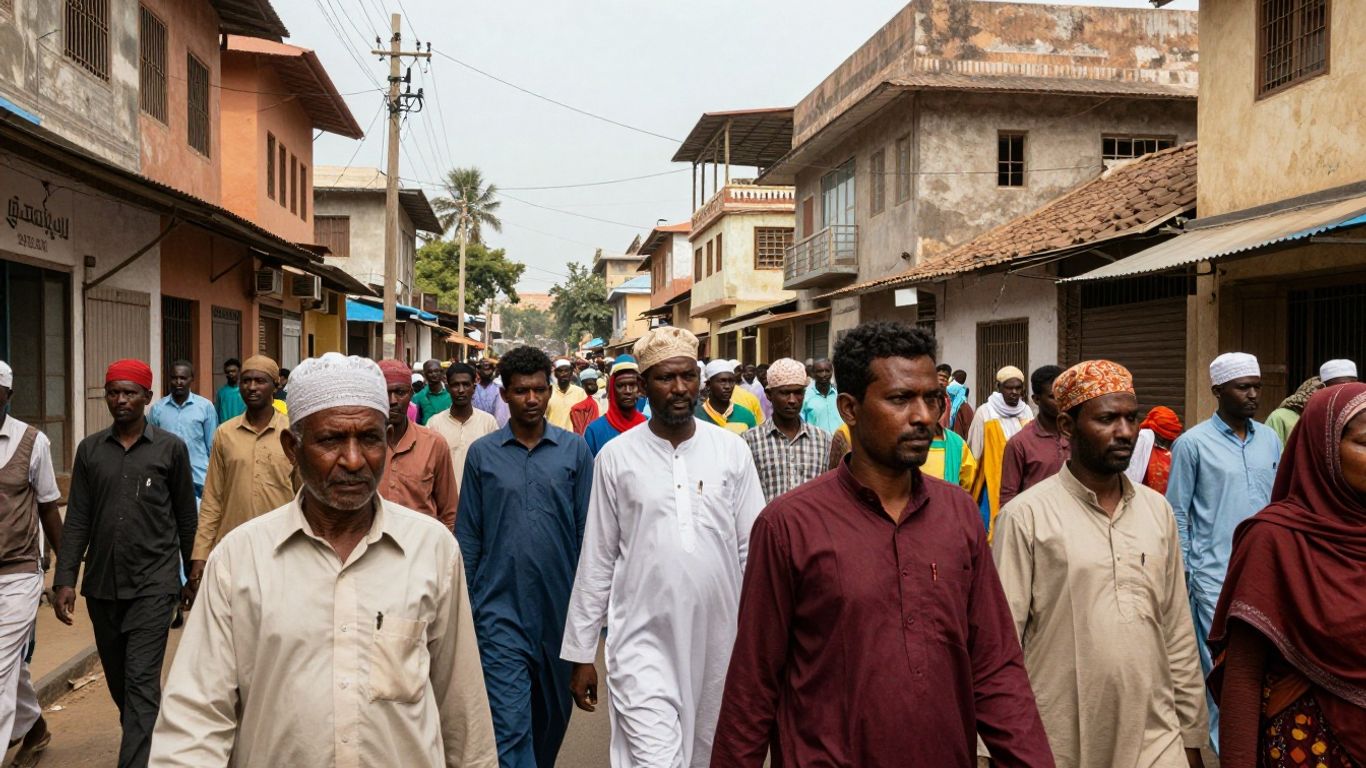
When we look at the continent of Africa, it’s easy to see where the vast majority of the Indian and Pakistani diaspora has settled. Places like South Africa, Mauritius, and Kenya have significant populations, often with deep historical roots. But what about the rest of the continent? Many African nations have a very small presence of people from India and Pakistan, often just a handful of individuals or families.
North Africa’s Minimal Representation
North Africa, with its distinct cultural and historical ties, doesn’t show a large Indian or Pakistani community. Countries like Algeria, Egypt, and Morocco have some Indian residents, but the numbers are quite low when you consider the total population. It’s not a major destination for folks from South Asia.
| Country | Indian Population | % of Total Population |
|---|---|---|
| Algeria | 5,710 | 0.01% |
| Egypt | 4,301 | 0.04% |
| Libya | 1,502 | 0.02% |
| Morocco | 355 | <0.01% |
| Sudan | 1,764 | <0.01% |
West African Coast’s Low Numbers
Heading west, the story is much the same. Countries along the West African coast, while vibrant and diverse, don’t feature large Indian or Pakistani communities. You’ll find a few people here and there, but nothing substantial. It’s a region that hasn’t seen a big influx from South Asia.
- Ghana has a small but established community.
- Nigeria, despite its size, has a relatively low percentage of South Asians.
- Liberia and Sierra Leone have very minimal numbers.
Central African Republic’s Scarcity
Central Africa is perhaps one of the least common destinations for people from India and Pakistan. The Central African Republic, for example, has an extremely small number of Indian residents. This region is quite remote for many international migrants, and the numbers reflect that.
The demographic landscape of many African nations shows a clear preference for certain regions when it comes to South Asian migration, with Central Africa being one of the least represented.
It’s clear that while South Asians have spread across the globe, their presence in many parts of Africa remains quite limited, often overshadowed by larger communities in other regions. This isn’t to say there’s no presence, just that it’s not a major demographic feature in these specific areas. For those interested in migration patterns, understanding these smaller communities can be just as insightful as studying the larger ones, offering a different perspective on global movement and settlement patterns. It’s a reminder that the world is a big place, and not every corner sees the same kind of migration.
Lesser-Known South Asian Communities in Asia
When we talk about the Indian and Pakistani diaspora, our minds often jump to places like the UK, Canada, or the US. But there are smaller, less talked-about communities scattered across Asia too. It’s interesting to see where people from the subcontinent have settled, even in places you might not expect.
Central Asian Republics’ Small Populations
While Central Asia has historical ties to South Asia, the modern Indian and Pakistani diaspora isn’t huge. Countries like Kazakhstan and Kyrgyzstan have small but present communities. These folks are often there for work or business opportunities. It’s not a massive influx, but a steady presence.
- Kazakhstan: Around 6,885 individuals.
- Kyrgyzstan: Approximately 11,204 people.
- Uzbekistan: A smaller group, with about 399 residents.
East Asian Nations’ Limited Influx
East Asia, with its distinct cultures and economies, hasn’t seen a massive wave of South Asians compared to Western countries. However, there are noticeable communities in places like China and Japan. These populations are often concentrated in major cities, working in tech, business, or education. The numbers might seem small on a global scale, but they represent a significant presence in their respective countries. The sheer scale of the Indian diaspora globally is staggering, with millions living abroad. For instance, China has a reported 56,050 Indians, though many are non-resident. Japan hosts around 43,886 individuals, and Hong Kong has a community of about 32,796. It’s a testament to the global reach of people from India and Pakistan, even if these numbers are dwart compared to other destinations. It’s worth noting that the global Indian diaspora is a significant force, with the U.S. alone hosting over 5 million people, impacting economies worldwide, like Guyana’s rapid growth.
Northeast Asian Territories
Further north, in Northeast Asia, the presence of Indian and Pakistani communities becomes even more sparse. Countries like Mongolia and North Korea have very minimal numbers. These are often individuals on specific assignments or with unique circumstances. It’s a stark contrast to the larger diaspora hubs, showing just how varied the settlement patterns are.
The movement of people is a complex phenomenon, influenced by economic factors, historical connections, and individual choices. While some regions attract large numbers, others remain on the periphery, hosting only a handful of individuals. This uneven distribution highlights the diverse paths taken by diaspora communities.
- Mongolia: A mere 117 individuals.
- North Korea: Reports indicate around 370 Indians.
- Taiwan: Hosts a modest number, around 4,382.
Caribbean Islands With Few South Asians
When you think about the Caribbean, you probably picture white sandy beaches and maybe some reggae music. It’s not exactly the first place that comes to mind for Indian or Pakistani communities, and for good reason. While some islands have a significant South Asian presence, many others have very few.
Lesser Antilles’ Minimal Presence
The smaller islands in the Lesser Antilles chain generally don’t have large Indian or Pakistani populations. Think places like Antigua and Barbuda, Saint Kitts and Nevis, or Dominica. While there are some folks with South Asian heritage, they’re not a dominant group. It’s a far cry from places like Trinidad and Tobago or Guyana, where the history of indentured labor brought over half a million people from British India between 1838 and 1917. These smaller islands just didn’t see that same level of migration. It’s interesting how history shaped these demographics, isn’t it? You can find more details on this historical migration here.
Greater Antilles’ Limited Reach
Even in the larger islands of the Greater Antilles, like Jamaica, the numbers aren’t as high as in some of the South American nations. Jamaica does have a notable Indo-Jamaican population, but it’s still a minority. Other islands in this group, like Cuba or the Dominican Republic, have even smaller communities. It’s not that there’s no South Asian presence at all, but it’s definitely not a defining characteristic of the islands’ cultural makeup. The focus tends to be elsewhere, and that’s just how it is.
Bahamian Holdings
When you look at the Bahamas, the picture is pretty similar. You’ll find a small number of people of Indian or Pakistani descent, but they are a tiny fraction of the overall population. It’s not a place known for a large South Asian diaspora. The islands are more known for tourism and their proximity to the United States. It’s just not a major destination for large-scale South Asian settlement.
The historical patterns of migration, driven by economic needs and colonial ties, have created distinct demographic landscapes across the Caribbean. Some islands became hubs for South Asian communities, while others remained largely untouched by this particular wave of immigration.
South American Countries With Scarce Indian and Pakistani Populations
When you look at South America, it’s pretty clear that large Indian or Pakistani communities aren’t really a thing here. Unlike other parts of the world where you see significant diaspora populations, this continent is mostly untouched by that.
Andean Nations’ Low Numbers
Countries like Peru, Ecuador, and Bolivia have very small numbers of people from India and Pakistan. It’s not a major demographic feature at all. You’re talking about a handful of folks, really. For instance, Peru has only a few hundred Indians, and Bolivia is even smaller. It’s hard to even find solid numbers sometimes because they’re so few.
Southern Cone’s Limited Influx
Down in the southern part of the continent, places like Argentina and Uruguay also show minimal Indian and Pakistani presence. Argentina has a few thousand, which sounds like a lot, but when you consider the total population, it’s a tiny fraction. Uruguay is similar, with very few people of Indian or Pakistani descent. It seems like the draw just wasn’t there for large-scale migration to these areas.
Northern South America’s Scarcity
Even in the north, countries like Colombia and Venezuela don’t have large South Asian communities. Colombia has a very small number, barely registering on the demographic charts. Venezuela has a slightly higher number, but it’s still a very small percentage of the overall population. It’s a stark contrast to places like Guyana or Suriname, where the Indian population is quite significant, making up a large chunk of their demographics. The rest of the continent, however, remains largely unpopulated by these communities.
Obscure European Territories
When we talk about European nations with minimal Indian and Pakistani populations, we often overlook the smaller, less-traveled corners of the continent. These places, while part of Europe, don’t typically show up on the radar for large-scale immigration from South Asia. It’s not about a lack of welcome, but more about geography, economic pull, and historical ties.
Microstate Demographics
Tiny European states, by their very nature, have small total populations, which naturally means any diaspora community will also be small. Think of places like San Marino or Liechtenstein. While exact figures for Indian and Pakistani residents can be hard to pin down, they are generally in the very low hundreds, if not dozens. These microstates are often more focused on their immediate neighbors and historical trading partners. It’s a different kind of demographic landscape compared to larger nations.
Island Nations’ Limited Appeal
Similarly, European island nations, especially those further afield or with limited economic opportunities, tend to have very small South Asian communities. Places like Malta or Cyprus, while having some Indian presence, don’t host massive numbers. The appeal for immigrants often lies in larger economies with more established networks. For instance, Malta has a small but noticeable Indian population, mostly working in specific sectors, but it’s a fraction of what you’d find in, say, the UK or Germany. The same goes for Cyprus. These islands are beautiful, no doubt, but they don’t usually represent the primary destination for those seeking to build a new life from South Asia.
It’s interesting to see how these smaller communities exist, often integrated into specific industries or local economies. They might not be large enough to make headlines, but they are part of the diverse tapestry of modern Europe. The focus here is on the minimal presence, highlighting places where the Indian and Pakistani diaspora is a tiny speck on the demographic map.
The sheer scale of some European countries means even a small percentage can translate to thousands of people. However, in these obscure territories, the numbers are so low they barely register. It’s a testament to how migration patterns are shaped by more than just proximity.
Here’s a look at some of the numbers, keeping in mind these are often estimates:
| Territory | Indian Population (Est.) | Pakistani Population (Est.) | Total Population (Approx.) |
|---|---|---|---|
| San Marino | 0 | Very Few | 34,000 |
| Liechtenstein | < 10 | Very Few | 39,000 |
| Andorra | ~170 | Very Few | 77,000 |
| Malta | ~5,000 | Very Few | 440,000 |
| Cyprus | ~300 | Very Few | 1.2 Million |
Remote Asian Territories
Siberian Holdings
When you think about Asia, Siberia probably isn’t the first place that comes to mind for large Indian or Pakistani communities. It’s a vast, cold region, and frankly, not exactly a magnet for folks looking to set up shop far from home. The numbers here are pretty small, reflecting the harsh climate and the limited economic opportunities that aren’t tied to natural resources. Most of the South Asian presence you might find would likely be tied to specific, often temporary, work or educational pursuits. It’s a far cry from the bustling diasporas found elsewhere.
Far Eastern Outposts
Moving further east, places like the Russian Far East or even some of the more isolated parts of China don’t exactly have a booming Indian or Pakistani population. These areas are geographically distant from the traditional hubs of South Asian migration. Think about it: you’re looking at regions with their own unique cultures and economies, and the draw for people from India or Pakistan just isn’t that strong. The communities that do exist are often quite small, sometimes just a handful of individuals or families. It’s a testament to how migration patterns are shaped by proximity, economic ties, and established networks. For those looking for a significant South Asian presence, these far-flung territories are unlikely to be the place to find it. The sheer distance and the established local populations mean that any Indian or Pakistani communities here are, by necessity, quite niche.
It’s interesting to consider how these remote areas contrast with the more popular destinations for emigration. While over 35 million Indians live abroad, with places like the USA and UAE being top choices, these far eastern outposts are at the other end of the spectrum. Many Indians seek opportunities in more accessible and economically vibrant regions.
Here’s a look at some of the smaller numbers:
| Territory | Estimated Indian/Pakistani Population | Notes |
|---|---|---|
| North Korea | ~370 | Primarily students or workers |
| Mongolia | ~117 | Very small, often transient presence |
| East Timor | ~100 | Minimal recorded presence |
The demographic landscape of these remote Asian territories is largely shaped by geography and historical migration patterns. Unlike regions with established trade routes or colonial ties to South Asia, these areas have seen minimal influx. The economic drivers for migration are often absent, leading to negligible diasporic communities.
African Territories With Minimal South Asian Ties
Southern African Nations’ Low Numbers
When you look at the continent of Africa, some regions have a noticeable presence of people from India and Pakistan, while others barely register. Southern Africa, for instance, has a significant Indian population in places like South Africa itself, but when you move to some of the smaller nations, the numbers drop off considerably. Countries like Botswana and Namibia have very small communities, often numbering in the hundreds or low thousands. It’s not a huge footprint, but it’s there.
East African Coast’s Limited Reach
The East African coast, with countries like Kenya and Tanzania, has historically seen more South Asian migration. However, if you venture further inland or to some of the smaller island nations off the coast, the Indian and Pakistani diaspora shrinks. Places like Comoros or even parts of mainland Tanzania away from the major ports show very limited numbers. It seems the historical trade routes and established communities played a big role in where people settled.
Here’s a quick look at some of the smaller numbers:
| Country | Indian/Pakistani Population (Approx.) |
|---|---|
| Central African Republic | 66 |
| Chad | 200 |
| Equatorial Guinea | 250 |
| Sao Tome and Principe | 51 |
| Mauritania | 150 |
It’s interesting to see how demographics can vary so much even within the same continent. The reasons for these small numbers are varied, often tied to economic opportunities, historical ties, and sometimes, just plain distance from the main migration paths. It’s a far cry from the larger communities you find in places like South Africa or Mauritius. The appeal of these more remote locations for establishing large South Asian communities just hasn’t been as strong.
Oceanian Nations With Negligible South Asian Presence
Australasia’s Limited Influx
When you look at the big players in Oceania, like Australia and New Zealand, you see some Indian and Pakistani communities, sure. Australia has a decent number, and New Zealand has a growing presence too. But when you zoom out and consider the vastness of the Pacific, these numbers, while significant for those countries, don’t exactly paint a picture of a widespread South Asian takeover. It’s more like a few scattered dots on a huge map. The focus here is on the truly minimal footprints.
Island Nations’ Limited Appeal
Now, let’s talk about the smaller island nations scattered across the Pacific. Places like Fiji have a notable Indo-Fijian population, which is a whole different story. But many of the smaller island states? Not so much. We’re talking about places where the Indian and Pakistani diaspora is practically non-existent. It’s not exactly a prime destination for folks looking to set up shop, and that’s just the way it is.
Here’s a quick look at some of the smaller island nations and their very small South Asian numbers:
- Kiribati: Around 50 individuals.
- Solomon Islands: Also around 50 individuals.
- Tuvalu: Roughly 50 individuals.
- Palau: About 27 individuals.
- Nauru: Around 20 individuals.
These numbers are so small they’re barely a blip on the demographic radar. It really highlights how certain regions just don’t attract large numbers of people from South Asia. It’s not a judgment, just an observation about global migration patterns. For those interested in the broader Sri Lankan diaspora, you can see their widespread presence across continents.
The sheer isolation and limited economic opportunities in many of these smaller island nations mean they aren’t typically on the radar for large-scale immigration from any part of the world, including South Asia. It’s a matter of geography and economics, plain and simple.
Conclusion
It’s pretty interesting to see how spread out people from India and Pakistan are across the globe. While some countries have large communities, many places have very few, almost none. This shows that people move for all sorts of reasons – jobs, family, or just a change of scenery. Looking at countries with the smallest Indian and Pakistani populations gives us a different view of global migration patterns. It’s not always about the biggest numbers; sometimes, it’s about where people aren’t, and why that might be. The world is a big place, and not everyone ends up in the same spots. It’s a reminder that migration is a complex thing, shaped by history, economics, and individual choices.
Frequently Asked Questions
Which countries have almost no Indians or Pakistanis?
It’s hard to say *no* one, but places like North Korea, some small island nations in the Pacific (like Nauru or Tuvalu), and even some European microstates (like Monaco or Liechtenstein) have extremely small numbers, often in the dozens or fewer. These places just don’t have many immigrants in general.
Why would a country have so few people from India or Pakistan?
There are a few reasons. Maybe the country doesn’t have many job opportunities that attract people from South Asia. Or perhaps it’s geographically very far away, making it harder and more expensive to get there. Sometimes, immigration policies might also play a role, making it tough for people to move.
Are there any European countries with very few Indians and Pakistanis?
Yes, definitely. Countries like Belarus, Moldova, and the Baltic states (Estonia, Latvia, Lithuania) have very small communities. While places like the UK and Germany have large populations, these Eastern and Northern European countries have much smaller numbers.
What about islands? Do they have many people from India or Pakistan?
Generally, smaller islands, especially those far from major travel routes, tend to have very few. Think of places like Kiribati or Marshall Islands in the Pacific. Larger islands or those with historical ties to countries like the UK or France might have more, but many small ones have tiny numbers.
Does this mean people from India and Pakistan only go to certain places?
Not exactly. People from India and Pakistan have moved all over the world! But it’s true that they tend to go to places where there are more job opportunities, established communities, or easier ways to settle. So, while you find them everywhere, the numbers are much bigger in some countries than others.
Are there any South American countries with few Indian or Pakistani people?
Yes, while countries like Guyana and Suriname have significant populations due to historical reasons, many other South American nations have smaller numbers. For instance, countries in the southern cone like Chile or Argentina, and even some northern ones, show lower figures compared to places with larger established diasporas.
What about Africa? Are there countries with hardly any South Asians?
Africa is quite diverse. While South Africa, Kenya, and Mauritius have large Indian populations, many other African countries, especially those in North, West, and Central Africa, have much smaller numbers. Countries like the Central African Republic or many West African nations have very limited South Asian communities.
Does ‘smallest population’ mean zero people?
Usually, when we talk about the ‘smallest’ populations, we mean very, very few people – maybe in the dozens, hundreds, or low thousands. It doesn’t necessarily mean absolutely zero, but it’s a number so small it’s barely noticeable compared to countries with hundreds of thousands or millions.
2 Comments