
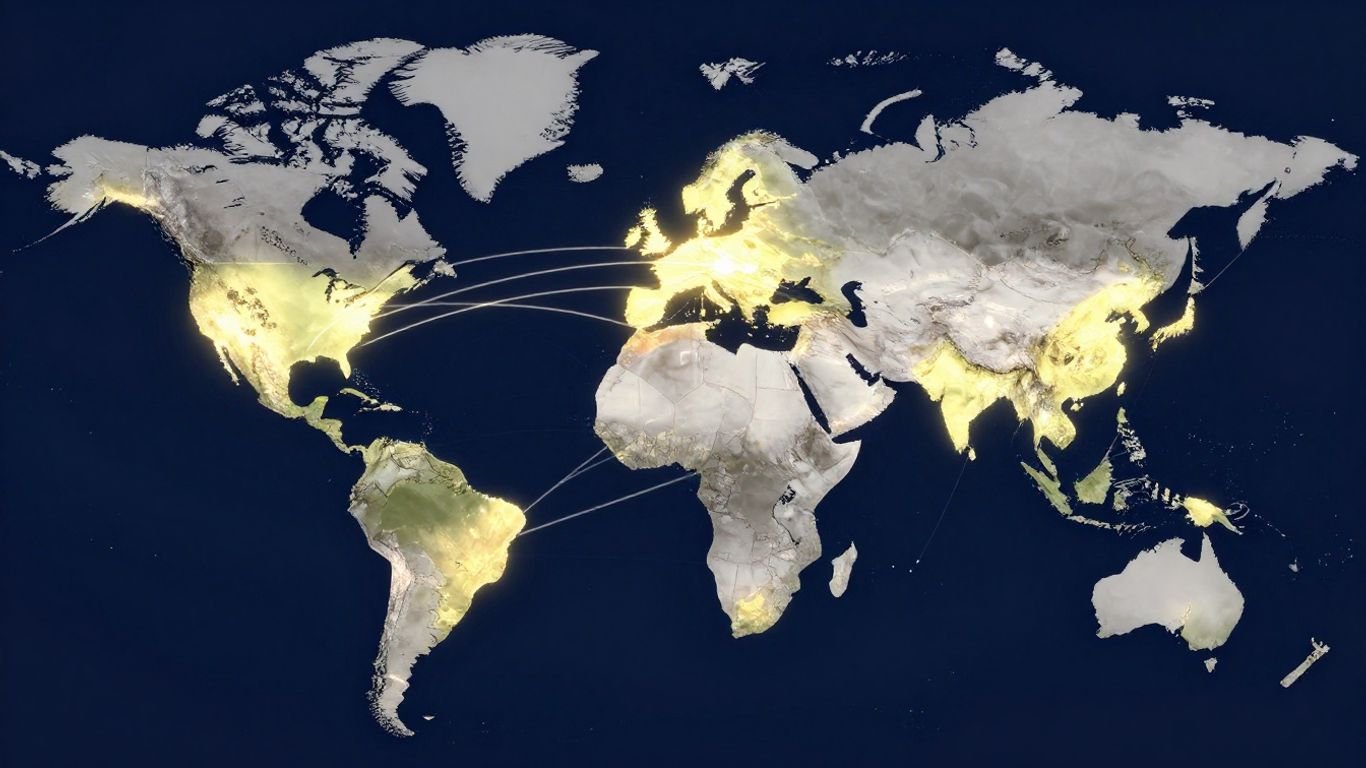
Countries with the most Vassal States Under its Influence
Ever wondered about countries that had a bunch of other states under their thumb? It’s a concept that goes way back, long before modern borders were even a thing. Empires used to have these ‘vassal states,’ which were basically territories that owed loyalty and often resources to a bigger power. It wasn’t always a simple master-slave deal, though. The specifics changed a lot depending on who was in charge and where. We’re going to look at some of the biggest examples and what it all means.
Key Takeaways
- Ancient empires like the Hittites and Neo-Assyrians had extensive networks of vassal states, often requiring tribute and military service.
- The Ottoman Empire controlled numerous tributary and vassal states across its vast territory, with varying degrees of autonomy.
- Imperial China maintained a tributary system, influencing neighboring states through a complex order of diplomacy and obligation.
- Modern international law emphasizes the equality of states, though concepts like ‘puppet states’ and ‘client states’ reflect modern forms of influence that echo historical vassalage.
- The idea of vassal states, with mutual obligations between a dominant power and subordinate entities, has historical parallels but differs significantly from modern international relations.
Ancient Empires and Their Vassal States
The Hittite Empire’s Grip on Anatolia and Syria
The Hittite Empire really knew how to run things, especially back in the 14th century BC. They had this whole system of vassal states stretching across Anatolia and into Northern Syria. It wasn’t just a casual arrangement; the Hittite king basically laid down the law, and the local rulers had to go along with it. New treaties were drawn up whenever a new king took over, or a vassal ruler changed. Sometimes, these local leaders got a special ‘protectorate’ status, which sounds fancy, but it didn’t actually mean they had more freedom. They still had to follow the king’s orders. These treaties meant military service for the Hittites, but in return, the vassals got protection. Some had to pay yearly tribute, too. It was a pretty tight system, and if a usurper tried to take the Hittite throne, the vassals were supposed to help put the rightful king back in power. Do that, and their own rule was guaranteed.
Neo-Assyrian Dominance and Tribute Collection
The Neo-Assyrian Empire, from around 911 BC to 609 BC, had a complex relationship with its vassal states. These weren’t just conquered territories; they were connected politically and economically, but still seen as separate from the ‘properly Assyrian’ parts. The Assyrians actually liked this ‘unified diversity,’ letting their vassals keep some of their own culture. It’s interesting because as the empire slowed down its expansion, it actually took on more vassal states. This suggests a shift in how they managed their power. A big part of this was tribute collection. Assyrian kings would collect all sorts of things – plants, animals, you name it – from these regions. They even created elaborate gardens to show off specimens from across their empire. In art, you’d see these vassal representatives bringing gifts, often bowing low to the Assyrian king. It was all about showing who was in charge.
The southern regions under Neo-Assyrian control actually became more settled and prosperous compared to some northern areas that had been damaged. This shows that for some of these kingdoms, being a vassal state wasn’t a bad deal at all.
The Egyptian, Hittite, and Mitanni Sphere of Influence
Back in the day, the Egyptians, Hittites, and the Mitanni kingdom were all playing a big game of influence, and vassal states were a key part of it. Think of it like a giant chess match across the Near East. These empires would extend their reach, bringing other kingdoms under their sway. The exact terms of these relationships could differ, but generally, it meant paying tribute, providing military support, or at least staying out of the dominant power’s way. It was a constant push and pull, with empires trying to secure their borders and resources by making sure their neighbors were either allies or, more often, subordinate states. This system of client states was pretty common in the ancient world, shaping the political map for centuries.
The Ottoman Empire’s Extensive Vassal Network
The Ottoman Empire, a power that spanned centuries and continents, didn’t just conquer; it incorporated. Its vast reach was often maintained not just by direct rule, but by a complex web of vassal and tributary states. This system allowed the Porte to project power and extract resources without the full administrative burden of governing every single town and village directly. It was a pragmatic approach, a way to manage a sprawling domain that stretched from the Balkans all the way to the Indian Ocean.
Tributary States from Wallachia to the Aceh Sultanate
Think about the sheer geographical spread. We’re talking about principalities like Wallachia and Moldavia in Europe, which paid regular tribute and offered military support, but largely managed their own internal affairs. Then, further east, you had entities like the Crimean Khanate, a crucial buffer state and a major source of manpower. And it didn’t stop there. Even the Aceh Sultanate, way out in Southeast Asia, acknowledged Ottoman suzerainty at various points, sending tribute and receiving recognition in return. This wasn’t just about collecting taxes; it was about maintaining a sphere of influence and projecting an image of imperial might across diverse cultures and geographies. This extensive network was a testament to the empire’s ability to adapt its control mechanisms to local conditions.
Forms of Vassalage Within the Ottoman Realm
It’s a common mistake to think all vassal states were treated the same. That’s just not how it worked. Some rulers were allowed to elect their own successors, provided they paid their dues and didn’t cause trouble. Others were more directly managed, with the Sultan’s approval needed for key appointments. Then there were those who paid tribute for the privilege of ruling their own lands under Ottoman protection. It was a spectrum, really, from near-autonomy to something much closer to direct control, all depending on the strategic importance of the region and the specific historical context. This flexibility was key to keeping so many disparate groups under the Ottoman umbrella.
Crimean Khanate: A Key Vassal Entity
The Crimean Khanate stands out as a particularly important example. For centuries, it served as a vital strategic asset for the Ottomans. Its cavalry was feared across Eastern Europe, and its raids into Polish and Russian lands served Ottoman interests by disrupting potential rivals. In return for their loyalty and service, the Khans enjoyed a significant degree of autonomy. They were instrumental in the Ottoman slave trade, providing a constant stream of captives that fueled the empire’s economy and manpower needs. The relationship was mutually beneficial, at least for a long time, solidifying the Khanate’s position as a cornerstone of Ottoman power in the north. It’s a prime example of how a well-managed vassal state could be more valuable than a directly conquered territory.
Imperial China’s Suzerainty Over Neighboring States
Li Hung-chang’s Policy Towards Korea
When we talk about historical power dynamics, China’s relationship with its neighbors, especially Korea, is a really interesting case. For a long time, China saw itself as the center of the world, and surrounding states were expected to acknowledge this. Li Hung-chang, a big deal in late 19th-century China, was all about maintaining this traditional order. He believed Korea was essentially a Chinese dependency, even though Korea had a lot of freedom in how it ran its own affairs. It wasn’t like a colony or anything. But things got complicated. China started meddling more, which was a big shift from their usual hands-off approach. Some folks, like Yuan Shikai, really pushed the idea that Korea was a subordinate state. Others, though, like William W. Rockhill, argued that calling Korea a "vassal state" was misleading. He pointed out that the tribute sent to China was often just a way to get better trade deals. Korea itself saw China more like a big brother or a father figure, not a master. The whole thing shows how fuzzy these relationships could get, with different people seeing the same situation in totally different ways. It’s a good reminder that history isn’t always black and white.
Protectorates in Imperial China’s Frontier
Imperial China also had this system where they’d exert influence over areas on their borders, kind of like protectorates. These weren’t always directly ruled like provinces, but they were definitely under China’s umbrella. Think of it as a way to keep the frontier stable and secure without having to manage every little detail. It was a practical approach to managing a vast territory and its neighbors. The idea was to maintain a buffer zone and ensure that no rival powers could get too close. This often involved local leaders staying in charge, but they had to acknowledge China’s superior position. It was a delicate balancing act, keeping these regions somewhat independent while still ensuring their loyalty and cooperation. This strategy helped China project its power and maintain its influence without overextending itself.
The East Asian Tributary Order
This whole system in East Asia, often called the tributary order, was pretty unique. It wasn’t just about China being the boss; it was a whole framework of how states interacted. Countries like Korea, Vietnam, and even Japan at times, would send envoys with gifts – tribute, basically – to the Chinese emperor. In return, they got recognition, trade privileges, and sometimes even military support. It was a way of managing international relations that emphasized hierarchy and ritual. The emperor was seen as the central figure, the Son of Heaven, and all others were expected to acknowledge his supreme position. This didn’t always mean China was calling all the shots day-to-day, but it set the tone for how things worked. It was a complex web of obligations and benefits that shaped the region for centuries. It’s a stark contrast to the way countries deal with each other today, where everything is supposed to be about equal footing. This historical model shows a different way of thinking about international order, one where hierarchy was openly accepted and even celebrated.
The concept of a tributary state in East Asia was more than just a simple exchange of goods; it was a deeply ingrained cultural and political system that defined relationships between China and its neighbors for centuries. It involved elaborate ceremonies, diplomatic protocols, and a shared understanding of hierarchy, where the Chinese emperor occupied the supreme position.
Here’s a look at some key aspects:
- Tribute Missions: Regular delegations sent to the Chinese capital, carrying valuable goods as a sign of respect and submission.
- Imperial Recognition: In return for tribute, China would grant the tributary state official recognition, often bestowing titles and seals of authority.
- Trade Privileges: Tributary states usually enjoyed preferential trade terms with China, allowing them access to Chinese markets and goods.
- Cultural Exchange: These missions also facilitated the flow of ideas, technologies, and cultural practices between China and its neighbors.
This system, while appearing unequal on the surface, provided a framework for stability and interaction in a region that might otherwise have been prone to conflict. It was a way of managing foreign relations that suited the times and the prevailing worldview. It’s fascinating to see how different these historical arrangements were compared to modern international relations, where the idea of a dominant power dictating terms is often frowned upon. The modern world has seen a surge in global trade, with countries like China becoming major players in various industries, including automotive exports. This shift highlights how economic power can also shape international dynamics, sometimes in ways that echo older forms of influence.
Modern Interpretations of Vassal State Dynamics
It’s easy to think of vassal states as something stuck in the dusty pages of history books, right? Like something only ancient empires worried about. But honestly, the idea of one country being heavily influenced, or even controlled, by another is still very much alive today. We just use different words for it now.
Russia’s View on Estonian Dependence
Take Russia’s perspective on Estonia, for instance. There’s this persistent idea that Estonia can’t really stand on its own two feet. If it’s not looking to Moscow for direction, then it must be looking to someone else. It’s a mindset that suggests a small nation is always destined to be a subordinate, a sort of underling to a bigger power. This view clashes with the official stance in international law, which, since the Peace of Westphalia, has championed the idea that all states are sovereign equals, regardless of their size or strength. It’s a bit of a disconnect, wouldn’t you say?
The Concept of ‘Underlings’ in International Relations
This notion of ‘underlings’ pops up in various ways. Sometimes it’s about economic ties, where one country’s economy is so tied to another’s that it has little room to maneuver. Other times, it’s about political alignment, where a nation’s foreign policy decisions seem to echo those of a larger, more dominant neighbor. It’s not always a formal treaty; it can be a more subtle, almost unspoken, understanding of who calls the shots. We see this dynamic playing out in various regions, where powerful nations exert influence over smaller ones, sometimes through aid, sometimes through pressure, and sometimes through sheer proximity. It makes you wonder about the true meaning of independence in today’s world.
Equality Versus Vassal States in International Law
International law officially promotes the idea of sovereign equality. Every nation, big or small, is supposed to be treated the same. But in practice, things get messy. The lines between a truly independent state and one that’s heavily influenced can blur. We have terms like ‘client state’ or ‘puppet state’ that describe situations where one country has significant control over another’s government or policies. It’s a far cry from the ideal of equal footing.
- Formal Treaties: Sometimes, these relationships are cemented by formal agreements, outlining specific obligations and benefits.
- Informal Influence: More often, influence is exerted through economic leverage, political pressure, or security guarantees that come with strings attached.
- Perception vs. Reality: The way a state is perceived, both internally and externally, can shape its actual level of autonomy.
The idea that some nations are inherently subordinate to others is a persistent one, often clashing with the modern legal framework that insists on the equality of all sovereign states. This tension creates a complex geopolitical landscape where formal independence doesn’t always equate to true autonomy.
It’s a complicated picture, and one that definitely makes you think about how power really works on the global stage. The old models of empire might be gone, but the dynamics of influence and dependence? They’re still very much with us, just wearing a new disguise. For example, the growing economic ties between Russia and China suggest a potential shift, with Russia possibly finding itself in a subordinate position within a Sino-centric order.
The Shadow of American Hegemony
British Economic Subordination to U.S. Corporate Power
It’s getting harder and harder to ignore the elephant in the room when we talk about Britain’s place in the world. Some folks are pointing out that the UK seems to be leaning a bit too heavily on the United States, especially when it comes to business and finance. It’s not just about politics; it’s about who really calls the shots when the money starts flowing. We’re seeing a lot more American companies buying up British businesses, and it makes you wonder who’s really in charge.
Foreigners own a huge chunk of British stocks now, way more than they used to. And a big part of that is American ownership. It’s gotten to the point where American shareholders own a significant portion of what’s available. This isn’t just a small trend; it’s a major shift in who controls our companies. It’s like we’re renting out our own house, and the tenants are starting to make the rules.
- Foreign ownership of British quoted shares: Over 60%
- U.S. shareholders’ portion of that ownership: Approximately 50%
- Overall U.S. ownership relative to domestic ownership: Astonishingly high
This kind of economic relationship makes you question our independence. It’s not just about trade deals; it’s about the very fabric of our economy being influenced by decisions made across the Atlantic. We need to think about what this means for our future and whether we’re really charting our own course.
Disproportionate U.S. Influence in Britain
When you look at how things are set up, it’s clear that American influence in Britain isn’t just a little bit more than it should be; it’s disproportionate. It’s not just about big corporations either. Even in areas where you’d expect Britain to be leading, like research and development or setting up new initiatives, American involvement seems to be everywhere. Think about some of the new government-backed research agencies; they often have American leadership or significant American input. It feels like we’re taking our cues from them a bit too often.
It’s becoming increasingly apparent that the UK’s economic landscape is heavily shaped by American corporate interests, leading to a situation where genuine national economic strategy is often overshadowed. This reliance raises serious questions about sovereignty and the ability of the UK to pursue independent economic policies that truly benefit its own citizens.
This isn’t about being anti-American; it’s about being realistic about power dynamics. When one country’s corporate power is so dominant, it inevitably shapes the policies and priorities of another. We’re seeing this play out in real-time, and it’s something we can’t afford to ignore if we want to maintain our own distinct identity and economic strength. It’s a complex situation, and frankly, it’s a bit worrying.
Ireland’s Reliance on American Dominance
Ireland is another case that really highlights this trend. While Britain might be a big player, smaller nations can sometimes be even more tied to American economic power. Ireland, with its own unique history and economy, finds itself in a position where American investment and corporate presence are incredibly significant. It’s not necessarily a bad thing in itself, but it does mean that a lot of decisions that affect the Irish economy are heavily influenced by what happens in the United States. This kind of dependence can make it tough for a country to set its own path without considering the broader American agenda. It’s a delicate balance, and one that many countries are grappling with today as they try to maintain their autonomy in an increasingly interconnected world. The European Union’s perception of being an American vassal is a symptom of this wider issue, where even large blocs can feel the weight of a dominant power. This situation is not unique to the UK or Ireland; it’s a global phenomenon that speaks to the enduring power of American economic might, a situation that has been developing for decades, leading to a state of dependency for Europe in many respects.
Feudal Echoes in Modern Geopolitics
Vassal States: A Medieval European Parallel
It’s easy to think of vassal states as something strictly from the history books, like knights and castles. But honestly, the whole idea of one country being beholden to another, owing it something – whether it’s money, military support, or just plain loyalty – feels like it never really went away. We see echoes of that feudal system all over the place if you look closely. It’s not always a king demanding tribute from a baron anymore, but the dynamic of power and obligation is still there. The core concept of a subordinate state owing allegiance to a dominant power persists, even if the terminology has changed. Think about how some smaller nations might lean heavily on a larger neighbor for security or economic stability. It’s not a formal feudal contract, but the dependency is real.
Mutual Obligations Between Superior and Subordinate States
Back in the day, a vassal had duties to their lord, and the lord had duties to their vassal. It wasn’t just one-way street. The lord was supposed to offer protection, justice, and sometimes even land. In today’s world, this plays out differently. A powerful nation might provide military aid or economic assistance to a smaller ally. In return, that smaller nation might grant access to military bases, vote with the larger power in international forums, or align its foreign policy. It’s a give-and-take, though the scales are often tipped. The powerful state usually gets the better end of the deal, which is kind of the point, isn’t it?
Here’s a look at some common forms of these modern ‘obligations’:
- Security Guarantees: A larger power offers protection against external threats.
- Economic Aid/Investment: Financial assistance or investment in exchange for favorable trade terms or political alignment.
- Strategic Alignment: The subordinate state agrees to coordinate its foreign policy with the dominant power.
- Resource Access: The dominant power may gain preferential access to the subordinate state’s natural resources.
The Role of Tribute and Military Service
While we don’t see literal chests of gold being shipped as tribute anymore, the idea of paying up or providing service is still very much alive. Sometimes, ‘tribute’ comes in the form of favorable trade deals that benefit the dominant power more, or perhaps allowing foreign military bases on your soil. Military service might not mean sending troops to fight in the overlord’s wars directly, but it could mean participating in joint military exercises, sharing intelligence, or simply ensuring your military is compatible with the dominant power’s equipment and doctrine. It’s all about maintaining that hierarchy. The powerful state wants to ensure its interests are protected, and often, that means the subordinate state has to contribute in some tangible way. It’s a way to solidify influence without the messy business of direct annexation. The historical patterns of influence are hard to shake.
The modern world often masks old power dynamics with new language. What looks like cooperation can sometimes be a carefully managed dependency, where one state’s ‘freedom’ is constrained by the needs and demands of another, more powerful entity. This isn’t necessarily malicious, but it’s a reality of international politics that echoes historical relationships.
Defining Vassalage: Beyond Simple Subordination
So, what exactly is a vassal state? It’s more than just a country that’s a bit down on its luck or heavily influenced by a bigger neighbor. Think of it as a formal arrangement, a kind of mutual obligation between a weaker state and a stronger one, much like the old feudal system in Europe. It’s not always a clear-cut situation, and the lines can get pretty blurry.
Puppet States and Client States: Modern Equivalents
Today, we don’t really use the term ‘vassal state’ much. Instead, we have terms like ‘puppet state’ or ‘client state.’ A puppet state is basically run by an outside power, with the local leaders just going through the motions. A client state is a bit more independent, but still heavily relies on its patron for support, often military or economic. It’s like having a big brother who makes all the important decisions for you, even if you get to pick out your own clothes.
The Spectrum of Independence for Vassal Entities
Not all these subordinate relationships are the same. Some states might have been allowed to keep their own rulers and customs, paying tribute and providing soldiers when needed. Others were more tightly controlled. The degree of freedom a vassal state had really depended on the empire or power in charge and the specific agreements made. It was a whole spectrum, from almost total control to a more hands-off approach. For instance, the Iberian vassals of Carthage played a significant role in Hannibal’s campaigns, showing a level of integration and contribution that varied across different regions.
Associated States and Satellite States
Then you have associated states and satellite states. Associated states often have a special relationship with a larger country, maybe handling some of their own affairs but leaving foreign policy and defense to the bigger partner. Satellite states, on the other hand, are usually countries that were once independent but ended up under the strong influence or control of a dominant power, often after a conflict. It’s a bit like being in a club where one member always gets to pick the music and the snacks.
- Formal Agreements: Often based on treaties or understandings, even if unwritten.
- Mutual Obligations: The superior state offers protection or support; the subordinate state offers loyalty, tribute, or military aid.
- Varying Degrees of Autonomy: From near-complete control to significant self-governance.
The reality of these relationships is complex. It’s not always a simple case of one state dominating another. There were often intricate webs of alliances, dependencies, and power plays that shaped how these states interacted. Understanding these dynamics requires looking beyond just the labels.
It’s important to remember that these arrangements weren’t always forced. Sometimes, weaker states sought out protection from stronger ones. It was a way to survive in a tough world, even if it meant giving up some independence. Countries like Sweden, Norway, and Portugal have, in modern times, moved away from taxing inherited wealth, recognizing that simplifying wealth transfer can be beneficial for families and the economy.
The Rise and Fall of Imperial Control
Incorporation into Provincial Systems
Empires, as they grow, often find that simply demanding tribute or loyalty from distant lands becomes too much hassle. It’s easier, in the long run, to just bring those places directly under the thumb of the central government. This is where the idea of incorporating vassal states into provincial systems comes in. Instead of a semi-independent ruler paying off a distant emperor, you get governors appointed by the emperor, directly managing the territory. It’s a way to tighten control, collect taxes more efficiently, and really make sure everyone is on the same page – the emperor’s page, of course.
Think about the Neo-Assyrian Empire. By the 7th century BC, they weren’t just content with kingdoms west of the Euphrates sending them gifts. Nope, they decided to make those areas proper provinces. This meant more direct administration, more soldiers, and less room for local leaders to get any funny ideas. It was a move towards a more unified, centrally controlled empire, which, for a time, seemed to work out pretty well for them. The southern parts of the empire, which had been vassal states, actually became more settled and prosperous once they were brought into this more structured system. It shows that sometimes, direct rule, while maybe less romantic, is just more practical for holding onto a large chunk of territory. It’s about moving from a loose network of favors and threats to a more organized, bureaucratic machine. This kind of shift is a classic move when an empire wants to solidify its power and avoid the messy business of managing too many independent-minded local chiefs. It’s a step towards making the empire truly one entity, rather than just a collection of places that owe allegiance.
The Impact of New Rulers on Vassal Treaties
When a new power takes over, especially after a conquest or a major shift in the geopolitical landscape, those old agreements with vassal states often go out the window. It’s like when a new landlord takes over an apartment building; they might honor existing leases, or they might decide to renegotiate everything to their liking. Empires weren’t exactly known for their strict adherence to the sanctity of contracts when it suited them. A new ruler, whether they’re a conquering general or a new dynasty, often sees existing treaties as mere suggestions, especially if those treaties were made with the previous regime. They might honor them for a while to keep things stable, but eventually, the new ruler’s priorities and vision for their empire will likely take precedence. This can mean demanding more tribute, imposing new laws, or even just replacing the local vassal ruler with someone more loyal to the new regime. It’s a messy business, and for the vassal states, it often meant uncertainty and a potential loss of whatever autonomy they previously enjoyed. The old promises of protection or limited interference could vanish overnight. It’s a stark reminder that in the world of empires, power is the ultimate arbiter, and treaties are often just temporary arrangements until a stronger hand decides otherwise. The Roman Empire’s decline, for instance, saw numerous shifts in power and the subsequent renegotiation or outright disregard of previous arrangements with client kingdoms and allies.
Guarantees of Sovereignty Upon Restoration
Sometimes, when an empire falls or a region is liberated, there’s a promise to restore the sovereignty of states that were previously vassals or under some form of imperial control. This sounds nice on paper, right? It’s the idea that once the big bad empire is gone, everyone gets their independence back, just like it was before. But in reality, this restoration is often complicated. The very act of being a vassal state changes things. Local leaders might have become accustomed to the imperial structure, or new power dynamics might have emerged during the period of foreign rule. Restoring sovereignty isn’t just flipping a switch; it often involves complex negotiations, redrawing borders, and dealing with the lingering influence of the former imperial power or the ambitions of new regional players. It’s a bit like trying to put a broken vase back together – you can glue the pieces, but it’s never quite the same as it was before. The guarantees might be there, but the practicalities of making them work in a post-imperial world are a whole different story. It requires a strong will and a clear vision from the restored state to truly reclaim its independence and rebuild its own destiny, free from the shadows of its past subjugation. It’s a chance for a fresh start, but it’s rarely a simple one. The path to true self-determination after a period of imperial control is often fraught with challenges, and the guarantees of sovereignty are just the first step on a long and difficult road.
Cultural Autonomy Within Imperial Structures
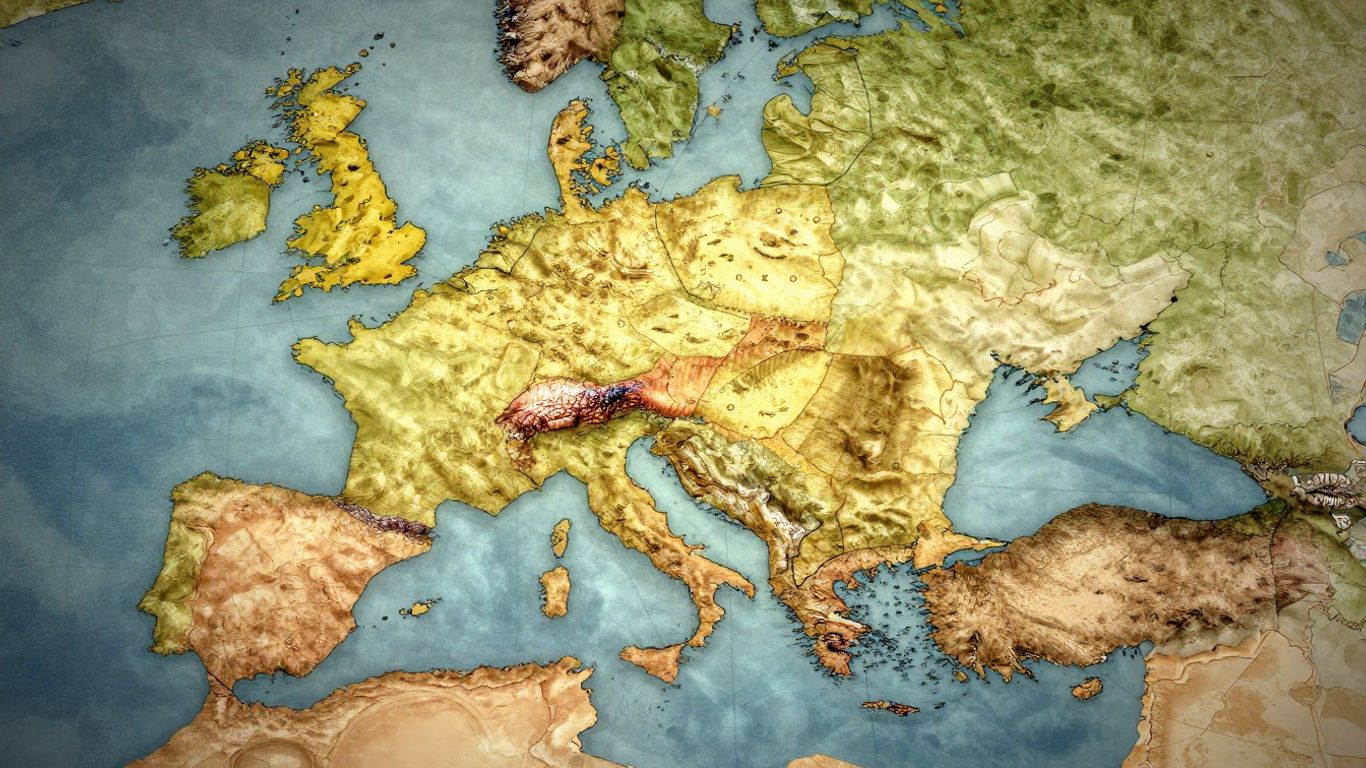
Unified Diversity in the Neo-Assyrian Empire
The Neo-Assyrian Empire, for all its might, wasn’t just about brute force and tribute. They actually managed to keep a lot of different cultures humming along without too much trouble. Think about it, they had people from all over the place – Anatolia, Syria, Mesopotamia – all under their thumb, but still doing their own thing culturally. It’s pretty wild when you consider how much they controlled. They weren’t trying to make everyone think and act exactly the same. Instead, they seemed to understand that letting local customs and traditions persist actually made the empire more stable. It’s a lesson many modern powers could learn from, frankly. A diverse empire, when managed correctly, can be a stronger empire.
Maintaining Cultural Independence as Vassals
So, how did these vassal states keep their own identities alive? It wasn’t always easy, but there were definitely strategies. For one, many empires, like the Ottomans, allowed local rulers to stay in power. This meant that the day-to-day administration and cultural practices often continued as before. The main thing was that tribute was paid and loyalty was shown. It was a kind of trade-off: give us your resources and acknowledge our supremacy, and we’ll let you keep your language, your religion, and your local festivals. It’s a bit like how some countries today still have their own unique traditions even while being part of larger international groups. It’s about finding that balance between belonging and being yourself. The East Asian tributary order, for instance, had its own complex system of interactions that allowed for a degree of local flavor.
Artistic Depictions of Tribute and Fealty
Art was a big way empires showed off their power and how vassals were supposed to act. You see it all over the place – on temple walls, in palaces, on fancy metalwork. These images often show conquered peoples bringing gifts, bowing down, or offering sacrifices to the emperor. It’s a visual reminder of who’s in charge and who’s not. But sometimes, the art from the vassal states themselves would subtly show their own cultural symbols mixed in with the imperial ones. It’s like a little wink and a nod, saying, ‘We’re paying our dues, but we’re still us.’ It’s a fascinating way to see how these relationships played out, not just in politics, but in everyday culture and art. It really shows that even under heavy influence, people find ways to express their own heritage. It’s a testament to the enduring nature of culture, even when facing hegemonic normative logic.
The Shifting Landscape of Power
Prosperous Vassal Regions in Ancient Empires
It’s easy to think of vassal states as just being pushed around, but sometimes, things were a bit more complicated. In the old days, powerful empires often had regions under their thumb that were actually doing pretty well. Think about it: these areas got protection from the big empire, which meant they didn’t have to worry as much about outside attacks. This stability could lead to trade booming and local economies growing. The empire got its tribute and loyalty, and the vassal region got a degree of peace and order it might not have had otherwise. It wasn’t always a bad deal for everyone involved, especially if the ruling empire wasn’t completely brutal.
The Evolution of Imperial Foreign Policy
Imperial foreign policy wasn’t static; it changed a lot over time. Early on, it might have been all about direct conquest and forcing everyone into line. But as empires got bigger and more complex, they had to get smarter. They started using diplomacy, alliances, and yes, vassalage, to manage their vast territories. This allowed them to control more land and resources without having to station troops everywhere. It was a way to project power and maintain order, often through indirect means. This shift shows how empires adapted to survive and expand, moving from brute force to more nuanced control strategies. It’s a bit like how modern nations think about spheres of influence.
From Vassal States to Provincial Systems
Eventually, many empires found that the vassal system, while useful, had its limits. Keeping a constant eye on all those subordinate states, making sure they paid up and didn’t get too ambitious, could be a real headache. So, what happened? Empires often started to phase out the vassal system and bring these regions under more direct control, turning them into provinces. This meant more centralized administration, direct taxation, and often, the imposition of the empire’s laws and culture. It was a move towards greater uniformity and tighter control, which could be good for efficiency but often meant less local autonomy. It was a way to solidify power and make the empire more cohesive, moving away from the looser ties of vassalage towards a more integrated structure.
The Enduring Reality of Influence
So, we’ve looked at a bunch of historical examples, from ancient empires to more recent times, showing how some nations have had a lot of other states looking to them for direction. It’s pretty clear that this kind of relationship, where one country has a strong hold over others, isn’t new. It pops up again and again throughout history. While the names and the exact ways things worked might change – from outright conquest to more subtle economic pressure – the basic idea of a dominant power influencing others remains. It makes you think about how these power dynamics play out even today, maybe in ways we don’t always see clearly. It’s a reminder that strength and influence have always mattered in how the world is shaped.
Frequently Asked Questions
What exactly is a vassal state?
Think of a vassal state like a smaller kingdom or territory that has a special agreement with a much bigger, stronger empire or kingdom. It’s like they’ve promised to help the big boss, maybe by sending soldiers or paying some money. In return, the big boss usually offers some protection. It’s a bit like the old days of knights and lords, but between countries.
Were vassal states always forced into this role?
Not always. Sometimes a weaker state might choose to become a vassal to get protection from a stronger neighbor, especially if there were other enemies around. Other times, a powerful empire would conquer a region and then make its leaders become vassals. The terms of the deal, like how much help or money they had to give, could be very different depending on the empire.
Did vassal states have any freedom?
It really depended! Some vassal states had a lot of freedom to run their own towns and cities and keep their own traditions. Others had very little say in what they did. The ruling empire usually decided how much independence they would get. Sometimes, they could even choose their own leaders, but they still had to answer to the main empire.
Can you give an example of a famous empire with many vassal states?
The Ottoman Empire was famous for having a huge network of vassal and tributary states. These stretched from places like Wallachia and Moldavia (in modern-day Romania) all the way to the Aceh Sultanate in Southeast Asia. They had different ways of managing these areas, with some paying money and others providing military support.
Are there modern terms for states that are like vassal states today?
Yes, the idea of a vassal state isn’t exactly the same today, but we have similar concepts. We might talk about ‘puppet states,’ where one country completely controls another, or ‘client states,’ which rely heavily on a powerful country for support. Sometimes we also hear ‘protectorates’ or ‘satellite states,’ which describe similar relationships of dependence.
Did ancient empires like China have vassal states?
Absolutely! Imperial China had a system where neighboring states would acknowledge China’s superiority. They would often send gifts, like tribute, and sometimes follow China’s lead in foreign affairs. This created a kind of ‘tributary order’ in East Asia for a long time.
What did vassal states have to do for the empire?
Usually, the main jobs were paying money or goods as ‘tribute’ and providing soldiers for the empire’s army when needed. They also had to show loyalty, like promising to support the empire’s ruler. In return, they often got protection from outside enemies.
Can a small country today be considered a vassal state?
In today’s world, countries are generally seen as equal, at least in official international law. However, some countries might be heavily influenced by or dependent on a larger, more powerful nation, economically or politically. While not called ‘vassal states’ anymore, these relationships can sometimes seem similar to the old dynamics of power and dependence.