Mapped: Countries With the Most Wildfires and Land Burned Worldwide
Key Takeaways
Wildfire rankings change with the year and with how fires are counted. Burned area, number of fire incidents, and the effects on people and ecosystems are related, but they are not interchangeable measures.
- Brazil and Bolivia face fires in forest and agricultural frontier regions, while savanna and grassland burning also shapes the picture.
- Russia and Canada can record very large burned areas across boreal landscapes, especially in severe fire seasons.
- The United States, Australia, China, and India experience fires across varied climates, vegetation types, and land uses.
- Indonesia’s peatlands can burn for long periods, and fires may produce smoke that travels far beyond the burn area.
- Any comparison of the countries with most wildfires should name its time period and distinguish fire counts from land burned.
1. Brazil: Fires across the Amazon and Cerrado
Brazil’s fire picture spans several major biomes, including the Amazon, the Cerrado savanna, and the Pantanal wetlands. Fire activity can rise sharply in dry periods, while fires set to clear or manage land can escape into surrounding vegetation. That mix makes a single national total an incomplete description of what is burning and why.
A useful comparison starts by separating the broad landscapes rather than treating every fire as the same event. Global reporting on recent fires, including in Brazil, offers a wider wildfire overview, but individual seasons still need to be read in their own context.
| Landscape | Common fire context | Why comparisons vary |
|---|---|---|
| Amazon | Forest edges and cleared areas | Fire and deforestation measures are not identical |
| Cerrado | Grassland and savanna vegetation | Fire is part of a fire-adapted ecosystem, though timing and intensity matter |
| Pantanal | Wetland vegetation during dry conditions | Water levels and drought influence how much can burn |
| Agricultural frontiers | Land clearing and pasture management | Fires may move beyond the intended area |
The table describes settings, not a ranking of annual burned area. A country’s place on a global list depends on the year measured, satellite methods, and whether the source counts fire detections, individual incidents, or area burned. For comparisons beyond fire statistics, a page about the Cook Islands tax haven addresses a wholly different country-level topic and should not be confused with a measure of environmental risk.
2. Russia: Vast burned areas across Siberia
Russia’s immense territory includes extensive boreal forest, or taiga, across Siberia. In a severe season, fires in remote areas can cover large expanses, making Russia a recurring presence in comparisons of land burned. The scale of the forest also means that a large burned-area estimate does not, by itself, describe the effect on nearby communities.
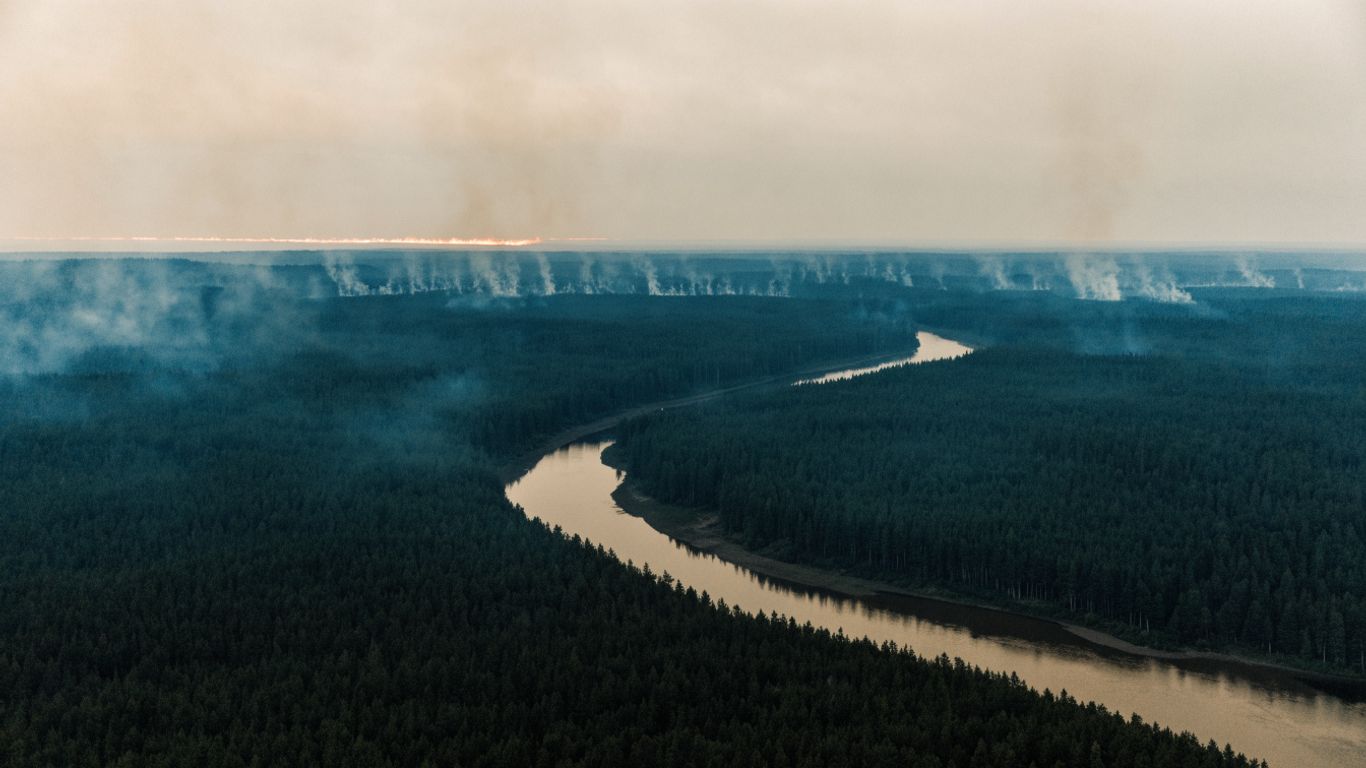
Fire seasons vary from year to year, and fires may be difficult to reach in sparsely populated regions. Satellite observations help reveal activity across remote areas, but estimates can differ according to the source’s method and the dates included. A list of major fires by area is useful background, provided its event-level figures are not treated as a stable annual country ranking.
Smoke can travel well beyond the burn perimeter, while local impacts depend on where fires occur and how long they persist. Russia’s large land area makes the distinction between absolute burned area and the share of a region affected especially important. Comparisons should also note whether a dataset includes all detected fires or only events that meet a particular threshold.
3. Canada: Large fires in boreal forests
Canada’s boreal forests stretch across a vast area, and fire is a recurring feature of many of these landscapes. In some years, widespread and persistent fires produce unusually large burned-area totals. The total can be striking, but it does not tell readers whether a particular fire season was typical or exceptional without a clear reference period.
The geography of a season matters as much as its headline number. Fires may occur far from major cities, yet smoke can affect communities at a distance, and the duration of a fire can shape the disruption. Records assembled for global and country-level wildfire data can help establish comparisons, but totals need to be interpreted alongside their coverage and update dates.
Canadian fire patterns are not uniform across the country. Forest type, weather, access, and local conditions all influence how fires spread and how they are managed. A large area burned is one important measure, not a complete account of ecological change or human consequences.
4. United States: Frequent fires across diverse landscapes
The United States has fire-prone landscapes ranging from western forests and shrublands to grasslands in other regions. This variety means a national total combines fires with different causes, seasons, and ecological effects. Counts of fire incidents and acres burned can also tell different stories: many smaller fires may produce less burned area than a few exceptionally large ones.
A compact way to read U.S. fire reporting is to separate the measures that are often blended together. The distinction matters when comparing one year with another or comparing the country with places where fires are detected and reported differently.
- Fire count records how many fires were reported or detected under a dataset’s rules.
- Burned area measures the land affected, regardless of how many separate fires produced it.
- Cause classifications distinguish, where known, between events such as lightning ignitions and human activity.
- Smoke and community impacts describe consequences that a fire count alone cannot capture.
The National Interagency Fire Center publishes national fire updates, including information on active large fires and statistics. Those figures should be read with the reporting period in view. A separate guide to Chrysler check-engine causes, for example, concerns vehicle diagnosis rather than wildfire measurement; the same country label does not make two sets of statistics comparable.
5. Australia: Seasonal fires across bushland and grasslands
Australia’s fire activity varies with season, climate, and vegetation, including bushland and grassland. Hot, dry conditions can contribute to dangerous fire weather, but fire behavior differs across regions and years. That is why a headline season should not be treated as a permanent description of the country’s risk.
On-the-ground conditions can change quickly during a heatwave, and local alerts are more useful for immediate decisions than a global ranking. Coverage of major bushfires in Victoria illustrates how conditions and emergency responses can be specific to a particular state and period. It is a snapshot, not a substitute for national or long-term data.
National burned-area figures also depend on what is included and how boundaries are drawn. A comparison can describe the scale of a season, but it cannot show every difference in vegetation, exposure, or local preparedness. Australia’s many other country-specific topics, such as pool floats in Australia, are separate from wildfire reporting and offer no evidence about fire frequency or area burned.
6. Indonesia: Fires in forests and peatlands
Indonesia’s fire story includes forested areas and peatlands, which are waterlogged soils made largely of partially decayed plant material. When peat dries, fires can spread below the surface and continue burning after flames are less visible. This can make suppression difficult and smoke persistent.
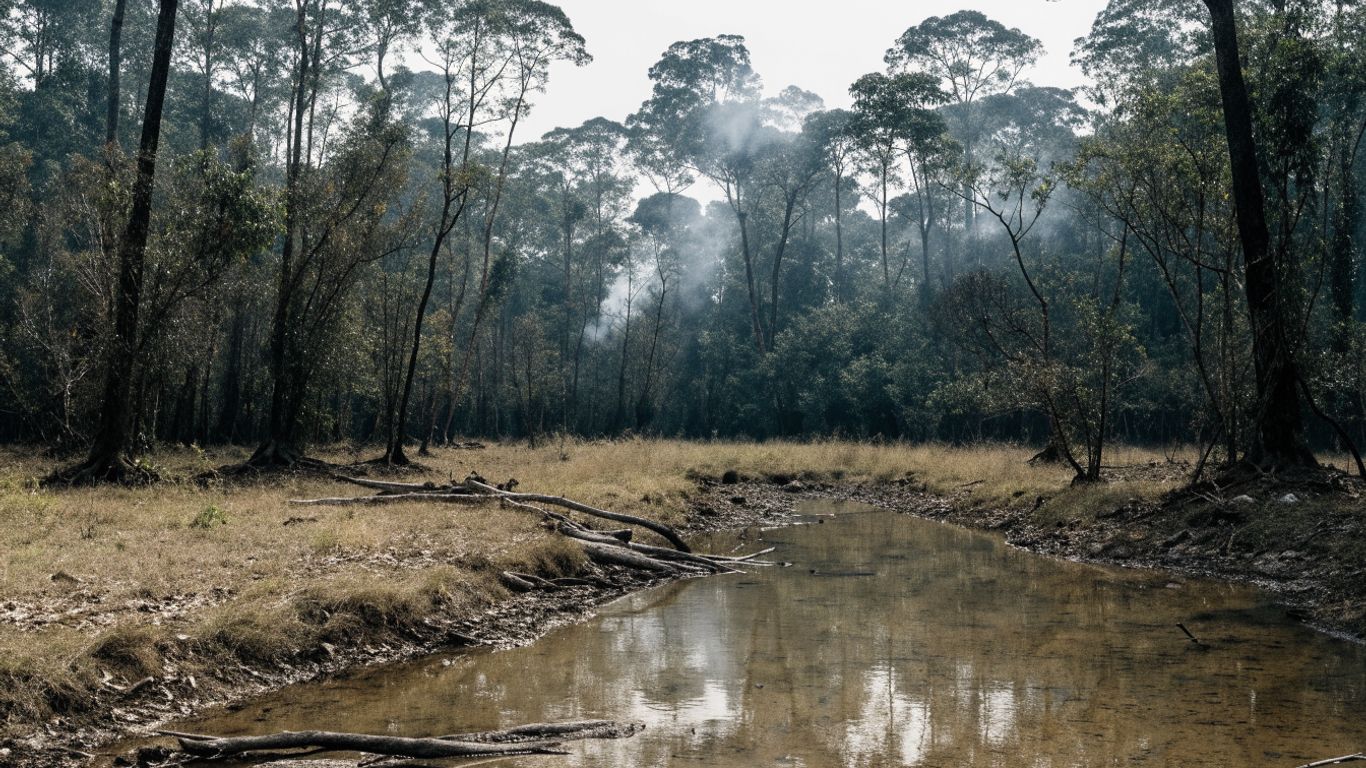
Conditions on peatlands are not the same as those in a surface grass fire, so a total burned-area figure may hide important differences in duration and smoke production. Land management, drainage, and dry weather can all affect fire risk in these landscapes. Measurement also depends on whether monitoring captures surface activity, underground smoldering, or both.
Smoke from fires can cross local and national boundaries, making Indonesia’s fire seasons a regional concern as well as a domestic one. A useful account therefore pairs area estimates with information on where fires occurred and how long they lasted. Without that context, a country ranking can flatten distinct kinds of fire into one number.
7. Democratic Republic of the Congo: Extensive fires in savanna regions
In the Democratic Republic of the Congo, many detected fires occur in savanna and grassland regions rather than in dense rainforest. Seasonal burning can be connected to land use and local practices, and the ecological effects depend on where, when, and how often fires take place. A high count of detections does not automatically mean that forest is being lost at the same rate.
Fire data in the region can help distinguish broad patterns, but satellite detection is not the same as a field account of every ignition. Smaller or short-lived fires may be recorded differently from large, persistent ones, and reporting systems are not identical across countries. Those limits matter when comparing national figures side by side.
Savanna fires can be extensive even when they do not resemble the forest fires that dominate public attention. The best comparisons identify the vegetation being affected and the season covered. That context helps readers avoid treating every burned hectare as ecologically equivalent.
8. China: Wildfires across forested and mountainous areas
China’s varied terrain includes forested and mountainous areas where fires can arise under different local conditions. Climate, vegetation, elevation, and access all influence how a fire develops and how responders can reach it. National totals combine these regional differences, so they need careful interpretation.
A comparison of China with other large countries should use the same time window and a consistent definition of fire. One source may report incidents while another emphasizes area burned or active detections. Even when the figures are accurate on their own terms, they may not be directly comparable.
Fire management and prevention also depend on local circumstances, from the kind of vegetation at risk to nearby settlement patterns. The country’s position in a particular year’s ranking can therefore change without any single measure explaining why. Readers should look for the data period and method before drawing conclusions from a headline total.
9. India: Frequent fires in forests and grasslands
India’s fire activity occurs across a range of forests and grasslands, with local patterns shaped by climate, vegetation, and land use. Seasonal changes can influence when fires are detected, while the geography of a region affects how quickly they spread. A national count can conceal these differences between landscapes.
The number of reported fires is only one part of the story. Some datasets identify many small events, while others focus on burned area or fires that pass a defined size threshold. A comparison is most useful when it states which of those measures is being used and how the reporting period was selected.
Impacts also vary. A fire in a remote grassland and one near a settled area may have similar footprints but very different consequences for people. Country rankings can orient readers, but local information is needed to understand risk, response, and ecological effects.
10. Bolivia: Fires across forests and agricultural frontiers
Bolivia’s fires affect forests as well as agricultural frontier areas, where land uses meet and change. Dry conditions can increase the likelihood that fires spread, while burning associated with land management may escape its intended boundaries. As in neighboring parts of South America, the balance between forest, savanna, and agricultural land matters to the national picture.
A country total should be read alongside information about the area affected and the kind of vegetation involved. The same number of burned hectares can describe very different ecological changes in forest and grassland. Reports may also differ in their treatment of fires that cross administrative boundaries or continue over several days.
Bolivia reinforces a broader point: the countries with most wildfires are not necessarily the same as those with the largest burned area in every year. Rankings depend on the question asked and the evidence gathered. Clear comparisons name the measure, the dates, and the source rather than implying that one number captures every dimension of fire.
Conclusion
Brazil, Russia, Canada, the United States, Australia, Indonesia, the Democratic Republic of the Congo, China, India, and Bolivia all experience significant fire activity, but their landscapes and fire patterns differ. No single ranking can capture fire counts, land burned, smoke, ecological effects, and human impacts at once. The clearest comparisons state what they measure, which period they cover, and where the data come from.
Frequently Asked Questions
Which countries have the most wildfires?
The answer depends on whether the comparison counts individual fires, measures burned area, or focuses on a particular year. A country can rank high on one measure and lower on another.
Which country has the largest area burned by wildfires?
There is no permanent answer because burned area changes substantially from season to season. Comparisons should name the year, source, and method used.
Are fire counts and burned area the same measure?
No. Fire counts record incidents or detections, while burned area estimates the land affected. A few large fires can burn more land than many smaller ones.
Why do wildfire rankings change each year?
Weather, drought, vegetation, ignition patterns, and fire management all vary. Rankings can also shift when datasets use different definitions or reporting periods.
Do all fires in forests have the same effects?
No. Effects depend on the forest type, fire intensity, season, frequency, and surrounding conditions. A burned-area total alone cannot describe those differences.
Why can fires in one country affect people elsewhere?
Smoke can travel long distances across regions and national borders. The degree of impact depends on the fire, weather, and the communities in its path.
How should I compare wildfire data between countries?
Check that the sources use compatible time periods and definitions, then distinguish fire counts from area burned. Consider vegetation, location, and impacts rather than relying on a single ranking.