
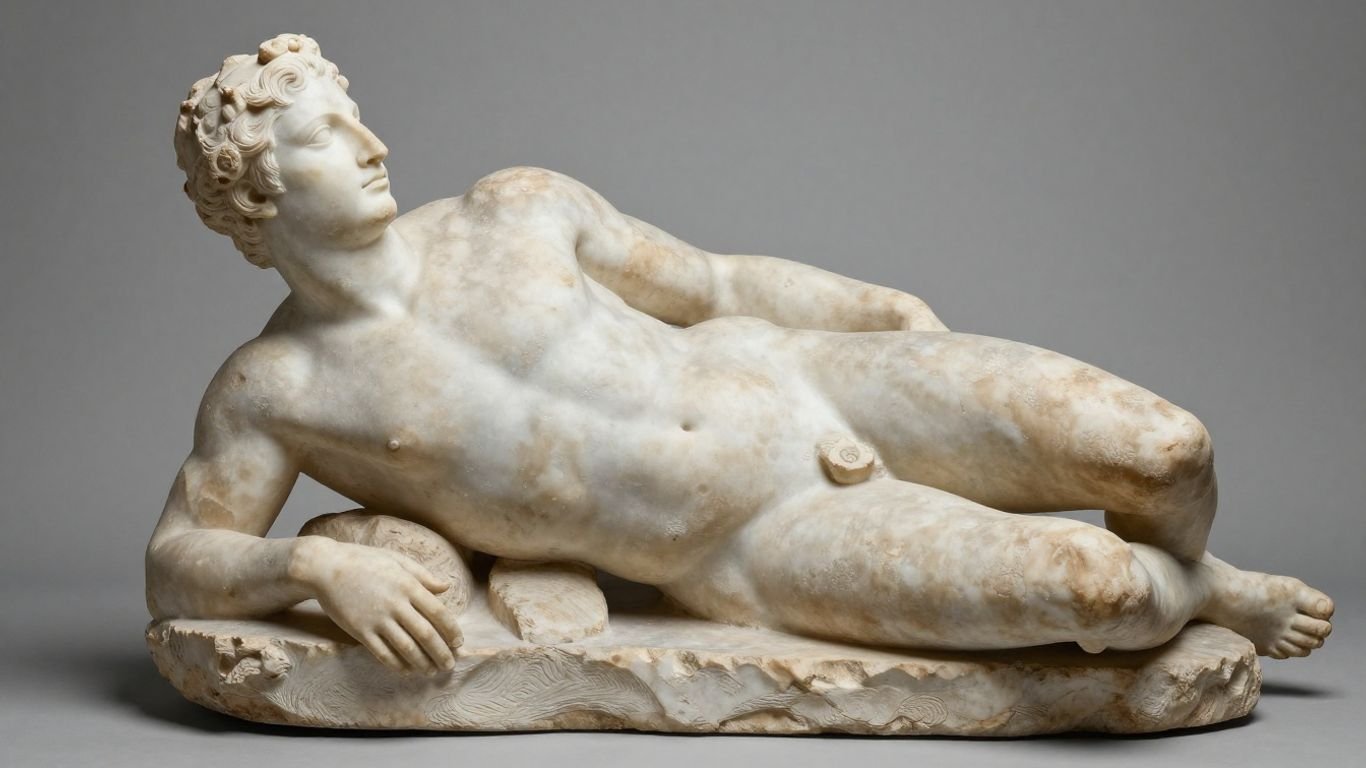
The Ancient Italian Sculpture That Looks Like a Modern “Dad Bod”
Here are the main points from our look at ancient bodies and modern physiques:
Key Takeaways
- Ancient cultures, like the Greeks and Etruscans, had different ideas about the ideal body than we often do today.
- The famous Greek ideal wasn’t just about muscles; it was tied to virtue and a well-lived life.
- Some ancient Italian art, like the Sarcophagus of the Spouses, shows a more relaxed and natural view of the human form.
- Modern fitness often focuses too much on looking a certain way, forgetting the importance of overall health and capability.
- The ‘dad bod’ shape has historical roots and isn’t necessarily a sign of laziness, but a natural human form.
The Enduring Allure Of The Grecian Ideal
A Lost Standard Of Manly Virtue
The ancient Greeks, they really had something going on. Their statues, man, they weren’t just pretty pictures carved in stone. They were supposed to show something deeper, like a kind of ideal for what a man should be. It wasn’t just about looking good at the beach, it was about virtue, strength, and being a good citizen. Think Hercules, Zeus – these guys were the ultimate role models, embodying power and a certain kind of moral uprightness. It’s like they believed that a strong body was tied to a strong character. This ideal of a noble and beautiful man, known as kalokagathia, was central to their whole way of thinking. It meant that being physically fit wasn’t just for show; it was a sign of a well-ordered life and a readiness to defend your community. It’s a shame we seem to have lost touch with that idea, focusing more on superficial appearances than on the substance behind them. It makes you wonder if we’re even aiming for the right things these days.
Modern Fitness’s Misguided Pursuit
Look around today, and what do you see? It’s all about the six-pack abs, right? That’s the modern version of the perfect body, the ultimate goal for so many guys. It’s like a trophy for all the hard work, but honestly, it feels a bit hollow. The ancient Greeks had a similar obsession, but their ideal was more about a complete package – strength, beauty, and virtue all rolled into one. They even sculpted muscles onto their armor, probably to look intimidating on the battlefield. It wasn’t just about individual muscles; it was about the whole picture, a reflection of a capable and honorable man. We’ve got all these fancy gyms and workout plans now, but are we really achieving anything close to what they did? It feels like we’re chasing a distorted version of their ideal, missing the bigger picture of what it truly meant to be physically excellent. We’re so focused on the individual parts, we forget the whole.
The Dad Bod Italian Sculpture Connection
It’s funny how things come full circle. We’ve got this whole “dad bod” thing going on now, and it’s a stark contrast to the chiseled perfection we often associate with ancient art. But then you look at some of these older Italian sculptures, and you start to see a different story. Take the Sarcophagus of the Spouses, for instance. It’s not about some impossibly ripped physique; it’s about warmth, affection, and a more natural, human form. It reminds us that the ancient world wasn’t just about rigid ideals. There was room for different kinds of beauty and expression. This Etruscan art, in particular, shows a more grounded, relatable humanity. It’s a welcome change from the often unattainable standards we see elsewhere, and it makes you think about what we truly value in physical representation. It’s a connection that’s more subtle than you might expect, showing that ancient art had a broader spectrum than we often give it credit for. It’s a reminder that strength and beauty can come in many forms, not just the ones we see plastered all over social media today. We can appreciate the idealized form of antiquity without dismissing the more humanistic expressions found elsewhere.
Ancient Sculptures: More Than Just Marble
The Idealized Form Of Antiquity
When we look at ancient Greek sculptures, it’s easy to get caught up in the sheer perfection of the physique. These aren’t just random bodies carved in stone; they represent a deliberate ideal. The Greeks, with their focus on humanism, saw the body as a reflection of inner virtue. So, a sculpted physique wasn’t just about looking good; it was about embodying a certain standard of excellence. Think about the armor they depicted – often with rippling muscles. Was it practical? Probably not. But it served a purpose. It was meant to intimidate enemies on the battlefield and, perhaps more importantly, to make the warriors feel like the heroes they were meant to be. It’s a far cry from the superficiality we often see today.
Beyond The Six-Pack Abs Obsession
Our modern obsession with chiseled abs and impossibly lean bodies often misses the point. The ancient Greeks, while appreciating a well-formed body, didn’t get hung up on a single, narrow definition of perfection. Their ideal was more holistic. It was about balance, proportion, and a form that suggested strength and capability. They understood that beauty in the body was tied to its ability to move and function. It wasn’t just a static image to be admired, but a living, breathing testament to a well-ordered life. This idea is something we seem to have lost in our relentless pursuit of a specific look, often driven by trends rather than timeless principles. It’s a shame, really, because there’s so much more to physical well-being than just a flat stomach.
Intimidation And Heroism In Bronze
Ancient sculptors weren’t just creating art; they were crafting powerful statements. Take, for instance, the way bronze was used. It wasn’t just for its durability; it had a certain sheen, a way of catching the light that could make a statue seem almost alive, imposing. Sculptures weren’t just meant to be admired from afar; they were meant to evoke a visceral reaction. The sheer scale and detail, the exaggerated musculature – these were designed to inspire awe and, yes, a healthy dose of fear. It was a visual language of power and dominance, a way to project strength and authority. This wasn’t about vanity; it was about projecting an image of unshakeable resolve and martial prowess, a stark contrast to the often-softened images we see in modern art and media.
The ancient world understood that the body was a canvas, not just for aesthetics, but for projecting a certain kind of strength and character. It was a visual representation of inner fortitude and societal standing, meant to command respect and inspire action.
Here’s a look at how different materials conveyed different messages:
| Material |
|---|
| Marble |
| Bronze |
| Terracotta |
These materials weren’t chosen by accident; each carried its own weight and meaning, contributing to the overall message of the sculpture. It’s a level of intentionality that’s often overlooked when we just see pretty statues.
The Etruscan Embrace: A Different Kind Of Antiquity
The Sarcophagus Of The Spouses
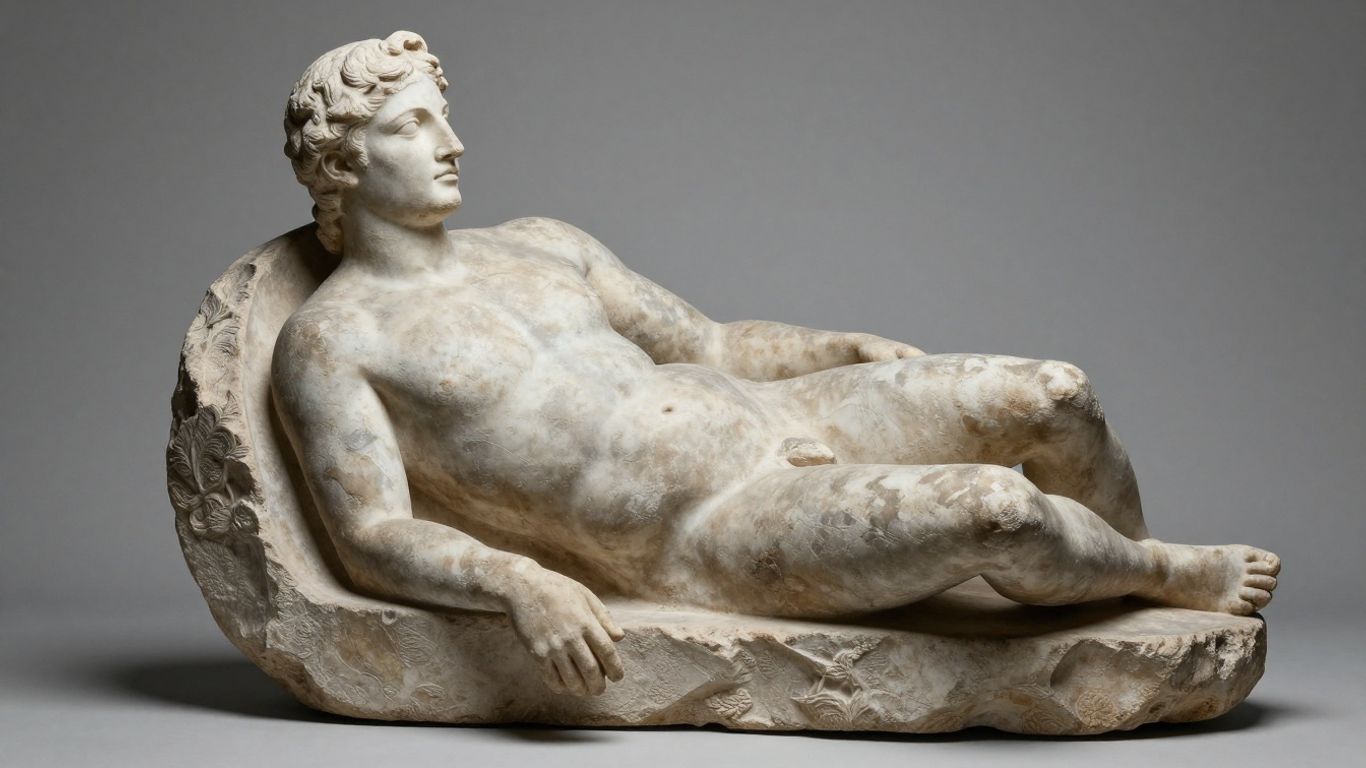
When we think of ancient Italy, our minds often jump straight to Rome, right? But before Rome was even a major player, there were the Etruscans. These folks were doing their own thing up in Tuscany, and they had a pretty unique take on life, death, and art. One of the most striking examples of this is the Sarcophagus of the Spouses. Found in a tomb, this isn’t your typical grim funerary art. It’s a terracotta sculpture showing a couple, you know, chilling together on a couch, looking pretty relaxed. The husband has his arm around his wife, and she’s holding something, maybe a little offering or a perfume bottle. It’s surprisingly intimate for something so old. It shows a warmth and a connection that we don’t always associate with ancient civilizations. It’s a far cry from the stern, idealized figures you see elsewhere. This piece really makes you think about what was important to these people – family, companionship, maybe even a good meal together. It’s a testament to their culture, which, frankly, gets overshadowed by the Romans a lot. It’s a shame more of their art hasn’t survived, but what we have is pretty special. You can see some amazing examples of Roman art, but don’t forget about the Etruscans when you’re exploring Rome’s hidden ancient sculptures.
A Testament To Enduring Affection
This sarcophagus isn’t just old; it’s over 2,500 years old. Think about that. It survived grave robbers, the elements, and centuries of being buried. When it was found, it was in pieces, but they managed to put it back together. The detail is incredible – you can see the expressions on their faces, the way their clothes are draped. It feels alive, almost like they could get up and walk away. The Etruscans seemed to value this kind of domestic scene, this quiet affection between a husband and wife. It’s a different kind of heroism than the warrior statues we often see. It’s the heroism of everyday life, of partnership. It’s a reminder that even thousands of years ago, people valued love and connection. It’s a powerful message, really. It makes you wonder what other aspects of their lives we’re missing out on because so much has been lost to time.
Rediscovering Ancient Italian Warmth
So, what does this mean for us today? Well, it’s a good reminder that the ancient world wasn’t just about battles and emperors. There was a whole spectrum of human experience, and the Etruscans captured a part of it beautifully. Their art shows a softer side, a focus on relationships and comfort. It’s a different kind of strength, not the brute force kind, but the strength of a bond. It’s a perspective that’s often overlooked in favor of more aggressive or overtly powerful imagery. This Etruscan art offers a different kind of ideal, one that’s more about shared life than individual glory. It’s a refreshing change from the constant push for dominance we see in so much of our modern culture. It makes you think about what we value and what we choose to celebrate in our own art and media. Maybe there’s something to be learned from looking back at these ancient Italians and their embrace of enduring affection. It’s a stark contrast to some of the modern political squabbles we see, where even simple improvements get bogged down in political discontent.
The Etruscans, often overshadowed by their Roman successors, left behind a legacy of art that speaks to a surprisingly human and tender side of antiquity. Their focus on domestic scenes and intimate relationships in their funerary art offers a unique window into a culture that valued companionship and warmth, a perspective often lost in the grand narratives of conquest and power.
The Philosophy Of The Ancient Physique
Kalokagathia: Beauty Born Of Virtue
The ancient Greeks had this idea called kalokagathia. It’s a fancy word, but it basically means that being beautiful and being good, or noble, go hand-in-hand. They believed that a good person, someone with strong character and virtue, would naturally have a good-looking body. It wasn’t just about having a six-pack; it was about the whole package – a reflection of inner strength and discipline. Socrates himself thought that not taking care of your body was a disgrace. He said, "What a disgrace it is for a man to grow old without ever seeing the beauty and strength of which his body is capable." It’s a pretty strong statement, right? It suggests that physical fitness isn’t just for show, but a sign of a well-lived life and a capable citizen. This ideal is a far cry from the modern obsession with just looking good, often without any real substance behind it. It’s about building a physique that supports a virtuous life, not just one that looks good in the mirror. This is the kind of thinking that built civilizations, not just muscles. The Greek ideal of physical fitness was about more than just aesthetics; it was about character.
Euexia: The Visible Signs Of A Well-Ordered Life
Building on that idea of kalokagathia, the Greeks also talked about euexia. Think of it as the outward appearance of a life lived with discipline and order. It wasn’t about being skinny or pale like some delicate flower; it was about looking strong, healthy, and full of life. Lucian, an ancient writer, described young men in these competitions, saying, "these young men, their bodies reddened, are darkened by the sun, and bearing masculine faces they reveal great vitality, fire, and courage. They are aglow with such splendid condition (euexias)." You can see this in the way they judged athletes: symmetry, muscle tone, how they carried themselves – it all pointed to a well-managed life. It’s the opposite of looking soft and lazy. It’s the visible proof that you’ve been putting in the work, eating right, and living with purpose. This is what we’re missing today – the idea that your body is a testament to your inner state.
The Decline Of Wisdom In Modern Training
It seems like we’ve lost something important when it comes to training these days. We have all these fancy gyms and programs, but are we really getting stronger in the ways that matter? Philostratus, an ancient writer, talked about how training was a form of wisdom. He believed that a lack of good training methods led to men becoming weak and soft, especially when times were too peaceful. Sound familiar? He blamed a "shortcoming of wisdom in the training conventions" for this decline. It’s not that human nature has changed, but our approach to fitness has become shallow. We focus on fads and quick fixes instead of building a solid foundation. We’ve forgotten that true physical development is tied to a larger philosophy of life, something that builds not just muscle, but character and resilience. We need to look back at how the ancients approached physical development, not just for the exercises, but for the underlying principles. It’s about more than just lifting weights; it’s about cultivating a disciplined mind and spirit, which is reflected in the body. This is where the ancient Greek concept of the body and soul comes into play, a holistic view that modern training often ignores.
The ancient world understood that a strong body was a reflection of a strong mind and a virtuous character. This connection has been largely severed in modern fitness culture, which often prioritizes superficial aesthetics over genuine well-being and character development. We’ve traded wisdom for trends, and the results are evident in a society that is physically weaker and perhaps morally adrift.
When Ancient Ideals Meet Modern Man
It’s funny, isn’t it? We’ve got all this modern science, all these fancy gyms, and yet, when we look back at ancient statues, especially those from Greece and Rome, they often seem to hit a mark we’re still chasing. Take Eugen Sandow, for instance. He was obsessed with the Grecian Ideal, trying to recreate those perfect proportions with weights. He even wrote about it, trying to systematize how to get that look. But here’s the kicker: despite all his efforts and inspiring millions, he kind of missed the point.
Eugen Sandow’s Quest for Perfection
Sandow, bless his heart, was all about the physique. He studied the old statues, the ones that showed off muscles and symmetry, and thought, "That’s it! That’s the goal." He wanted to bring that back. He was frustrated that most guys back then weren’t into it. So, he developed exercises, trying to build specific muscles to match what he saw on those ancient figures. It’s like he saw the statue and thought the muscles themselves were the whole story. He was a showman, no doubt, and he definitely got people moving. But his focus, and consequently the focus of much of what came after, was on the parts rather than the whole person. It’s a subtle difference, but it’s a big one.
The Heresy Of Bodybuilding
This is where modern bodybuilding really goes off the rails. It’s like taking a good idea and twisting it until it’s unrecognizable. The ancient Greeks understood something called kalokagathia. It’s a big word, but it basically means that being beautiful and being good, or noble, go hand-in-hand. A strong, well-proportioned body wasn’t just for show; it was supposed to reflect inner virtue, discipline, and readiness. Think about it: a man who trains himself, who has self-control, who is strong and capable – that’s a man who’s likely to be good in other areas of life too, like in defending his community. Sandow, by focusing just on the sculpted look, inadvertently paved the way for this deeper meaning to get lost. Modern bodybuilding often just chases size, this cult of bigness, and forgets that the body is supposed to be a reflection of something more. It’s a truth gone mad, as Chesterton might say.
The Dad Bod Italian Sculpture Paradox
So, where does that leave us? We have these ancient sculptures, and sometimes, they don’t look like the shredded athletes we see on magazine covers today. They look… more human. Maybe a bit softer, more rounded. It’s like the Italian sculpture we’re talking about – it’s not a six-pack, but it’s not flabby either. It’s just… a body. It’s a paradox because we’re told to strive for this extreme ideal, yet the art that has lasted for centuries often shows something more balanced, more natural. It makes you wonder if we’ve gotten fitness all wrong. Maybe the real ideal isn’t about being a walking anatomy chart, but about having a body that’s strong, capable, and reflects a life lived with some measure of discipline and virtue. It’s a different kind of strength, a different kind of beauty, one that doesn’t require you to look like you’re about to compete in a strongman competition. The ancient Romans, for example, had their own ideas about sculpture, and some of it is quite different from the Greek ideal, as seen in the Torlonia Collection. It shows that beauty and form have always been interpreted in various ways throughout history.
The Wisdom Of Ancient Athletic Training
Philostratus’s Gymnasticus
Back in the day, the Greeks and Romans really knew a thing or two about getting in shape. It wasn’t just about lifting heavy things or running fast; it was a whole philosophy. Take Philostratus, for example. He wrote this book called the Gymnasticus around 170 A.D., and it’s basically a guide to athletic training that’s considered a form of wisdom. He thought the whole point was to achieve balance, and you could see that in how an athlete looked – all symmetrical and well-proportioned. He even had specific ideas, like wrists and ankles should be the same size, and so should forearms and shins. It sounds a bit rigid, but it was about creating a harmonious body. Of course, he also understood that different sports needed different builds. A sprinter needed to be lean and fast, not bulky. And a boxer? Well, a bit of a belly was actually a good thing, apparently, to help absorb punches. It’s a far cry from the one-size-fits-all approach we sometimes see today.
Balance, Symmetry, And Functional Form
What’s really interesting is how much the ancient Greeks valued functional form. They weren’t just training for looks; they were training for life. Think about it: they had to march in armor, fight, and generally be ready for anything. Their training reflected that. They trained outdoors, in places called Gymnasia, which were basically open spaces designed for all sorts of movement. They’d lift rocks, carry them, throw them – not just static lifts. They even had races in full armor. This wasn’t about isolating muscles; it was about making the whole body work together. You see it in the old pottery – the way they depicted athletes moving with incredible precision and control. It’s about having a body that can do things, not just look a certain way. This kind of training builds resilience, something we could use more of today.
The Dangers Of Softness And Sloth
Philostratus, and many others from that era, were pretty clear about the downsides of not staying active. They saw softness and sloth as real dangers, not just physically but mentally. When the Roman Empire became more peaceful, men started to get lazy. They weren’t needed as much for fighting, and they just sort of… softened up. It’s a cycle that seems to repeat itself. When life gets too easy, when we don’t have to push ourselves, we tend to decline. It’s like that old saying, "use it or lose it." The ancient Greeks understood that a strong body was linked to a strong mind and a strong society. They believed that physical training was a civic duty, a way to prepare yourself to contribute. They saw the physical decline of their time as a failure of wisdom, a lack of understanding about what it truly means to be a well-rounded human being. It’s a lesson that still holds true today, especially when you look at the focus on crime data and societal issues. A fit populace is a more capable populace.
The ancient Greeks didn’t just train their bodies; they trained their character. They understood that physical discipline was a pathway to mental and moral strength. This holistic approach is something modern fitness often misses, focusing too much on isolated metrics rather than the integrated well-being of the individual.
Reclaiming The True Meaning Of Physical Beauty
It’s easy to get lost in the noise these days, isn’t it? Everywhere you look, there’s some new fitness trend or body ideal being pushed. But if we step back and look at history, especially at the ancient Greeks and Romans, we see a different picture. They weren’t obsessed with just looking a certain way; their idea of beauty was tied to something deeper. It was about how you moved, how you lived, and the kind of person you were.
Movement As The Measure Of Beauty
Think about ancient Greek sculpture. Those statues weren’t just pretty pictures; they were meant to show the potential of the human body in motion. The beauty wasn’t just in the stillness of the marble, but in what that form suggested about strength, agility, and health. It was a beauty that came from doing, from training, from living a vigorous life. We’ve lost that connection, focusing instead on static images and fleeting trends. The real beauty is in the functional strength, the ability to move well and live fully. It’s about being capable, not just looking a certain way for a photo op. This focus on movement is something we can still learn from today, even with all our modern distractions. It’s a reminder that a healthy body is a body that works, that can perform tasks, and that is ready for life’s challenges. We need to get back to appreciating that kind of physical prowess.
Avoiding The Traps Of Body Fascism
This modern obsession with a single, narrow body type is what some call "body fascism." It’s like a dictatorship for your body, telling you there’s only one right way to look. This is a far cry from the ancient ideals. The Greeks, for instance, understood that beauty changes with age and purpose. What’s beautiful for a young athlete isn’t the same as what’s beautiful for a mature man. They valued symmetry and proportion, yes, but these were seen as outward signs of inner virtue and a well-lived life, not just an aesthetic goal in themselves. The problem today is that we’ve taken the idea of the ideal physique and twisted it into something rigid and unforgiving. It’s become about conforming to an image, rather than cultivating a healthy, capable body. This pursuit often leads to unhealthy practices and a constant feeling of not being good enough. We need to reject this narrow view and embrace a broader definition of physical well-being. It’s about health and capability, not just fitting a mold. The ancient world understood that a strong, healthy body was a reflection of a strong, healthy character, and that’s a lesson worth remembering. We should aim for a balanced approach, one that values health over mere appearance, and capability over conformity. It’s about building a body that serves you well throughout life, not just one that looks good on Instagram. This is a stark contrast to the modern focus on extreme physiques, which often come at the expense of genuine health and longevity. We need to remember that true masculinity is about more than just muscles.
The Dad Bod Italian Sculpture’s Timeless Appeal
So, what does this have to do with that Italian sculpture that looks like a modern "dad bod"? It shows us that the ancient world wasn’t as obsessed with chiseled perfection as we sometimes imagine. They appreciated different forms, and they understood that a body could be strong and healthy without looking like a competition-ready athlete. That sculpture, in its own way, speaks to a more natural, less extreme ideal of the male physique. It’s a reminder that a bit of softness, a bit of a belly, doesn’t negate a man’s strength or his worth. It’s about accepting the natural variations in human bodies and appreciating them for what they are. This is a healthy perspective, especially when you consider the sheer number of people who go missing globally each year, a sign of societal breakdown that affects us all. We need to move away from the idea that only one body type is acceptable or beautiful. The ancient world, with its varied artistic expressions, offers us a more inclusive and realistic view of physical beauty. It’s about embracing a holistic approach to health and fitness, one that values strength, movement, and overall well-being, rather than chasing an unattainable and often unhealthy ideal. This is the real legacy we should be reclaiming.
Lessons From The Outdoor Gymnasium
The Rigors Of Natural Training
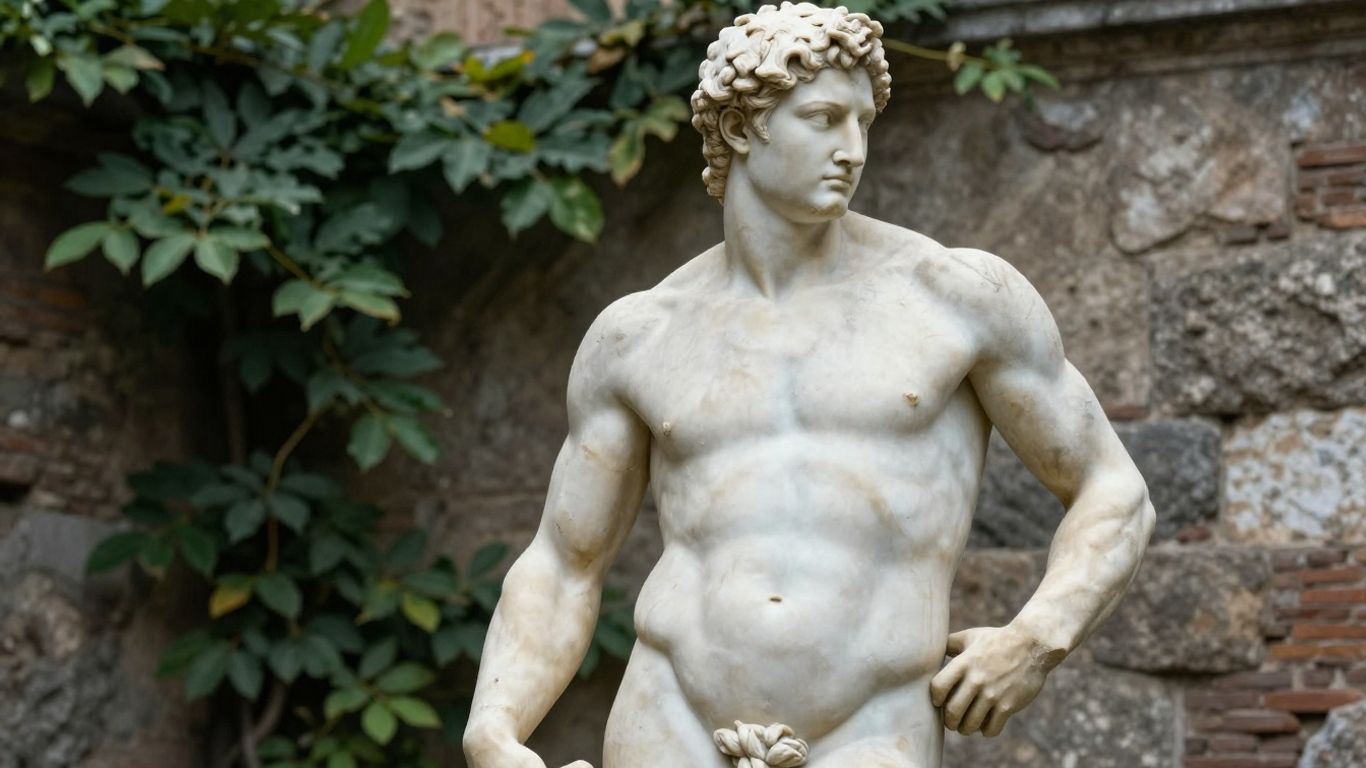
Forget the sterile, climate-controlled boxes we call gyms today. The ancient Greeks knew that real strength and resilience are forged in the elements. Their ‘gymnasia’ weren’t fancy buildings; they were open spaces where men trained under the sun, wind, and rain. This wasn’t about comfort; it was about building a body that could handle the real world. Think lifting heavy, awkward objects like rocks, not just perfectly weighted barbells. They ran, they wrestled, they threw things – all in natural environments. This kind of training toughens you up, mentally and physically. It’s about embracing the primal and understanding that hardship builds character.
Impeccable Form And Functional Strength
While the Greeks certainly valued strength, it wasn’t just about brute force. Depictions on ancient pottery show athletes with incredible precision in their movements. They understood that form was everything. Lifting a log or throwing a stone requires a different kind of coordination and full-body engagement than a machine-assisted exercise. It’s about moving your body as it was designed to move, in ways that are useful for life, not just for a specific sport or aesthetic. This focus on functional strength means you’re building a body that’s capable, not just one that looks a certain way. It’s about preparing for whatever life throws at you, much like the ancient warriors who had to march in armor and fight effectively. This approach is a stark contrast to the compartmentalized training seen today, where strength is often separated from metabolic conditioning. The ancient Greeks understood that a warrior needed to be strong, fast, and enduring, all at once.
Building Resilience Through Harshness
The ancient Greeks didn’t shy away from discomfort; they used it. Cold water, rough terrain, heavy loads – these were all tools to build a tougher, more capable individual. They understood that the human body thrives on challenge and adapts to stress. This is a far cry from the modern tendency to coddle ourselves with perfect temperatures and predictable surfaces. Their training was a holistic process, integrating physical exertion with mental fortitude. It was about developing a kind of inner toughness that could withstand not just physical trials, but the challenges of life itself. This philosophy is something we could all benefit from rediscovering, especially when looking at the soft, pampered physiques often celebrated today. It’s about embracing the struggle, because that’s where true strength is found. The ancient Greeks knew that a body hardened by the elements was a body ready for anything, a concept that seems lost on many modern fitness enthusiasts who seek the path of least resistance. They understood that true physical prowess wasn’t just about lifting weights, but about enduring and overcoming.
| Training Element | Ancient Greek Approach | Modern Gym Approach |
|---|---|---|
| Environment | Natural, unpredictable (sun, wind, rain) | Controlled, predictable (climate-controlled) |
| Equipment | Natural objects (rocks, logs), bodyweight | Machines, free weights, specialized gear |
| Focus | Functional strength, resilience, adaptability | Muscle isolation, hypertrophy, specific metrics |
| Intensity | Embraced discomfort, harshness | Often avoided, prioritized comfort |
| Goal | Overall capability, preparedness for life | Aesthetic goals, performance metrics |
The ancient Greeks didn’t just train their bodies; they trained their spirits. The harshness of the outdoor gymnasium was a crucible, forging not only physical strength but also mental toughness and a deep connection to the natural world. This holistic approach is something modern fitness often misses, focusing too much on isolated metrics and comfort.
The Modern Bodybuilder’s Fall From Grace
It seems like everywhere you look these days, the focus in fitness has shifted. We’ve gone from admiring the balanced, proportional physiques of ancient Greece to something… else. The modern bodybuilding scene, with its almost religious devotion to sheer size, is a prime example of a good idea gone completely off the rails. It’s like taking a truth and twisting it until it’s unrecognizable.
What started as a pursuit of perfection, inspired by figures like Eugen Sandow who looked to classical statues for his model, has devolved into a cult of bigness. Sandow himself, while perhaps a bit too focused on his own image, at least aimed for harmony. He wanted to replicate the Grecian Ideal, that sense of balance and proportion we see in ancient art. But today? It’s all about getting as huge as possible, often at the expense of anything resembling natural form or function. You see these guys with necks thicker than their heads, and it’s considered normal in their world. It’s a far cry from the athletic grace of figures like Michelangelo’s David, which still holds up as a standard of human form.
From Grecian Ideal To Hypertrophy
Eugen Sandow, often called the father of modern bodybuilding, was actually trying to bring back the ancient Greek ideal of a well-proportioned physique. He studied the statues, he lifted weights, and he even started a magazine called Physical Culture. He wanted people to achieve a harmonious body, not just a big one. But somewhere along the line, the message got lost. The emphasis shifted from overall balance to just building the biggest muscles possible. It’s a classic case of a truth gone mad, as G.K. Chesterton might say. Instead of aiming for the kind of balanced strength seen in ancient athletes, the modern focus is purely on hypertrophy – that’s just a fancy word for muscle growth.
The Cult Of Bigness
This obsession with sheer size has created a strange environment. It’s not about health or even true strength anymore; it’s about looking as imposing as possible. You see it in the competitions, where the biggest physiques often win, regardless of their symmetry or how they actually move. It’s a distorted view of what a strong, healthy body should look like. We have more resources than ever before, better nutrition, and more information about training, yet we can’t seem to replicate the balanced forms the ancient Greeks achieved centuries ago. It makes you wonder what we’re even aiming for.
The Dad Bod Italian Sculpture Contrast
When you compare the extreme physiques of modern bodybuilders to the subtle, natural forms found in ancient Italian sculptures, the difference is stark. Think about the Sarcophagus of the Spouses, or even the idealized forms of Roman statues. They represent a different kind of ideal – one that values proportion, naturalism, and a sense of grounded strength. These ancient works don’t scream for attention with bulging muscles; they exude a quiet confidence and a harmonious presence. It’s a stark contrast to the almost aggressive display of mass seen in today’s bodybuilding world. This ancient Italian art shows us a different path, one that doesn’t require sacrificing natural form for sheer bulk. It’s a reminder that true physical beauty might lie in balance, not just in size. The pursuit of this balanced form is something we can still learn from today, perhaps even more so than from the extreme examples of modern fitness. It’s a shame that so much of online fitness content focuses on these extreme physiques, often lacking the nuance found in classical art.
The modern bodybuilding scene has, in many ways, become a heretical pursuit – a truth taken to an extreme that loses its original meaning. The focus has shifted from holistic well-being and balanced aesthetics to an almost singular obsession with muscle mass, often ignoring proportion and natural form.
Rediscovering The Strength Of Our Ancestors
It seems like we’ve gotten a bit lost in the modern fitness craze. We chase numbers, chase trends, and forget what our bodies are actually built for. Our ancestors, though, they knew a thing or two about staying strong and capable. They didn’t have fancy gyms or protein shakes; they had life. They had to move, to work, to survive. And that kind of living built a different kind of strength, a more natural, resilient kind.
The Limits Of Modern Science
Modern science tells us a lot, but sometimes it overcomplicates things. We get bogged down in metrics – heart rate, reps, calories – and lose sight of the bigger picture. It’s like focusing so hard on the individual bricks that you forget you’re building a house. We’re told to isolate muscles, to chase hypertrophy, but is that really what makes us strong for life? It feels like we’re missing something, a connection to how humans were meant to move. The ancient Greeks, for instance, understood that true fitness wasn’t just about looking good; it was about being capable. They valued a body that could perform, that was ready for whatever life threw at it. This focus on capability is something we’ve largely forgotten in our pursuit of sculpted physiques.
Training Like The Greeks
The ancient Greeks had a pretty good handle on things. Their gymnasia weren’t just places to lift weights; they were centers for holistic development. Think about it: they trained for endurance, for agility, for strength, all integrated. They understood that a strong body supported a strong mind. Their training wasn’t about extremes, but about balance and preparedness. It was about building a body that could handle the demands of life, whether that was marching into battle or simply living a full life. We could learn a lot from their approach, focusing on functional movements and overall well-being rather than just aesthetics. It’s about building a body that works, not just one that looks a certain way. This kind of training prepares you for the unexpected, a quality sorely lacking in many modern fitness routines.
The Dad Bod Italian Sculpture’s Unexpected Resonance
And that brings us back to that Italian sculpture, the one that looks surprisingly like a modern dad bod. It’s a stark contrast to the hyper-idealized Greek statues we often see. This ancient figure, likely Etruscan, shows us that perhaps the ancient world wasn’t solely obsessed with chiseled perfection. It suggests a broader appreciation for the human form, one that includes a more natural, less extreme physique. The Etruscans, who significantly influenced Roman culture, had their own distinct artistic traditions. Their art often depicted a more grounded, perhaps even warmer, view of humanity than the austere ideals of classical Greece. This sculpture, in its unexpected familiarity, reminds us that strength and beauty can come in many forms, and that our ancestors might have had a more inclusive view of physical well-being than we give them credit for. It’s a reminder that the pursuit of physical excellence doesn’t have to mean chasing an unattainable, narrow ideal. It’s about finding a healthy, functional strength that resonates with our natural selves, much like this ancient artwork does. We can find inspiration in the Etruscan embrace of a more varied human form.
Conclusion
So, the next time you see a dad bod, remember it’s not some new, lazy trend. It’s a shape that’s been around, maybe even admired, for ages. Ancient Italians, and Greeks before them, weren’t all about chiseled abs. They valued a strong, capable body, sure, but they also understood that life, and the bodies it shapes, come in many forms. Maybe we could learn a thing or two from them and stop obsessing over a single, narrow idea of what a good body should look like. It’s about health and strength, not just fitting a mold. And hey, that dad bod Italian sculpture? It’s a pretty cool reminder of that.
Frequently Asked Questions
What is a ‘dad bod’?
A ‘dad bod’ is a term people use to describe a man’s body shape that isn’t super muscular or skinny. It’s usually a bit soft around the middle, kind of like a father who might not have as much time for the gym anymore. It’s seen as a more natural, less intense look compared to a bodybuilder’s physique.
Are there ancient Italian sculptures that look like dad bods?
Yes, there are! Some ancient Italian art, especially from cultures like the Etruscans, shows people who look more natural and less like the super-fit statues we often think of from ancient Greece. They weren’t always going for the six-pack look.
Did ancient Greeks only like super muscular bodies?
Not exactly. While they admired strong, athletic bodies, their idea of a good physique was linked to being a good person and a good citizen. It was about balance and virtue, not just having huge muscles. They thought a healthy body showed a healthy mind.
Why do we focus so much on perfect bodies today?
Today, we see a lot of images in media that show only one type of ‘perfect’ body. This makes people think that’s the only good-looking or healthy way to be. It’s like a fashion trend for bodies, and it puts a lot of pressure on people to look a certain way.
What’s the difference between ancient and modern ideas of fitness?
Ancient fitness was often about preparing for life’s challenges, like work or defense, and it was tied to a sense of honor and virtue. Modern fitness can sometimes be more about looking good for social media or fitting a specific trend, rather than overall well-being.
What does ‘kalokagathia’ mean?
Kalokagathia is an old Greek idea that means being beautiful and good at the same time. It suggests that true beauty comes from having a good character and living a virtuous life, and that a healthy body is part of that.
Were ancient athletes always perfectly sculpted?
While ancient sculptures often show idealized athletes, the actual training methods focused more on functional strength and balanced development. They understood that different sports needed different body types, not just one single look.
Can we learn anything from these old statues today?
Absolutely. These statues can teach us that beauty isn’t just about having a six-pack. They show us that strength, balance, and a body shaped by a full life have their own kind of appeal. It reminds us to appreciate different body types and focus on health over just appearance.