
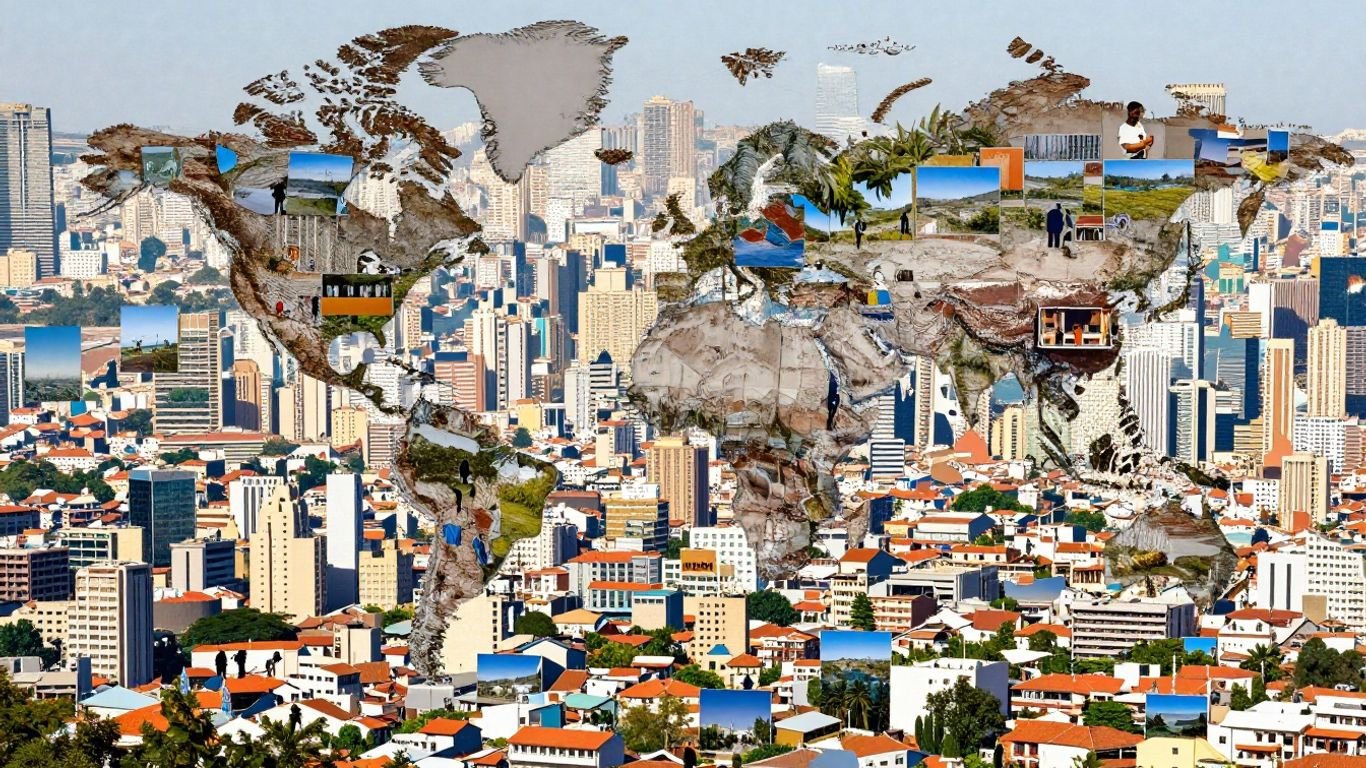
10 Largest diasporas of the world.
You know, the world is a big place, and people are always moving around. Whether it’s for work, family, or just a change of scenery, lots of folks end up living far from where they were born. This movement creates what we call diasporas – groups of people living outside their home country but still connected to it. It’s pretty interesting to see which countries have the most people living abroad. Let’s take a look at some of the biggest diasporas out there.
Key Takeaways
- The Indian diaspora is the largest globally, with millions living in countries worldwide.
- Mexico has the second-largest diaspora, with most emigrants heading to the United States.
- Conflict and labor migration are major reasons for the formation of many large diasporas.
- Remittances, or money sent back home by people living abroad, are a significant economic factor for several countries.
- The definition of diaspora often focuses on first-generation emigrants but can include broader ancestral connections.
- Diasporas contribute to both their host countries and their homelands culturally and economically.
- The Russian and Chinese diasporas are also among the world’s largest.
- Countries like Syria and Ukraine have seen their diaspora populations grow significantly due to recent conflicts.
1. Indian Diaspora
When we talk about people living outside their home country, the Indian diaspora is the one that really stands out. It’s the biggest out there, with millions of folks from India living all over the globe. This isn’t some new thing; it’s been happening for a long time, with people moving for work, better opportunities, or sometimes just to see the world.
These communities aren’t just scattered randomly. You’ll find large groups in places like the United States, the UAE, and Canada, but also significant populations in countries like Malaysia and even parts of Africa. It’s a testament to the sheer reach of the Indian people and their ability to build lives and contribute wherever they go. The sheer scale of the Indian diaspora is a defining feature of modern global migration patterns.
It’s fascinating to look at the numbers. While exact figures can shift, estimates often place the Indian diaspora well over 30 million people. This makes them the largest of the world’s expatriate communities by a considerable margin.
Here’s a rough breakdown of where some of these communities are concentrated:
- United States
- United Arab Emirates
- Canada
- Malaysia
- United Kingdom
- Saudi Arabia
- Australia
These folks often maintain strong ties to their homeland, bringing their culture, food, and traditions with them. It’s a complex picture, with many different reasons driving people to leave and build new lives abroad. The impact they have on both their home and host countries is pretty significant, economically and culturally. It’s a story of movement and adaptation that continues to shape the world we live in, showing how interconnected we’ve become. You can find more details about the global presence of Indians on pages like India’s diaspora.
The Indian diaspora is a massive force, shaping economies and cultures across continents. Their journey is a key part of understanding how people move around the world today.
It’s not just about the numbers, though. It’s about the stories, the challenges, and the successes of millions of individuals building lives far from where they started. This global spread is a huge part of what makes up the modern world, and the Indian community is right at the center of it, with a presence in places like Malaysia and beyond.
2. Mexican Diaspora
When we talk about the Mexican diaspora, we’re really talking about a massive movement of people, mostly heading north. It’s one of the largest immigrant populations out there, with millions of Mexicans living outside their home country. The lion’s share, as you might guess, ends up in the United States. It’s not just a recent thing either; this migration has been happening for a long time, shaping communities on both sides of the border.
The United States is the primary destination for Mexicans seeking opportunities abroad. This isn’t surprising given the proximity and historical ties. Many of these individuals contribute significantly to the U.S. economy, filling vital roles in various sectors. Think about agriculture, construction, and service industries – Mexicans are a huge part of the workforce in these areas. Los Angeles, for instance, is often called the second-largest Mexican city, which really puts the scale of this diaspora into perspective. It’s a testament to the enduring cultural connections and the sheer number of people involved.
Beyond the U.S., there are smaller, but still notable, Mexican communities scattered across the globe. You’ll find them in Canada, and even in places like Spain and Germany, though these numbers pale in comparison to those in the States. It’s a complex picture, with people moving for a mix of economic reasons, family reunification, and sometimes, unfortunately, due to instability back home. Understanding this dispersion is key to grasping the broader patterns of global migration today.
The Mexican diaspora represents a significant demographic force, deeply intertwined with the economic and cultural landscapes of both its homeland and host countries. Its sheer size and the consistent flow of people underscore the persistent economic disparities and the powerful draw of opportunity elsewhere.
It’s fascinating to see how these communities maintain their traditions and identity while adapting to new environments. They bring their food, music, and customs, enriching the places they settle. It’s a dynamic process, and the Mexican diaspora continues to be a major story in global migration patterns, with millions living abroad.
3. Russian Diaspora
The Russian diaspora is a complex tapestry woven from centuries of movement, driven by everything from religious schisms to political upheaval. The earliest significant outflow happened way back in the 17th century with the Old Believer schism, a religious dispute that sent many Russians seeking freedom to practice their faith elsewhere. Then came the big one: the October Revolution and the subsequent Civil War in the early 20th century. This period saw a massive wave of what are often called the “White émigrés” – people fleeing the new Bolshevik regime, desperate to preserve their way of life and culture. Many found new homes in places like North America, Europe, and even parts of Asia.
Later, during World War II, another smaller group of Russians left, often as refugees or displaced persons. Throughout the Soviet era, ethnic Russians moved extensively within the vast Soviet Union, and after its collapse in 1991, many found themselves living in newly independent countries, forming part of the modern Russian diaspora. These movements weren’t just about escaping hardship; they were also about seeking opportunity and maintaining connections to their heritage. It’s a story of resilience, adaptation, and the enduring spirit of a people spread across the globe. The sheer scale of this movement highlights the historical forces that have shaped Eastern Europe and beyond, impacting global economic systems in various ways over time.

4. Chinese Diaspora
The Chinese diaspora is a massive global presence, with estimates of its size varying wildly, but often cited as being well over 50 million people, and some figures pushing towards 100 million. This isn’t just a recent phenomenon; Chinese people have been migrating for thousands of years. The big waves of emigration, especially from the 19th century up to 1949, were often driven by tough times back home – think wars, famine, and a lot of political mess.
Many of these early migrants were laborers, heading to places that needed hands for development. Today, you’ll find huge Chinese communities scattered all over the globe. Asia has the largest concentrations, with countries like Indonesia, Thailand, Malaysia, Singapore, and the Philippines hosting millions. But it’s not just Asia; the United States, Canada, and Australia also have significant populations, often over a million each in their urban centers. Smaller, but still notable, communities exist in places like Japan, Brazil, Russia, and even France and the UK.
It’s interesting how these communities maintain their identity while integrating into new societies. They often keep strong ties to their ancestral homeland, which shapes who they are. This global network is a testament to the resilience and adaptability of the Chinese people.

Understanding this diaspora is key to understanding global economics and culture today. It’s a complex picture, and frankly, it’s amazing how many people have spread out from China over the centuries. The sheer scale of it is something else, and it’s something that impacts international relations and trade more than many realize. It’s also worth noting that this movement has been happening for so long, it’s not just about recent economic shifts, but a deep historical pattern of migration and settlement.
The global flow of people and ideas is a constant, and the Chinese diaspora is a prime example of that. It’s a story that continues to unfold, with new generations born and raised in different countries, yet still connected to their heritage. This global network is a testament to the resilience and adaptability of the Chinese people, and it’s a story that continues to unfold. The sheer scale of it is something else, and it’s something that impacts international relations and trade more than many realize. It’s a complex picture, and frankly, it’s amazing how many people have spread out from China over the centuries.
The global flow of people and ideas is a constant, and the Chinese diaspora is a prime example of that. It’s a story that continues to unfold, with new generations born and raised in different countries, yet still connected to their heritage. The U.S. State Department has been looking into intellectual property issues involving Chinese AI companies, which is just one facet of the complex relationship between China and the rest of the world. protecting U.S. technological leadership.
The Chinese diaspora represents a significant demographic force, influencing economies and cultures worldwide. Their historical migration patterns and continued global presence highlight a dynamic aspect of human movement and adaptation.
5. Bangladeshi Diaspora
The Bangladeshi diaspora is a significant global presence, with millions of people of Bangladeshi origin living outside their homeland. Many leave Bangladesh seeking better economic opportunities, education for their children, or simply a more stable life. It’s a complex picture, with people moving for all sorts of reasons, often to support families back home.
Key destinations for Bangladeshis include the Middle East, particularly Saudi Arabia and the United Arab Emirates, as well as Malaysia. In the Western world, the United Kingdom and Italy have notable Bangladeshi communities. The net migration rate for Bangladesh shows more people leaving than entering, which highlights the push factors driving this outward movement [c7ea].
While exact numbers are hard to pin down, estimates suggest a substantial portion of the global South Asian diaspora originates from Bangladesh. These communities often maintain strong cultural ties to their roots, contributing to the diverse fabric of their adopted countries. In the United States alone, hundreds of thousands identify as Bangladeshi [f485].
The Bangladeshi diaspora represents a global network of individuals striving for improved circumstances, driven by a mix of economic necessity and aspirations for a better future for themselves and their families.
Some of the main reasons for emigration include:
- Seeking better employment and higher wages.
- Accessing advanced educational systems.
- Escaping poverty and improving financial stability.
- Joining family members already settled abroad.
These factors combine to create a dynamic and widespread diaspora that continues to grow and evolve.
6. Syrian Diaspora
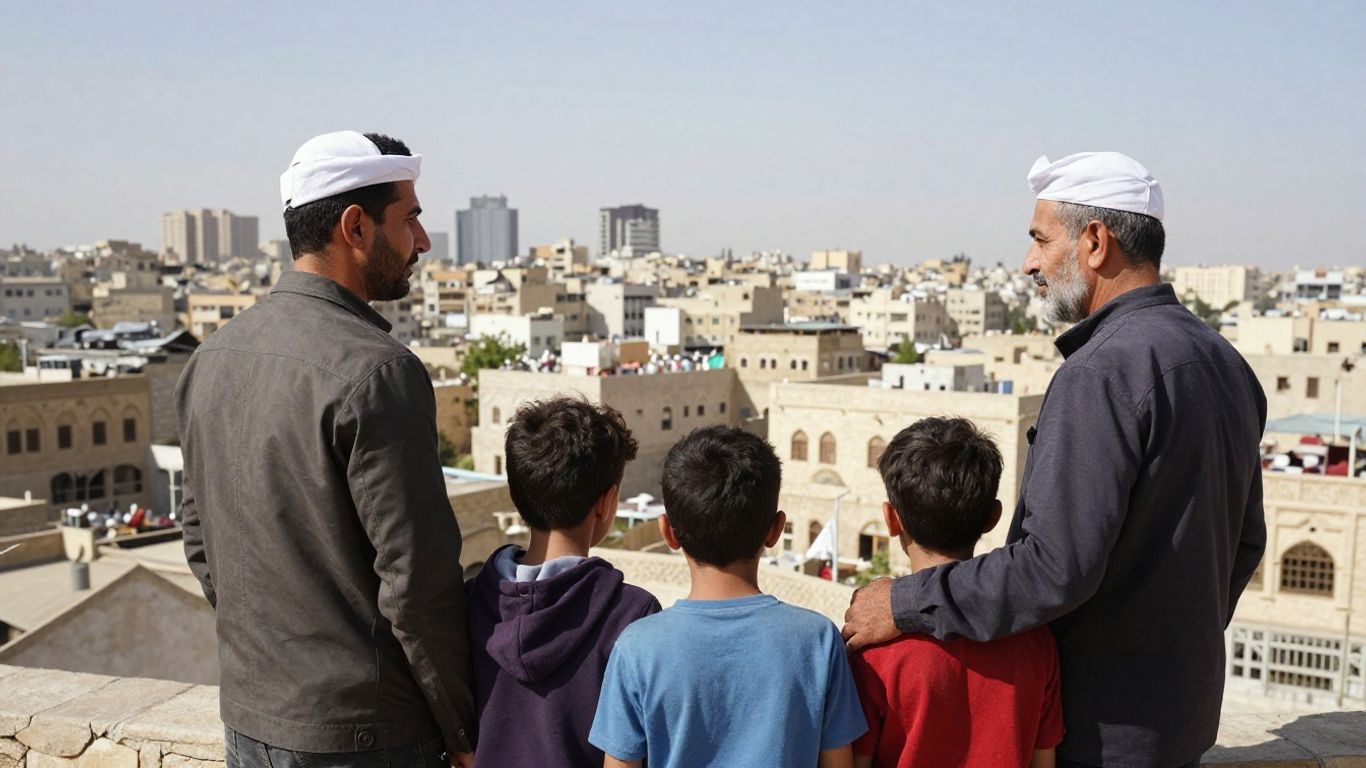
The Syrian diaspora is a significant global presence, largely shaped by decades of conflict and instability in their homeland. It’s estimated that millions of Syrians now live outside of Syria, with a huge number of those being refugees seeking safety and a new start elsewhere. This displacement has created large Syrian communities in countries all over the world, particularly in neighboring Middle Eastern nations, but also stretching to Europe and North America.
The sheer scale of this displacement is staggering, with millions forced to leave their homes. Many Syrians have had to rebuild their lives from scratch, facing challenges in new environments while holding onto their cultural identity. It’s a tough situation, and you see Syrian families trying to make the best of it wherever they’ve landed.
Here’s a look at some of the key aspects:
- Mass Displacement: The ongoing conflict has led to an unprecedented number of people leaving Syria. Many are fleeing violence and seeking refuge.
- Global Reach: While many Syrians have settled in nearby countries like Turkey, Lebanon, and Jordan, significant populations can now be found in Germany, Sweden, Canada, and the United States.
- Cultural Preservation: Despite being scattered, Syrian communities often work hard to maintain their traditions, language, and heritage in their new homes.
It’s a complex situation, and understanding the Syrian diaspora means looking at the human stories behind the numbers. Many are just trying to find stability and a place to call home again. The impact of this diaspora is felt economically and culturally in host countries, and it’s a testament to the resilience of the Syrian people. You can find more information about the global refugee situation on UNHCR’s website.
It’s important to remember that while many are seeking aid, there are also Syrians who have established successful lives and businesses abroad, contributing to their new societies. The narrative isn’t just about hardship; it’s also about adaptation and building anew. This situation also highlights how global events can have far-reaching consequences, impacting populations across continents. It makes you think about how interconnected everything is, and how personal circumstances can be tied to larger geopolitical shifts. It’s a reminder that financial security often depends on factors beyond individual control, unlike the myth of a massive wealth transfer that some people talk about [bd01].
7. Pakistani Diaspora
The Pakistani diaspora is a pretty significant group of people scattered across the globe. When you look at where they’ve settled, the Middle East and the United Kingdom are top spots, with millions calling these places home. It’s not just about economics, though that’s a big part of it; many are seeking better opportunities and a more stable future for their families.
The total number of people of Pakistani origin living abroad is estimated to be around 7 million. This makes it one of the larger diasporas out there. They’ve established communities in various countries, contributing to the cultural and economic fabric wherever they go. It’s interesting to see how these communities maintain their traditions while integrating into new societies.
Here’s a rough breakdown of where some of the larger Pakistani communities can be found:
- Middle East: This region hosts a substantial number of Pakistanis, often working in construction, services, and other industries. Countries like Saudi Arabia and the UAE are major destinations.
- United Kingdom: A long-standing and well-established community exists in the UK, with many second and third-generation Pakistanis now living there.
- North America: While not as large as the Middle East or UK communities, significant numbers have also settled in the United States and Canada.
It’s a complex picture, with people moving for a mix of reasons, from work to education. Understanding the Pakistani diaspora means looking at both the push factors from Pakistan and the pull factors in the countries they move to. The United States Census provides some interesting figures on global populations, including Pakistan’s estimated population.
The movement of people from Pakistan is a long-standing trend, driven by a desire for economic advancement and a better quality of life. These communities often form strong networks that support new arrivals and help preserve cultural heritage abroad.
8. Ukrainian Diaspora
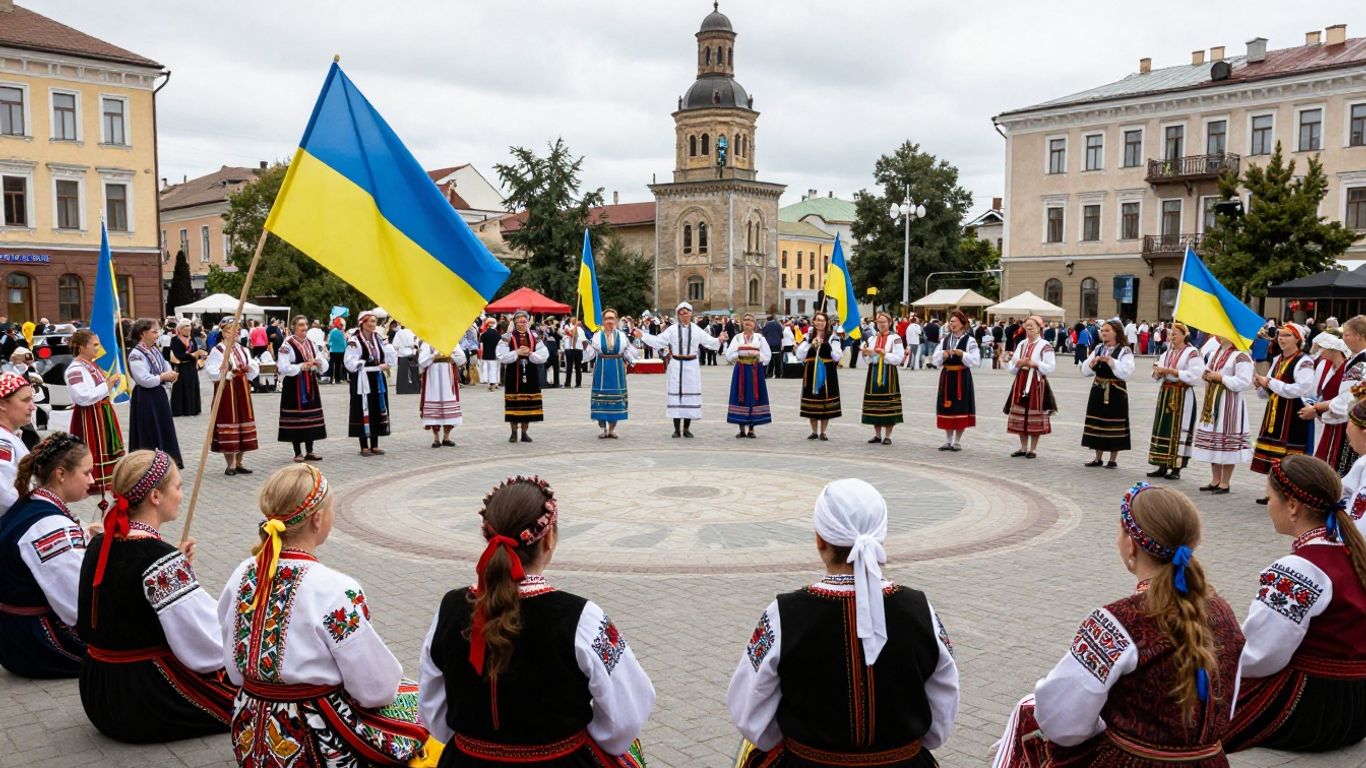
The Ukrainian diaspora has exploded in recent years. The ongoing war with Russia pushed millions of Ukrainians to relocate, seeking better lives and safety far away from home. An estimated 6.6 million Ukrainians are now living outside of Ukraine, making them one of the world’s largest overseas communities.
Here’s a look at where most Ukrainians have settled:
| Country | Estimated Number of Ukrainians (2026) |
|---|---|
| Poland | 1,200,000 |
| Germany | 1,000,000 |
| Canada | 350,000 |
| United States | 350,000 |
| United Kingdom | 430,000 |
| Russia | 2,000,000+ |
- Many Ukrainians have rebuilt their lives in Germany and Poland, which currently host the largest populations of Ukrainian refugees. Germany and Poland have stepped up as main destinations since 2022.
- Canada and the United States had established Ukrainian communities long before the latest crisis, but recent events brought a new wave of arrivals.
- Unique Ukrainian settlements can also be found in Brazil, Argentina, and even Australia, legacies of older migration waves.
The story of the Ukrainian diaspora isn’t just numbers. Older migration included moves to Russia and the Baltics during Soviet times, and communities popped up in North and South America, as well as across Europe and the Middle East.
Ukrainian families have faced real uncertainty, but wherever they go, they hold onto their traditions while adjusting to new systems and cultures. Their presence has changed local economies and community life, just as much as they’ve been changed by it, too.
Integration in host countries can be tough. Language barriers and employment challenges stick out, along with the fight to keep Ukrainian identity alive. But the diaspora keeps providing large sums in remittances to families back home—and they’re not just passive guests. Ukrainians abroad get involved politically and culturally, helping build bridges between Ukraine and their new countries.
Recently, even the United Kingdom has risen as a major host, currently ranking fourth in receiving Ukrainian refugees as of 2026. With new conflicts, expect the Ukrainian diaspora to keep growing and reshaping everywhere it settles.
9. Filipino Diaspora
The Filipino diaspora is a massive global presence, with estimates putting the number of Filipinos living abroad at around 20 million. These folks come from all sorts of backgrounds within the Philippines and have spread out everywhere, really. You’ll find large communities in Southeast Asia, East Asia, Oceania, the Middle East, North America, and Europe. A big chunk of this diaspora is made up of migrant workers, often referred to as Overseas Filipino Workers (OFWs). These workers send a lot of money back home, which is a pretty big deal for the Philippine economy. It’s so significant that they even have their own political party in the Philippine Congress.
It’s interesting to see how the demographics are shifting. While the total number of Filipino immigrants in the U.S. has seen some ups and downs, the proportion of immigrants within the Filipino population there has actually gone down since 2000. This suggests more people born in the U.S. to Filipino parents are staying put, or perhaps the nature of migration is changing. The Filipino community in the U.S. is quite established, with a long history of settlement.
The sheer scale of the Filipino diaspora highlights a global trend of labor migration, driven by economic opportunities and family ties. These communities often maintain strong connections to their homeland, contributing significantly through remittances and cultural exchange.
When you look at where they’ve settled, you see a pattern. Many end up in countries that need labor, especially in the Middle East and parts of Asia. But they’re also a visible part of societies in North America and Europe. It’s a testament to their adaptability and the global demand for their skills. The influence of the Filipino diaspora is felt in many corners of the world, making it one of the most significant diasporic groups globally.
10. British Diaspora
When we talk about the British diaspora, we’re really looking at a massive movement of people over centuries. Think English, Scots, and Welsh folks heading out to pretty much every corner of the globe. It wasn’t just one big event, either; people left for all sorts of reasons – opportunities, adventure, sometimes just because they could. The sheer scale of this outward migration has shaped many nations.
Historically, places like the United States, Canada, Australia, and New Zealand became major destinations. But honestly, you’ll find people of British descent scattered everywhere, from Spain to Kenya, even down in Chile and Argentina. This reflects a long history of exploration and settlement. Looking at the countries with the most emigrants reveals how many traditional destinations still feature prominently.
It’s not just about the old colonial ties, though. In more recent times, people have moved for economic reasons, seeking better prospects or escaping difficult situations back home. This has led to significant British communities popping up in places you might not immediately expect. Understanding these movements helps paint a clearer picture of global international community statistics.
Here are some of the key countries that have historically received large numbers of British emigrants:
- United States
- Canada
- Australia
- New Zealand
- South Africa
Of course, this is just a snapshot. The British diaspora is a complex tapestry woven into the fabric of many societies worldwide, a constant reminder of historical connections and ongoing human movement.
A World on the Move
So, we’ve looked at some of the biggest groups of people living outside their home countries. It’s pretty clear that folks are moving around the globe for all sorts of reasons, whether it’s for work, to escape trouble, or just to find a better life. These diasporas are a huge part of the world today, shaping cultures and economies everywhere. It’s a reminder that borders aren’t always as solid as we think, and people have always found ways to make a life for themselves, no matter where they end up. It’s just how things are.
Frequently Asked Questions
What exactly is a diaspora?
A diaspora is basically a group of people who come from one country but now live in many different places around the world. They often still feel connected to their home country, even though they live far away.
Why do people become part of a diaspora?
People move for many reasons. Some look for better job opportunities, like people from India or the Philippines. Others might have to leave because of wars or difficult situations, such as people from Syria or Ukraine. Sometimes, it’s just about moving for family or a new life.
How is the Indian diaspora the largest?
India has a huge number of people living and working in other countries. This is because many Indians seek jobs and education abroad, and they have spread out all over the globe.
What makes the Mexican diaspora so large?
A lot of people from Mexico move to the United States for work and to be closer to family. This long-standing movement has created one of the biggest diasporas in the world.
Are there diasporas from countries affected by conflict?
Yes, absolutely. Countries like Syria and Ukraine have seen many people leave their homes due to fighting and unrest. This has led to significant diasporas forming in other nations.
What does ‘first-generation emigrants’ mean?
This refers to people who were born in a country and then moved away to live in another country. It’s about the people who actually made the move themselves, not their children or grandchildren born elsewhere.
Do diasporas send money back home?
Yes, many diasporas send money back to their families in their home countries. This is called remittances, and it’s a really important source of income for countries like India, Mexico, and the Philippines.
Is the Chinese diaspora large?
Yes, the Chinese diaspora is one of the largest. Many people of Chinese descent live in countries all over the world, especially in Southeast Asia and North America, often forming strong business communities.
What about the Russian diaspora?
After the Soviet Union changed, many Russians moved to different countries. This created a large Russian diaspora, with people living in various parts of Eastern Europe and beyond.
How do diasporas keep their culture alive?
People in a diaspora often try to keep their traditions, language, and food alive. They might celebrate holidays from their home country, open cultural centers, or run businesses that reflect their heritage.
Does the UK have a large diaspora?
Yes, the British diaspora is also quite significant. Many people from the UK have moved to countries like the United States, Canada, and Australia over the years.
Are diasporas always about economics or war?
Not always. While jobs and conflict are big reasons, people also move for education, to join family, or simply for a change in life. The reasons can be very personal and varied.
One Comment