
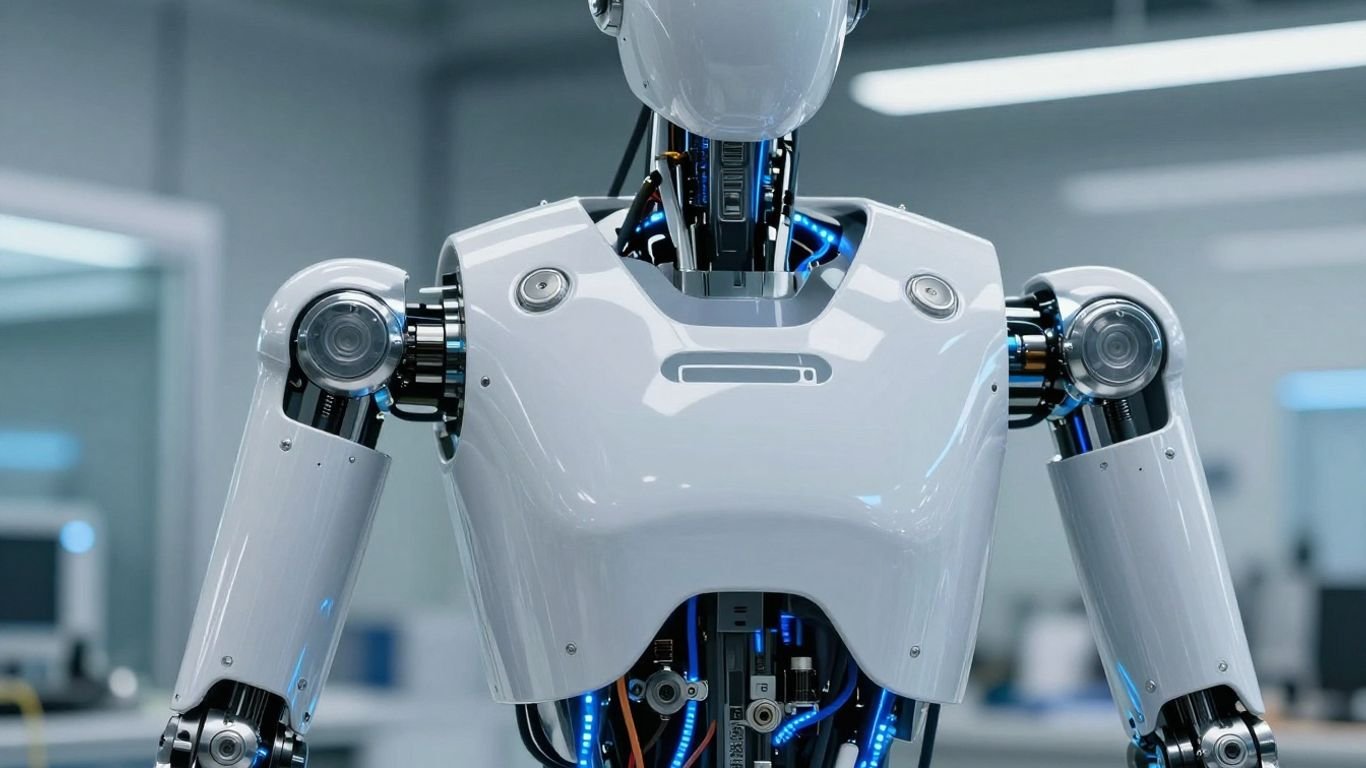
China’s Humanoid Robot School: What It Means for the Future of AI Training
Key Takeaways
- China is establishing specialized training centers for humanoid robots to accelerate industrial automation.
- The strategy aims to mitigate labor shortages and address aging workforce challenges through advanced robotics.
- Facilities are utilizing motion-capture and real-time physical interaction to refine machine motor skills.
- State-backed capital is essential for scaling hardware production and creating an autonomous domestic ecosystem.
- These initiatives threaten to disrupt global manufacturing supply chains by lowering reliance on human-intensive assembly.
The strategic shift toward industrial robotics
Beijing is aggressively realigning its economic priorities to favor high-end automation as a cornerstone of national growth. By focusing on advanced mechanical systems, the government seeks to secure long-term productivity gains independent of foreign technology imports. This shift reflects a move toward self-reliance that prioritizes domestic hardware stability and sophisticated AI control mechanisms.
Beijing’s vision for technological autarky
Technological autarky is now a central pillar of the long-term industrial policy. By building internal capabilities, the state aims to insulate itself from global supply chain volatility and external restrictions on high-compute hardware. This proactive posture shifts the landscape toward internal engineering superiority.
Moving beyond low-cost manual labor
The reliance on vast pools of inexpensive manual workers is decreasing, driven by rising domestic wages and shifting demographic trends. Automation provides a pathway to modernize the assembly line and elevate worker output per hour. Policies directed by the People’s Bank of China are intended to stimulate the liquidity necessary for firms to transition away from labor-intensive capital structures.
The role of state-backed capital in hardware scaling
Hardware scaling requires significant, sustained investment that often exceeds traditional private market thresholds. Government initiatives provide the necessary capital, ensuring that startups and established firms share the technical infrastructure required for large-scale development. This interconnected approach allows researchers to iterate on hardware design with public policy oversight.
Inside the first humanoid robot training facility
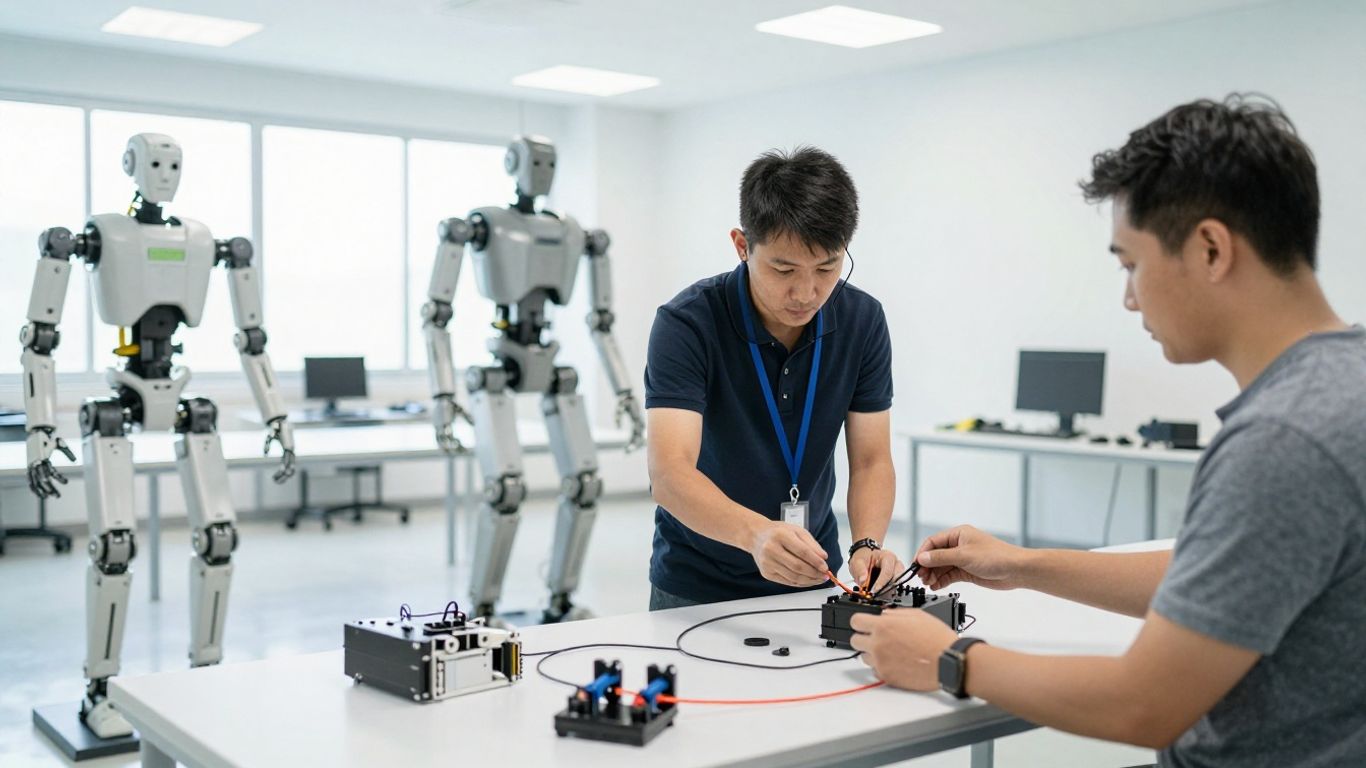
State-run facilities are now operating across key tech hubs to curate the behaviors of a new generation of mechanical workers. These centers function as schoolhouses where complex tasks are broken down into granular data units. By mapping human physical actions to machine motor responses, the facilities enable robots to progress beyond simple, repetitive motions.
Curricula for motor skill acquisition and spatial awareness
Training focuses on the fundamental physical coordination required for unstructured work environments. Instructors utilize motion capture technology to guide robot limbs through specific sequences, allowing the underlying AI to parse spatial obstacles. This process converts physical guidance into actionable digital code.
Multi-modal AI integration for real-world tasks
The integration of visual sensors with physical actuation is refined through real-world experimentation. Systems are trained to interpret color, shape, and resistance in three-dimensional environments, allowing for nuanced movement during assembly. This capability ensures that models can distinguish between materials and components without constant human supervision.
Standardizing robotic performance metrics within the ecosystem
Standardization is critical for the interoperability of various robotics components across the industry. By implementing uniform performance benchmarks, the developers ensure that components from different vendors function reliably within the same assembly line. This rapid industrial transformation relies on the shared data sets generated by students of the program.
Strengthening manufacturing dominance
Manufacturing remains the backbone of the domestic economy, and advanced robotics are being deployed to reinforce this status. By incorporating these machines into established workflows, firms maintain output levels despite labor shortages. The objective is to sustain high throughput while improving the precision of finished goods.
Increasing throughput on assembly lines
Robotic workstations are designed to operate around the clock, providing a level of consistency that human shifts cannot maintain. By replacing tedious manual tasks with automated counterparts, factories see a reduction in error rates and a substantial increase in cycle completion times.
Flexibility in production supply chains
A resilient, agile chain requires the ability to adapt to sudden changes in external demand. Robots capable of reprogrammable behavior allow for the reconfiguration of hardware platforms for different products on short notice. This adaptability defines the modern manufacturing landscape, reducing the time needed to bring new consumer goods to market.
Reducing reliance on domestic human workforce stability
Demographic shifts have forced a re-evaluation of workforce dependencies to prevent production stalls. Utilizing machines in high-risk or labor-heavy environments protects the sector from sudden fluctuations in available personnel. The transition mirrors themes seen in the electrification of transport, where scaling output is balanced against evolving market realities.
| Facility Stage | Capability Focus | Data Yield |
|---|---|---|
| Phase One | Orientation | 40% |
| Phase Two | Physical Drill | 75% |
| Phase Three | Autonomy | 95% |
The geopolitical race for technology supremacy
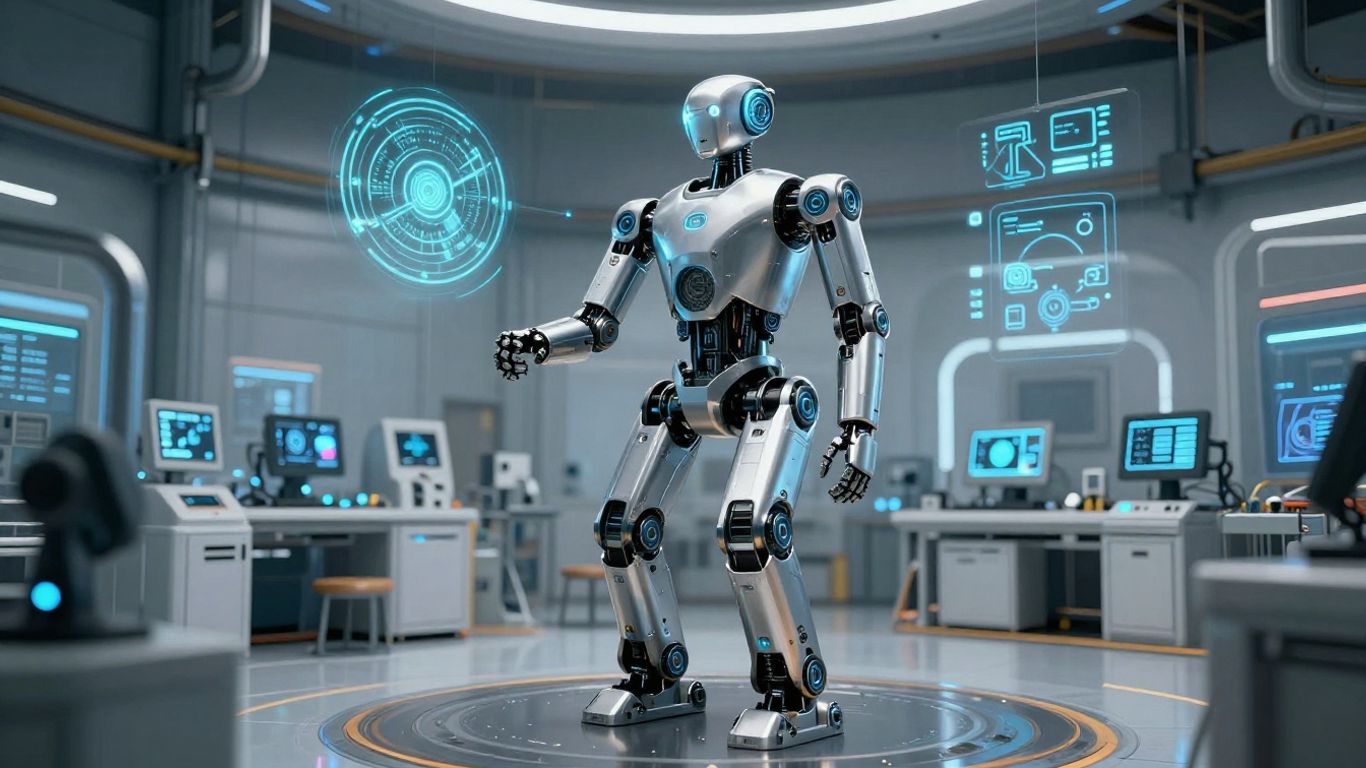
Global competition for dominance is centered on the control of foundational AI and robotics architectures. The ability to command the next generation of industrial base operations is seen as an existential necessity for economic longevity. This race pits domestic innovation against the backdrop of international standard-setting bodies.
Countering Western export controls through domestic innovation
Restrictions on advanced semiconductors have prompted an intensification of local research efforts. By developing proprietary alternatives, local firms are reducing their vulnerability to foreign supply chain cutoffs. This strategy emphasizes the refinement of existing internal capabilities to achieve breakthrough performance targets.
The integration of critical AI intellectual property
Intellectual property is now treated as a core sovereign asset. The concentration of AI expertise within restricted facilities ensures that advancements are retained internally. This keeps the most sensitive algorithms and logic controllers away from international replication.
Developing an autonomous technological ecosystem outside global norms
Creating an isolated technological sphere allows for the development of standards that diverge from existing international frameworks. If the future of AI markets is built on internal standards, global actors not aligned with these norms may face barriers to entry. This approach secures the nation as a technological gatekeeper.
Addressing the AI training bottleneck
Physical reality presents challenges that purely digital learning environments often struggle to replicate. The friction, gravity, and inconsistency of the physical world are difficult to simulate without high-fidelity environmental data. Bridging the gap between code and concrete is the current objective of institutional research.
Moving from simulated virtual environments to physical reality
Simulation is useful for base code, but true mastery requires experiencing the physical resistance of real objects. Facilities provide the necessary materials for machines to interact with the world in ways that digital emulators cannot replicate. This physical training is where the most valuable operational data is gathered.
Real-time sensor-fusion learning in industrial settings
Sensors must work in concert to translate a messy environment into clear decision parameters. Through integrated hardware, robots process environmental input to make split-second adjustments to their grip or path. This fusion is the mechanism that allows for high-precision operations in variable conditions.
The fundamental limitations of digital-only machine learning
- Models often fail in physical reality because of unexpected environmental friction.
- Virtual training sets are static and miss real-time entropy.
- Digital sensors cannot capture true material durability or weight.
- Physical repetition is required to ensure long-term mechanical reliability.
The potential impact on global trade and labor
The widespread employment of humanoids will fundamentally alter international manufacturing incentives. If costs continue to drop, the geographic advantage of low-wage nations will be erased by high-efficiency local robotics. This shift will require a rethink of traditional offshoring strategies and labor management globally.
Impact on manufacturing reshoring initiatives in the West
Automation incentivizes the return of industrial production to domestic soil. As human labor costs become less dominant in the total product pricing, manufacturers will likely favor proximity to end consumers. This shift creates a need for developers to offer modern sales solutions, such as Waymark, to navigate the transition in real estate and infrastructure support.
The obsolescence of low-skilled international labor
Many emerging economies rely on the export of labor-intensive goods to drive growth. A future where robotic units perform these tasks at a comparable cost point puts these economies at risk of prolonged stagnation. International labor demand may shrink as production centers consolidate in highly automated hubs.
Future-proofing the domestic industrial base against global instability
Building a robust, machine-led production system creates a hedge against international supply chain disruptions. By localizing the production of essential goods, the industrial base can remain operational even during protracted global crises. This protection ensures that vital supplies are available regardless of the political climate abroad.
Conclusion
The push toward robotics marks a definitive change in the global economic architecture, prioritizing local autonomy and technical efficiency over traditional international labor exchanges. As these machines integrate into the workplace, the ability to control and maintain this mechanical workforce will define the next chapter of international industrial relations. This initiative is not merely about productivity; it is an foundational effort to rewrite the rules of modern manufacturing and secure national interest in an increasingly competitive environment.
Frequently Asked Questions
Why are humanoid robots being trained instead of specialized machines?
Humanoid forms are designed to interface with infrastructure already optimized for human workers, such as stairs, existing tools, and workstations, which saves companies from having to redesign every piece of factory floor hardware.
What data are robots gathering during their training sessions?
Robots are collecting massive amounts of telemetry data regarding force application, path planning, obstacle avoidance, and material interaction to help build more generalized foundation models for physical task execution.
Does the training center focus only on industrial tasks?
While industrial applications are the primary focus, the underlying motor skill development and sensory data collection are universally applicable to service, medical, and agricultural sectors that require similar levels of spatial coordination.
How does this affect the cost of manufactured goods for consumers?
Greater operational efficiency and reduced dependence on costly manual sequences are expected to lower production cycle times, which could theoretically drive down the unit costs of manufactured goods in the long term.
Can machines trained in China work in factories elsewhere?
While hardware platforms may vary, the core AI models and motor-skill knowledge developed in these facilities can be distributed as software updates, potentially influencing global robotic capabilities if those software standards are adopted internationally.
Is the reliance on robotics risky for industrial stability?
Any complex automated system carries risks of technical failure, software glitches, or power dependency, but stakeholders argue that these are more predictable and manageable than the uncertainties associated with human labor and global supply chains.
How will this change the nature of future unemployment?
Manufacturing-focused roles will evolve toward high-tech maintenance, oversight, and software operation, likely reducing the demand for low-skill manual physical labor while increasing the need for personnel with specialized engineering and technical expertise.