Mapped: Countries That Depend Most on Imported Food
Key Takeaways
Food import dependence is shaped by geography, climate, land availability, and the cost of moving supplies—not simply by how much a country buys from abroad.
- Small islands often rely on ships and ports to connect them with food markets.
- Singapore’s limited farmland makes trade central to its food supply.
- Gulf states face constraints that include arid climates and limited arable land.
- Remote island chains must manage transport across long distances and dispersed settlements.
- Rankings change depending on whether they measure import value, domestic supply, or the share of merchandise imports spent on food.
1. Maldives: Why an island nation imports most of its food
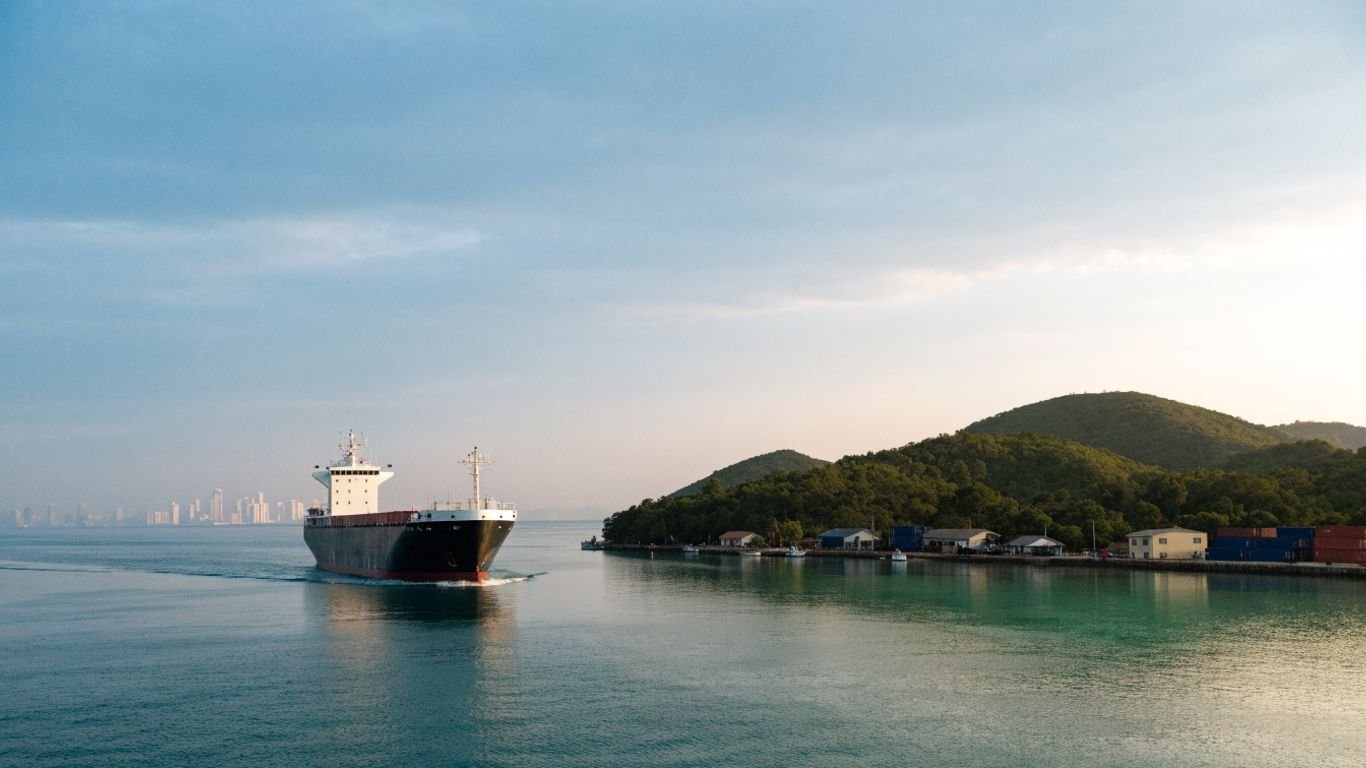
The Maldives has little room for large-scale farming: its islands are small, widely dispersed, and surrounded by ocean. That geography makes imports a practical part of supplying a population and visitor economy, while local production can contribute only within the limits of available land, freshwater, and growing conditions. The country is a clear example of how an island’s physical scale can shape its food system.
| Supply condition | Why it matters |
|---|---|
| Limited land | Restricts the area available for cultivation |
| Dispersed islands | Adds steps between arrival and local delivery |
| Reliance on sea routes | Makes ports and shipping schedules important |
| Imported goods | Connects local availability to external markets |
These pressures are related, but they are not interchangeable measures of dependence. A country may import a large share of its food supply, or food may account for a large share of its total merchandise imports; each describes a different aspect of exposure. The food import shares comparison, for example, uses food as a share of merchandise imports, rather than measuring the share of food consumed that is imported.
That distinction matters when comparing island states. A disruption to transport or a shift in global prices can affect costs and availability, while domestic production, inventories, and the mix of imported goods influence how that pressure reaches households. The Maldives illustrates a broader point: food security is shaped not only by where food is grown, but also by the links that carry it from origin to table.
2. Singapore: How limited farmland drives food imports
Singapore is a densely built city-state with limited land for agriculture, so it depends on trade to supply much of what residents eat. Its position as a major commercial center gives it links to international markets, but access to trade does not erase exposure to changes in prices, shipping, or supplier conditions. In comparing countries most dependent on food imports, Singapore shows why a high-income economy can still rely heavily on external food sources.
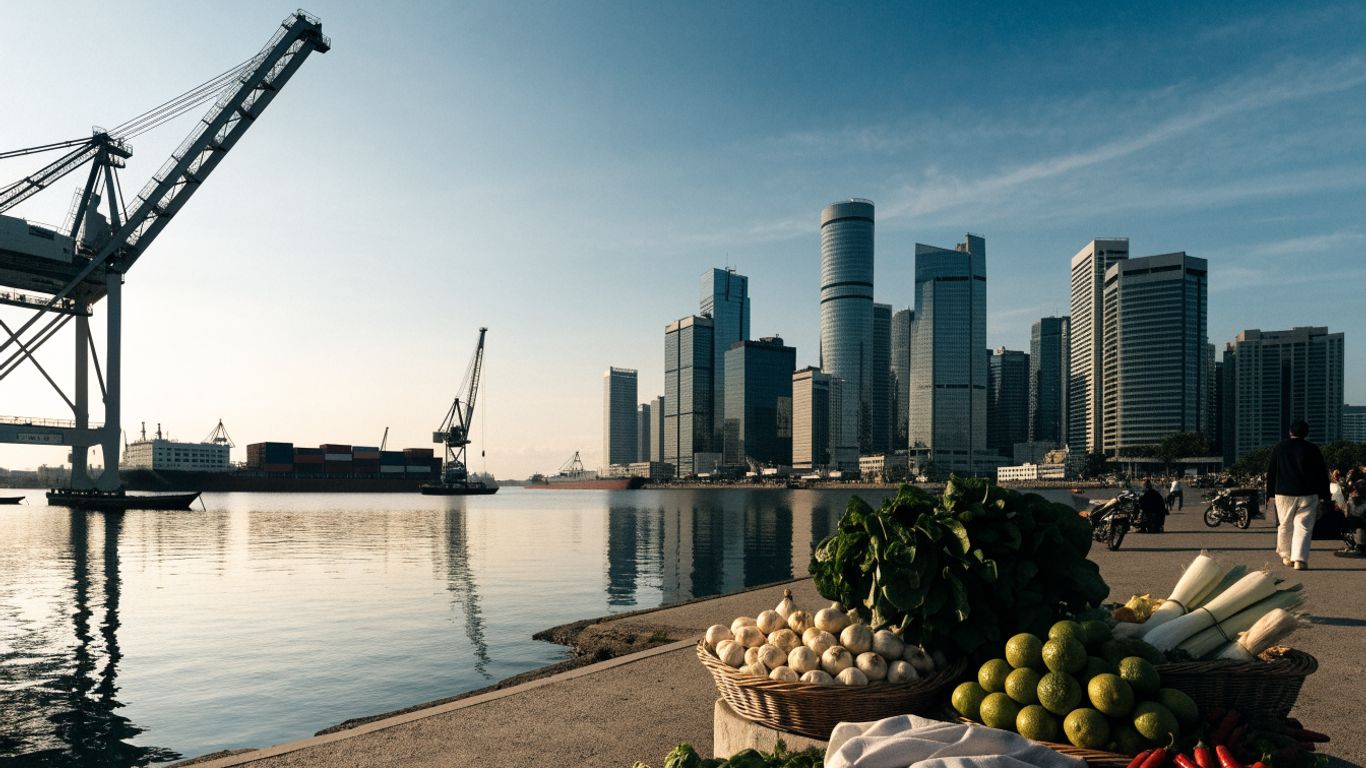
Food supply also depends on a chain of practical steps, not just on the point where goods enter the country. A useful way to understand that chain is to follow the movement from overseas production to local use:
- Food is grown or processed in a supplier country.
- Shipments travel by sea or air to Singapore.
- Importers and distributors move products through storage and wholesale channels.
- Retailers and food businesses make supplies available to households.
Each step can affect timing, cost, and the range of goods available. Singapore’s case also shows that import dependence is not a simple proxy for vulnerability: infrastructure, purchasing power, supplier diversity, and domestic planning all shape how a country manages its reliance. For a separate look at how global commerce links economies, see this overview of global trade patterns.
3. Qatar: The role of imports in a desert food system
Qatar’s hot, arid climate and limited arable land constrain conventional agriculture. Imports therefore play an important role in supplying food, while domestic production operates within environmental limits that include water availability and growing conditions. The balance between local output and overseas supply can vary by product, so it is more useful to discuss the structure of dependence than to treat every food category as identical.
A desert food system also makes resource use part of the supply question. Growing food locally can require land and water that are scarce, while importing it shifts some production needs beyond the country’s borders. Neither approach removes trade-offs: imported supplies rely on transport and external markets, and local production has to fit the conditions in which it takes place.
Food access and nutrition are related, but they are not the same question. For example, a discussion of vitamin D deficiency concerns health risks and guidance, not a measure of how much food a country imports. Keeping those questions distinct helps avoid reading a broad food-trade statistic as a complete picture of public health or household diets.
4. United Arab Emirates: Feeding a population with limited arable land
The United Arab Emirates faces a combination of limited arable land, an arid climate, and a population supplied through extensive trade networks. These conditions make imports a significant part of the food system, even as local production can contribute to selected needs. The country’s experience is a reminder that food dependence is often an outcome of environmental constraints and economic choices together.
The pressures are easier to see when the supply chain is considered as a whole. For households, the effects can show up in several connected ways:
- Changes in international prices can influence import costs.
- Delays in shipping can affect when products reach distributors.
- Limited local growing conditions narrow options for domestic production.
- Distribution and storage affect how goods move from ports to consumers.
These factors do not mean that any one disruption automatically causes shortages. They do show why policymakers and businesses pay attention to sourcing, transport, and the capacity to respond when conditions change. For readers interested in a different kind of economic pressure on households, this discussion of Canadian housing recovery looks at housing indicators rather than food supply.
5. Kuwait: Reliance on imported staples and fresh food
Kuwait’s dry climate and limited fertile land create constraints on domestic agriculture. Imports help fill the gap across food categories, including goods that are difficult to produce at scale in local conditions. As elsewhere in the Gulf, the composition of supply matters: dependence can look different for staples, fresh produce, and processed foods.
The term “food imports” can conceal those differences. A country’s total import bill reflects prices as well as quantities, while a measure of imports as a share of domestic food supply asks how much of the available food comes from abroad. Comparisons based on food balances, such as net food trade as a share of domestic supply, use a different lens from rankings based on the value or share of merchandise imports.
For Kuwait, that means a single headline figure cannot tell the entire story of resilience. The relevant questions include which foods are sourced internationally, how many supply routes are available, and how households and businesses respond when costs change. Such details help explain why two countries with similar import shares may face different practical risks.
6. Bahrain: How geography shapes food supply
Bahrain is a small island country, and its limited land and dry conditions restrict the scope for domestic agriculture. Food imports connect it to regional and wider markets, making shipping, border procedures, and distribution important parts of everyday supply. Geography does not determine every outcome, but it sets the conditions in which the food system operates.
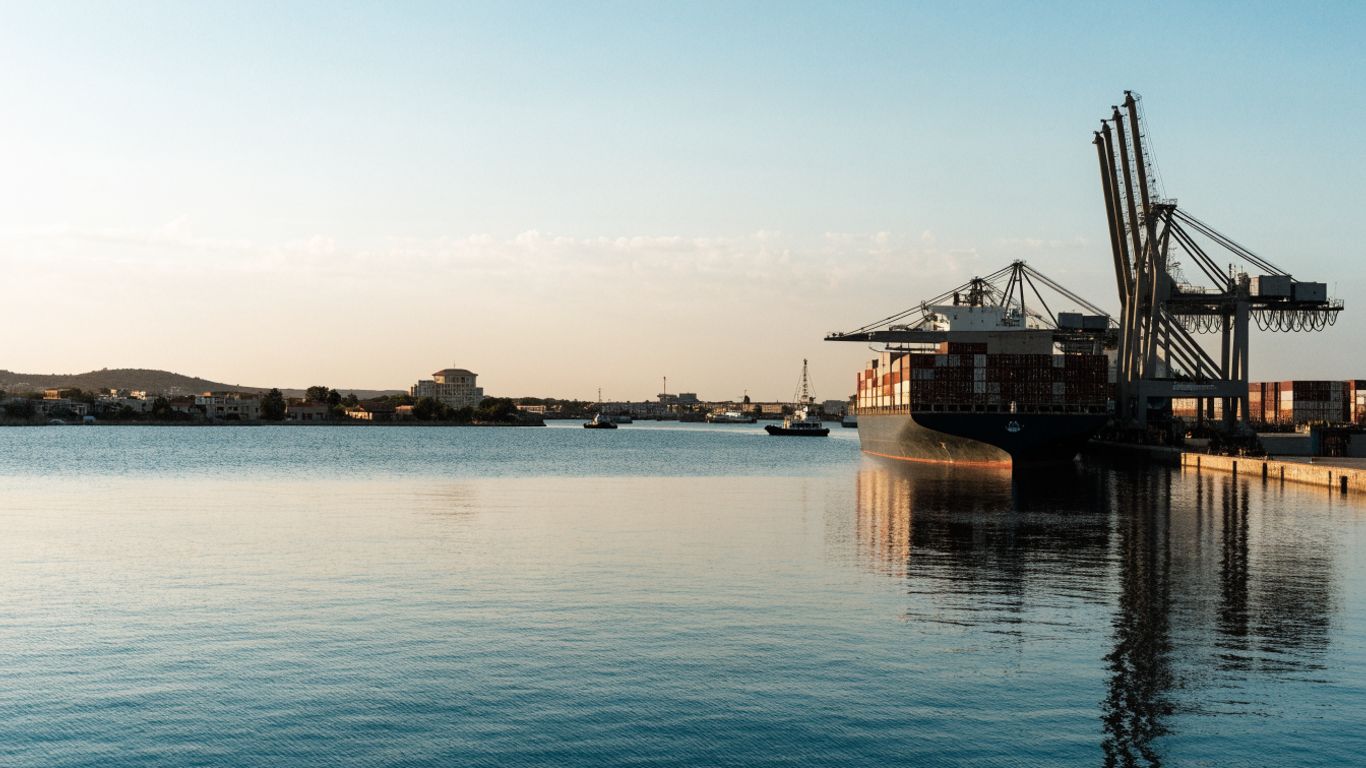
An island’s connection to nearby markets can make trade more accessible than it is for a remote archipelago, but imports still depend on functioning transport and commercial links. The broader comparison of food trade and domestic supply is useful here because it separates the role of imports from the country’s overall food availability. That distinction prevents a trade statistic from being mistaken for a direct measure of hunger or food access.
Beyond food, import reliance is part of a wider pattern of cross-border sourcing. A guide to PU leather and microfiber, for instance, compares materials used in goods such as bags and furniture rather than food products. The comparison is a reminder that import measures concern different product categories and should not be conflated when assessing a country’s food system.
7. Seychelles: The challenges of importing food to an island chain
The Seychelles consists of islands in the Indian Ocean, making transport a central feature of its food supply. Limited land restricts the scale of local agriculture, while distance from major production centers can add complexity to bringing goods in. As a result, imports are important, though the precise balance differs among food types and over time.
An island chain also has an internal distribution challenge. Food arriving at a main port still needs to reach people and businesses across islands, with logistics shaped by distance, frequency of service, and local infrastructure. That last stage can matter as much as the international journey when considering how consistently supplies are available.
The Seychelles illustrates why “island dependence” is not a single condition. An archipelago’s position relative to shipping routes, the size of its market, and the organization of domestic distribution all shape the experience. The same factors help explain why a country-level ranking is a starting point for comparison, rather than a complete account of how food reaches different communities.
8. Cabo Verde: Food imports across a dry Atlantic archipelago
Cabo Verde is an Atlantic archipelago with a dry climate, and these conditions limit the potential for extensive domestic crop production. Imports are consequently an important source of food, with transport links connecting the islands to suppliers beyond the country. The system must account for both the challenge of growing food locally and the practicalities of moving it across an island state.
This context also shows why import dependence can intersect with wider economic questions without being the same thing as them. A country may rely on international trade for food while facing separate issues in labor markets, housing, or business regulation. For example, EOR platforms in France concern hiring and employment administration, not food sourcing; the two subjects should not be treated as evidence about one another.
For Cabo Verde, the useful comparison is with other states where climate and geography shape supply options. The exact degree of reliance depends on the measure used and the year covered, while the practical challenge remains one of connecting external suppliers with island communities. That combination makes transport and local distribution important parts of the food-security picture.
9. Kiribati: Supplying food across remote Pacific islands
Kiribati’s islands are spread across a large area of the Pacific Ocean, making distance a defining feature of its supply network. The geography complicates the movement of goods between international suppliers and communities, while limited land and local growing conditions constrain domestic production. These pressures help explain why imported food plays a major role in the country’s food system.
The supply challenge is not simply getting goods to the country. Dispersed settlements mean domestic transport and the timing of deliveries matter after products arrive. Small-scale local production can remain important, but it operates alongside the logistical demands of connecting islands that are far apart.
Remote states also reveal the limits of a single national statistic. An import share can describe the country overall without showing whether supplies are equally accessible across every island or community. Even small, non-food goods can face different transport considerations; a guide to compact travel games is one example of an unrelated category designed for portability, not a measure of food access or trade dependence.
10. Nauru: Import dependence in one of the world’s smallest states
Nauru is a very small island state with little land available for broad agricultural production. Imports are therefore central to its food supply, linking local availability to external markets and transport. Its scale makes the country a particularly clear case of how a small domestic production base can increase reliance on supplies from abroad.
For a small market, the organization of deliveries can carry substantial weight. The range of goods available, the reliability of transport, and the ability of households to afford food all shape the lived experience behind an import statistic. Those factors are related, but a measure of dependence alone does not say whether food is affordable or evenly accessible.
Nauru also underscores why the countries most dependent on food imports should not be treated as a uniform group. A remote Pacific island, a Gulf state, and a dense city-state may all rely on trade, but for different reasons and with different transport options. Comparing them carefully means being clear about the indicator, the reference year, and the geography behind the number.
Conclusion
Food import dependence reflects a mix of land, climate, population, and access to trade. The Maldives, Singapore, Gulf states, and remote island nations show different versions of that relationship, so rankings are most useful when their measure and year are made clear. No single figure captures the full story of supply, affordability, or resilience.
Frequently Asked Questions
What does food import dependence mean?
It describes the extent to which a country relies on food supplied from abroad. It can be measured in different ways, including imports as a share of domestic food supply or food as a share of merchandise imports.
Does a high food import share mean a country is food insecure?
Not by itself. Food security also depends on affordability, distribution, household access, supply diversity, and the ability to respond to disruption.
Why do island countries often import food?
Many islands have limited land for agriculture and rely on ships or air transport to connect with suppliers. The scale of dependence varies with climate, location, infrastructure, and local production.
Why does Singapore import so much food?
Singapore has limited land for agriculture and is a densely built city-state. International trade therefore plays an important role in supplying food, alongside domestic planning and distribution.
How can food import dependence be measured?
Common approaches compare imports with domestic food supply, or compare food imports with total merchandise imports. These measures describe different things and should not be substituted for one another.
Can a country reduce its reliance on food imports?
A country may expand local production where land, water, and growing conditions allow, or diversify suppliers and transport routes. The options depend on local resources and economic trade-offs.
Why do food import rankings change over time?
Rankings can shift as prices, harvests, trade flows, population, and measurement methods change. A meaningful comparison should identify both the indicator and the year it covers.