Climate Change or Arson? What Really Causes the World’s Wildfires?
Key Takeaways
Wildfire risk has more than one cause: an ignition starts a fire, while weather, fuel, and landscape conditions influence what happens next. Separating those roles helps explain both individual fires and long-term trends.
- Lightning and human activity can both ignite wildfires; deliberate arson is only one kind of human cause.
- Hotter, drier conditions can make vegetation easier to burn and fires harder to contain, without explaining who or what sparked them.
- Fire patterns vary by region, ecosystem, land use, and the period being measured.
- Investigators may identify a likely cause without establishing intent or motive, and some fires remain unexplained.
- Prevention works best when local ignition risks, vegetation, warnings, community readiness, and climate trends are considered together.
Climate change vs. arson: different roles in wildfire risk
The phrase climate change vs arson wildfires can make two different questions sound like competing answers to one. Arson concerns an intentional act that may ignite a particular fire; climate change concerns shifts in conditions that can influence fire danger and behavior. Both can matter, but they operate at different points in the chain of events. Keeping that distinction clear makes it easier to assess claims about a single blaze and about wildfire patterns over time.
Ignition starts a fire; weather and fuels influence how it spreads
A wildfire needs an ignition source, but the spark alone does not determine the eventual size or intensity of a fire. The moisture in vegetation, recent weather, wind, terrain, and available fuel all affect whether a small flame dies out or grows. The distinction is useful: investigators may seek the origin and cause, while fire scientists also examine the conditions that shaped spread. Ignition and fire behavior are related questions, not interchangeable explanations.
How heat, drought, and low humidity raise fire danger
Heat can increase moisture loss from soil and vegetation, while drought leaves many plants and other fuels drier than usual. Low humidity can also help fine fuels, such as grasses and leaves, dry quickly. These conditions do not guarantee a fire, but they can make ignition easier and help a fire spread once it starts. A broad overview of climate-related wildfire risk describes this relationship between hotter, drier conditions and fire danger.
Why climate change can lengthen fire seasons
In some places, warmer conditions and earlier snowmelt can leave landscapes dry sooner, while autumn rains or cooler weather may arrive later. That can extend the period when fuels are receptive to fire. The pattern is not uniform: local rainfall, vegetation, and land management matter, and a longer season in one region does not prove that every region is changing in the same way. Climate change can shift the odds and timing of dangerous conditions without dictating the calendar for every fire.
What climate change does not explain about individual ignitions
Climate conditions cannot by themselves establish whether a specific fire began with lightning, equipment, a campfire, or deliberate setting. That requires evidence about the ignition point and the circumstances of the event. A fire can be human-caused during extreme fire weather, or lightning-caused under relatively ordinary conditions. Understanding those distinctions is central to the broader question of wildfire causes and climate, where ignition and the conditions for spread must be considered separately.
How wildfires start around the world
Wildfires begin through both natural events and human activity, and the balance differs among regions and years. Lightning is a major natural ignition source in some settings; elsewhere, many fires are associated with people, infrastructure, or land-clearing practices. A fire’s cause also does not tell us by itself how much land will burn or how much damage it will cause. Comparing global fire patterns therefore requires attention to geography and to what a particular measure counts.
Common natural causes, including lightning
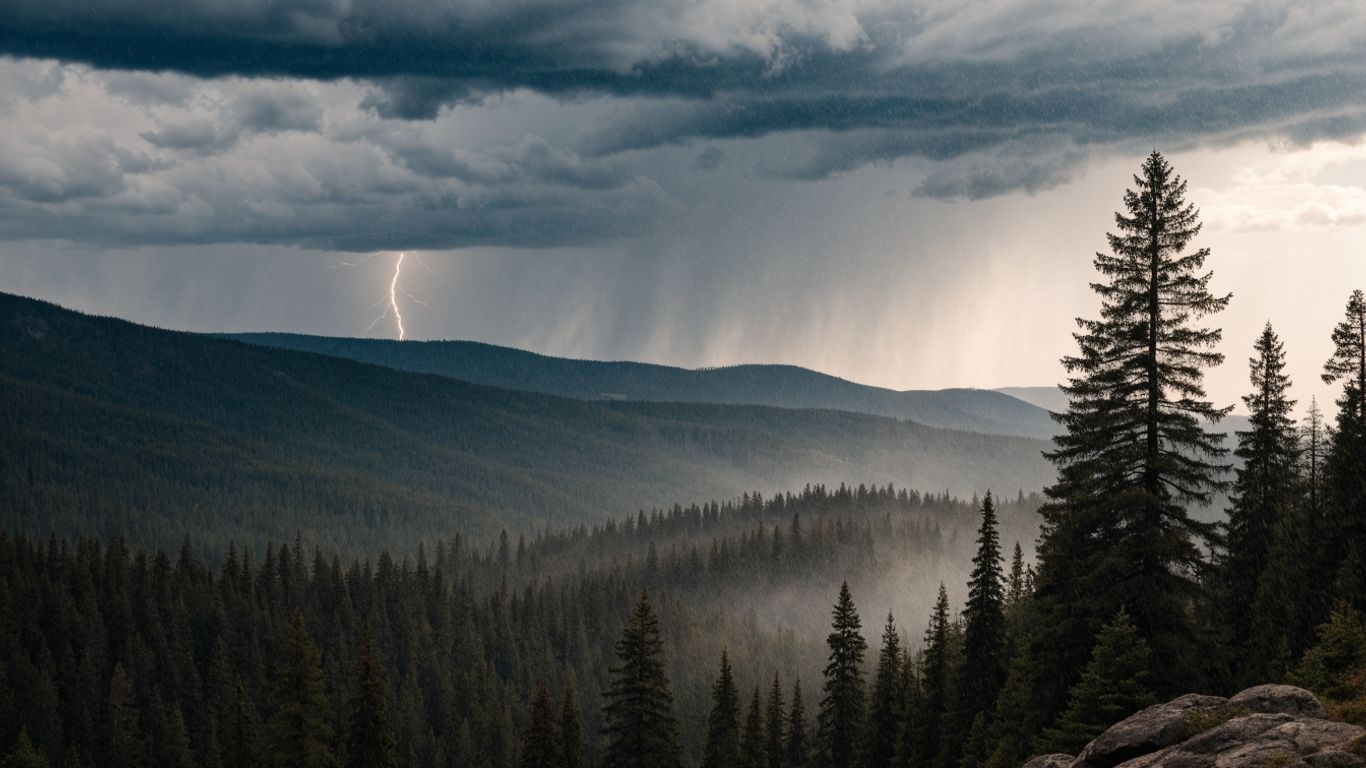
Lightning can ignite vegetation, especially when storms bring little rain or when a strike reaches dry fuels. Some ecosystems have adapted to recurring fire, and fire can play a role in renewal, though the timing and intensity of a burn still matter. Natural ignition does not mean a fire is harmless or inevitable. The surrounding fuel, weather, and landscape help determine whether a strike leads to a small burn or a major wildfire.
Human-caused ignitions: accidents, negligence, and arson
Human-caused fires include accidental sparks, unsafe use of flames, equipment failures, and intentional setting. Arson is only one category, and the label should not be applied simply because a fire began near a road, home, or work site. Investigators need evidence to distinguish deliberate action from negligence or an accident. Research into wildland arson patterns also considers how human activity intersects with weather, fuels, and nearby fires.
How land use and infrastructure create ignition risks
Roads, power systems, farms, construction, and expanding settlement can bring more ignition sources into or near burnable landscapes. The risk depends on the activity and local conditions: a damaged power line may pose a hazard in dry vegetation, while an unattended flame can be dangerous in windy weather. Development also changes the consequences of a fire by placing homes and infrastructure closer to fuels. These connections make prevention a question of both individual behavior and planning.
Why causes vary by region and ecosystem
The dominant ignition sources and the effects of fire differ across forests, grasslands, peatlands, and agricultural frontiers. A landscape with frequent lightning may have a different pattern from one where roads, farming, or power infrastructure are more influential. Reporting systems and the definition of a recorded fire can vary too. This means country rankings and regional comparisons need a clear measure, not just a headline number.
What the evidence says about arson
Arson is a real cause of some wildfires, but the word should be used with care. Establishing that a fire was deliberate is different from identifying a person, proving intent, or establishing a motive. Investigations may produce a confirmed cause, a probable cause, or no conclusion at all. Public accounts can emerge before that work is complete, so allegations and verified findings should not be treated as equivalent.
How investigators distinguish arson from other causes
Investigators examine the fire’s point of origin, burn patterns, physical evidence, weather, and possible ignition sources. They may also consider witness accounts and information about activity near the site. No single clue necessarily proves deliberate setting; evidence must be assessed together and in context. The methods and certainty available can vary with the damage left by the fire and the time that has passed.
Why wildfire cause statistics can be incomplete
Some fires are too small, remote, or destructive for investigators to determine a cause with confidence. Records may classify events as unknown or undetermined, and agencies may use different categories or reporting periods. As a result, a share calculated only from fires with a known cause can give a different picture from a share calculated across every recorded fire. Comparisons should state which fires are included and how unknown cases are treated.
The difference between deliberate fire-setting and accidental ignition
A fire can be linked to a person without being an act of arson. Equipment, discarded materials, unattended flames, or other human activity may cause an unintended ignition. Deliberate setting requires evidence of intent, not merely evidence that a person was present or that a human activity was involved. That distinction matters both for responsible reporting and for deciding what prevention measures might reduce future risk.
Why motive and confirmed cause are not always known
Even when investigators conclude that a fire was intentionally set, they may not identify who did it or why. In other cases, they can establish a likely ignition source but not determine whether the event was accidental or deliberate. Reports should reflect those limits rather than fill gaps with speculation. When interpreting claims about arson, readers can look for whether a source distinguishes confirmed findings from allegations and unresolved questions.
How climate change affects wildfire behavior
Climate change is not a match or a lightning bolt; it can alter the background conditions in which fires start and spread. The effects depend on local climate, vegetation, terrain, and the timing of rain and drought. In some areas, hotter conditions increase the chance that fuels will be dry when an ignition occurs. That influence is important, but it does not make every wildfire a direct or identical consequence of climate change.
Hotter conditions dry out vegetation and soils
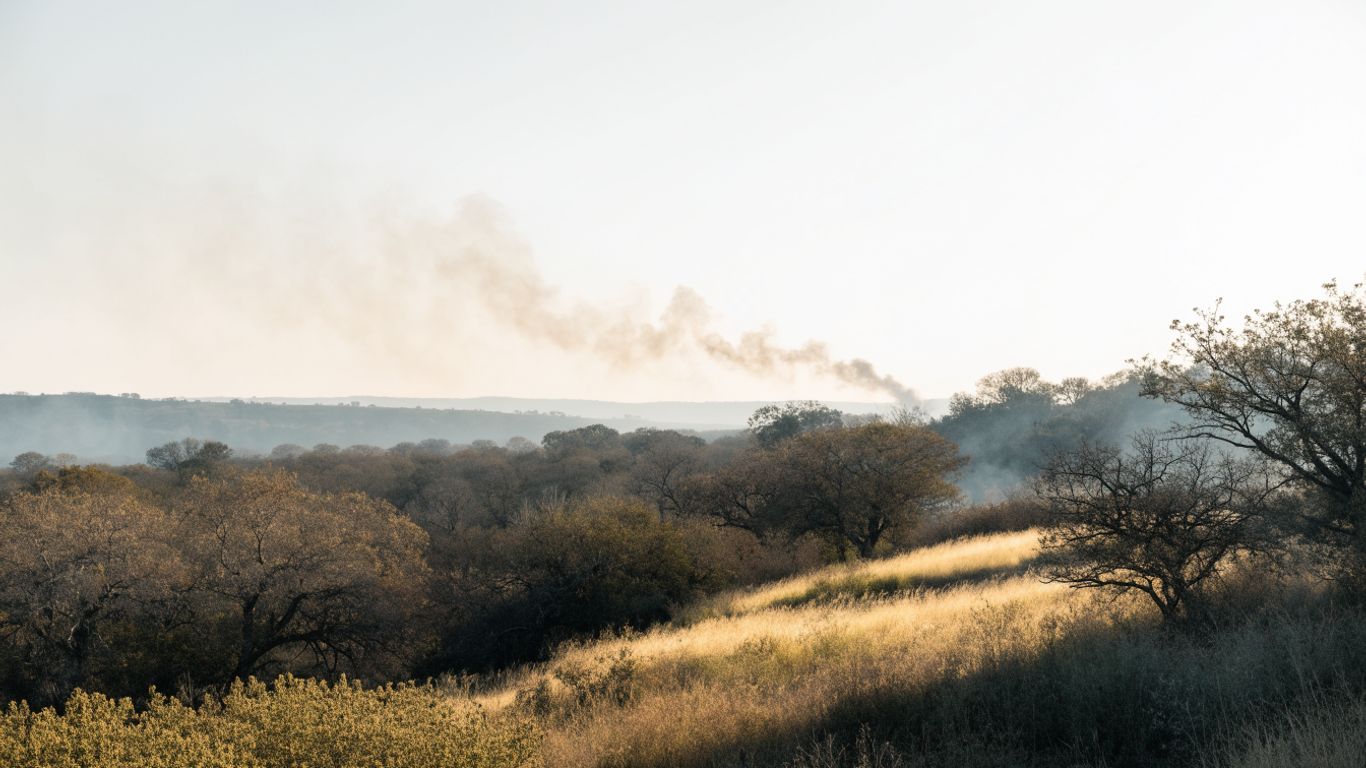
Warmer air can draw moisture from soil and plants, leaving grasses, shrubs, leaf litter, and other fuels more ready to burn. Dry fuels can help a fire take hold and may contribute to faster spread, depending on wind and other conditions. The effect can extend beyond visible vegetation: dry soils and stressed plants may signal a landscape with limited moisture. A warmer period raises risk in context; it does not independently determine a fire’s origin or outcome.
Drought and changing rainfall patterns shape fuel availability
Drought can leave live and dead vegetation dry, but rainfall patterns influence how much fuel grows in the first place. In some ecosystems, a wet period can support more plant growth, followed by a dry period that leaves more material available to burn. In others, prolonged dryness may limit vegetation. This is one reason climate impacts cannot be reduced to a single rule such as “less rain always means more fire.”
Wind and extreme fire weather can accelerate spread
Wind can carry embers ahead of a fire line and bring flames into contact with new fuels. When strong winds coincide with heat and dry vegetation, fire behavior may become especially difficult to predict and manage. Forecasts and warnings help communities prepare, but conditions can change quickly. A useful account of risk therefore considers more than temperature: it also asks what fuels are present and what the weather is doing at the time.
Why climate impacts differ across landscapes
A hotter, drier trend can affect a forest differently from a grassland, peatland, or region where vegetation is sparse. Local ecology, past land management, seasonal rainfall, and development all shape the result. Even neighboring areas may experience different fire risks in the same year. Those differences help explain why global claims need regional evidence and why a single dramatic fire cannot stand in for every landscape.
How scientists assess the causes of wildfire trends
Scientists study wildfire trends by combining measures that describe different parts of the problem. The number of fires, the area burned, and the severity of ecological effects are not interchangeable. Records can also be influenced by reporting practices and changes in land use. Good analysis states what is being measured, over which period, and where, then weighs climate alongside other influences rather than assigning every change to one cause.
Comparing burned area, fire frequency, and fire severity
A trend in fire counts may differ from a trend in the land burned, while severity refers to the effects a fire has on vegetation and the ecosystem. A region can experience many small fires in one period and fewer, larger fires in another. The table below shows why each measure answers a different question.
| Measure | What it describes | A key limitation |
|---|---|---|
| Fire frequency | How many fires are recorded | Depends on detection and reporting practices |
| Burned area | How much land burned | Can be dominated by a few unusually large fires |
| Fire severity | The degree of ecological change or damage | Requires suitable observations and a clear definition |
Reading these measures together gives a fuller picture than relying on one headline statistic. A rise in one measure does not automatically mean that all dimensions of wildfire risk have risen at the same rate.
Separating climate influences from land management and development
Climate is one influence among several. Vegetation management, fire suppression history, land conversion, infrastructure, and settlement patterns can affect both the likelihood of ignition and the amount of fuel exposed to fire. Researchers compare regions and time periods, while accounting for these interacting factors where the data allow. The goal is not to choose between climate and people, but to estimate how each contributes and where their effects overlap.
Using fire records, satellite data, and climate models
Fire agencies’ records can help identify locations, dates, and reported causes, while satellite observations can track fire activity and burned area across large regions. Climate records and models help researchers examine changes in temperature, moisture, and other conditions associated with fire weather. Each source has strengths and gaps: satellites may not capture every small event, while cause records may leave some ignitions unresolved. Combining evidence can reduce those blind spots, though it cannot eliminate uncertainty.
Why one wildfire cannot establish a global trend
A single fire can be investigated for its origin and analyzed in the weather and landscape conditions it encountered. It cannot, by itself, reveal whether wildfire activity is changing worldwide. Scientists look for patterns across many fires, regions, and years, and they distinguish observed changes from modeled projections. This broader approach also guards against treating a striking local event as proof of a universal explanation.
Reducing wildfire risk through prevention and preparedness
Wildfire prevention has to address both ignitions and the conditions that allow a fire to grow. Measures that work in one place may not suit another, so communities need to consider local vegetation, infrastructure, climate, and patterns of human activity. Preparedness also depends on clear warnings and plans people can follow when conditions deteriorate. Different forms of place-specific guidance—from coastal property maintenance and tree pruning in Vejle to urgent wildlife-removal calls, Portuguese tax residence, and recurring yeast-infection guidance—cover distinct subjects, not wildfire evidence; the comparison is simply that advice needs to match its context.
Limiting accidental ignitions near homes and infrastructure
Practical steps can reduce some preventable ignition risks, particularly during dry and windy periods. Local authorities and residents can focus on likely hazards around homes, roads, work sites, and power infrastructure. Useful measures include:
- Follow local restrictions on campfires, outdoor burning, and equipment use during high-risk periods.
- Keep flammable materials and dry vegetation away from structures where local guidance recommends it.
- Maintain vehicles and equipment, and report damaged or downed power lines to the responsible utility.
- Make sure household members know local alert channels and evacuation routes.
These actions cannot prevent every fire, especially lightning-caused ignitions, but they can reduce avoidable risks. Advice should come from local fire and emergency authorities, whose guidance reflects conditions on the ground.
Managing vegetation while protecting ecosystem health
Vegetation management can include removing selected fuels, maintaining defensible space near buildings, and using prescribed fire where it is safe and ecologically appropriate. The aim is not to eliminate all fire or clear every landscape. Many ecosystems have relationships with fire that management needs to respect, and poorly planned interventions can damage habitat or shift risk elsewhere. Decisions are best made with local ecological knowledge and the needs of nearby communities in view.
Improving early detection, warnings, and community readiness
Early detection can give responders and residents more time, while reliable warnings help people act before roads or conditions become unsafe. Readiness includes knowing how alerts arrive, where to get official instructions, and what to do if an evacuation is ordered. Community plans should account for people who may need extra time, mobility support, or information in different languages. These preparations matter even where a fire’s cause remains unknown.
Combining emissions reductions with local fire-risk measures
Reducing greenhouse gas emissions can limit the longer-term warming that contributes to fire-conducive conditions, but it does not replace local prevention or emergency planning. Conversely, local fuel management and safer infrastructure do not address climate change on their own. The two approaches work on different timescales and parts of the risk. A realistic strategy treats them as complementary: reduce avoidable ignitions now, prepare for local hazards, and limit the warming that can intensify future fire weather.
Conclusion
Wildfire risk is best understood as a chain of causes rather than a contest between climate change and arson. An ignition may come from lightning, an accident, negligence, or deliberate setting; the weather, fuels, and landscape then help shape the fire’s course. Careful investigation can identify some causes, while broader trends require evidence across regions and years. That distinction supports more accurate reporting—and prevention that addresses both the spark and the conditions around it.
Frequently Asked Questions
Does climate change start wildfires?
Climate change is not an ignition source like lightning or a spark from equipment. It can alter heat, moisture, and other conditions that influence how readily fuels burn and how fires behave.
What is the difference between arson and a human-caused wildfire?
Arson is the deliberate setting of a fire. Human-caused wildfires also include accidental ignitions and negligence, so a fire linked to human activity is not automatically arson.
Are most wildfires caused by lightning or people?
The balance varies by region, ecosystem, and year. It also depends on how fires are recorded and whether unknown causes are included, so a single global answer can be misleading.
Can investigators always determine what started a wildfire?
No. A fire may destroy evidence, occur in a remote location, or leave too little information to distinguish among possible causes. Investigators may classify the cause as undetermined.
Does a hotter climate always mean more area burned?
Not necessarily in every place or every year. Temperature is one influence; rainfall, vegetation, land management, ignition patterns, and wind also shape burned area.
How do scientists know whether wildfire patterns are changing?
They compare multiple measures, such as fire counts, burned area, and severity, across years and regions. They use fire records, satellite observations, and climate information while accounting for data gaps and other influences.
What can communities do to reduce wildfire risk?
Communities can reduce avoidable ignitions, manage vegetation with ecological care, improve detection and warnings, and prepare residents to follow local emergency guidance. Measures should reflect local hazards and conditions.