
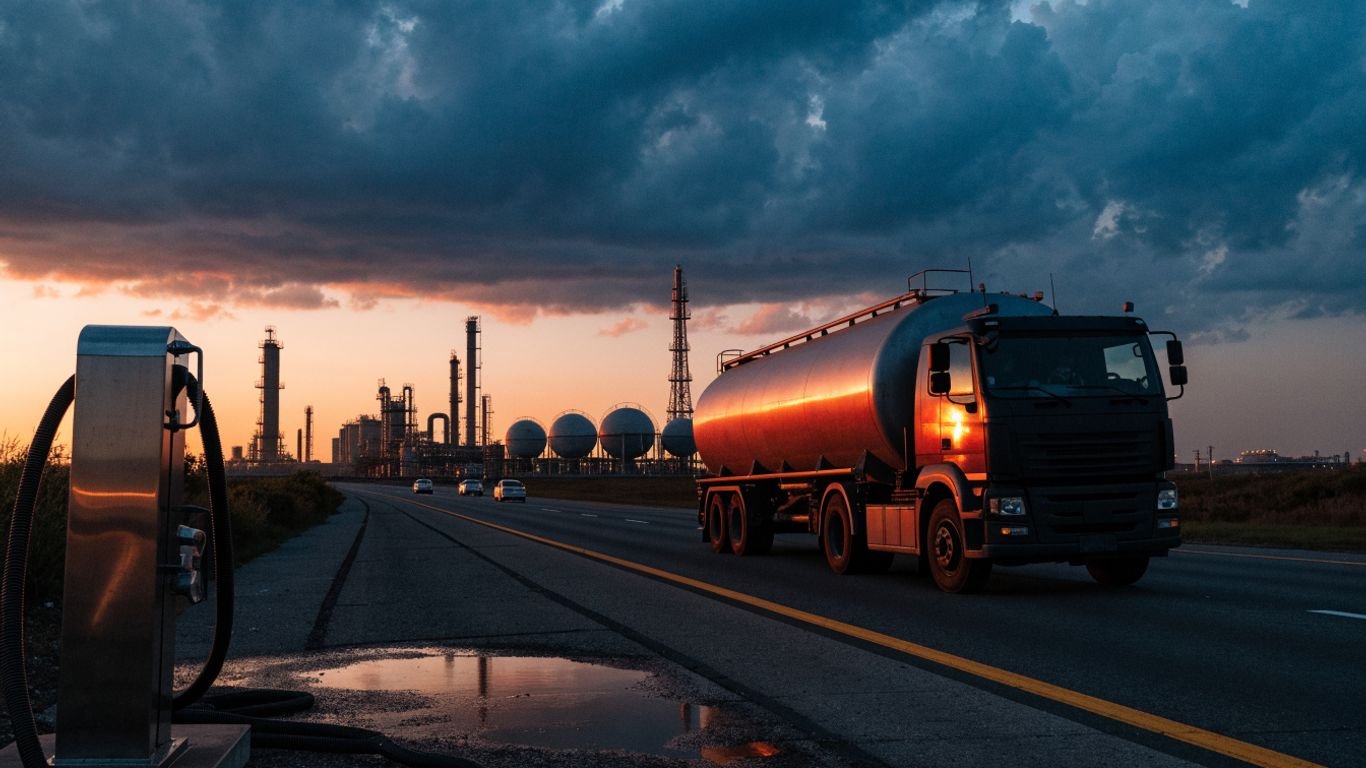
Why Falling Oil Prices May Not Bring Diesel Costs Down
Oil prices can fall while diesel remains expensive, a divergence highlighted in market commentary warning that refinery damage and reduced global integration may keep inflation pressures alive. The gap reflects more than the cost of crude: refining capacity, fuel inventories and transportation also shape what drivers and businesses pay at the pump.
Key takeaways
The headline points to a mismatch between crude-oil prices and the price of a finished fuel. The commentary’s broader argument is that supply-chain constraints can keep costs elevated even when one key input becomes cheaper.
- Crude oil is a major input, but diesel prices also depend on refining and distribution.
- Refinery disruptions can limit the supply of finished fuels and keep prices from tracking crude immediately.
- De-globalization may make supply chains less flexible, though its effects vary by product and market.
Why diesel prices can resist a drop in oil
Crude oil must be processed into products such as diesel before it reaches consumers. The cost of that conversion, the availability of operating refineries, inventories and distribution all influence the final price. As a result, a decline in crude prices does not guarantee an immediate or equal decline in diesel prices.
The spread between crude and refined-fuel prices can also shift as supply and demand change. If refineries are disrupted or running near capacity, less diesel may be available even when crude is cheaper. The event information does not identify specific refinery incidents or provide price data, so the scale and location of any such effects cannot be assessed from the headline alone.
Refinery damage and supply-chain resilience
The cited commentary connects refinery damage with persistent inflation risk. Physical disruptions can reduce processing capacity, while maintenance, logistics bottlenecks or limited inventories may make it harder for markets to respond quickly. These pressures can affect fuel costs beyond the price of crude, although their impact depends on the extent of the disruption and the availability of alternative supply.
A less globally integrated economy may have fewer options for shifting supplies across borders when disruptions occur. That does not mean every supply chain will become less reliable or that prices must rise; it means resilience and redundancy can matter more, and may come with higher costs.
What the warning means for inflation
Diesel is used in freight, agriculture and other commercial activity, so sustained increases can add to operating expenses. Businesses may absorb those costs, reduce margins or pass some of them on to customers. The timing and size of any pass-through vary, and the headline does not establish that diesel prices will keep rising or that inflation will follow a particular path.
The central point is narrower: cheaper crude alone may not be enough to bring down the cost of refined fuels. Monitoring refinery operations, fuel inventories and distribution conditions alongside oil prices offers a fuller picture of pressure on diesel and the broader economy.